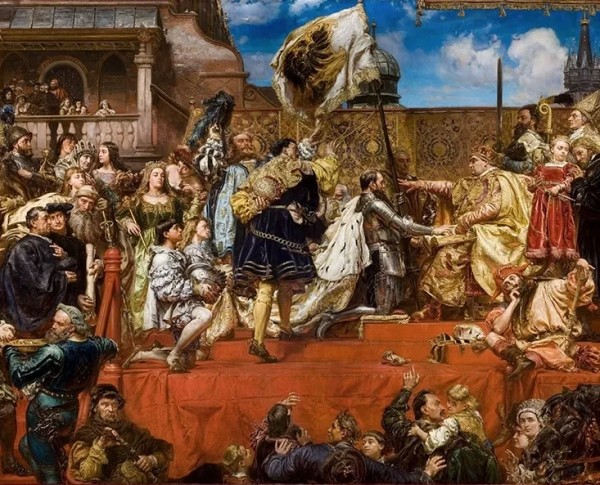
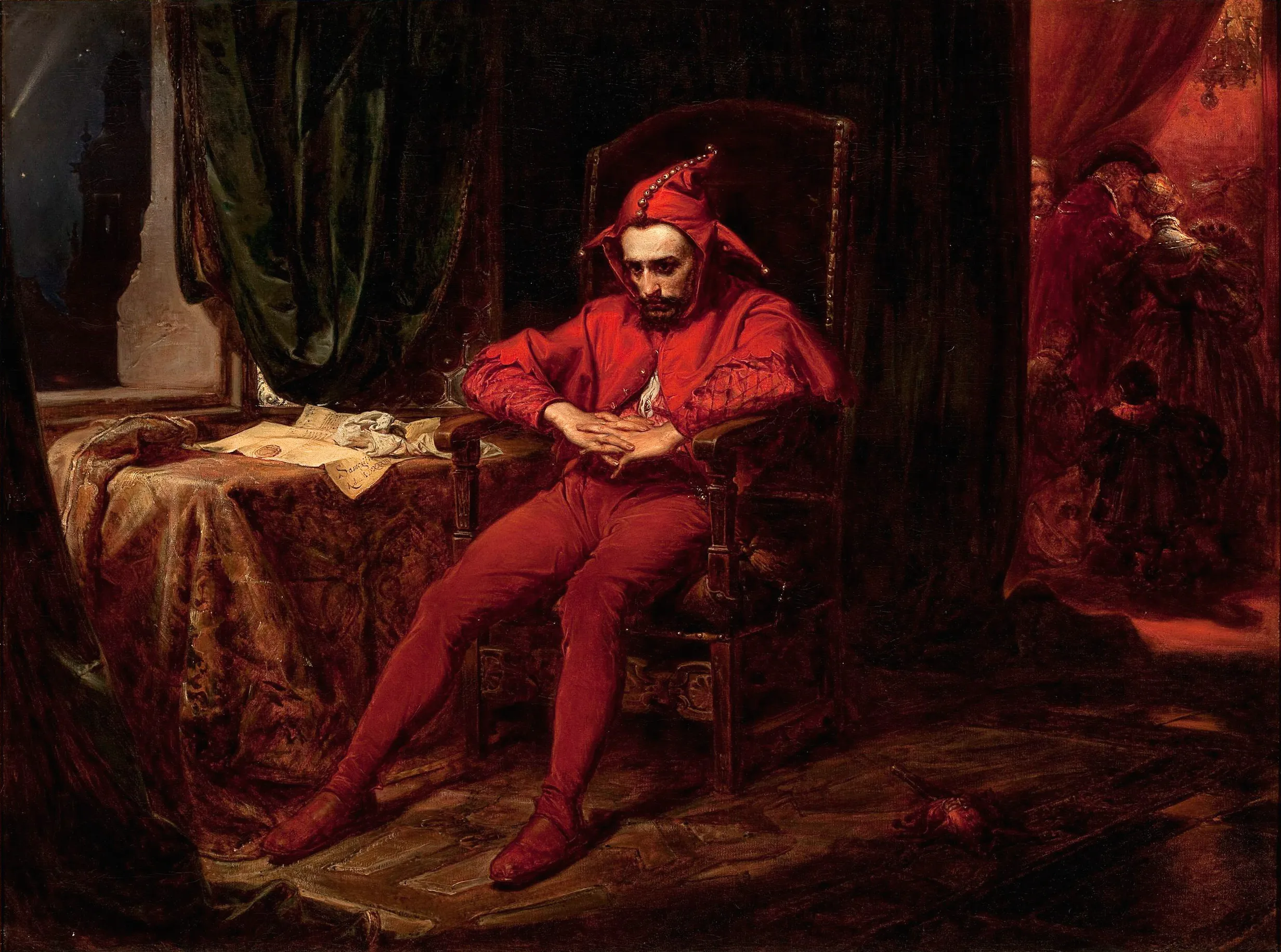
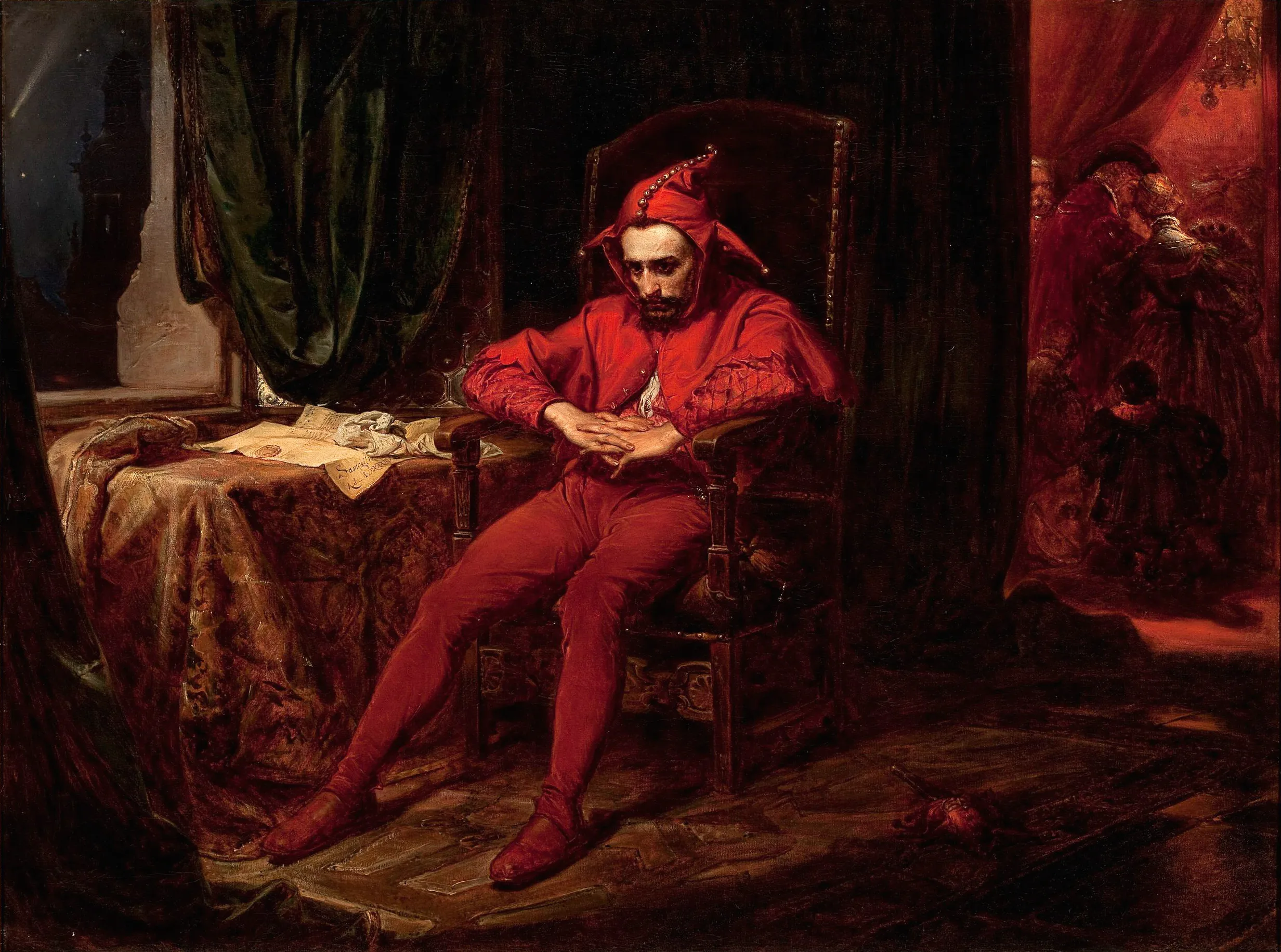
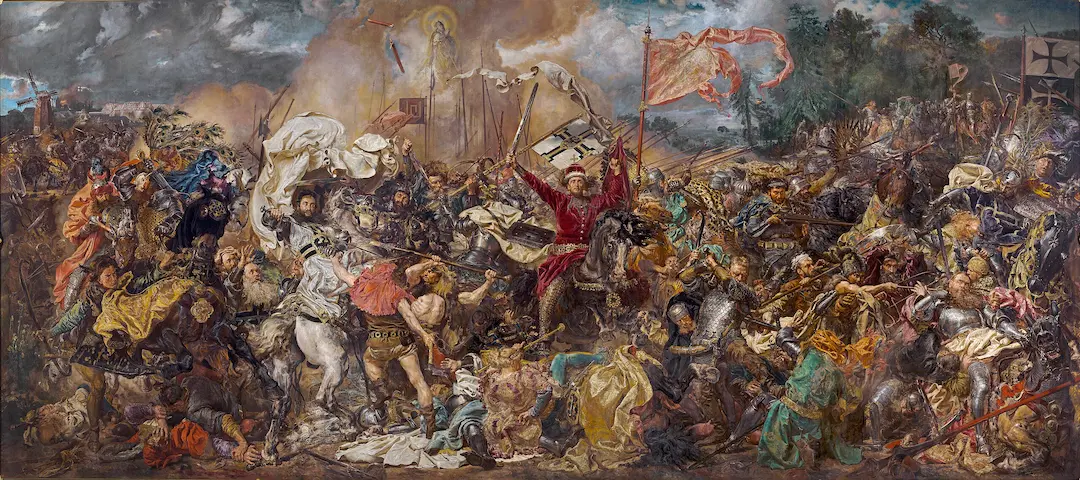
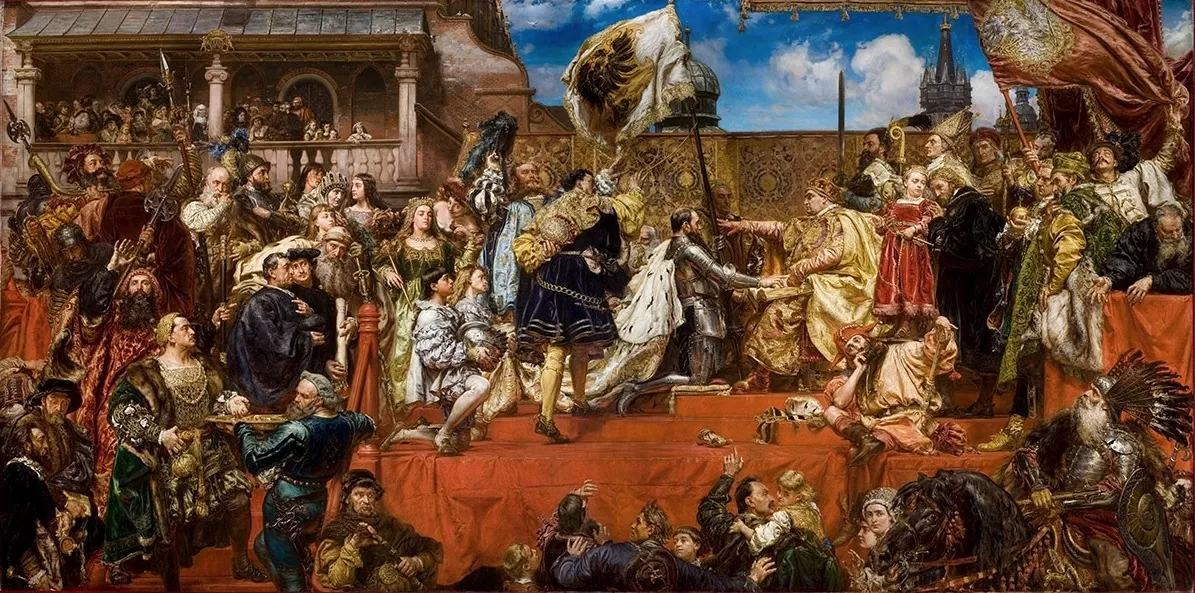
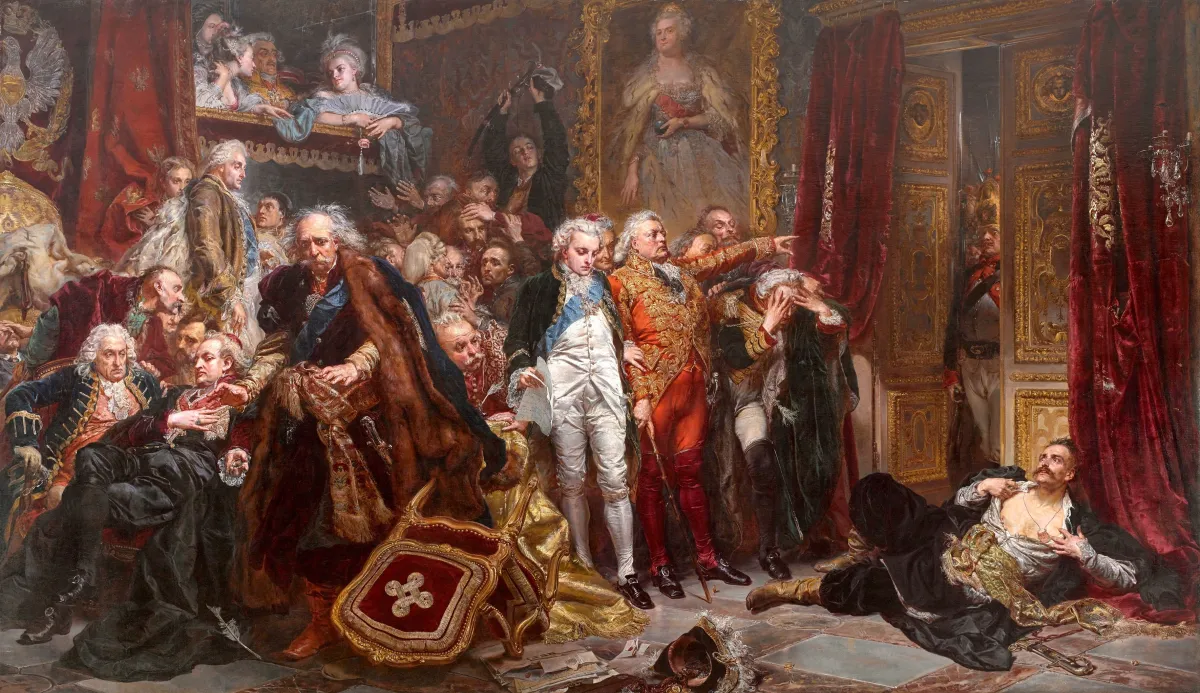
Jan Matejko’s technical skill shines through in "Stanczyk during a Ball at the Court of Queen," where every detail and expression is meticulously rendered using oil on canvas. The artist’s ability to convey emotion and narrative through color and composition is exemplary of the Historicism movement. This piece, alongside others such as "Hanging of the Sigismund bell at the cathedral tower in 1521 in Kraków," showcases the mastery that defines Matejko’s celebrated career.
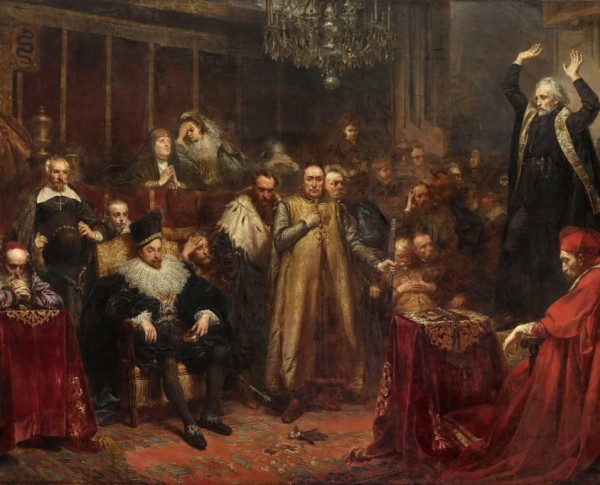
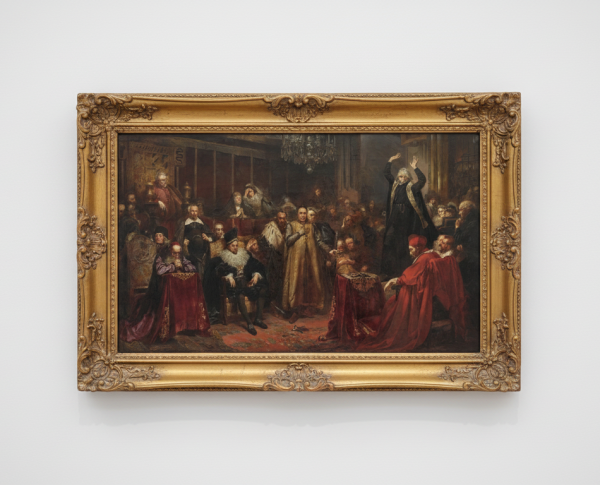
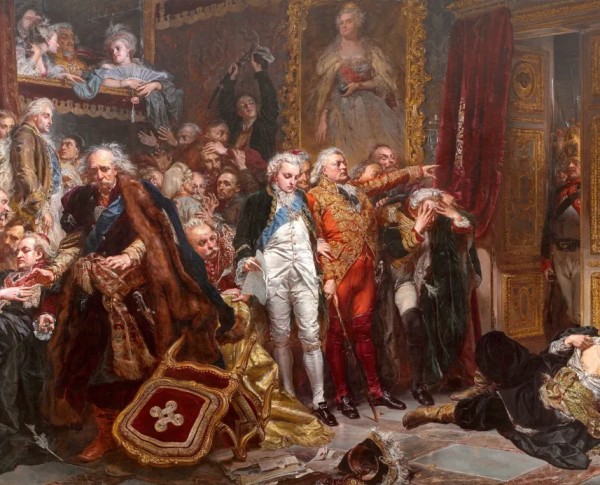
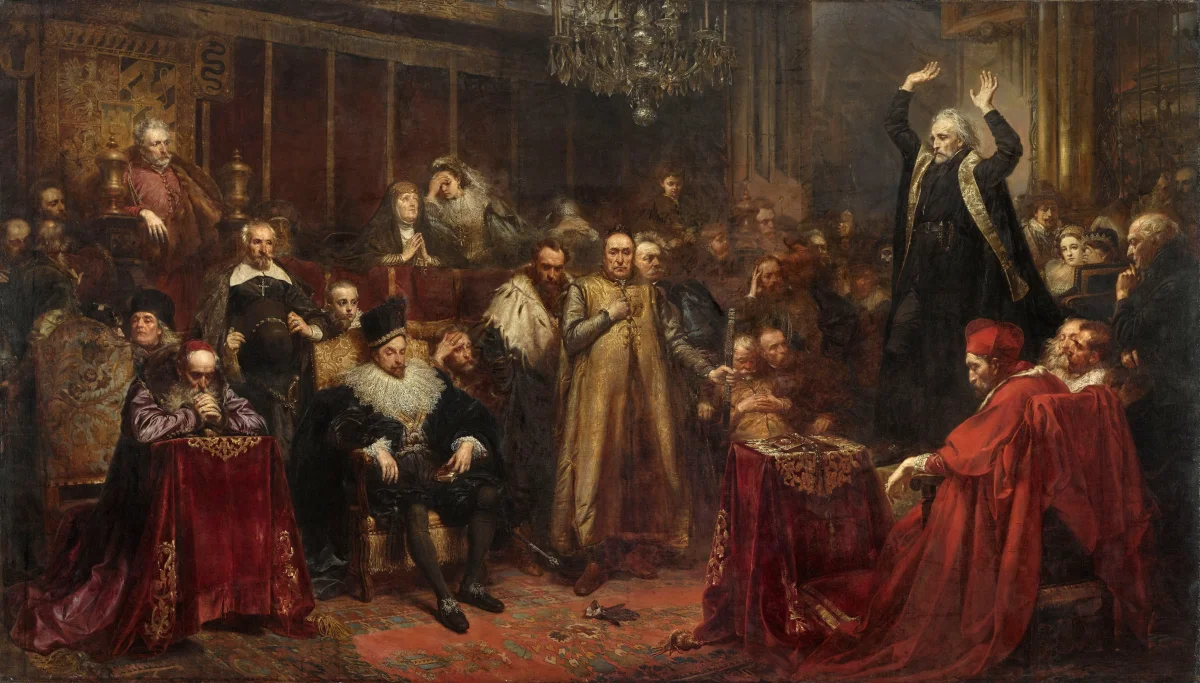
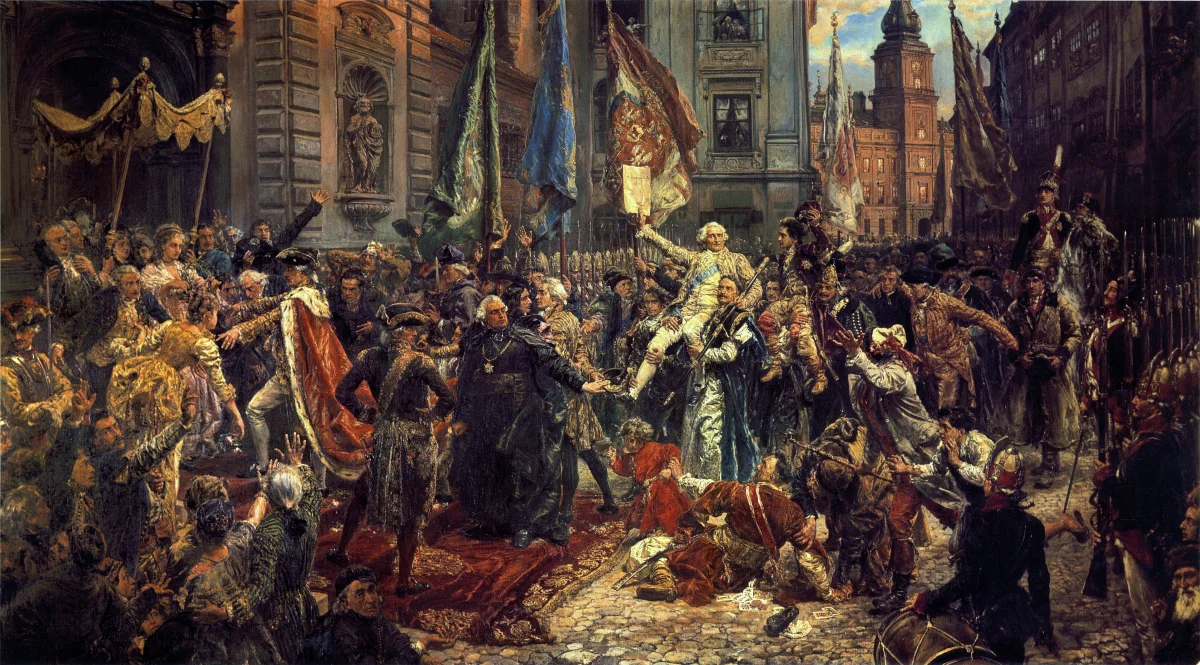
This fine art painting for sale is not just a visual delight, but also a layered narrative. "Stanczyk during a Ball at the Court of Queen" by Jan Matejko is filled with symbolism, revealing the inner turmoil of the court jester amidst royal festivities—a recurring theme in Historicism. The painting’s depth is comparable to Matejko’s other historical works like "Constitution of May 3, 1791" and "Skarga's Sermon," offering viewers a rich tapestry of Polish history.
For art collectors, acquiring a hand-painted oil painting like "Stanczyk during a Ball at the Court of Queen" by Jan Matejko is a prized investment. As a significant piece from the Historicism movement, it complements collections featuring related masterpieces such as "Jan Kochanowski over the dead body of his daughter." This oil on canvas work stands as both a historical artifact and a testament to Matejko’s enduring influence in the world of fine art.
When Art Meets History
"Stanczyk during a Ball at the Court of Queen" by Jan Matejko is a remarkable example of the Historicism movement, capturing a pivotal moment in Polish history. This hand-painted oil painting immerses viewers in the grandeur and turmoil of the royal court, reflecting Matejko’s dedication to historical accuracy. Through this work, the artist revives the past, much like his other celebrated works, ensuring that history remains alive in the world of fine art.
Techniques That Speak
Jan Matejko’s mastery is evident in every brushstroke of this oil on canvas, employing rich colors and dramatic lighting to evoke the atmosphere of the court. The meticulous attention to detail, a hallmark of the Historicism movement, allows viewers to appreciate the intricate costumes and somber mood. This technique can also be seen in many of Matejko’s other masterpieces, each one a testament to his skill with oil paints and historical themes.
Emotions on Display
"Stanczyk during a Ball at the Court of Queen" stands out for its intense emotional depth, as the jester’s solitary figure contrasts with the revelry around him. This fine art painting for sale captures the melancholy and introspection often found in Matejko’s work, inviting viewers to ponder the deeper meaning behind the scene. The Historicism movement’s focus on emotional storytelling is vividly brought to life in this evocative composition.
Coveted by Collectors
Art collectors highly value Jan Matejko’s "Stanczyk during a Ball at the Court of Queen" for its historical significance and artistic excellence. As a hand-painted oil painting, it represents the pinnacle of the Historicism movement, making it a sought-after piece for those who appreciate both history and art. Matejko’s reputation for creating museum-quality works ensures that this painting remains a prized possession among collectors and enthusiasts worldwide.
Frequently Asked Questions About Stanczyk during a Ball at the Court of Queen
What is the historical context of "Stanczyk during a Ball at the Court of Queen"?
This painting by Jan Matejko depicts the Polish court during the 16th century, a time marked by political intrigue and cultural flourishing. It captures the essence of the Polish Renaissance, highlighting the social dynamics and the role of jesters in royal courts.
Who is the central figure in the painting and what does he represent?
The central figure is Stanczyk, a court jester, who symbolizes the voice of reason amidst the frivolity of court life. His contemplative expression suggests a deeper awareness of the political and social issues of his time, contrasting with the revelry around him.
What artistic techniques did Jan Matejko use in this painting?
Matejko employed a rich color palette and detailed textures to bring the scene to life. His use of chiaroscuro enhances the dramatic effect, highlighting Stanczyk's figure against the vibrant backdrop of the court festivities.
How does the composition of the painting contribute to its meaning?
The composition is carefully arranged to draw the viewer’s eye to Stanczyk, placing him at the forefront while the other figures are positioned in a dynamic, swirling manner. This arrangement emphasizes his isolation and the contrast between his serious demeanor and the surrounding gaiety.
What symbolism is present in the painting?
The painting is rich in symbolism, particularly the juxtaposition of joy and sorrow. Stanczyk's expression reflects the underlying tensions of the court, suggesting that beneath the surface of merriment lies a deeper awareness of the nation’s struggles.
How does this work reflect Jan Matejko's artistic style?
Matejko is known for his historical paintings that combine realism with dramatic narrative. "Stanczyk during a Ball at the Court of Queen" exemplifies his ability to convey complex emotions and historical narratives through meticulous detail and vibrant storytelling.
What role did jesters play in the historical context of the painting?
Jesters, like Stanczyk, served as entertainers in royal courts but also acted as social commentators. They had the unique ability to speak truths to power, often using humor and wit to critique the nobility and reflect societal issues.
What influence did this painting have on Polish culture?
This painting has become an iconic representation of Polish identity and history. It highlights the importance of cultural figures like Stanczyk in Polish folklore and serves as a reminder of the complexities of court life during the Renaissance.
In what ways does the painting address the theme of duality?
The theme of duality is evident in the contrast between the festive atmosphere of the ball and Stanczyk's somber reflection. This duality captures the tension between appearance and reality, a common theme in Matejko's work and in the broader context of Polish history.
What is the significance of the setting in the painting?
The opulent setting of the royal court serves to underscore the disparity between the lavish lifestyle of the nobility and the struggles faced by the common people. It highlights the role of the court as a center of power and influence during a pivotal time in Polish history.























_GFM_Painting_(1).webp)


 100% Hand-Painted: Finished in 3-6 Weeks

.png)
















_(1).webp)