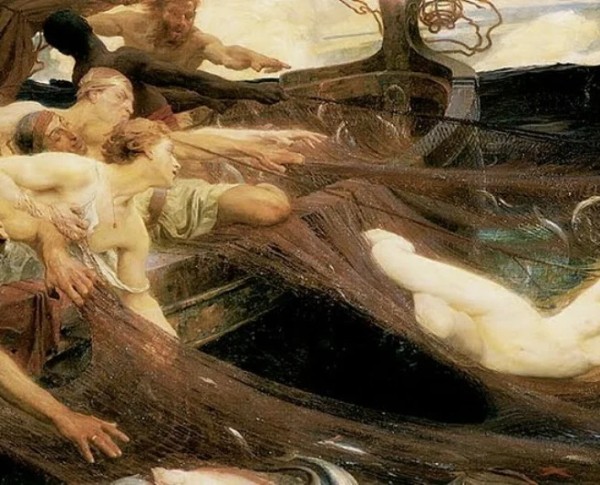
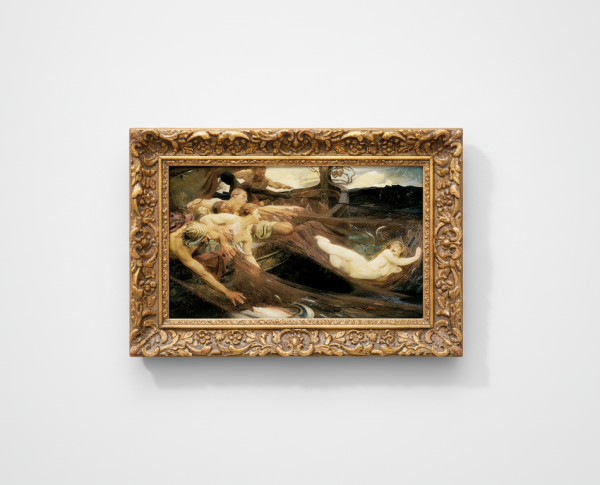
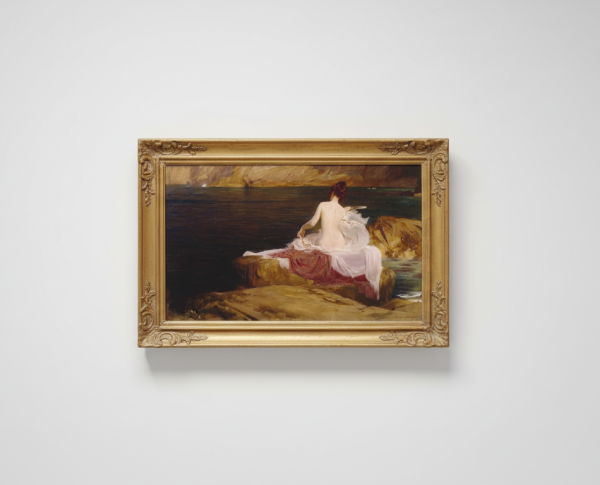
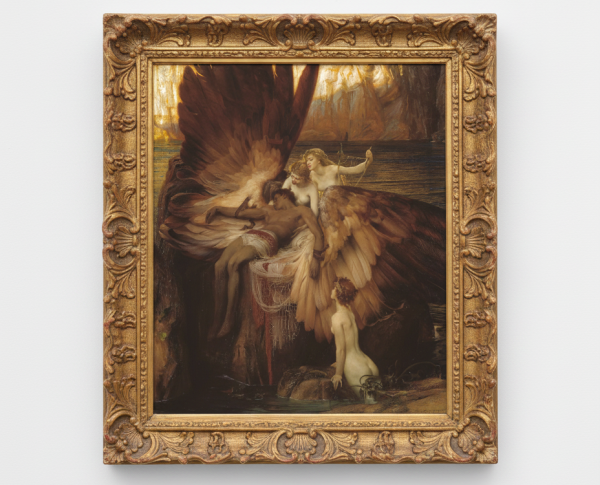
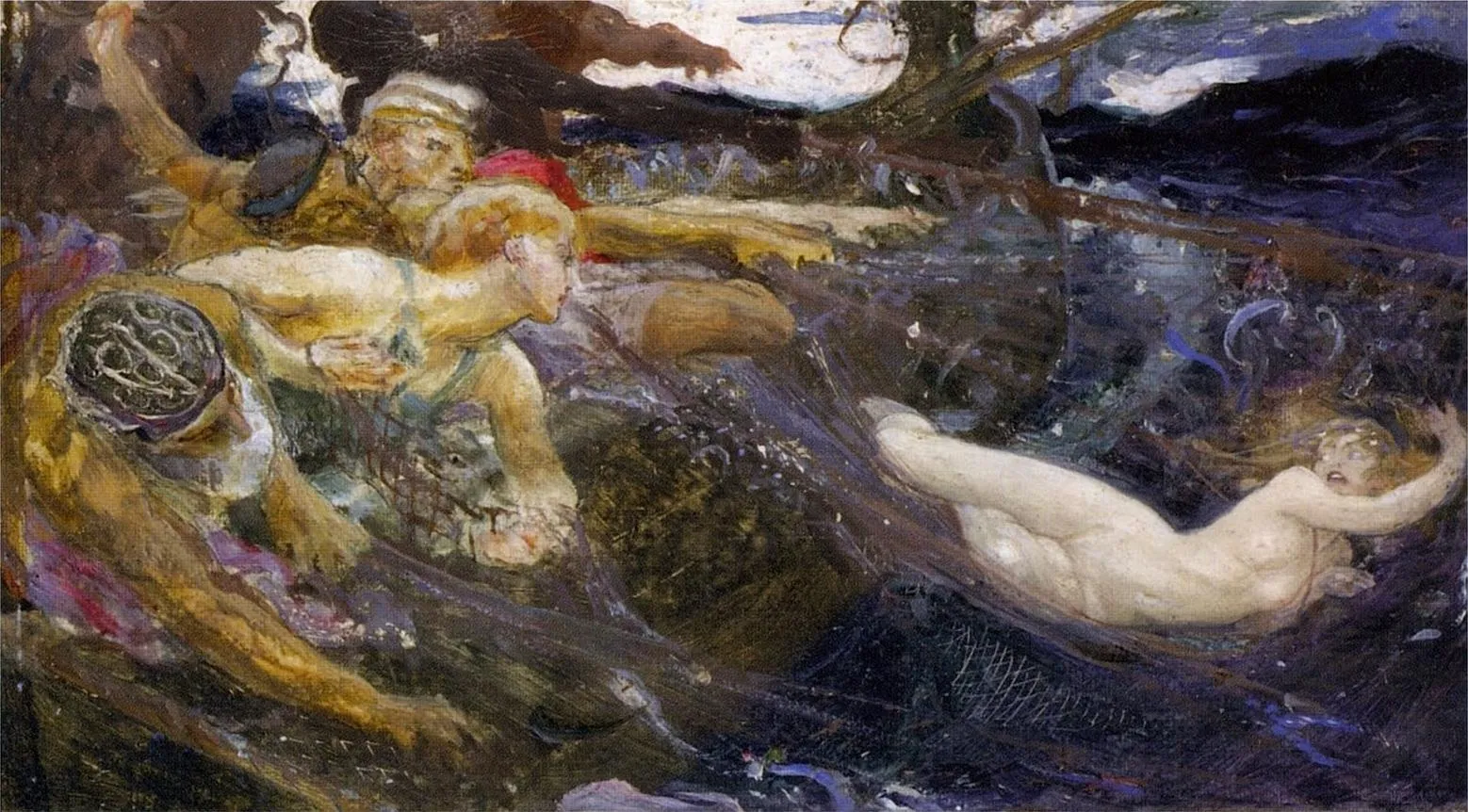
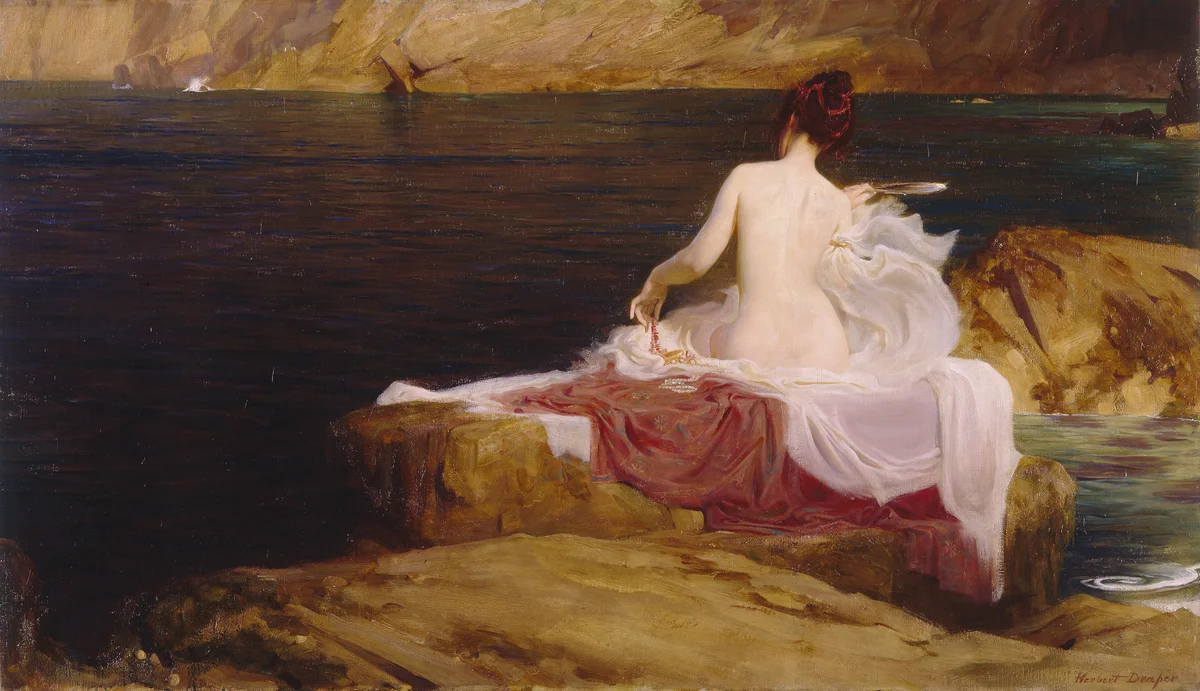
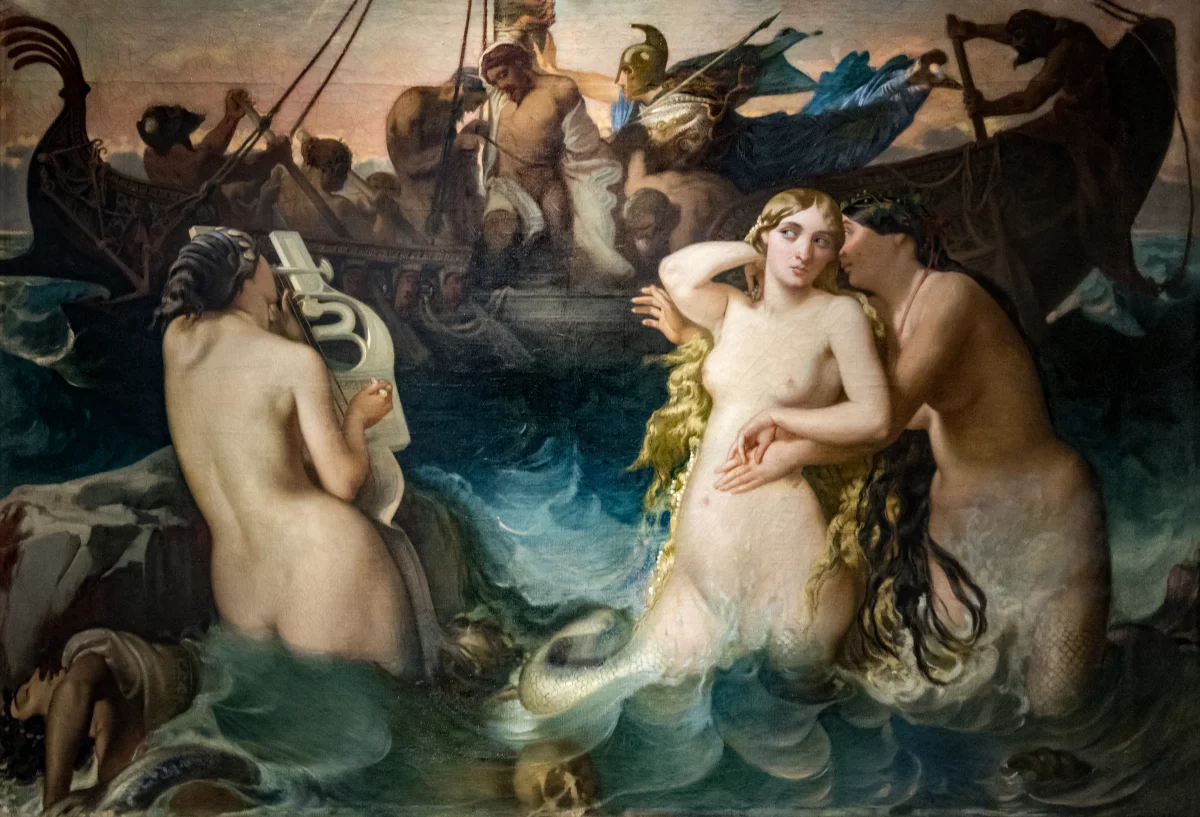
Draper’s exceptional technique is evident in every detail of “Study for The Sea Maiden,” where the fluidity of oil on canvas brings the ethereal subject to life. As with his other celebrated works like “Ulysses and the Sirens,” Draper’s mastery lies in his ability to blend realism with idealized forms. This approach not only defines the Neo-Classical movement but also makes his fine art painting for sale highly sought after by collectors and galleries worldwide.
“Study for The Sea Maiden” weaves together myth and symbolism, inviting viewers into a world of fantasy and beauty. The painting’s subject—an enchanting sea maiden—reflects themes of allure and mystery, much like Draper’s “Clyties of the Mist.” As a hand-painted oil painting, it exemplifies the Neo-Classical movement’s penchant for storytelling through art, imbuing each canvas with layered meanings that continue to captivate audiences and inspire contemporary interpretations.
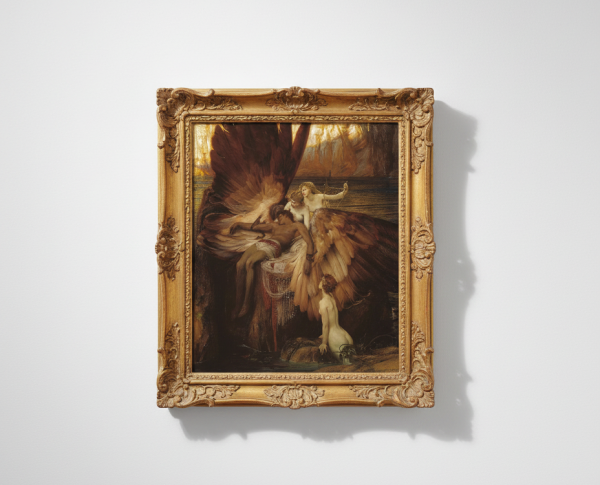
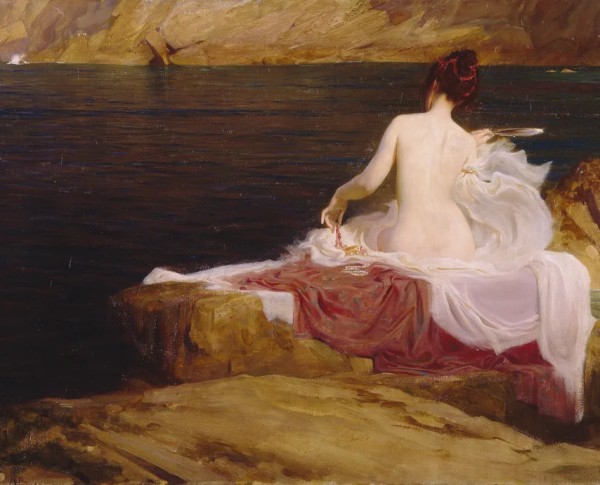
Owning a “Study for The Sea Maiden” is a rare opportunity for connoisseurs of Neo-Classical art to acquire a piece of history. This oil on canvas work, like Draper’s other masterpieces, is a fine art painting for sale that enhances any collection. Collectors often pair it with related works such as “Lament for Icarus” and “Calypso’s Isle,” appreciating the cohesive narrative and exquisite artistry that define Draper’s enduring legacy in the world of fine art.
When Art Meets History
"Study for The Sea Maiden" by Herbert James Draper is a captivating example of the Neo-Classical movement, seamlessly blending mythological themes with refined technique. This hand-painted oil painting echoes the historical reverence seen in works like "Declaration of Independence" and "View of the Isle of Sora." Draper’s artistry connects the viewer with a bygone era, where classical ideals and storytelling were paramount, making this piece a timeless treasure for enthusiasts of Neo-Classical art.
Techniques That Speak
Herbert James Draper’s mastery is evident in his use of oil on canvas, a medium favored by Neo-Classical artists for its richness and depth. The delicate brushwork and luminous color palette in "Study for The Sea Maiden" highlight Draper’s attention to anatomical accuracy and texture, reminiscent of related paintings like "Portrait of Rosalba Peale." Each stroke reveals the artist's dedication to classical techniques, elevating the painting’s visual impact and lasting appeal.
Emotions on Display
In "Study for The Sea Maiden," Draper captures a moment of serene contemplation, inviting viewers to immerse themselves in the subject’s gentle expression. This fine art painting for sale resonates emotionally, much like "Lake Fucino and the Abruzzi Mountains" and "Paysage Avec Pan Jouant De La Flûte Pour Une Nymphe," where mood and atmosphere play crucial roles. Draper’s skillful rendering draws out the sea maiden’s allure, evoking wonder and longing in all who behold her.
Coveted by Collectors
Collectors and art lovers alike value "Study for The Sea Maiden" for its exquisite blend of Neo-Classical style and mythological storytelling. As with other prized works such as "Declaration of Independence" and "View of the Isle of Sora," this hand-painted oil painting stands as a testament to Herbert James Draper’s legacy. Its historical significance and timeless beauty make it a highly sought-after piece in the world of fine art, cherished by discerning collectors.
Related Neo-Classical Hand-Painted Oil Paintings by Other Artists
Other Famous Neo-Classical Artists:
Frequently Asked Questions About Study for The Sea Maiden
What is the historical context of "Study for The Sea Maiden"?
"Study for The Sea Maiden" was created during the early 20th century, a period marked by the transition from academic art to modernism. This era saw a resurgence of interest in classical themes and mythological subjects, which Draper embraced in his work.
Who was Herbert James Draper?
Herbert James Draper was a British painter known for his classical and mythological subjects. Active during the late 19th and early 20th centuries, Draper was influenced by the Pre-Raphaelite movement and was recognized for his skillful use of color and composition.
What themes are explored in "Study for The Sea Maiden"?
The painting explores themes of femininity, beauty, and the allure of the sea. It reflects the romanticized view of women as ethereal beings, often associated with nature and mythology.
What is the significance of the sea in this artwork?
The sea serves as a powerful symbol of mystery and the unconscious. In "Study for The Sea Maiden," it represents both danger and beauty, embodying the duality of nature and the feminine spirit.
How does Draper's technique contribute to the painting's impact?
Draper's technique employs rich color palettes and dynamic brushwork, which enhance the emotional depth of the work. His attention to detail and ability to capture light create a sense of movement and life within the composition.
What artistic movements influenced Draper's work?
Draper was influenced by the Pre-Raphaelite Brotherhood, which emphasized vivid colors, intricate detail, and themes drawn from literature and mythology. Additionally, the Symbolist movement's focus on emotional expression and the exploration of the subconscious also impacted his style.
What role does symbolism play in "Study for The Sea Maiden"?
Symbolism is central to "Study for The Sea Maiden," with the sea maiden herself representing the idealized feminine archetype. Elements such as the waves and marine life symbolize the connection between humanity and nature, as well as the complexities of desire and temptation.
How does "Study for The Sea Maiden" compare to Draper's other works?
What was the reception of "Study for The Sea Maiden" during Draper's lifetime?
During Draper's lifetime, "Study for The Sea Maiden" was well-received, praised for its technical skill and emotive quality. It contributed to Draper's reputation as a leading figure in British art, particularly in the realm of mythological painting.
What can contemporary viewers learn from "Study for The Sea Maiden"?
Contemporary viewers can appreciate "Study for The Sea Maiden" not only for its aesthetic beauty but also for its exploration of timeless themes such as femininity, nature, and the human experience. The painting invites reflection on the relationship between art and mythology in expressing cultural values.























_GFM_Painting_(1).webp)


 100% Hand-Painted: Finished in 3-6 Weeks

.png)



















_(1).webp)