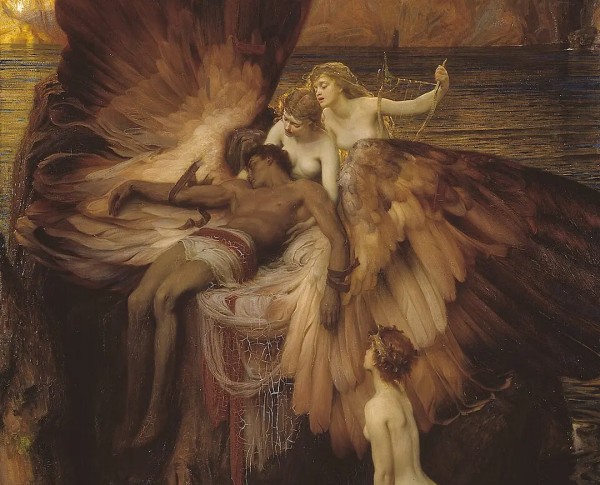
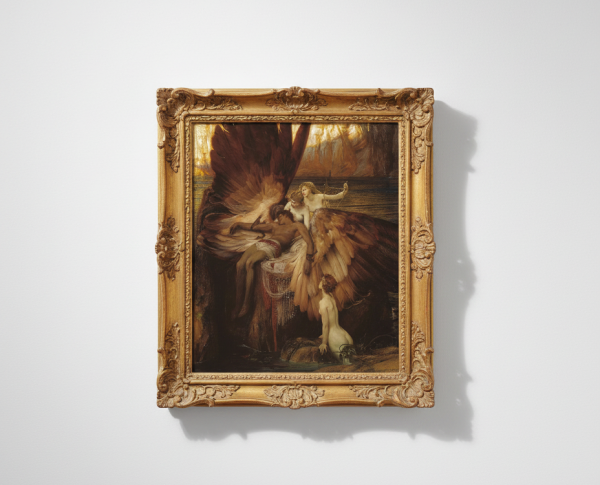
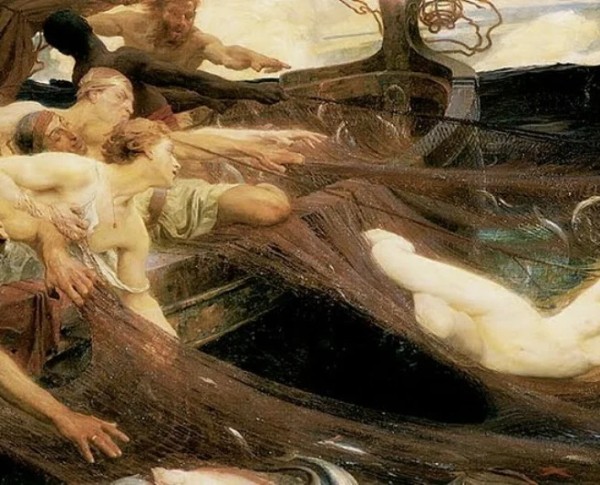
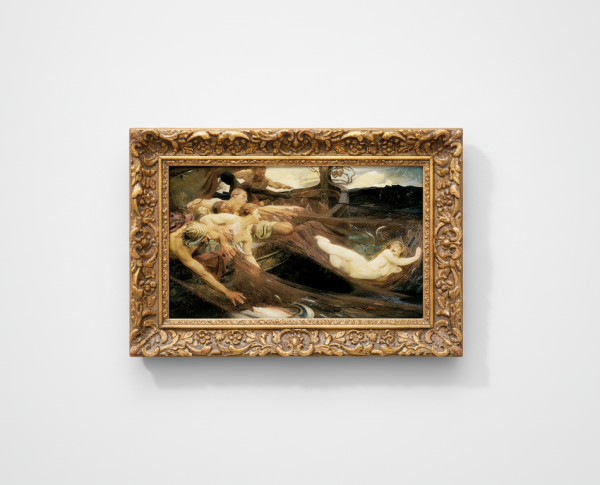
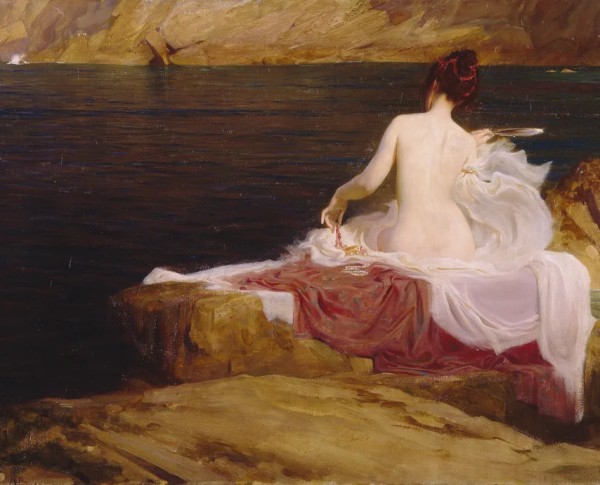
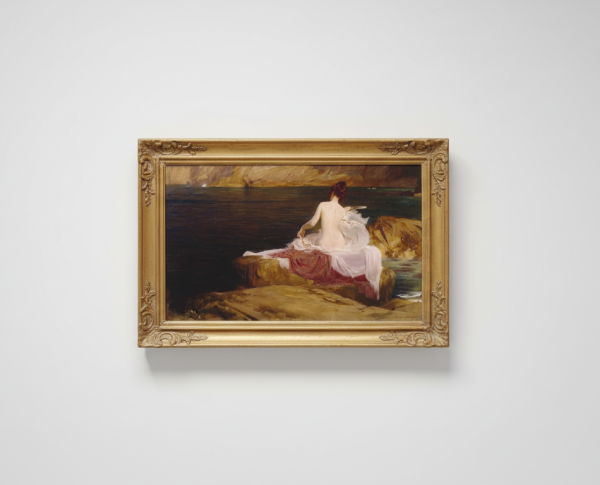
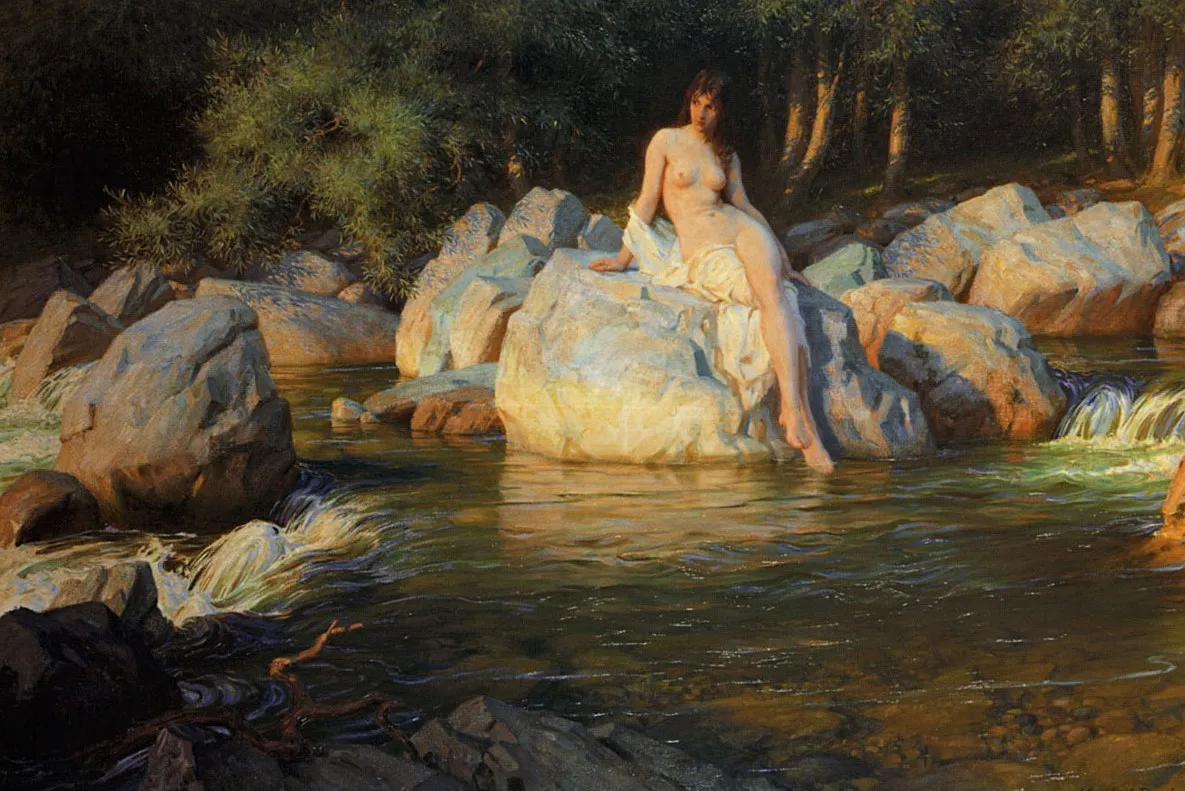
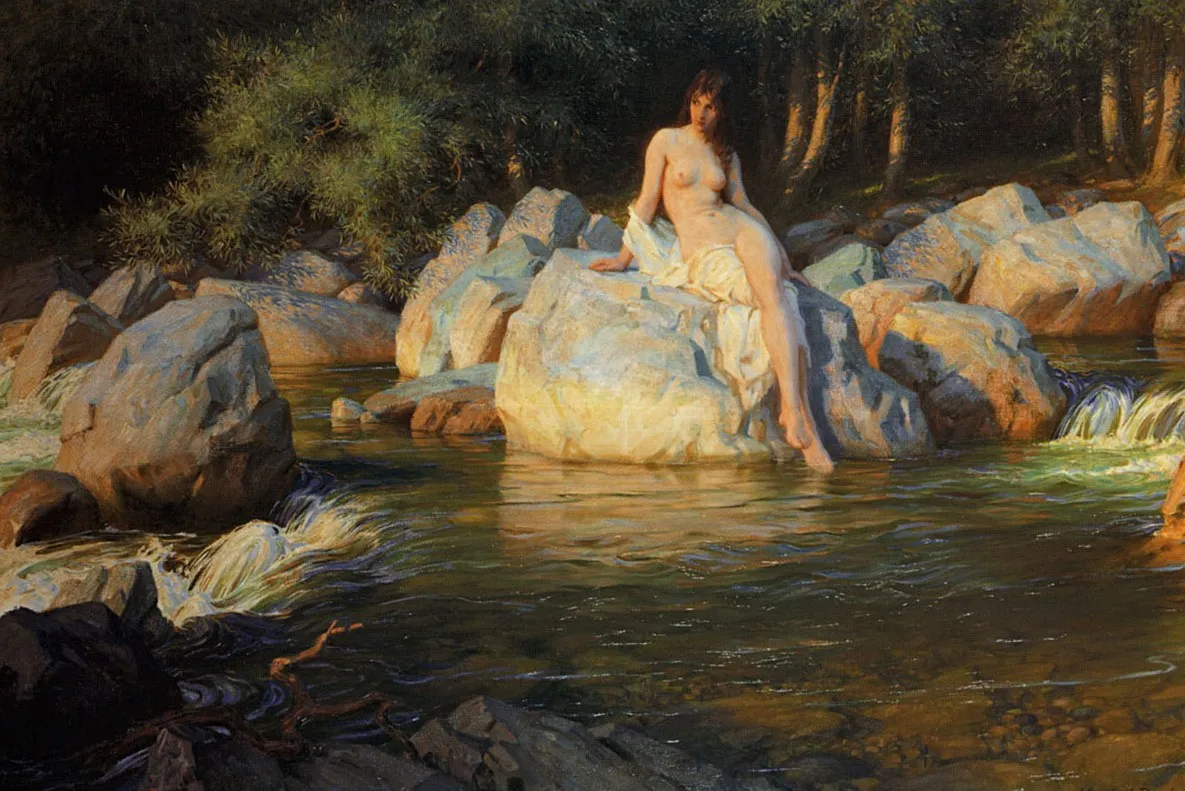
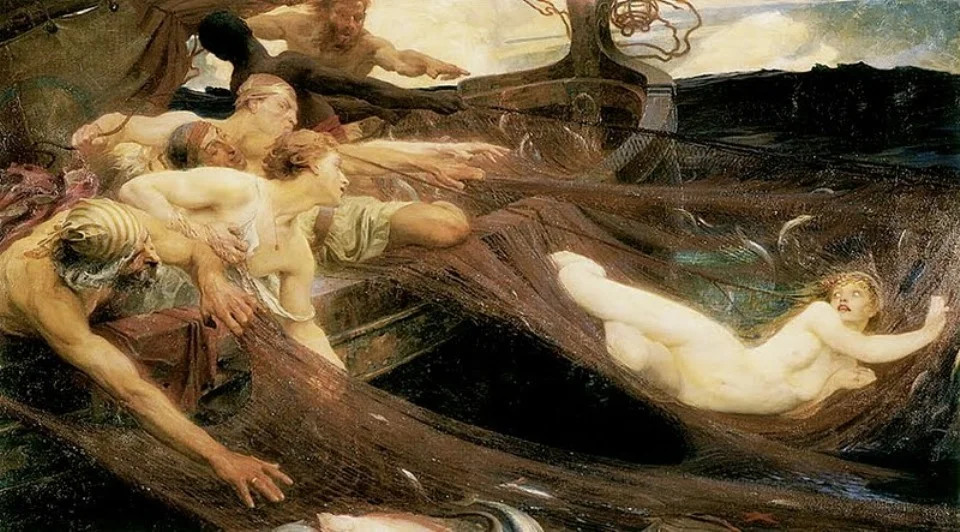
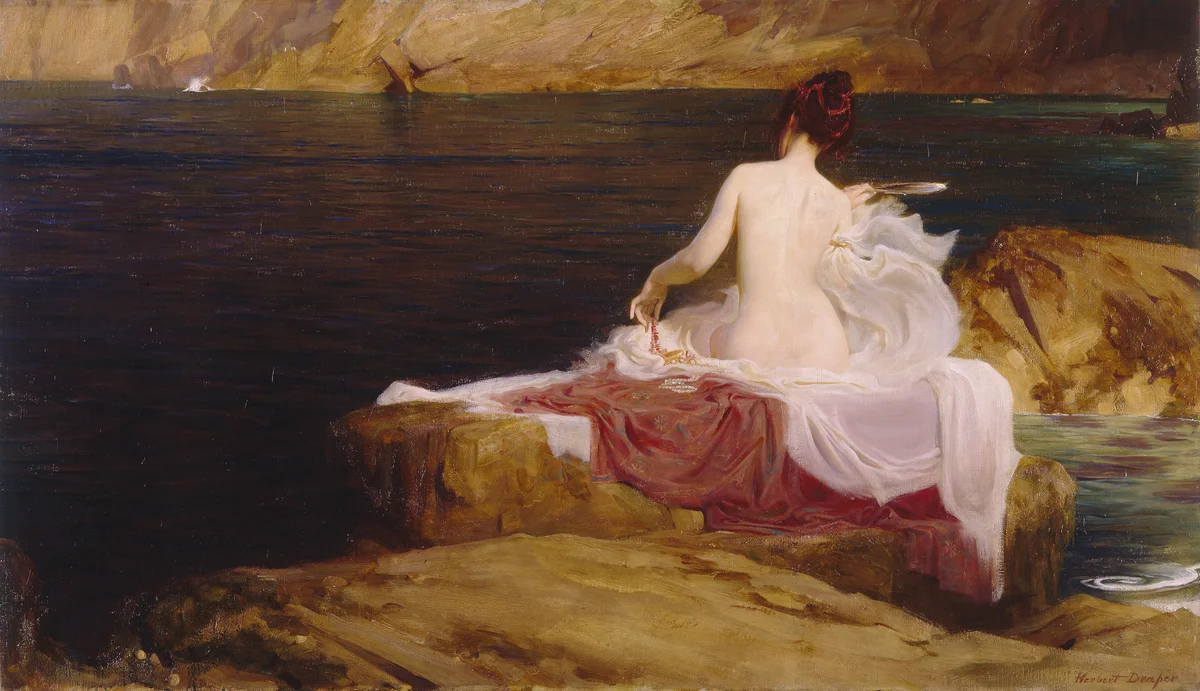
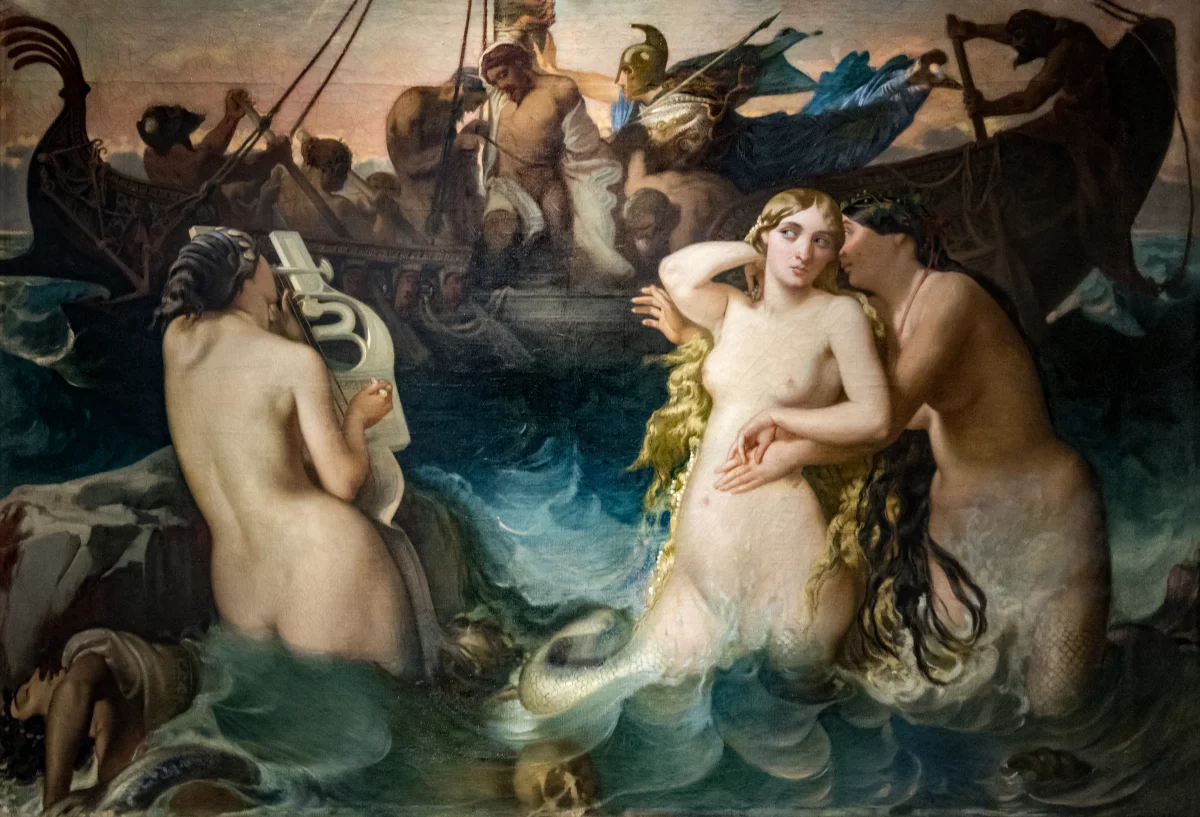
Herbert James Draper’s "The Kelpie" showcases his exceptional skill with oil on canvas, demonstrating flawless technique and a keen eye for detail. The luminous textures and expressive brushwork reflect the hallmarks of the Neo-Classical movement, where precision meets poetic narrative. Draper’s other masterpieces, such as "Ulysses and the Sirens" and "Calypso's Isle," further illustrate his command over the medium, making "The Kelpie" a must-have for collectors seeking timeless elegance.
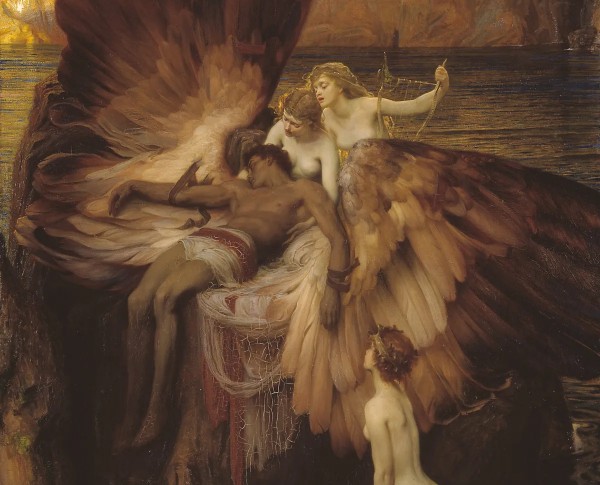
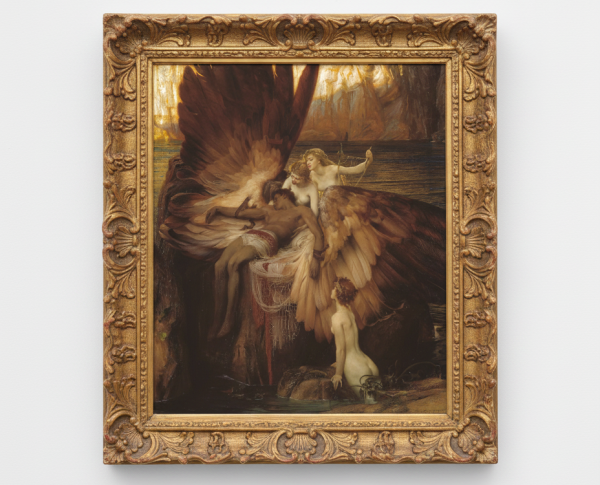
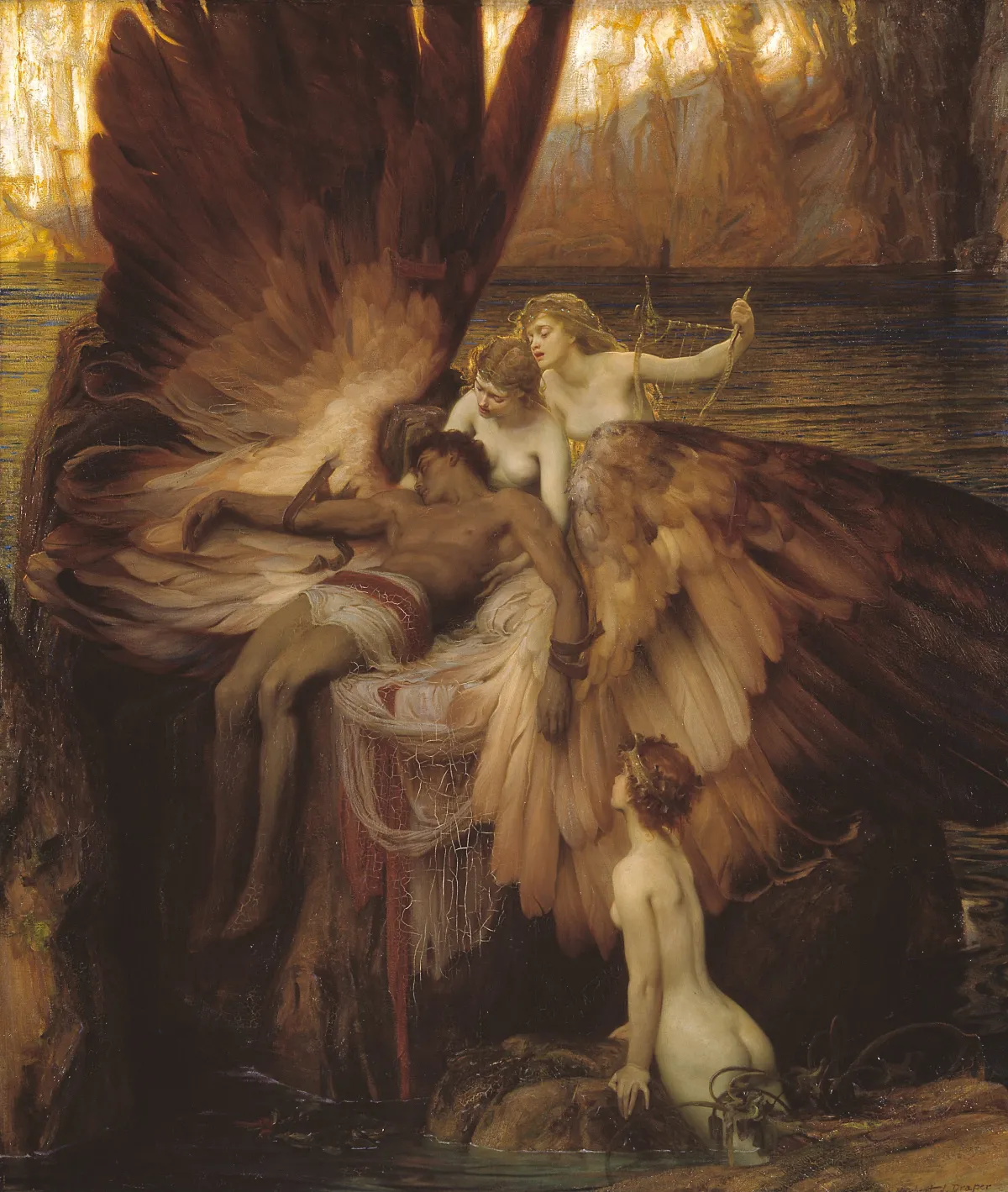
In "The Kelpie," Draper weaves a tapestry of myth and symbolism, inviting viewers into a world where fantasy and reality merge on oil on canvas. The kelpie, a mystical shape-shifting water spirit, serves as a metaphor for allure and danger—an enduring theme in the Neo-Classical movement. Collectors interested in narrative depth will also appreciate related paintings like "The Lament for Icarus," each offering a unique exploration of mythological storytelling through fine art painting for sale.
For those seeking a truly distinguished addition to their collection, "The Kelpie" by Herbert James Draper is an exceptional fine art painting for sale. Its Neo-Classical roots, combined with captivating subject matter and Draper’s renowned artistry, ensure lasting value and admiration. Pairing this masterpiece with related works such as "Calypso's Isle" or "The Sea Maiden" will create a stunning display of mythological allure and hand-painted oil painting excellence in any gallery or home.
When Art Meets History
Herbert James Draper’s masterpiece, "The Kelpie," stands as a testament to the Neo-Classical movement’s reverence for myth and legend. This hand-painted oil painting draws inspiration from Scottish folklore, bringing the mythical kelpie to life with exquisite detail. Draper, renowned for his evocative works, connects "The Kelpie" to other period pieces like "View of the Isle of Sora" and "Still-Life 1810," immersing viewers in a world where art and history intertwine seamlessly.
Techniques That Speak
"The Kelpie" showcases Draper’s exceptional mastery of oil on canvas, a technique characteristic of Neo-Classical artists. His skillful use of light and shadow creates a lifelike, almost ethereal presence, reminiscent of his contemporaries’ works, such as "Caroline Louisa Pratt Bartlett." Each brushstroke in this painting demonstrates the artist’s dedication to classical form and technique, making "The Kelpie" a striking example of Neo-Classical artistry and refined oil painting methods.
Emotions on Display
Draper’s "The Kelpie" evokes a haunting sense of beauty and mystery, capturing the viewer’s imagination through its expressive composition. The subject’s gaze and flowing forms imbue the scene with emotion, echoing the evocative power of works like "The Marquis de Lafayette" and "Martha Washington." This fine art painting for sale invites art lovers to experience the emotional depth and storytelling that define both Draper’s oeuvre and the broader Neo-Classical movement.
Coveted by Collectors
As a highly sought-after piece, "The Kelpie" by Herbert James Draper holds a special place among collectors of Neo-Classical art. Its status as a hand-painted oil painting ensures lasting value and appeal, much like other celebrated works from the era. Collectors and enthusiasts alike prize this painting for its historical significance, technical brilliance, and connection to other period masterpieces, making it an essential addition to any distinguished art collection.
Related Neo-Classical Hand-Painted Oil Paintings by Other Artists
Other Famous Neo-Classical Artists:
Frequently Asked Questions About The Kelpie
What is the historical context of "The Kelpie"?
"The Kelpie," painted by Herbert James Draper in 1909, reflects the early 20th-century fascination with mythological themes and the revival of classical art forms. This period saw a resurgence in interest in folklore and mythology, particularly within the Symbolist movement.
Who was Herbert James Draper?
Herbert James Draper was a British painter known for his allegorical and mythological subjects. Active during the late 19th and early 20th centuries, Draper's work often combined classical themes with a modern sensibility, making him a prominent figure in the art world of his time.
What is the significance of the kelpie in Scottish mythology?
The kelpie is a mythical water spirit from Scottish folklore, often depicted as a horse that can transform into a human. It symbolizes the duality of nature, embodying both beauty and danger, and serves as a cautionary figure regarding the perils of the water.
What artistic techniques did Draper use in "The Kelpie"?
Draper employed a combination of rich color palettes, dynamic compositions, and detailed figures to convey emotion and movement. His use of light and shadow enhances the ethereal quality of the kelpie, drawing the viewer into the mystical narrative.
How does "The Kelpie" reflect the Symbolist movement?
"The Kelpie" embodies the Symbolist movement's emphasis on emotion, imagination, and the representation of ideas through symbols. Draper's portrayal of the kelpie transcends mere representation, inviting viewers to explore deeper meanings and feelings associated with the mythological creature.
What themes are explored in "The Kelpie"?
The painting explores themes of transformation, the allure of the unknown, and the interplay between beauty and danger. The kelpie's enchanting presence juxtaposed with its ominous nature serves as a metaphor for the complexities of desire and temptation.
What materials and mediums were used in "The Kelpie"?
"The Kelpie" was created using oil on canvas, a medium that allows for rich textures and vibrant colors. Draper's mastery of oil painting techniques contributes to the work's depth and luminosity, enhancing the mythical atmosphere of the scene.
In what ways does "The Kelpie" connect to other works by Draper?
Thematically, "The Kelpie" connects to Draper's other works that feature mythological and allegorical subjects, such as "The Lament for Icarus." His consistent exploration of transformation and the human experience through myth reflects his artistic vision and style.
How has "The Kelpie" been received by critics and audiences over time?
Since its unveiling, "The Kelpie" has been praised for its technical skill and imaginative subject matter. Critics have noted Draper's ability to evoke emotion and narrative through his work, establishing "The Kelpie" as a significant piece in the study of early 20th-century art.
What is the current location of "The Kelpie"?
"The Kelpie" is part of the collection at the Manchester Art Gallery, where it continues to be appreciated for its artistic merit and cultural significance. The gallery provides a platform for visitors to engage with Draper's work and the themes it represents.






















_GFM_Painting_(1).webp)


 100% Hand-Painted: Finished in 3-6 Weeks

.png)
















_(1).webp)