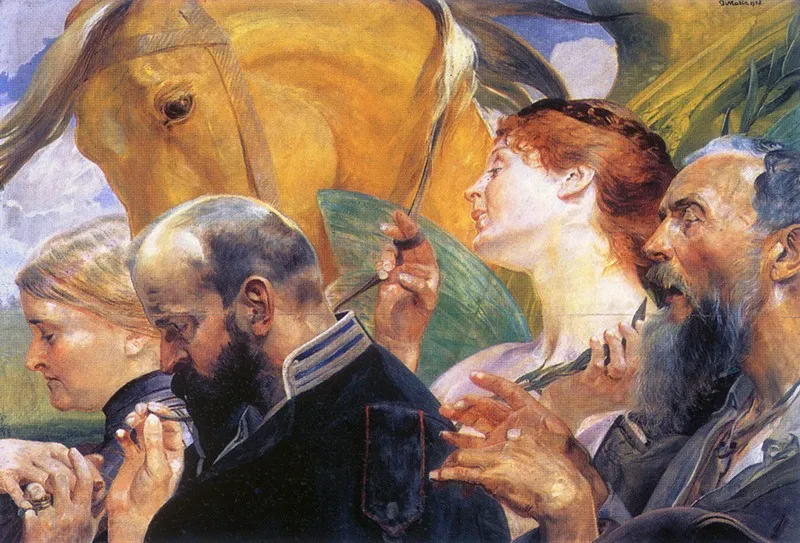
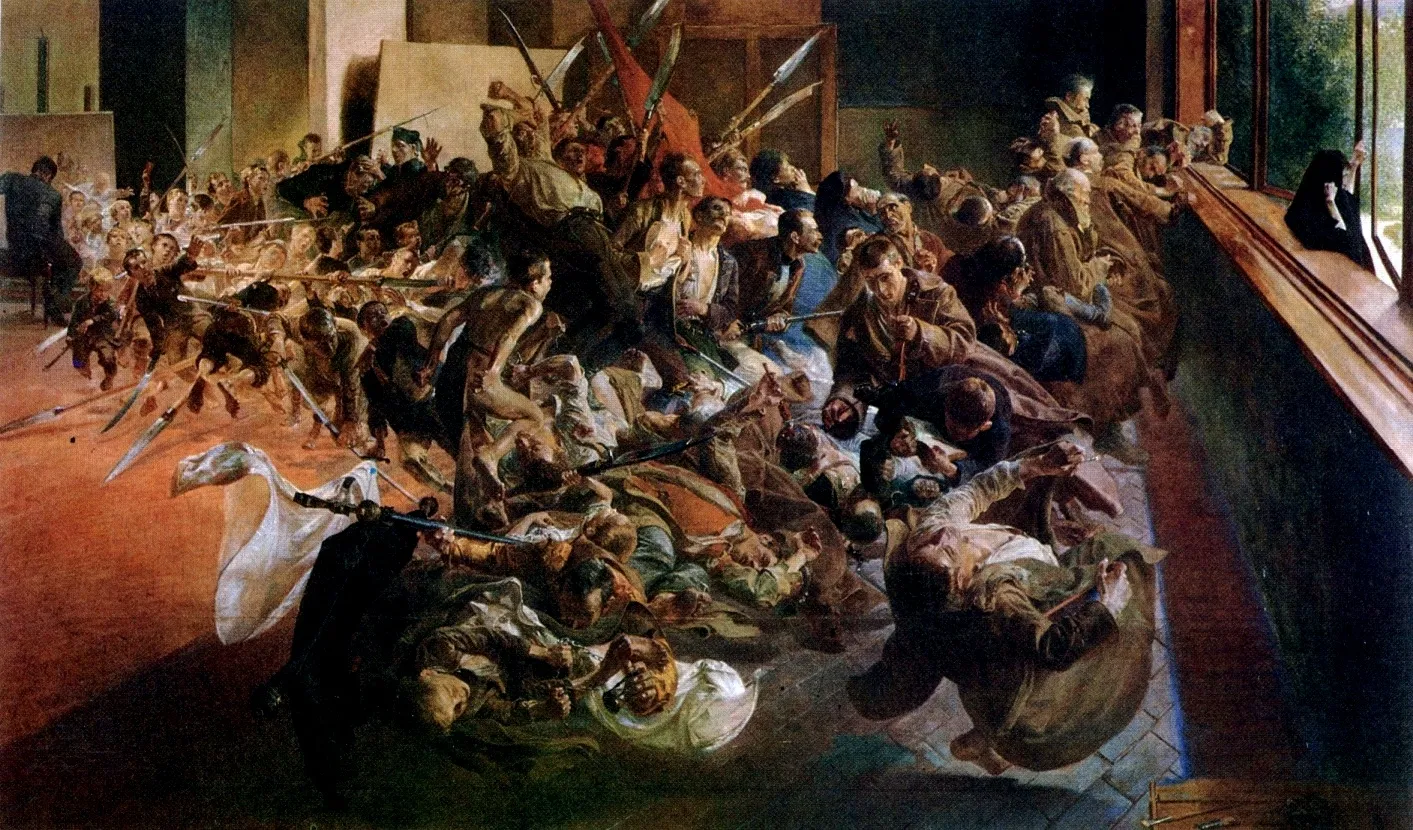
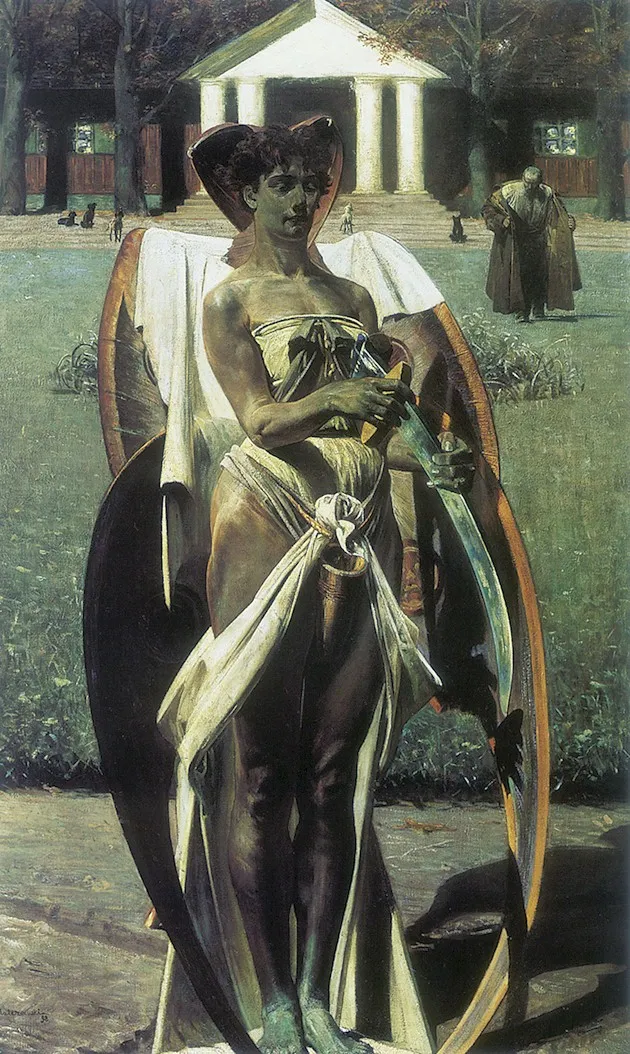
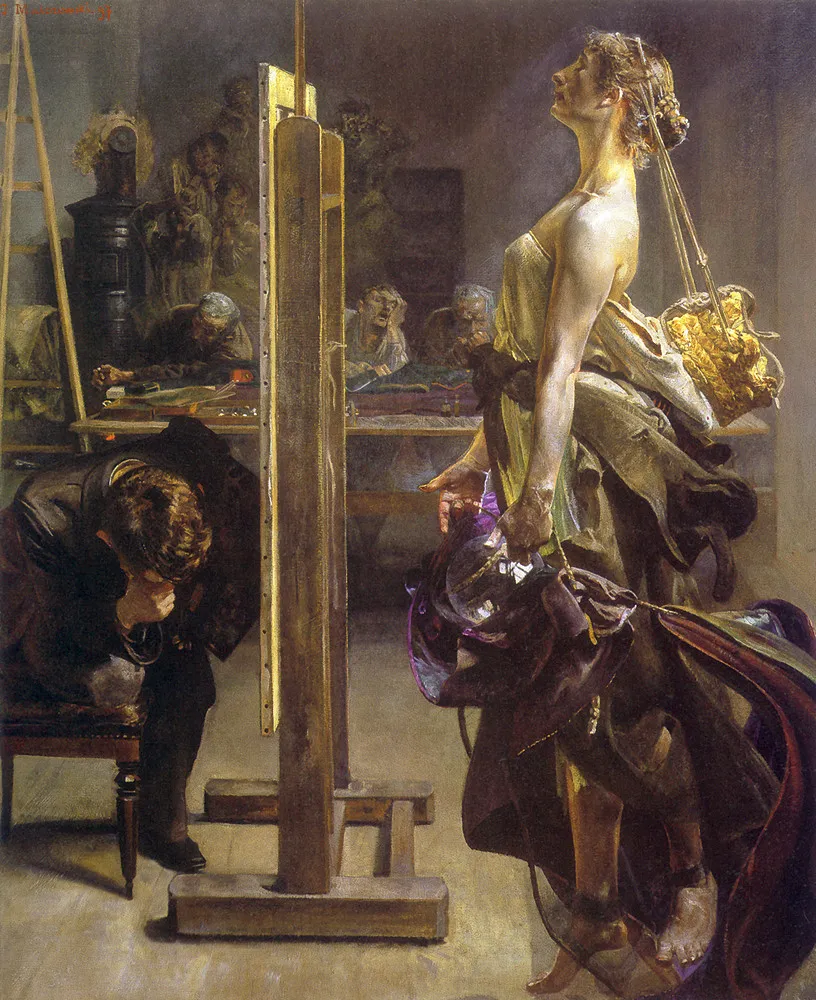
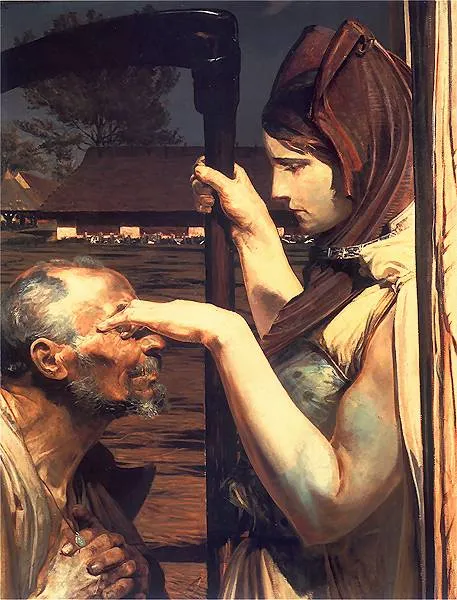
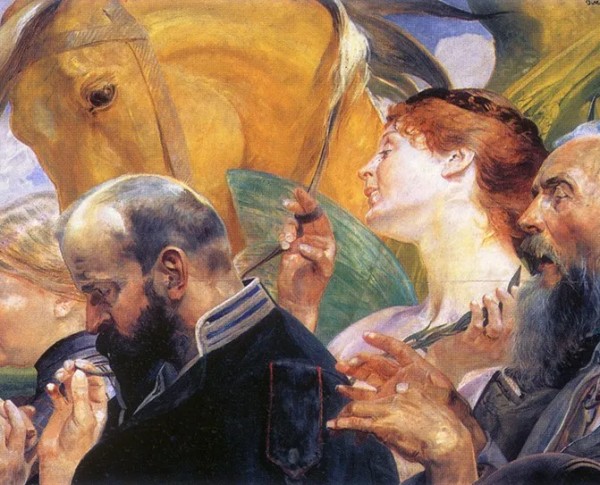
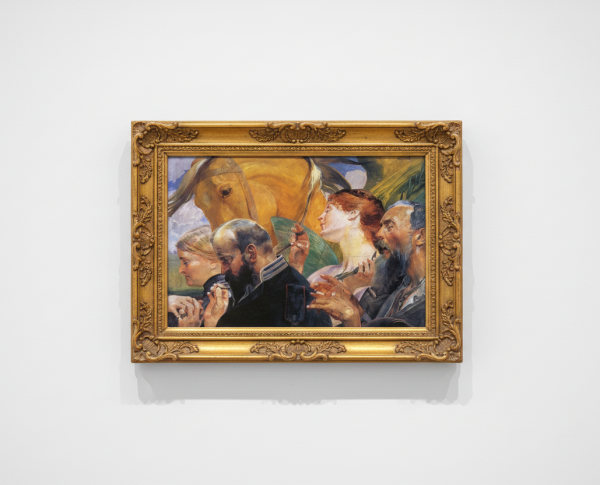
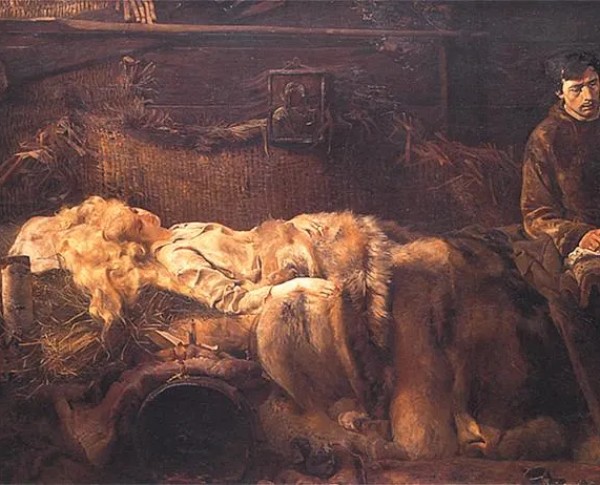
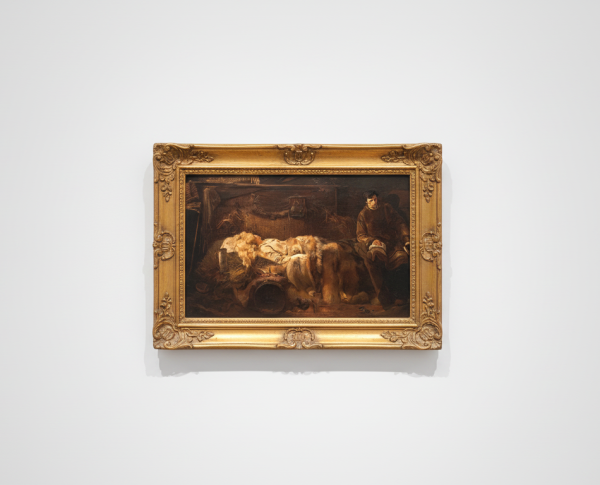
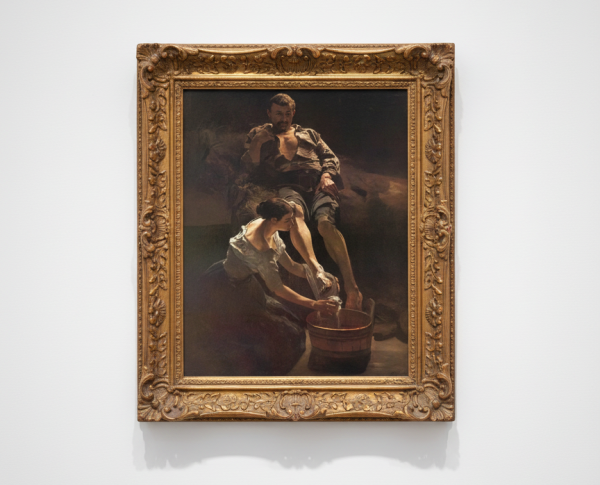
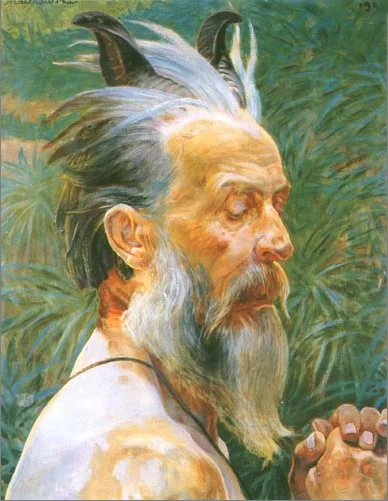
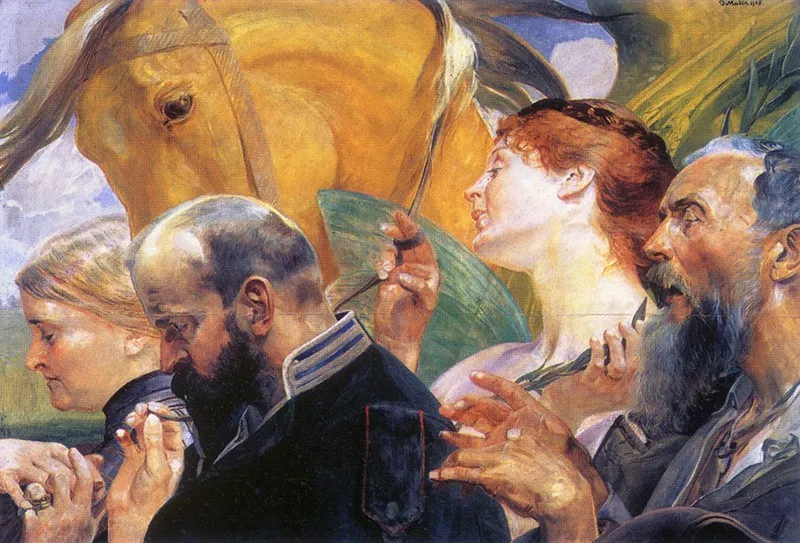
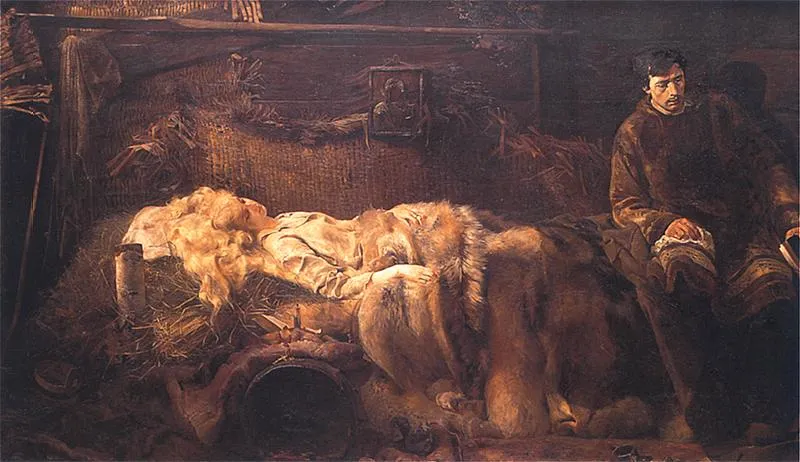
The exquisite technique of Malczewski is evident in "The Head of a Faun," an oil on canvas that showcases his remarkable control over color and texture. Each brushstroke brings to life the enigmatic features of the faun, reflecting the Symbolism movement’s fascination with myth and emotion. Collectors and enthusiasts seeking similar works will also admire his "Allegory of experience and youth" and "Death," both illustrating the artist’s profound mastery of oil on canvas.
"The Head of a Faun" by Jacek Malczewski invites viewers into a world of allegory and hidden meaning, hallmarks of the Symbolism movement. The faun’s gaze hints at ancient myths and inner turmoil, themes that also appear in Malczewski’s "At the stage" and "Portrait of Stanislaw Witkiewicz." This fine art painting for sale is not just a visual delight but also a conversation piece that sparks curiosity about the deeper stories woven into every detail.
For art collectors, owning "The Head of a Faun" means possessing a unique hand-painted oil painting that embodies the spirit of Symbolism and the genius of Jacek Malczewski. This masterpiece, along with related works like "Thanatos" and "Death," represents a vital era in European art history. As a fine art painting for sale, it offers an unmatched opportunity to enrich any collection with a piece that bridges myth, mastery, and meaning.
When Art Meets History
Jacek Malczewski’s "The Head of a Faun" stands as a remarkable example of Symbolism, a movement that flourished in the late 19th century. This hand-painted oil painting connects viewers with the era’s fascination for myth and allegory, much like related works such as "Salome" or "Maja Maldita." Malczewski’s unique approach to mythological figures, especially the faun, invites us to explore the deeper meanings behind his fine art painting for sale.
Techniques That Speak
"The Head of a Faun" showcases Malczewski’s mastery of oil on canvas, utilizing bold brushwork and nuanced color palettes to evoke texture and depth. Through these techniques, the artist captures the faun’s enigmatic expression, echoing the stylistic complexity found in "Manola with Mantilla and Fan" and "Casament D'irene Narezo I Federico Beltrán." This oil on canvas technique exemplifies the Symbolist movement’s quest to transcend reality and delve into the subconscious.
Emotions on Display
In "The Head of a Faun," Malczewski imbues the subject with a sense of mystery and emotional intensity, hallmarks of Symbolism. The hand-painted oil painting invites contemplation, as the faun’s gaze appears both haunting and alluring. Similar emotional depth can be found in works like "Catalan Estudi Per A Un Retrat" and "Salome." This fine art painting for sale continues to resonate with viewers, stirring intrigue and reflection.
Coveted by Collectors
Collectors and art enthusiasts highly seek "The Head of a Faun" for its historic significance and artistic mastery. Jacek Malczewski’s contribution to Symbolism, alongside related paintings such as "Maja Maldita" and "Manola with Mantilla and Fan," makes this hand-painted oil painting a prized addition to any collection. Its enduring allure ensures that this fine art painting for sale remains a centerpiece for those passionate about Symbolist masterpieces.
Related Symbolism Hand-Painted Oil Paintings by Other Artists
Other Famous Symbolism Artists:
Frequently Asked Questions About The head of a faun
What is the historical context of "The head of a faun"?
"The head of a faun" was created during the late 19th to early 20th century, a period marked by significant changes in European art, including the rise of Symbolism and the exploration of mythological themes. Jacek Malczewski, a prominent Polish painter, was influenced by these movements, which sought to convey deeper emotional and philosophical meanings through art.
What artistic techniques did Jacek Malczewski employ in this painting?
Malczewski utilized a combination of realism and symbolism in "The head of a faun." His meticulous attention to detail, particularly in the facial features and textures, showcases his technical skill, while the use of mythological subject matter reflects the Symbolist movement's emphasis on emotion and the inner world.
What does the faun symbolize in this artwork?
The faun, a creature from Roman mythology, often symbolizes nature, fertility, and the untamed aspects of humanity. In Malczewski's work, the faun may represent the duality of human nature, embodying both the primal instincts and the search for beauty and transcendence.
How does "The head of a faun" reflect Malczewski's artistic philosophy?
Malczewski's artistic philosophy was deeply rooted in the exploration of the human condition and the interplay between reality and the spiritual realm. "The head of a faun" encapsulates this philosophy by merging the physical form with symbolic meaning, inviting viewers to contemplate the deeper truths of existence.
In what ways does this painting connect to Polish cultural identity?
As a Polish artist, Malczewski often infused his works with elements of Polish folklore and mythology. "The head of a faun" can be seen as a reflection of the national identity, drawing on universal themes while also resonating with the local cultural narrative, thus bridging the gap between the personal and the collective.
What influences can be seen in Malczewski's portrayal of the faun?
Malczewski was influenced by various artistic movements, including Symbolism and Romanticism. His portrayal of the faun reflects a fascination with mythological subjects, drawing inspiration from classical art and literature, which often depicted similar themes of nature and the supernatural.
What role does color play in "The head of a faun"?
Color in "The head of a faun" serves to evoke emotion and create a mood that aligns with the symbolic content of the painting. The earthy tones and subtle contrasts enhance the connection to nature while also highlighting the faun's otherworldly qualities, inviting viewers to engage with the painting on a sensory level.
How does this painting compare to other works by Malczewski?
Compared to other works by Malczewski, "The head of a faun" showcases his unique ability to blend realism with symbolic representation. While many of his pieces explore themes of Polish identity and mythology, this particular painting emphasizes the mystical and the psychological, setting it apart in his oeuvre.
What is the significance of the faun's expression in the painting?
The expression of the faun in the painting is crucial for conveying its symbolic meaning. It reflects a sense of contemplation and introspection, suggesting a connection to the viewer's own emotions and thoughts. This invites a deeper engagement with the themes of nature, humanity, and the search for understanding.
What impact did "The head of a faun" have on contemporary art?
"The head of a faun" contributed to the broader discourse on Symbolism and the use of mythological themes in contemporary art. Malczewski's innovative approach influenced subsequent generations of artists, encouraging them to explore the interplay between reality and the symbolic, thus enriching the artistic landscape of the time.























_GFM_Painting_(1).webp)


 100% Hand-Painted: Finished in 3-6 Weeks

.png)















_(1).webp)