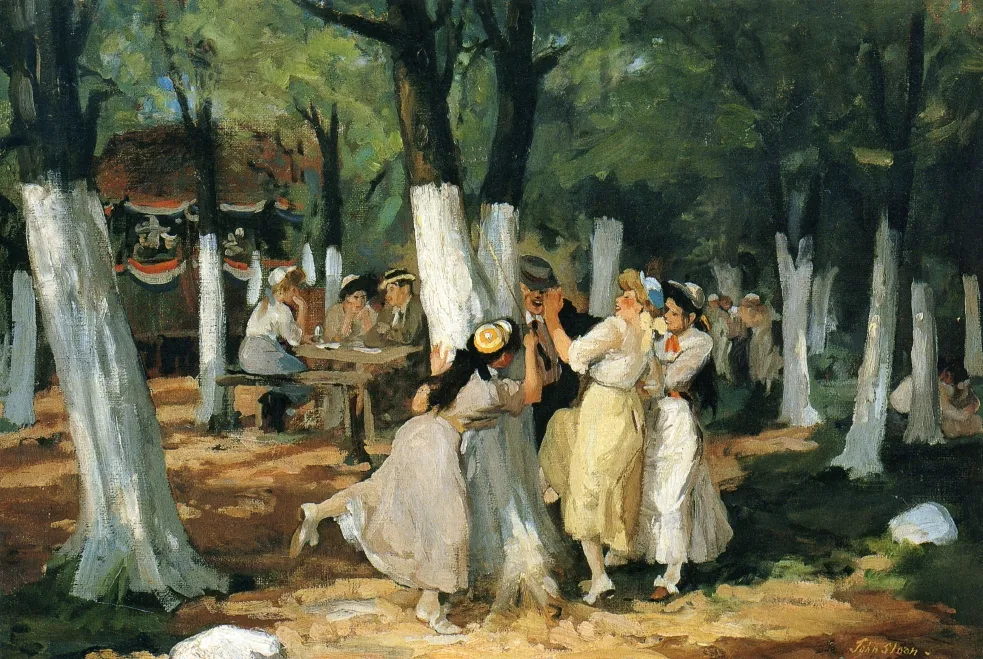
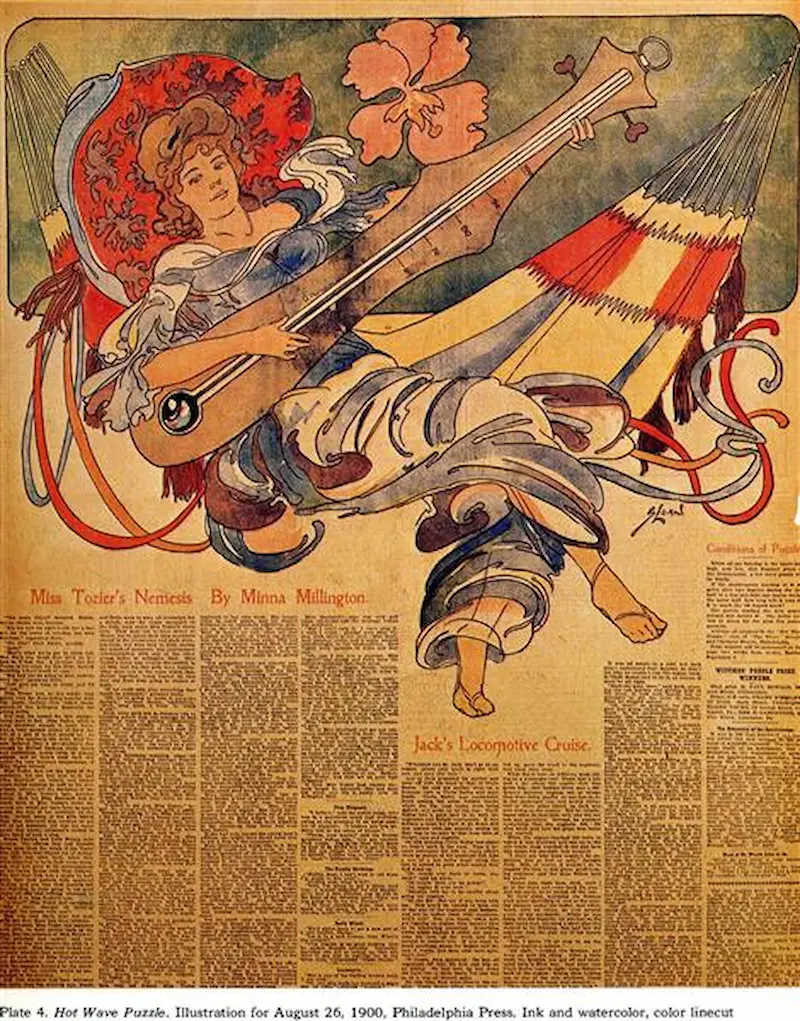
John Sloan’s expertise is evident in every brushstroke of "The Picnic Grounds," a masterful oil on canvas. The Ashcan School’s focus on realism and social commentary shines through in Sloan’s technique, as he brings ordinary scenes to life with dynamic composition and expressive color. Collectors of fine art often seek pieces like "Hot Wave Puzzle Illustration for Philadelphia Press" and "Hairdresser’s Window" for their authenticity and technical brilliance, making Sloan’s works highly desirable.
In "The Picnic Grounds," Sloan weaves subtle stories and symbols within the bustling scene, characteristic of the Ashcan School movement. The hand-painted oil painting reflects themes of community, leisure, and the changing urban landscape. Similar to "Sunset, West Twenty-Third Street" and "The Cot," this piece invites viewers to find meaning in everyday moments. Art lovers searching for a fine art painting for sale will appreciate the narrative depth and emotional resonance in Sloan’s work.
"The Picnic Grounds" by John Sloan is a prized oil on canvas for any collection, showcasing the best of the Ashcan School movement. Its authenticity and historical context make it a sought-after treasure among collectors of American art. For those interested in related products, works like "Gray and Brass" and "The Cot" are also excellent choices. Investing in a Sloan masterpiece ensures you own a significant piece of fine art painting for sale that will endure for generations.
When Art Meets History
John Sloan’s masterpiece, "The Picnic Grounds," stands as a testament to the Ashcan School movement’s commitment to capturing everyday urban life. Painted in the early 20th century, this hand-painted oil painting reflects a pivotal era in American history when artists sought to depict the realities of city living. Sloan’s work, alongside other notable pieces from the Ashcan School, offers a window into the social gatherings and leisure activities of the time, immortalized through his unique artistic vision.
Techniques That Speak
Sloan’s "The Picnic Grounds" is celebrated for its dynamic brushwork and expressive use of color, hallmarks of the oil on canvas technique favored by the Ashcan School. Through layered textures and bold strokes, Sloan captures the vibrancy of a bustling outdoor scene. His mastery of oil on canvas allows for intricate detail and depth, inviting viewers to immerse themselves in the lively atmosphere. This technique connects his work with other influential Ashcan School paintings from the same era.
Emotions on Display
In "The Picnic Grounds," John Sloan masterfully conveys the joy and camaraderie of urban leisure, a recurring theme in Ashcan School paintings. The figures, rendered with sensitivity, evoke feelings of warmth and community, drawing viewers into the scene. This fine art painting for sale not only captures a fleeting moment but also resonates with universal emotions. Sloan’s work stands alongside other emotionally charged pieces by Ashcan artists, each reflecting the human experience in city life.
Coveted by Collectors
"The Picnic Grounds" by John Sloan is a highly sought-after piece among collectors of the Ashcan School movement. Its historical significance and artistic excellence make it a standout hand-painted oil painting in any collection. Art enthusiasts prize this and related paintings for their authentic depiction of early 20th-century American life. As a fine art painting for sale, Sloan’s work continues to attract attention from museums and private collectors eager to own a piece of art history.
Frequently Asked Questions About The Picnic Grounds
What is the historical context of "The Picnic Grounds"?
"The Picnic Grounds," painted by John Sloan in 1905, reflects the burgeoning American urban life of the early 20th century, capturing the leisure activities of the middle class in a rapidly industrializing society.
What artistic movements influenced John Sloan in creating this painting?
Sloan was a key figure in the Ashcan School, which emphasized realism and the depiction of everyday life. His work in "The Picnic Grounds" showcases elements of Impressionism through its loose brushwork and vibrant color palette.
What themes are explored in "The Picnic Grounds"?
The painting explores themes of leisure, community, and the contrast between urban life and nature. It captures a moment of joy and relaxation, highlighting the importance of social gatherings in an increasingly busy world.
How does Sloan use color in "The Picnic Grounds"?
Sloan employs a bright and varied color palette to evoke a sense of warmth and vitality. The use of greens and blues contrasts with the figures, drawing attention to the interaction between people and their natural surroundings.
What is the significance of the composition in "The Picnic Grounds"?
The composition is dynamic, with figures arranged in a way that leads the viewer’s eye through the scene. This arrangement creates a sense of movement and invites the viewer to share in the picnic experience.
What role does light play in "The Picnic Grounds"?
Light is used effectively to create depth and atmosphere in the painting. Sloan captures the dappled sunlight filtering through trees, enhancing the feeling of a serene outdoor setting and emphasizing the joy of the picnic.
How does "The Picnic Grounds" reflect societal changes of its time?
The painting reflects the leisure activities of the urban middle class during a time of significant social change in America. It symbolizes the shift towards valuing leisure and recreation as essential aspects of modern life.
What can be said about the figures depicted in "The Picnic Grounds"?
The figures in the painting represent a diverse group, indicative of the social fabric of early 20th-century America. Their relaxed postures and interactions convey a sense of community and shared enjoyment.
What is the overall mood conveyed in "The Picnic Grounds"?
The overall mood of the painting is one of joy and tranquility. Sloan captures a fleeting moment of happiness, inviting the viewer to partake in the carefree spirit of the picnic.
How does "The Picnic Grounds" compare to other works by John Sloan?























_GFM_Painting_(1).webp)


 100% Hand-Painted: Finished in 3-6 Weeks

.png)















_(1).webp)