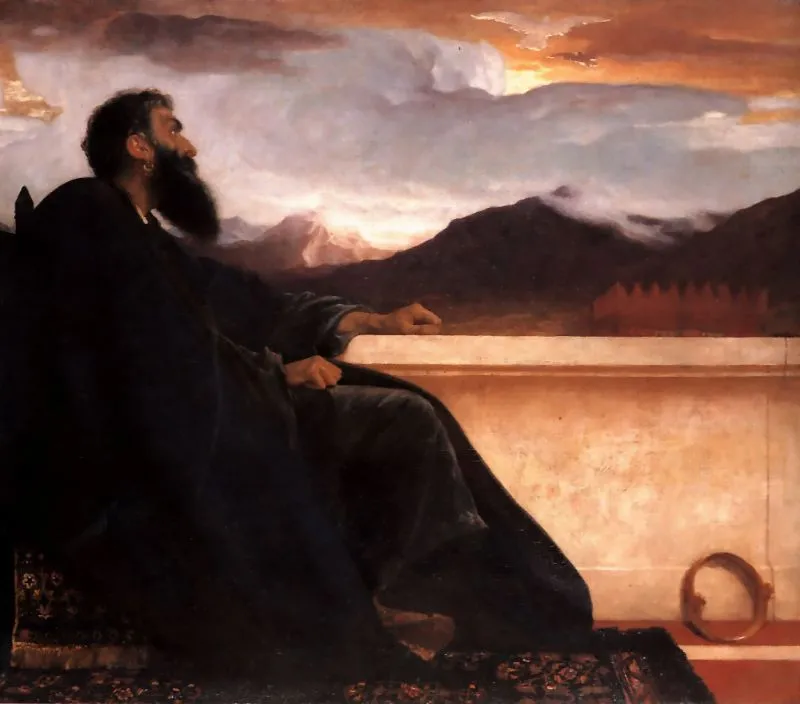
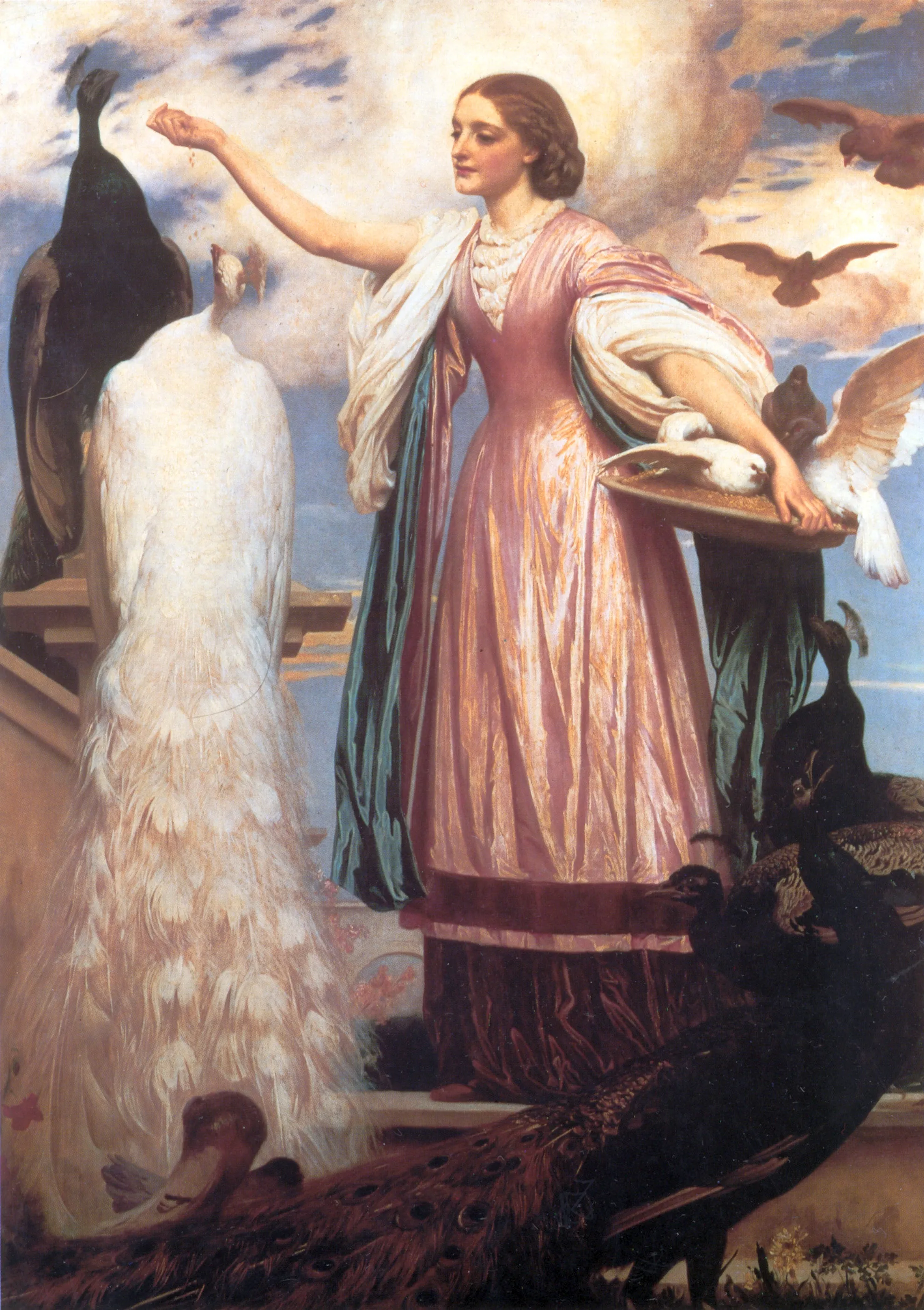
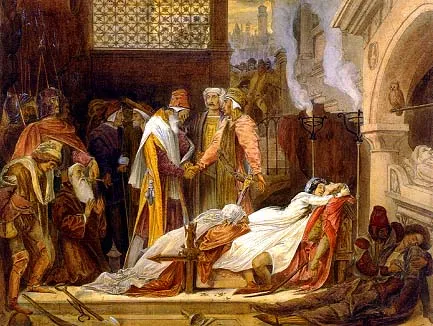
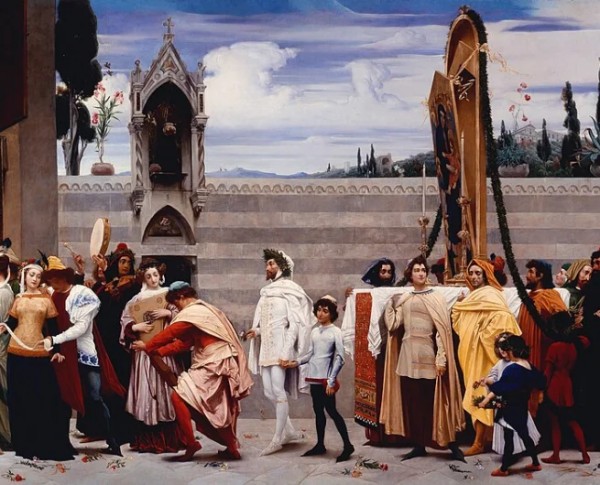
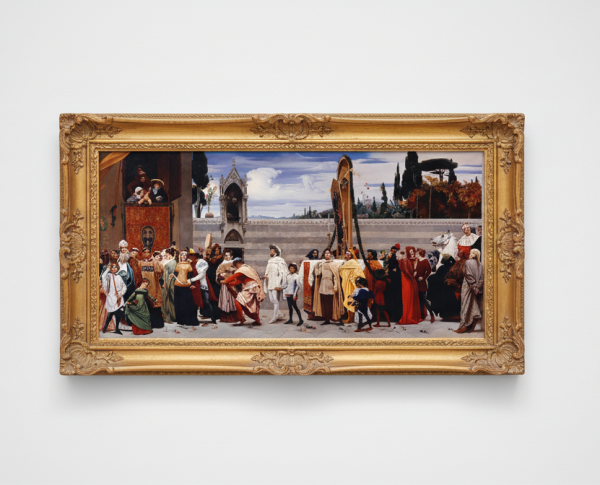
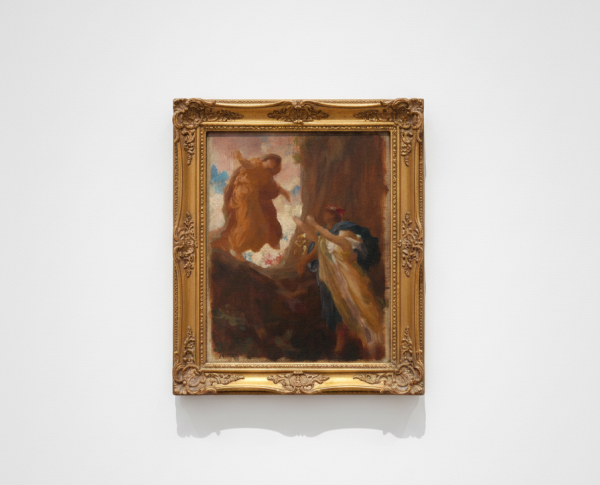
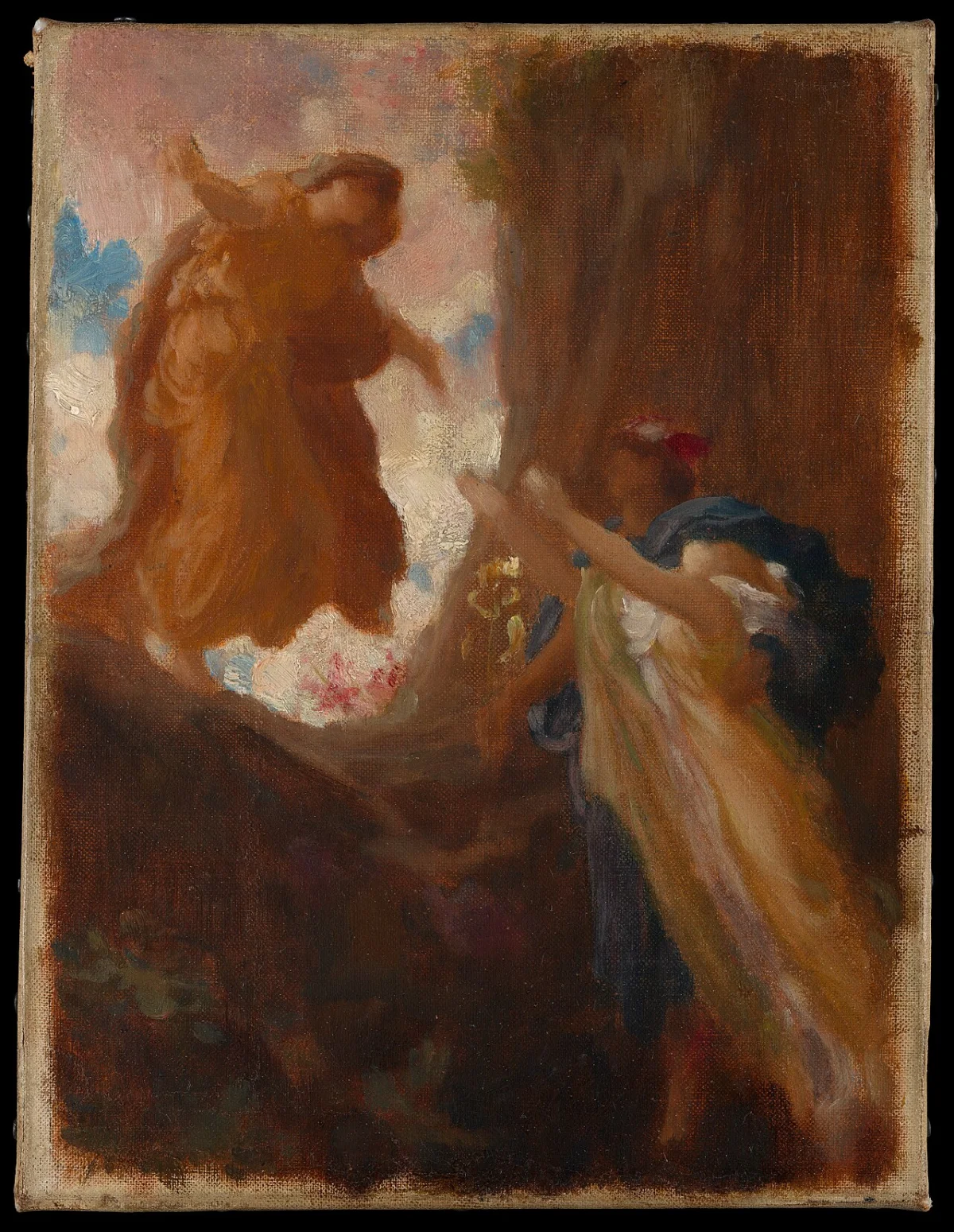
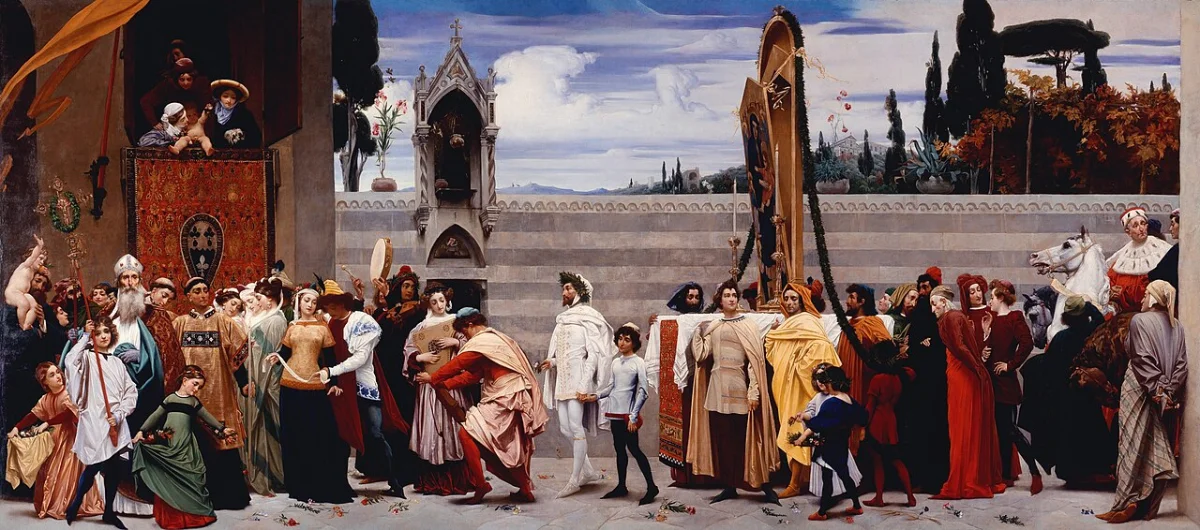
Leighton’s expertise with oil on canvas is evident in "The Return of Persephone," where each brushstroke contributes to the painting’s lifelike textures and luminous colors. As a leading figure in Academic Classicism, his technique elevates the narrative and emotional impact. Admirers of hand-painted oil paintings will notice similarities in craftsmanship with other works by Leighton, such as "Cimabue's Celebrated Madonna," making this piece a must-have for discerning collectors.
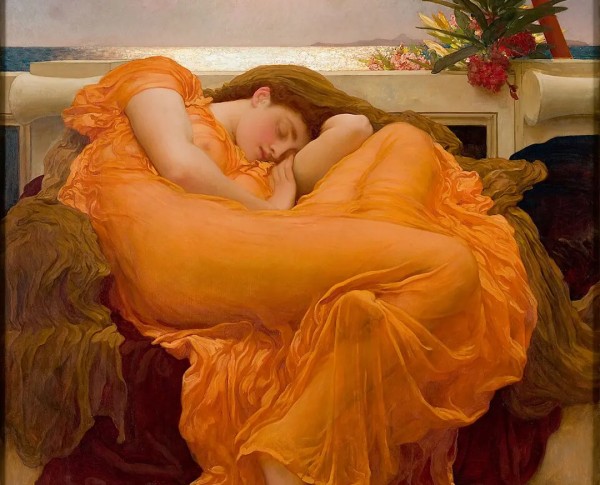
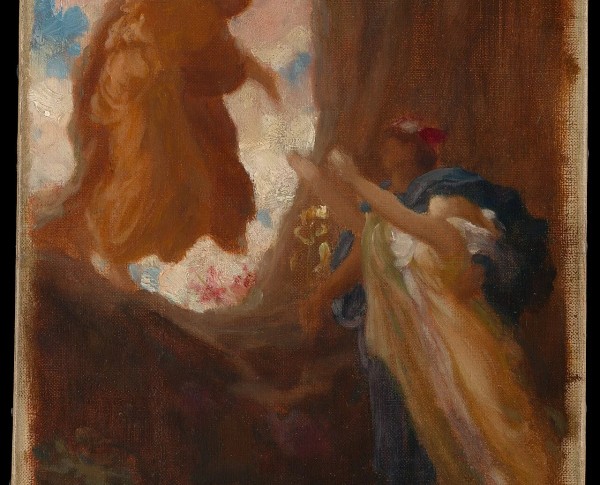
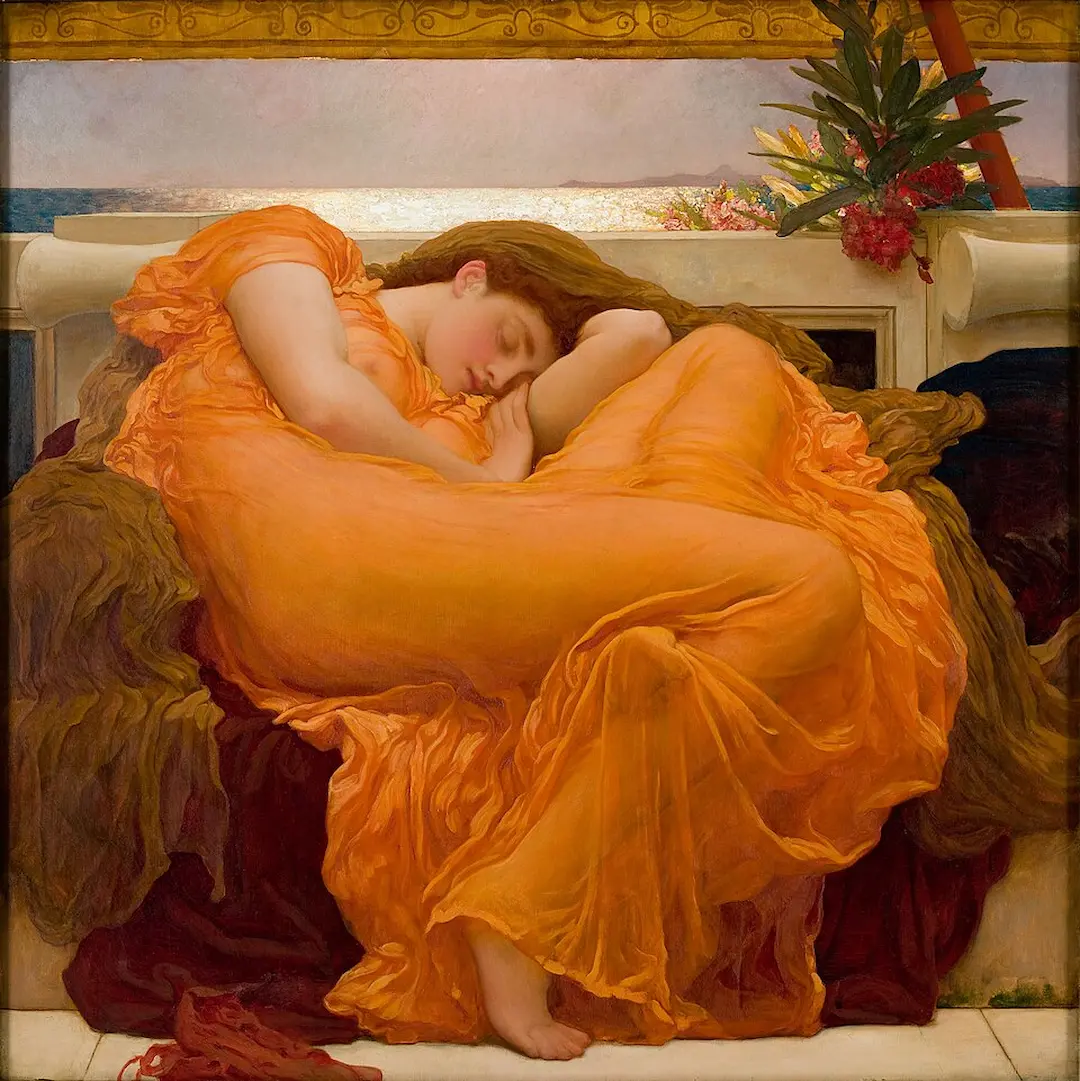
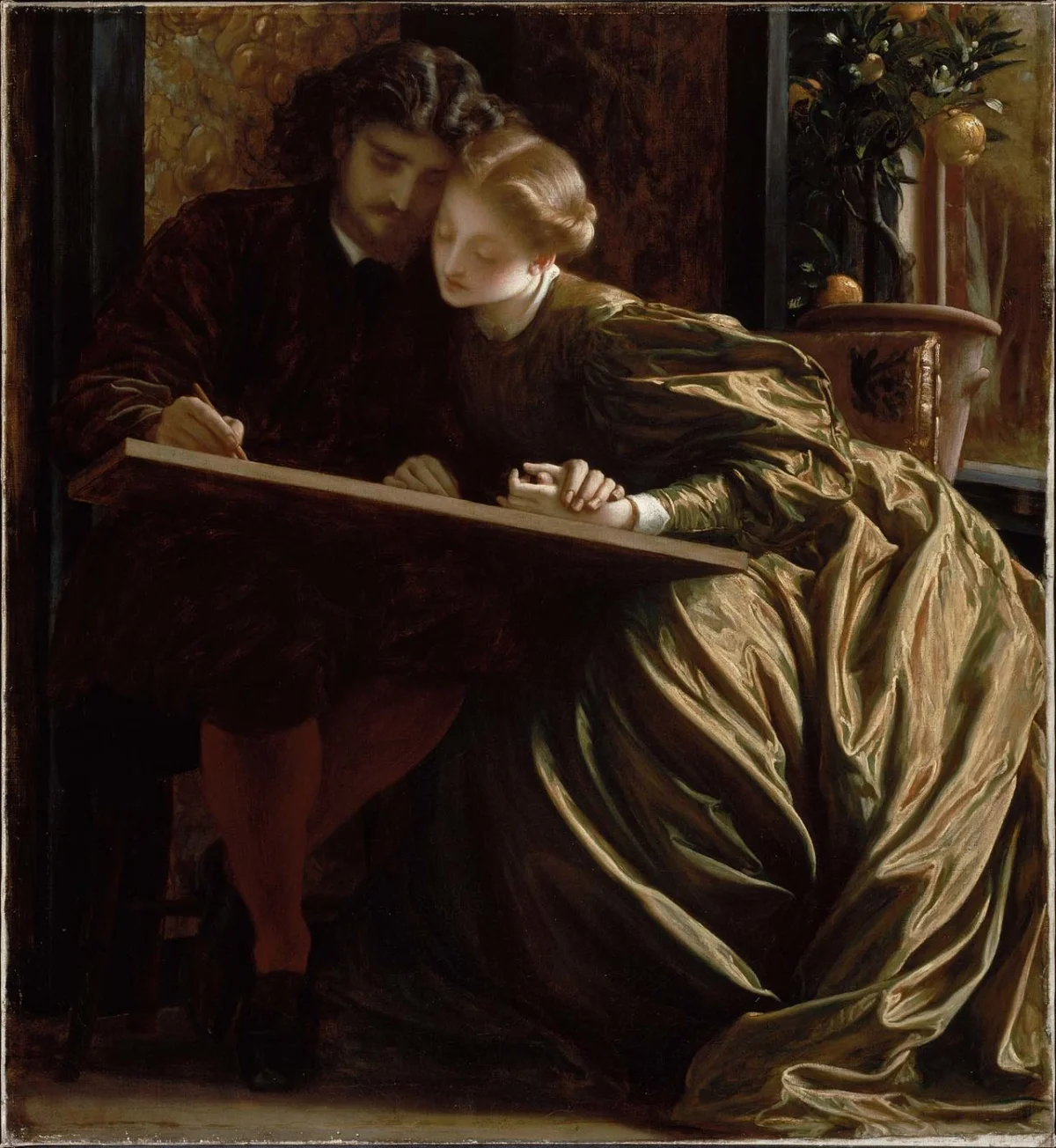
"The Return of Persephone" tells the poignant story of Persephone’s ascent from the underworld, symbolizing themes of renewal and hope. This fine art painting for sale weaves mythological symbolism through its composition, inviting viewers to delve into ancient tales. Lord Frederick Leighton’s ability to convey narrative through Academic Classicism places this work alongside related masterpieces like "Flaming June," enriching any collection with its depth and meaning.
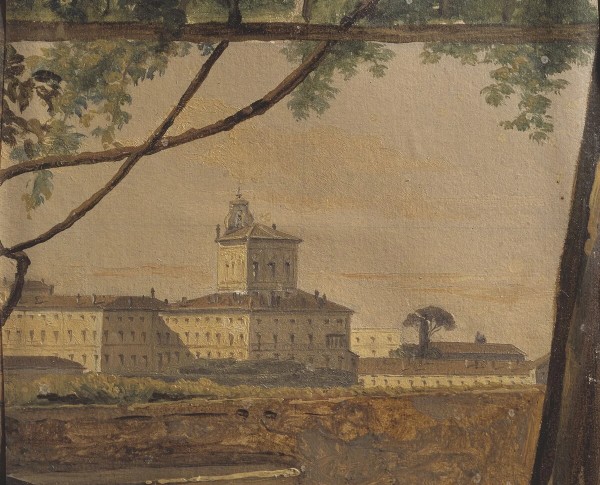
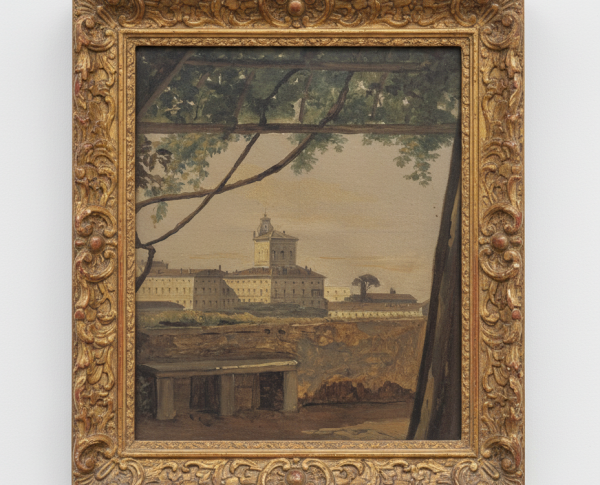
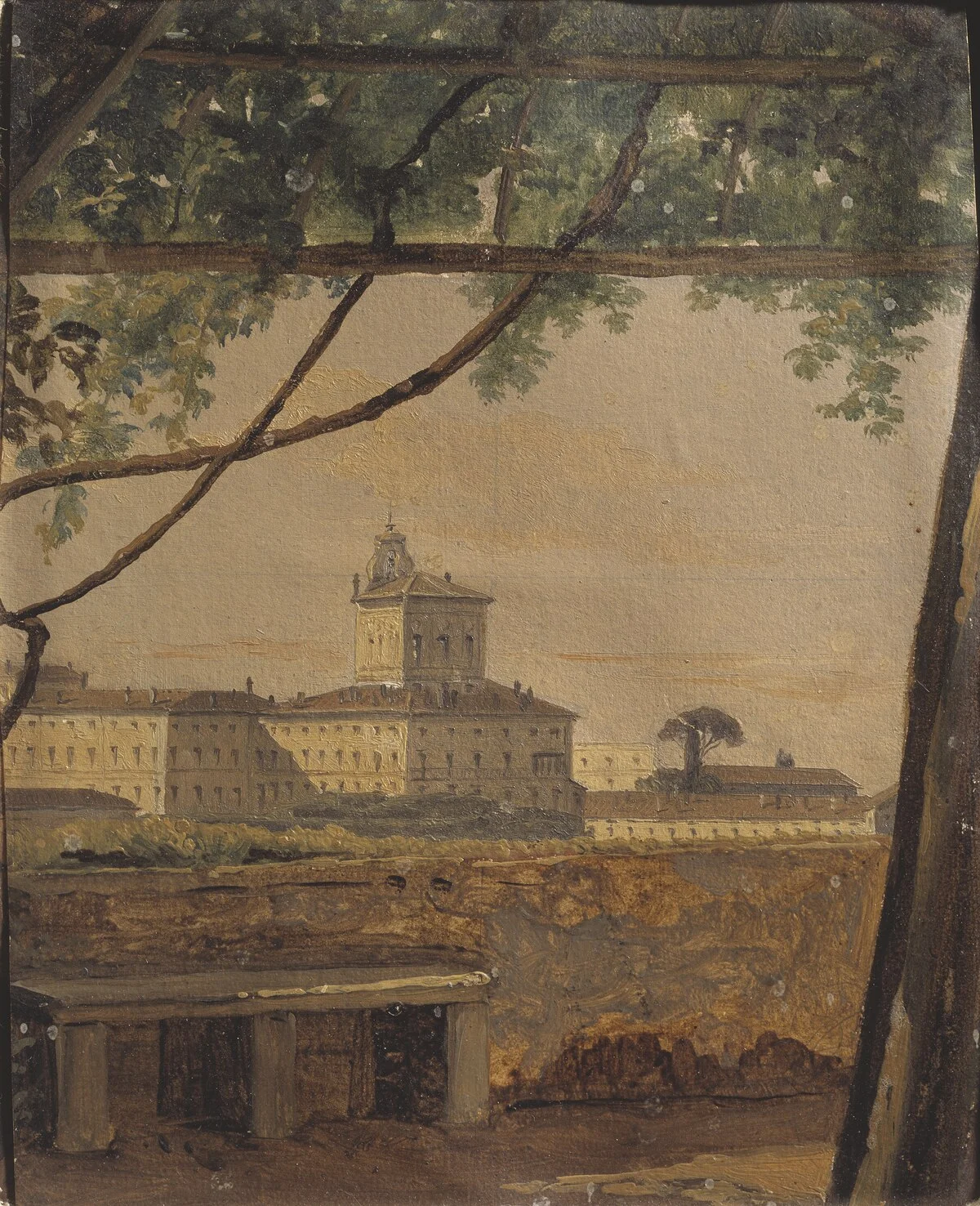
For collectors seeking a standout hand-painted oil painting, "The Return of Persephone" by Lord Frederick Leighton offers both beauty and prestige. Its status within the Academic Classicism movement enhances its desirability, making it a valuable addition to any fine art portfolio. Those interested in oil on canvas masterpieces may also consider related products like "The Villa Malta, Rome" and "Cimabue's Celebrated Madonna" to complement their collection.
When Art Meets History
"The Return of Persephone" by Lord Frederick Leighton stands as a testament to the Academic Classicism movement, intertwining mythological narratives with artistic mastery. This hand-painted oil painting draws inspiration from ancient Greek mythology, depicting Persephone's poignant return from the underworld. Leighton's approach echoes the grandeur of related works like "Song of the Angels" and "Dante et Virgile au Enfers (Dante and Virgil in Hell)," capturing the era's fascination with classical themes and timeless storytelling.
Techniques That Speak
Leighton's "The Return of Persephone" showcases his exceptional command of oil on canvas, a medium favored by Academic Classicists for its depth and luminosity. The artist's meticulous brushwork and delicate color transitions breathe life into the mythic scene. Similar technical prowess can be seen in masterpieces like "Bonaparte Before the Sphinx" and "The Slave Market," where the interplay of light and form elevates narrative content, making each composition a visual feast for art enthusiasts.
Emotions on Display
In this fine art painting for sale, Leighton masterfully conveys a spectrum of emotions, from Persephone's longing to Demeter's relief. The figures' expressive gestures and nuanced facial expressions evoke empathy and awe, hallmarks of the Academic Classicism movement. Comparable emotional intensity is found in "Calinerie (A Little Coaxing)" and "Song of the Angels," where the artists' sensitivity to human feeling transforms mythological and historical subjects into profoundly moving visual experiences.
Coveted by Collectors
"The Return of Persephone" remains a prized piece among collectors of hand-painted oil paintings, celebrated for its fusion of technical skill and mythological depth. Lord Frederick Leighton's work, alongside related masterpieces like "Dante et Virgile au Enfers" and "The Slave Market," continues to attract admiration in galleries and private collections. The enduring appeal of Academic Classicism ensures that such artworks remain sought-after treasures in the world of fine art painting for sale.
Related Academic Classicism Hand-Painted Oil Paintings by Other Artists
Other Famous Academic Classicism Artists:
Frequently Asked Questions About The Return of Persephone
What is the historical context of "The Return of Persephone"?
"The Return of Persephone," painted by Lord Frederick Leighton in 1891, reflects the late Victorian fascination with classical mythology and the revival of interest in ancient Greek culture during the 19th century.
Who is Persephone and why is she significant in mythology?
Persephone is a central figure in Greek mythology, known as the goddess of spring and the queen of the underworld. Her story symbolizes the cycle of life, death, and rebirth, representing the changing seasons and the duality of existence.
What artistic techniques did Lord Frederick Leighton use in this painting?
Leighton employed a combination of classical composition, vibrant color palettes, and intricate detailing to convey emotion and narrative. His use of light and shadow enhances the three-dimensionality of the figures, creating a sense of depth.
How does the painting reflect the themes of love and loss?
The painting captures the moment of Persephone's return from the underworld, embodying themes of love and loss through her separation from Hades and her reunion with her mother, Demeter. This duality illustrates the emotional complexity of their relationships.
What symbolism is present in "The Return of Persephone"?
The pomegranate, often associated with Persephone, symbolizes fertility and the cycle of life and death. The contrasting elements of light and dark in the painting further emphasize the themes of resurrection and the passage of time.
In what ways does this painting exemplify the Pre-Raphaelite movement?
While not strictly a Pre-Raphaelite work, "The Return of Persephone" shares their emphasis on detailed realism, vibrant colors, and a focus on romanticized historical and mythological subjects, aligning with the movement's ideals of beauty and emotional depth.
What influences can be seen in Leighton's portrayal of the figures?
Leighton's figures are influenced by classical sculpture, evident in their idealized forms and graceful poses. He draws from both ancient Greek art and Renaissance techniques, blending them to create a harmonious representation of mythological themes.
How does the composition of the painting contribute to its narrative?
The composition, with Persephone at the center surrounded by flowing drapery and ethereal light, directs the viewer's attention to her emotional state. This arrangement enhances the narrative of her transition between the worlds of the living and the dead.
What role does color play in the emotional impact of the painting?
The use of rich, warm colors juxtaposed with cooler tones creates a dynamic emotional landscape. The brightness surrounding Persephone contrasts with the darker elements of the underworld, symbolizing hope and renewal amidst despair.
How has "The Return of Persephone" been received in art history?
The painting is celebrated for its technical mastery and emotional depth, often regarded as one of Leighton's masterpieces. It has been influential in discussions about the intersection of art, mythology, and the human experience throughout art history.






















_GFM_Painting_(1).webp)


 100% Hand-Painted: Finished in 3-6 Weeks

.png)















_(1).webp)