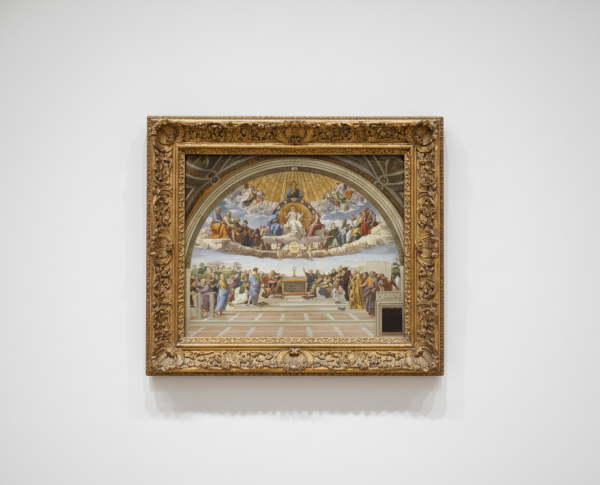
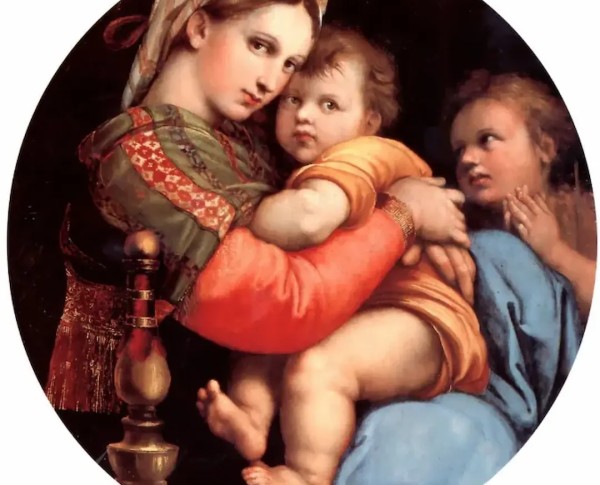
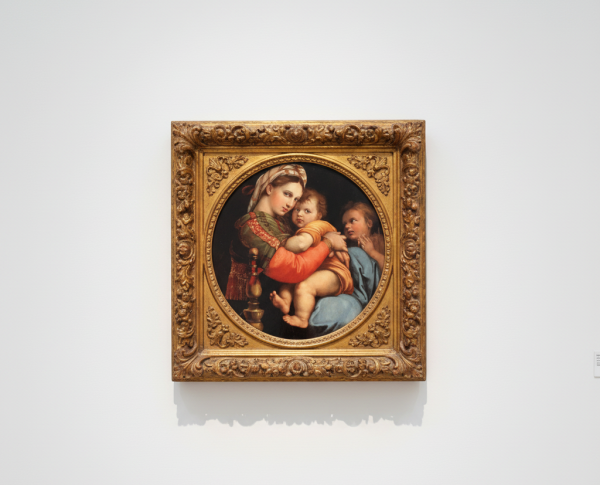
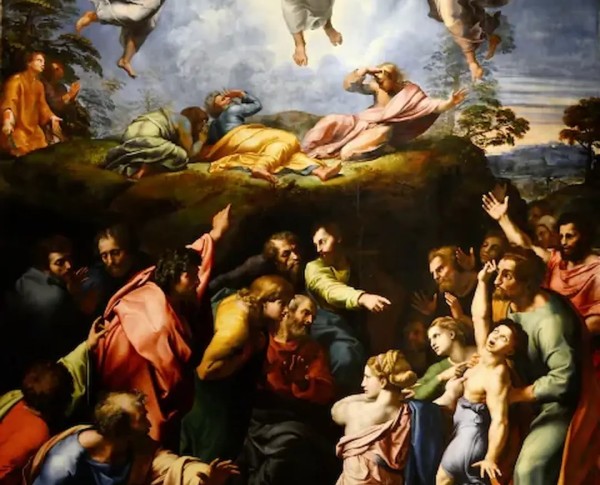
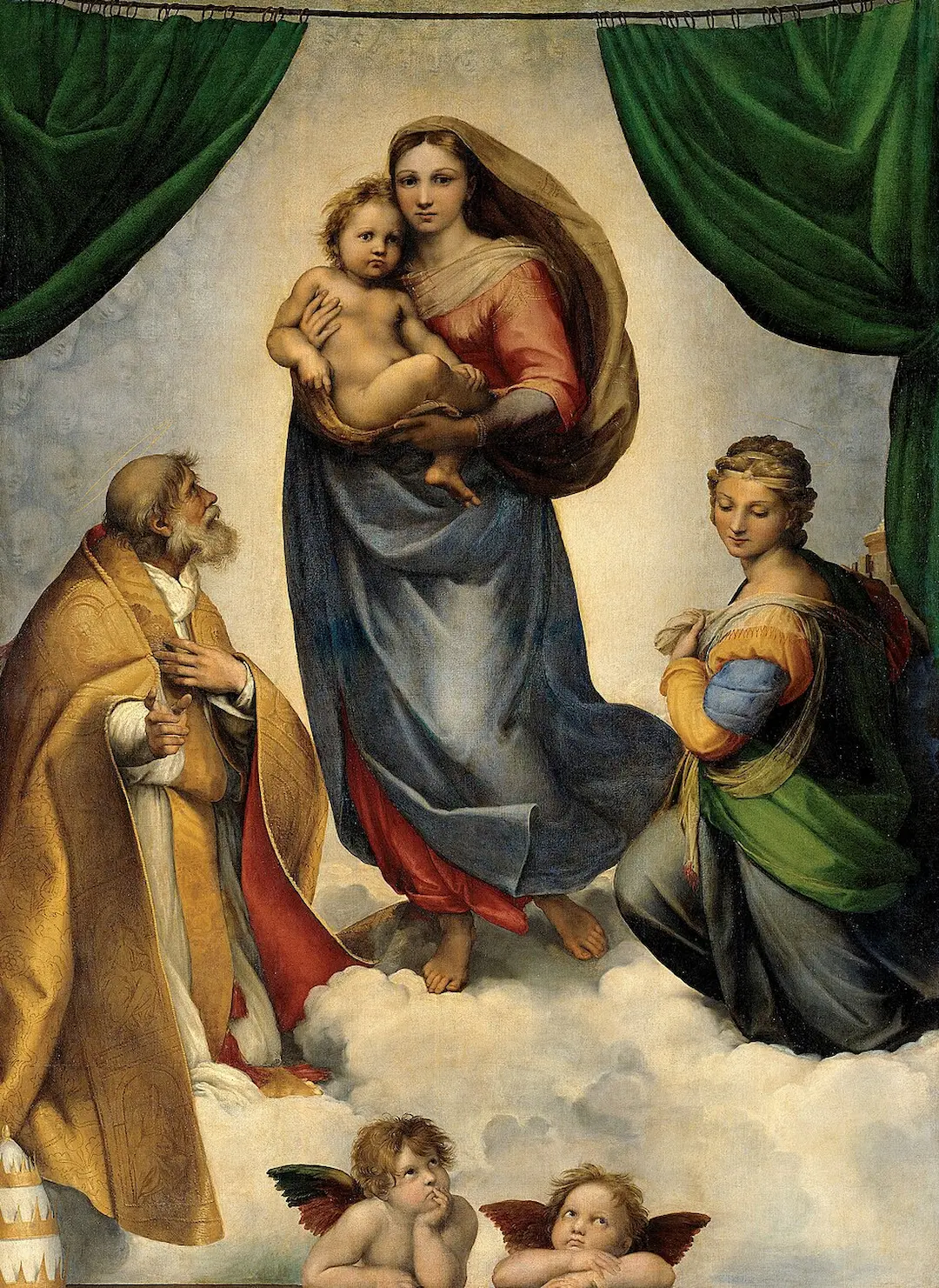
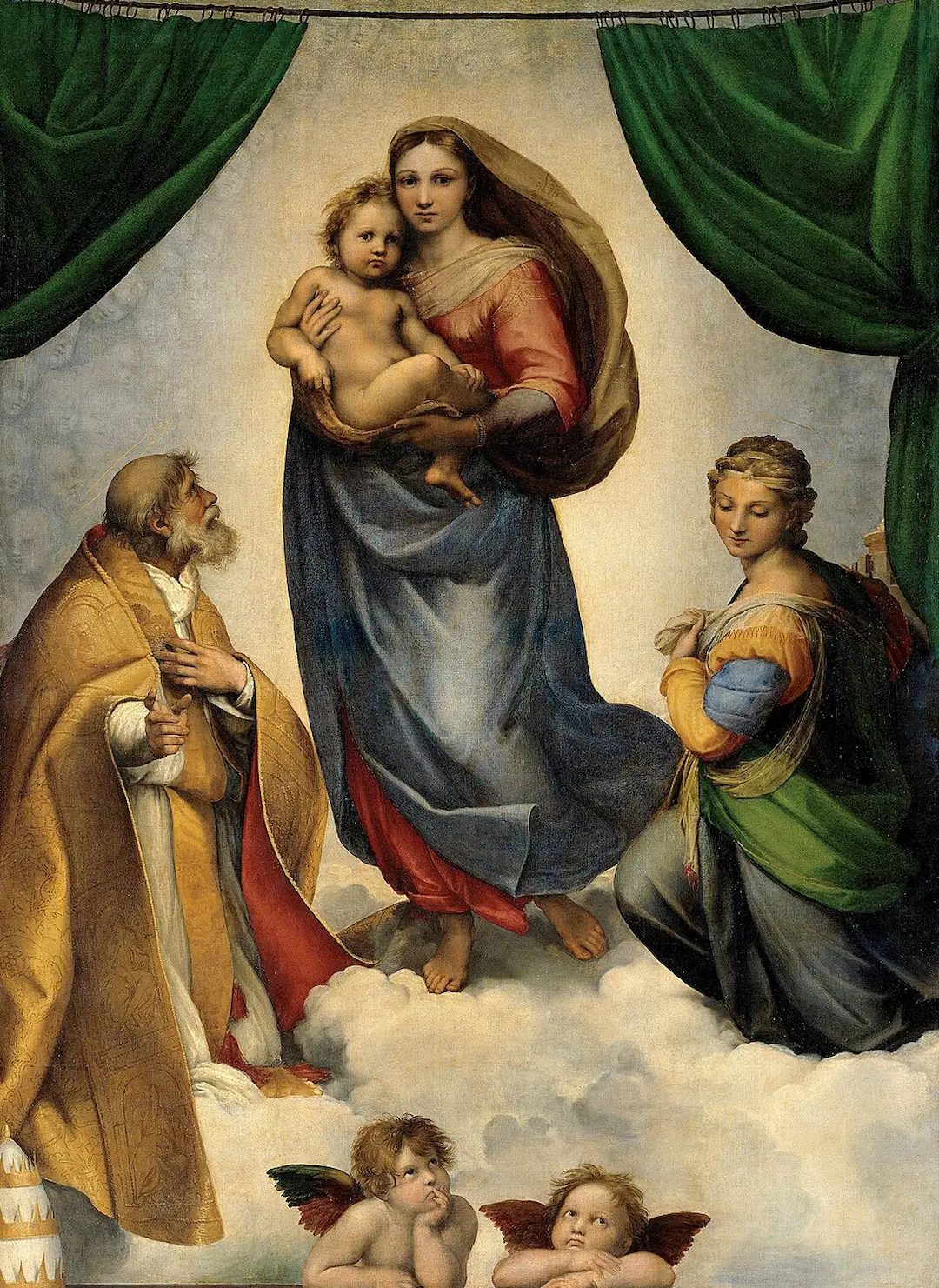
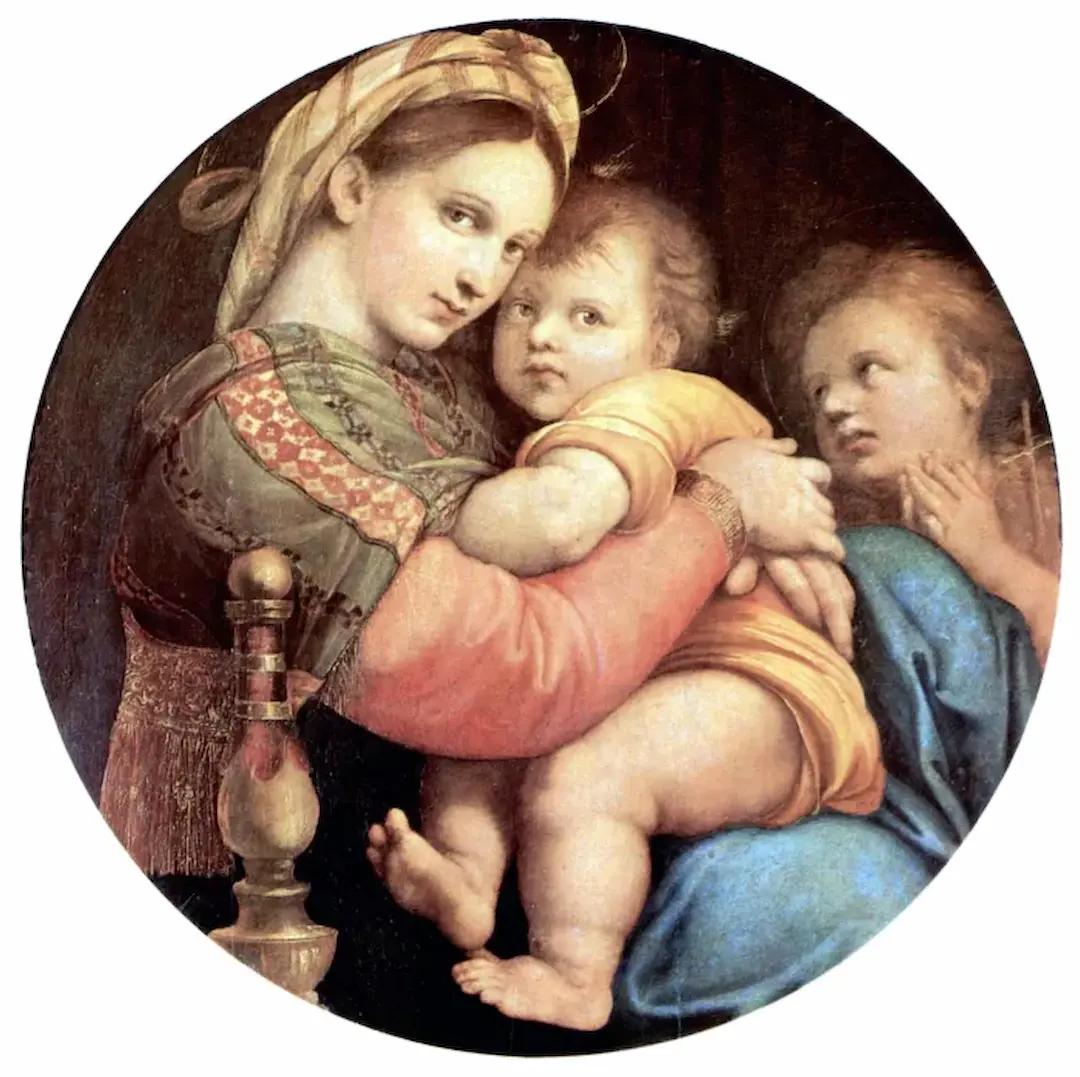
Raffaello Sanzio’s exceptional technique in "The Sistine Madonna" demonstrates the artist’s deep understanding of composition, light, and emotion. The oil on canvas medium allows for rich color blending and subtle details, making this painting a true gem of the High Renaissance. Raphael’s skill is also evident in related works like "Self Portrait" and "The Madonna Of The Chair," where his brushwork and use of oil on canvas elevate each subject to a transcendent level of beauty and realism.
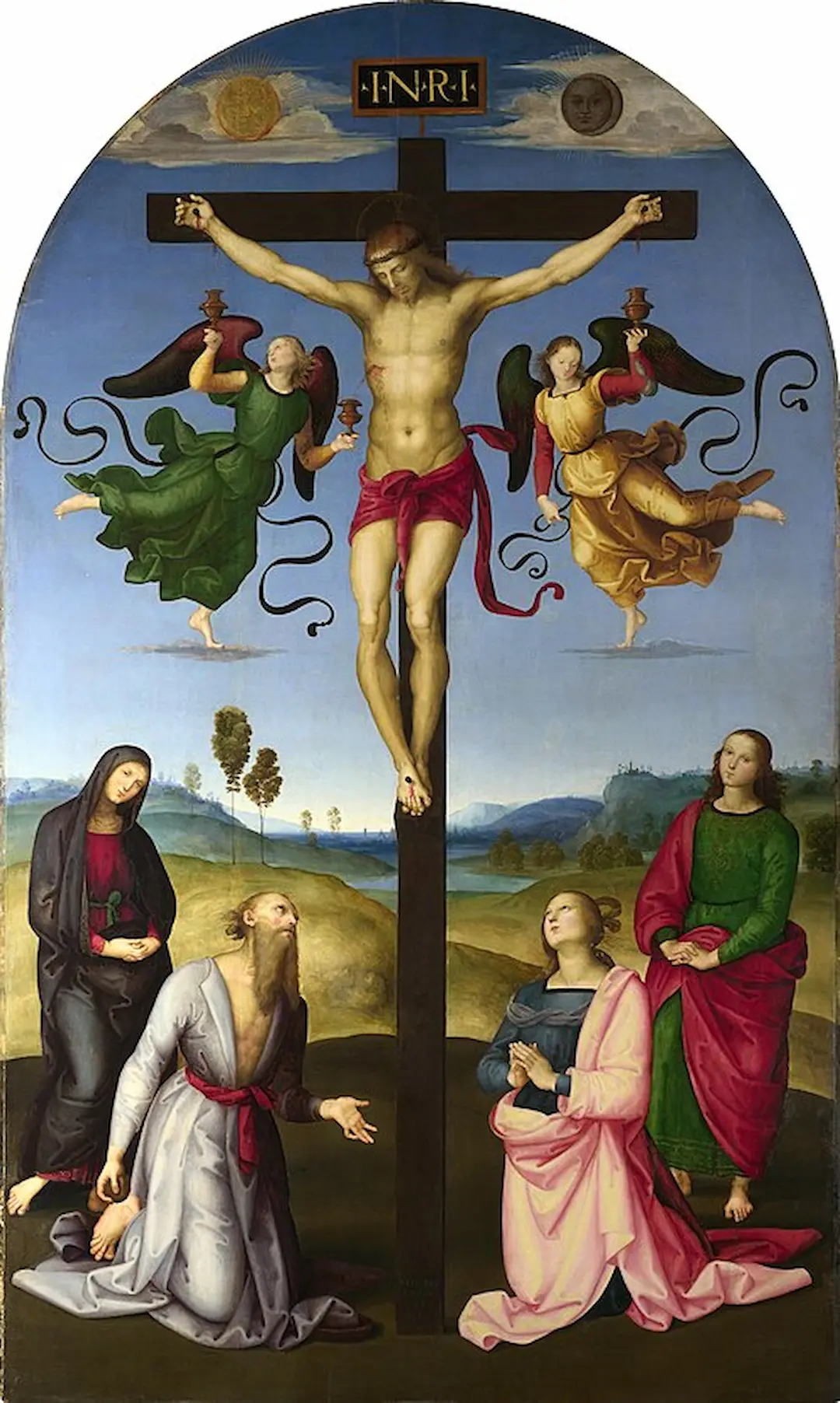
Every detail in "The Sistine Madonna" is imbued with symbolism, from the serene figures of Mary and Christ to the iconic cherubs below. Raffaello Sanzio’s fine art painting for sale not only captivates with its visual beauty but also invites viewers to explore layers of meaning. Similar narrative depth can be found in Raphael’s "Christ on the Cross with the Virgin, Saint Jerome, Mary Magdalene, and John the Baptist (Citta di Castello Altarpiece)" and "The Stanza Della Segnatura Ceiling Justice."
For collectors and admirers of the High Renaissance, "The Sistine Madonna" represents the pinnacle of artistic achievement. This hand-painted oil painting is a sought-after masterpiece, often featured alongside other revered works by Raffaello Sanzio. Whether displayed next to "La Donna Velata" or "Self Portrait," owning a reproduction of this fine art painting for sale brings the timeless elegance of Raphael’s vision into any collection, making it a true treasure for art connoisseurs.
When Art Meets History
Painted by the renowned Raffaello Sanzio during the High Renaissance, "The Sistine Madonna" stands as a pivotal masterpiece in art history. This hand-painted oil painting was completed in 1512, reflecting the era’s devotion to both divine beauty and human emotion. Alongside celebrated works like "Creation of Adam 1510" and "Mona Lisa (La Gioconda) c. 1503-05", Raphael’s iconic Madonna continues to inspire generations and remains a testament to the transformative power of Renaissance art.
Techniques That Speak
Raffaello Sanzio’s mastery of oil on canvas is evident in "The Sistine Madonna", where subtle gradations, lifelike figures, and dynamic composition showcase the High Renaissance’s technical brilliance. The painting’s soft contours and atmospheric perspective echo similar innovations seen in "The Last Supper 1498" and "La Scapigliata". Raphael’s use of oil on canvas allowed for greater depth and luminosity, setting a standard for fine art painting for sale and influencing countless artists throughout history.
Emotions on Display
"The Sistine Madonna" by Raffaello Sanzio captures a profound sense of grace and serenity, hallmarks of the High Renaissance movement. The gentle expressions and tender gestures evoke deep emotional resonance, much like those found in "Portrait of Cecilia Gallerani (Lady with an Ermine) 1483-90". This hand-painted oil painting invites viewers to connect with its spiritual narrative, highlighting Raphael’s unparalleled ability to convey universal human emotion through art.
Coveted by Collectors
As a celebrated fine art painting for sale, "The Sistine Madonna" by Raffaello Sanzio remains highly prized among art collectors and institutions worldwide. Its influence rivals masterpieces such as "Mona Lisa (La Gioconda) c. 1503-05" and "Creation of Adam 1510". Collectors value not only the painting’s historical significance but also its exquisite representation of the High Renaissance movement, making it a sought-after treasure in the world of classic oil on canvas artworks.
Related High Renaissance Hand-Painted Oil Paintings by Other Artists
Other Famous High Renaissance Artists:
Frequently Asked Questions About The Sistine Madonna
What is the historical significance of The Sistine Madonna?
The Sistine Madonna, painted by Raffaello Sanzio in the early 16th century, is significant as it represents the height of the High Renaissance style. Commissioned by Pope Julius II, it reflects the artistic advancements of the period and the importance of religious themes in art.
Who are the figures depicted in The Sistine Madonna?
The painting features the Virgin Mary holding the Christ Child, flanked by Saint Sixtus and Saint Barbara. These figures are central to the composition and symbolize the connection between heaven and earth.
What artistic techniques did Raffaello use in The Sistine Madonna?
Raffaello employed techniques such as chiaroscuro to create depth, and sfumato for soft transitions between colors. The use of vibrant colors and detailed drapery showcases his mastery of form and light.
What is the symbolism behind the figures in The Sistine Madonna?
The Virgin Mary represents purity and motherhood, while the Christ Child symbolizes divine love and salvation. Saint Sixtus and Saint Barbara serve as protectors, emphasizing the sanctity of the Virgin and Child.
How does The Sistine Madonna reflect the ideals of the High Renaissance?
The painting embodies the High Renaissance ideals of harmony, balance, and proportion. Raffaello's composition is carefully arranged to create a sense of serenity and divine presence, characteristic of the era.
What influence did The Sistine Madonna have on later artists?
The Sistine Madonna has had a profound influence on subsequent generations of artists. Its composition and emotional depth inspired many, including the likes of Michelangelo and later Baroque painters.
Where can The Sistine Madonna be viewed today?
The Sistine Madonna is housed in the Gemäldegalerie Alte Meister in Dresden, Germany. It remains one of the gallery's most celebrated works and attracts numerous visitors each year.
What are the dimensions of The Sistine Madonna?
The painting measures approximately 265 cm × 196 cm (104.3 in × 77.2 in), making it a grand and imposing work that captures the viewer's attention.
What role did The Sistine Madonna play in the Counter-Reformation?
The Sistine Madonna played a significant role in the Counter-Reformation by reinforcing Catholic beliefs through its depiction of the Virgin Mary and Christ, serving as a visual affirmation of faith during a time of religious upheaval.
What materials were used in the creation of The Sistine Madonna?
The Sistine Madonna was painted using oil on canvas, a technique that allowed Raffaello to achieve rich colors and detailed textures, enhancing the overall impact of the artwork.






















_GFM_Painting_(1).webp)


 100% Hand-Painted: Finished in 3-6 Weeks

.png)
















_(1).webp)