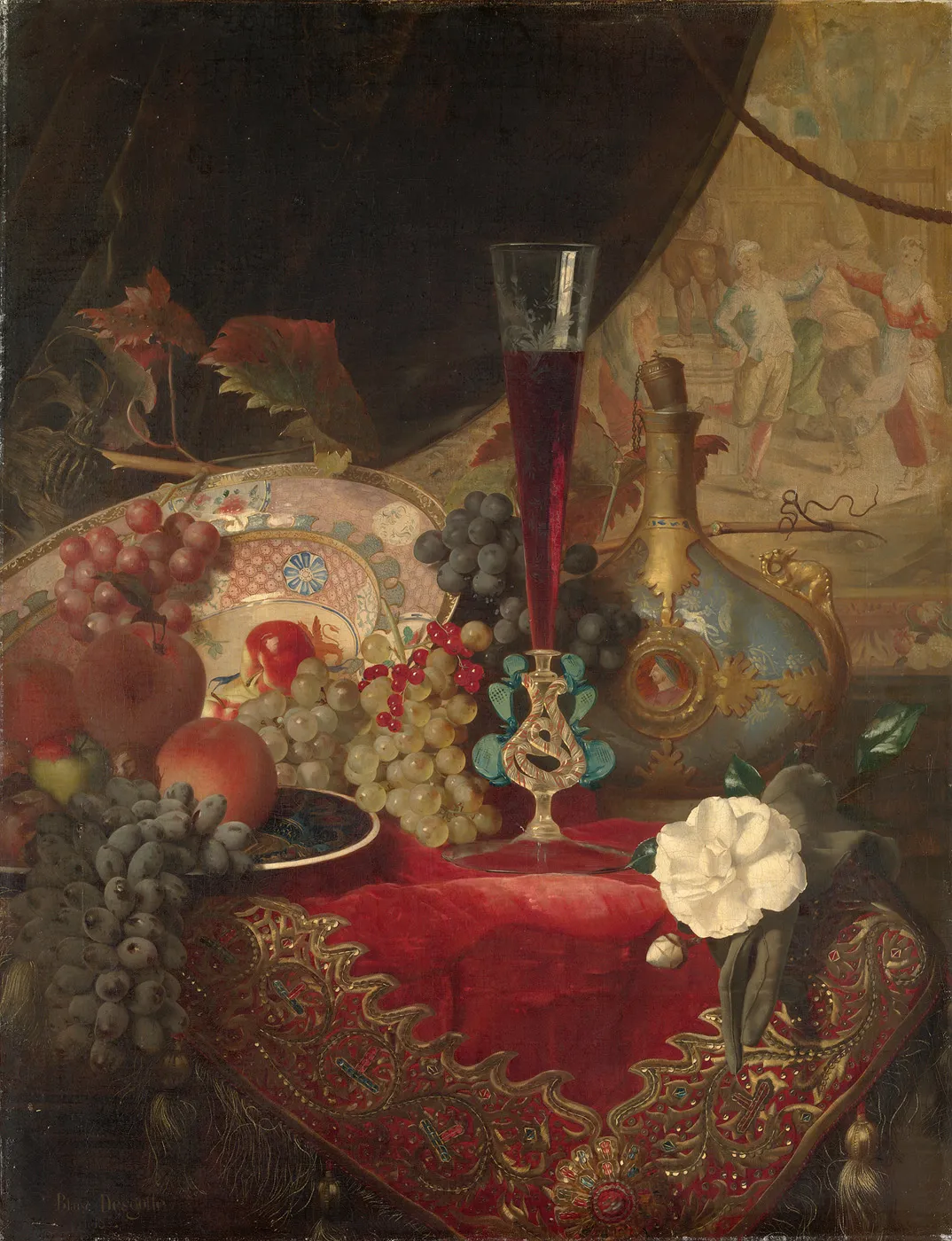
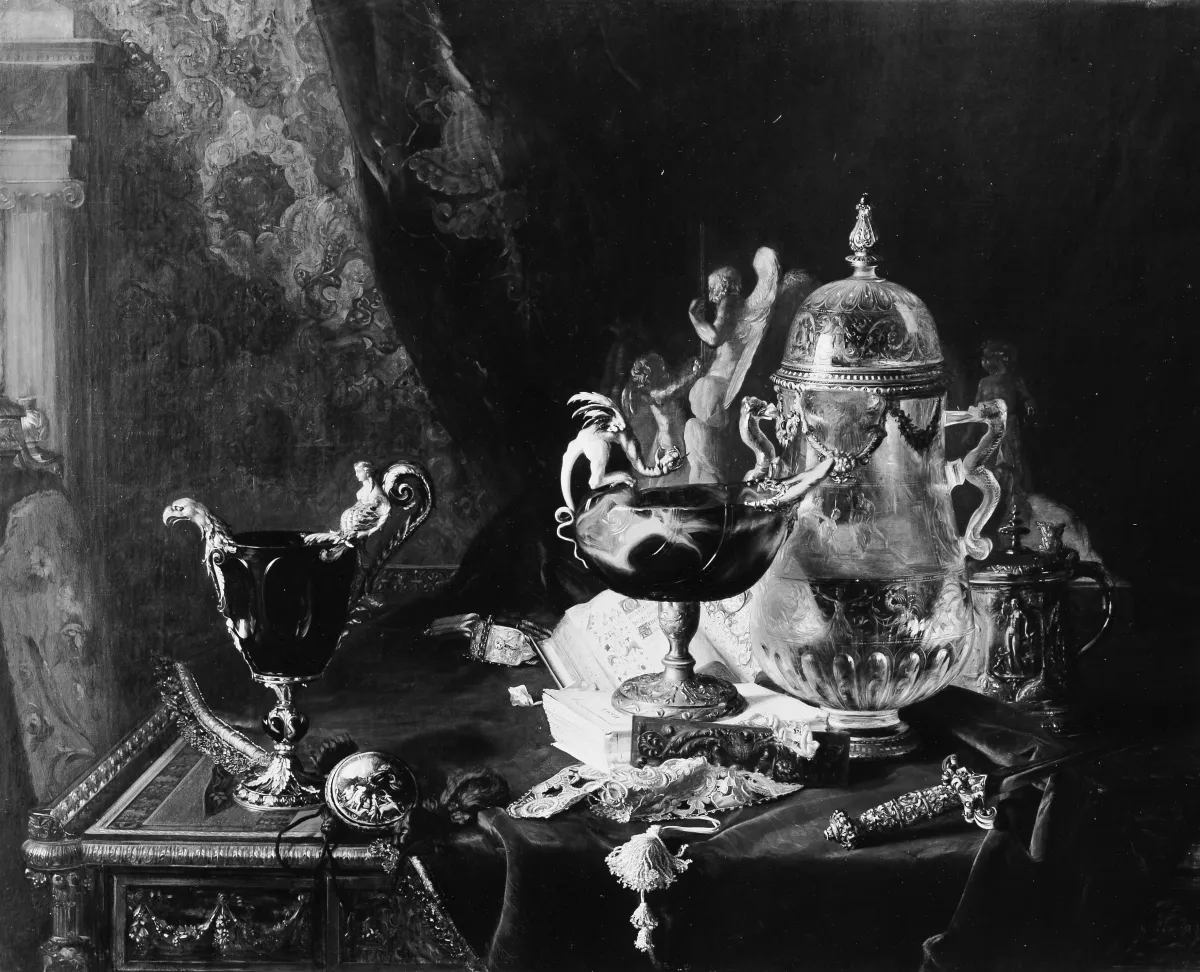
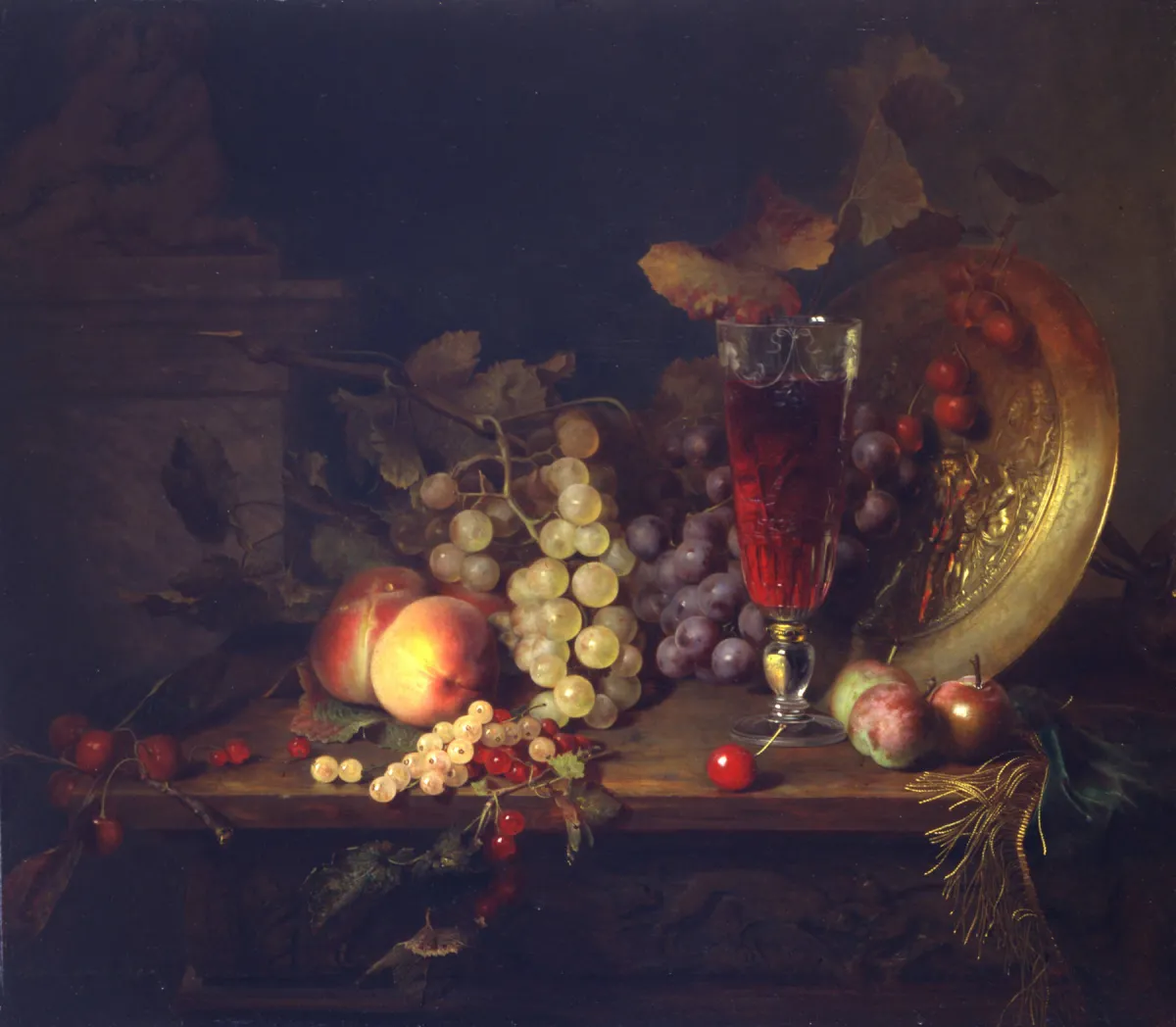
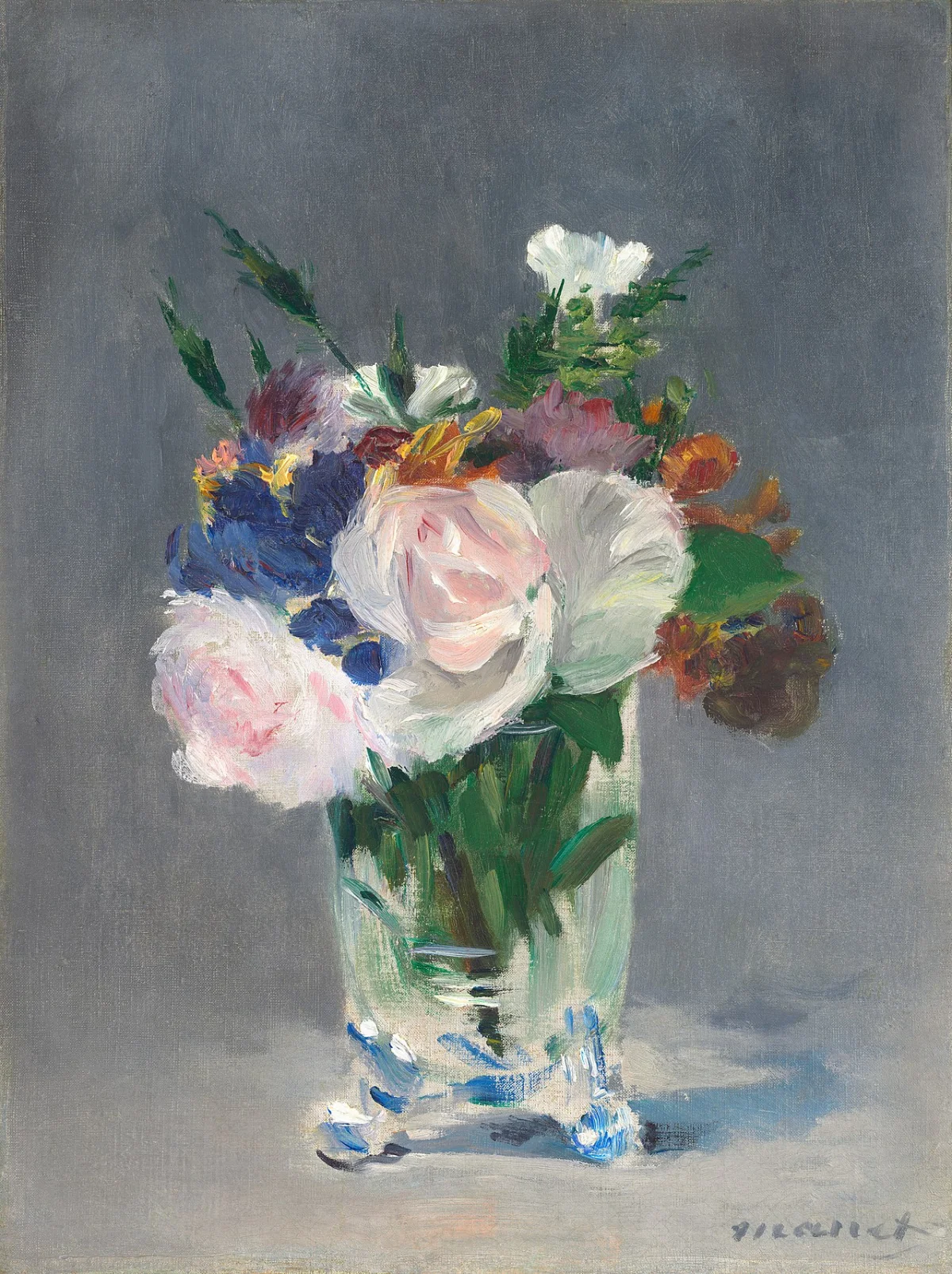
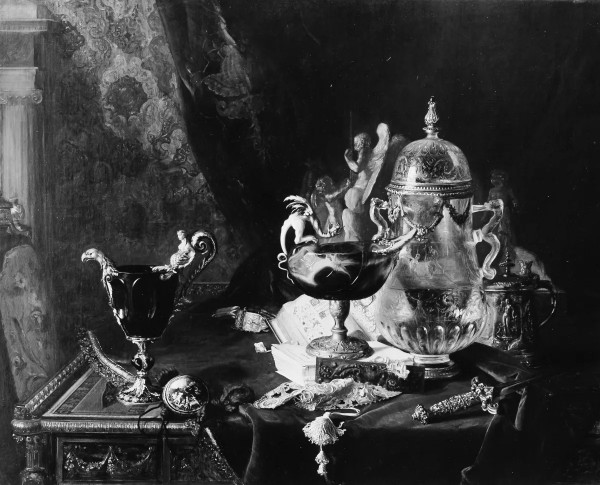
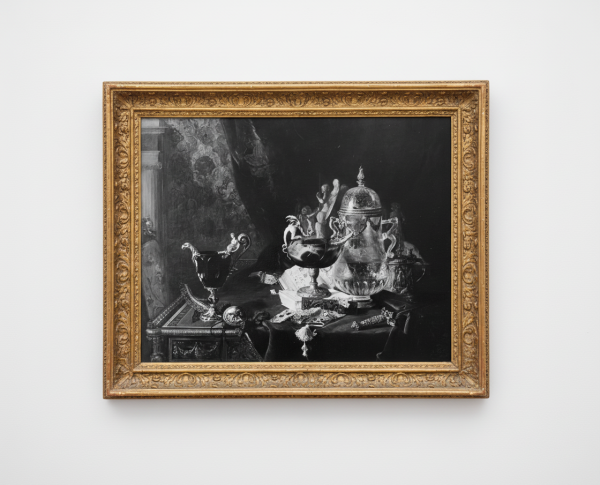
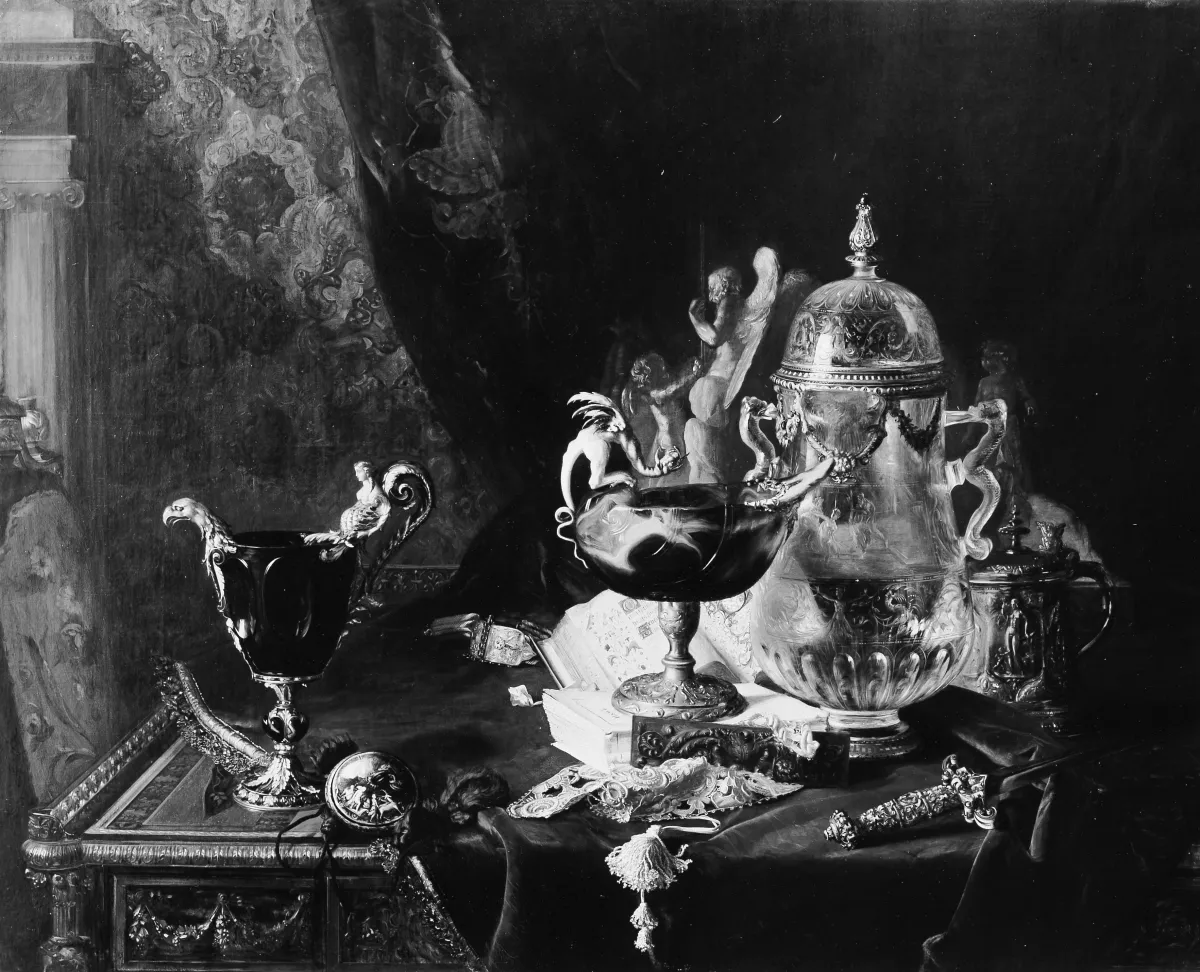
Blaise Alexandre Desgoffe’s "BRIC-À-BRAC" exemplifies the technical brilliance achievable with oil on canvas. The Academic Art movement prized precision and realism, both of which are evident in the luminous textures and rich colors of this piece. Art enthusiasts often pair this painting with similar works such as "Crystal vase" or "Vase of améthyste from the 16th-century" to appreciate Desgoffe’s mastery in capturing the essence of luxury objects.
Within "BRIC-À-BRAC," Desgoffe weaves stories through the careful placement of symbolic items, a hallmark of Academic Art. Each element in this hand-painted oil painting invites viewers to ponder hidden meanings and historical references. Collectors looking for deeper narratives in still life art often explore related pieces like "Still Life with Basket of Flowers" and "At the Louvre," which also showcase Desgoffe’s symbolic storytelling.
Owning "BRIC-À-BRAC" by Blaise Alexandre Desgoffe is a unique opportunity for any art connoisseur seeking a fine art painting for sale from the Academic Art movement. Its refined composition and historical significance make it a prized possession, often displayed alongside works such as "Crystal vase" or "Objects of Art from the Louvre." This painting is not just an artwork, but a statement piece that enriches any distinguished collection.
When Art Meets History
Blaise Alexandre Desgoffe’s "BRIC-À-BRAC" stands as a testament to the Academic Art movement, capturing a moment in time with remarkable precision. This hand-painted oil painting transports viewers to a world where everyday objects are elevated to fine art. Desgoffe, known for his meticulous still lifes, shares this mastery with related works like "Rest on the Flight into Egypt" and "A Forester at Home," making "BRIC-À-BRAC" a significant piece in art history.
Techniques That Speak
The artist’s expert use of oil on canvas brings "BRIC-À-BRAC" to life, showcasing the technical brilliance characteristic of Academic Art. Desgoffe’s attention to detail, from the play of light on porcelain to the subtle textures of fabrics, demonstrates his command of the medium. Similar to masterpieces such as "Diana the Huntress" and "Odalisque with a Fan," this work exemplifies the refined techniques that define the era’s most celebrated oil on canvas creations.
Emotions on Display
Through "BRIC-À-BRAC," Blaise Alexandre Desgoffe invites viewers to contemplate the beauty in the mundane, a hallmark of Academic Art. The fine art painting for sale communicates tranquility and reverence for everyday objects, much like "Love's Offering." The careful arrangement and harmonious color palette evoke a sense of intimacy, encouraging the audience to appreciate the emotional depth present in each carefully rendered detail.
Coveted by Collectors
As a prime example of the Academic Art movement, "BRIC-À-BRAC" by Blaise Alexandre Desgoffe is highly sought after by art enthusiasts. The hand-painted oil painting’s exquisite craftsmanship and historical significance make it a desirable addition to any collection. Collectors who value works like "Rest on the Flight into Egypt" or "Odalisque with a Fan" will find "BRIC-À-BRAC" a compelling and timeless investment in the world of fine art.
Related Academic Art Hand-Painted Oil Paintings by Other Artists
Other Famous Academic Art Artists:
Frequently Asked Questions About BRIC-À-BRAC
What is the historical context of "BRIC-À-BRAC"?
"BRIC-À-BRAC" was created during the late 19th century, a period characterized by a fascination with eclecticism and the decorative arts. This era saw a blending of traditional and modern influences, reflecting the cultural shifts of the time.
Who is Blaise Alexandre Desgoffe and what is his significance in art history?
Blaise Alexandre Desgoffe was a prominent French painter known for his still life and genre paintings. His work is significant for its detailed representation of everyday objects and its exploration of light and texture, contributing to the realism movement in art.
What artistic techniques are employed in "BRIC-À-BRAC"?
The painting utilizes techniques such as chiaroscuro to create depth and dimension, as well as a meticulous attention to detail that highlights the textures of the objects depicted, showcasing Desgoffe's skill in still life composition.
What symbols are present in "BRIC-À-BRAC" and what do they represent?
The objects in "BRIC-À-BRAC" symbolize the passage of time and the transient nature of life. Each item can be interpreted as a reflection of personal history and memory, inviting viewers to contemplate their own experiences.
How does "BRIC-À-BRAC" reflect the artistic trends of its time?
The painting embodies the 19th-century trend of still life, where artists began to focus on the beauty of everyday objects. It reflects a shift towards realism and the appreciation of the mundane, elevating common items to subjects of fine art.
What materials and mediums were used in the creation of "BRIC-À-BRAC"?
"BRIC-À-BRAC" was likely created using oil on canvas, a common medium during Desgoffe's time, which allowed for rich color saturation and intricate detail, enhancing the visual impact of the still life composition.
What is the significance of the title "BRIC-À-BRAC"?
The title "BRIC-À-BRAC" refers to a collection of miscellaneous objects, suggesting a sense of nostalgia and the beauty found in the ordinary. It invites viewers to appreciate the stories behind the items depicted.
How does "BRIC-À-BRAC" compare to other works by Desgoffe?
<p"bric-À-brac" showcases="" desgoffe's="" characteristic="" style,="" marked="" by="" meticulous="" detail="" and="" a="" focus="" on="" light.="" compared="" to="" his="" other="" works,="" this="" painting="" emphasizes="" the="" interplay="" of="" objects="" their="" arrangement,="" highlighting="" ability="" create="" harmony="" within="" complexity.=""
What influence did "BRIC-À-BRAC" have on later artists? The painting influenced later generations of still life artists by demonstrating the potential for narrative and emotional depth within seemingly simple compositions, encouraging a more personal and introspective approach to still life painting.
In what ways does "BRIC-À-BRAC" invite viewer interpretation?
"BRIC-À-BRAC" invites viewers to engage with the painting on a personal level, encouraging them to reflect on their own memories and associations with the objects depicted, thus creating a unique and individual experience for each observer.






















_GFM_Painting_(1).webp)

.webp)

 100% Hand-Painted: Finished in 3-6 Weeks
.webp)

.png)















_(1).webp)