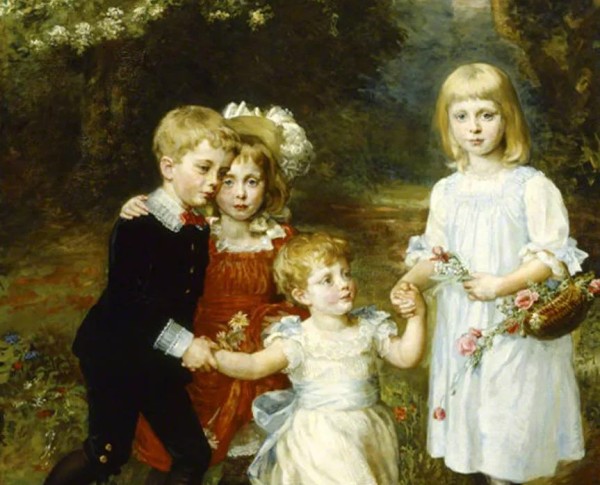
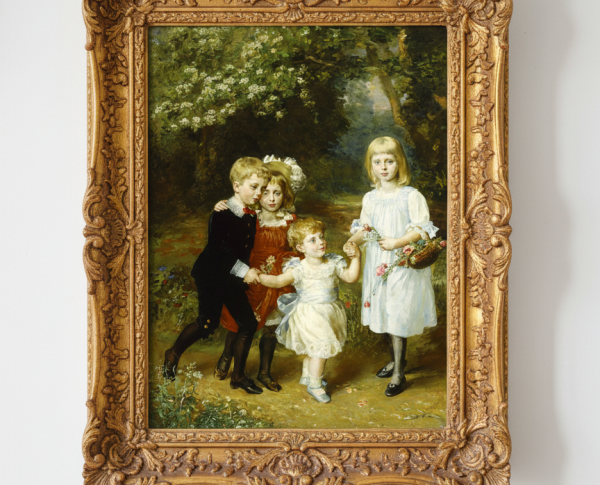
Executed in oil on canvas, this painting showcases Anna Lea Merritt’s meticulous technique, characteristic of the Pre-Raphaelite movement. The delicate brushwork and vibrant hues highlight her exceptional skill and dedication to realism. The careful rendering of light and texture brings the subjects to life, much like in her other works such as "The Four Elder Agar-Robartes Children." Collectors seeking a masterful oil on canvas will appreciate the timeless beauty of this piece.
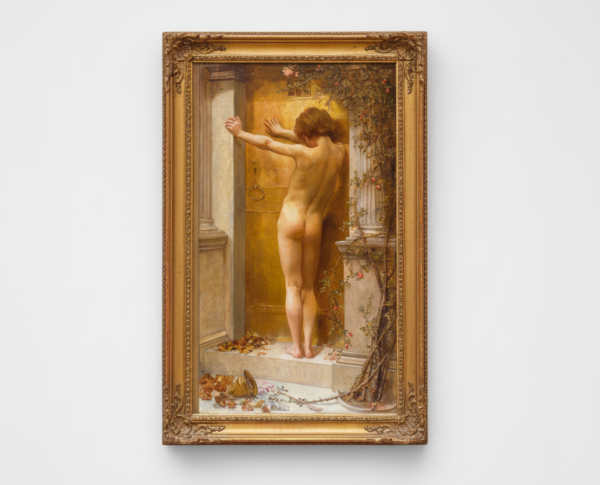
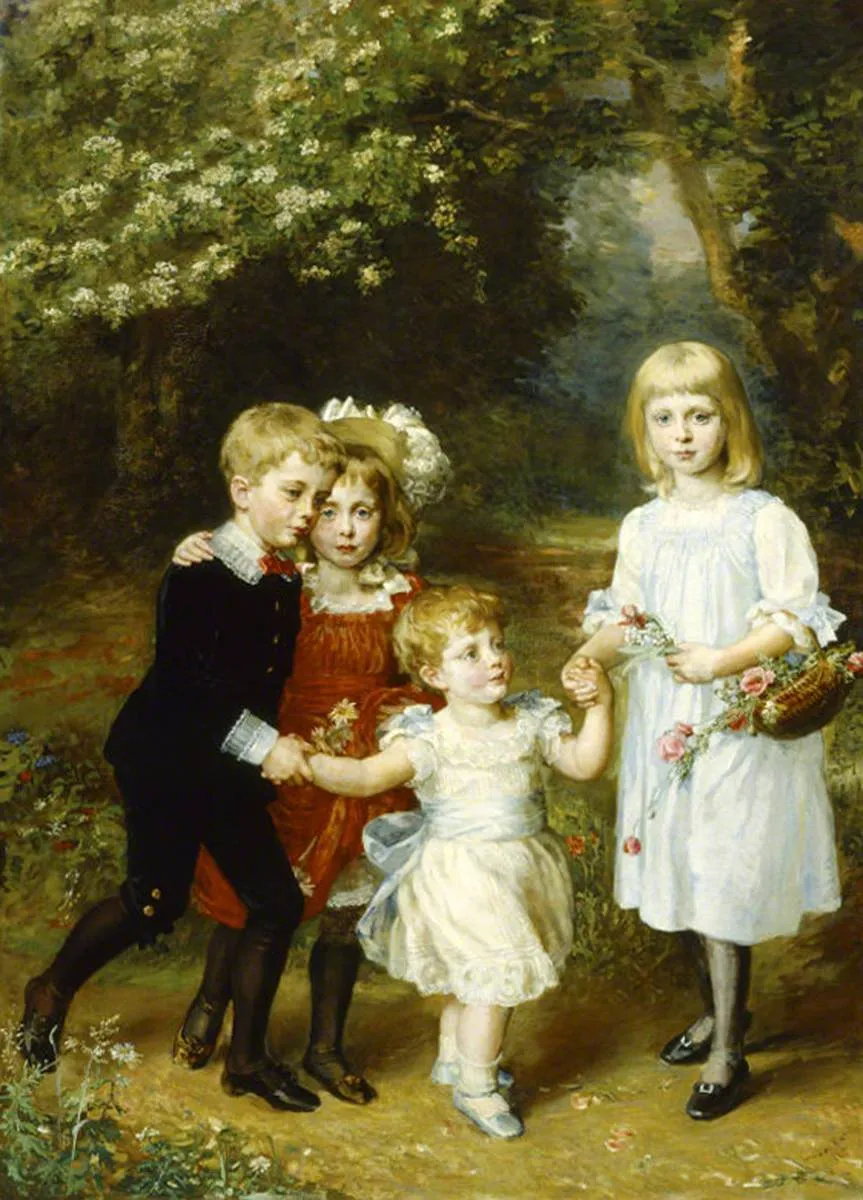
"Alfred and Charles, Grandchildren of Alfred Tennyson" by Anna Lea Merritt is rich with narrative and symbolic detail, reflecting the Pre-Raphaelites’ fascination with storytelling. The children’s poised expressions and the thoughtful setting evoke themes of heritage and innocence. This fine art painting for sale resonates with the same emotional storytelling found in Merritt’s "Love Locked Out" or "Alice Potter Lippincott," making it an evocative centerpiece for admirers of symbolic portraiture.
For art enthusiasts, Anna Lea Merritt’s work is a rare gem among Pre-Raphaelite masterpieces. "Alfred and Charles, Grandchildren of Alfred Tennyson" not only offers visual delight but also historical significance. As with related products like "Rear-Admiral Sir Lambton Loraine, 11th Bt" and "James Russell Lowell," this hand-painted oil painting elevates any collection, promising lasting value and admiration among connoisseurs of fine art painting for sale.
When Art Meets History
"Alfred and Charles, Grandchildren of Alfred Tennyson" by Anna Lea Merritt is a remarkable example of the Pre-Raphaelites movement, capturing a significant moment in art and family history. This hand-painted oil painting immortalizes the grandchildren of the famed poet, Alfred Tennyson, blending historical reverence with artistic mastery. Merritt’s approach resonates with themes seen in related paintings such as "Midsummer Eve" and "Portrait of Caroline Hill," making it a cherished piece for enthusiasts of 19th-century art.
Techniques That Speak
Anna Lea Merritt’s "Alfred and Charles, Grandchildren of Alfred Tennyson" showcases the meticulous techniques characteristic of the Pre-Raphaelites, especially through her use of oil on canvas. The artist’s attention to detail and vibrant color palette bring the subjects to life, echoing the fine brushwork found in her other works like "Hylas and the Nymphs 1896." This painting exemplifies the technical prowess and devotion to realism that define the movement and Merritt’s celebrated style.
Emotions on Display
With "Alfred and Charles, Grandchildren of Alfred Tennyson," Anna Lea Merritt masterfully conveys the innocence and curiosity of childhood, hallmarks of the Pre-Raphaelites. The emotional depth in this fine art painting for sale is evident in the gentle expressions and thoughtful composition, reminiscent of Merritt’s evocative works such as "A Mermaid 1900" and "Night with her Train of Stars." Collectors and admirers of emotional portraiture are drawn to the sincerity radiating from this piece.
Coveted by Collectors
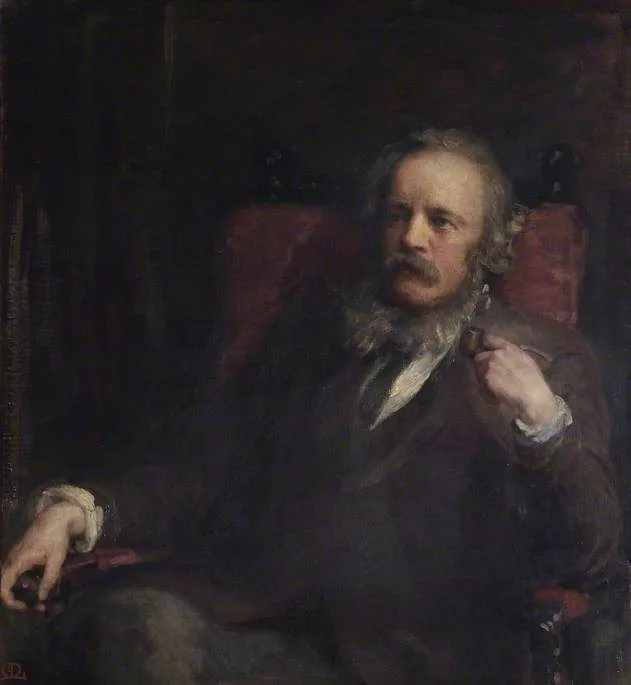
Collectors prize "Alfred and Charles, Grandchildren of Alfred Tennyson" for its historical significance and artistic excellence within the Pre-Raphaelites movement. As a hand-painted oil painting by Anna Lea Merritt, it stands alongside masterpieces like "Midsummer Eve" and "Portrait of Caroline Hill" in terms of desirability. Its provenance and connection to literary heritage make it one of the most sought-after fine art painting for sale, appealing to those who value both artistry and cultural legacy.
Related Pre-Raphaelites Hand-Painted Oil Paintings by Other Artists
Other Famous Pre-Raphaelites Artists:
Frequently Asked Questions About Alfred and Charles, Grandchildren of Alfred Tennyson
What is the historical significance of the painting "Alfred and Charles, Grandchildren of Alfred Tennyson"?
This painting holds historical significance as it captures the likeness of the grandchildren of Alfred Lord Tennyson, one of the most celebrated poets of the Victorian era, thereby connecting the realms of art and literature during a transformative period in British history.
Who was Anna Lea Merritt and what was her contribution to art?
Anna Lea Merritt was an American artist known for her portraiture and genre paintings. She was notable for being one of the few women artists of her time to gain recognition in the male-dominated art world of the late 19th century, and her works often reflected themes of family and emotional depth.
What artistic techniques did Anna Lea Merritt employ in this painting?
Merritt utilized a combination of realism and impressionism, employing soft brushwork and a delicate palette to convey the innocence and charm of the children, while also capturing the emotional resonance of familial bonds.
What symbolism can be found in the portrayal of Alfred and Charles?
The portrayal of Alfred and Charles symbolizes the continuity of legacy and the passage of time, reflecting the nurturing bonds of family and the influence of Tennyson’s literary heritage on future generations.
How does the composition of the painting contribute to its overall message?
The composition, with the children positioned closely together and gazing outward, creates a sense of intimacy and connection, emphasizing the themes of childhood innocence and the protective nature of family relationships.
What role did the Victorian era play in shaping the themes of this painting?
The Victorian era was characterized by a strong emphasis on family values and emotional expression, which is reflected in Merritt's work. The painting encapsulates the era's ideals of childhood and the importance of familial ties.
In what ways does this painting reflect Anna Lea Merritt's personal experiences?
Merritt’s personal experiences as a woman artist and her reflections on family life are evident in the tenderness of the subjects, suggesting her own values and emotional connections to family, which resonate throughout her body of work.
What influences can be seen in Merritt's style in this painting?
Merritt's style in this painting shows influences from both the Pre-Raphaelite movement and Impressionism, evident in her attention to detail, rich color palette, and the emotional depth conveyed through the subjects' expressions.
How has the reception of this painting changed over time?
Initially celebrated for its technical skill and emotional depth, the painting has gained renewed interest in contemporary art discussions, particularly regarding women's contributions to art history and the exploration of familial themes.
What can visitors learn about the relationship between art and literature through this painting?
This painting serves as a poignant example of how art and literature intersect, illustrating the personal lives of literary figures and their families, thereby enriching our understanding of the cultural context in which both art and literature thrive.






















_GFM_Painting_(1).webp)


 100% Hand-Painted: Finished in 3-6 Weeks

.png)















_(1).webp)