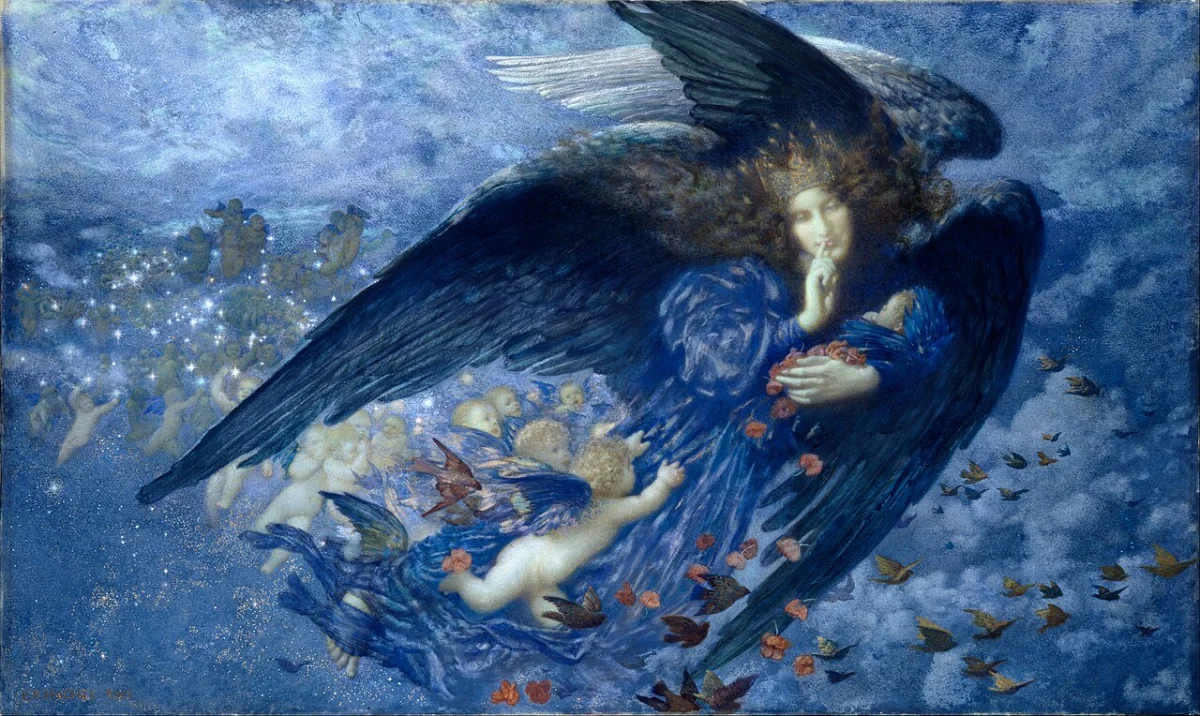
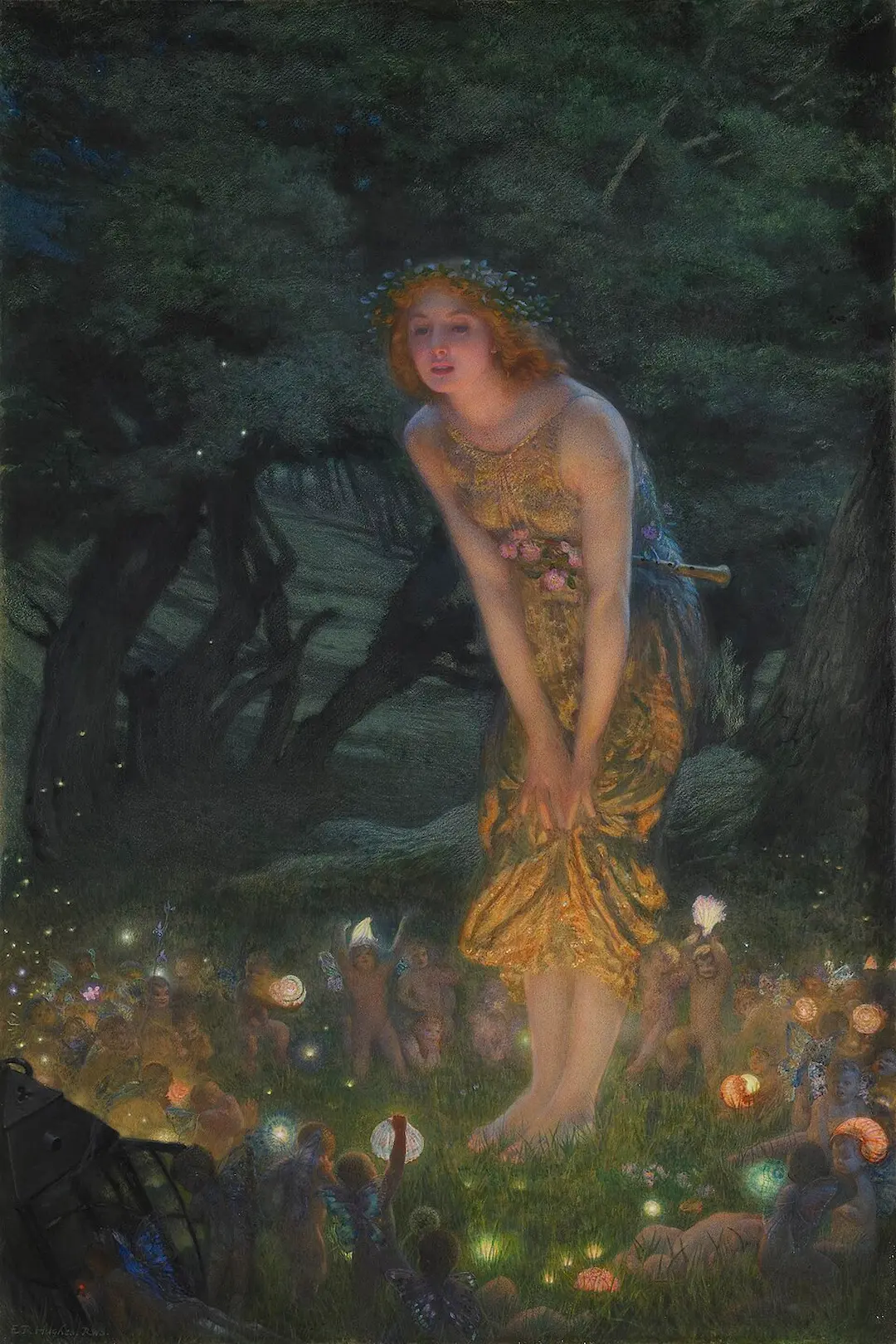
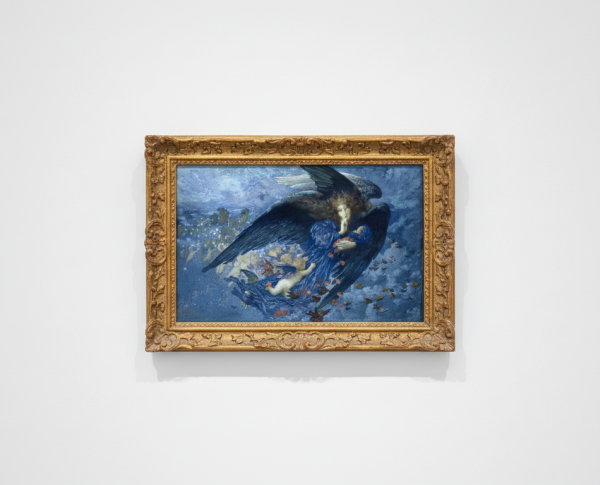
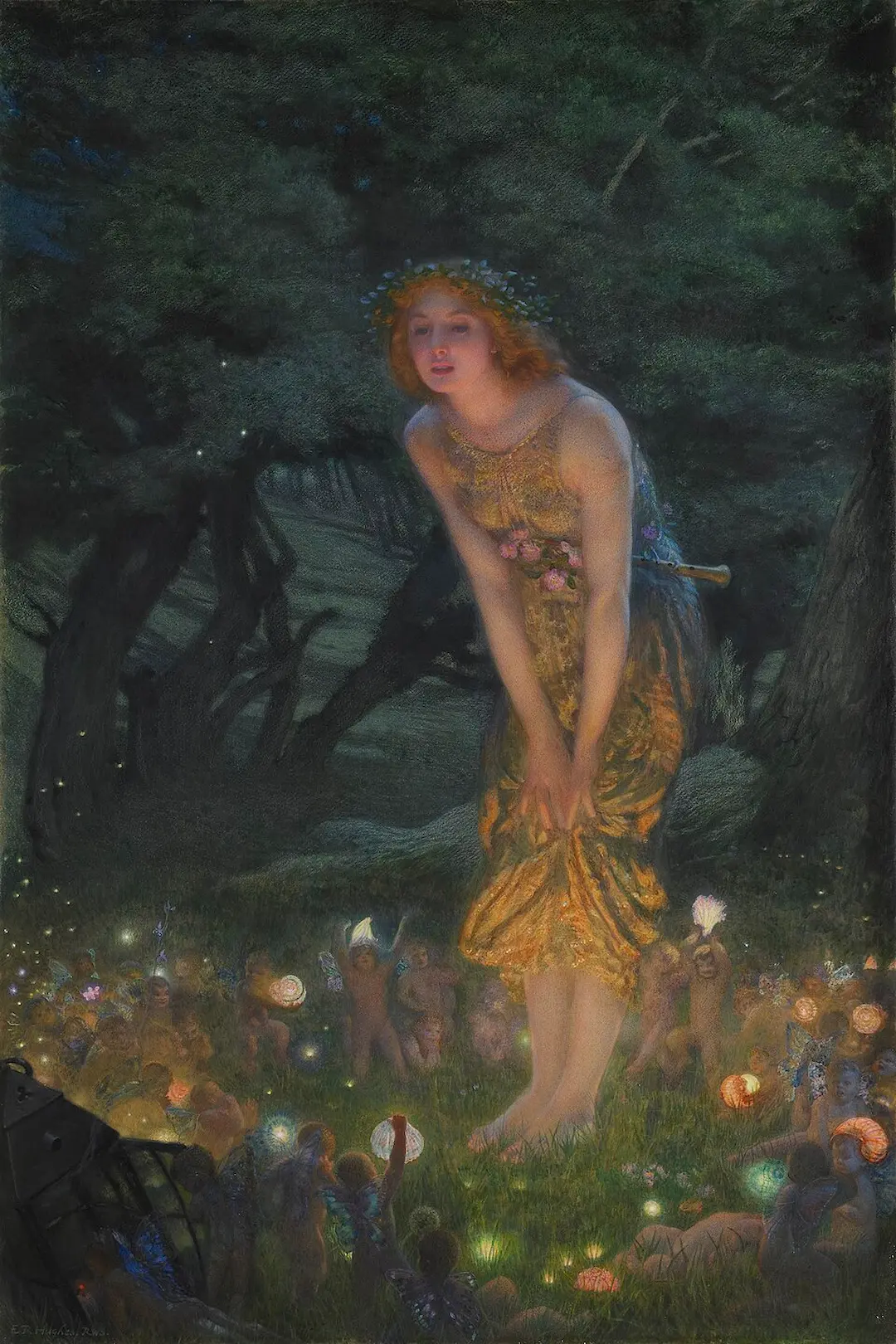
"Midsummer Eve" showcases Hughes’s exceptional technique with oil on canvas, a medium favored by many Pre-Raphaelites for its rich color and texture. The artist’s delicate layering and luminous effects highlight his mastery, creating a dreamlike quality that draws viewers into the mystical scene. For those interested in owning a piece of art history, this oil on canvas exemplifies the skill and vision synonymous with Edward Robert Hughes and his contemporaries.
This fine art painting for sale is renowned for its intricate storytelling and symbolic imagery. Hughes weaves together themes of folklore, enchantment, and nature, characteristic of the Pre-Raphaelites. The glowing fairy figures and lush garden evoke a sense of wonder, inviting viewers to interpret the secrets hidden within. Collectors and admirers of "Midsummer Eve" appreciate how its hand-painted oil painting technique enhances the mystical narrative and timeless appeal.
For art lovers and collectors, "Midsummer Eve" by Edward Robert Hughes R.W.S. is a coveted hand-painted oil painting that embodies the spirit of the Pre-Raphaelites. Its enduring beauty and meticulous craftsmanship make it a standout piece in any collection. Owning this oil on canvas not only adds value but also brings the enchanting world of 19th-century fine art painting for sale into the modern home, a true treasure for discerning enthusiasts.
When Art Meets History
"Midsummer Eve" by Edward Robert Hughes R.W.S. is a captivating hand-painted oil painting rooted in the enchanting Pre-Raphaelites movement. Created during an era that celebrated intricate detail and romanticism, this artwork bridges folklore and fine art. Hughes, inspired by myth and nature, crafted a piece that stands alongside related paintings such as "The Soul of the Rose 1908" and "A Mermaid 1900." The painting is a testament to the era's fascination with magical realism and poetic storytelling.
Techniques That Speak
Edward Robert Hughes's mastery shines through his delicate use of oil on canvas, a hallmark of the Pre-Raphaelites. "Midsummer Eve" glows with ethereal light, achieved through meticulous layering and glazing. The artist’s attention to botanical accuracy and luminous color creates a dreamlike atmosphere, reminiscent of works like "Hylas and the Nymphs 1896" and "The Lady of Shalott 1888." Each brushstroke in this oil on canvas painting reveals Hughes’s dedication to technical excellence and narrative depth.
Emotions on Display
"Midsummer Eve" evokes a sense of wonder and mystery, drawing viewers into its magical world. Edward Robert Hughes channels the emotional sensitivity of the Pre-Raphaelites, infusing his hand-painted oil painting with longing and enchantment. The fairy-filled nocturnal scene invites comparisons to "Boreas 1903" and "The Soul of the Rose 1908," as both explore themes of love, nature, and fantasy. The painting’s subtle expressions and glowing colors stir deep emotions in all who experience it.
Coveted by Collectors
As a fine art painting for sale, "Midsummer Eve" remains highly sought after by collectors and enthusiasts of Pre-Raphaelite art. Edward Robert Hughes’s exquisite technique and the painting’s ethereal subject matter ensure its enduring appeal. Alongside masterpieces like "A Mermaid 1900" and "Hylas and the Nymphs 1896," it represents the pinnacle of romantic fantasy in art. Owning such a work connects collectors to a legacy of beauty, imagination, and historical significance.
Related Pre-Raphaelites Hand-Painted Oil Paintings by Other Artists
Other Famous Pre-Raphaelites Artists:
Frequently Asked Questions About Midsummer Eve
What is the historical context of "Midsummer Eve"?
"Midsummer Eve," painted by Edward Robert Hughes in the early 20th century, reflects the Victorian fascination with nature and the supernatural, a theme prevalent during the Pre-Raphaelite movement to which Hughes was closely associated.
What artistic techniques did Edward Robert Hughes employ in "Midsummer Eve"?
Hughes utilized a combination of vibrant colors, intricate details, and soft brushwork to create a dreamlike quality in "Midsummer Eve," emphasizing the ethereal nature of the scene and its subjects.
What symbolism can be found in "Midsummer Eve"?
The painting symbolizes the transition between day and night, representing the liminal space where reality mingles with the fantastical, often associated with themes of love and enchantment during the midsummer festivities.
How does "Midsummer Eve" reflect the influence of the Pre-Raphaelite Brotherhood?
The Pre-Raphaelite Brotherhood emphasized detailed realism and vibrant colors, both of which are evident in Hughes' work. "Midsummer Eve" captures the romanticism and idealization of nature characteristic of this artistic movement.
What is the significance of the figures depicted in "Midsummer Eve"?
The figures in "Midsummer Eve" are often interpreted as embodiments of nature and the spirit world, suggesting a connection between humanity and the natural environment, which is a recurring theme in Hughes' oeuvre.
How does the composition of "Midsummer Eve" enhance its thematic elements?
The composition of "Midsummer Eve" is carefully arranged to draw the viewer's eye towards the central figures, creating a sense of intimacy and inviting contemplation of the mystical narrative being portrayed.
What role does light play in "Midsummer Eve"?
Light in "Midsummer Eve" is used to create a magical atmosphere, highlighting the figures and enhancing the dreamlike quality of the scene, which is essential to conveying the painting's themes of enchantment and mystery.
In what ways does "Midsummer Eve" reflect Edward Robert Hughes' artistic philosophy?
Hughes believed in the power of art to evoke emotion and transport viewers to otherworldly realms. "Midsummer Eve" exemplifies this philosophy through its enchanting imagery and the emotional resonance of its subject matter.
What are the notable influences on Edward Robert Hughes' work, particularly in "Midsummer Eve"?
Hughes was influenced by the works of artists such as Dante Gabriel Rossetti and John Everett Millais, as well as the broader Symbolist movement, which sought to express ideas and emotions through symbolic imagery, evident in "Midsummer Eve."
How has "Midsummer Eve" been received by art critics and historians?
"Midsummer Eve" has been praised for its technical mastery and its ability to evoke a sense of wonder, with critics noting its significance as a key example of late Victorian art that bridges the gap between realism and fantasy.






















_GFM_Painting_(1).webp)


 100% Hand-Painted: Finished in 3-6 Weeks

.png)















_(1).webp)