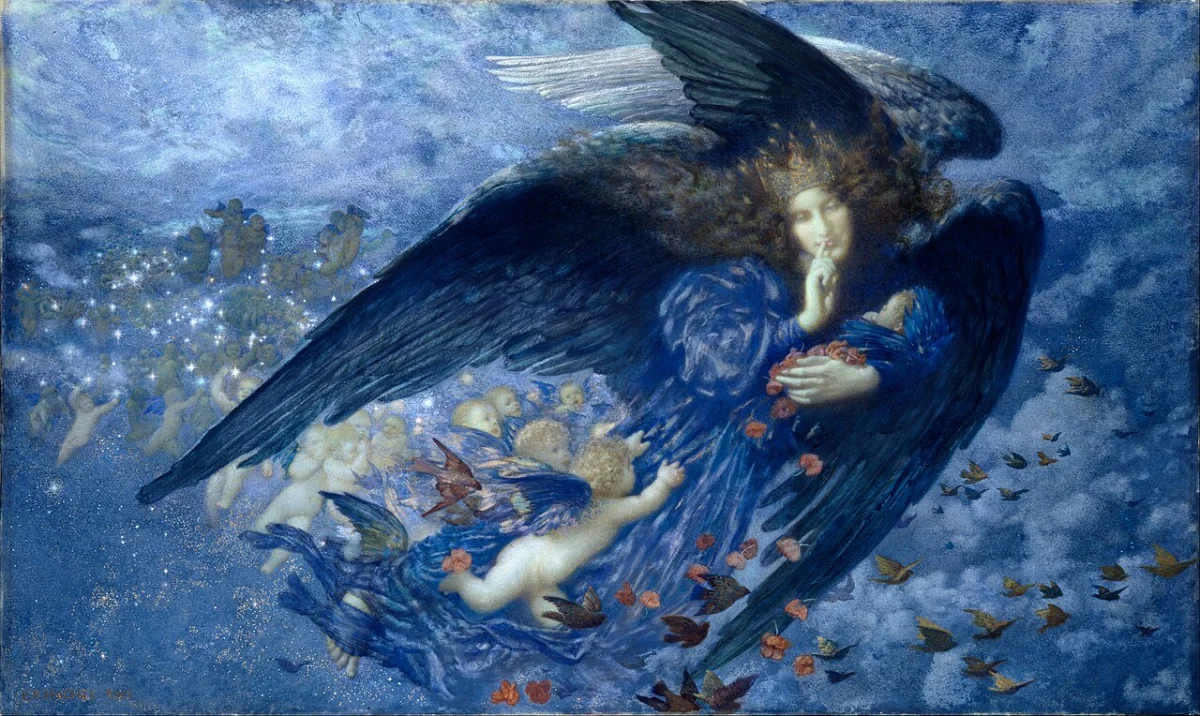
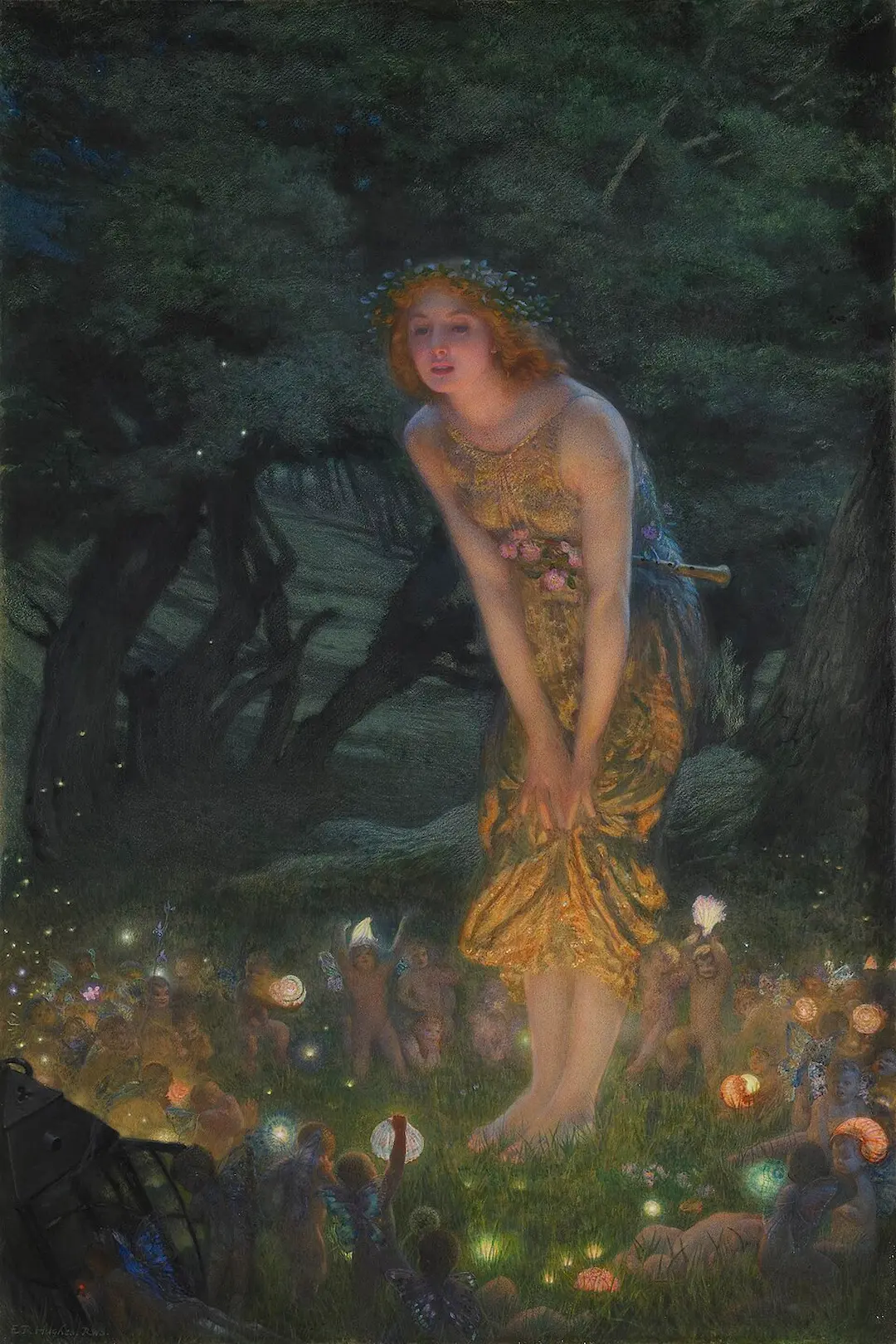
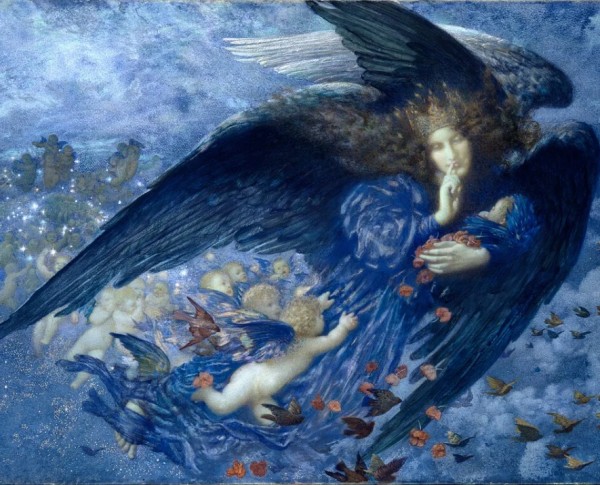
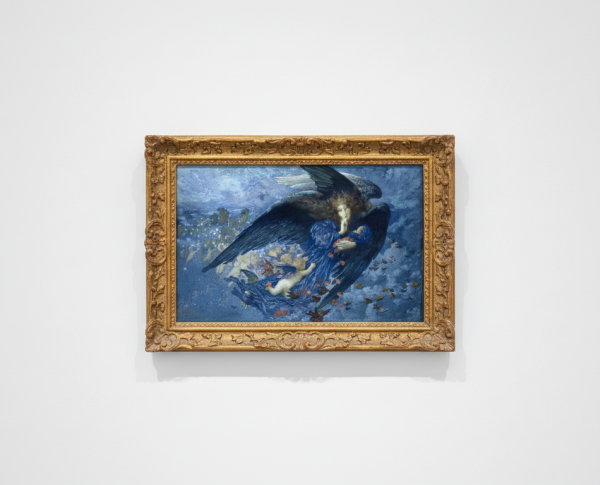
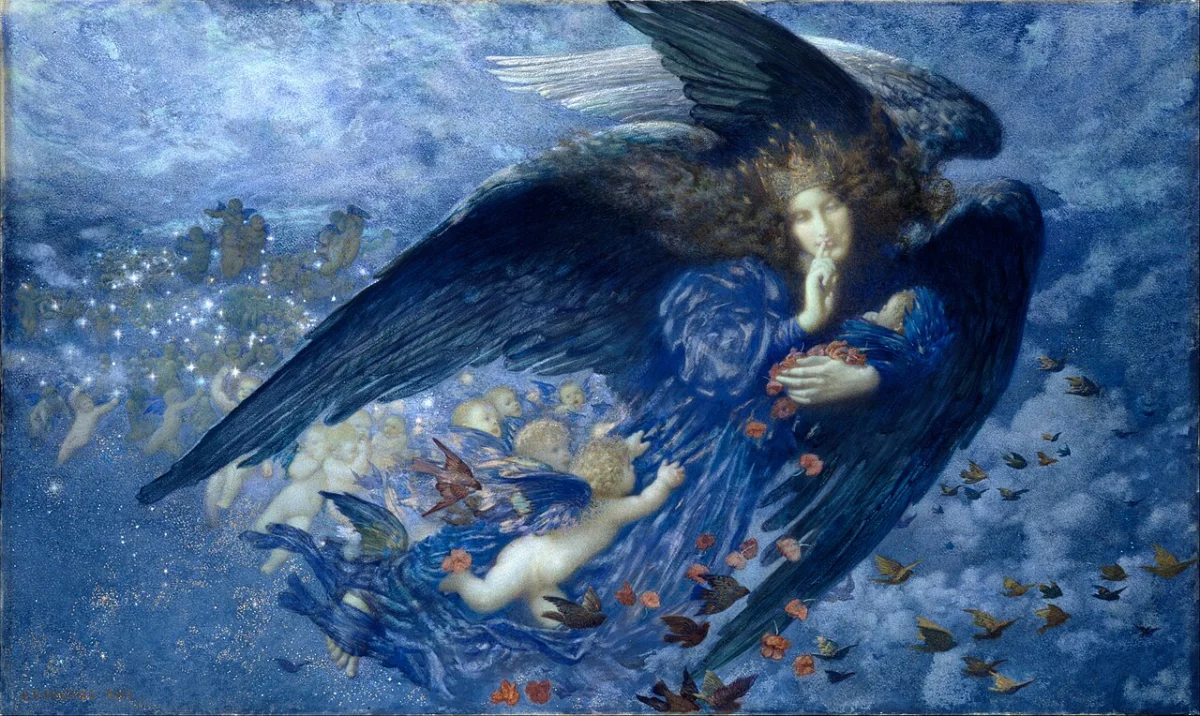
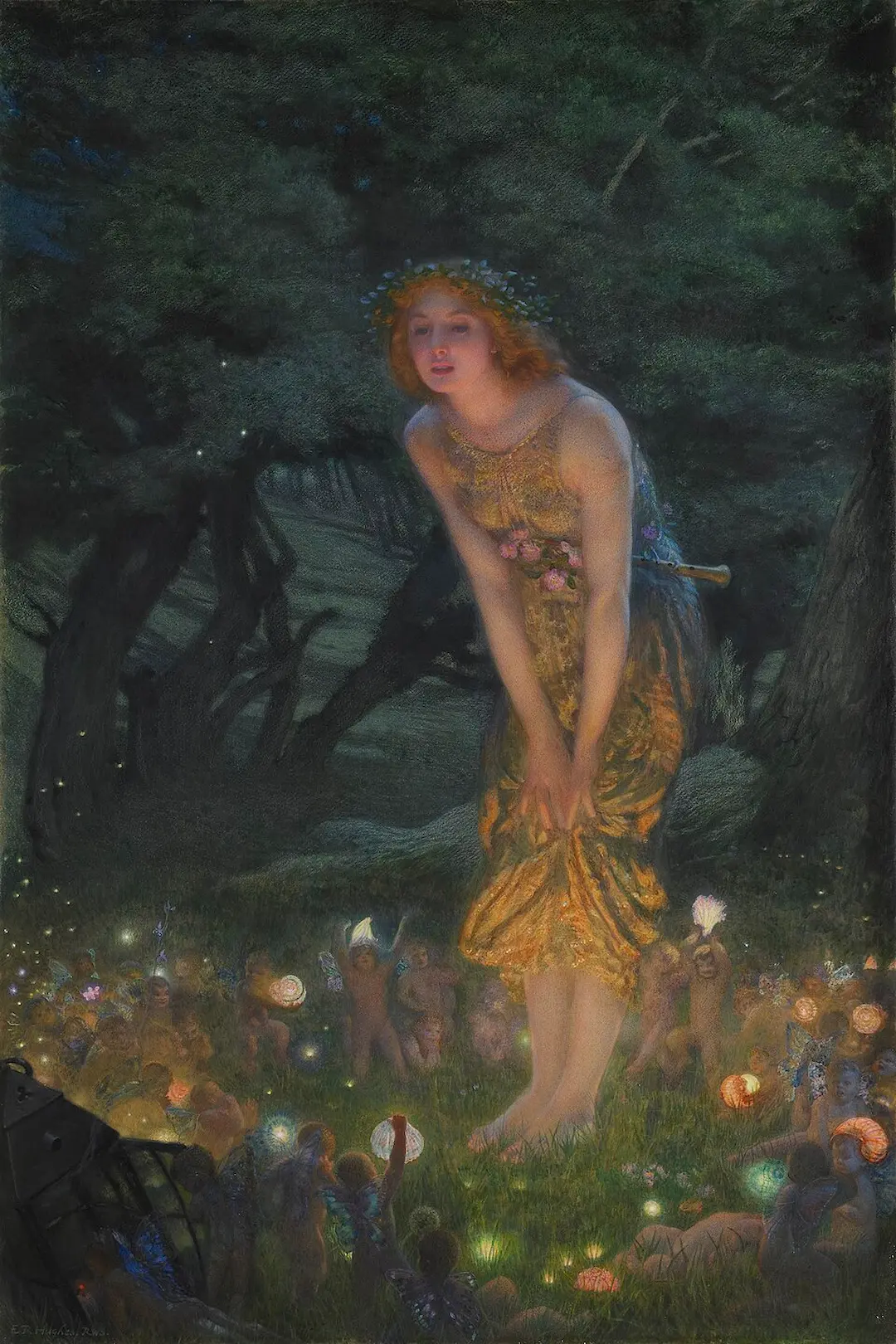
The "Night with her Train of Stars" is a testament to Hughes’ technical brilliance, rendered as an exquisite oil on canvas. His delicate brushwork and vibrant palette bring the night sky and its celestial figures to life, embodying the ideals of the Pre-Raphaelites movement. Each stroke reveals Hughes’ dedication to realism and beauty, making this painting and related works like "Midsummer Eve" exceptional choices for anyone seeking a timeless oil on canvas for their collection.
In "Night with her Train of Stars," Edward Robert Hughes R.W.S. weaves layers of symbolism and narrative, hallmarks of the Pre-Raphaelites movement. The painting’s enchanting figures and luminous atmosphere evoke themes of mystery, dreams, and the passage of time. Collectors looking for a fine art painting for sale will appreciate how Hughes’ work, alongside "Midsummer Eve," invites viewers into a world rich with allegory and poetic storytelling, making each piece truly meaningful.
For art enthusiasts and collectors, "Night with her Train of Stars" by Edward Robert Hughes R.W.S. stands out as a prized hand-painted oil painting from the Pre-Raphaelites movement. Its enduring beauty and craftsmanship ensure its place as a centerpiece in any fine art collection. Those who admire Hughes’ style often seek related products like "Midsummer Eve," both of which represent the pinnacle of Pre-Raphaelite artistry and make for a remarkable addition to any home or gallery.
When Art Meets History
"Night with her Train of Stars" by Edward Robert Hughes R.W.S. stands as a luminous example of Pre-Raphaelite art, crafted during a period when symbolism and beauty flourished. This hand-painted oil painting captures the mystical essence of night, echoing the era’s fascination with myth and poetry. Hughes, alongside contemporaries like Waterhouse and Millais, contributed to masterpieces such as "A Mermaid 1900" and "The Lady of Shalott 1888," shaping the movement’s legacy.
Techniques That Speak
Edward Robert Hughes employed masterful techniques in "Night with her Train of Stars," utilizing oil on canvas to create ethereal lighting and delicate textures. His meticulous brushwork and use of luminous color evoke a dreamlike quality, characteristic of Pre-Raphaelite works. The painting’s technique aligns with other renowned pieces like "Hylas and the Nymphs 1896" and "Boreas 1903," showcasing the artist’s ability to render atmosphere and emotion through traditional oil painting methods.
Emotions on Display
The emotional resonance of "Night with her Train of Stars" is palpable, as Hughes’s depiction of the night personified invites viewers into a world of wonder and tranquility. The painting, a celebrated fine art painting for sale, stirs feelings of serenity and awe much like "The Soul of the Rose 1908." Through the Pre-Raphaelite lens, Hughes transforms allegory into heartfelt imagery, making his work enduringly captivating for art lovers and collectors alike.
Coveted by Collectors
Collectors highly prize "Night with her Train of Stars," recognizing its significance within the Pre-Raphaelites movement and its exquisite oil on canvas execution. Hughes’s artistry, comparable to iconic works such as "A Mermaid 1900" and "The Lady of Shalott 1888," makes this piece a sought-after treasure in the art world. The painting’s rarity and historical importance ensure its status as a fine art painting for sale that appeals to discerning enthusiasts globally.
Related Pre-Raphaelites Hand-Painted Oil Paintings by Other Artists
Other Famous Pre-Raphaelites Artists:
Frequently Asked Questions About Night with her Train of Stars
What is the historical context of "Night with her Train of Stars"?
"Night with her Train of Stars" was painted by Edward Robert Hughes during the late 19th century, a period characterized by the Pre-Raphaelite movement and a growing interest in symbolism and romanticism in art. This painting reflects the era's fascination with nature and the celestial, as well as a departure from traditional academic painting techniques.
What artistic techniques did Edward Robert Hughes employ in this painting?
Hughes utilized a combination of oil on canvas and a meticulous attention to detail, characteristic of the Pre-Raphaelite style. His use of vibrant colors, intricate patterns, and soft lighting creates a dreamlike quality, enhancing the ethereal theme of the work.
What symbolism is present in "Night with her Train of Stars"?
The painting symbolizes the connection between the earthly and the celestial. The figure of Night, personified as a woman, is depicted with a flowing gown that resembles the night sky, adorned with stars. This imagery conveys themes of mystery, beauty, and the passage of time.
How does "Night with her Train of Stars" reflect the ideals of the Pre-Raphaelite movement?
This work embodies the Pre-Raphaelite ideals of beauty, nature, and emotional depth. The focus on intricate detail and the use of vibrant colors are hallmarks of the movement, which sought to challenge the conventions of the art of their time by returning to the vividness and clarity of earlier art.
What influences can be seen in Hughes' depiction of Night?
Hughes' depiction of Night is influenced by classical mythology and literature, where Night is often personified as a goddess. The flowing garments and serene expression of the figure draw parallels to classical representations of divine femininity, enhancing the painting's mythological resonance.
What role does color play in "Night with her Train of Stars"?
Color plays a crucial role in establishing the mood and atmosphere of the painting. The deep blues and purples evoke the tranquility of night, while the bright stars provide contrast and draw the viewer's eye, symbolizing hope and wonder amidst darkness.
How does the composition of the painting enhance its themes?
The composition features a central figure surrounded by a vast expanse of sky, emphasizing the grandeur of the night. This arrangement directs the viewer's gaze towards the figure of Night, reinforcing her significance as a symbol of mystery and the cosmos.
What is the significance of the title "Night with her Train of Stars"?
The title suggests a personification of Night as a majestic figure adorned with stars, akin to a train of jewels. This imagery evokes a sense of elegance and beauty, inviting viewers to contemplate the enchanting aspects of the night sky and its celestial bodies.
How does this painting compare to other works by Edward Robert Hughes?
Compared to other works by Hughes, "Night with her Train of Stars" showcases his mastery of color and light, as well as his ability to convey emotion through symbolism. While many of his works focus on mythological themes, this painting stands out for its ethereal quality and the intimate portrayal of the night.
What impact did "Night with her Train of Stars" have on later artists?
The painting influenced later artists by reinforcing the importance of symbolism and emotional depth in art. Its dreamlike quality and exploration of nature and the cosmos inspired subsequent movements, including Symbolism and Art Nouveau, which sought to express the intangible through visual means.






















_GFM_Painting_(1).webp)


 100% Hand-Painted: Finished in 3-6 Weeks

.png)















_(1).webp)