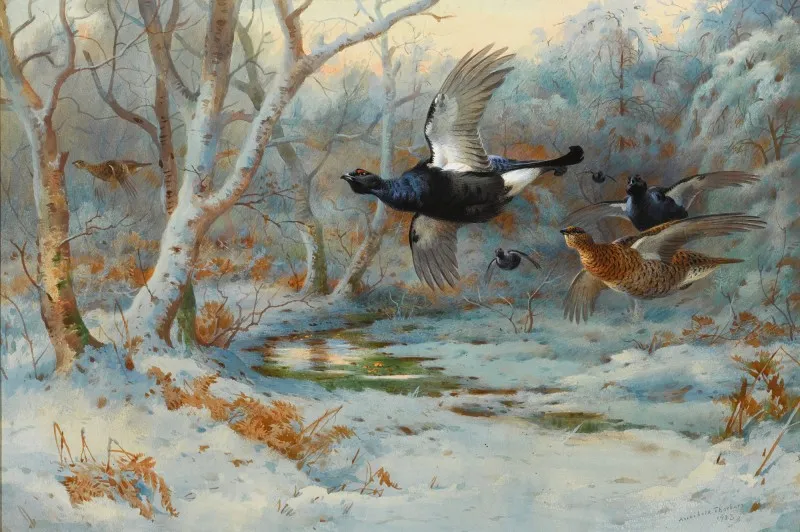
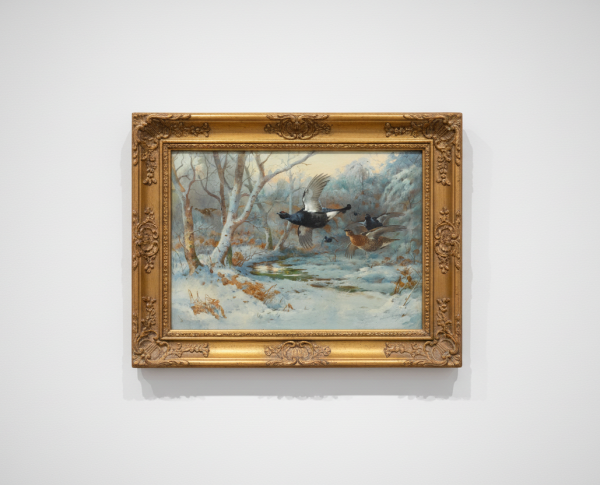
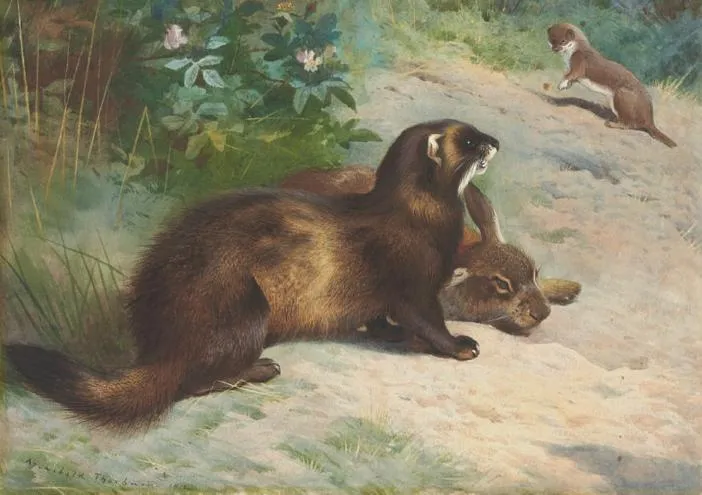
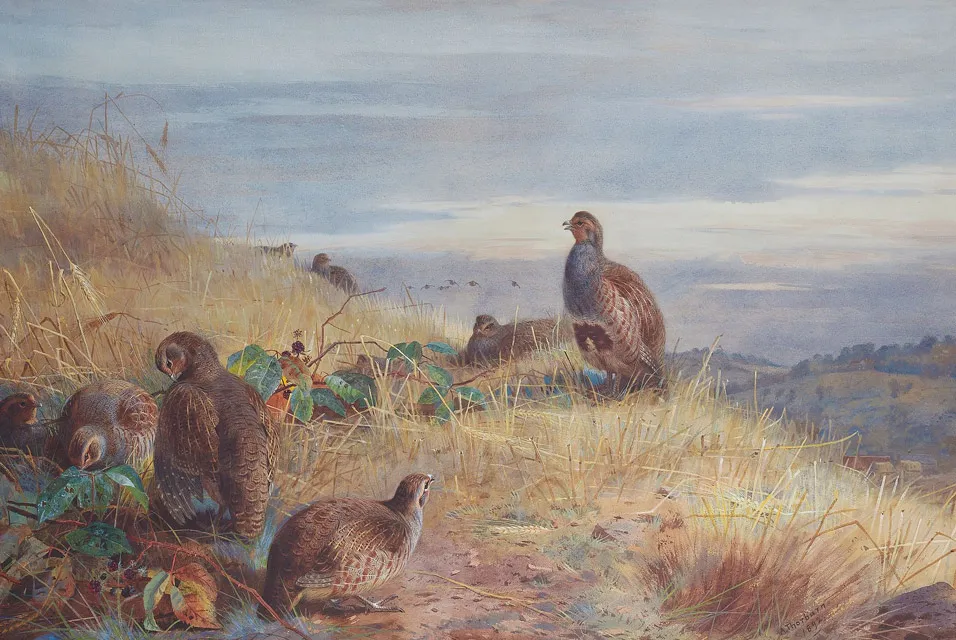
"European polecat defending a rabbit carcass from a least weasel" stands as a remarkable hand-painted oil painting by Archibald Thorburn, a master of the Naturalism movement. Thorburn’s dedication to capturing wildlife in their natural habitats is evident in this iconic work. Collectors and enthusiasts of fine art will appreciate how this piece, along with related products like "A Golden Eagle" and "The Covey at Daybreak," reflects the enduring legacy of wildlife art in the early twentieth century.
Archibald Thorburn’s technique shines through in the detailed oil on canvas rendering of the European polecat and least weasel, each brushstroke revealing his profound understanding of animal behavior. The Naturalism movement’s emphasis on realism is captured perfectly, with lifelike textures and dynamic composition. Other works such as "King of the roost" and "Woodcock Nesting On A Beach" showcase Thorburn’s consistent mastery, making his paintings highly sought after by collectors and nature lovers.
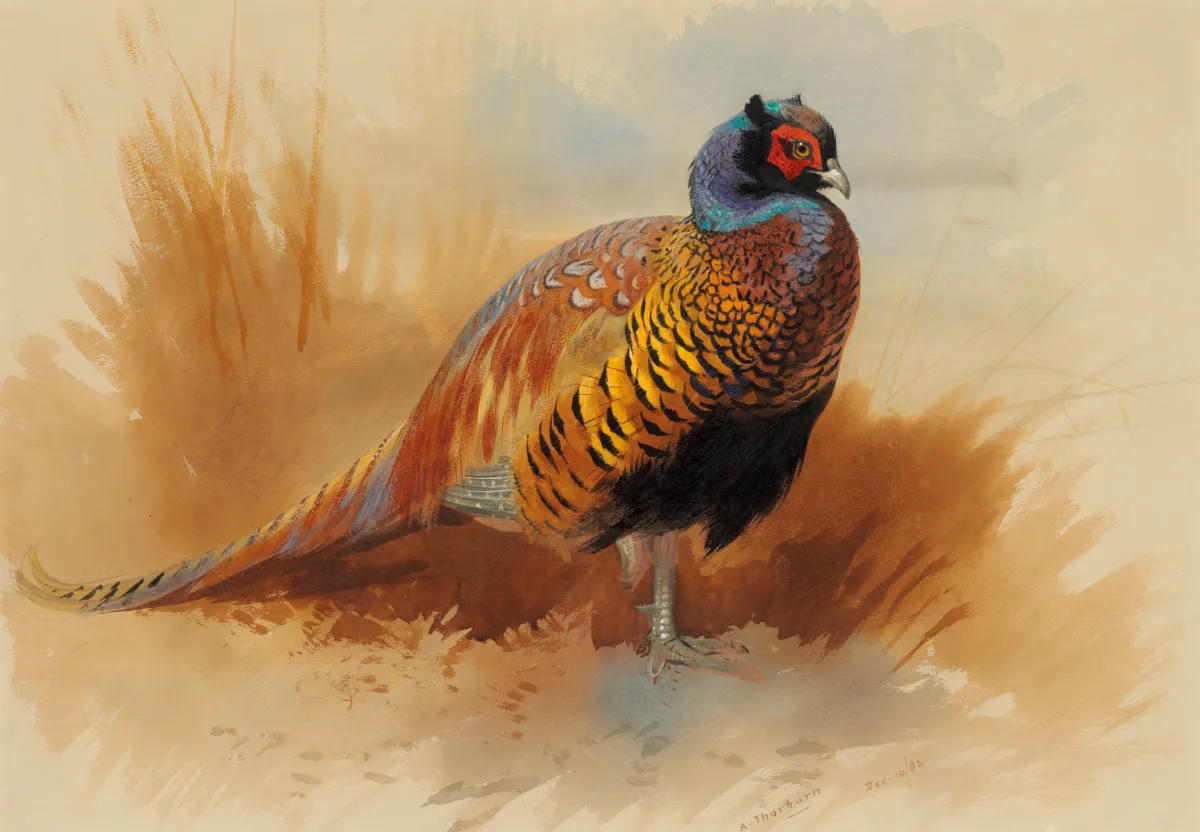
This fine art painting for sale tells a compelling story of survival and instinct, typical of the Naturalism movement’s focus on the raw drama of wildlife. Thorburn’s depiction of the polecat’s fierce defense against the least weasel symbolizes the eternal struggle for life in the natural world. Art enthusiasts may also find similar themes in related products like "Cock and hen pheasant in the undergrowth" and "Pintail, Teal And Wigeon," further highlighting Thorburn’s narrative artistry.
For those seeking a unique addition to their collection, "European polecat defending a rabbit carcass from a least weasel" is an exceptional hand-painted oil painting by Archibald Thorburn. As a celebrated figure in the Naturalism movement, Thorburn’s works, including "On The Seashore," are prized for their authenticity and attention to detail. This painting is a true collector’s treasure, blending artistic mastery with the captivating beauty of the wild, and is a standout among fine art painting for sale.
When Art Meets History
Archibald Thorburn’s remarkable hand-painted oil painting, "European polecat defending a rabbit carcass from a least weasel," stands as a vivid testament to the Naturalism movement. Created with meticulous attention to detail, Thorburn’s work captures a dramatic moment in the animal kingdom, reflecting both the beauty and brutality of nature. Like his contemporaries who painted "Portrait of Sarah Bernhardt" and "Hay Making," Thorburn brings history to life with his unique artistic vision and storytelling prowess.
Techniques That Speak
In this oil on canvas masterpiece, Thorburn demonstrates his technical prowess through intricate brushwork and a profound understanding of animal anatomy. His use of light and shadow brings depth and realism, echoing techniques seen in "Madame Godillot" and "Simon Hayem." The painting’s lifelike textures and dynamic composition are hallmarks of the Naturalism movement, inviting viewers to appreciate the raw, unfiltered beauty of wildlife as only a true master of the medium can present.
Emotions on Display
Every element in Thorburn’s fine art painting for sale evokes a palpable sense of tension and survival. The polecat’s fierce defense and the weasel’s cunning approach are rendered with expressive strokes, immersing the viewer in the emotional drama. This powerful storytelling aligns with the evocative mood found in works like "An ethereal beauty with putti in the clouds," allowing Thorburn’s audience to connect deeply with the scene’s emotional core, a signature of Naturalism’s evocative spirit.
Coveted by Collectors
As a celebrated example of hand-painted oil painting within the Naturalism movement, Thorburn’s "European polecat defending a rabbit carcass from a least weasel" is highly prized among collectors. Its rarity and masterful execution make it a sought-after piece, much like "Hay Making" and "Madame Godillot." Collectors appreciate not only the historical significance but also the technical brilliance, ensuring this artwork remains a treasured highlight in any fine art collection.
Related Naturalism Hand-Painted Oil Paintings by Other Artists
Other Famous Naturalism Artists:
Frequently Asked Questions About European polecat defending a rabbit carcass from a least weasel
What is the historical context of Archibald Thorburn's work?
Archibald Thorburn was active during the late 19th and early 20th centuries, a period marked by a growing interest in natural history and wildlife conservation. His paintings reflect the Victorian fascination with nature and the detailed observation of animal behavior.
What artistic techniques did Thorburn employ in this painting?
Thorburn was known for his meticulous attention to detail and use of vibrant colors. In this painting, he employs a realistic style characterized by fine brushwork and careful rendering of textures, particularly in the fur of the animals and the surrounding environment.
What symbolism is present in the painting?
The depiction of the European polecat defending its prey symbolizes the struggle for survival in the natural world. It highlights themes of predation, instinct, and the harsh realities of wildlife, serving as a reminder of the balance of nature.
How does this painting reflect the characteristics of the wildlife genre?
This painting exemplifies the wildlife genre by focusing on animals in their natural habitat, capturing their behaviors and interactions. Thorburn's work is celebrated for its authenticity and ability to evoke a sense of place within the animal kingdom.
What influences can be seen in Thorburn's artistic style?
Thorburn was influenced by earlier naturalists and artists such as John James Audubon and Charles Tunnicliffe. His work reflects a blend of scientific observation and artistic interpretation, merging the disciplines of art and natural history.
What role did nature play in Thorburn's artistic vision?
Nature was central to Thorburn's artistic vision. He sought to portray wildlife authentically, emphasizing the beauty and complexity of animal life. His paintings often serve as both artistic expressions and educational tools about the natural world.
How does this painting compare to other works by Thorburn?
Compared to other works by Thorburn, this painting showcases his ability to capture dynamic action and tension in wildlife scenes. While many of his pieces feature solitary animals, this work emphasizes interaction and conflict, highlighting the drama of nature.
What is the significance of the animals depicted in this painting?
The European polecat and least weasel are significant as they represent common species within the British ecosystem. Their portrayal in this painting underscores the importance of biodiversity and the roles different species play in their habitats.
What impact did Archibald Thorburn have on wildlife art?
Thorburn significantly impacted wildlife art by elevating the genre to a level of respectability and artistic merit. His detailed studies of animals inspired future generations of wildlife artists and contributed to the appreciation of nature in art.
How does this painting contribute to our understanding of animal behavior?
This painting offers insight into the instinctual behaviors of predators and prey, illustrating the natural instincts that drive survival. It encourages viewers to reflect on the complexities of animal interactions and the realities of life in the wild.























_GFM_Painting_(1).webp)


 100% Hand-Painted: Finished in 3-6 Weeks

.png)















_(1).webp)