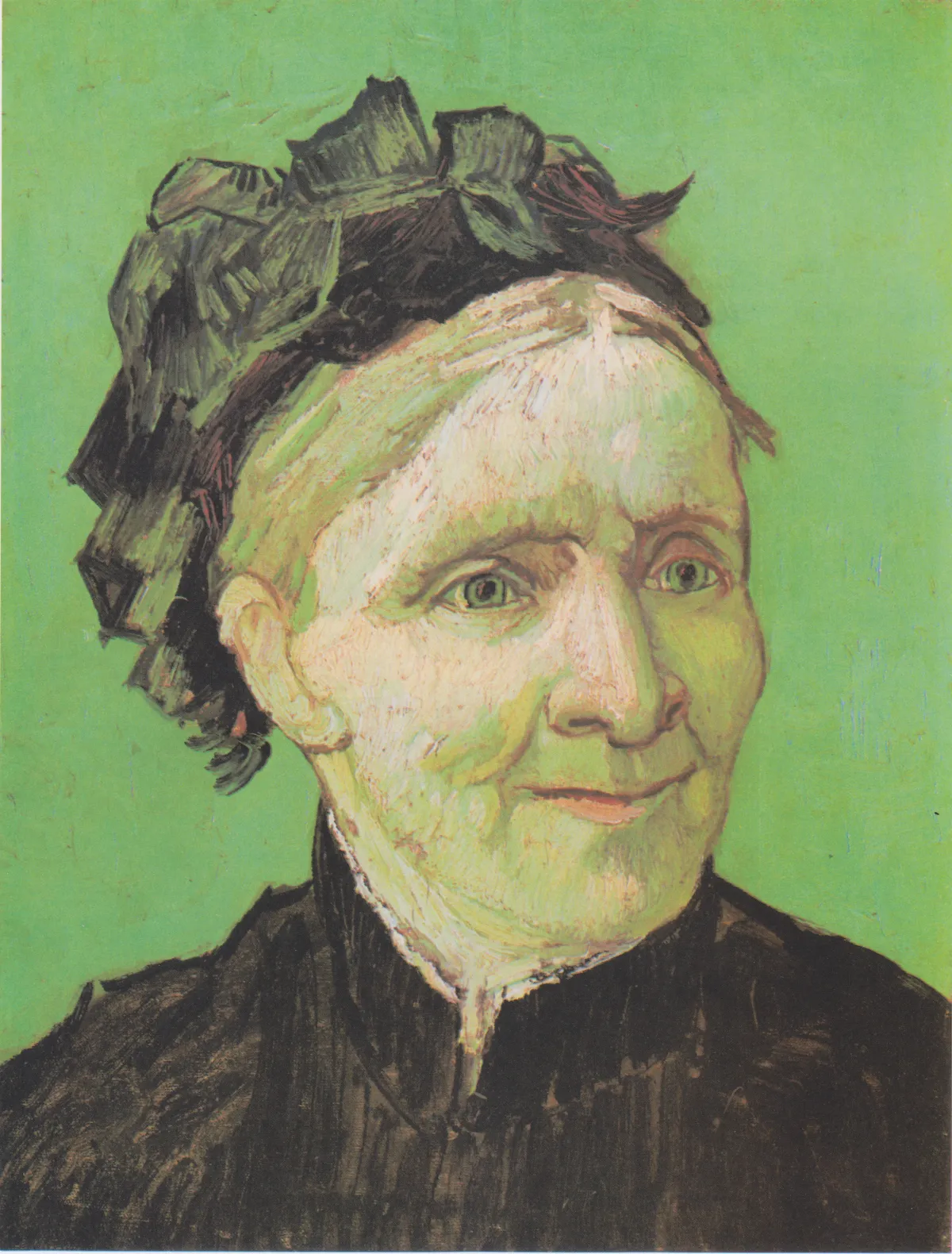
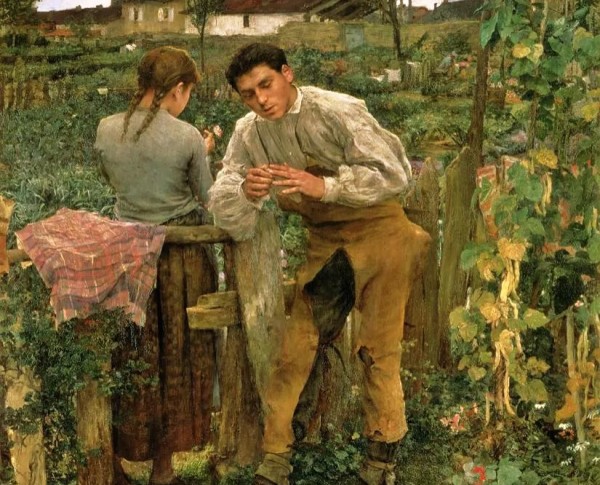
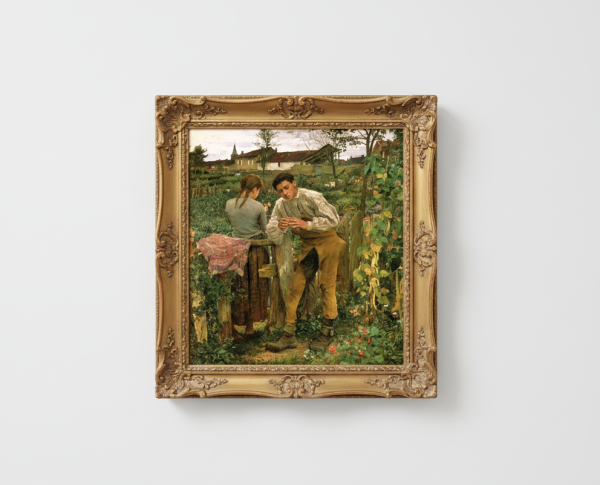
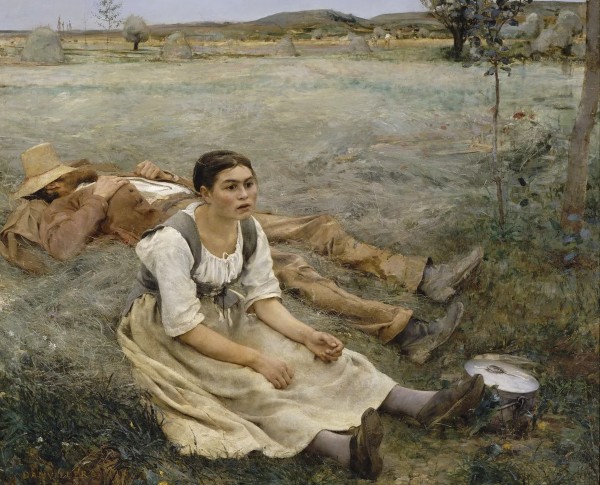
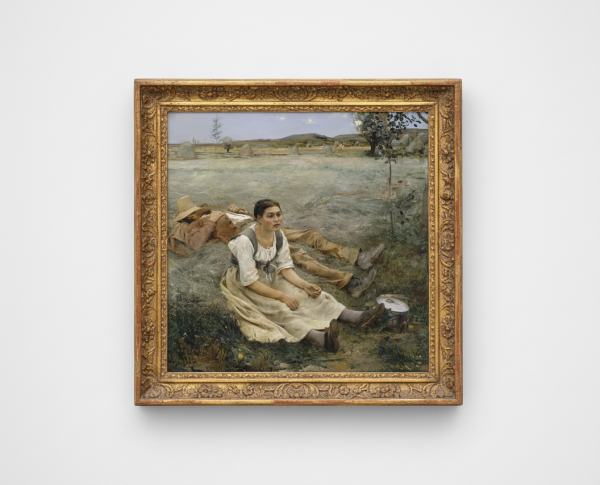
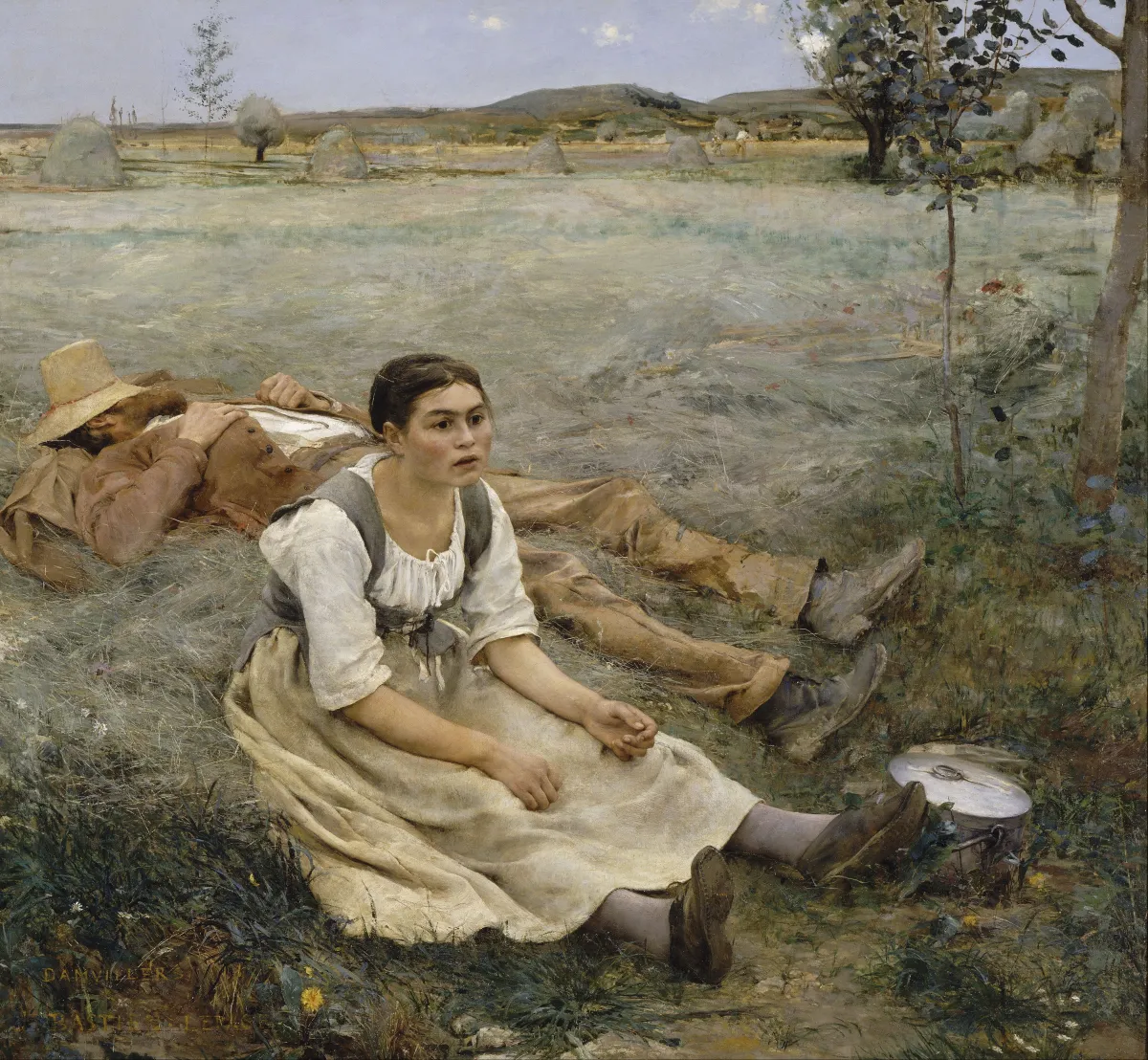
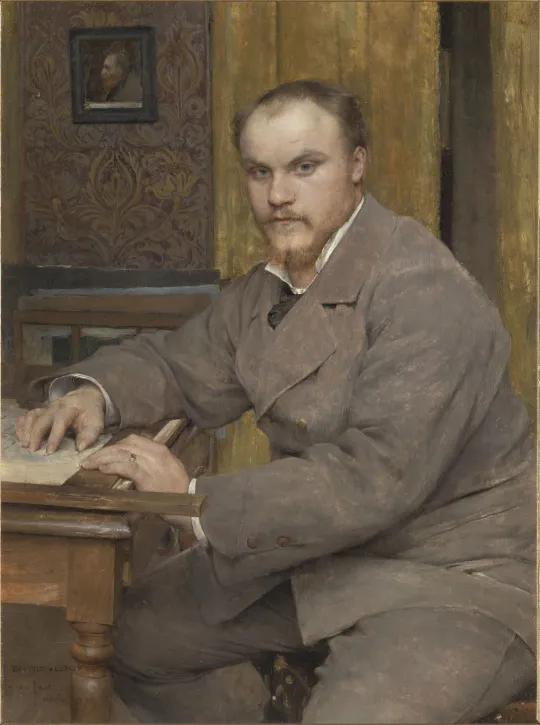
Bastien Lepage’s "Hay Making" showcases his exceptional skill with oil on canvas, blending subtle light and shadow to evoke the languid atmosphere of a summer’s day. Each brushstroke reveals his devotion to the Naturalism movement, making the painting a benchmark for artistic realism. Related products such as "Piet-Lataudrie, collector" and "Madame Godillot" further illustrate Lepage’s technical prowess and his ability to capture the essence of his subjects in a timeless manner.
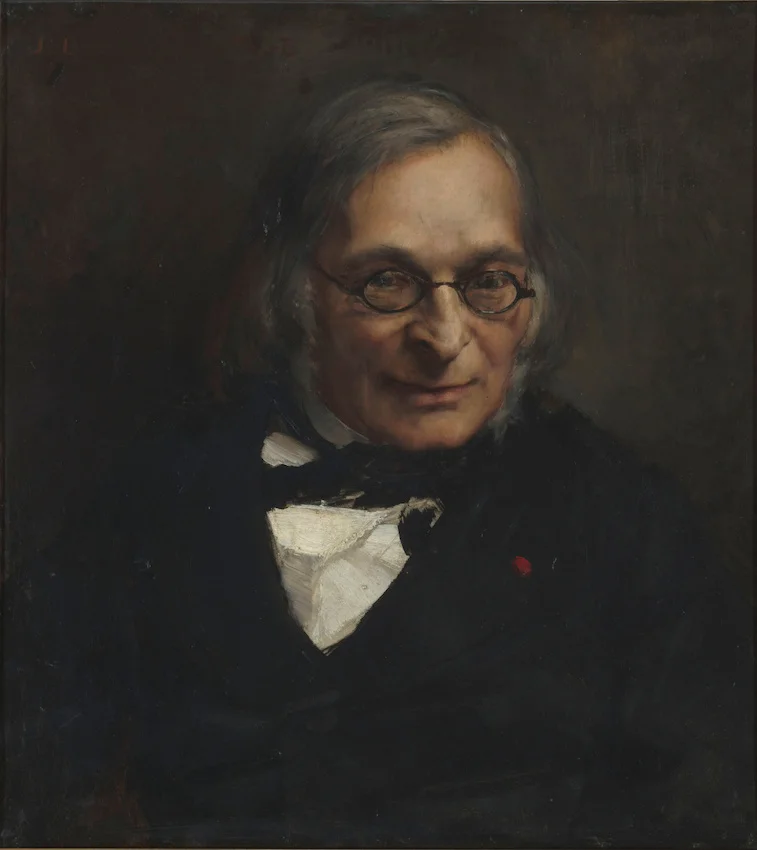
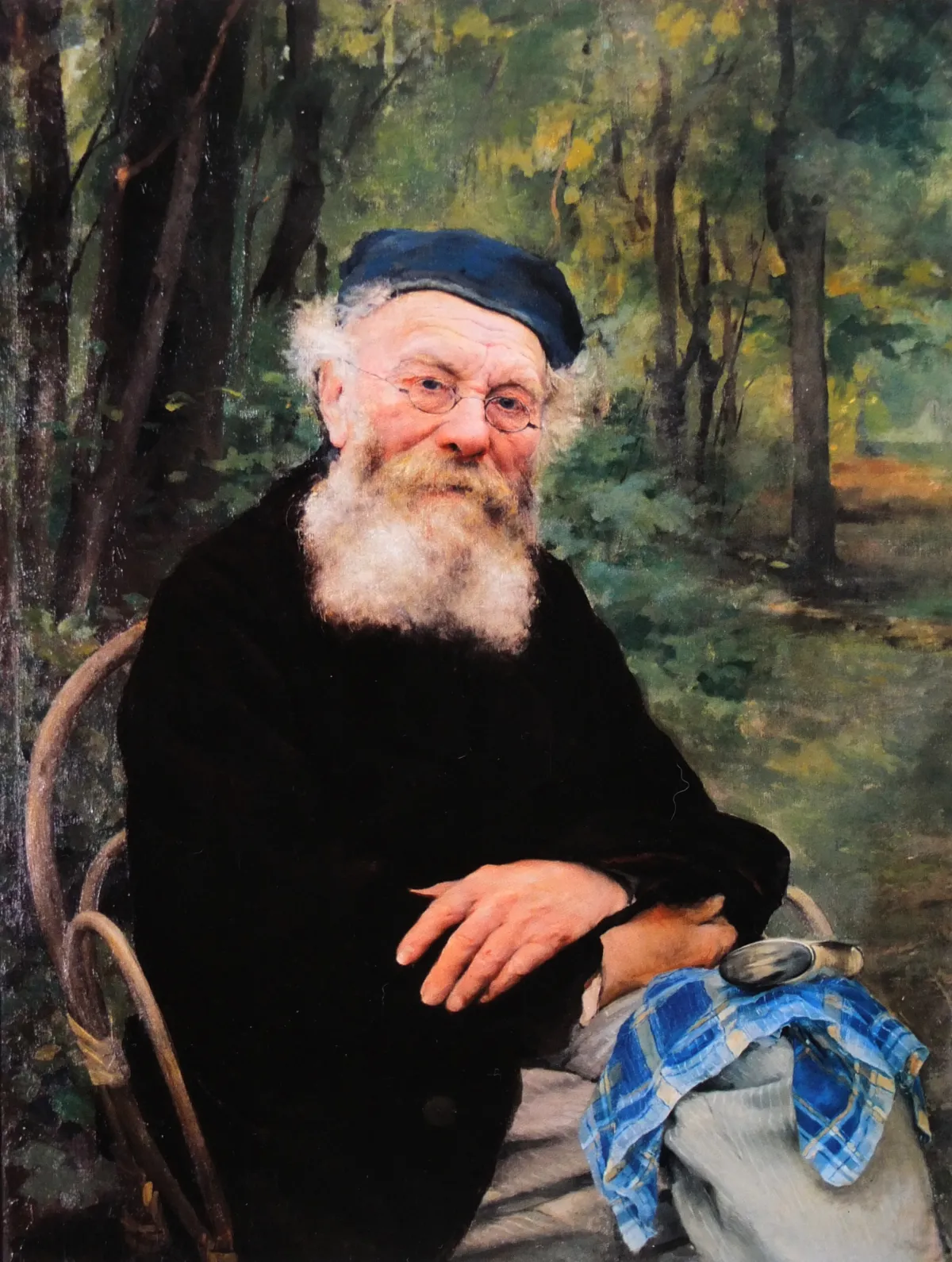
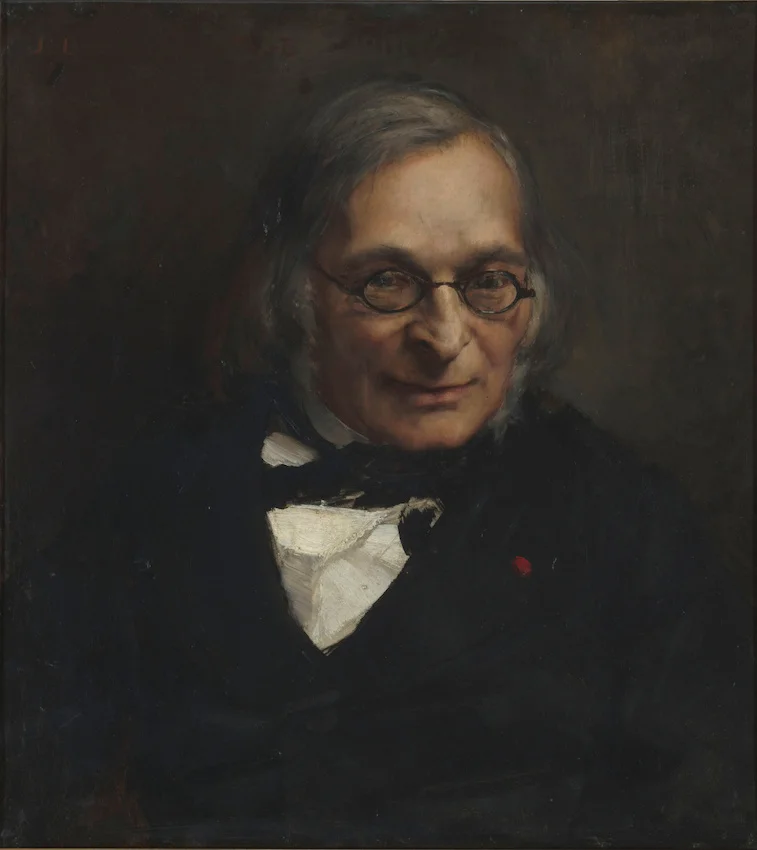
Within "Hay Making," Bastien Lepage weaves a narrative of rural toil and quiet reflection, emblematic of the Naturalism movement. The figures, rendered with empathy, speak to broader themes of labor and rest. This fine art painting for sale invites viewers to interpret its symbols, drawing parallels to other works like "The artist's grandfather" and "Adolphe Franck, French philosopher." Each element in the scene reveals Lepage’s storytelling genius and his deep connection to the countryside.
For art collectors, "Hay Making" by Bastien Lepage represents a unique opportunity to own a masterpiece of the Naturalism movement. The hand-painted oil painting stands alongside related works such as "October" and "Snow Effect, Damvillers," making it a prized addition to any fine art collection. Its authenticity and historical significance ensure enduring value, attracting both seasoned collectors and admirers of Bastien Lepage’s evocative, lifelike portrayals of rural France.
When Art Meets History
"Hay Making" by Bastien Lepage stands as a hallmark of the Naturalism movement, capturing rural life with remarkable authenticity. Painted in the late 19th century, this hand-painted oil painting reflects the era’s social realities and the artist’s deep empathy for his subjects. Bastien Lepage’s dedication to realism is also seen in related works such as "Winter landscape with mallard" and "Danger aloft – Ptarmigan," further cementing his legacy in Naturalist art.
Techniques That Speak
Bastien Lepage’s mastery of oil on canvas is evident in "Hay Making," where every brushstroke brings texture and light to life. The painting’s subtle palette and meticulous details exemplify the Naturalism movement’s commitment to truthful representation. Similar attention to technique is visible in Lepage’s works like "Little Owl and Scops Owl" and "Blackcocks at the Lek," making each piece a testament to his skill with oil on canvas and his observational prowess.
Emotions on Display
In "Hay Making," Bastien Lepage communicates profound emotion through the weary postures and serene expressions of his figures. The fine art painting for sale invites viewers to empathize with the rural workers, a hallmark of Naturalist art. This emotional depth is mirrored in related paintings such as "Blackcocks at the Lek," where nature’s drama unfolds in subtle gestures and mood, showcasing Lepage’s talent for evoking feeling through his brushwork.
Coveted by Collectors
"Hay Making" remains a prized fine art painting for sale among collectors who appreciate the authenticity and historical context of the Naturalism movement. Bastien Lepage’s works, including "Winter landscape with mallard" and "Danger aloft – Ptarmigan," are highly sought after for their technical excellence and evocative storytelling. Owning a piece like "Hay Making" offers not only aesthetic pleasure but also a connection to the rich tapestry of 19th-century art history.
Related Naturalism Hand-Painted Oil Paintings by Other Artists
Other Famous Naturalism Artists:
Frequently Asked Questions About Hay Making
What is the historical context of "Hay Making"?
"Hay Making," painted by Bastien-Lepage in 1877, reflects the rural life and agricultural practices of 19th-century France, a period marked by significant social and economic changes following the Industrial Revolution.
What artistic techniques did Bastien-Lepage employ in "Hay Making"?
Bastien-Lepage utilized naturalism and plein air techniques, capturing the effects of light and atmosphere, which were characteristic of the Impressionist movement, although he remained distinct in his detailed representation of subjects.
What themes are explored in "Hay Making"?
The painting explores themes of labor, rural life, and the connection between humans and nature, emphasizing the dignity of agricultural work and the beauty of the pastoral landscape.
How does "Hay Making" reflect the artist's style?
The work exemplifies Bastien-Lepage's signature style, which blends realism with a romanticized view of rural life, showcasing his ability to portray both the physicality of the landscape and the emotional resonance of the human experience.
What is the significance of the figures in "Hay Making"?
The figures in "Hay Making" represent the hardworking rural population, symbolizing the harmony between man and nature, and highlighting the importance of agricultural traditions in French culture.
What symbolism can be found in the landscape depicted in "Hay Making"?
The lush fields and vibrant colors in "Hay Making" symbolize fertility and abundance, reflecting the bountiful harvests of rural life and serving as a metaphor for the cyclical nature of life and labor.
How did "Hay Making" influence later artists?
"Hay Making" influenced later artists by bridging the gap between realism and impressionism, inspiring subsequent generations to explore the interplay of light, color, and everyday subjects in their works.
What role does light play in "Hay Making"?
The use of light in "Hay Making" is crucial, as it enhances the three-dimensionality of the figures and landscape, creating a dynamic interplay that draws the viewer into the scene and emphasizes the time of day.
In what ways does "Hay Making" reflect the socio-economic conditions of its time?
The painting reflects the socio-economic conditions of the late 19th century, illustrating the importance of agriculture in a rapidly industrializing society and highlighting the struggles and resilience of rural communities.
What is the legacy of "Hay Making" in the context of French art history?
"Hay Making" holds a significant place in French art history as a testament to the naturalist movement, influencing the perception of rural life and contributing to the evolving narrative of modern art in France.






















_GFM_Painting_(1).webp)


 100% Hand-Painted: Finished in 3-6 Weeks

.png)















_(1).webp)