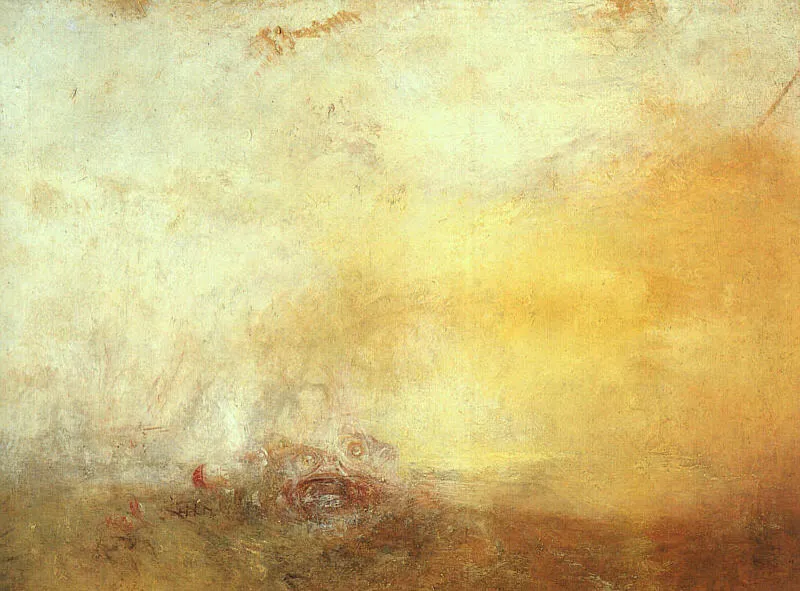
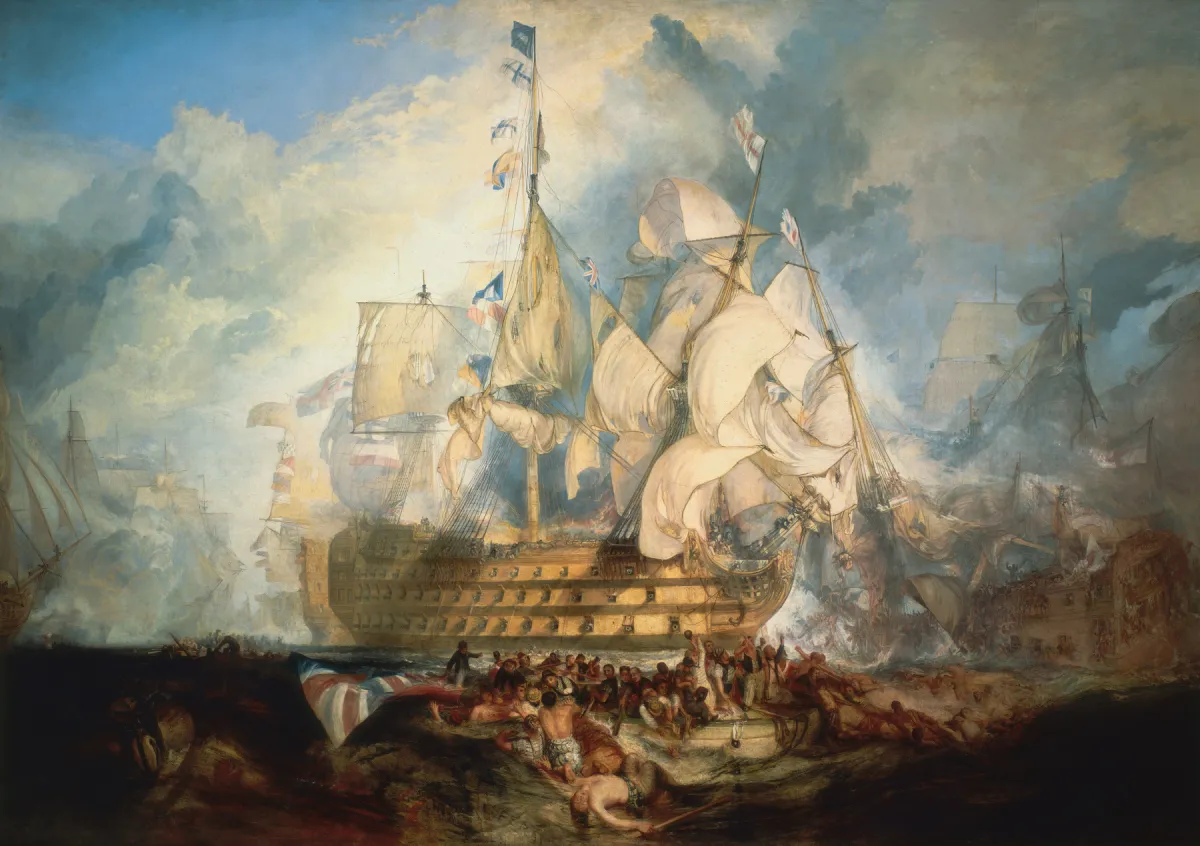
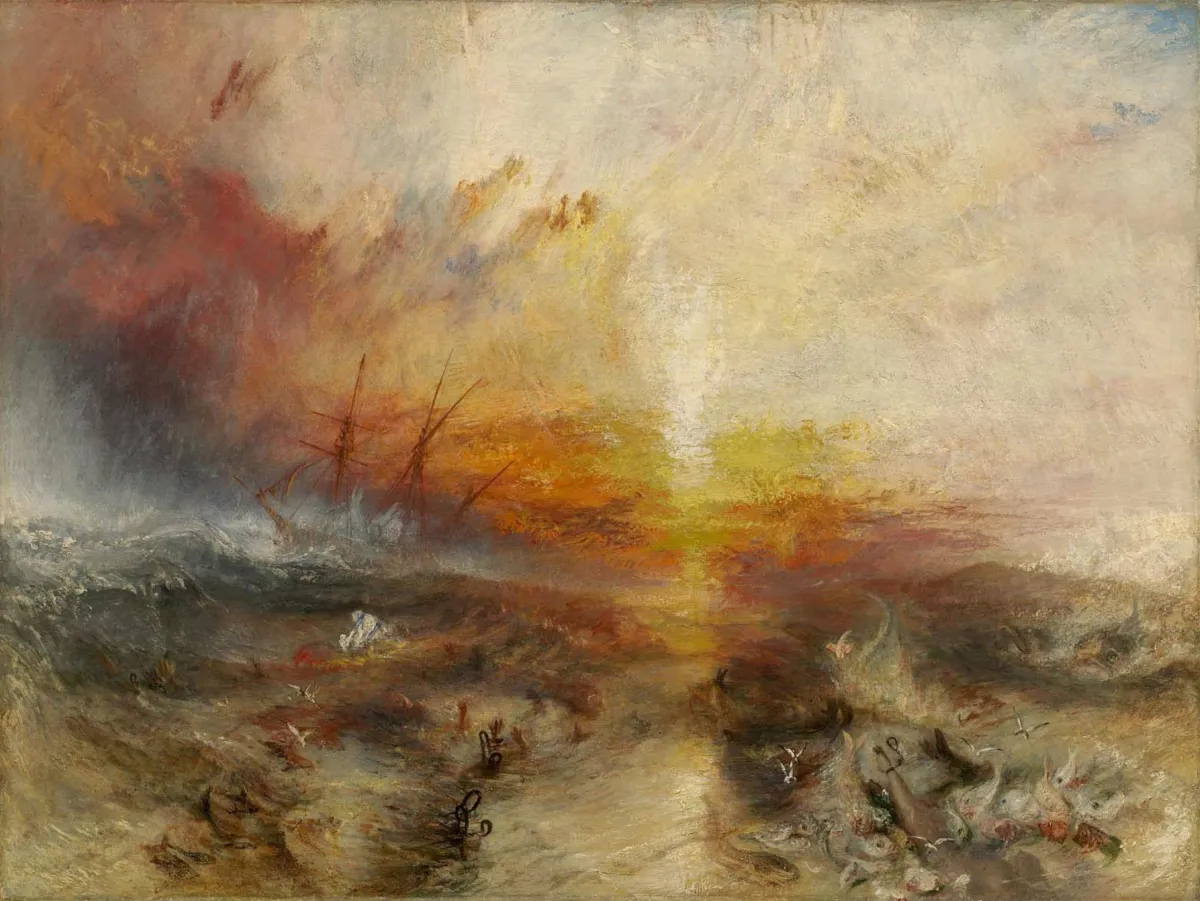
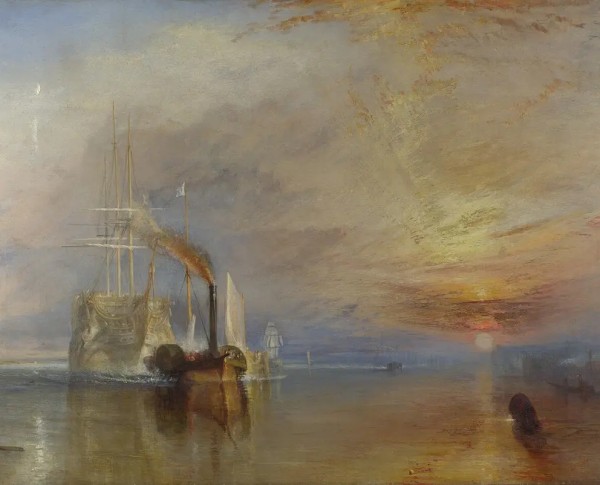
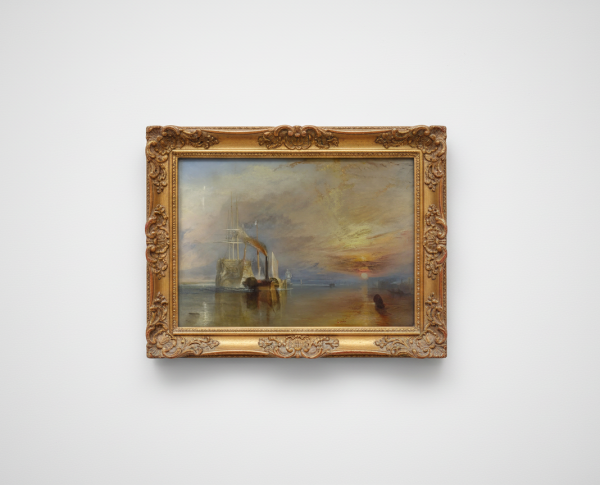
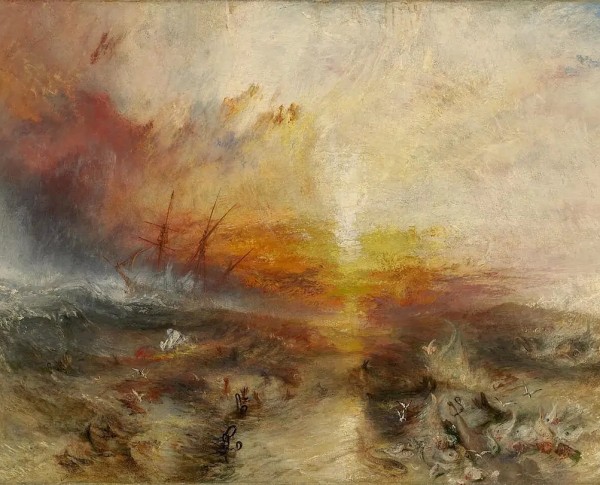
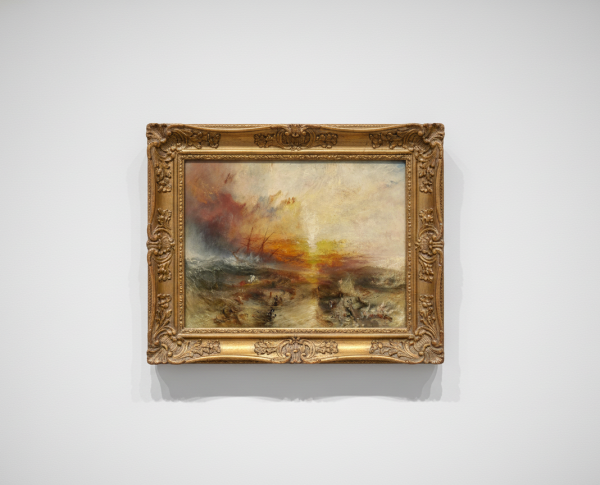
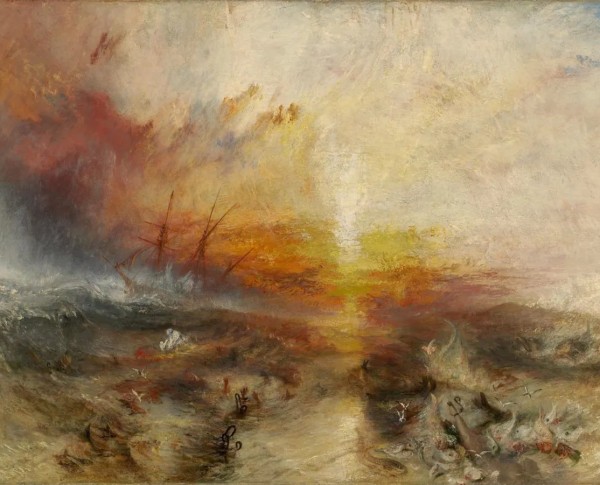
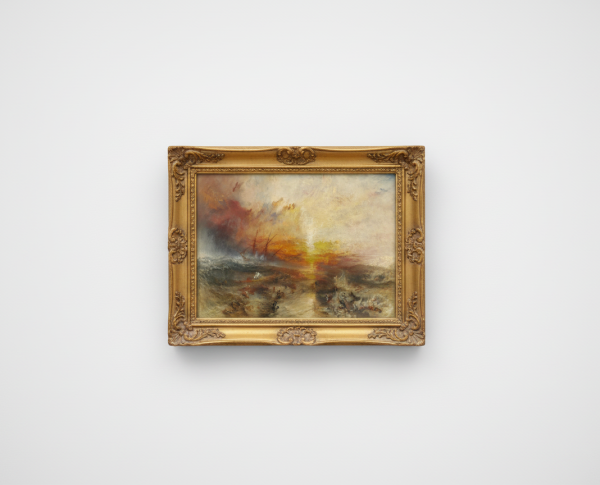
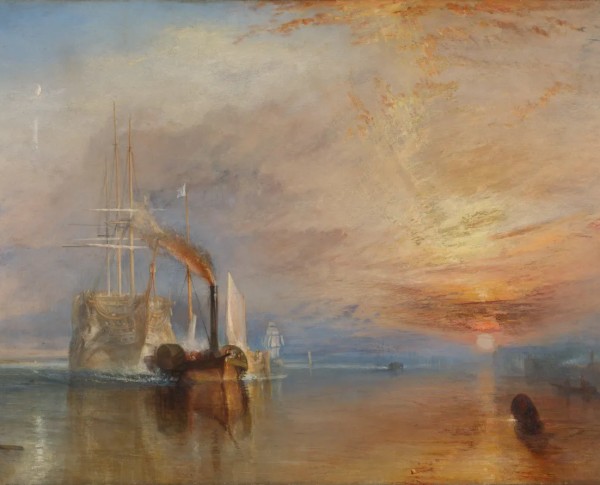
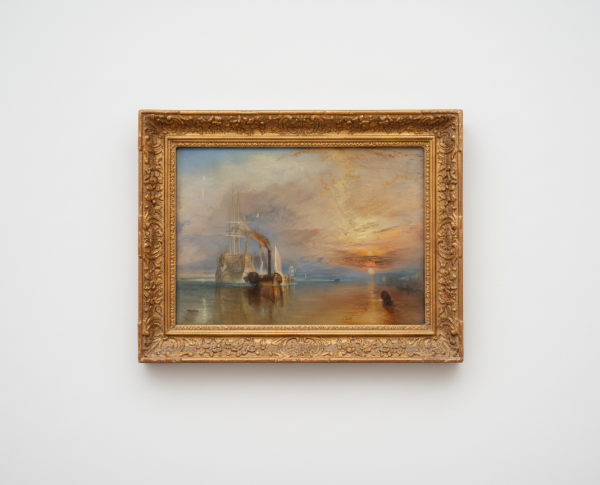
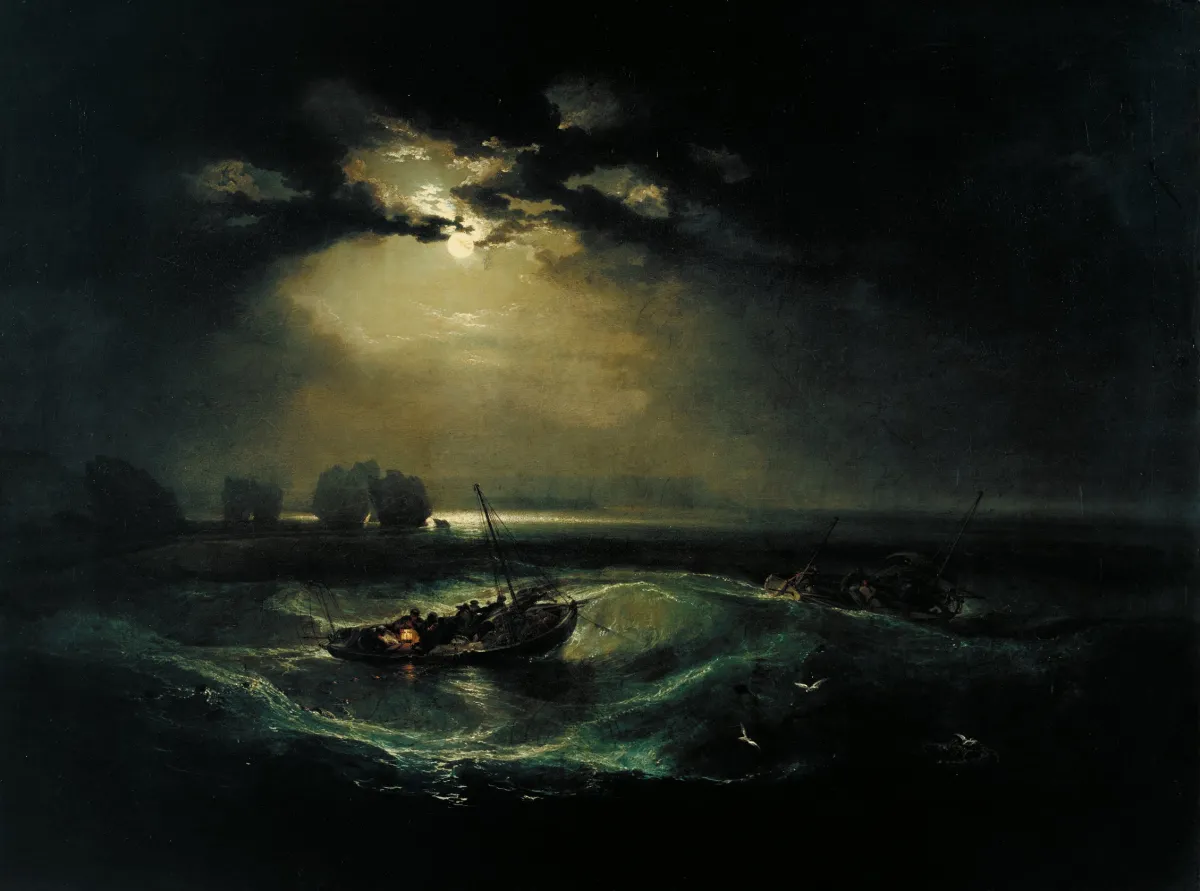
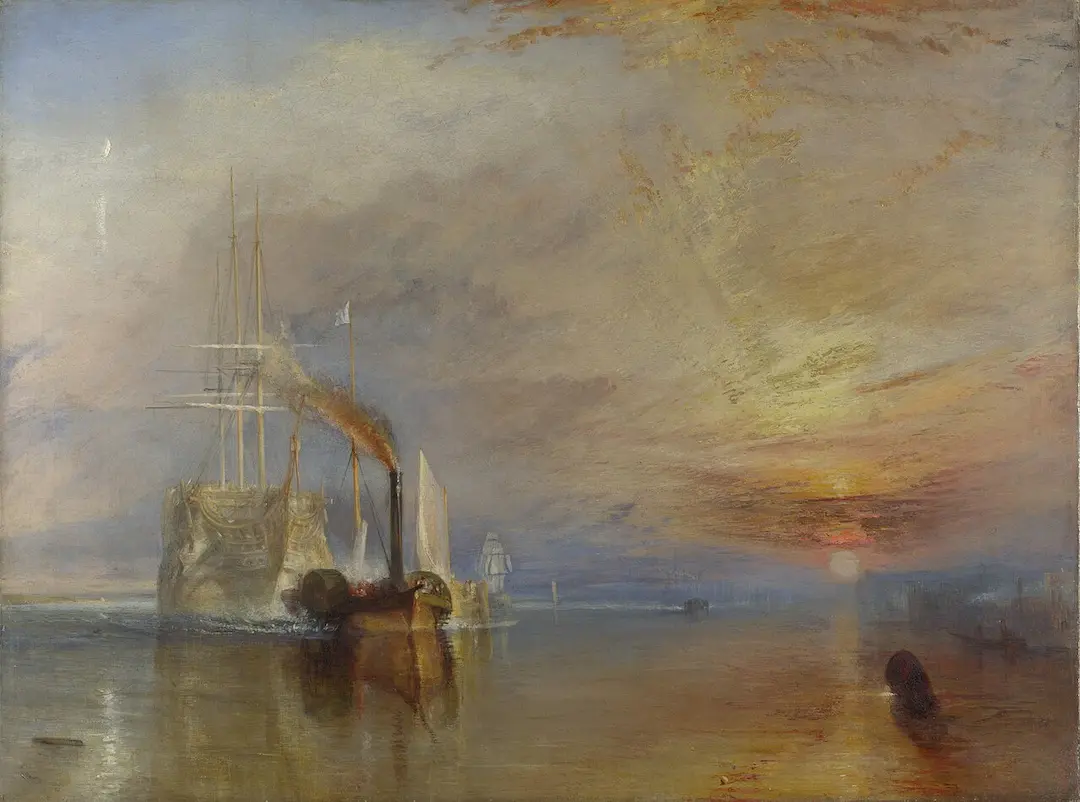
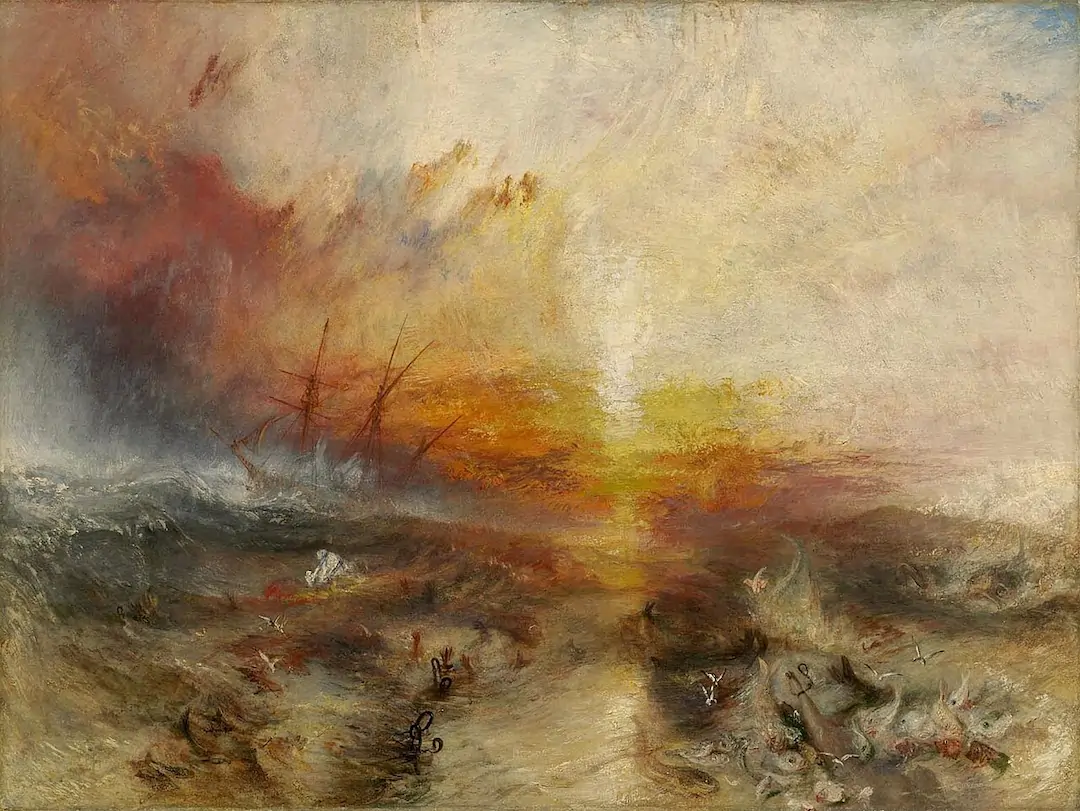
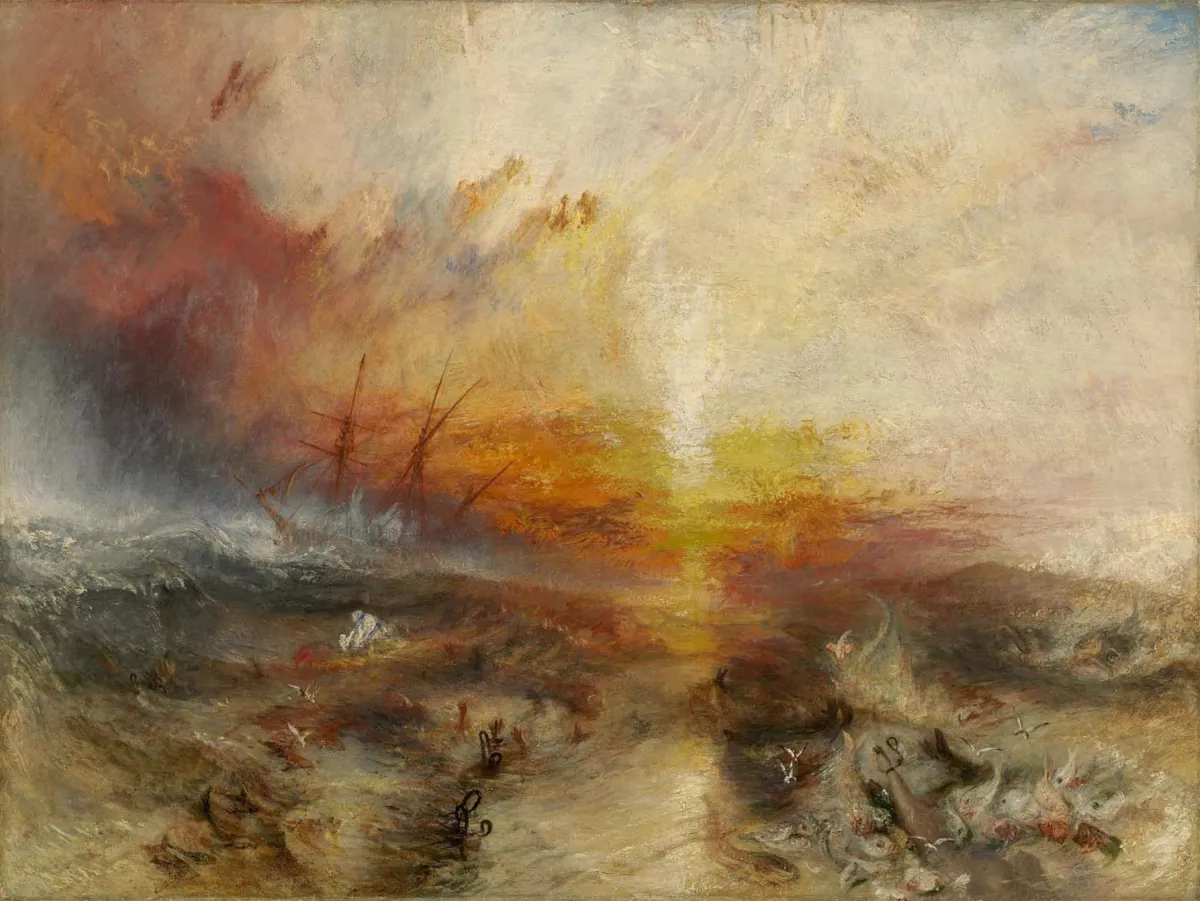
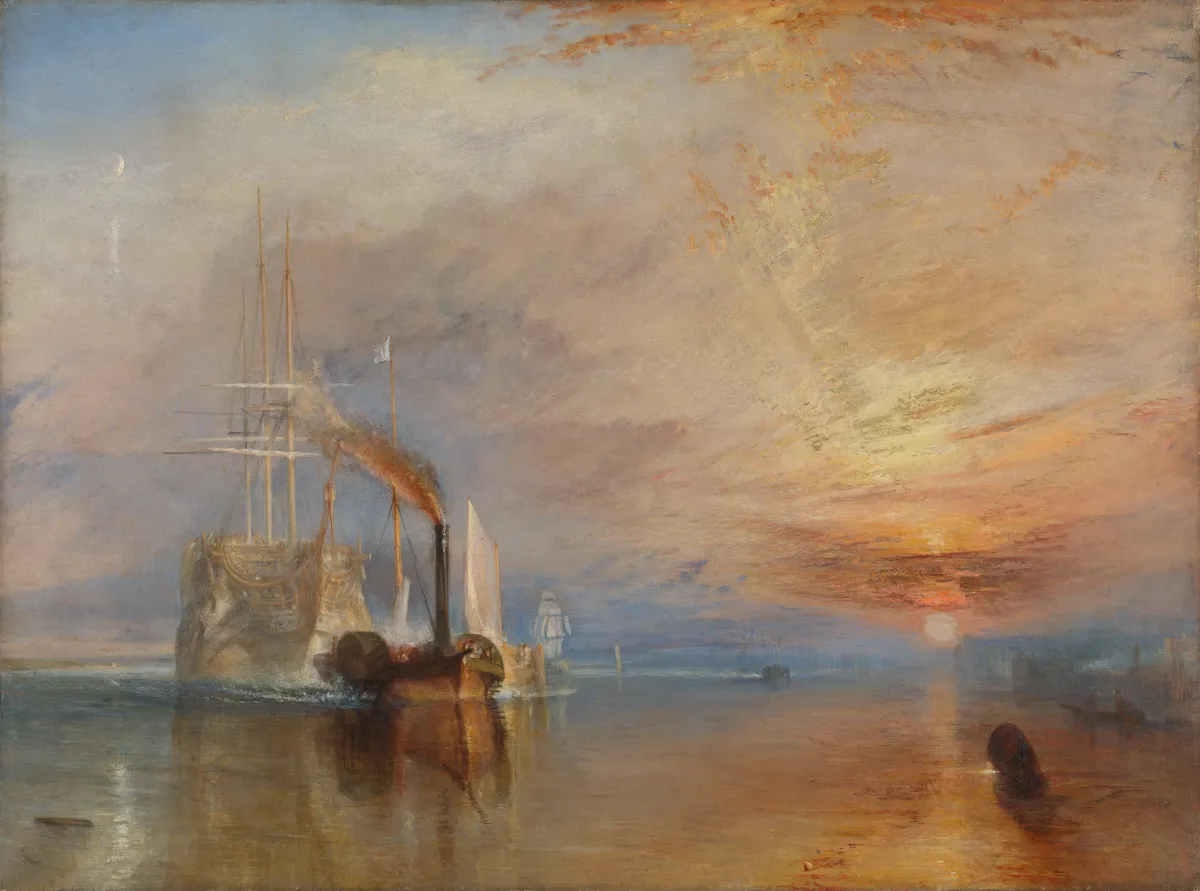
Turner's exceptional skills are evident in "Fishermen at Sea," where his mastery of oil on canvas brings the restless sea and moonlit sky to life. The delicate interplay of light and shadow showcases his innovative technique, setting new standards for artists during the Romanticism period. Art lovers and collectors may also appreciate related works such as "The Slave Ship 1840" and "The Fighting 'Téméraire' tugged to her last Berth to be broken up."
"Fishermen at Sea" is more than a fine art painting for sale; it is a narrative of man's fragile existence against the vast power of nature. Turner weaves symbolism throughout the composition, using the flickering lantern and turbulent waves to convey hope and peril. The painting's dramatic storytelling aligns it with other Romantic masterpieces like "The Fighting Temeraire" and "The Slave Ship," enriching any art collection.
As one of Turner's earliest exhibited works, "Fishermen at Sea" is a coveted hand-painted oil painting among art enthusiasts. Its historical significance and connection to the Romanticism movement enhance its desirability. For those seeking to expand their galleries, Turner’s related creations—such as "The Slave Ship 1840" and "The Fighting 'Téméraire' tugged to her last Berth to be broken up"—offer complementary additions to this timeless masterpiece.
When Art Meets History
"Fishermen at Sea" by Joseph Mallord William Turner stands as a remarkable example of the Romanticism movement. Painted in 1796, it captures a dramatic nocturnal seascape, reflecting the era's fascination with nature's power and beauty. This hand-painted oil painting is often compared to related works like "Two Men by the Sea" and "The Wanderer above the Mists 1817-18," which also highlight artists’ deep connection to nature and emotion during this period.
Techniques That Speak
Turner's masterful use of oil on canvas in "Fishermen at Sea" creates an atmospheric interplay of moonlight and turbulent waters. The brushwork and luminous color palette showcase his innovative approach, influencing later Romantic artists. When viewed alongside paintings like "Bathsheba Bathing" or "Dawn at the Alamo," Turner's technique stands out for its ability to evoke both serenity and awe, making this artwork a quintessential example of Romanticism’s technical brilliance.
Emotions on Display
"Fishermen at Sea" by Joseph Mallord William Turner evokes a sense of awe, vulnerability, and wonder, central to the Romanticism movement. The peril faced by the fishermen, set against the vast ocean, stirs emotions that transcend time. Collectors and art lovers are drawn to such fine art painting for sale for its ability to connect viewers to the sublime. Related works like "Portrait of Giovanni David as Alessandro" similarly explore deep emotional landscapes.
Coveted by Collectors
Collectors worldwide seek out "Fishermen at Sea" for its historical significance and evocative beauty. As a standout hand-painted oil painting by Joseph Mallord William Turner, it represents a pivotal moment in Romanticism. Its atmospheric qualities rival those of related masterpieces, such as "The Wanderer above the Mists 1817-18" and "Dawn at the Alamo," making it a highly desirable piece for anyone passionate about collecting influential works of fine art.
Related Romanticism Hand-Painted Oil Paintings by Other Artists
Other Famous Romanticism Artists:
Frequently Asked Questions About Fishermen at Sea
What is the historical context of "Fishermen at Sea"?
"Fishermen at Sea" was painted by Joseph Mallord William Turner in 1796, during a period when maritime themes were gaining popularity in British art. The painting reflects the Romantic era's fascination with nature and the sublime, showcasing the power of the sea and the struggle of humanity against it.
What artistic techniques did Turner employ in "Fishermen at Sea"?
Turner utilized a combination of oil paint and innovative brushwork to create dynamic waves and atmospheric effects. His use of light and color captures the tumultuous nature of the sea, emphasizing the emotional intensity of the scene.
What is the significance of the fishermen in the painting?
The fishermen symbolize the resilience and vulnerability of humanity in the face of nature's overwhelming forces. Their struggle against the turbulent sea reflects broader themes of survival and the human condition, which were central to Romantic art.
How does "Fishermen at Sea" exemplify Romanticism?
This painting exemplifies Romanticism through its emphasis on emotion, nature, and individual experience. Turner's dramatic portrayal of the sea conveys a sense of awe and terror, aligning with Romantic ideals that celebrate the sublime aspects of the natural world.
What role does light play in "Fishermen at Sea"?
Light is a crucial element in "Fishermen at Sea," as Turner uses it to create a sense of drama and movement. The contrast between the dark stormy sky and the illuminated waves enhances the emotional impact of the scene, drawing the viewer's eye to the fishermen's plight.
What influences can be seen in Turner's style in this painting?
Turner's style in "Fishermen at Sea" shows influences from both the Dutch masters and the emerging Impressionist movement. His focus on light, atmosphere, and the fleeting effects of nature foreshadowed later developments in modern art.
How does "Fishermen at Sea" reflect Turner's view of nature?
The painting reflects Turner's view of nature as both beautiful and terrifying. He portrays the sea as a powerful force that can inspire awe while also posing a significant threat to those who venture into it, highlighting the duality of nature's character.
What is the composition of "Fishermen at Sea"?
The composition features a dramatic diagonal arrangement, with the fishermen's boat positioned against the vastness of the stormy sea. This creates a sense of movement and tension, drawing the viewer's eye across the canvas and enhancing the narrative of struggle.
What was the public reception of "Fishermen at Sea" when it was first exhibited?
Upon its exhibition in 1796, "Fishermen at Sea" received a mixed reception. While some praised Turner's innovative approach to light and atmosphere, others were critical of the painting's dramatic subject matter and emotional intensity, which were not universally appreciated at the time.
What legacy has "Fishermen at Sea" left in the art world?
"Fishermen at Sea" is considered a seminal work in the history of British art, influencing generations of artists with its exploration of light, color, and emotion. It paved the way for future movements, including Impressionism and Abstract Expressionism, solidifying Turner's status as a pioneer of modern art.






















_GFM_Painting_(1).webp)


 100% Hand-Painted: Finished in 3-6 Weeks

.png)















_(1).webp)