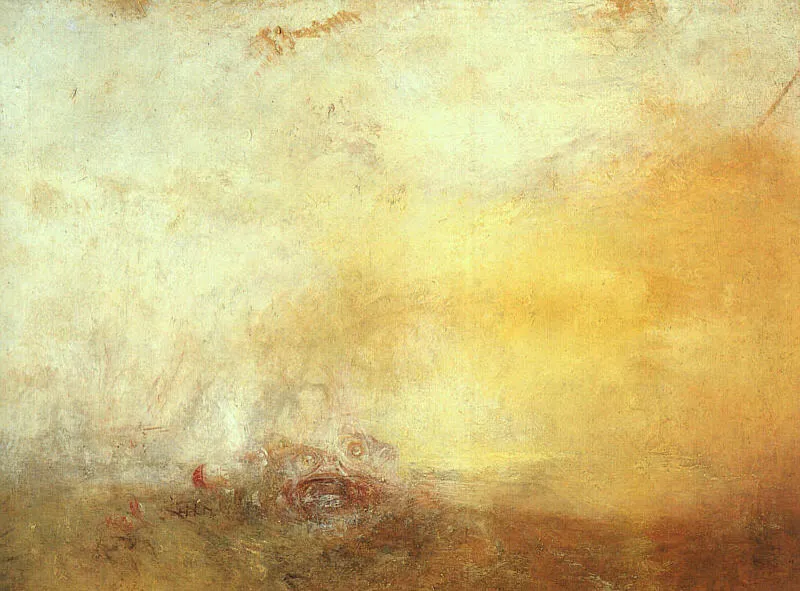
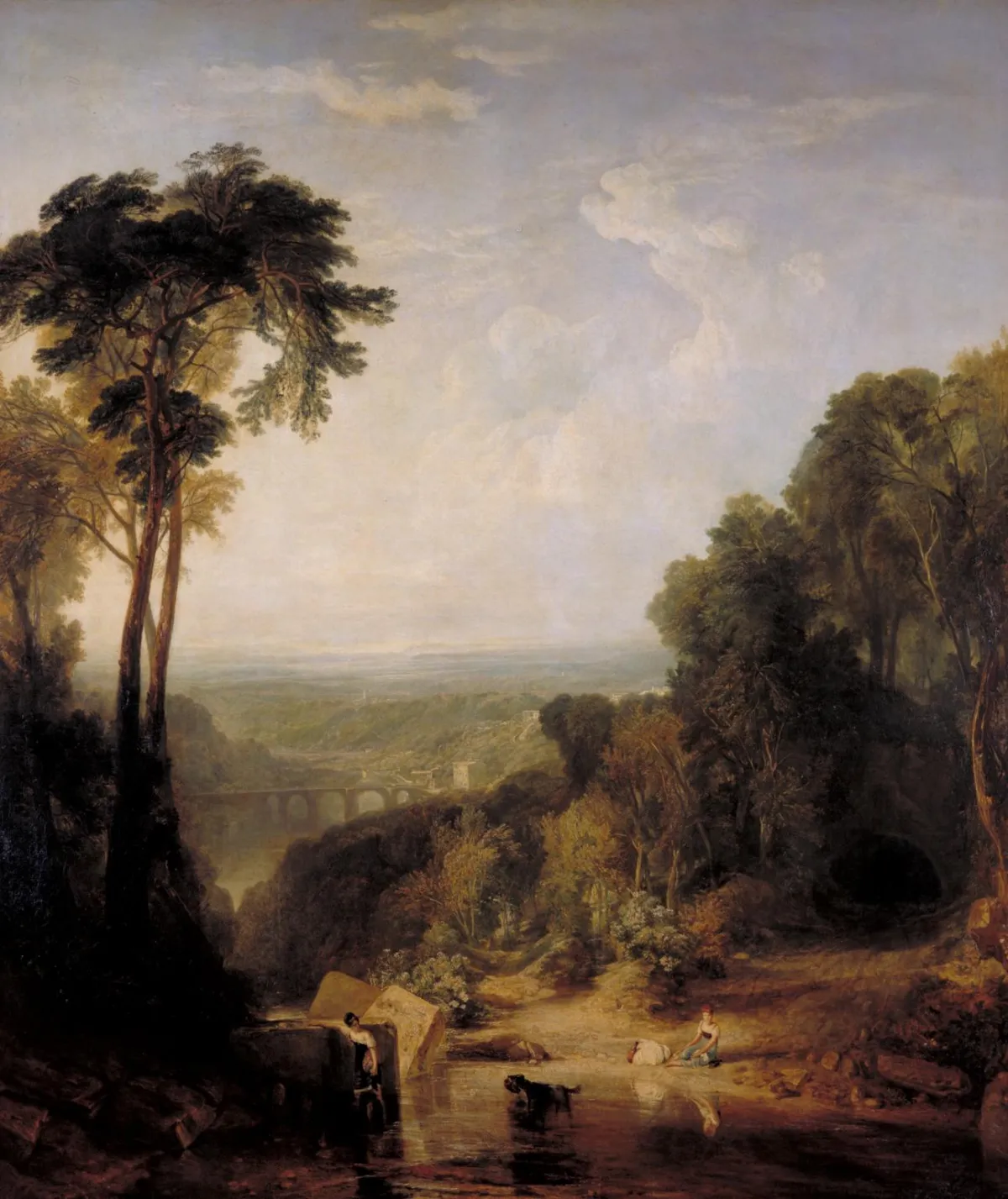
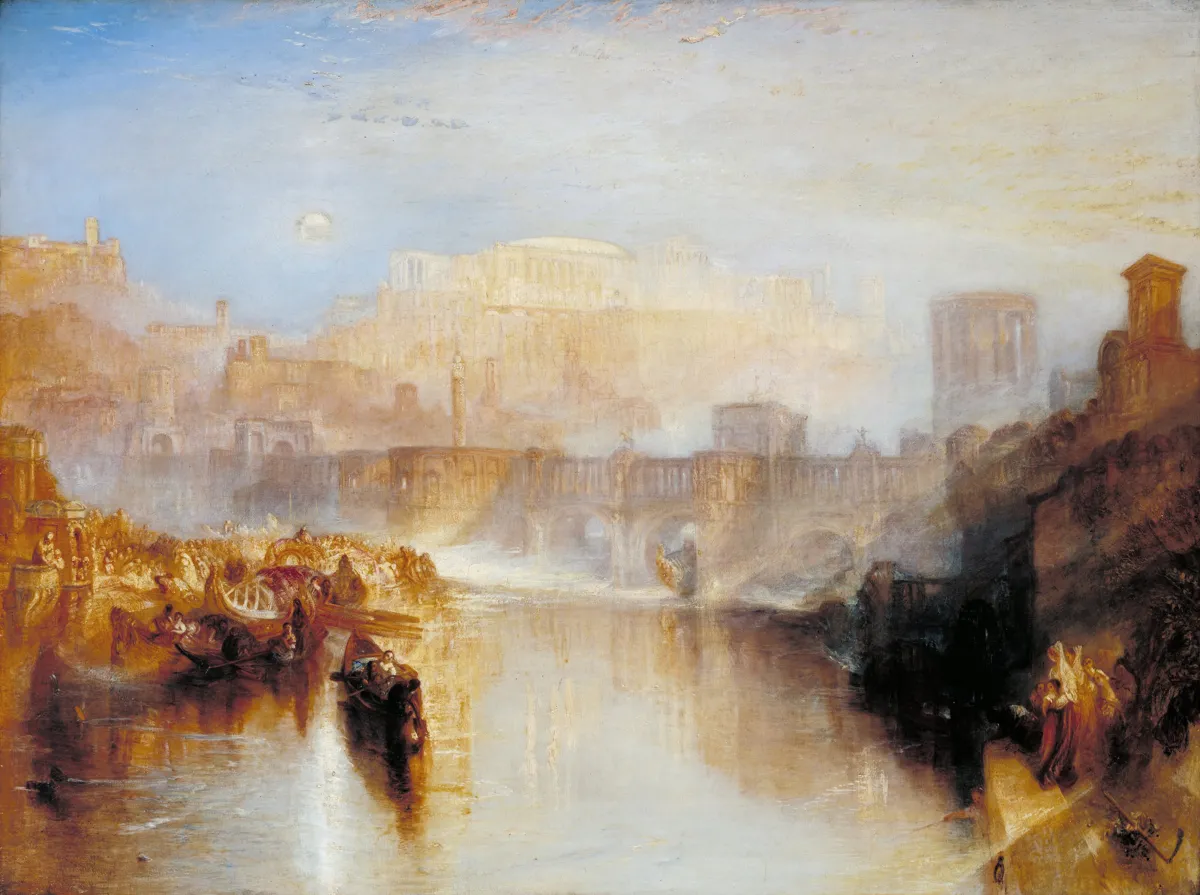
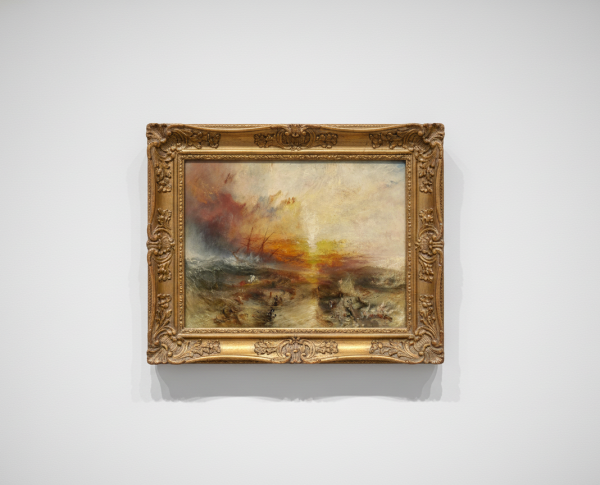
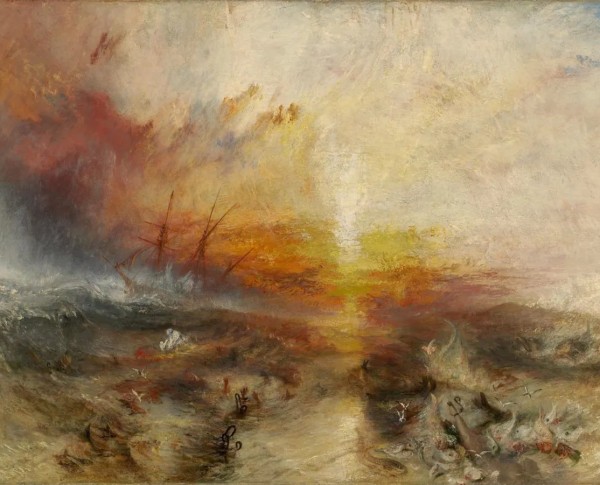
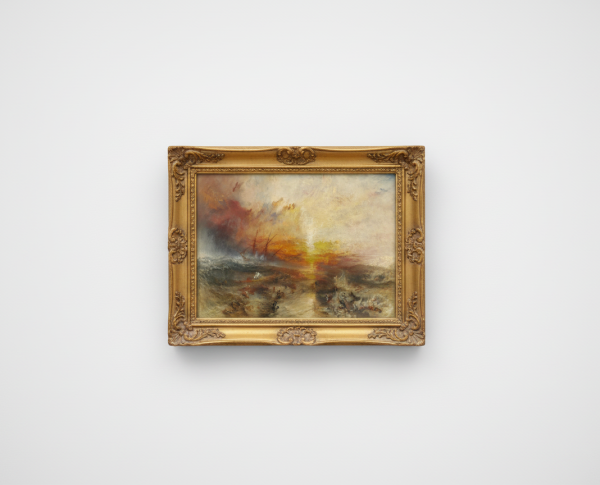
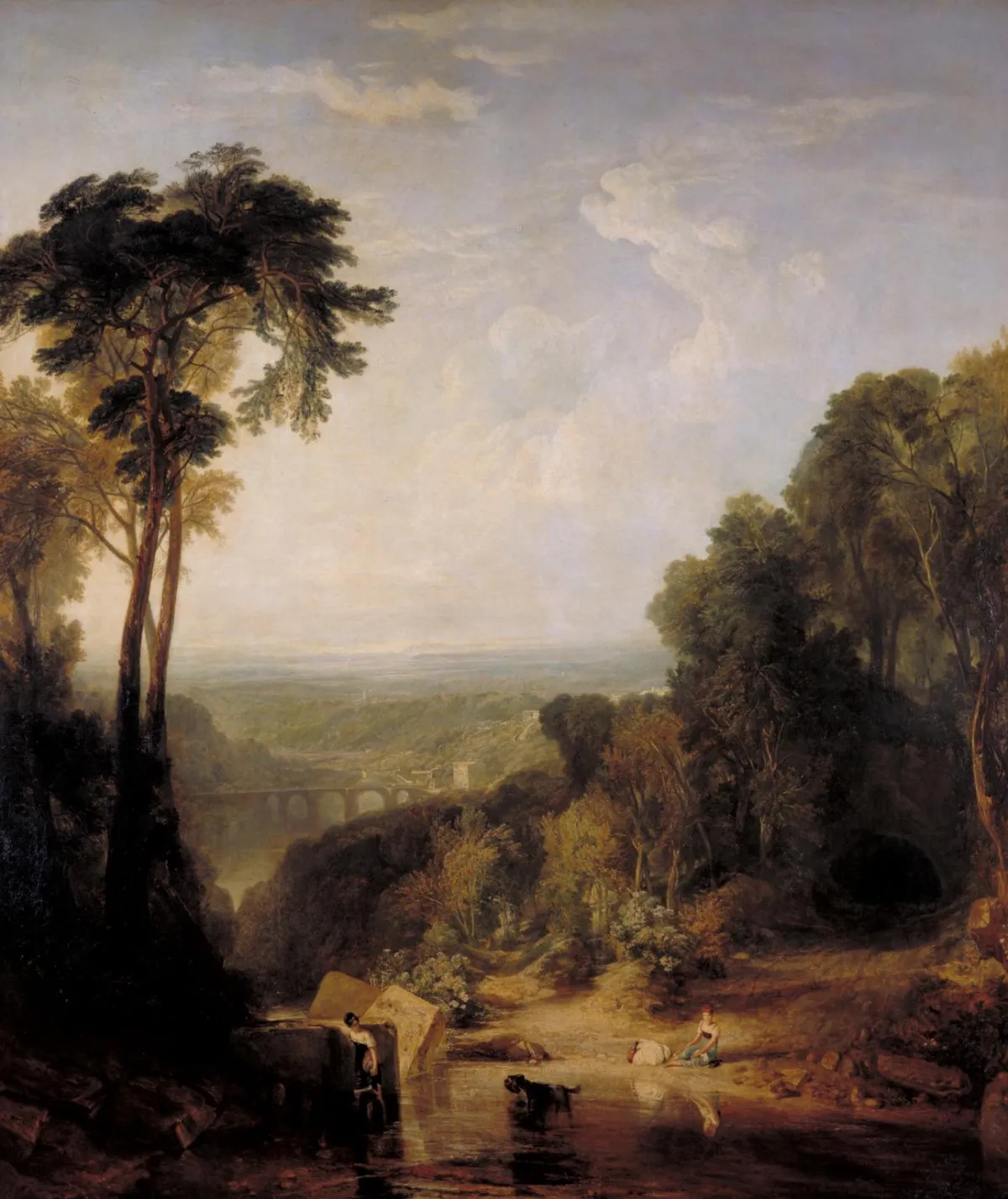
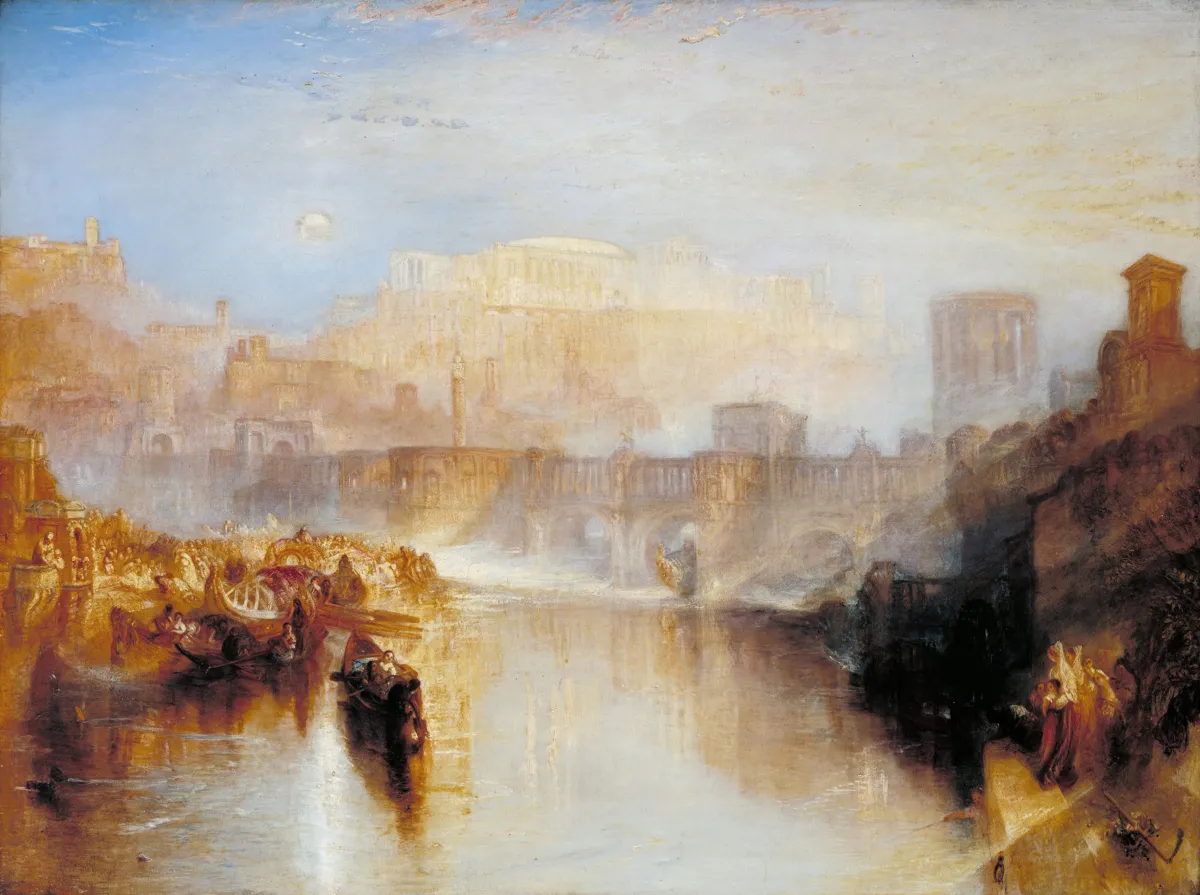
Turner’s technical prowess is evident in every brushstroke of "Crossing the Brook." The oil on canvas medium allows him to layer color and light, creating a vivid, atmospheric landscape. His mastery is also seen in other works like "Sunrise with Sea Monsters" and "Ancient Rome; Agrippina Landing with the Ashes of Germanicus." The Romanticism movement thrives in these textures, making each oil on canvas piece a testament to Turner’s innovative vision and unparalleled skill.
"Crossing the Brook" weaves narrative and symbolism into its lush landscape, reflecting Turner’s fascination with nature and human experience. The painting’s setting and figures evoke themes of journey, transition, and discovery, resonating with the Romanticism spirit. Similar storytelling can be found in related products like "Light and Colour (Goethe's Theory) – The Morning after the Deluge – Moses Writing the Book of Genesis." Each fine art painting for sale invites viewers to explore hidden meanings and emotional depths.
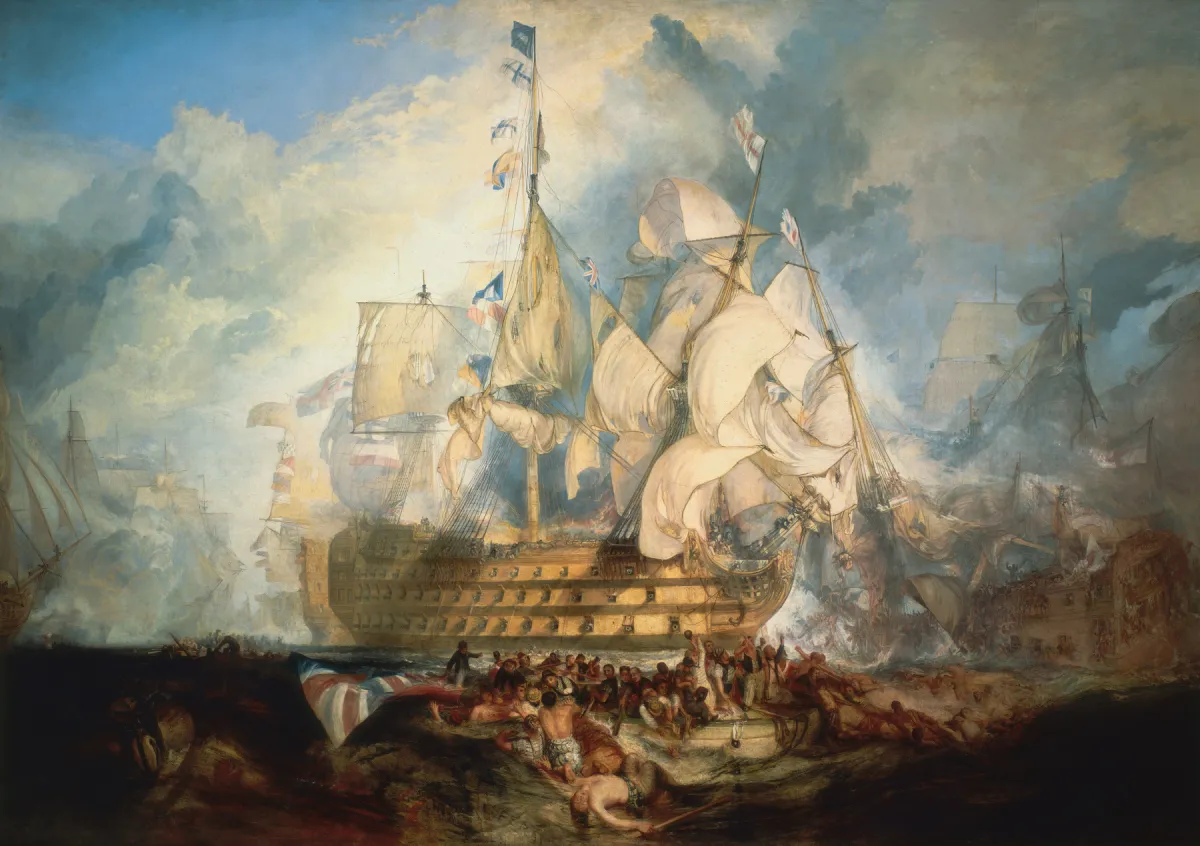
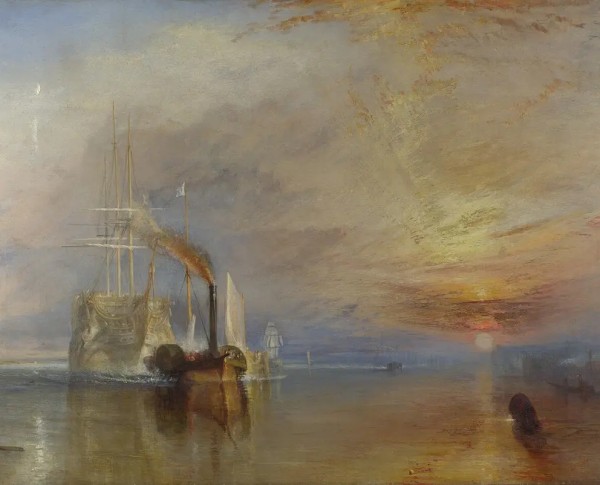
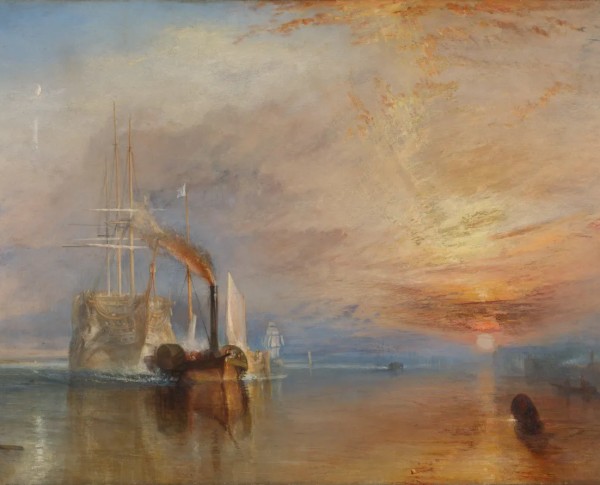
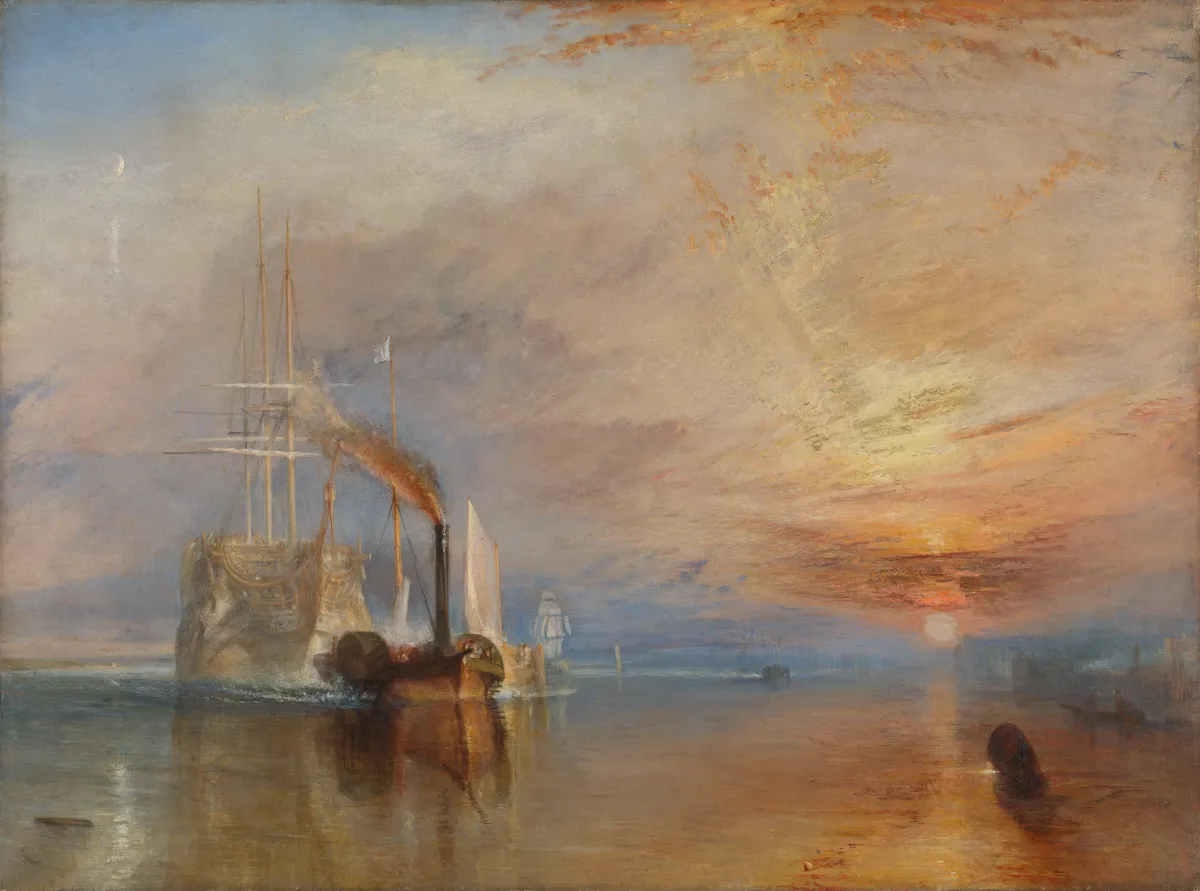
For collectors, owning "Crossing the Brook" by Joseph Mallord William Turner means possessing a piece of Romanticism’s rich heritage. This hand-painted oil painting is highly sought after, much like Turner’s renowned works including "The Fighting Temeraire" and "The Battle of Trafalgar." As a fine art painting for sale, it represents a unique investment in timeless beauty and historical significance, making it a cherished addition to any distinguished collection.
When Art Meets History
"Crossing the Brook" by Joseph Mallord William Turner, a key figure in the Romanticism movement, captures the spirit of early 19th-century landscape painting. This hand-painted oil painting reflects the era's fascination with nature’s grandeur and the emotional resonance of rural scenes. Turner's mastery aligns him with contemporaries like those behind "The Monk by the Sea" and "Washington Crossing the Delaware 1851," showcasing how art can immortalize historical moments and landscapes for future generations.
Techniques That Speak
Turner's "Crossing the Brook" exemplifies his innovative approach to oil on canvas, utilizing expressive brushwork and luminous color palettes that evoke the changing moods of the English countryside. His technique in this fine art painting for sale is comparable to the atmospheric qualities found in works like "Marine" and "The Lampugnani Conspiracy." By manipulating light and shadow, Turner creates depth and movement, inviting viewers to immerse themselves in the natural beauty of Romanticism.
Emotions on Display
The emotional intensity of "Crossing the Brook" lies in its sweeping vistas and dramatic skies, hallmarks of Turner’s hand-painted oil paintings. The scene radiates tranquility and awe, inviting viewers to reflect on nature's power and beauty. Similar emotional depth can be found in related paintings such as "Santa Claus" and "The Monk by the Sea," all demonstrating how Romanticism artists like Turner used landscape as a vessel for human feeling and contemplation.
Coveted by Collectors
As a celebrated oil on canvas work, "Crossing the Brook" remains highly sought after among collectors and art enthusiasts. Its place in the Romanticism movement and its connection to masterpieces like "Washington Crossing the Delaware 1851" and "Marine" enhance its desirability. Owning this fine art painting for sale is not just an investment in history, but also in the enduring legacy of Joseph Mallord William Turner’s visionary artistry.
Related Romanticism Hand-Painted Oil Paintings by Other Artists
Other Famous Romanticism Artists:
Frequently Asked Questions About Crossing the Brook
What is the historical context of "Crossing the Brook"?
"Crossing the Brook" was painted by Joseph Mallord William Turner in 1815, during a period when Romanticism was emerging as a dominant artistic movement. This era emphasized emotion, nature, and individualism, which are all evident in Turner's work.
What artistic techniques did Turner employ in "Crossing the Brook"?
Turner is known for his innovative use of light and color. In "Crossing the Brook," he employs a loose brushwork technique and a vibrant palette to create a sense of movement and atmosphere, capturing the essence of the natural landscape.
What themes are explored in "Crossing the Brook"?
The painting explores themes of nature, human interaction with the environment, and the sublime. It reflects the Romantic ideal of finding beauty and transcendence in the natural world.
How does "Crossing the Brook" reflect Turner's artistic evolution?
This work marks a transition in Turner's style, showcasing his shift towards a more expressive and atmospheric approach. It foreshadows his later masterpieces that further explore light and color as primary elements of composition.
What is the significance of the brook in the painting?
The brook serves as a symbol of life's journey and the passage of time. It represents both a physical and metaphorical crossing, inviting viewers to contemplate the relationship between humanity and nature.
What role does light play in "Crossing the Brook"?
Light is a central element in Turner's work, and in "Crossing the Brook," it creates a dynamic interplay between the figures and the landscape. The way light reflects off the water enhances the painting's emotional depth and sense of realism.
How does "Crossing the Brook" compare to other works by Turner?
Compared to other works by Turner, "Crossing the Brook" is notable for its balance of detailed realism and expressive abstraction. It shares thematic similarities with his later works, yet retains a more traditional composition typical of the early 19th century.
What influences can be seen in Turner's depiction of nature in this painting?
Turner's depiction of nature in "Crossing the Brook" is influenced by the Romantic movement, which emphasized the beauty and power of the natural world. The painting reflects a deep appreciation for the landscape, characteristic of Turner's broader oeuvre.
What is the significance of the figures in "Crossing the Brook"?
The figures in the painting represent humanity's relationship with nature. Their placement within the landscape emphasizes the scale of the natural world and suggests themes of exploration and connection to the environment.
How has "Crossing the Brook" been received by art critics over the years?
"Crossing the Brook" has been praised for its innovative approach and emotional resonance. Art critics have noted its significance in Turner's career and its impact on subsequent generations of artists, particularly in the realm of landscape painting.























_GFM_Painting_(1).webp)


 100% Hand-Painted: Finished in 3-6 Weeks

.png)















_(1).webp)