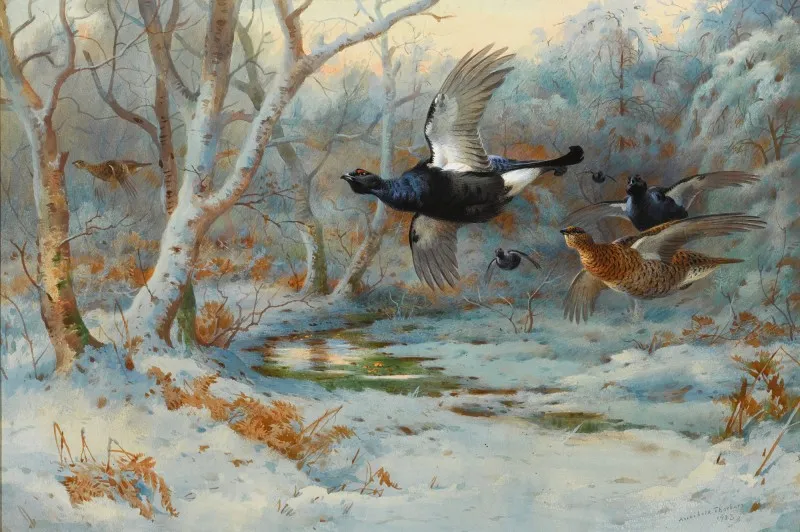
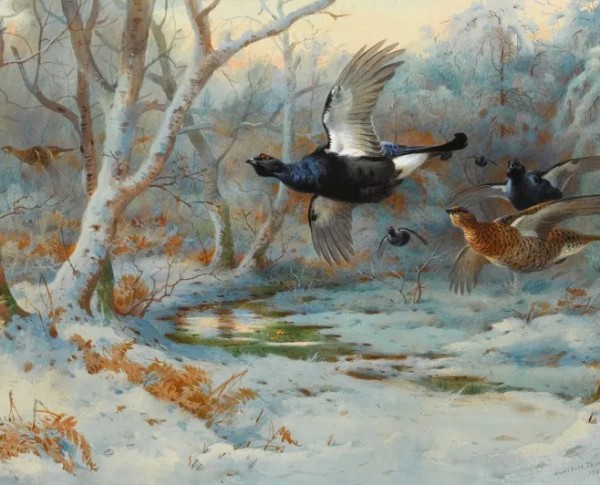
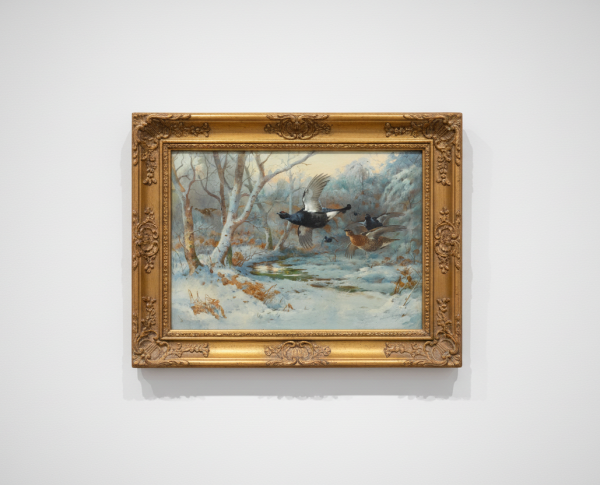
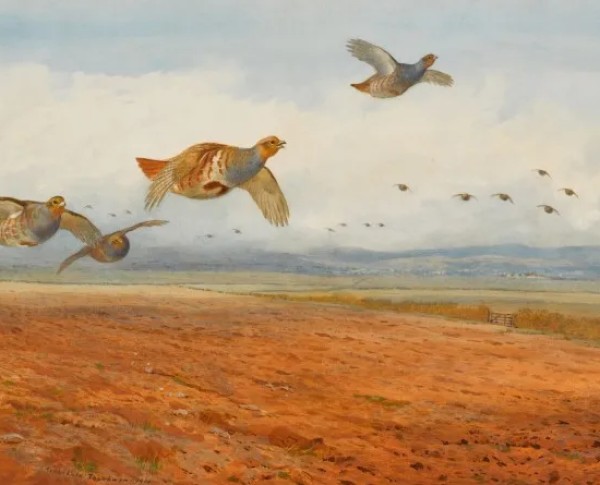
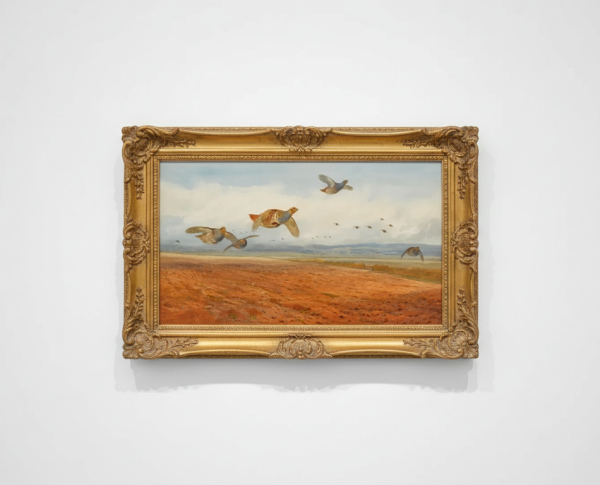
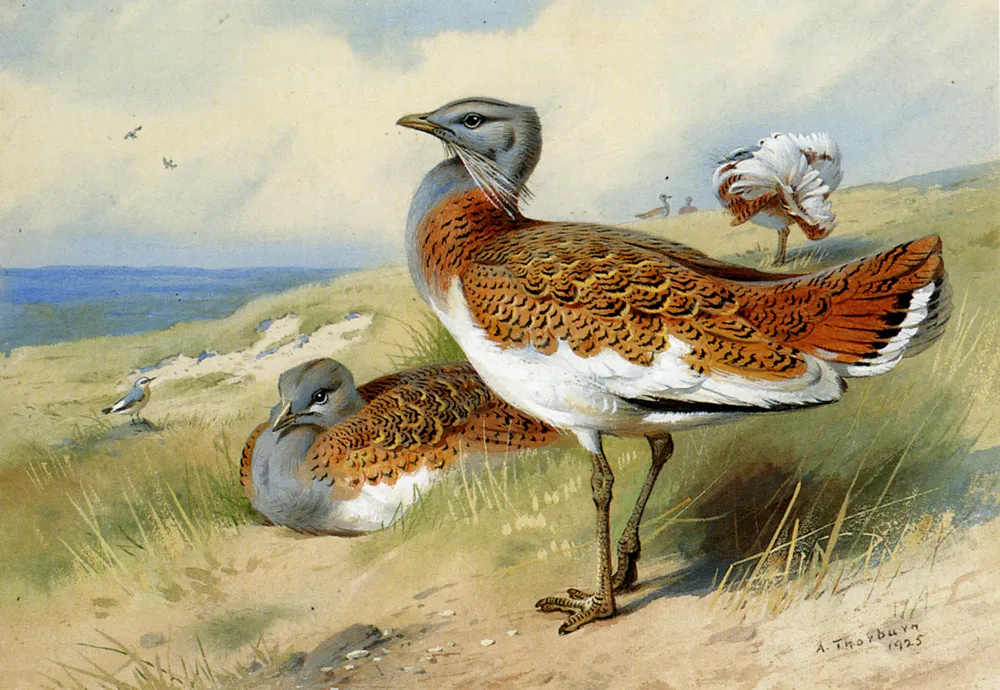
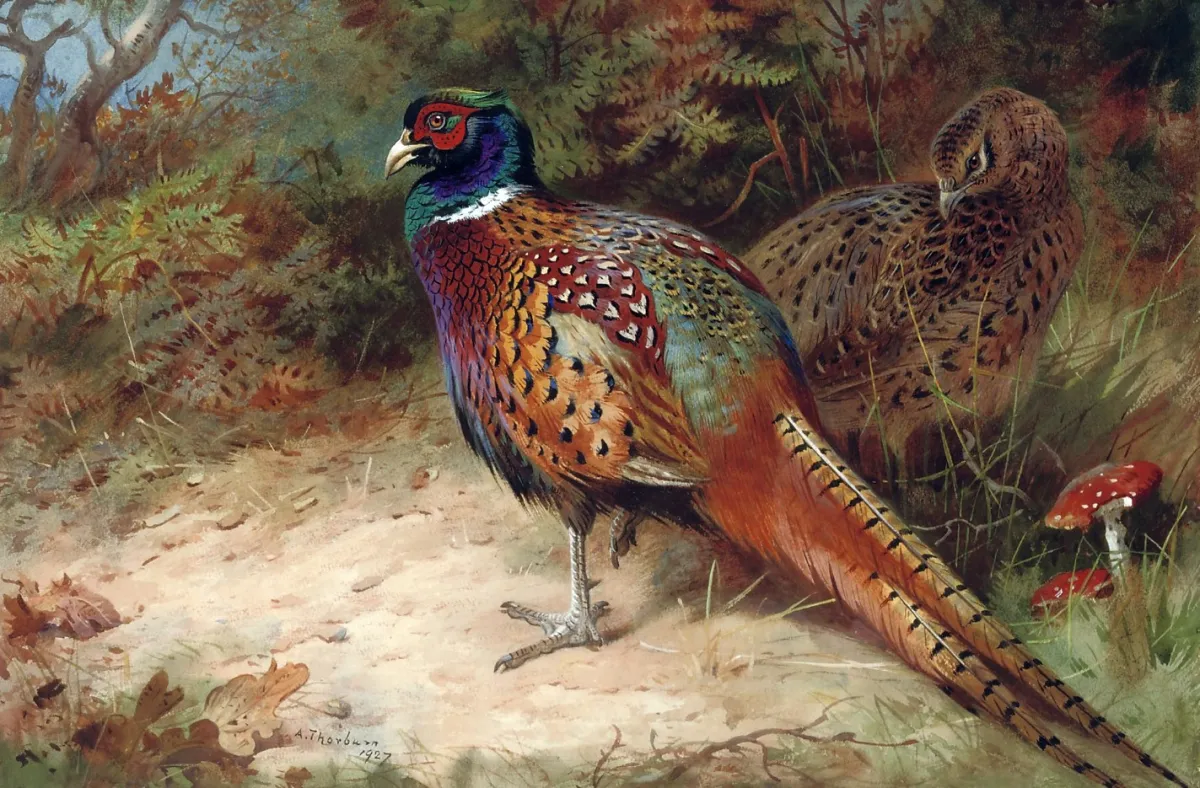
Archibald Thorburn’s "Great bustards" is a testament to his exceptional skill with oil on canvas. Each brushstroke brings the majestic birds to life, demonstrating the artist’s deep understanding of both his subjects and the medium. The painting’s rich textures and realistic lighting highlight Thorburn’s mastery, making it a coveted piece among collectors. Art lovers seeking similar works might also enjoy "Black Grouse In Flight In A Winter Woodland, Dormice ." or "The Covey at Daybreak."
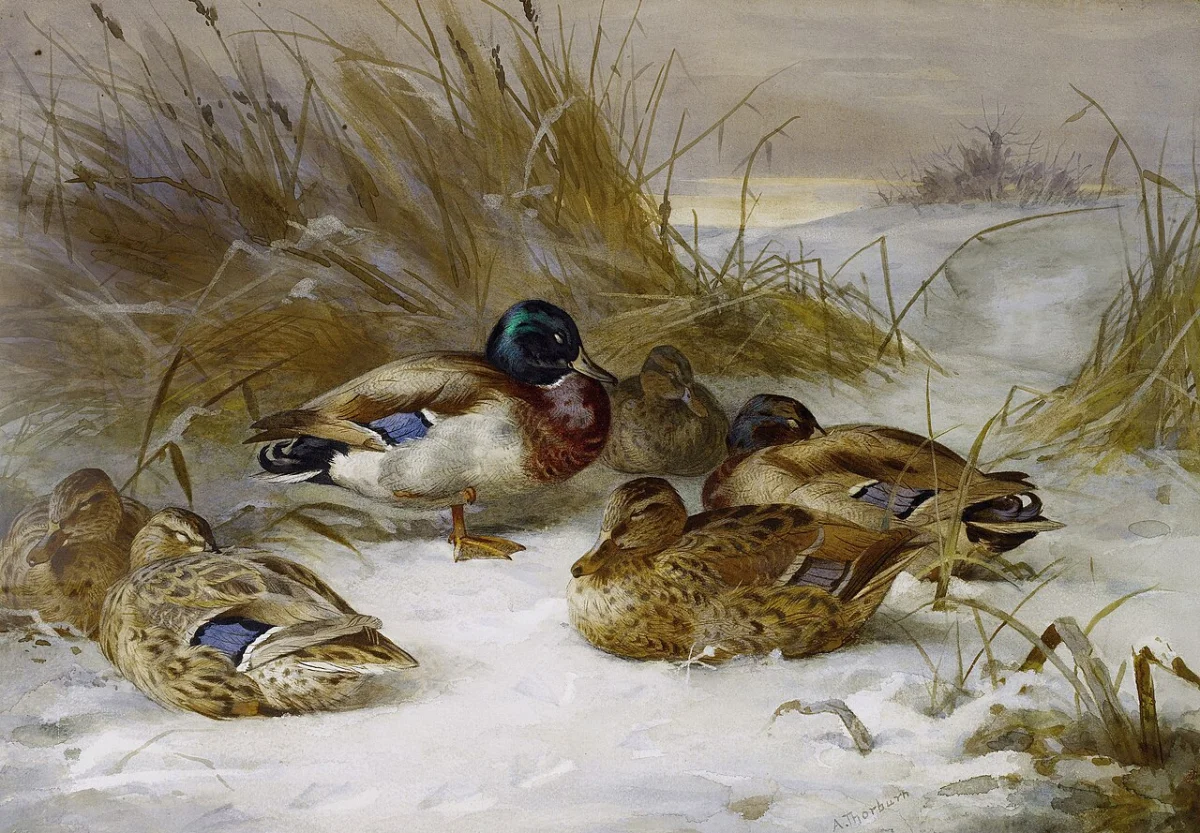
With "Great bustards," Thorburn invites viewers into a world where every detail tells a story. The careful composition and lifelike portrayal symbolize the harmony and fragility of the natural world—a central theme in Naturalism. As a fine art painting for sale, it resonates with those who value both artistic beauty and environmental awareness. Pieces like "Pheasants." and "Winter landscape with mallard." further reflect the narrative richness found in Thorburn’s oeuvre.
Owning "Great bustards" by Archibald Thorburn is akin to possessing a piece of art history. This hand-painted oil painting is not only a visual delight but also a valuable addition to any collection rooted in the Naturalism movement. Its rarity and craftsmanship make it highly sought after, just like related works such as "Blackcocks at the Lek." and "The Covey at Daybreak." Such paintings offer enduring value to discerning collectors worldwide.
When Art Meets History
"Great bustards" by Archibald Thorburn stands as a testament to the Naturalism movement, capturing the majestic birds in their natural habitat. This hand-painted oil painting reflects Thorburn’s dedication to accurate wildlife depiction, a hallmark of his era. As with related works like "The artist's grandfather" and "The Annunciation to the Shepherds," Thorburn’s art bridges history and nature, offering viewers a glimpse into the past while celebrating the beauty of the natural world.
Techniques That Speak
Archibald Thorburn employed masterful techniques in "Great bustards," utilizing oil on canvas to achieve vivid textures and lifelike detail. The brushwork and color palette exemplify the Naturalism movement’s focus on realism, drawing comparisons to related pieces like "Émile Bastien-Lepage" and "Village Love." Through careful layering and attention to light, Thorburn’s approach ensures each feather and landscape element is rendered with authenticity, making the painting a true showcase of technical skill.
Emotions on Display
In "Great bustards," Thorburn conveys a serene sense of wonder, inviting viewers to connect emotionally with the wildlife scene. The painting’s tranquil atmosphere evokes admiration for nature’s beauty, much like the sentiments found in "Pas Mèche" and other naturalist works. This fine art painting for sale not only captures the essence of the birds but also stirs a deep appreciation for the delicate balance of the natural world, reflecting the artist’s emotional connection to his subjects.
Coveted by Collectors
"Great bustards" is highly sought after by collectors who value both historical significance and artistic excellence. Archibald Thorburn’s reputation within the Naturalism movement, coupled with the painting’s exceptional quality, makes it a prized addition to any collection. Like other notable works such as "Village Love," owning this hand-painted oil painting offers enthusiasts a piece of art history, ensuring its status as a cherished and valuable masterpiece for generations to come.
Related Naturalism Hand-Painted Oil Paintings by Other Artists
Other Famous Naturalism Artists:
Frequently Asked Questions About Great bustards
What is the historical significance of the painting "Great bustards"?
"Great bustards," painted by Archibald Thorburn, reflects the early 20th-century interest in wildlife conservation and the natural world, highlighting the artist's dedication to depicting the beauty of British fauna.
Who was Archibald Thorburn and what influenced his artistic style?
Archibald Thorburn was a prominent Scottish painter and illustrator known for his detailed and lifelike representations of birds and wildlife, influenced by his deep appreciation for nature and ornithology.
What techniques did Thorburn use in "Great bustards" to achieve realism?
Thorburn employed meticulous attention to detail, vibrant color palettes, and careful observation of his subjects, utilizing watercolor and oil painting techniques to create a lifelike representation of the great bustards.
What symbolism can be found in "Great bustards"?
The great bustard symbolizes the fragility of nature and the importance of conservation, serving as a reminder of the need to protect endangered species and their habitats.
How does "Great bustards" reflect the artistic movements of its time?
The painting embodies the late Victorian and early Edwardian fascination with naturalism and realism, aligning with the broader Art Nouveau movement that emphasized organic forms and the beauty of the natural world.
What role did nature play in Thorburn's body of work?
Nature was central to Thorburn's oeuvre, as he sought to capture the essence of wildlife and landscapes, emphasizing the interconnectedness of species and their environments through his art.
What is the significance of the great bustard in British culture?
The great bustard, once nearly extinct in Britain, holds cultural significance as a symbol of national wildlife heritage and conservation efforts, representing the broader themes of ecological balance and biodiversity.
How did the public respond to Thorburn's work during his lifetime?
Thorburn's work was well-received, gaining popularity among naturalists and art enthusiasts alike, who admired his ability to portray the beauty and intricacies of wildlife with both scientific accuracy and artistic flair.
What impact did "Great bustards" have on wildlife art?
"Great bustards" contributed to the genre of wildlife art by setting a high standard for realism and detail, influencing future artists to adopt similar approaches in their depictions of nature.
Where can I view "Great bustards" today?
"Great bustards" is part of the collection at [Gallery Name], where visitors can appreciate Thorburn's artistry and the historical context of the painting in person.























_GFM_Painting_(1).webp)


 100% Hand-Painted: Finished in 3-6 Weeks

.png)















_(1).webp)