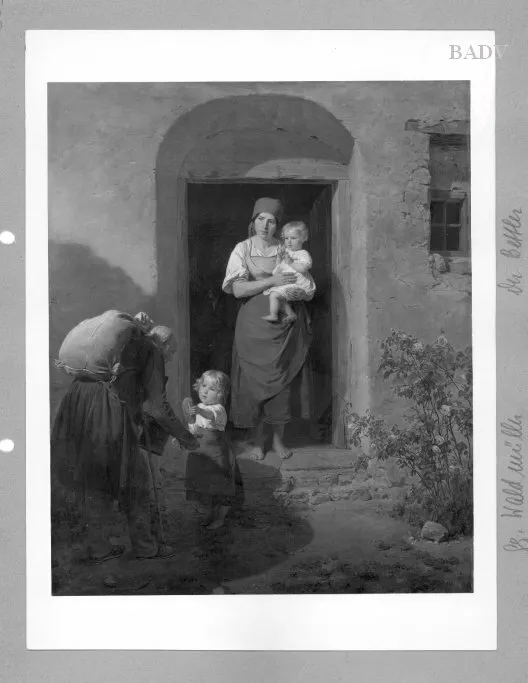
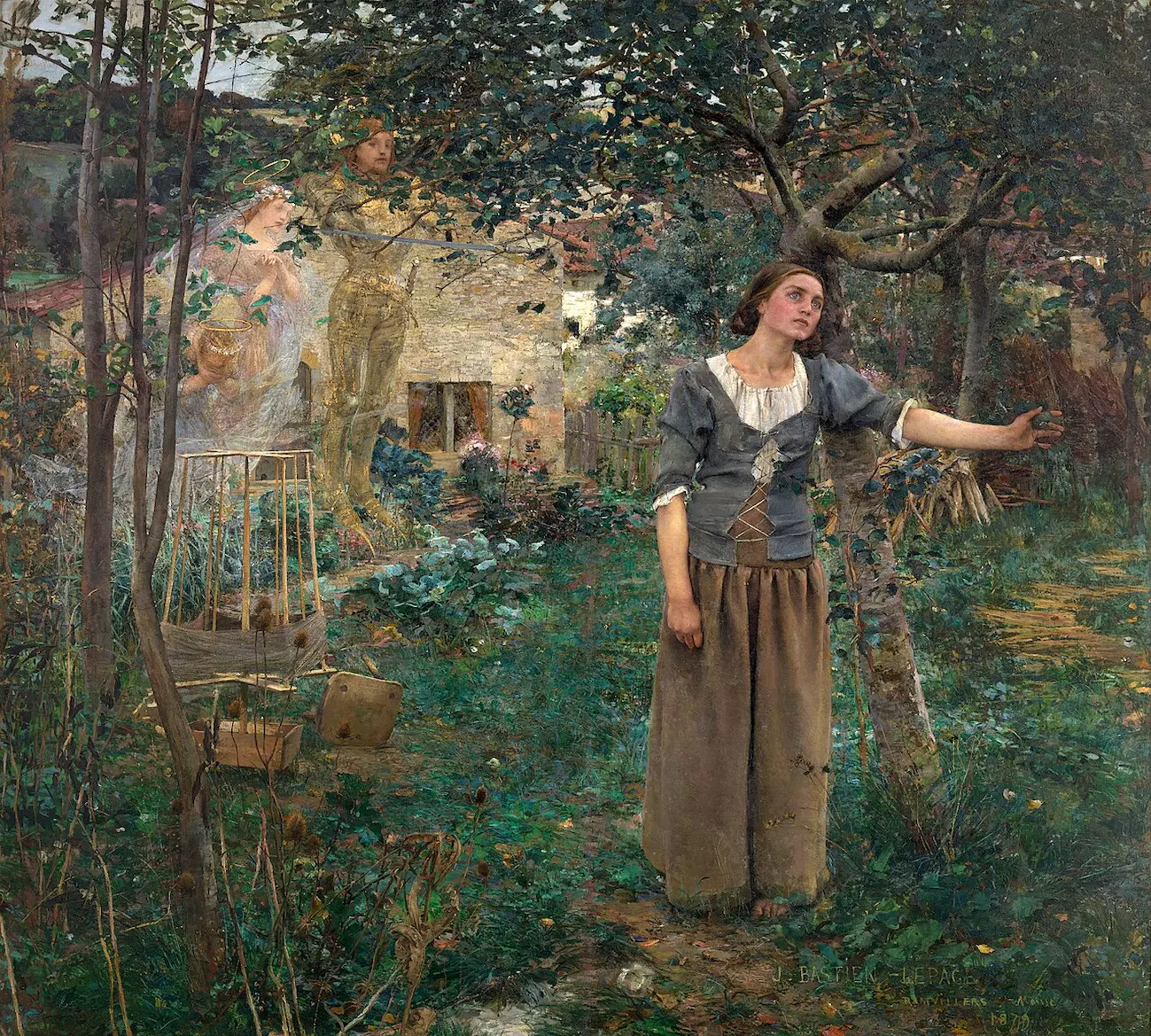
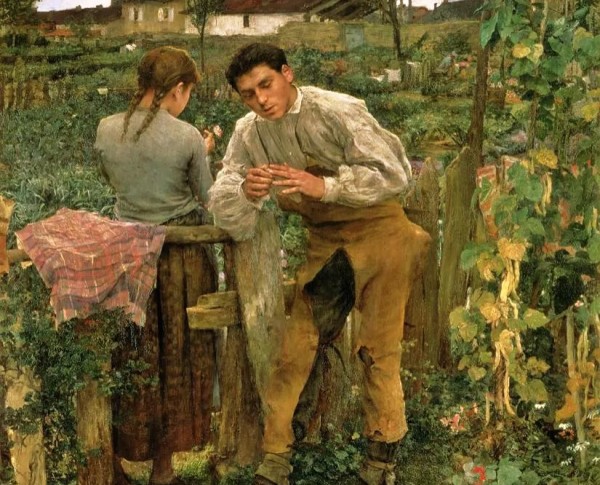
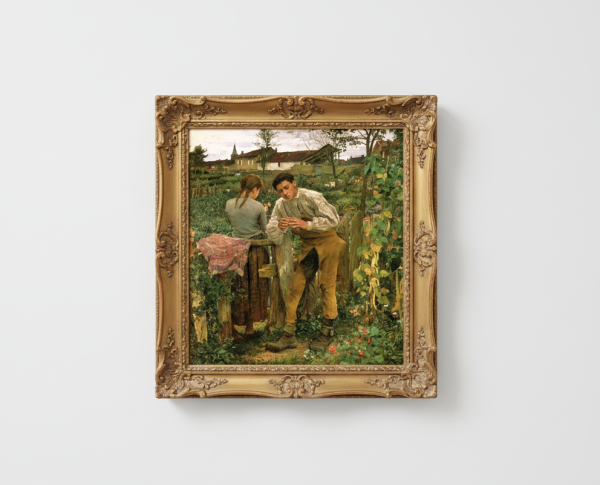
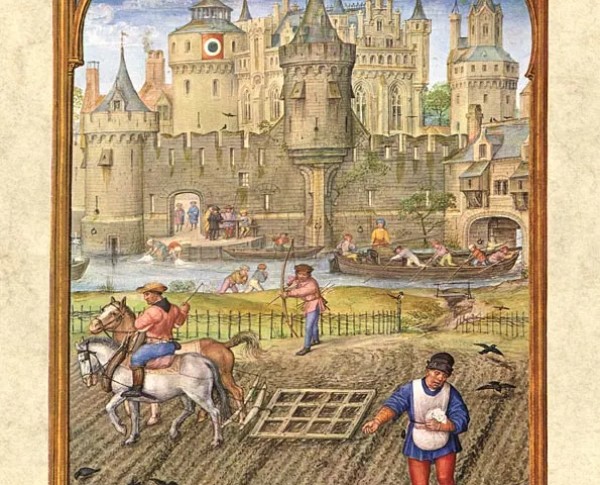
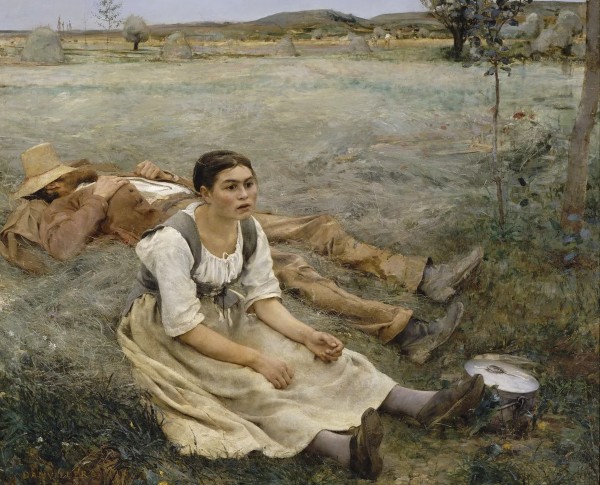
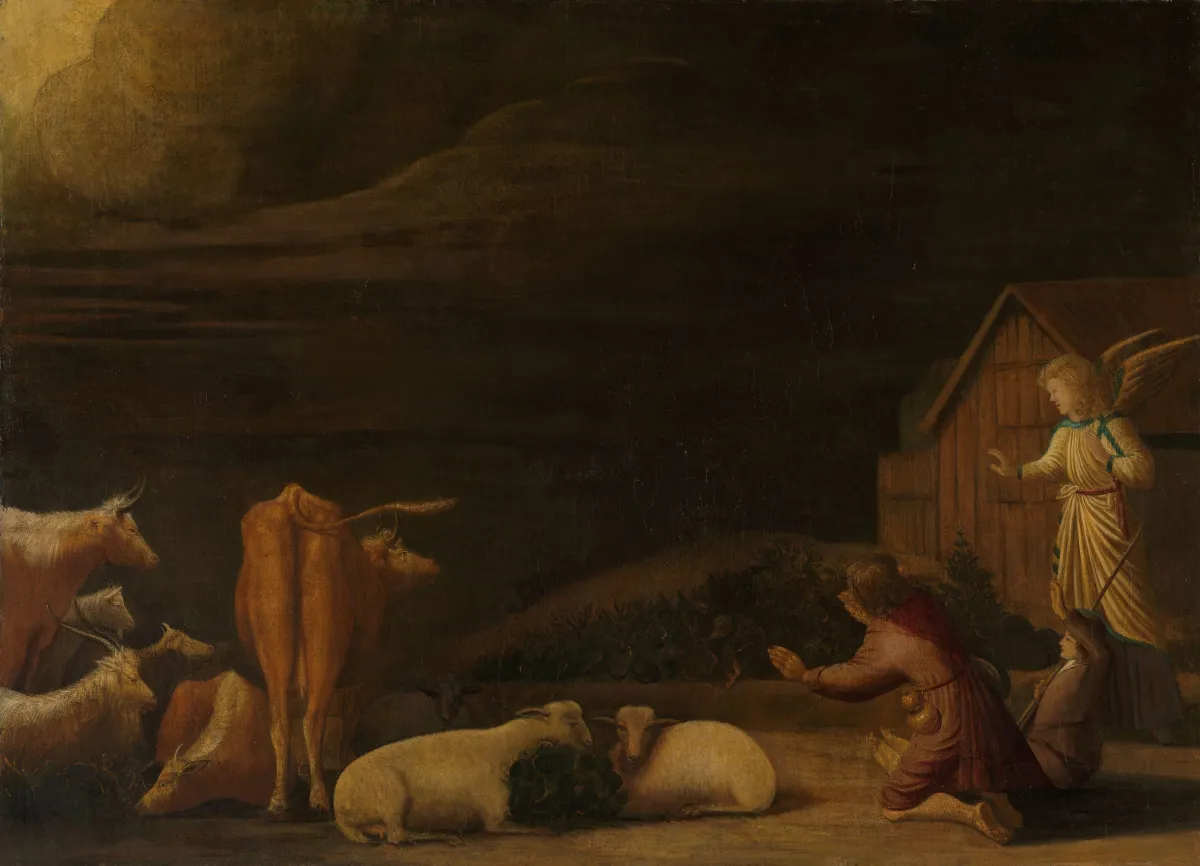
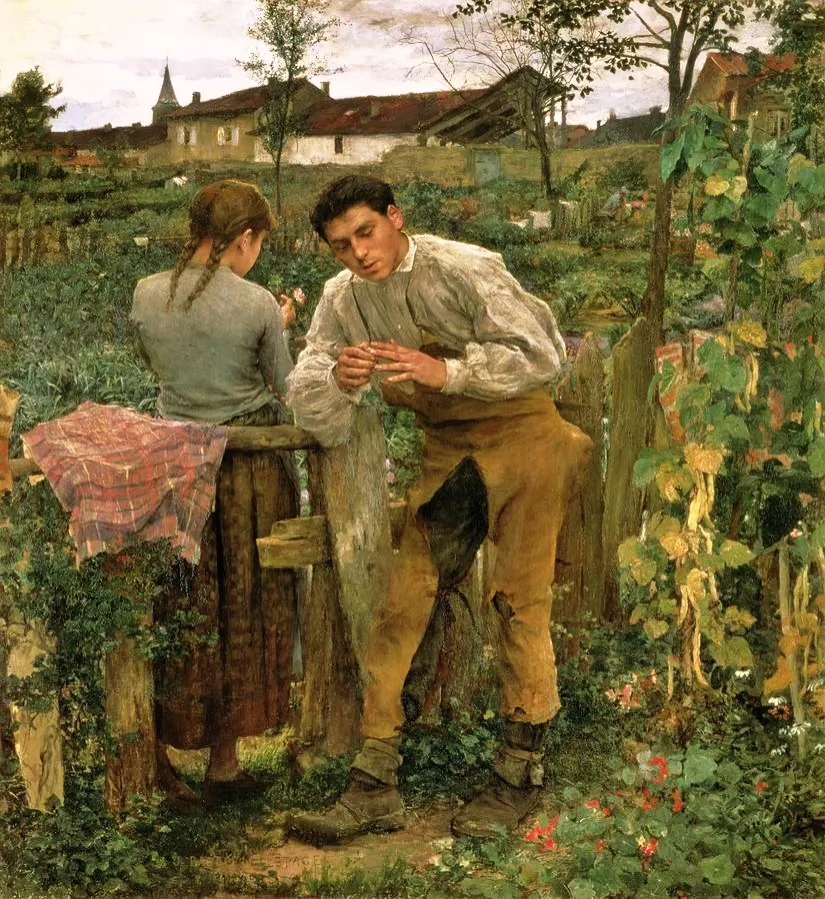
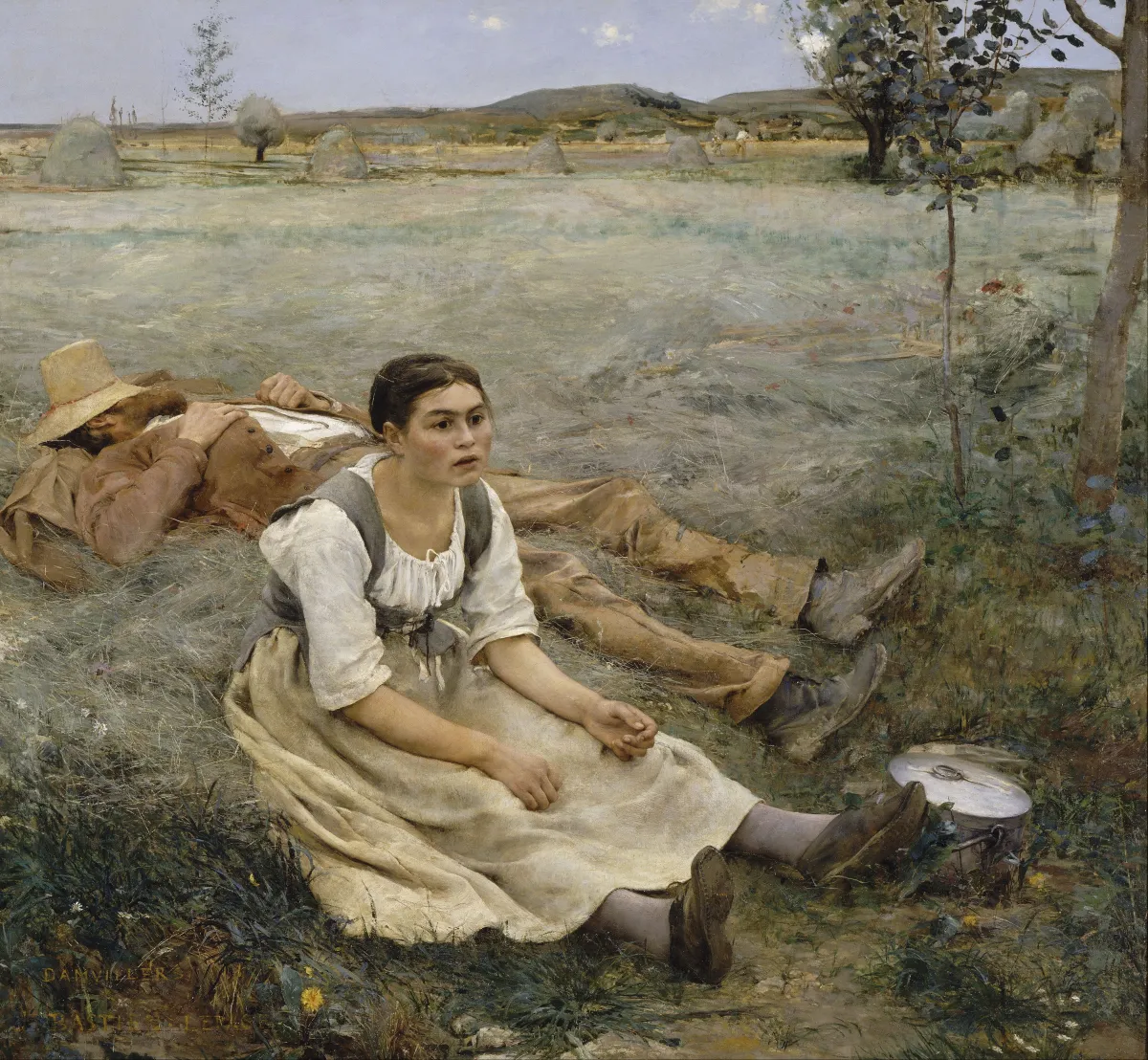
Bastien Lepage’s "The Annunciation to the Shepherds" showcases his exceptional skill with oil on canvas, characteristic of the Naturalism movement. The meticulous brushwork and subtle interplay of light and shadow reveal the artist’s attention to detail and deep understanding of his subjects. This technique is also visible in related products like "Hay Making" and "Village Love," which demonstrate Lepage’s consistent mastery and his ability to bring scenes to life with extraordinary realism and emotion.
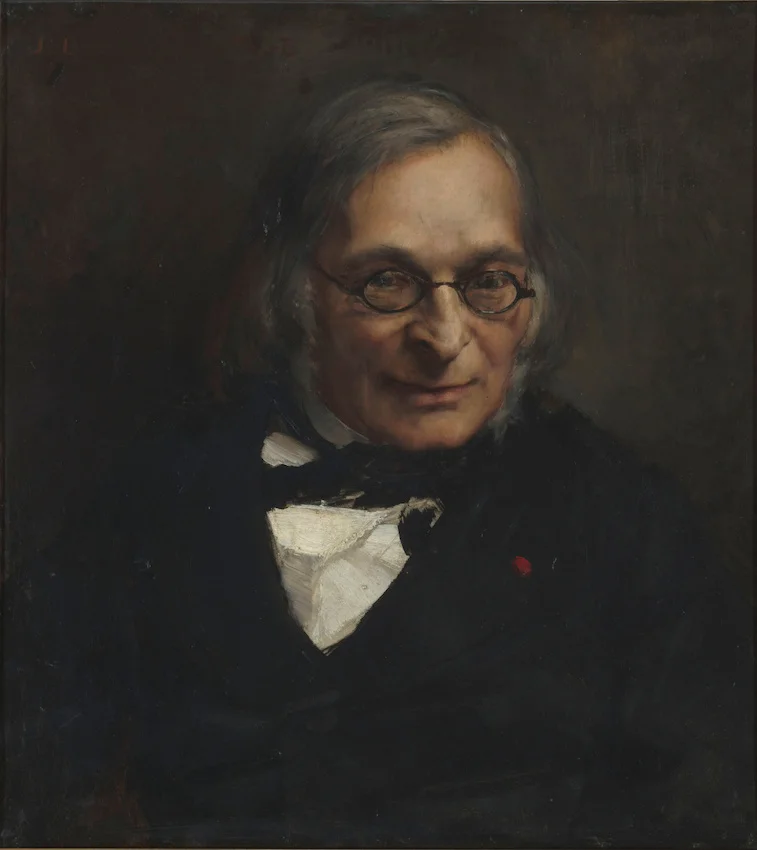
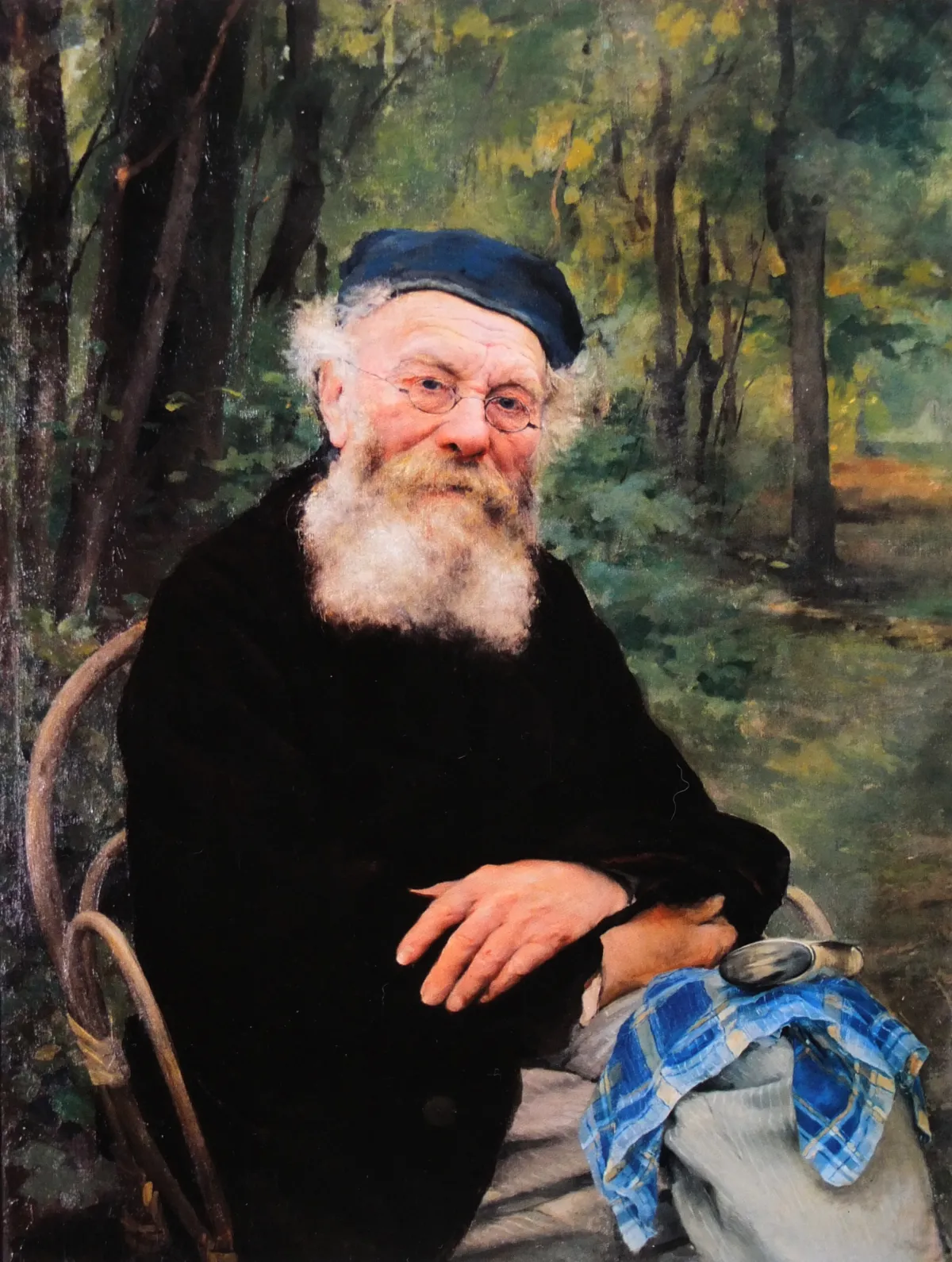
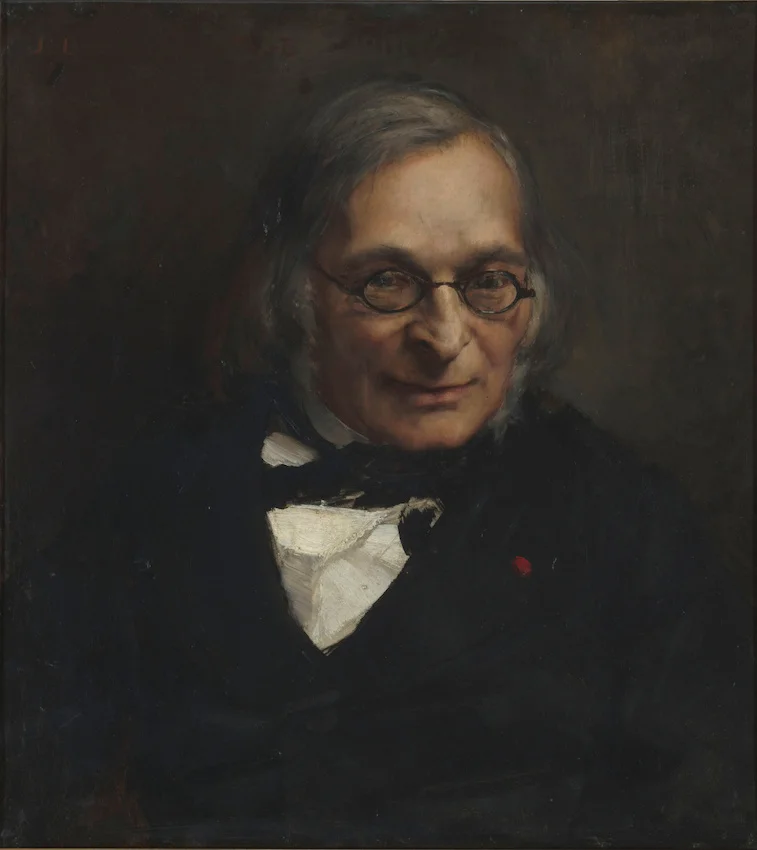
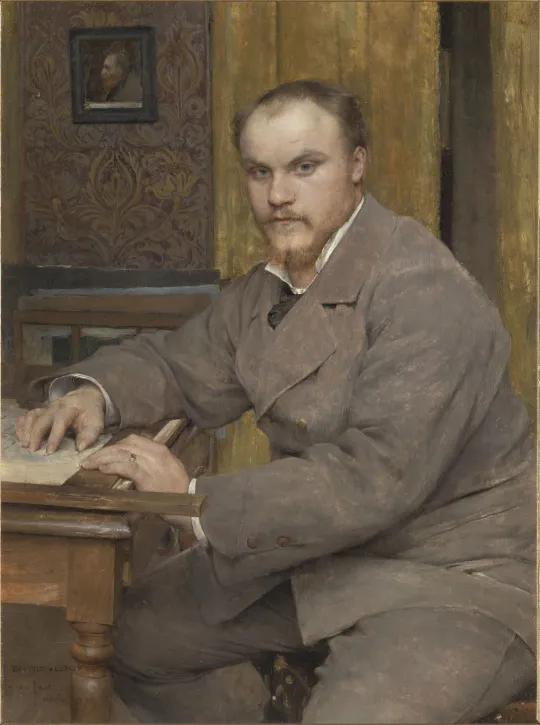
"The Annunciation to the Shepherds" is more than a fine art painting for sale; it is a narrative woven with rich symbolism. Lepage skillfully depicts the biblical moment of revelation, infusing the scene with authenticity and emotional depth. The shepherds’ expressions and gestures are rendered with heartfelt realism, inviting viewers into their world. Similar narrative depth can be found in works like "Simon Hayem" and "Alexandre Wallon, historian and politician," both capturing pivotal moments in human experience.
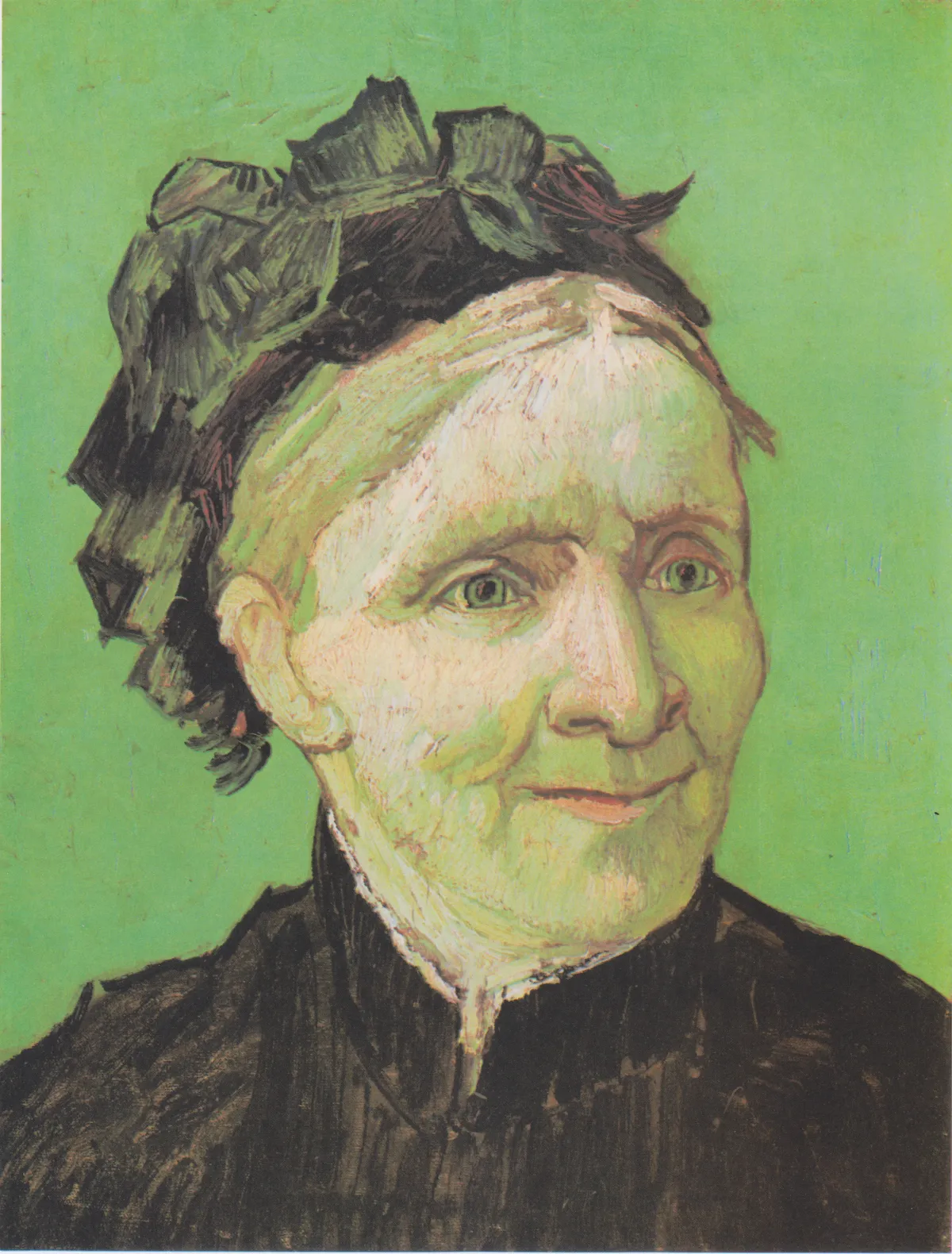
For collectors seeking a remarkable hand-painted oil painting, "The Annunciation to the Shepherds" by Bastien Lepage offers enduring value and beauty. Its place within the Naturalism movement and connection to related products such as "October" and "Pas Mèche" enhance its desirability. This masterpiece not only elevates any fine art collection but also serves as a testament to Lepage’s legacy, making it a prized treasure for those who appreciate the rich tradition of oil on canvas artwork.
When Art Meets History
"The Annunciation to the Shepherds" by Bastien Lepage stands as a remarkable example of Naturalism, a movement known for its truthful depictions of everyday life. Created in the late 19th century, this hand-painted oil painting captures a biblical moment with striking realism. Lepage, also celebrated for works like "Dormice" and "Bewick's swan," masterfully brings history to life, making this piece a testament to both artistic skill and the storytelling power of fine art.
Techniques That Speak
Bastien Lepage’s "The Annunciation to the Shepherds" showcases his mastery of oil on canvas, utilizing subtle brushwork and a natural palette to evoke a serene, lifelike atmosphere. The detailed rendering of figures and landscape reflects the Naturalism movement’s dedication to authenticity. Similar technical brilliance can be observed in Lepage’s related paintings such as "Wigeon and Teal by the water's edge." Each stroke in this oil on canvas masterpiece invites viewers to experience the moment firsthand.
Emotions on Display
In "The Annunciation to the Shepherds," Lepage conveys a profound sense of awe and wonder, inviting viewers into the emotional world of the shepherds. The artist’s commitment to Naturalism ensures that every expression and gesture feels genuine. This fine art painting for sale resonates with the same emotional intensity found in Lepage’s "Little Owl and Scops Owl," allowing collectors to connect deeply with the depicted scene and its timeless message.
Coveted by Collectors
As a sought-after hand-painted oil painting, "The Annunciation to the Shepherds" continues to captivate fine art enthusiasts worldwide. Bastien Lepage’s works, including "Dormice" and "Bewick's swan," are highly prized among collectors for their realism and emotional depth. Owning a piece from the Naturalism movement, such as this, offers not only aesthetic pleasure but also a valuable addition to any collection of fine art painting for sale, reflecting both history and artistry.
Related Naturalism Hand-Painted Oil Paintings by Other Artists
Other Famous Naturalism Artists:
Frequently Asked Questions About The Annunciation to the Shepherds
What is the historical context of "The Annunciation to the Shepherds"?
"The Annunciation to the Shepherds" was painted by Bastien Lepage in the late 19th century, a period characterized by a shift towards realism in art. This painting reflects the artist's interest in capturing everyday life and the emotional depth of his subjects, aligning with the broader movements of Naturalism and Impressionism.
What artistic techniques did Bastien Lepage employ in this painting?
Bastien Lepage utilized a combination of naturalistic detail and soft, atmospheric lighting in "The Annunciation to the Shepherds." His technique involved layering paint to achieve depth and texture, while his use of light creates a sense of immediacy and intimacy in the scene.
What is the significance of the shepherds in the painting?
The shepherds in "The Annunciation to the Shepherds" symbolize humility and the common man. Their presence emphasizes the message of the divine announcement being accessible to all, not just the elite, reflecting the Christian theme of universal salvation.
How does the composition of the painting contribute to its meaning?
The composition of "The Annunciation to the Shepherds" is carefully structured, with the figures arranged in a triangular formation that draws the viewer's eye towards the angelic figure. This arrangement enhances the narrative focus and highlights the moment of revelation and awe experienced by the shepherds.
What role does color play in "The Annunciation to the Shepherds"?
Color in "The Annunciation to the Shepherds" is used to evoke emotion and atmosphere. The warm tones of the shepherds' clothing contrast with the ethereal light surrounding the angel, symbolizing the divine presence and the transformative nature of the announcement.
What themes are explored in this painting?
The themes of divine revelation, humility, and the intersection of the sacred and the mundane are central to "The Annunciation to the Shepherds." The painting invites viewers to contemplate the significance of faith and the joy of receiving a divine message.
How does this work compare to other depictions of the Annunciation in art history?
Unlike many traditional depictions of the Annunciation that focus on the Virgin Mary, Lepage's interpretation centers on the shepherds, offering a fresh perspective. This approach highlights the inclusivity of the message and reflects the artist's innovative spirit in the context of 19th-century art.
What influences can be seen in Lepage's style in this painting?
Lepage's style in "The Annunciation to the Shepherds" showcases influences from both the Realist movement and the emerging Impressionist style. His attention to detail and naturalistic portrayal of figures, combined with a focus on light and atmosphere, exemplify his unique artistic voice.
What is the significance of the angel's portrayal in the painting?
The angel in "The Annunciation to the Shepherds" is depicted with a sense of gentleness and authority, embodying the divine message. This portrayal emphasizes the angel's role as a mediator between the heavenly and earthly realms, reinforcing the painting's spiritual themes.
How has "The Annunciation to the Shepherds" been received by critics and historians?
Critics and historians have praised "The Annunciation to the Shepherds" for its emotional depth and innovative approach to a traditional subject. The painting is often noted for its ability to convey a profound sense of wonder and accessibility, marking it as a significant work in Lepage's oeuvre and 19th-century art.






















_GFM_Painting_(1).webp)


 100% Hand-Painted: Finished in 3-6 Weeks

.png)















_(1).webp)