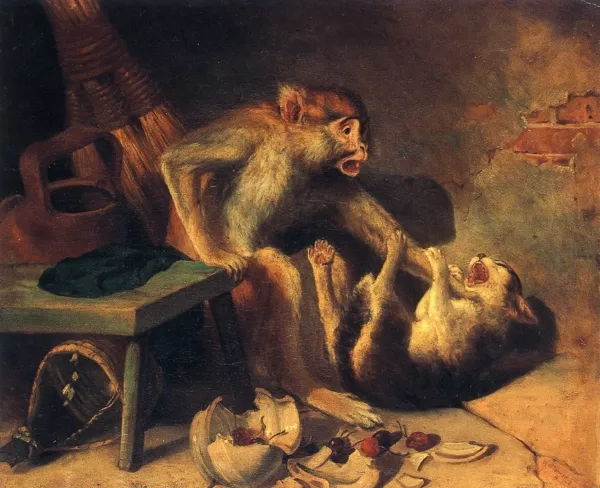
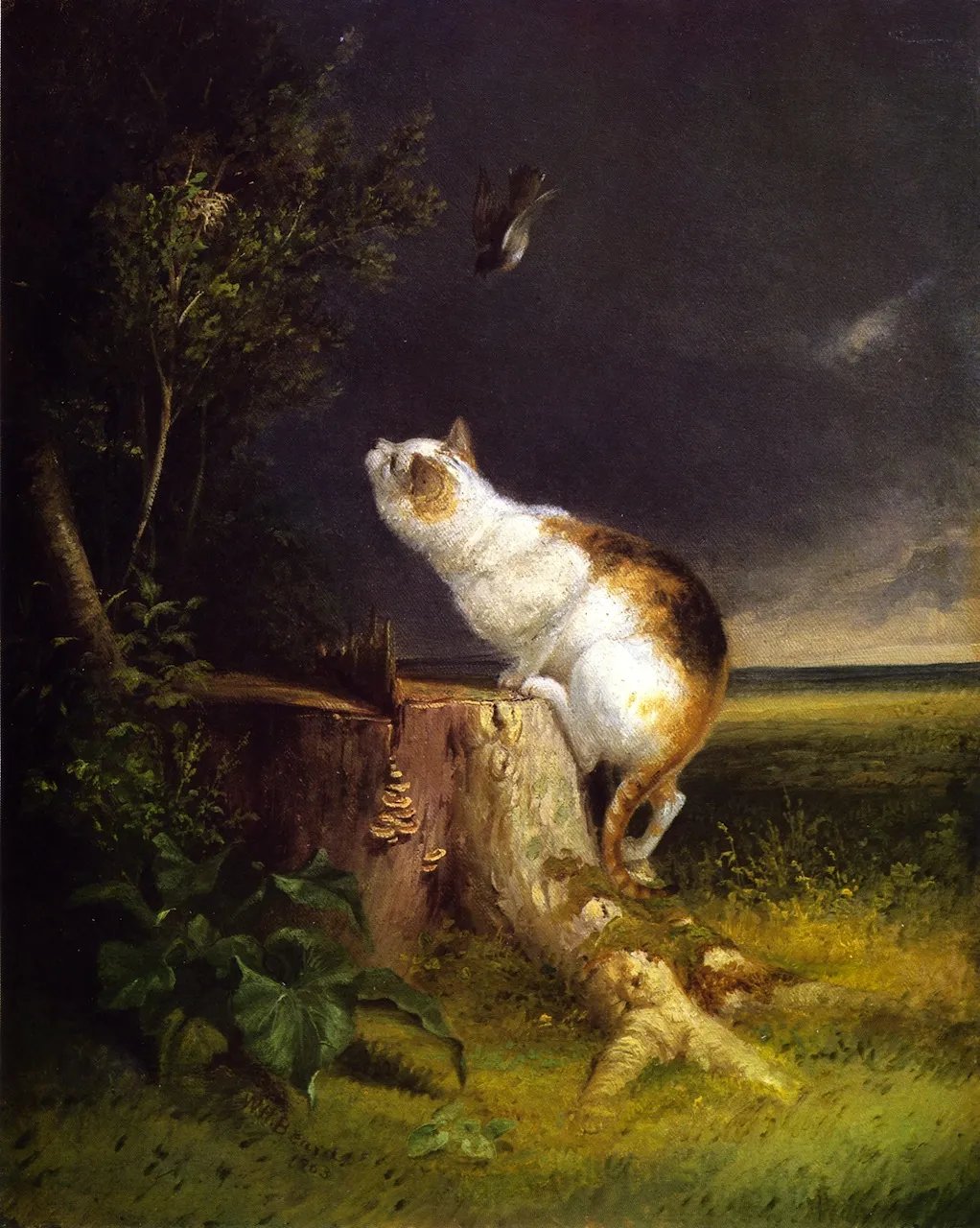
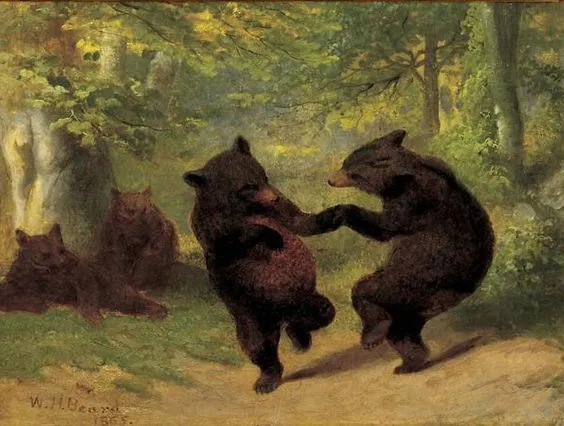
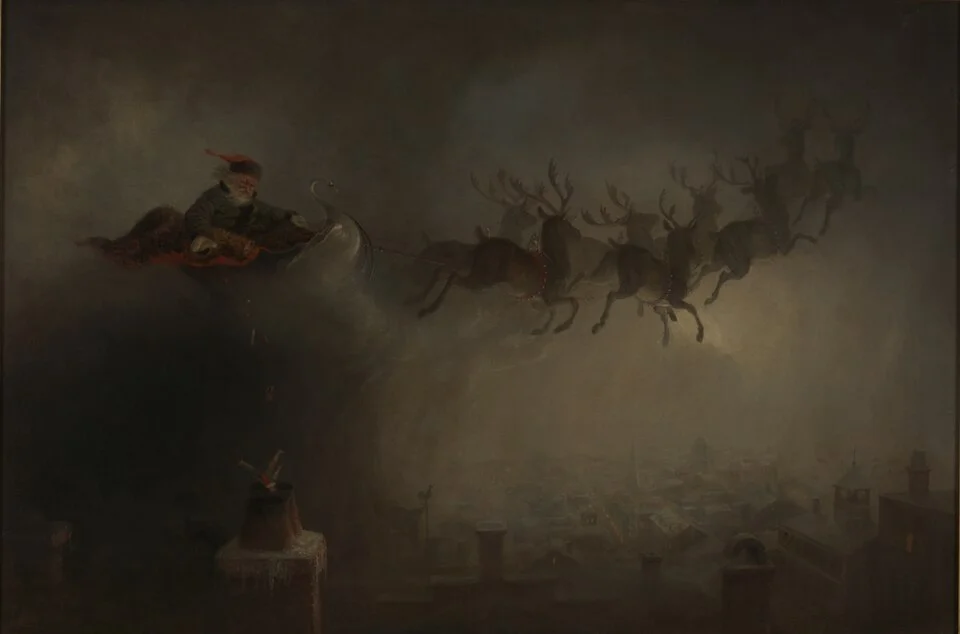
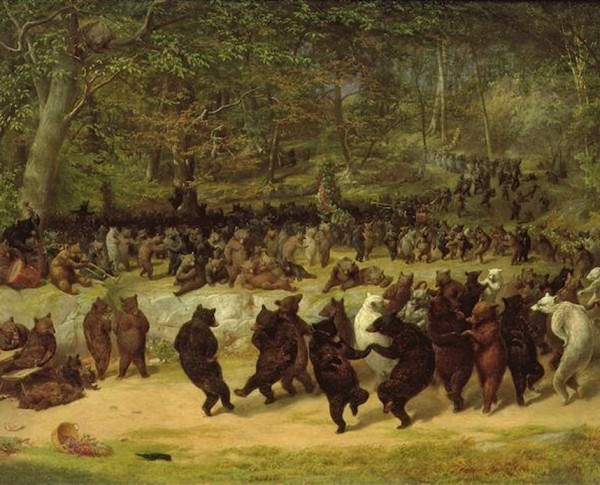
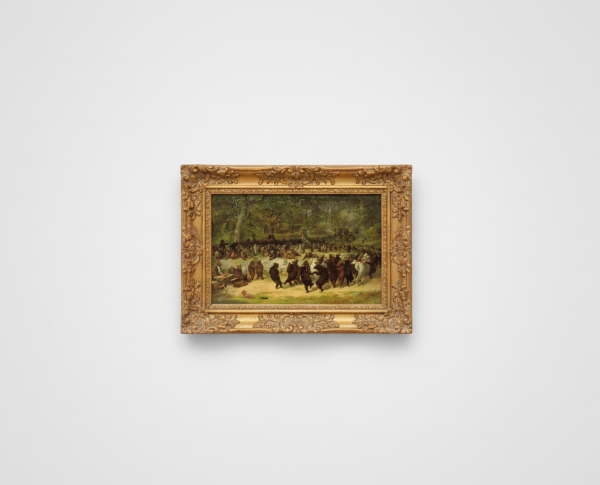
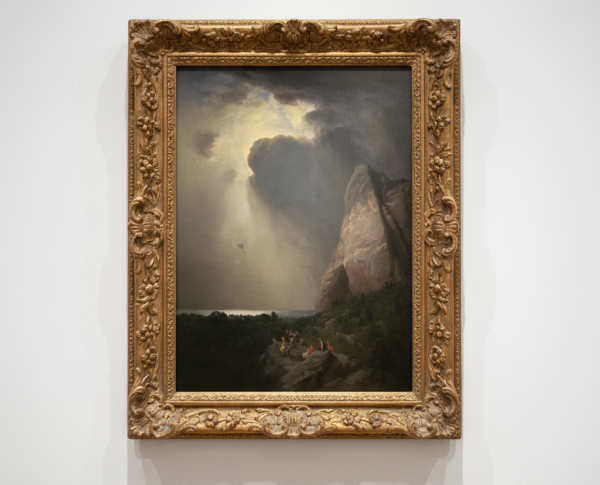
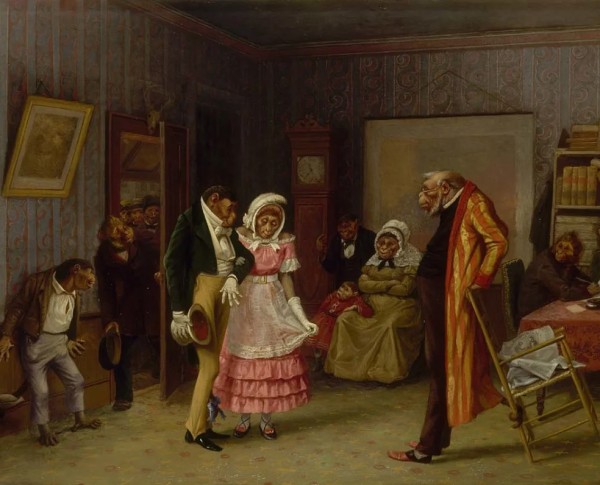
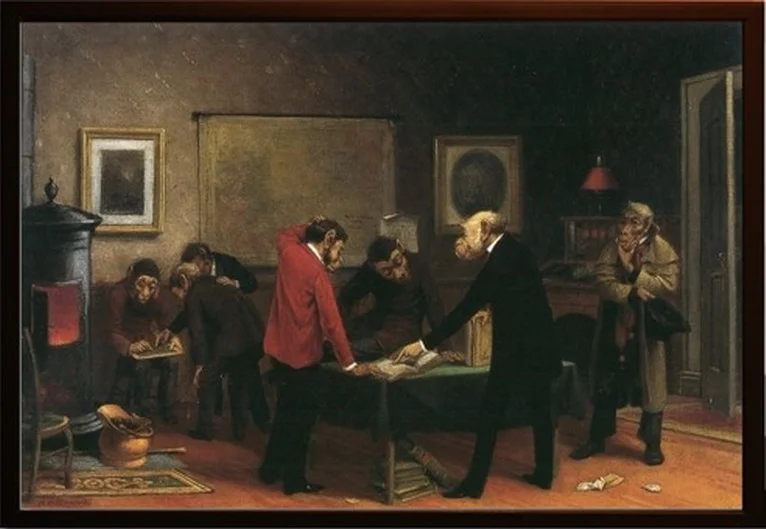
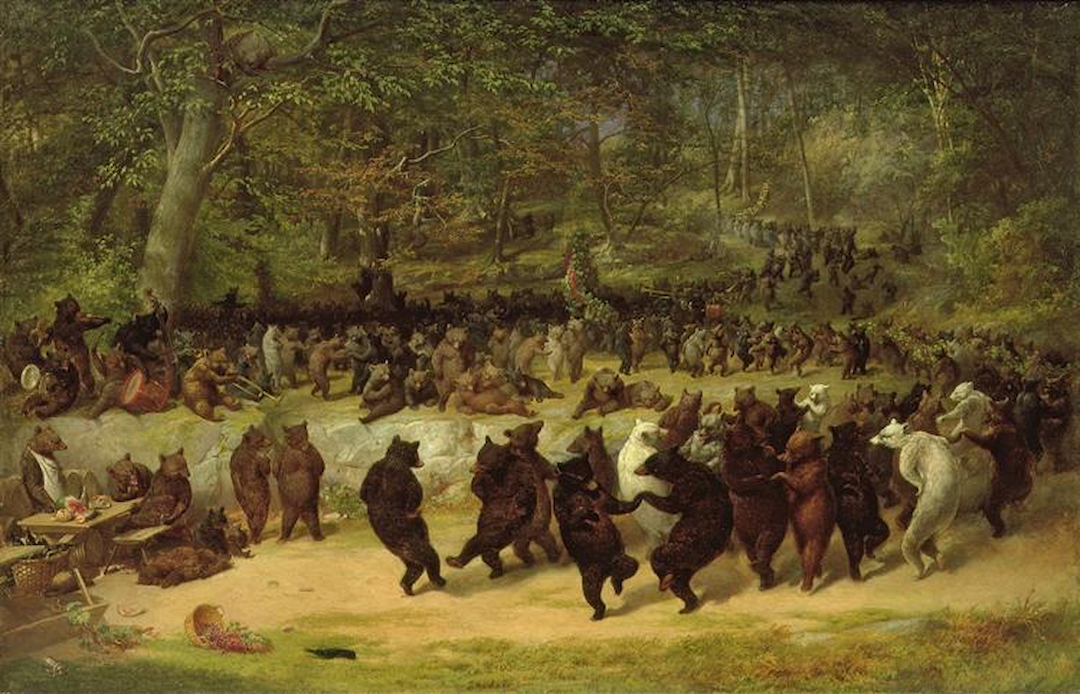
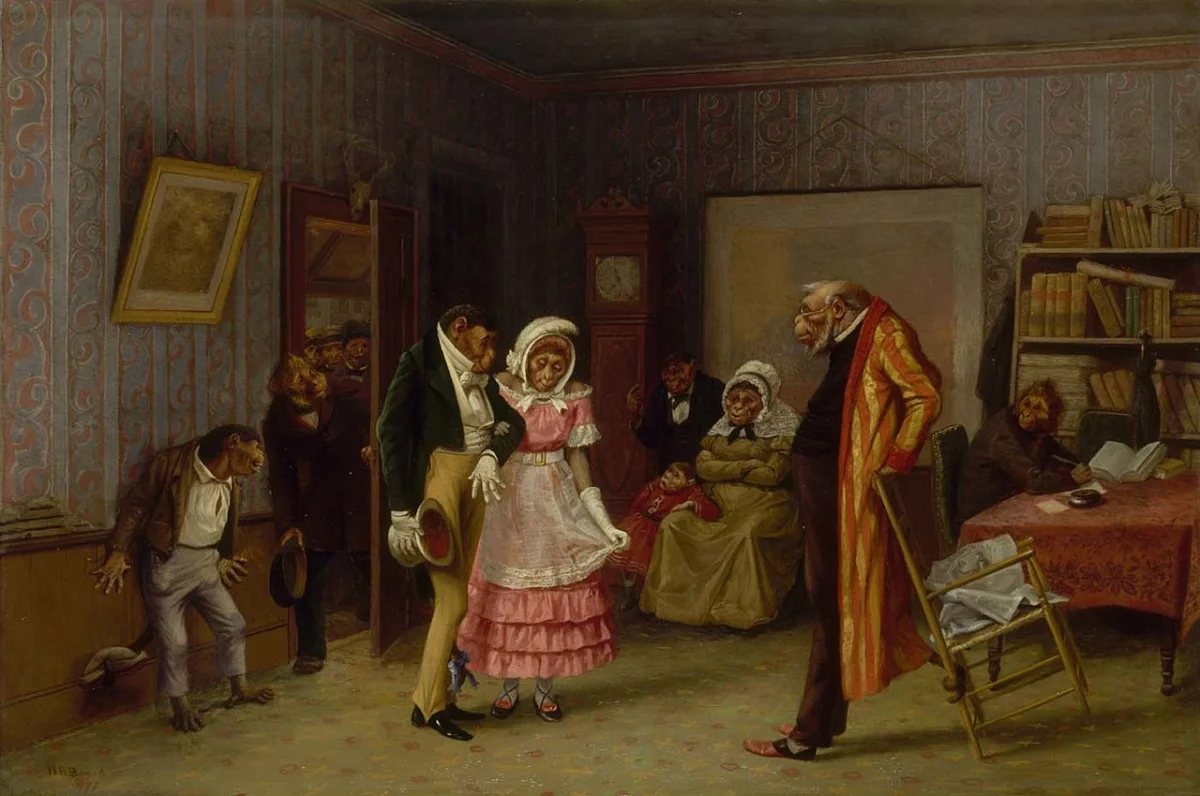
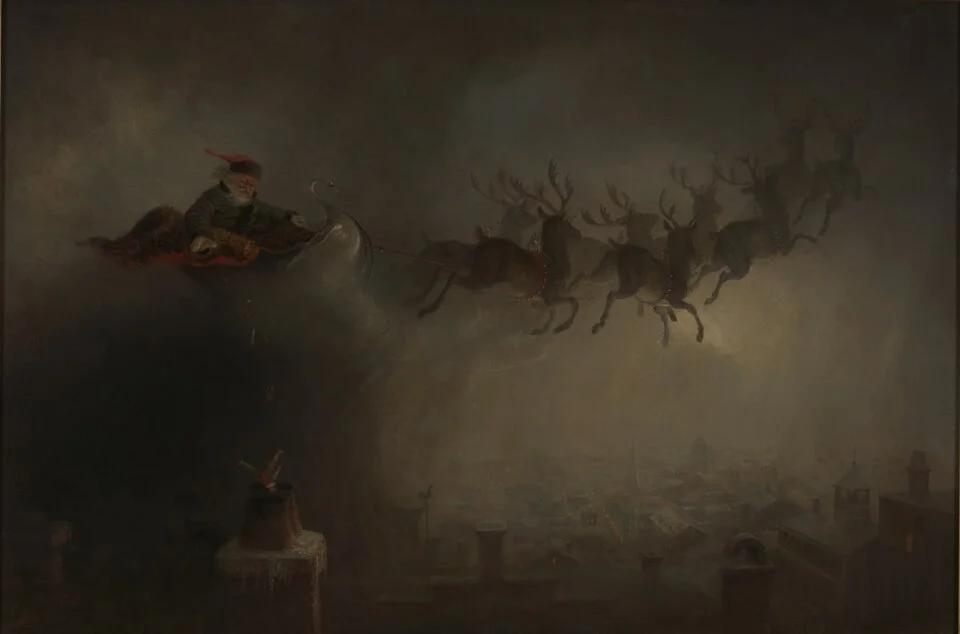
William Holbrook Beard’s "Scientists At Work" demonstrates his exceptional skill with oil on canvas, a medium favored by Romanticism artists for its richness and depth. Each brushstroke reveals Beard’s attention to detail, infusing the painting with character and movement. The meticulous rendering found here is echoed in his other works, such as "The Bear Dance" and "Pre Adamite By," all testaments to his mastery and the enduring appeal of fine oil canvases from this era.
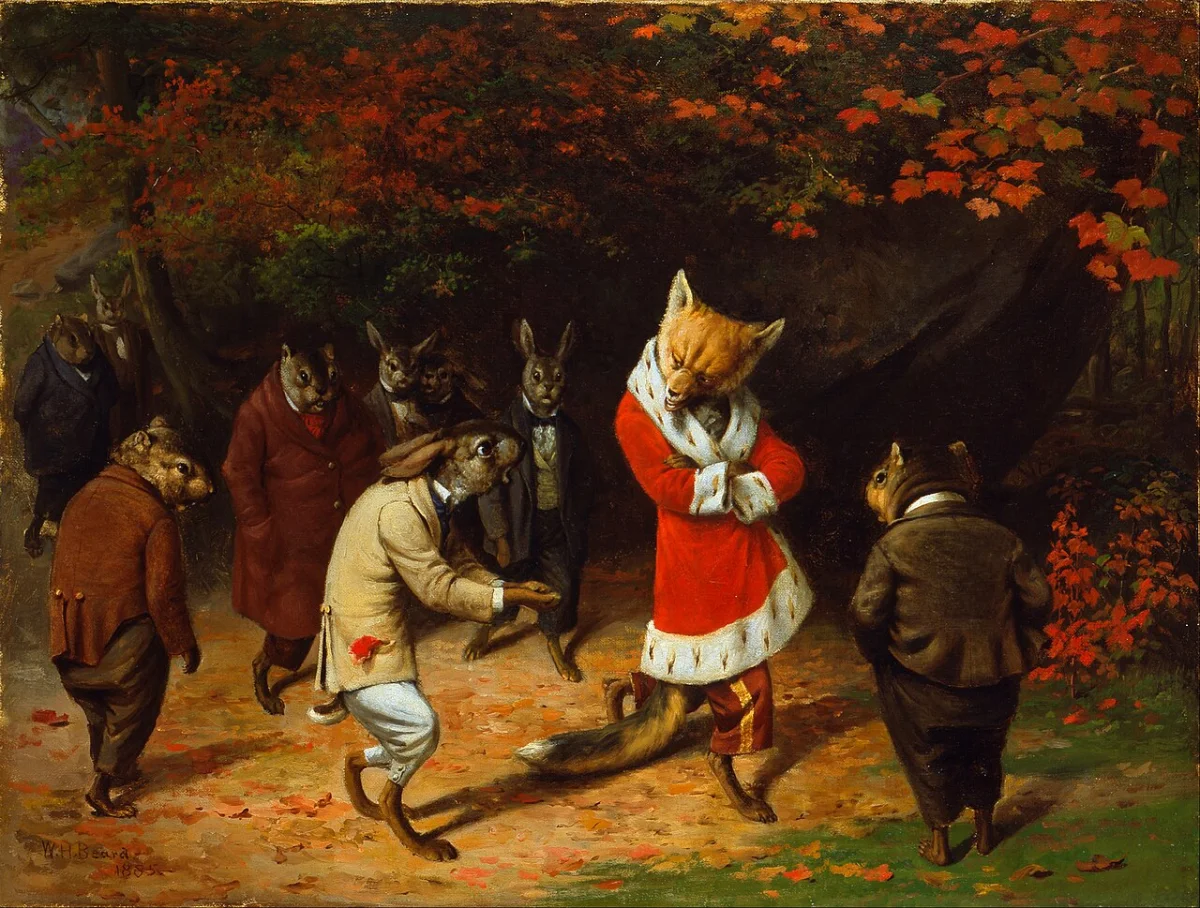
Within "Scientists At Work," Beard weaves playful narratives and subtle symbolism, hallmarks of a fine art painting for sale from the Romanticism movement. Animals take on human roles, prompting viewers to reflect on society and intellect. The storytelling in this painting is reminiscent of Beard’s other works like "Domestic Squabble" and "School Rules," where satire and allegory blend seamlessly, making each piece a window into both the artist’s wit and a bygone era’s ideals.
For art collectors, "Scientists At Work" by William Holbrook Beard is more than a hand-painted oil painting; it’s a piece of Romanticism history. This unique work, alongside related products such as "Five Bears" and "The Bear Dance," enriches any fine art collection. Its blend of humor, technical skill, and historical context ensures that Beard’s creations remain sought-after treasures, perfect for those seeking a standout fine art painting for sale that tells a story.
When Art Meets History
"Scientists At Work" by William Holbrook Beard stands as a testament to the Romanticism movement, where emotion and imagination intertwine with historical contexts. This hand-painted oil painting captures a unique moment in time, echoing the intellectual curiosity of the era. Beard, renowned for his whimsical yet profound works, aligns this piece with other masterpieces like "Salute at Sunset" and "Fishermen at Sea," reflecting the period's fascination with discovery and the wonders of the natural world.
Techniques That Speak
Beard’s mastery of oil on canvas is evident in "Scientists At Work." His brushwork brings to life the vibrant energy and intricate details of the scene, characteristic of Romanticism. The painting’s rich textures and dramatic lighting showcase Beard’s technical prowess, similar to the approaches seen in "Bad der Nymphen" and "Salisbury Cathedral from the Meadows." Each stroke reveals the artist’s dedication to his craft, making this piece a stunning example of fine art painting for sale.
Emotions on Display
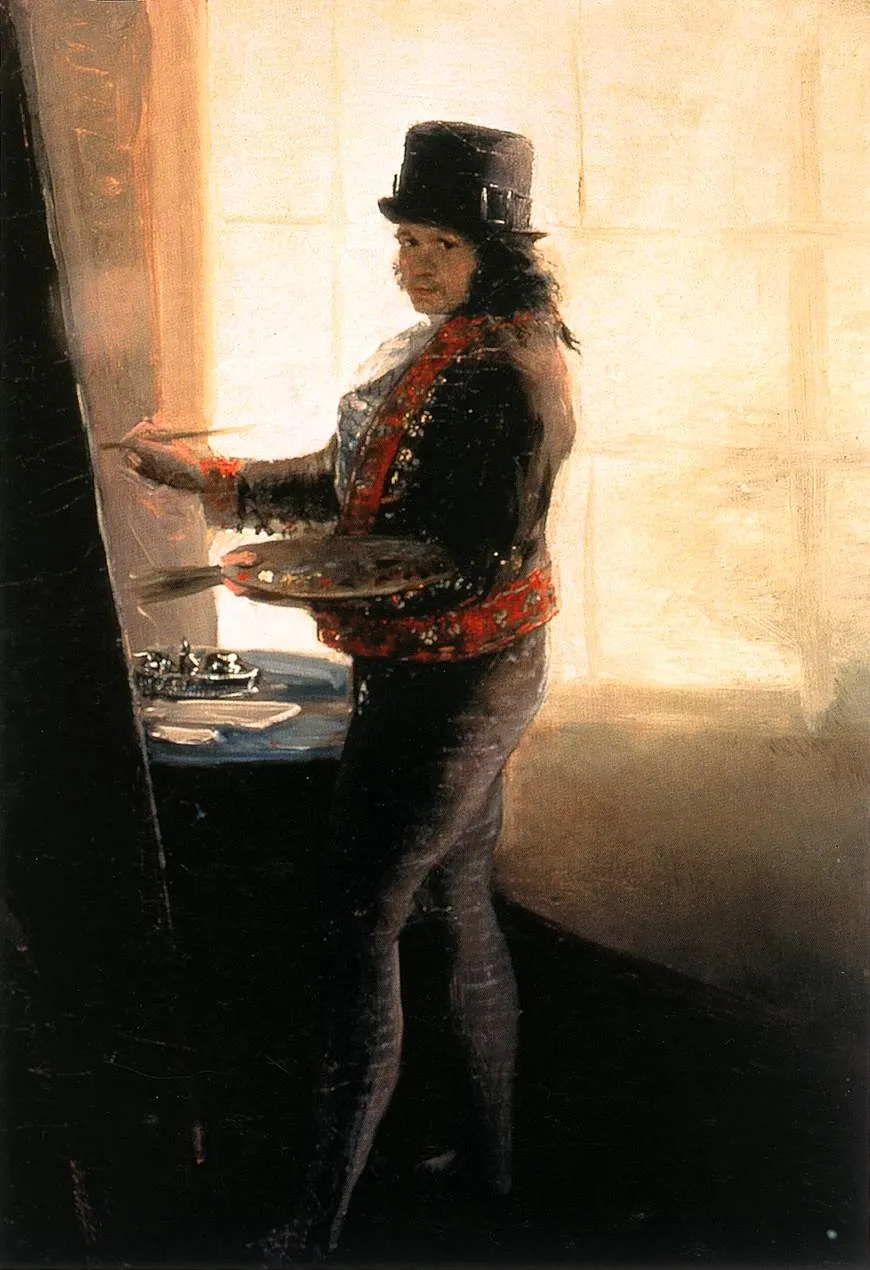
In "Scientists At Work," William Holbrook Beard infuses his subjects with palpable emotion, a hallmark of the Romanticism movement. The figures’ expressive faces and dynamic poses evoke curiosity and wonder, inviting viewers into their world. This emotional depth, akin to that found in "First Consul Bonaparte," sets the painting apart as a hand-painted oil painting that resonates with audiences, capturing the timeless human fascination with exploration and discovery.
Coveted by Collectors
Collectors seeking a standout piece from the Romanticism era will find "Scientists At Work" by William Holbrook Beard highly desirable. As an oil on canvas, it offers both historical significance and artistic beauty, much like "Salute at Sunset" and "Fishermen at Sea." Its rarity and captivating subject matter make it a fine art painting for sale that appeals to enthusiasts and connoisseurs alike, ensuring its place in any distinguished art collection.
Related Romanticism Hand-Painted Oil Paintings by Other Artists
Other Famous Romanticism Artists:
Frequently Asked Questions About Scientists At Work
What is the historical context of "Scientists At Work"?
"Scientists At Work" was created during the late 19th century, a time marked by significant advancements in science and technology. The painting reflects the growing fascination with scientific inquiry and the role of scientists in society during this period.
Who was William Holbrook Beard?
William Holbrook Beard was an American painter known for his unique blend of realism and humor. His works often featured animals and human figures, showcasing his keen observation of both nature and society. Beard's contributions to American art were significant during the late 19th century.
What artistic techniques did Beard employ in this painting?
Beard utilized a combination of realism and detailed brushwork to create a vivid portrayal of the scientists. His use of light and shadow enhances the three-dimensionality of the figures and their environment, drawing the viewer into the scene.
What themes are explored in "Scientists At Work"?
The painting explores themes of curiosity, discovery, and the pursuit of knowledge. It highlights the importance of scientific exploration and the dedication of scientists to their craft, reflecting the era's reverence for intellectual achievement.
How does Beard symbolize the role of science in society?
In "Scientists At Work," Beard symbolizes the role of science as a noble pursuit. The depiction of scientists engaged in their work conveys a sense of purpose and diligence, suggesting that their contributions are vital to societal progress and understanding.
What significance do the figures in the painting hold?
The figures in "Scientists At Work" represent the diverse fields of scientific inquiry. Each character embodies different aspects of research and experimentation, emphasizing the collaborative nature of scientific discovery and the importance of interdisciplinary approaches.
What message does Beard convey through the setting of the painting?
The setting of "Scientists At Work" is meticulously crafted to reflect a laboratory environment, filled with tools and instruments of the trade. This setting underscores the seriousness of scientific work while also inviting the viewer to appreciate the beauty of the scientific process.
How does "Scientists At Work" reflect the values of the late 19th century?
The painting reflects the values of the late 19th century by celebrating intellectualism and the scientific method. During this time, there was a growing belief in progress through science, and Beard's work embodies this optimism and reverence for knowledge.
In what ways does Beard's humor manifest in this painting?
Beard's humor is subtly woven into the portrayal of the scientists, often through exaggerated expressions or whimsical interactions. This lightheartedness adds a layer of accessibility to the serious subject matter, inviting viewers to engage with the painting on multiple levels.
What impact did "Scientists At Work" have on contemporary art and society?
"Scientists At Work" contributed to the dialogue surrounding the role of science in art and culture during its time. It encouraged viewers to appreciate the intersection of creativity and scientific inquiry, influencing future artists to explore similar themes in their work.






















_GFM_Painting_(1).webp)


 100% Hand-Painted: Finished in 3-6 Weeks

.png)
















_(1).webp)