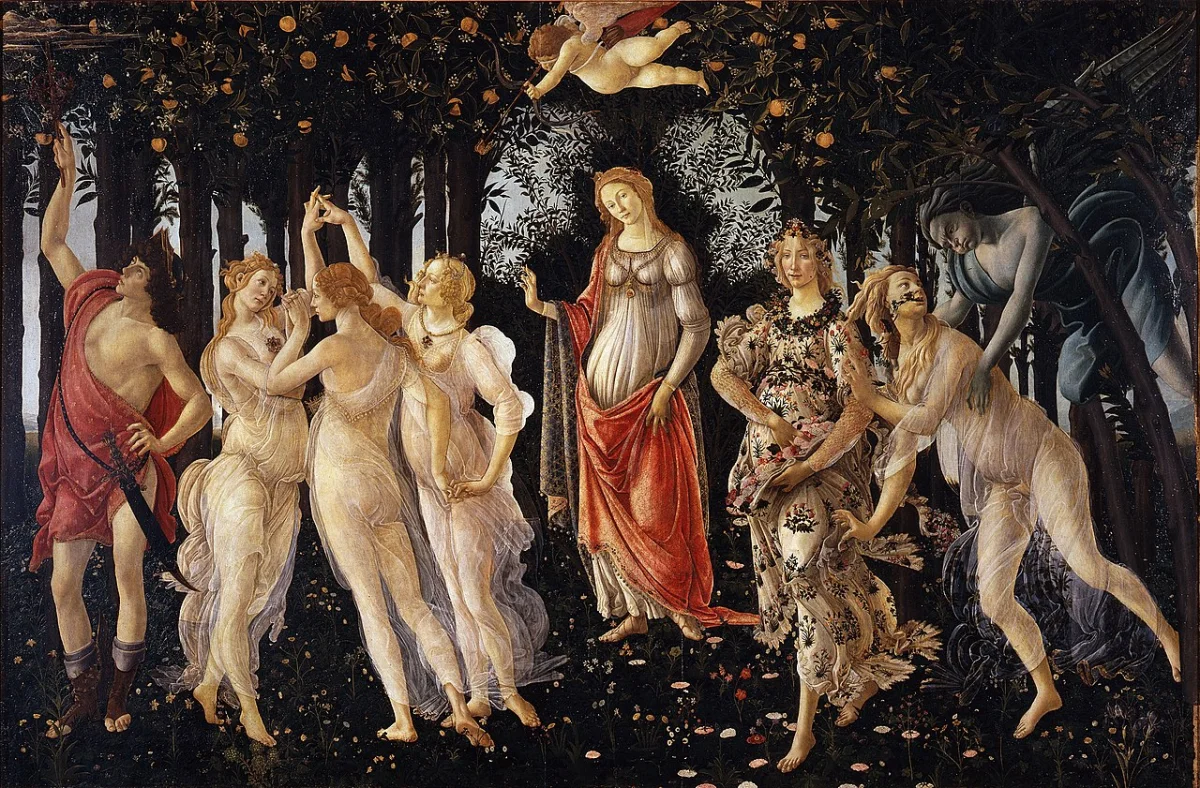
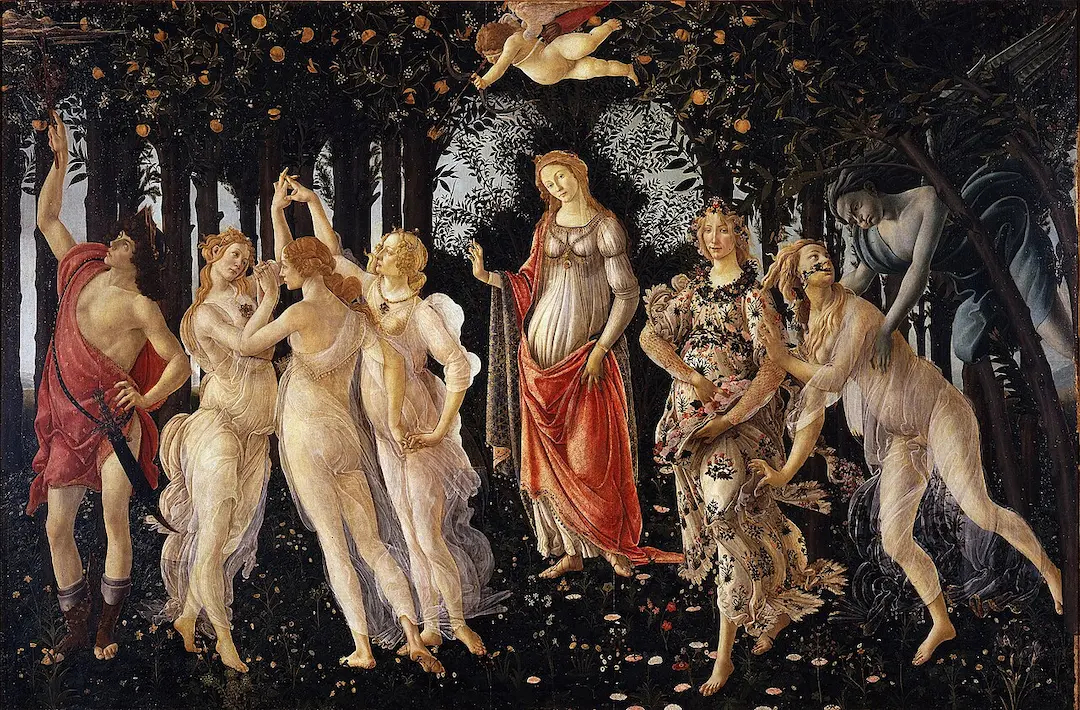
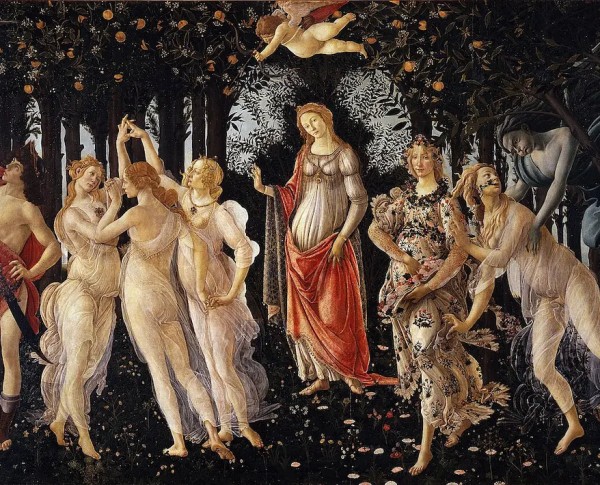
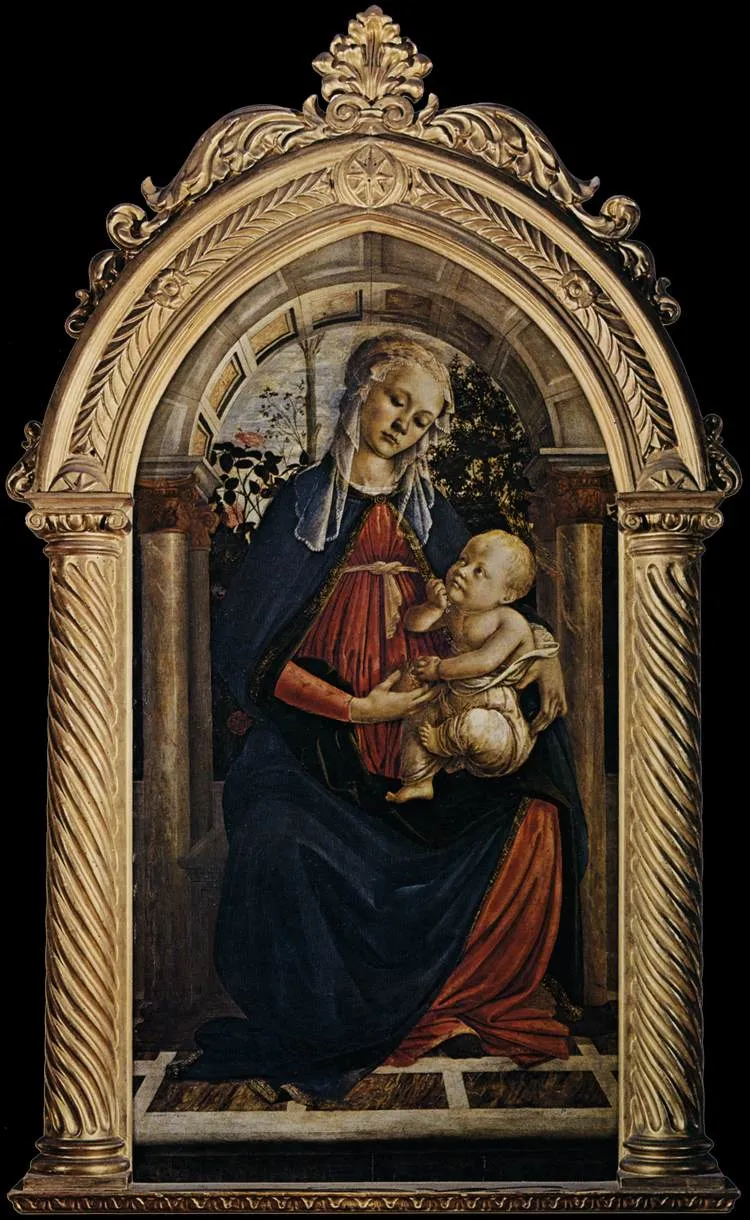
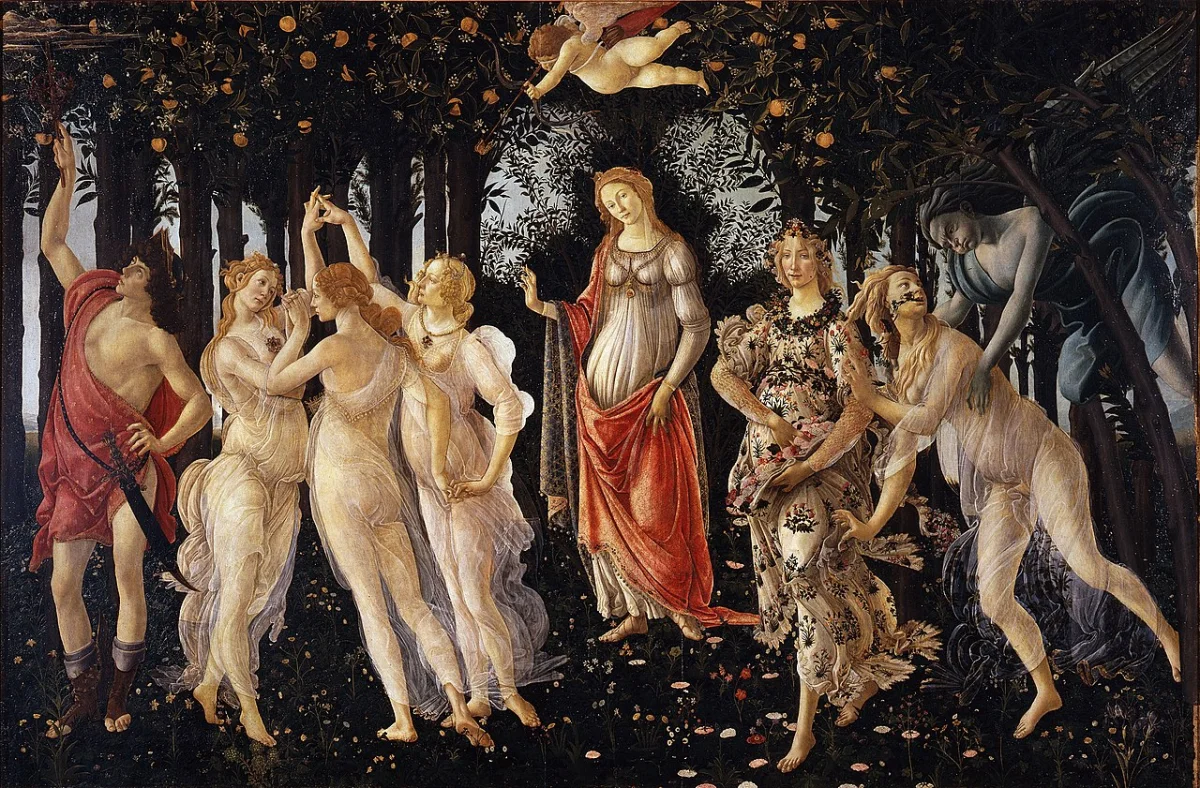
"Madonna of the Rosegarden" by Alessandro Filipepi, known as Sandro Botticelli, stands as a testament to the Early Renaissance movement. This hand-painted oil painting captures the spiritual essence and delicate beauty that define Botticelli’s masterpieces. As with other iconic works like "Primavera" and "Allegory Of Spring La Primavera," Botticelli’s art continues to inspire collectors and enthusiasts seeking authentic fine art painting for sale from the Renaissance period.
Botticelli’s exceptional skill is evident in every detail of this oil on canvas. His careful brushwork, balanced composition, and use of luminous color exemplify the Early Renaissance ideals. "Madonna of the Rosegarden" shares its artistic mastery with related works such as "Virgin and child with two angels" and "Madonna in Glory with Seraphim," making it a prime example of the era’s devotion to technical excellence and spiritual storytelling.
The painting is rich with symbolism, from the serene Madonna to the lush rose garden backdrop. Botticelli’s hand-painted oil painting weaves religious narrative and natural beauty, much like his celebrated "Madonna and Child with an Angel." Collectors and art historians value these symbolic layers, which distinguish Botticelli’s work within the Early Renaissance and enhance the allure of owning such a fine art painting for sale.
For collectors, "Madonna of the Rosegarden" represents a rare opportunity to own a piece of Early Renaissance history. Botticelli’s oil on canvas paintings, including renowned pieces like "Fortitude" and "Primavera," are highly sought after by those who appreciate timeless beauty and masterful technique. This artwork, alongside other related products, remains a coveted fine art painting for sale, treasured by museums and private collectors alike.
When Art Meets History
Alessandro Filipepi, widely known as Sandro Botticelli, created "Madonna of the Rosegarden" during the influential Early Renaissance movement. This period was marked by a renewed interest in classical art and humanism. The hand-painted oil painting beautifully captures the era's devotion to religious subjects and natural beauty. Like many of Botticelli’s works, "Madonna of the Rosegarden" reflects the spiritual and artistic aspirations of its time, making it a cornerstone in the history of Renaissance masterpieces.
Techniques That Speak
Sandro Botticelli’s mastery of oil on canvas is evident in "Madonna of the Rosegarden." He employs delicate brushwork and a refined color palette, characteristic of the Early Renaissance movement. The painting’s harmonious composition and attention to detail showcase Botticelli’s innovative approach to perspective and form. This oil on canvas not only exemplifies his technical prowess but also sets a standard for subsequent artists who sought to capture beauty and emotion in their fine art painting for sale.
Emotions on Display
"Madonna of the Rosegarden" by Alessandro Filipepi (Sandro Botticelli) radiates a serene and tender atmosphere, hallmarks of Early Renaissance art. The hand-painted oil painting evokes a sense of maternal love and divine grace, inviting viewers to connect emotionally with the sacred scene. Botticelli’s sensitive portrayal of the Madonna and Child, coupled with the lush surroundings, creates a timeless narrative that resonates with admirers of fine art painting for sale across generations.
Coveted by Collectors
Collectors and art enthusiasts highly prize Botticelli’s "Madonna of the Rosegarden," recognizing its significance as an exquisite oil on canvas from the Early Renaissance. The painting’s historical value and artistic brilliance make it a sought-after piece in galleries and private collections. As a fine art painting for sale, it represents not only Botticelli’s genius but also the enduring appeal of Renaissance masterpieces that continue to inspire and captivate audiences worldwide.
Frequently Asked Questions About Madonna of the Rosegarden
What is the historical context of "Madonna of the Rosegarden"?
"Madonna of the Rosegarden" was painted by Sandro Botticelli during the early Renaissance period in Florence, a time marked by a revival of classical learning and a flourishing of the arts. This painting reflects the cultural and religious values of the time, particularly the veneration of the Virgin Mary.
Who is the artist behind "Madonna of the Rosegarden"?
The painting was created by Alessandro Filipepi, commonly known as Sandro Botticelli, an influential Italian painter of the early Renaissance. Botticelli is renowned for his unique style that combines grace and beauty with a deep spiritual resonance.
What are the main themes depicted in "Madonna of the Rosegarden"?
The primary themes of "Madonna of the Rosegarden" include motherhood, divine love, and the connection between the earthly and the heavenly. The rose garden symbolizes purity and the Virgin Mary's role as the mother of Christ, emphasizing her importance in Christian theology.
What artistic techniques did Botticelli use in this painting?
Botticelli employed tempera on wood for this artwork, utilizing delicate brushwork and a vibrant color palette. His use of linear perspective and soft, flowing lines creates a sense of harmony and balance, characteristic of his style.
What symbols are present in "Madonna of the Rosegarden"?
The roses in the garden symbolize love and beauty, while the Madonna represents divine grace. The presence of other flora may also signify the virtues associated with Mary, such as purity and compassion, reinforcing her role as an intercessor between humanity and God.
How does "Madonna of the Rosegarden" reflect Botticelli's artistic style?
This painting exemplifies Botticelli's signature style, characterized by elegant figures, flowing lines, and an ethereal quality. His ability to convey emotion through facial expressions and gestures is evident in the serene demeanor of the Madonna and child.
What is the significance of the setting in "Madonna of the Rosegarden"?
The garden setting in the painting serves as a metaphor for paradise, reflecting the idea of the Virgin Mary as a gateway to eternal life. The lush greenery and blooming roses enhance the spiritual atmosphere, inviting viewers to contemplate the divine.
In what ways does "Madonna of the Rosegarden" influence modern interpretations of religious art?
This painting continues to inspire modern interpretations of religious art by emphasizing the emotional connection between the viewer and the subjects. Its blend of beauty and spirituality invites contemporary audiences to explore themes of faith, motherhood, and the human experience.
What impact did Botticelli's work have on subsequent artists?
Botticelli's innovative approach to composition and his ability to convey complex emotions influenced many artists of the High Renaissance and beyond. His emphasis on beauty and grace set a precedent for future generations, shaping the direction of Western art.
Where can one view "Madonna of the Rosegarden" today?
"Madonna of the Rosegarden" is housed in a prominent art collection, where it can be appreciated by the public. For specific location details, please refer to the gallery's collection information or visit our exhibitions page.






















_GFM_Painting_(1).webp)


 100% Hand-Painted: Finished in 3-6 Weeks

.png)












.webp)



_(1).webp)