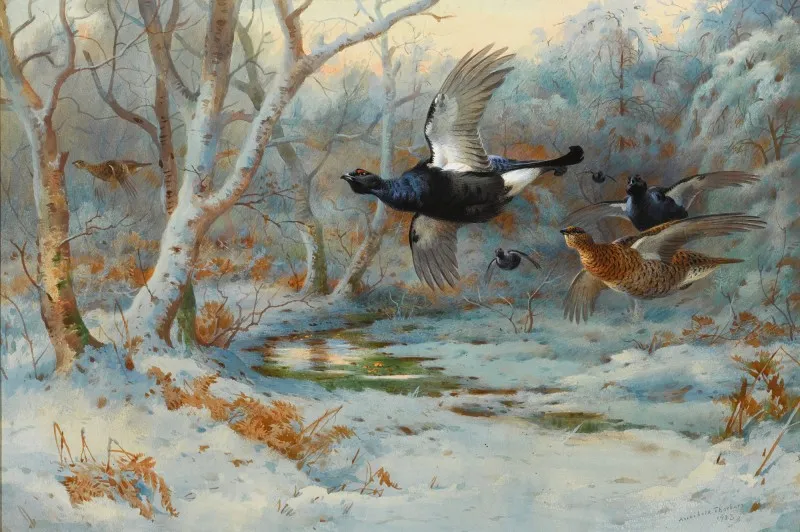
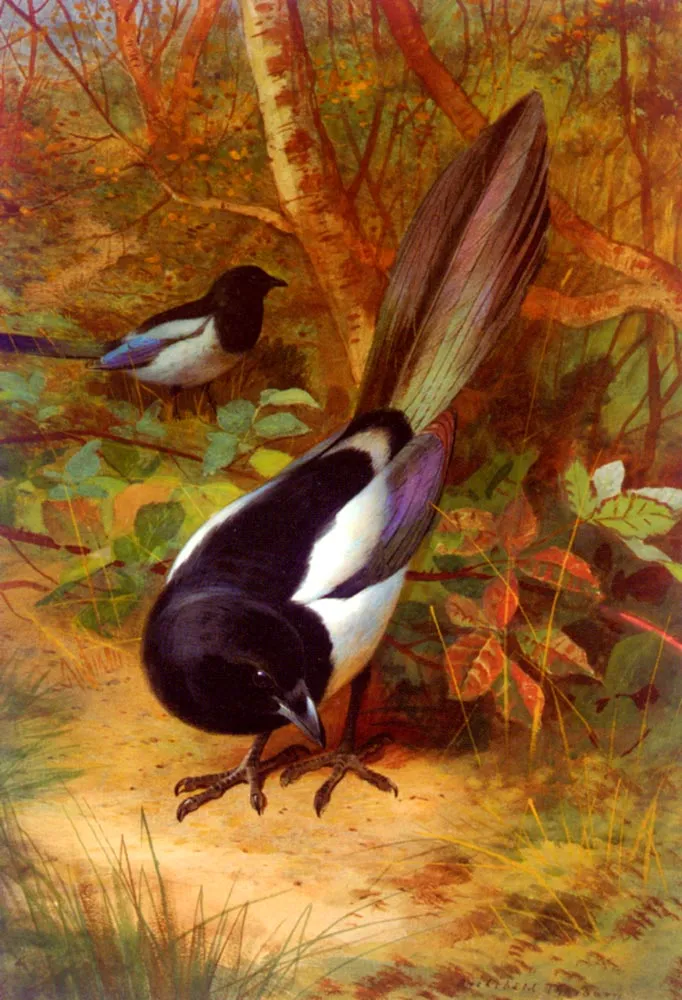
Archibald Thorburn’s technique in "Magpies" is a testament to his mastery of oil on canvas. Each feather, branch, and subtle hue is rendered with meticulous attention, revealing the artist’s profound understanding of avian anatomy and natural light. As a leading figure in the Naturalism movement, Thorburn’s works—alongside pieces like "A Greenland or Gyr Falcon"—demonstrate how oil on canvas can bring wildlife to life with breathtaking authenticity and depth.
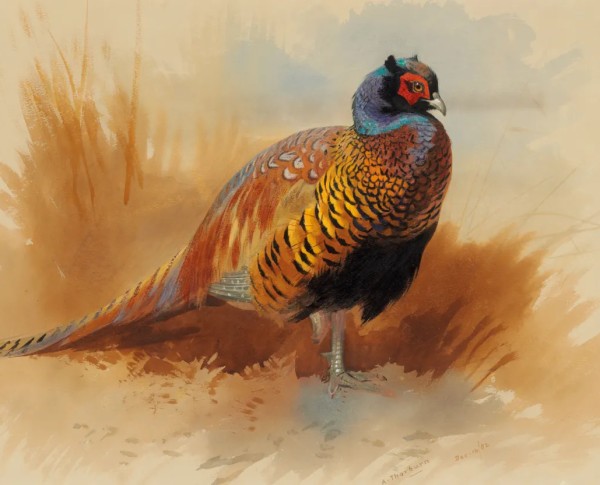
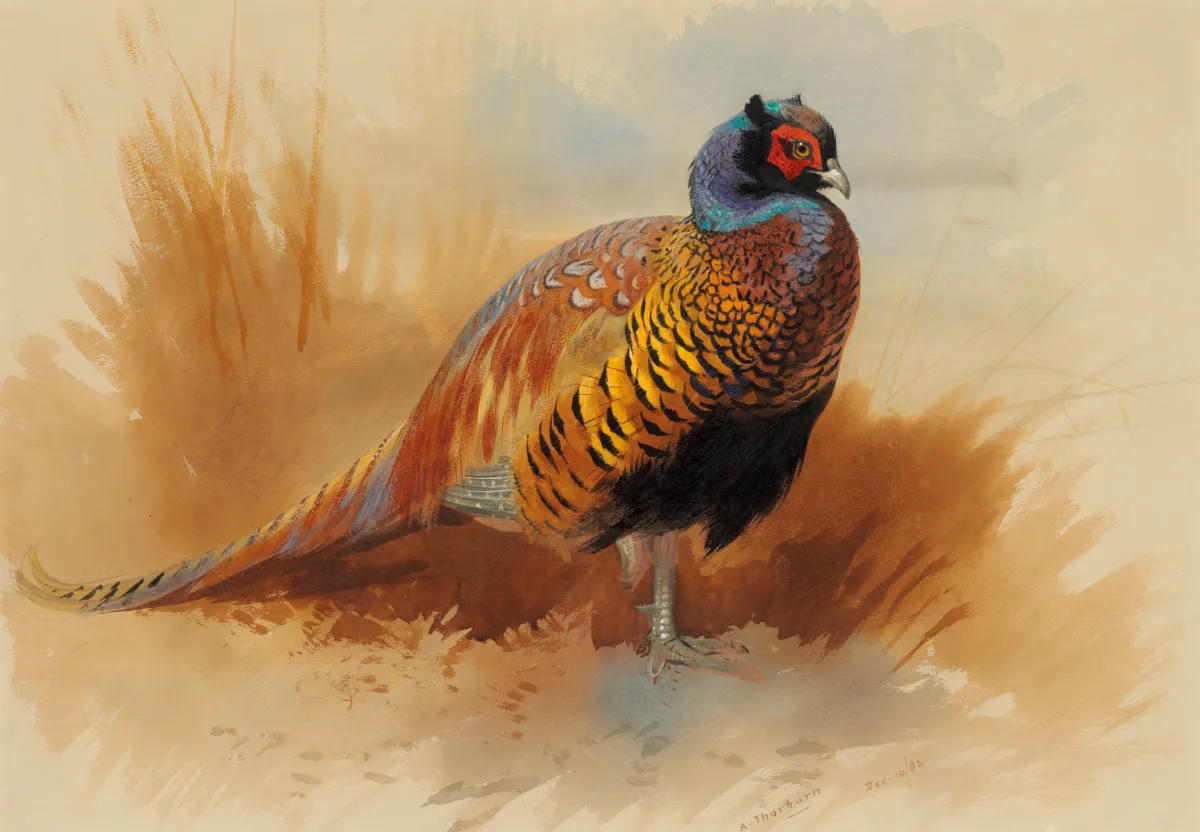
"Magpies" by Archibald Thorburn is more than a fine art painting for sale; it weaves stories and symbols from the natural world into every brushstroke. In the Naturalism movement, birds like magpies often symbolize intelligence and adaptability. Similar themes can be found in related works such as "Study of a Cock Pheasant" and "Little Owl and Scops Owl." Each painting invites viewers to explore the hidden meanings behind the captivating wildlife subjects.
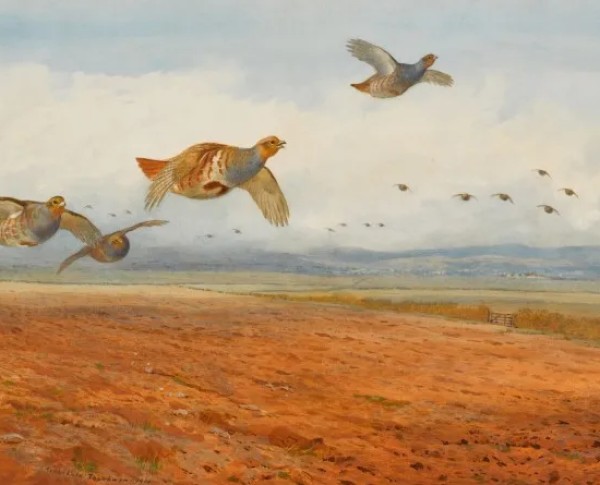
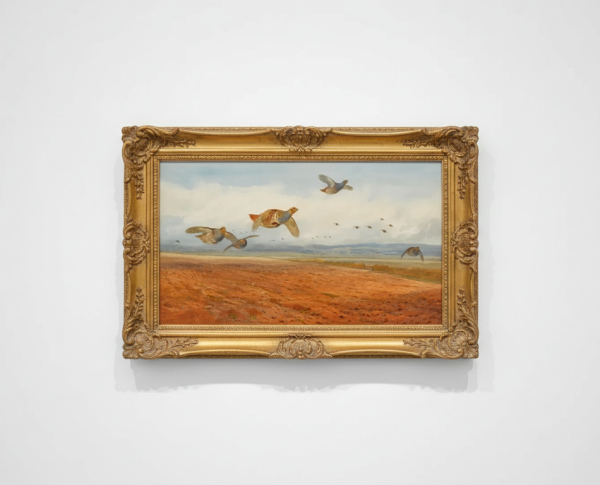
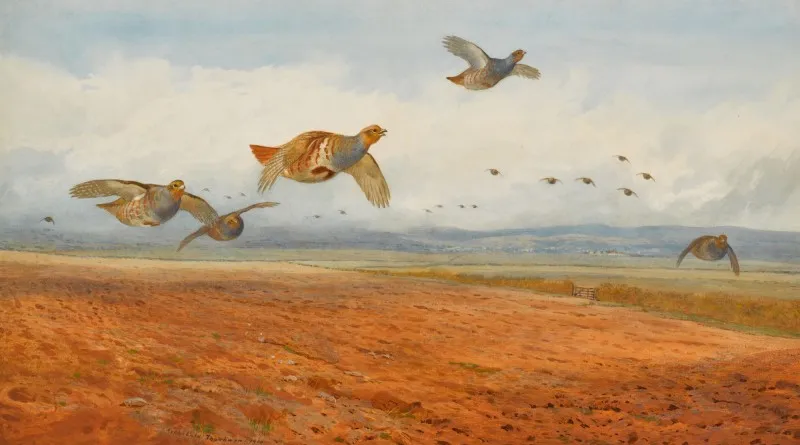
For collectors, owning "Magpies" by Archibald Thorburn is owning a piece of Naturalism history. This hand-painted oil painting represents the pinnacle of wildlife artistry and remains highly sought after, much like "English Partridge In Flight." Each Thorburn artwork, whether displayed solo or with related pieces, adds enduring value and elegance to any collection, making it a cherished fine art painting for sale among connoisseurs and nature lovers alike.
When Art Meets History
Archibald Thorburn’s "Magpies" stands as a brilliant example of the Naturalism movement, capturing the delicate balance between wildlife and environment. This hand-painted oil painting transports viewers to a serene countryside, reflecting the period’s fascination with nature’s authenticity. Thorburn’s meticulous approach aligns "Magpies" with related works such as "Hay Making" and "Portrait of the artist's mother," each echoing a commitment to lifelike representation and historical accuracy characteristic of Naturalism.
Techniques That Speak
Thorburn’s mastery is evident in his refined use of oil on canvas, which brings the magpies to life with vivid detail and realistic textures. Through careful layering and subtle brushwork, he achieves a striking depth and luminosity that defines this piece. Similar techniques are seen in related paintings like "The Annunciation to the Shepherds" and "Madame Godillot," showcasing the artist’s unique ability to render both wildlife and human subjects with equal finesse in the Naturalism movement.
Emotions on Display
"Magpies" by Archibald Thorburn evokes a quiet sense of wonder and reverence for the natural world. The hand-painted oil painting captures the lively curiosity of the birds, set against a tranquil landscape that invites contemplation. Like "The artist’s grandfather" and "Portrait of the artist's mother," Thorburn’s work resonates emotionally, allowing viewers to connect with the subtle narratives and moods embedded within each scene, a hallmark of fine art painting for sale from this era.
Coveted by Collectors
Collectors highly prize "Magpies" for its exquisite artistry and historical significance within the Naturalism movement. As an original oil on canvas, this fine art painting for sale appeals to those seeking works by Archibald Thorburn and comparable pieces such as "Hay Making." The painting’s attention to detail and lifelike depiction of wildlife make it a standout addition to any collection, reflecting the enduring appeal of Thorburn’s contributions to naturalistic art.
Related Naturalism Hand-Painted Oil Paintings by Other Artists
Other Famous Naturalism Artists:
Frequently Asked Questions About Magpies
What is the historical significance of the painting "Magpies"?
"Magpies," created by Archibald Thorburn, is significant as it reflects the early 20th-century British fascination with naturalism and wildlife. Thorburn was known for his detailed and vibrant depictions of birds, contributing to the understanding and appreciation of British fauna during a time of increasing industrialization.
What artistic techniques did Archibald Thorburn use in "Magpies"?
Thorburn employed meticulous attention to detail and a keen understanding of color and light in "Magpies." His use of watercolors allowed for delicate layering and transparency, which enhances the realism of the birds and their natural habitat.
How does "Magpies" reflect the themes of nature and wildlife?
The painting embodies the themes of nature and wildlife by showcasing the magpies in their natural environment, emphasizing the beauty and intricacy of avian life. Thorburn's work often highlights the relationship between animals and their habitats, promoting a sense of conservation and appreciation for the natural world.
What symbolism is associated with magpies in art and culture?
Magpies are often associated with duality and change due to their black and white plumage. In various cultures, they symbolize intelligence, adaptability, and the balance between good and bad fortune, which adds depth to Thorburn's portrayal of these birds in the painting.
What influences can be seen in Thorburn's style in "Magpies"?
Thorburn's style in "Magpies" is influenced by the Pre-Raphaelite movement, which emphasized detail and vivid color. His background in natural history and his passion for ornithology also shaped his artistic approach, allowing him to capture the essence of his subjects with precision.
In what ways did "Magpies" contribute to the genre of wildlife art?
"Magpies" contributed to the genre of wildlife art by setting a standard for realism and detail in bird representation. Thorburn's ability to convey the personality and behavior of the magpies helped elevate wildlife art as a respected genre within the broader art community.
What was the public's reception of "Magpies" when it was first exhibited?
Upon its exhibition, "Magpies" was well-received by the public and critics alike, who praised Thorburn's technical skill and his ability to evoke emotion through his depiction of wildlife. The painting resonated with audiences who appreciated both its aesthetic beauty and its celebration of nature.
How does "Magpies" compare to other works by Archibald Thorburn?
What role did Archibald Thorburn play in the conservation movement?
Thorburn was an early advocate for wildlife conservation, and his paintings, including "Magpies," played a role in raising awareness about the importance of preserving natural habitats. His art often served as a visual reminder of the beauty of nature and the need to protect it.
What materials were used in the creation of "Magpies"?
Archibald Thorburn primarily used watercolors for "Magpies," which allowed him to achieve a delicate and nuanced portrayal of the birds. He often worked on high-quality paper to enhance the vibrancy and longevity of the colors used in his paintings.























_GFM_Painting_(1).webp)


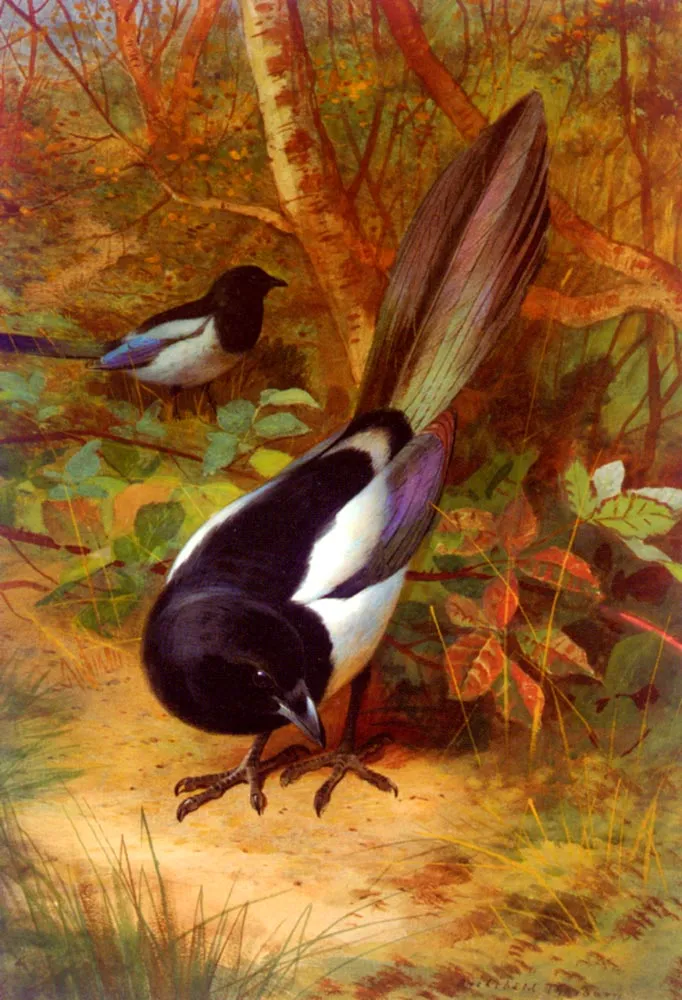
 100% Hand-Painted: Finished in 3-6 Weeks

.png)















_(1).webp)