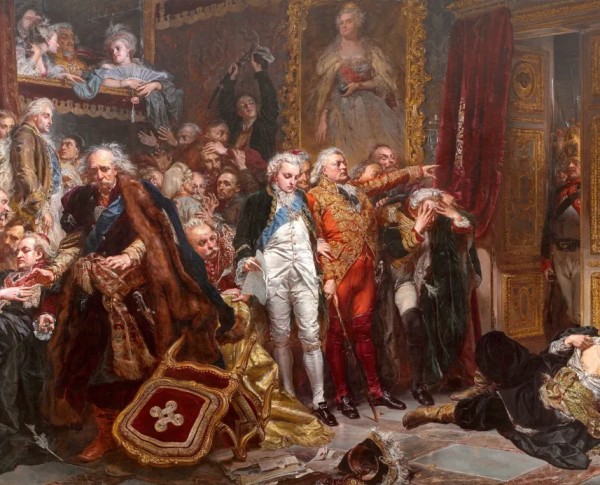
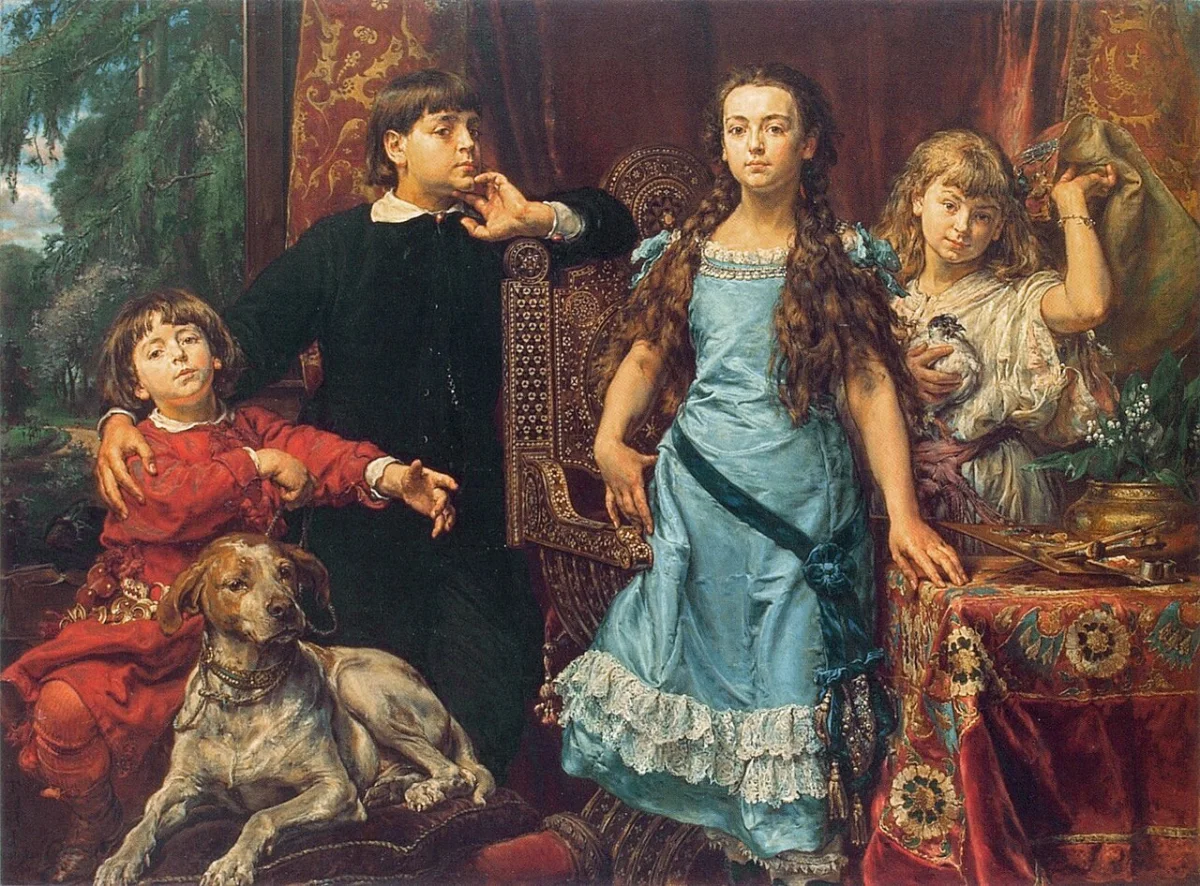
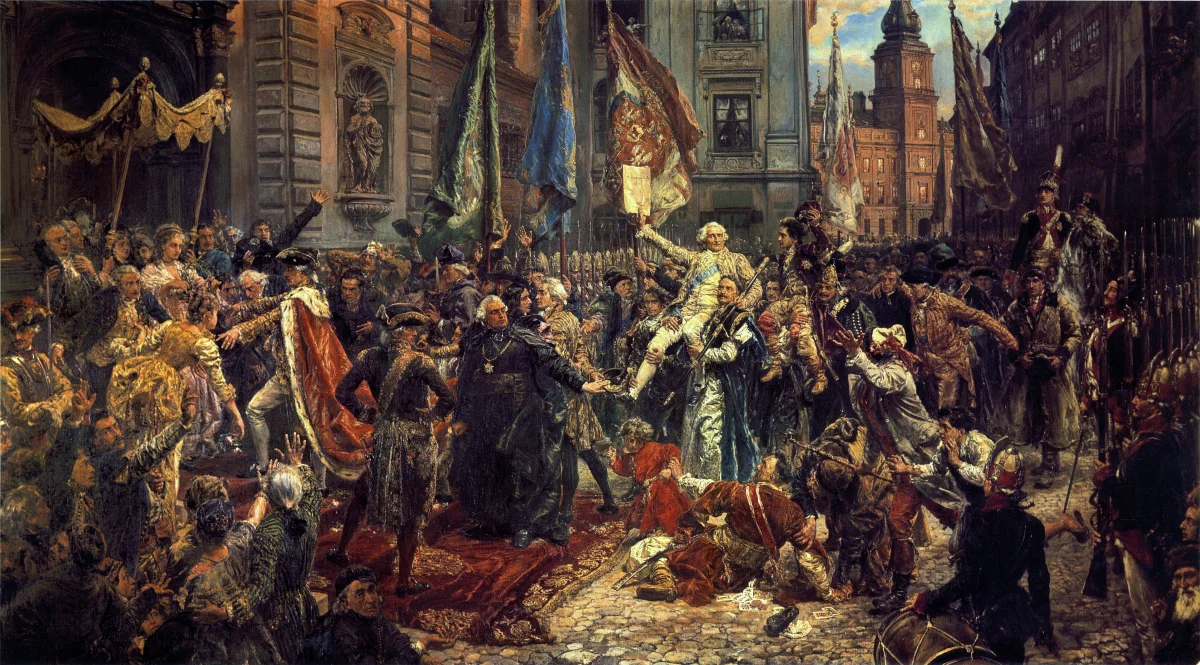
"Portrait of the artist's four children" is a testament to Jan Matejko’s unparalleled skill with oil on canvas. Each brushstroke is meticulously applied, illustrating the depth of emotion and personality in his subjects. As a prime example of the Historicism movement, this painting stands alongside other celebrated works such as "Constitution of May 3, 1791" and "Stanczyk during a Ball at the Court of Queen," showcasing Matejko’s enduring artistic legacy.
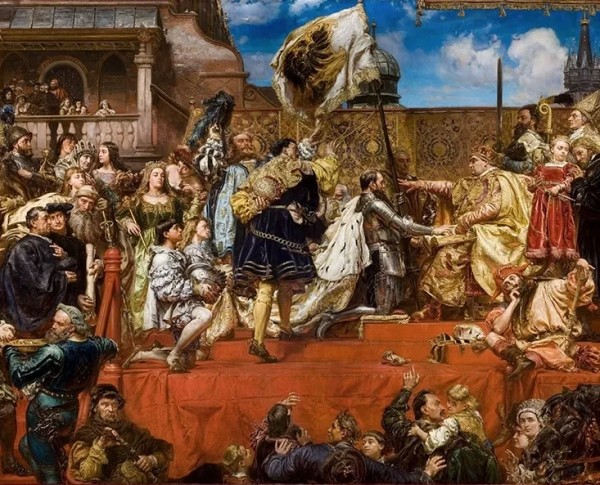
In this hand-painted oil painting, Jan Matejko weaves subtle narratives and symbols that reveal the bonds between his children and the cultural milieu of his era. The Historicism movement’s influence is evident in the detailed representation and thoughtful composition. Collectors of fine art painting for sale often seek pieces like this, as well as related works such as "Hanging of the Sigismund bell at the cathedral tower in 1521 in Kraków" and "The Fall of Poland," for their historical and emotional depth.
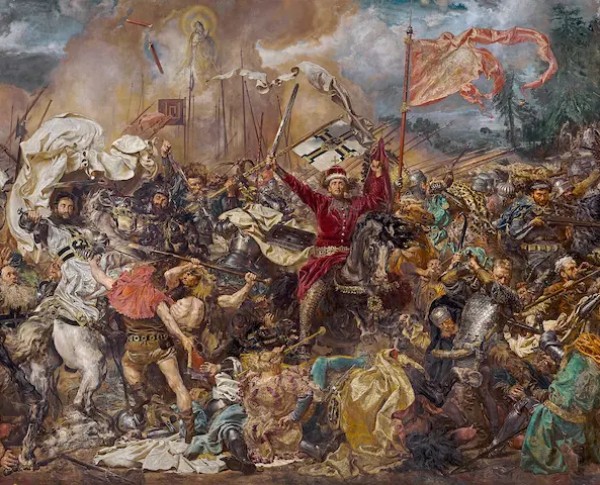
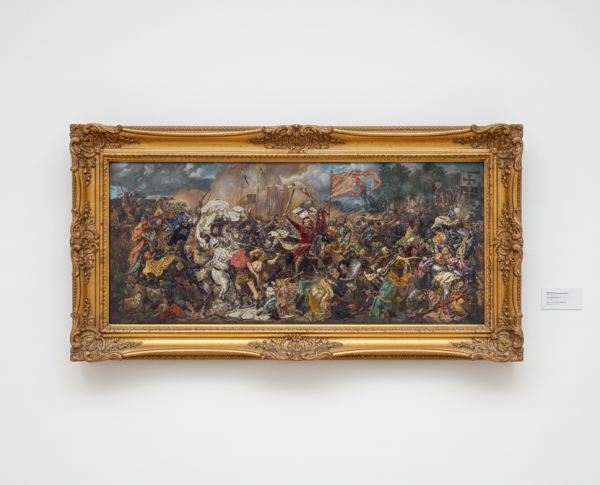
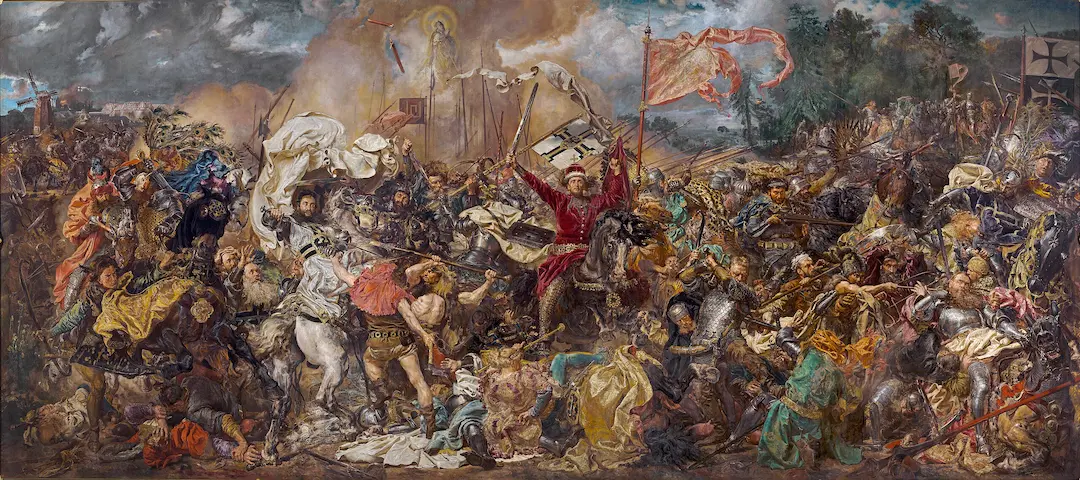
For those passionate about acquiring a fine art painting for sale, "Portrait of the artist's four children" by Jan Matejko is an exceptional choice. The oil on canvas technique and Historicism style make it a centerpiece for any collection. Works by Matejko, including "Battle of Grunwald" and "Stanczyk during a Ball at the Court of Queen," are highly sought after, making this portrait a true collector’s treasure and a celebration of Polish artistic heritage.
When Art Meets History
"Portrait of the Artist's Four Children" by Jan Matejko stands as a remarkable example of the Historicism movement. This hand-painted oil painting captures not only the likenesses of Matejko’s children but also the spirit of a bygone era. The composition reflects the artist’s deep appreciation for history, a trait shared with his other celebrated works. Through this masterpiece, Matejko connects the viewer to nineteenth-century Polish culture, blending personal narrative with historical context.
Techniques That Speak
Jan Matejko’s "Portrait of the Artist's Four Children" showcases his mastery of oil on canvas. The artist’s refined brushwork and use of light highlight each child’s individuality while maintaining a harmonious composition. As with his other paintings, Matejko’s attention to period details and textures exemplifies the technical prowess of the Historicism movement. This oil on canvas painting remains a testament to Matejko’s ability to merge historical accuracy with expressive artistry.
Emotions on Display
The emotional depth in "Portrait of the Artist's Four Children" is unmistakable, as Jan Matejko portrays his children with tenderness and sincerity. This fine art painting for sale captures the innocence and curiosity of youth, drawing viewers into the intimate world of the artist’s family. Like his other works, Matejko’s use of color and expression evokes a powerful emotional response, making this piece a treasured example of the Historicism movement’s human touch.
Coveted by Collectors
Collectors prize "Portrait of the Artist's Four Children" not only for its artistic merit but also for its historical significance. As a hand-painted oil painting by Jan Matejko, it stands as a sought-after addition to any collection of Historicism masterpieces. The painting’s rich narrative and exceptional craftsmanship ensure its enduring appeal, much like Matejko’s other celebrated works. It remains a testament to the timeless allure and value of fine art painting for sale.
Frequently Asked Questions About Portrait of the artists four children
What is the historical context of "Portrait of the artists four children"?
This painting was created during the late 19th century, a period marked by significant artistic movements in Europe, including realism and romanticism. Jan Matejko, a prominent Polish painter, sought to capture the essence of his family's life and the cultural heritage of Poland through this work.
What artistic techniques did Jan Matejko employ in this painting?
Matejko is known for his meticulous attention to detail and use of rich colors. In "Portrait of the artists four children," he employs a realistic style, utilizing chiaroscuro to create depth and dimension, while also incorporating symbolic elements that reflect his family's identity.
What is the significance of the children depicted in the painting?
The four children in the painting represent not only Matejko's personal life but also the future of Polish culture and heritage. Each child is portrayed with distinct expressions and postures, symbolizing their unique personalities and the hopes their father had for them.
How does this painting reflect Jan Matejko's artistic philosophy?
Matejko believed in the importance of history and identity in art. "Portrait of the artists four children" reflects his philosophy by intertwining personal narrative with broader cultural themes, emphasizing the role of family in shaping one's identity and legacy.
What symbols can be found in "Portrait of the artists four children"?
Various symbols are present in the painting, such as the children's clothing, which reflects the fashion of the time, and the background elements that may represent Polish heritage. These symbols work together to convey themes of family, tradition, and national identity.
In what ways does this painting contribute to our understanding of Polish art history?
This work is significant in Polish art history as it showcases the blend of personal and national themes that characterize Matejko's oeuvre. It highlights the importance of familial bonds and cultural identity, which are recurring motifs in Polish art during this period.
What emotions does the painting evoke, and how does Matejko achieve this?
The painting evokes a sense of warmth, nostalgia, and pride. Matejko achieves this through the intimate portrayal of his children, their expressions, and the careful arrangement of figures, which invites viewers to connect emotionally with the subjects.
How does "Portrait of the artists four children" compare to other works by Jan Matejko?
Unlike Matejko's historical paintings, which often depict grand events and figures, "Portrait of the artists four children" is more personal and introspective. This contrast highlights his versatility as an artist and his ability to convey both public and private narratives.
What influence did "Portrait of the artists four children" have on future generations of artists?
This painting has influenced future generations by emphasizing the importance of personal narrative in art. It encourages artists to explore their own identities and familial relationships, fostering a deeper connection between the artist and their audience.
Where can one view "Portrait of the artists four children" today?
The painting is part of a collection that can be viewed at the National Museum in Warsaw, Poland. It remains an important piece for both its artistic merit and its cultural significance within Polish heritage.























_GFM_Painting_(1).webp)


 100% Hand-Painted: Finished in 3-6 Weeks

.png)















_(1).webp)