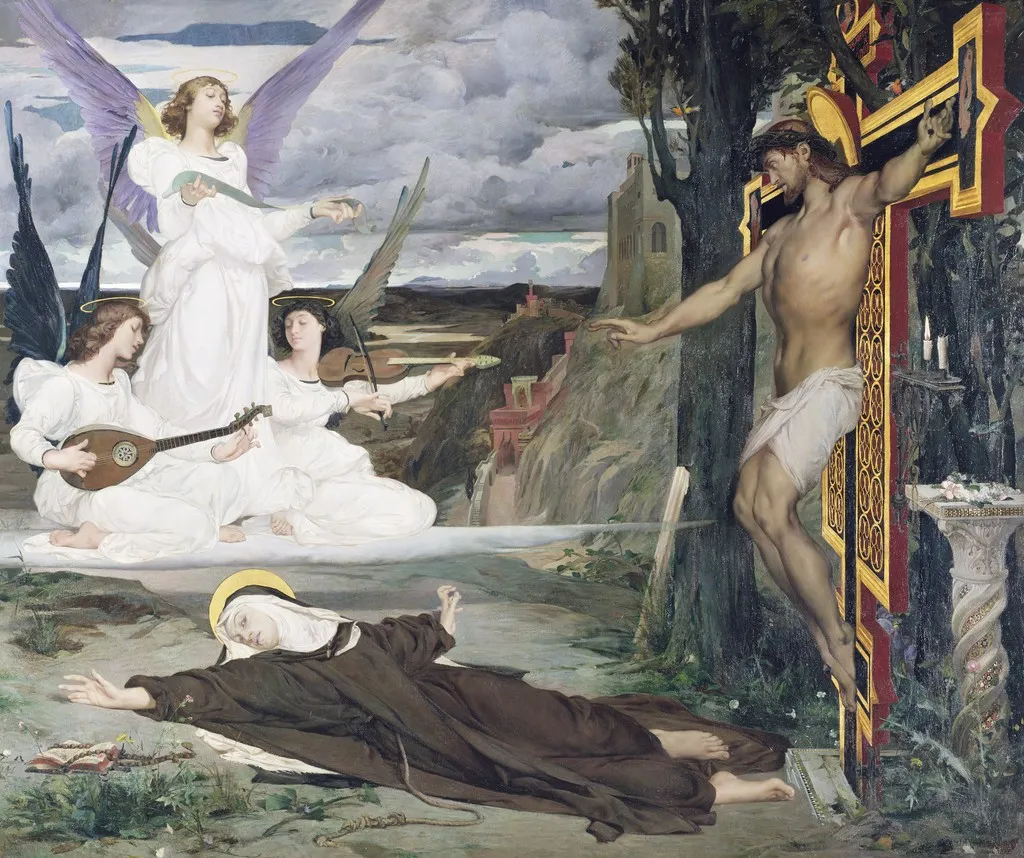
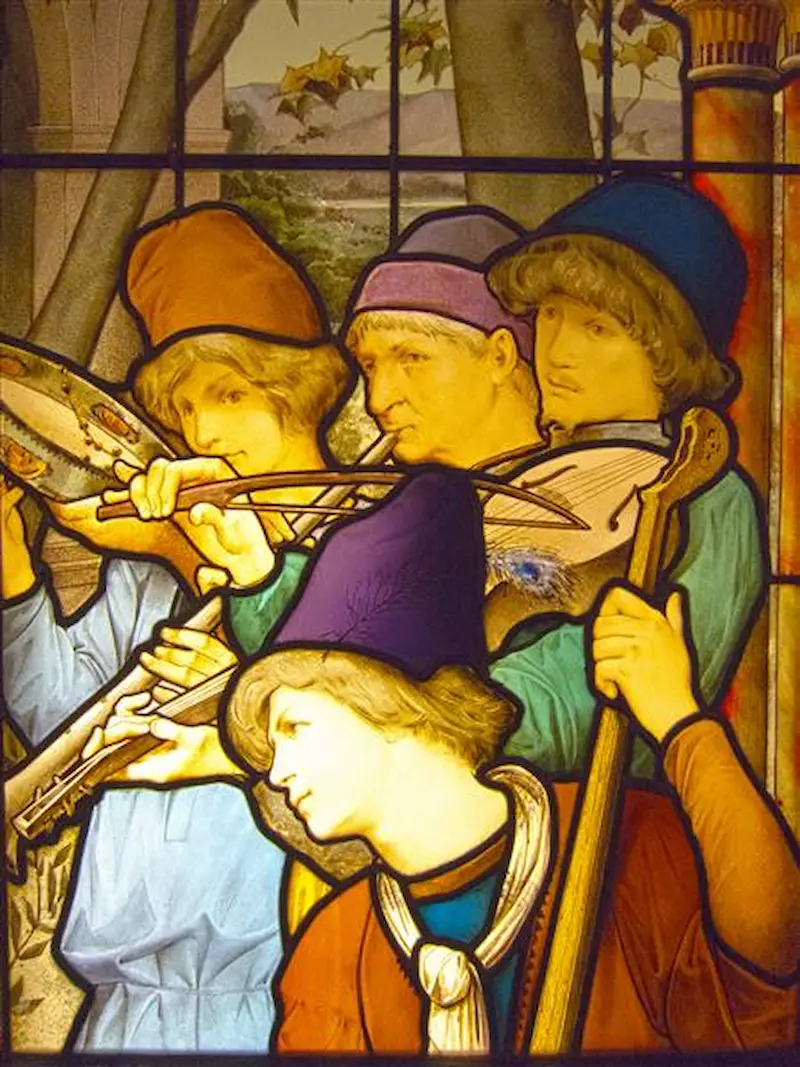
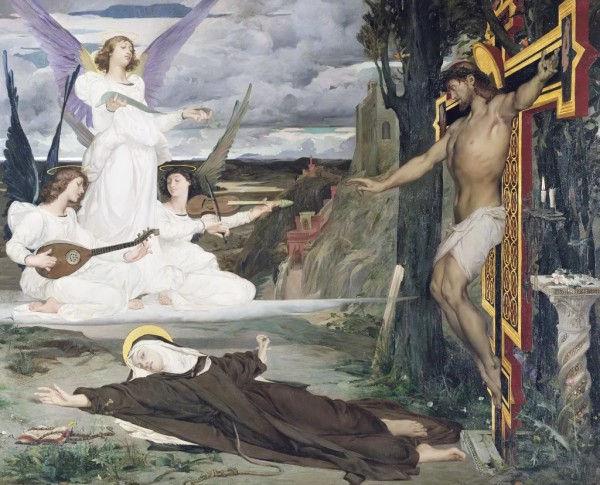
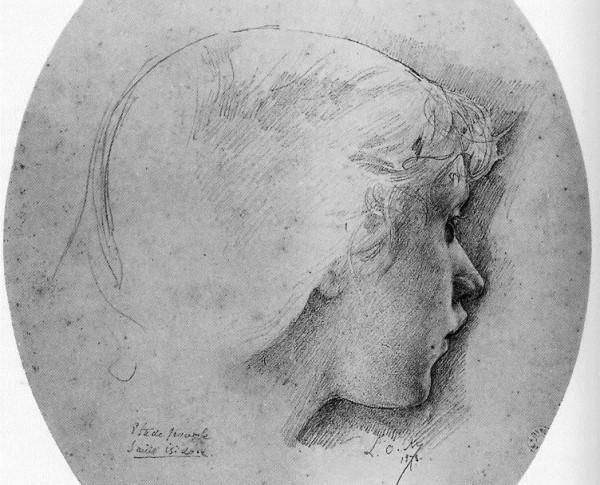
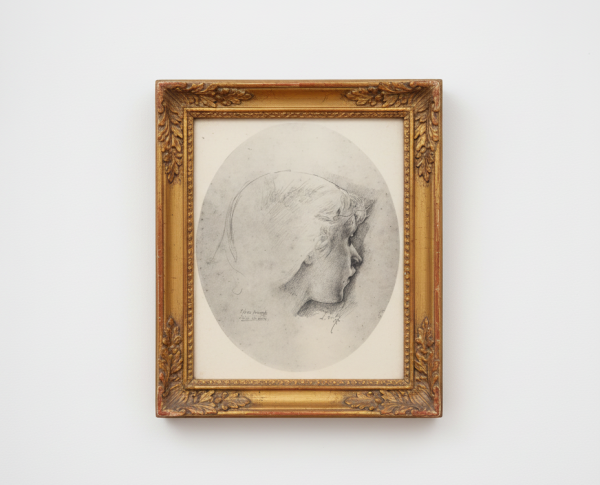
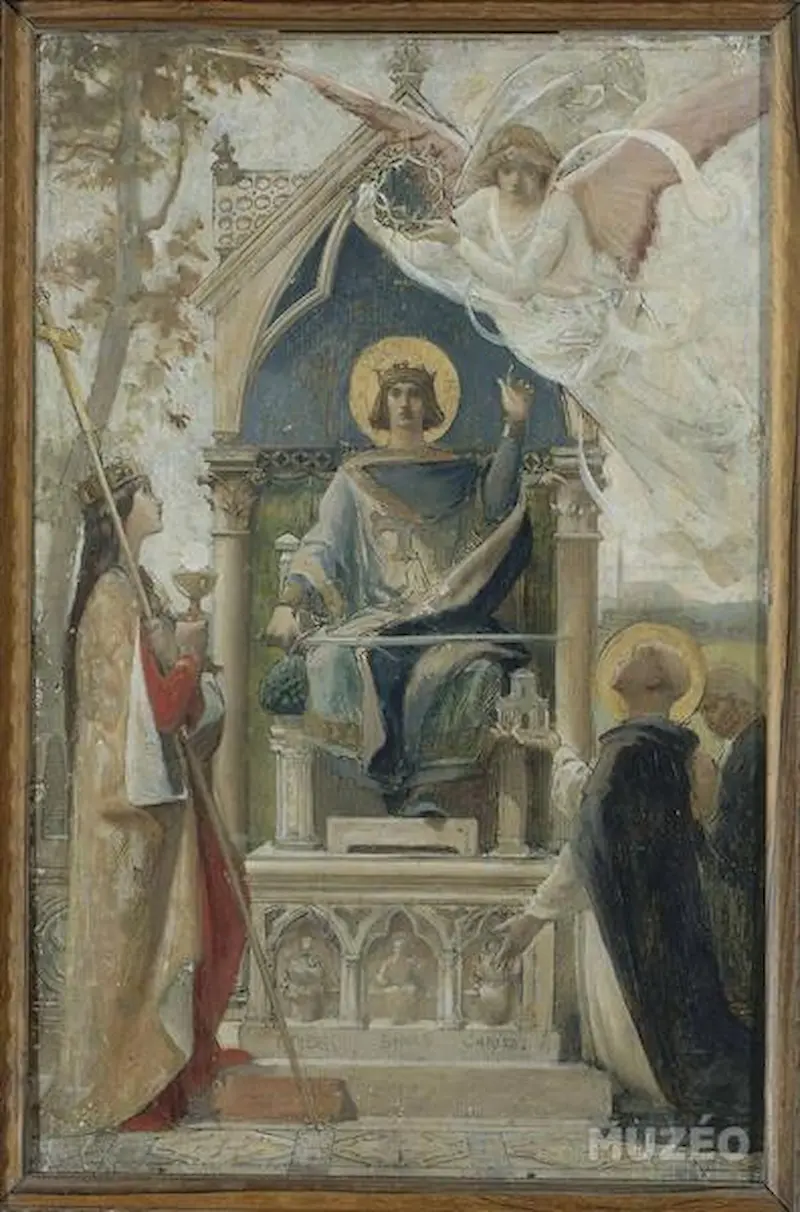
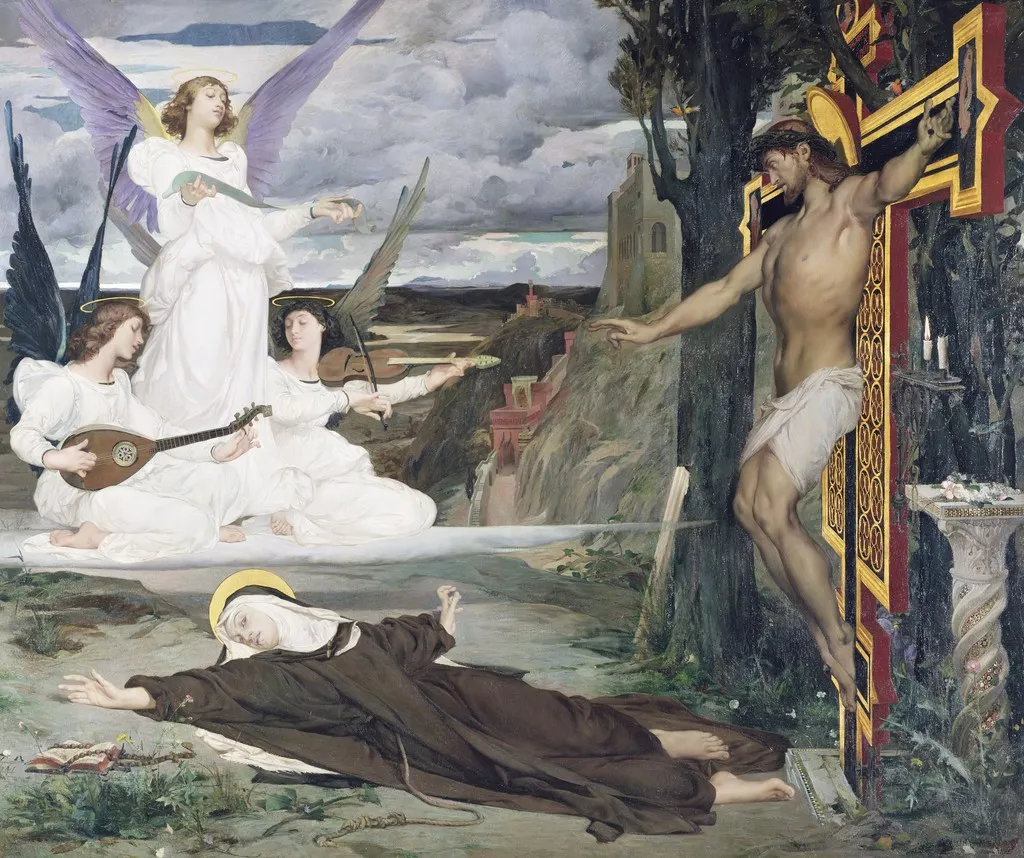
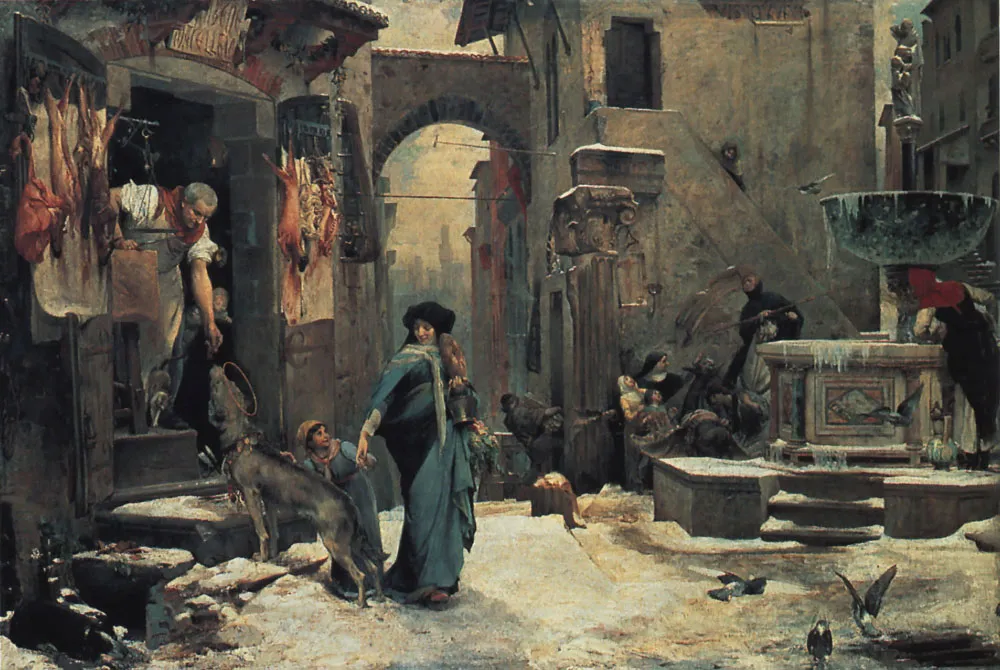
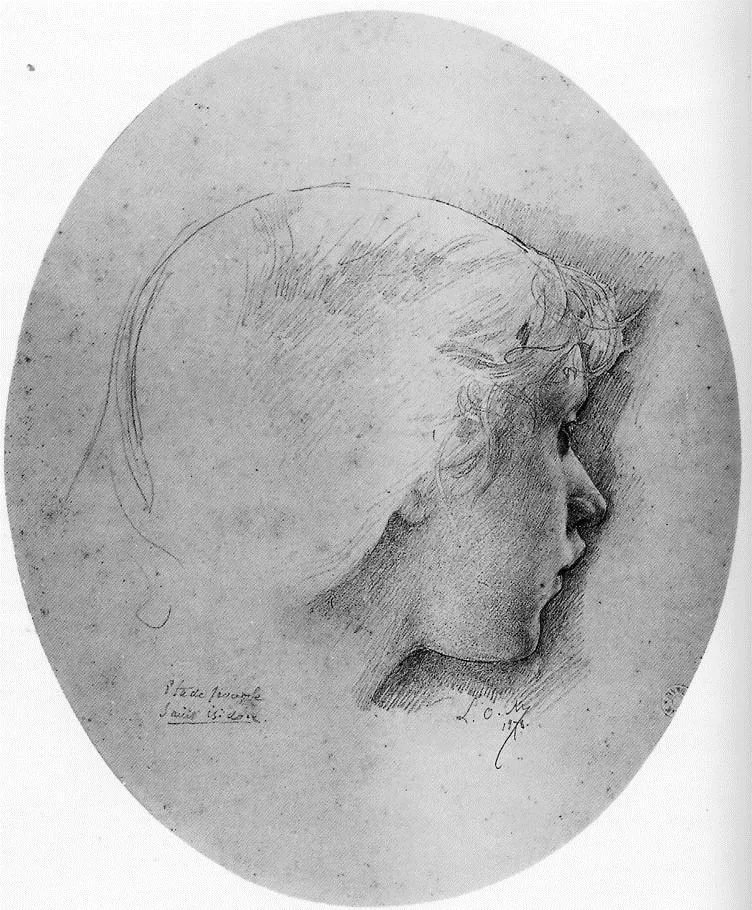
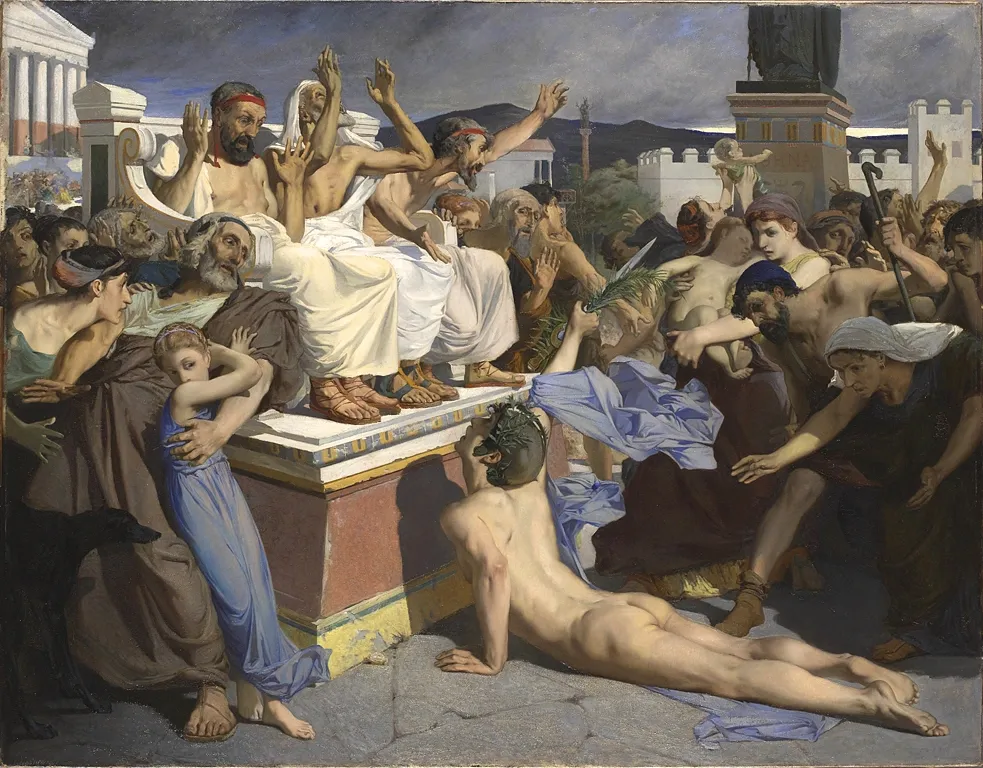
Luc-Olivier Merson’s "St Louis, study for a painting done in" showcases expert technique and attention to detail, hallmarks of oil on canvas in the Academic Art movement. The painting’s refined lines and harmonious composition highlight Merson’s mastery, making it an exemplary addition to any collection. Those interested in similar works may also explore "The Vision," "Legend of the 14th Century," and "Study for the Head of an Angel in Saint Isidore," all reflecting the movement’s dedication to technical excellence.
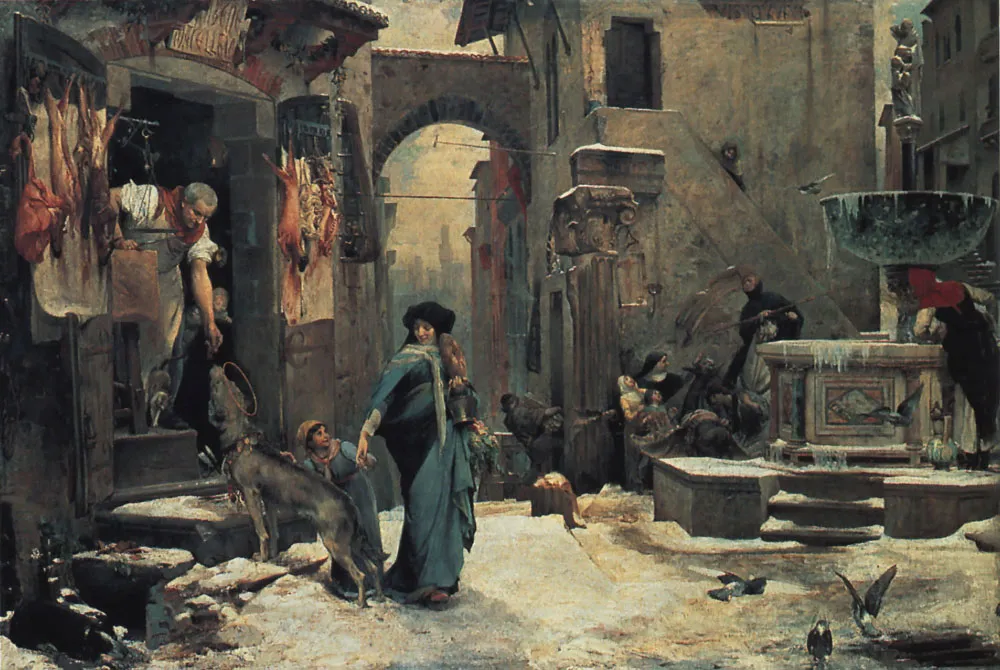
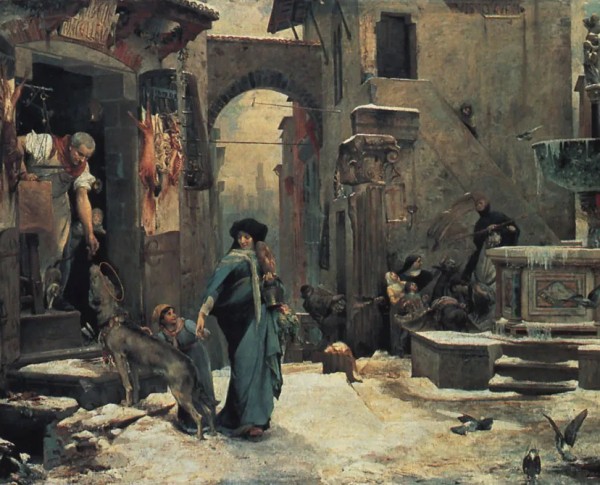
Within "St Louis, study for a painting done in," Luc-Olivier Merson weaves intricate stories and potent symbols, characteristic of Academic Art. Each element in this fine art painting for sale invites viewers to delve deeper into the historical and spiritual narrative. Merson’s skill in embedding layered meanings draws connections to related pieces like "Rest on the Flight into Egypt" and "The Wolf of Agubbio," enriching the viewing experience for art lovers and collectors alike.
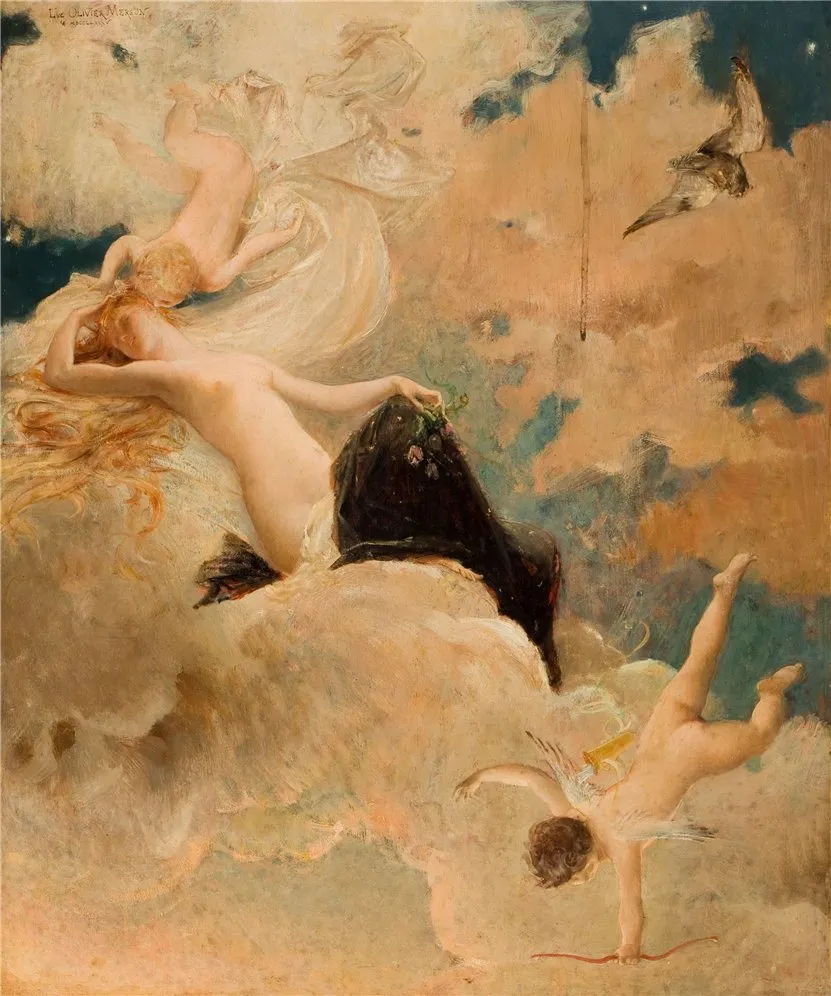
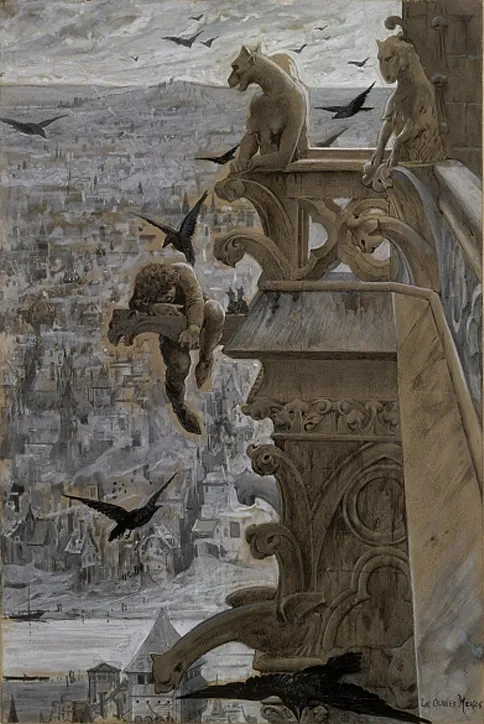
For discerning collectors, "St Louis, study for a painting done in" by Luc-Olivier Merson offers a unique opportunity to own a significant work from the Academic Art movement. This hand-painted oil painting stands out for its rarity and historical importance, making it a prized acquisition. Complementing related products such as "Diane" and "The Hunchback of Notre-Dame," this painting is a testament to Merson’s enduring influence and the timeless appeal of Academic Art in today’s fine art market.
When Art Meets History
"St Louis, study for a painting done in" by Luc-Olivier Merson is a remarkable example of the Academic Art movement, capturing both historical depth and artistic mastery. Merson, renowned for works like "Auguste Au Tombeau D'Alexandre" and "Battle of Auvours, 10 January," infuses this hand-painted oil painting with references to France’s storied past. The painting’s careful attention to historical detail demonstrates how fine art can serve as a bridge between eras, making history come alive on canvas.
Techniques That Speak
Luc-Olivier Merson’s "St Louis, study for a painting done in" showcases the refined techniques emblematic of the Academic Art movement. The artist employs oil on canvas to create intricate textures and luminous effects, much like in his other works, including "Still Life with Fruit" and "A Nymph by a Fountain." Through masterful brushwork and layered glazes, Merson achieves a depth that invites viewers to linger, making the painting a testament to his technical prowess and dedication to traditional artistry.
Emotions on Display
In "St Louis, study for a painting done in," Merson conveys a profound emotional resonance, a hallmark of his approach within the Academic Art movement. The contemplative mood, reminiscent of "By the Well," draws the viewer into a narrative of devotion and reflection. This fine art painting for sale doesn’t just depict a scene—it evokes empathy and introspection, inviting collectors and art lovers to experience the emotional depth that Merson so skillfully imparts through his evocative subject matter.
Coveted by Collectors
Collectors are drawn to Luc-Olivier Merson’s "St Louis, study for a painting done in" for its historical significance and exceptional artistry. As with other oil on canvas masterpieces from the Academic Art movement, this work stands alongside sought-after pieces like "Still Life with Fruit, Glass of Wine." Its provenance and meticulous execution make it a prized addition to any collection, reflecting both timeless appeal and the enduring value of Merson’s contribution to fine art.
Related Academic Art Hand-Painted Oil Paintings by Other Artists
Other Famous Academic Art Artists:
Frequently Asked Questions About St Louis, study for a painting done in
What is the historical significance of "St Louis, study for a painting done in"?
This artwork serves as a crucial study that reflects the artistic trends of the late 19th century, particularly in France, where Luc-Olivier Merson was influenced by both academic and romantic styles.
Who was Luc-Olivier Merson and what was his contribution to art?
Luc-Olivier Merson was a prominent French painter known for his historical and religious subjects. His work often combined classical techniques with contemporary themes, contributing significantly to the academic art movement of his time.
What artistic techniques are evident in this study?
The study showcases Merson's mastery of light and shadow, as well as his skillful use of color to evoke emotion and depth, which are hallmarks of his larger body of work.
What themes are explored in "St Louis, study for a painting done in"?
The painting explores themes of leadership, faith, and nobility, encapsulating the essence of Saint Louis as a historical figure who embodied the virtues of justice and piety.
How does this study relate to Merson's other works?
This study is a precursor to Merson's larger compositions, often depicting similar themes of history and spirituality, showcasing his consistent exploration of the human condition through a historical lens.
What symbols are present in the painting and what do they represent?
Symbols such as the crown and the cross are prominent, representing Saint Louis's royal authority and his deep Christian faith, which were central to his identity and legacy.
In what context was "St Louis, study for a painting done in" created?
The study was created during a period of renewed interest in historical subjects in art, reflecting the societal desire to connect with national identity and heritage in post-revolutionary France.
What impact did this study have on the final painting?
The study served as a foundational exploration of composition and color, allowing Merson to refine his ideas before executing the final painting, ultimately enhancing its emotional and visual impact.
How does this work reflect the academic art style of its time?
The work exemplifies the academic style through its meticulous attention to detail, realistic portrayal of figures, and adherence to classical themes, which were highly valued in the art institutions of the period.
What can we learn about the cultural context of the time through this painting?
The painting provides insight into the cultural revival of historical narratives in art, reflecting a collective longing for stability and identity in a rapidly changing society during the late 19th century.























_GFM_Painting_(1).webp)


 100% Hand-Painted: Finished in 3-6 Weeks

.png)
















_(1).webp)