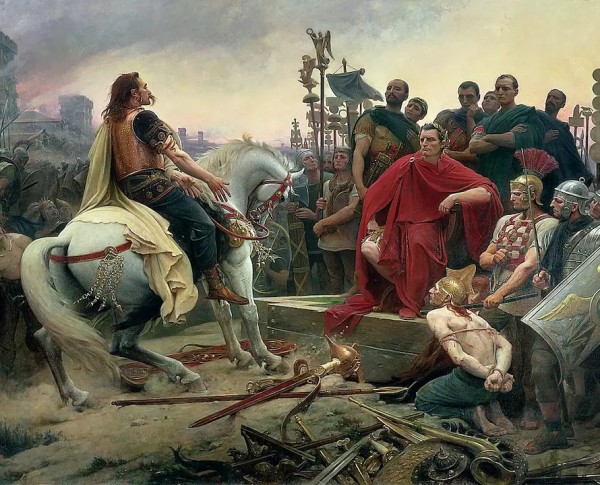
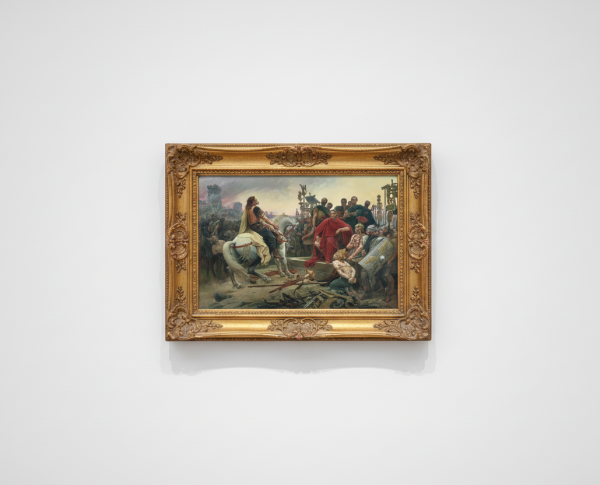
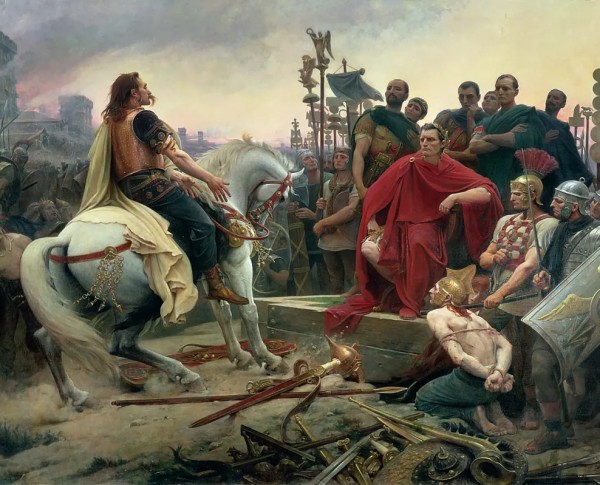
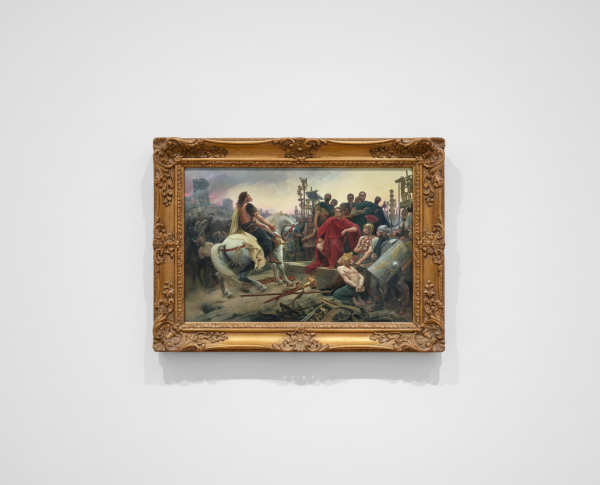
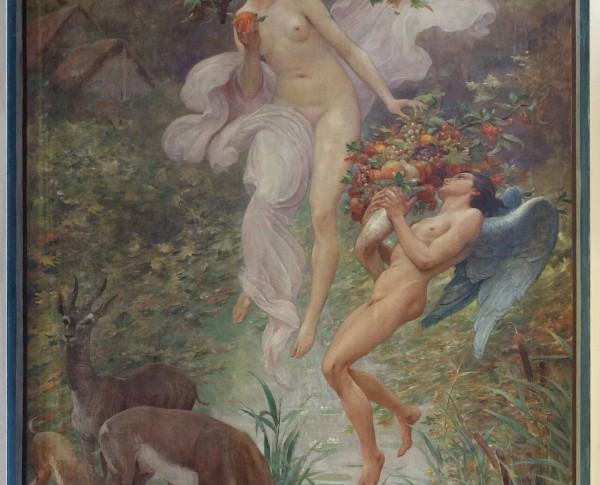
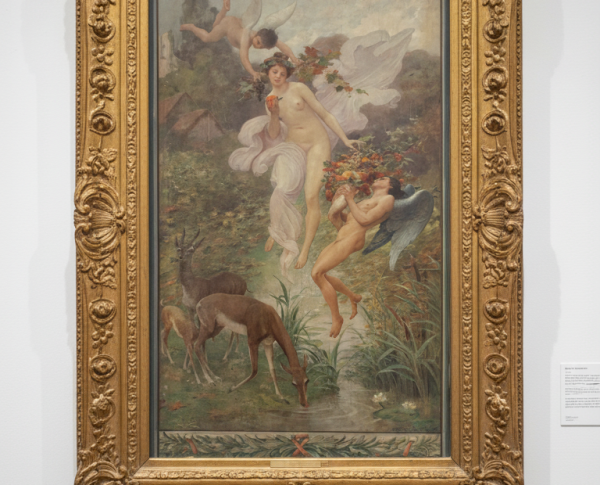
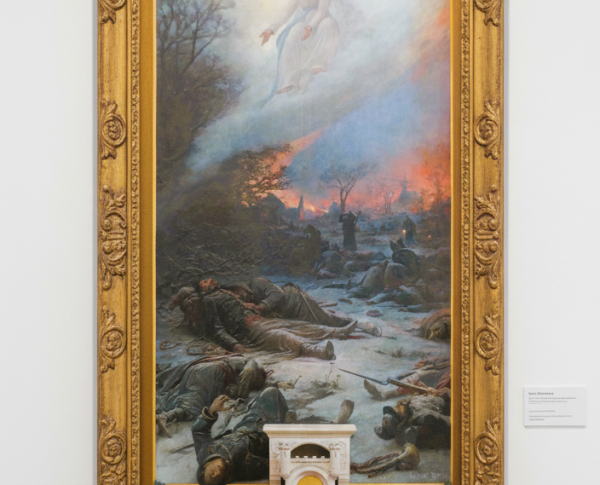
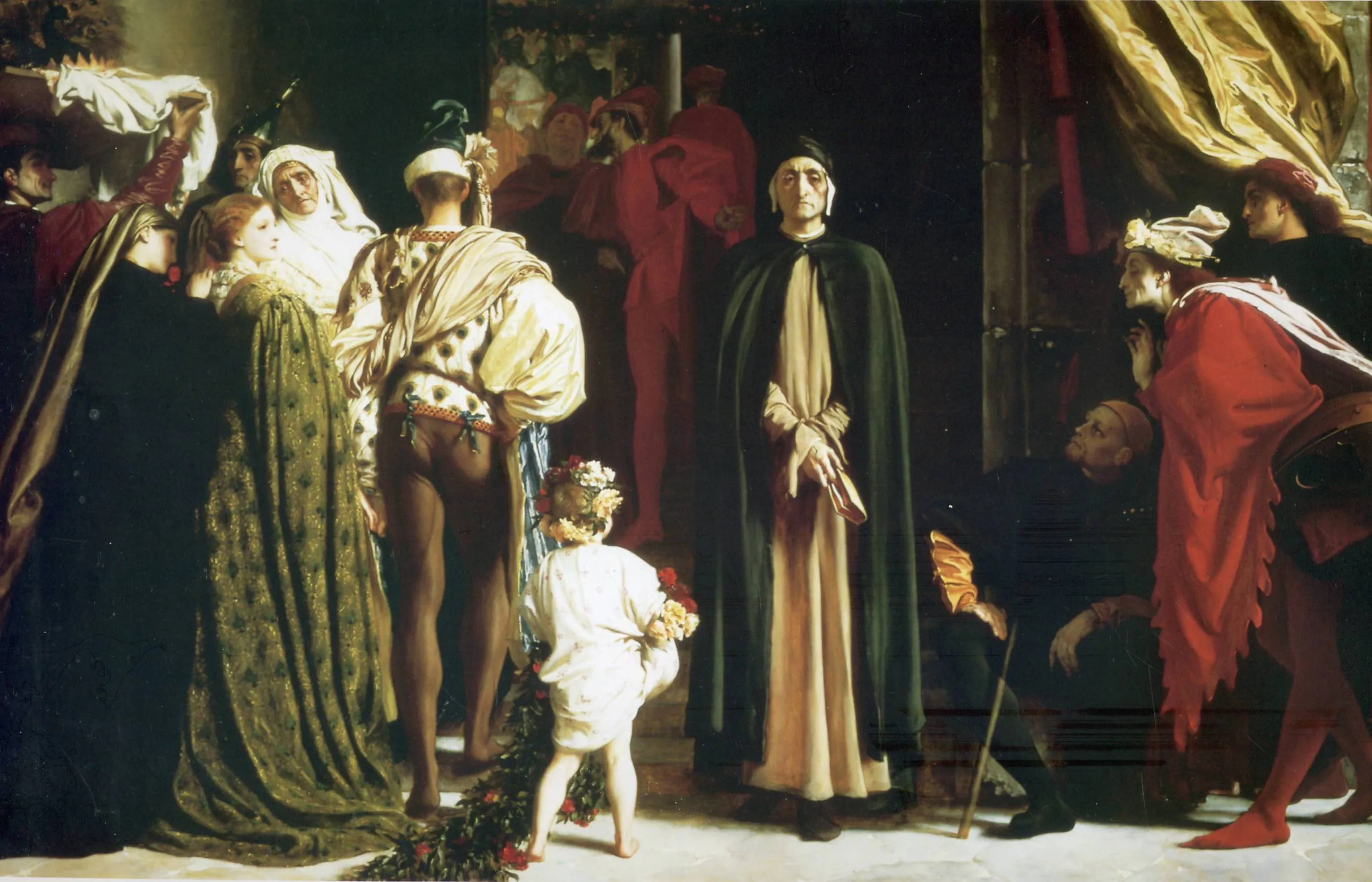
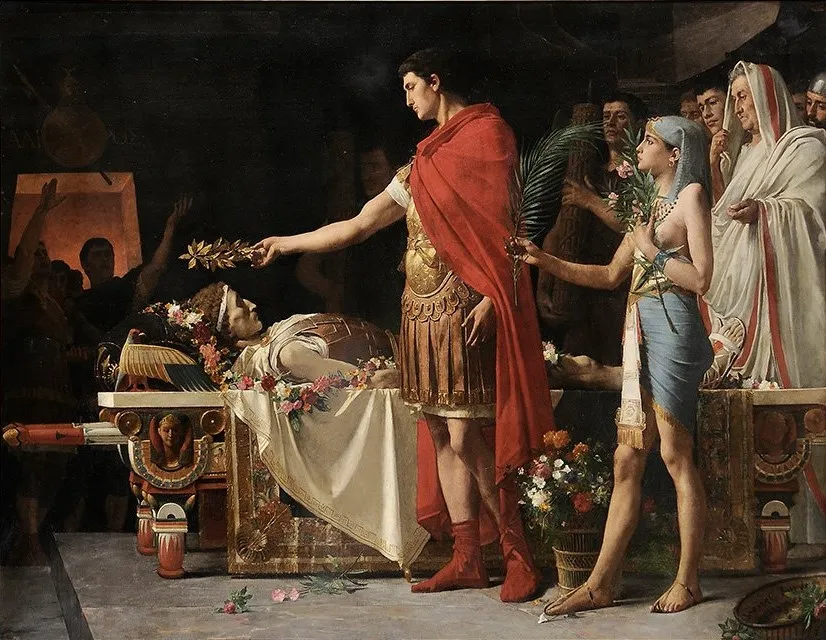
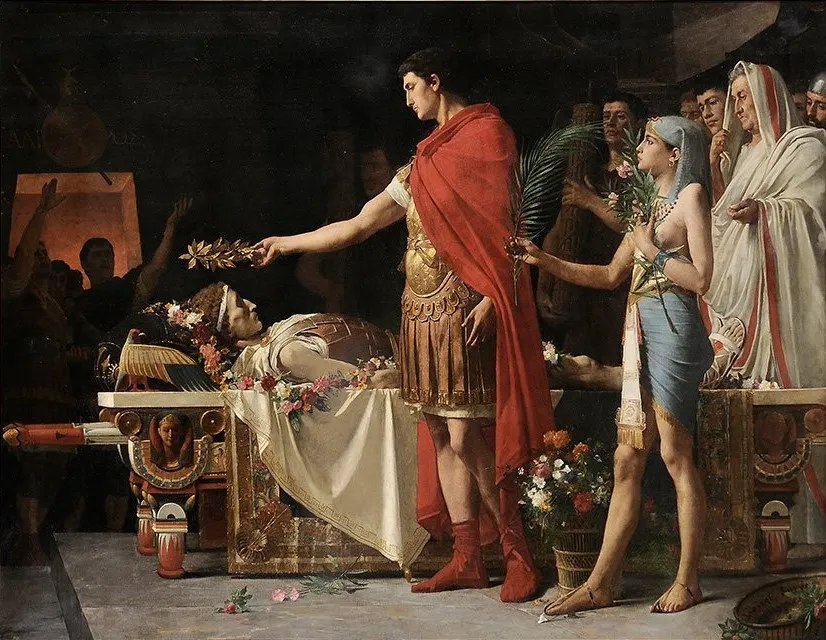
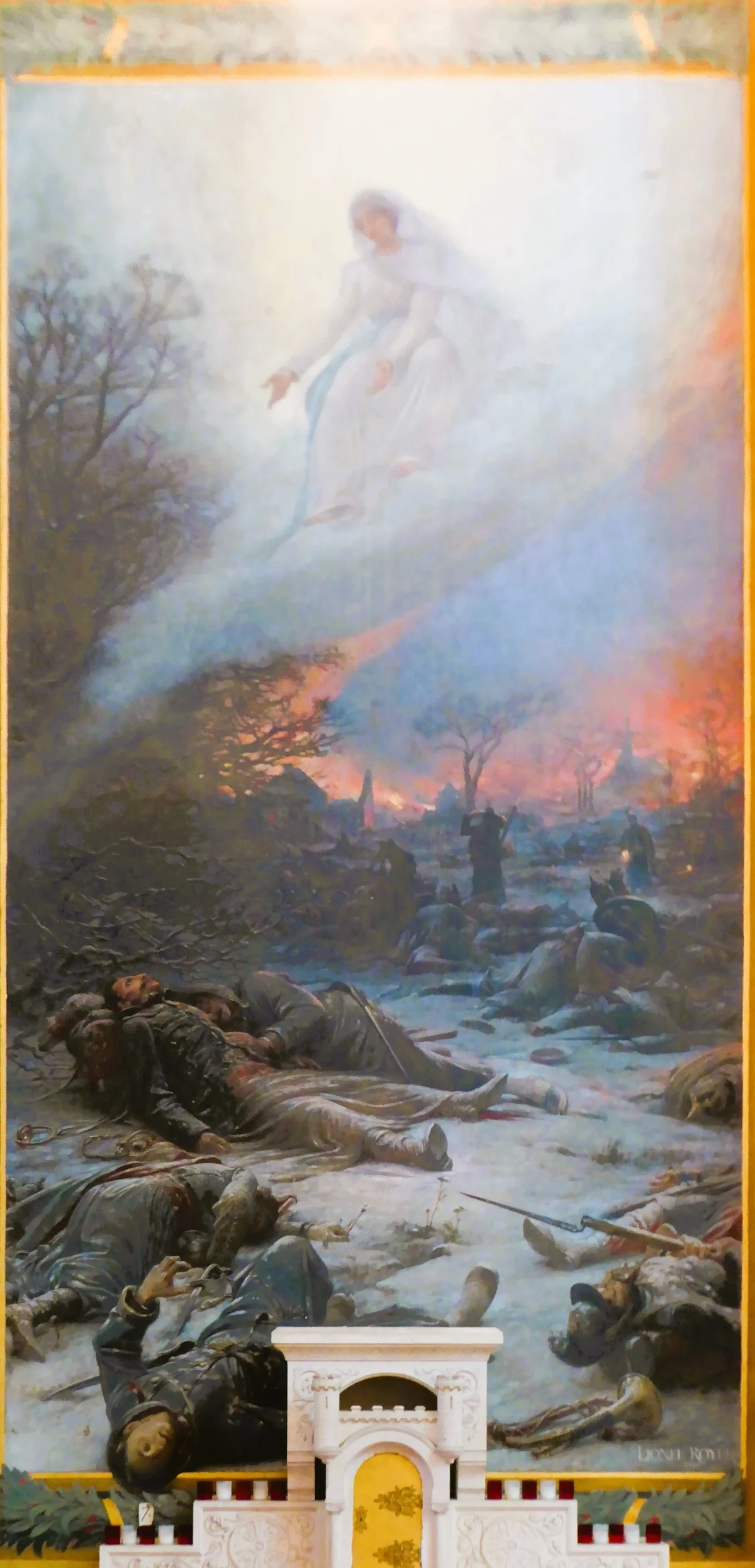
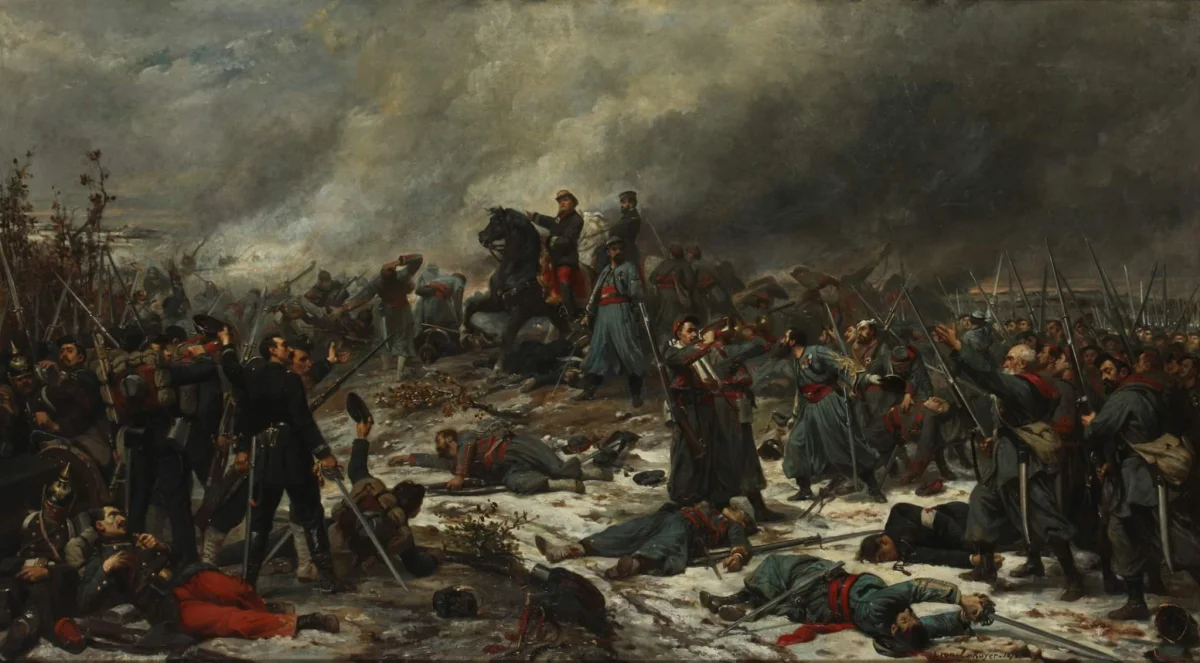
Lionel Noel Royer’s technique shines in "Auguste Au Tombeau D'Alexandre," demonstrating the refined skill characteristic of Academic Art. Executed in oil on canvas, the painting reveals meticulous attention to detail and a masterful use of color and composition. Similar to Royer’s works such as "General Gaston de Sonis" and "Battle of Auvours, 10 January 1871," this painting highlights the artist’s dedication to historical accuracy and artistic excellence, making it highly sought after by connoisseurs.
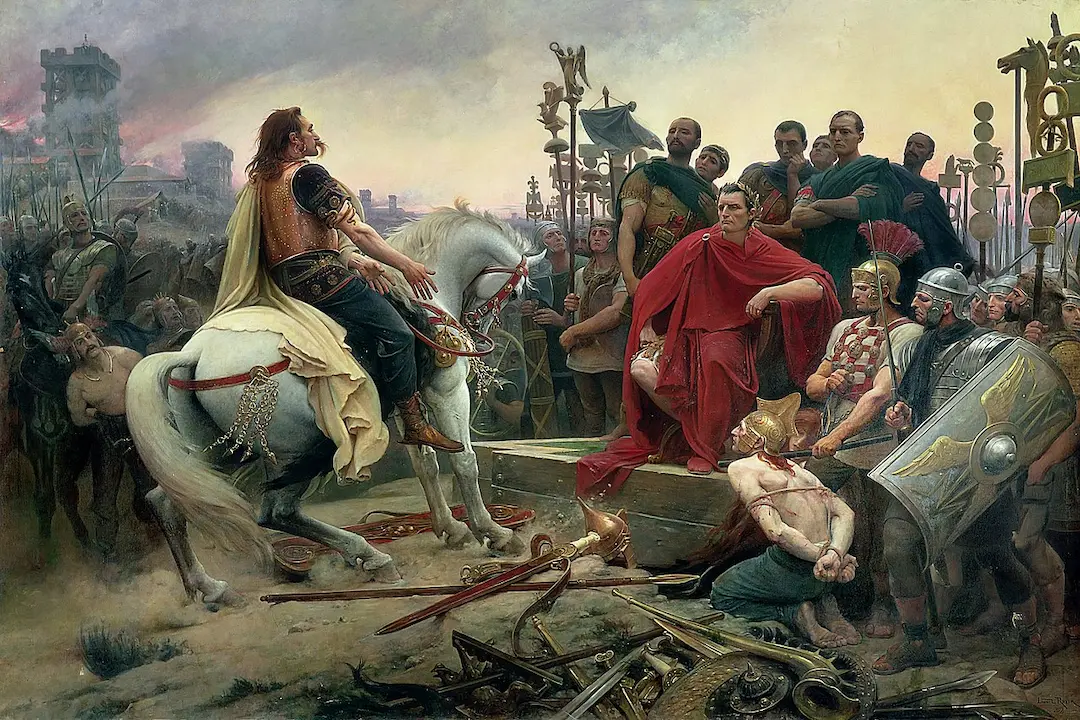
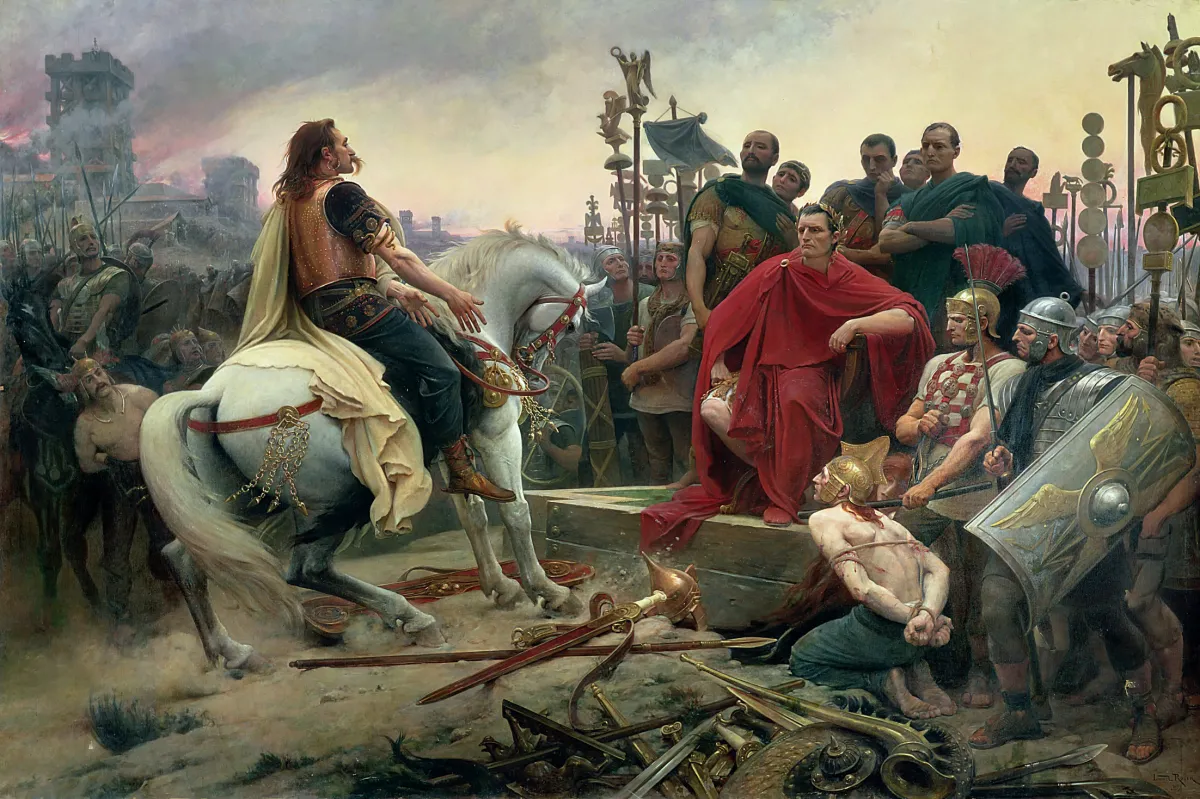
Every element in "Auguste Au Tombeau D'Alexandre" tells a story, weaving history and emotion into a single fine art painting for sale. Royer, renowned for his narrative depth, infuses the scene with symbolism that echoes throughout his oeuvre, including "Vercingetorix throws down his arms at the feet of Julius Caesar, 1899." Such storytelling, rooted in the Academic Art movement, ensures that each piece resonates with viewers and collectors alike, making it a valuable addition to any collection.
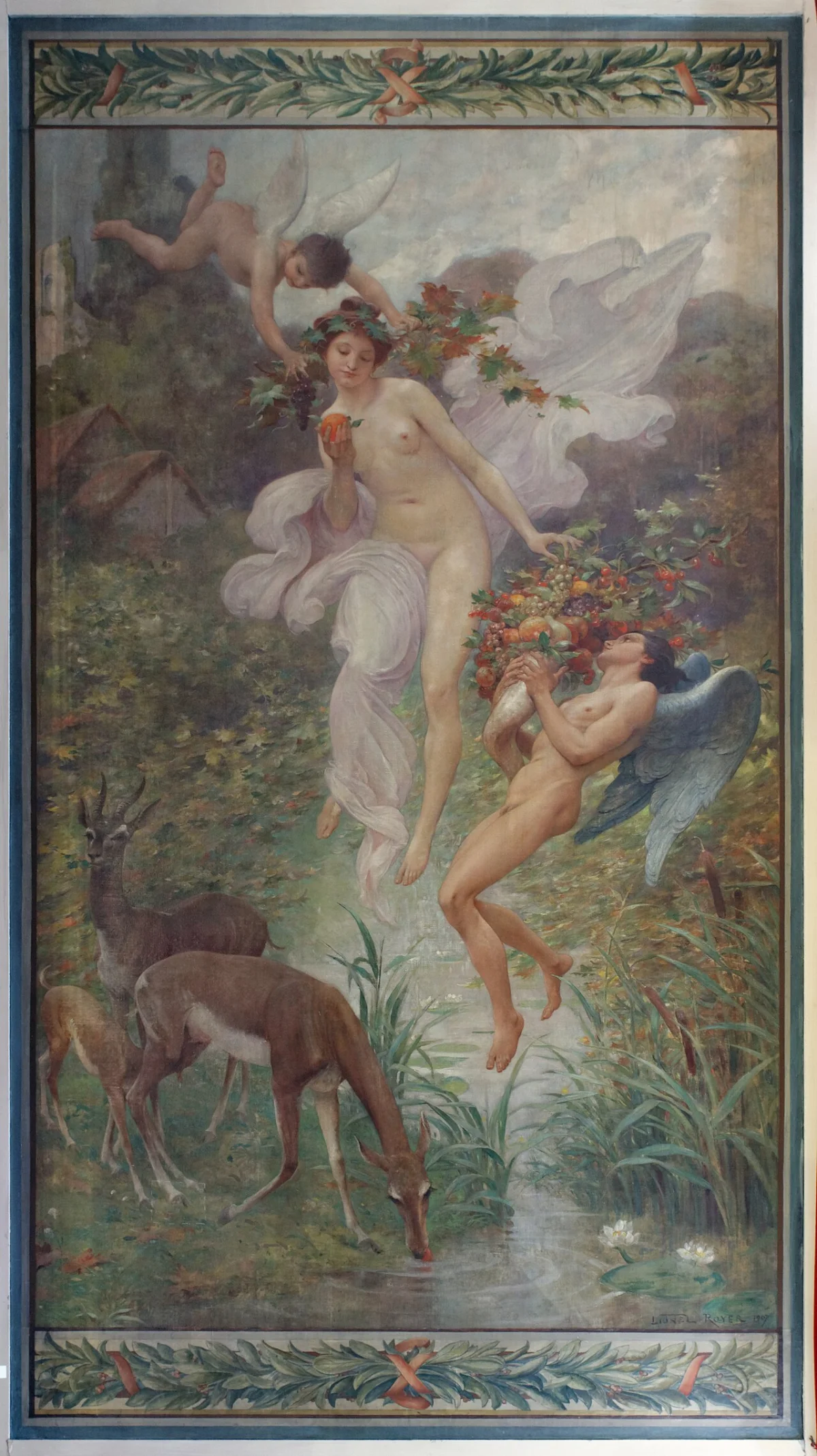
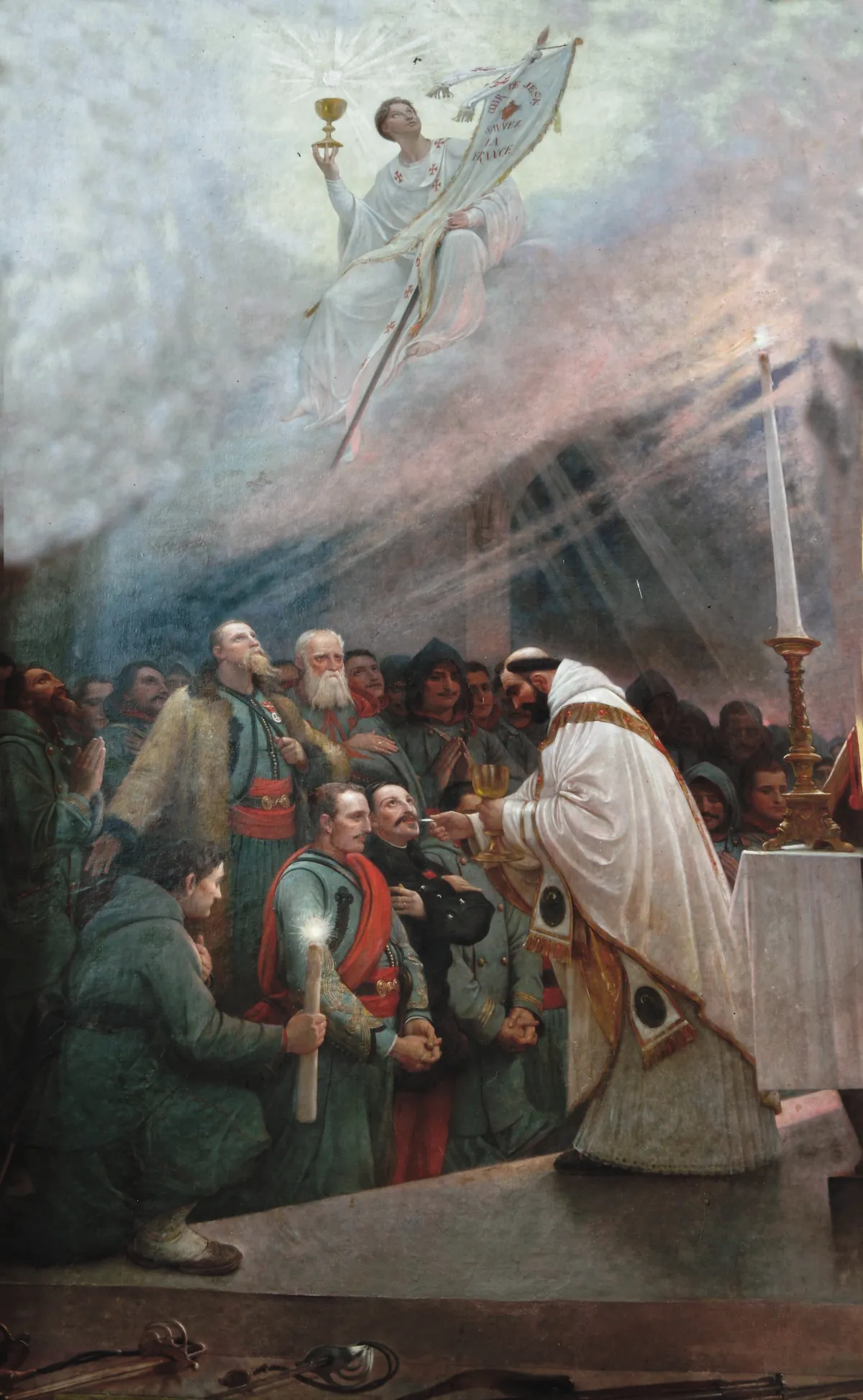
For collectors, "Auguste Au Tombeau D'Alexandre" by Lionel Noel Royer represents a rare opportunity to acquire a distinguished Academic Art piece. As a hand-painted oil painting, it pairs beautifully with related products like "Le Goût" or "The Communion of Zouaves," enhancing any fine art collection. Royer’s legacy, preserved in masterpieces like this, continues to attract those who appreciate the enduring value and historical significance of authentic Academic Art.
When Art Meets History
"Auguste Au Tombeau D'Alexandre" by Lionel Noel Royer stands as a testament to the enduring legacy of Academic Art. This hand-painted oil painting captures a pivotal historical moment, blending meticulous detail with dramatic storytelling. Royer, renowned for his historical scenes, channels the grandeur of the era, much like his contemporaries did in works such as "Vase of améthyste from the 16th-century" and "Odalisque." The painting is a striking example of how history and artistry intertwine on canvas.
Techniques That Speak
Lionel Noel Royer’s mastery is evident in his use of oil on canvas, a medium that allows for subtle gradations and rich color depth. The texture and luminosity in "Auguste Au Tombeau D'Alexandre" exemplify the refined techniques characteristic of the Academic Art movement. Similar finesse can be seen in related works like "Study for the Head of an Angel in Saint Isidore" and "Still Life with Fruit," where the artist’s brushwork and attention to detail bring scenes vividly to life.
Emotions on Display
In "Auguste Au Tombeau D'Alexandre," Royer’s ability to convey intense emotion is unmistakable. The mournful atmosphere and expressive faces invite viewers to connect deeply with the narrative. This fine art painting for sale resonates with the emotional depth found in works like "Glass of Wine" and "On lake Brienz." Royer’s approach within the Academic Art tradition ensures each figure and gesture is charged with poignant meaning, making the experience unforgettable.
Coveted by Collectors
As a shining example of Academic Art, "Auguste Au Tombeau D'Alexandre" by Lionel Noel Royer is highly sought-after by collectors. The painting’s historical significance and exquisite execution elevate its status among art enthusiasts. Hand-painted oil paintings from this era, especially those by Royer, hold a special place in prestigious collections, alongside masterpieces such as "Vase of améthyste from the 16th-century" and "Still Life with Fruit." Such works remain timeless treasures in the art world.
Related Academic Art Hand-Painted Oil Paintings by Other Artists
Other Famous Academic Art Artists:
Frequently Asked Questions About Auguste Au Tombeau D'Alexandre
What is the historical context of "Auguste Au Tombeau D'Alexandre"?
This painting, created by Lionel Noel Royer, reflects the late 19th-century fascination with classical themes and historical figures, particularly the legacy of Alexander the Great. It captures a moment of reverence and contemplation, indicative of the Romantic movement's emphasis on emotion and individual experience.
Who is depicted in the painting?
The painting features the figure of Augustus, the first Roman emperor, who is shown at the tomb of Alexander the Great. This juxtaposition highlights the influence of Alexander on Augustus and the broader themes of power and legacy in history.
What artistic techniques did Lionel Noel Royer employ in this work?
Royer utilized a combination of realism and romanticism in "Auguste Au Tombeau D'Alexandre," employing detailed brushwork and a rich color palette to evoke emotion and depth. The dramatic use of light and shadow enhances the solemnity of the scene.
What is the significance of the tomb in the painting?
The tomb symbolizes the enduring legacy of great leaders and the contemplation of mortality. It serves as a reminder of the transient nature of power and the historical impact of figures like Alexander the Great on subsequent rulers, such as Augustus.
How does the painting reflect the themes of power and legacy?
Royer's work encapsulates the tension between ambition and mortality, showcasing Augustus's reflection on his own legacy in the shadow of Alexander's greatness. This theme resonates with the viewer, prompting a deeper consideration of historical influence and the passage of time.
What role does symbolism play in "Auguste Au Tombeau D'Alexandre"?
Symbolism is central to the painting, with elements such as the tomb representing death and legacy, while Augustus's posture conveys introspection and reverence. The overall composition invites viewers to ponder the weight of history and the responsibilities of leadership.
In what ways does this painting connect to the Romantic movement?
Royer's painting embodies the Romantic movement through its emotional depth, focus on historical figures, and dramatic composition. The portrayal of Augustus's contemplation reflects the Romantic ideal of individual experience and the significance of personal legacy.
What materials and techniques were used in the creation of this painting?
Royer likely used oil on canvas, a common medium in the 19th century, allowing for rich colors and detailed textures. His technique involved layering and glazing to achieve the luminous quality seen in the figures and background.
How has "Auguste Au Tombeau D'Alexandre" influenced modern interpretations of historical art?
This painting has influenced modern interpretations by highlighting the emotional and psychological aspects of historical figures, encouraging contemporary artists to explore similar themes of legacy, power, and the human condition in their works.
Where can I view "Auguste Au Tombeau D'Alexandre"?
The painting is part of the collection at our gallery, where it is displayed alongside other works that explore historical and symbolic themes in art. Please check our exhibition schedule for viewing times.























_GFM_Painting_(1).webp)


 100% Hand-Painted: Finished in 3-6 Weeks

.png)















_(1).webp)