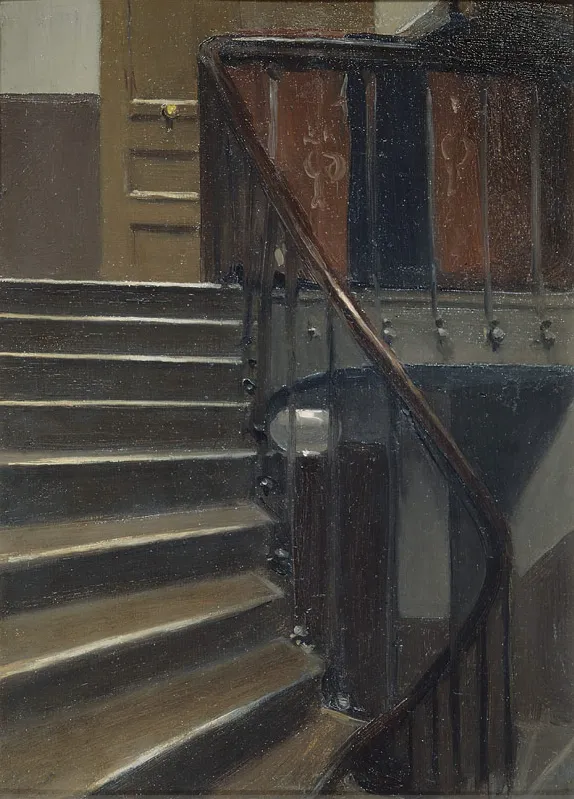
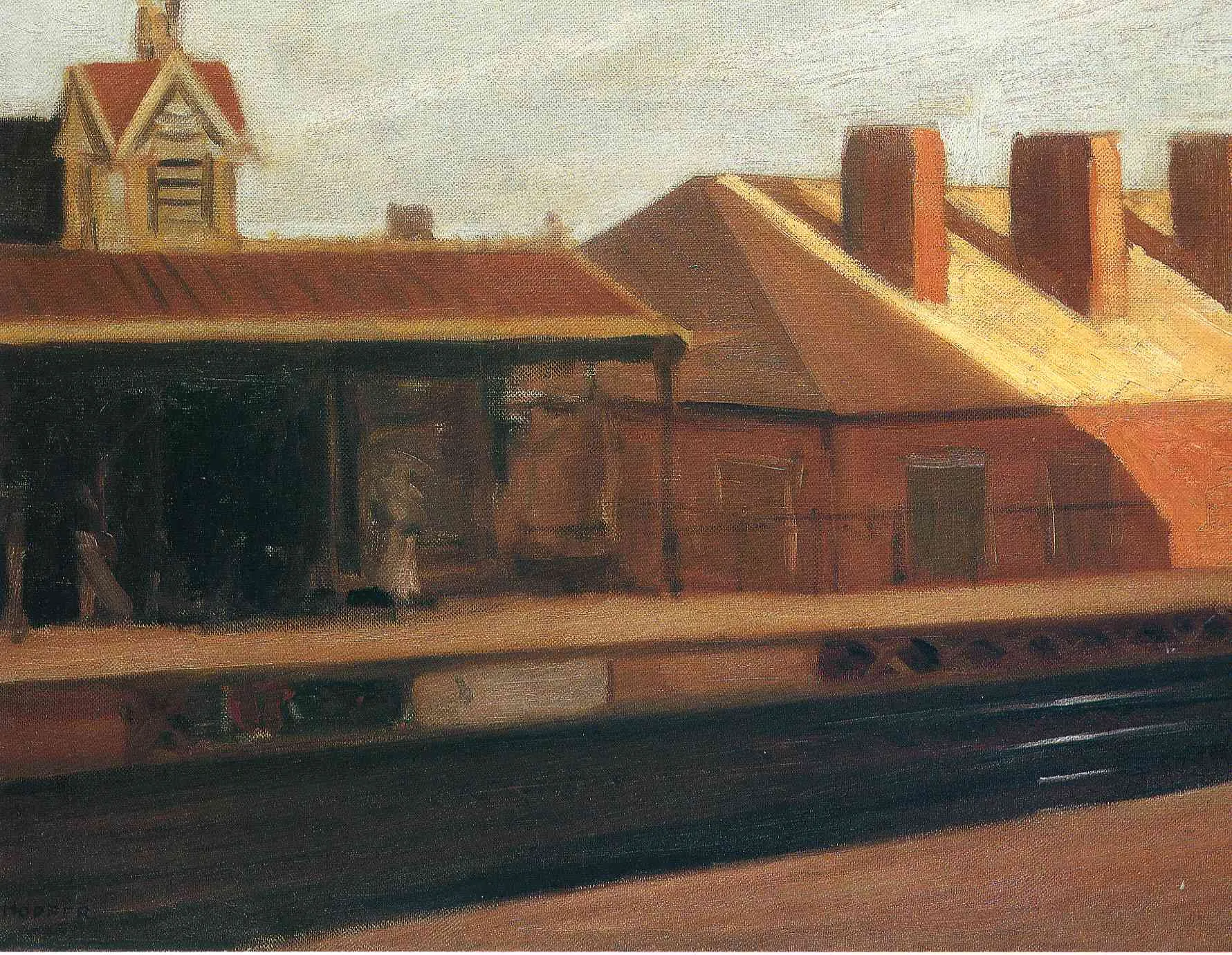
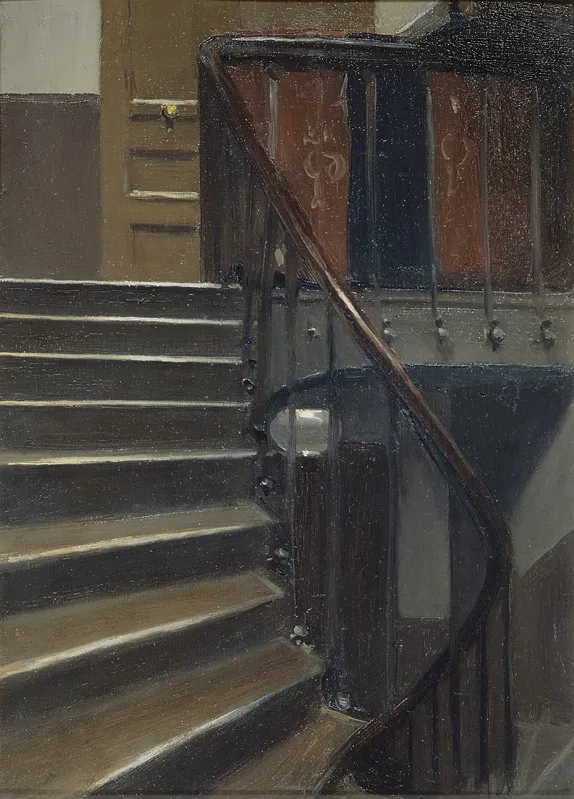
"The El Station" showcases Hopper’s remarkable skill with oil on canvas, blending light and shadow to evoke a mood of quiet introspection. Every brushstroke reveals his dedication to detail and composition, hallmarks of the American Realism movement. The painting’s urban setting and atmospheric effects demonstrate Hopper’s technical prowess, inviting viewers to appreciate the nuances of city life. For fans of this style, related products such as "Stairway at 48 rue de Lille, Paris" provide further examples of exquisite oil on canvas artistry.
Within "The El Station," Edward Hopper weaves subtle narratives and symbols, reflecting the isolation and contemplation characteristic of American Realism. This fine art painting for sale captures fleeting moments and hidden stories within the cityscape, encouraging viewers to interpret its deeper meanings. Hopper’s evocative imagery links to related products like "Le Pont des Arts" and "Paris Street," each offering unique perspectives on urban environments and the human experience, enriching any collection with their narrative depth.
Owning "The El Station" by Edward Hopper means possessing a piece of American Realism history. This hand-painted oil painting appeals to collectors seeking authenticity, emotional resonance, and artistic excellence. Its timeless quality makes it a centerpiece for any fine art collection, and those interested in expanding their holdings can consider related products such as "Steps in Paris." Each artwork, including "The El Station," offers a glimpse into Hopper’s world and the enduring allure of realist masterpieces.
When Art Meets History
"The El Station" by Edward Hopper is a remarkable example of American Realism, capturing the atmosphere of early 20th-century urban life. This hand-painted oil painting not only reflects the bustling energy of city transit but also echoes the social and historical context of its era. Hopper’s work stands alongside related paintings like "A Lesson in Discretion" and "Dogs Playing Poker," which similarly document American life, making "The El Station" a timeless piece in the movement’s legacy.
Techniques That Speak
Edward Hopper’s mastery is evident in "The El Station," where his use of oil on canvas brings to life the stark contrasts and dramatic lighting typical of American Realism. Hopper’s brushwork and attention to architectural detail evoke a sense of solitude within a crowded environment. Techniques seen here are also present in related works such as "A Friend in Need" and "Scene III - Married Couple Standing," further highlighting his influential role in the fine art tradition.
Emotions on Display
In "The El Station," Edward Hopper’s portrayal of isolated figures amidst a busy setting communicates a profound sense of loneliness, a recurring theme in his art. This fine art painting for sale resonates with viewers through its emotional depth, much like "The Tale of a Wedded Life" and other related paintings. Hopper’s ability to evoke introspection and empathy cements his reputation as a leading figure in the American Realism movement.
Coveted by Collectors
Collectors are consistently drawn to Edward Hopper’s "The El Station" for its historical relevance and artistic mastery. As a hand-painted oil painting, it represents the pinnacle of American Realism and is highly sought after alongside works like "A Lesson in Discretion" and "Dogs Playing Poker." The painting’s unique perspective and authenticity make it a prized addition to any collection, highlighting the enduring appeal of Hopper’s oeuvre in the art market.
Related American Realism Hand-Painted Oil Paintings by Other Artists
Other Famous American Realism Artists:
Frequently Asked Questions About The El Station
What is the historical context of Edward Hopper's "The El Station"?
"The El Station," painted in 1929, reflects the urban landscape of America during the late 1920s, a period marked by rapid industrialization and the rise of the modern city. Hopper's work captures the essence of American life and the solitude often felt in bustling urban environments.
What artistic techniques did Edward Hopper employ in "The El Station"?
Hopper utilized a distinctive use of light and shadow, creating a sense of depth and atmosphere. His mastery of color and composition draws the viewer's eye to the interplay between the architectural elements and the figures within the scene.
What themes are prevalent in "The El Station"?
The painting explores themes of isolation and urban alienation. The figures depicted seem disconnected from one another, emphasizing the loneliness that can exist in crowded public spaces.
How does "The El Station" reflect Edward Hopper's overall artistic style?
This work exemplifies Hopper's signature style, characterized by a focus on light, architectural forms, and the human experience. His ability to convey mood and emotion through simple yet powerful imagery is evident in this piece.
What symbolism can be found in "The El Station"?
The train station symbolizes transition and movement, yet the stillness of the figures suggests a pause in their journey, representing the tension between progress and stagnation in modern life.
How does the composition of "The El Station" contribute to its meaning?
The composition features strong geometric lines and a balanced arrangement of figures and architecture, which enhances the feeling of confinement and structure, mirroring the constraints of urban life.
What role does light play in "The El Station"?
Light serves as a crucial element in the painting, illuminating the figures and creating a contrast between the interior and exterior spaces. This use of light evokes a sense of time and atmosphere, inviting contemplation.
How does "The El Station" compare to other works by Edward Hopper?
Where can I view "The El Station" today?
"The El Station" is part of the collection at the Whitney Museum of American Art in New York City, where it continues to be appreciated for its artistic and historical significance.























_GFM_Painting_(1).webp)


 100% Hand-Painted: Finished in 3-6 Weeks

.png)















_(1).webp)