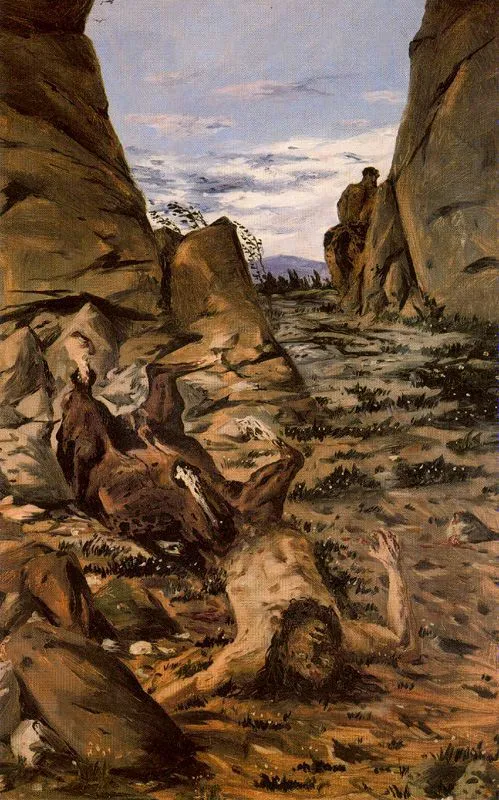
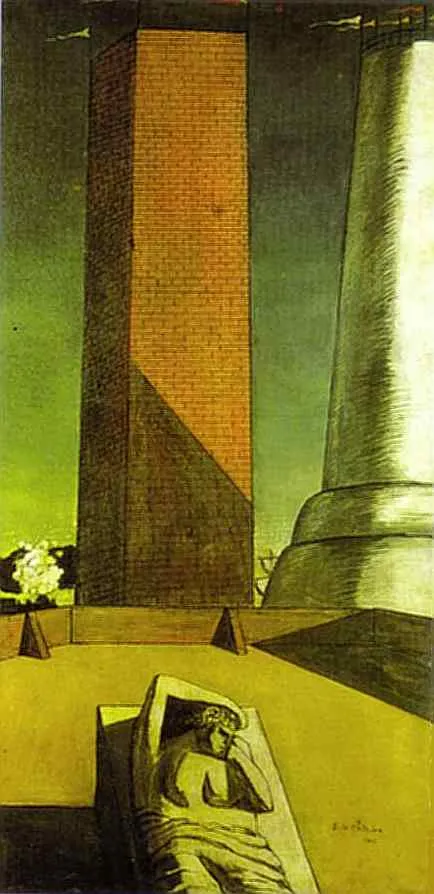
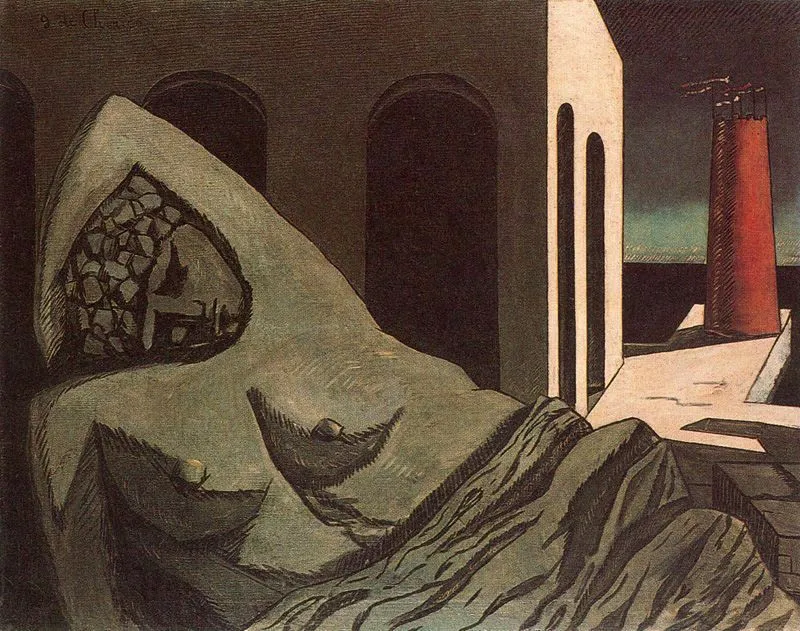
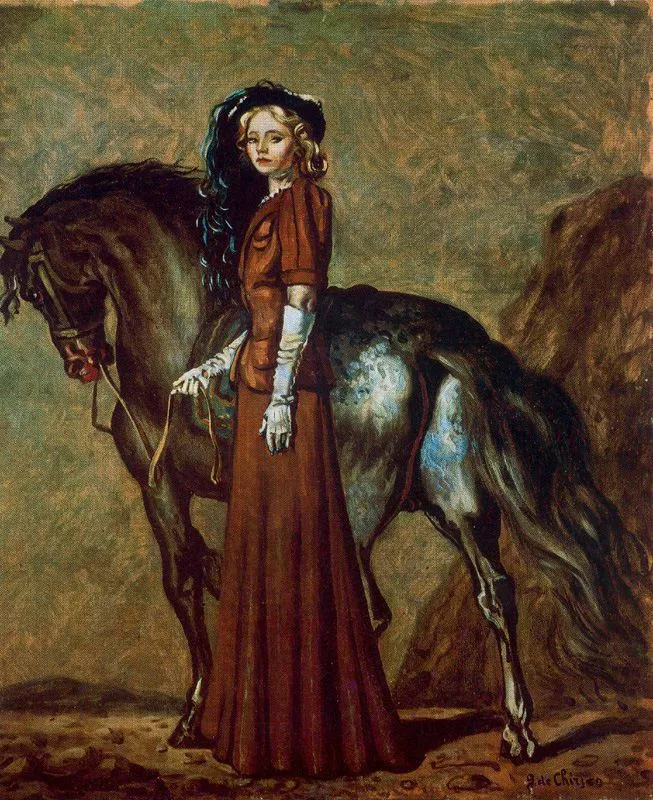
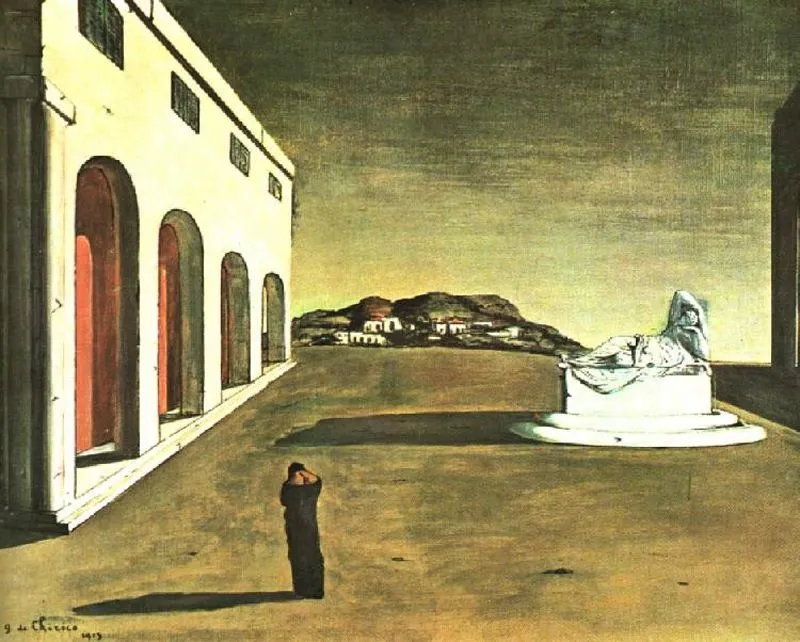
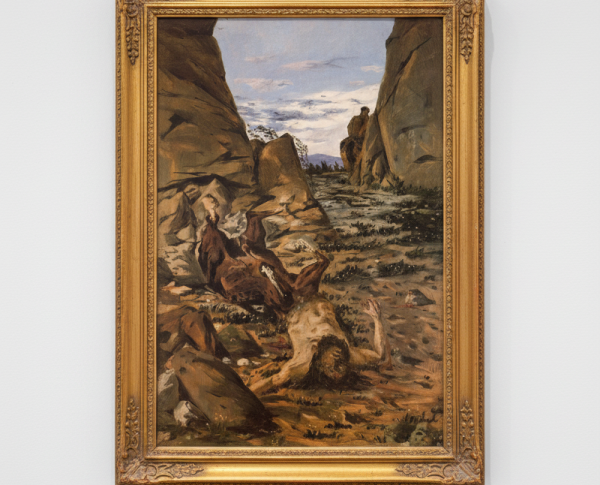
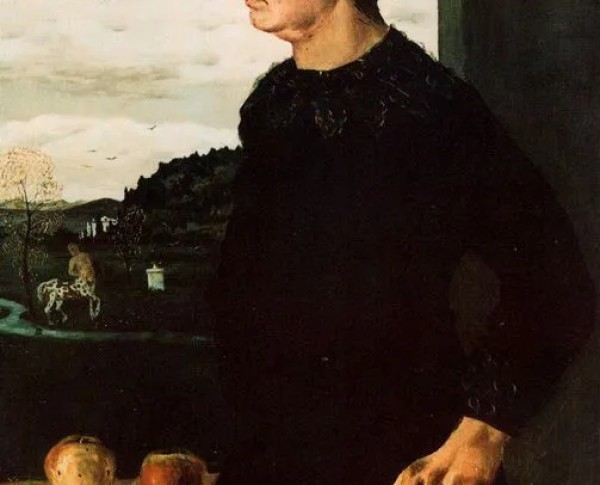
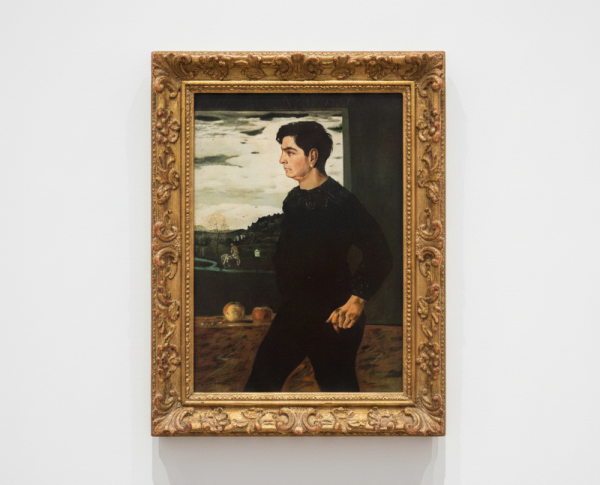
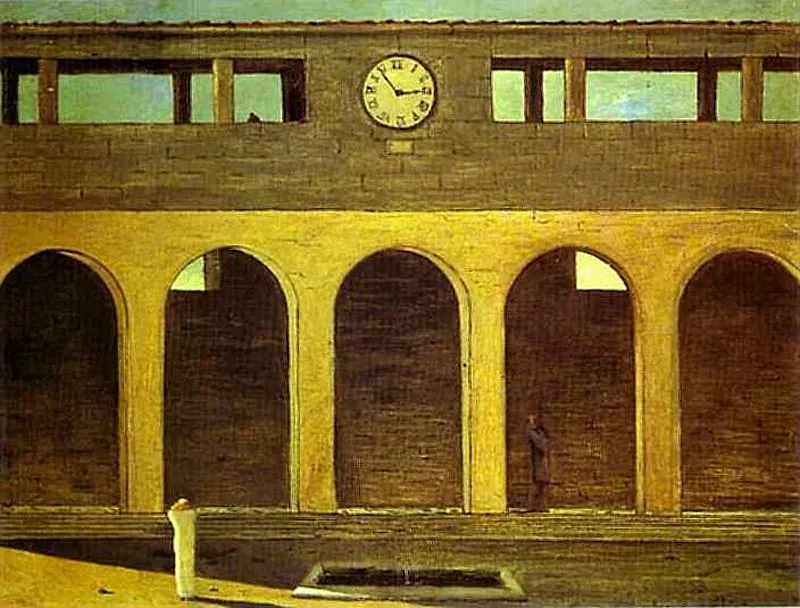
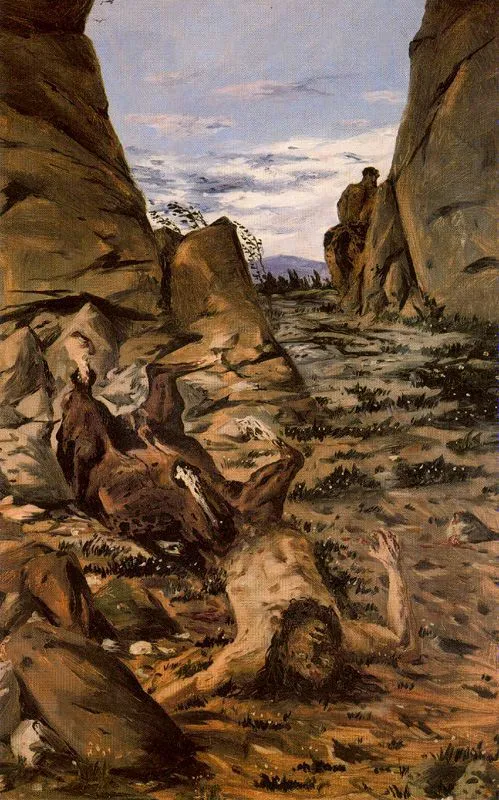
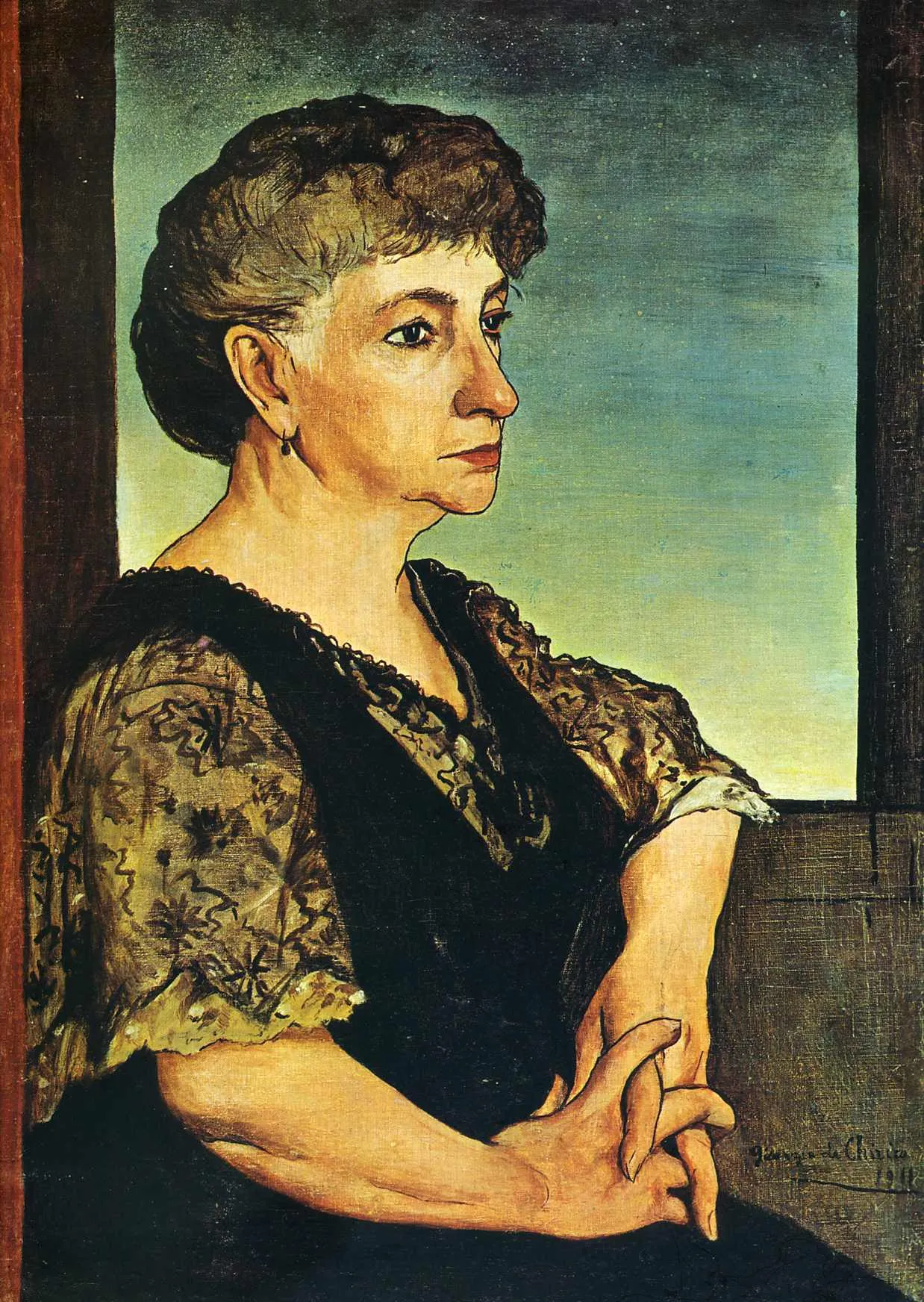
Every detail in "The Enigma of the Hour" reveals Giorgio de Chirico’s expertise with oil on canvas, showcasing his ability to blend classical motifs with dreamlike elements. The Surrealism movement is brought to life through his meticulous technique, evident in the painting’s hauntingly empty plazas and shadowy figures. Art lovers appreciative of de Chirico’s skill may also explore related works such as "Portrait of artist's mother" and "Dying Centaur" for a deeper immersion.
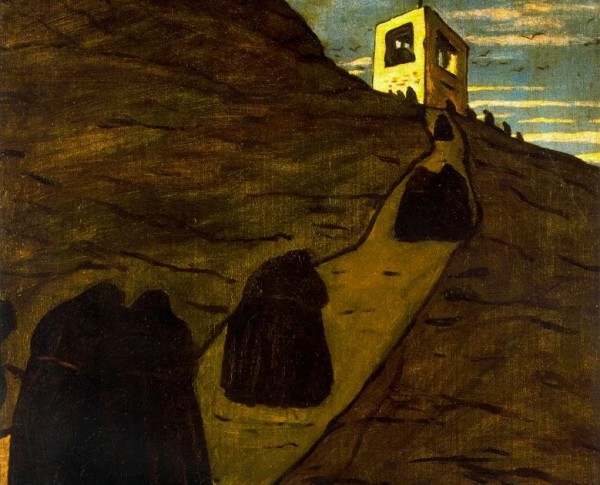
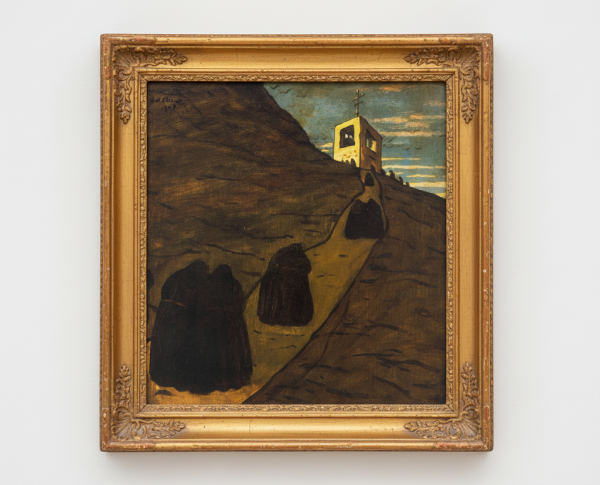
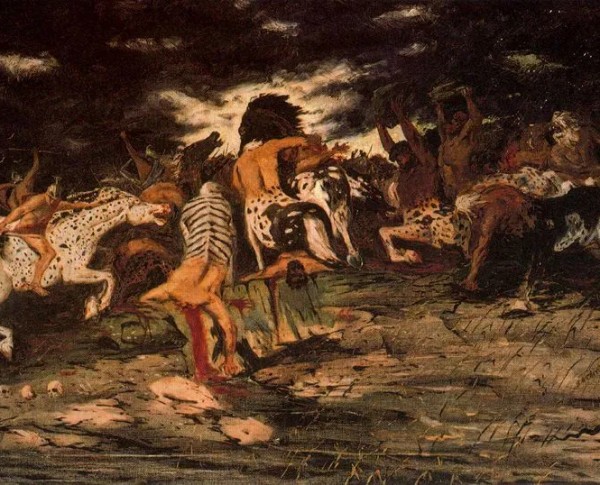
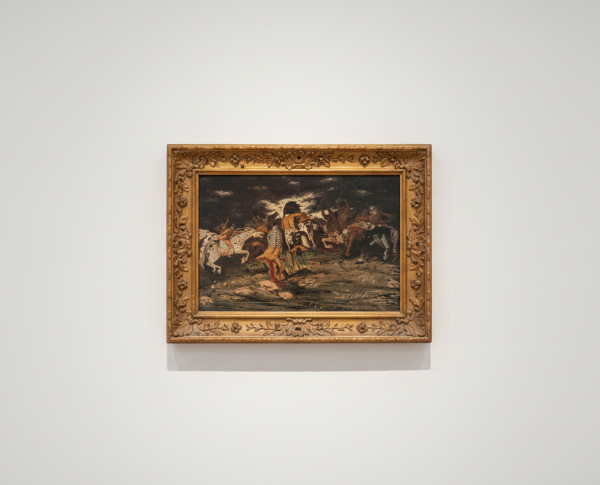
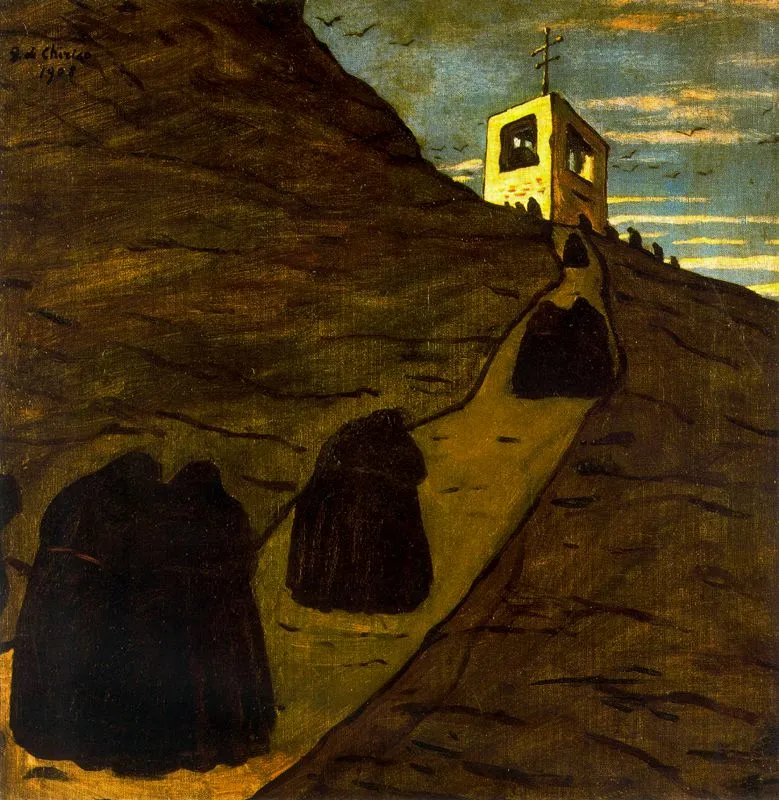
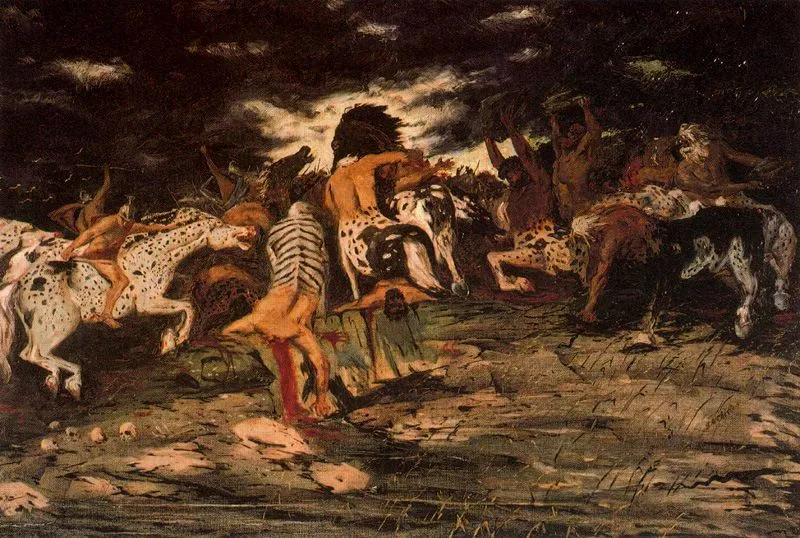
Within "The Enigma of the Hour," Giorgio de Chirico weaves a narrative full of hidden meanings and surreal symbols, making it a celebrated fine art painting for sale among collectors. The clock, the distant arches, and the elongated shadows evoke a sense of mystery tied closely to the themes of the Surrealism movement. Other symbolic works by de Chirico, like "The battle of Lapiths and Centaurs" and "Climb to the monastery," offer further intrigue for those fascinated by his enigmatic style.
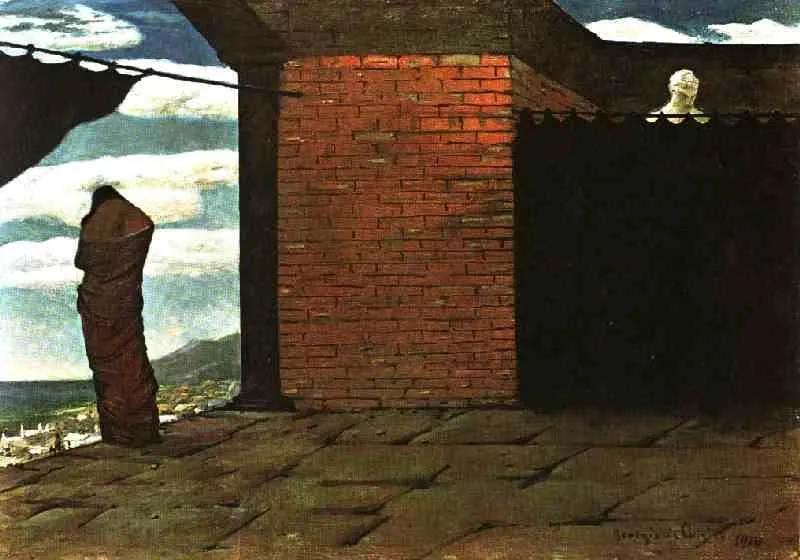
Owning "The Enigma of the Hour" by Giorgio de Chirico is a testament to one’s appreciation for Surrealism and historical artistry. This hand-painted oil painting stands as a centerpiece of any collection, admired for its imaginative landscape and profound influence on modern art. Collectors often seek complementary pieces, such as "The Enigma of the Oracle" and "Dying Centaur," to enrich their gallery with more of de Chirico’s remarkable vision and creative legacy.
When Art Meets History
Giorgio de Chirico’s masterpiece, "The Enigma of the Hour," stands as a pivotal work within the Surrealism movement. Completed in 1911, this hand-painted oil painting reflects a unique blend of metaphysical elements and classical architecture, capturing the intrigue of early twentieth-century art. De Chirico’s innovative approach influenced countless artists and is often discussed alongside his other enigmatic works. "The Enigma of the Hour" remains a cornerstone for those exploring fine art painting for sale in the Surrealist genre.
Techniques That Speak
"The Enigma of the Hour" is celebrated for its meticulous oil on canvas technique, a hallmark of Giorgio de Chirico’s artistry. The composition features sharp contrasts between light and shadow, elongated perspectives, and dreamlike architecture, hallmarks of his Surrealist vision. De Chirico’s use of muted tones and precise brushwork enhances the mysterious atmosphere, inviting viewers to ponder deeper meanings. This oil on canvas painting exemplifies the technical mastery found in Surrealist fine art.
Emotions on Display
In "The Enigma of the Hour," Giorgio de Chirico evokes a profound sense of mystery and anticipation, typical of Surrealism. The deserted square and lone figures elicit feelings of isolation and timelessness, drawing the viewer into a contemplative state. This hand-painted oil painting masterfully communicates the emotional ambiguity that defines de Chirico's work, making it a compelling example for collectors and enthusiasts searching for evocative fine art painting for sale.
Coveted by Collectors
As a seminal work by Giorgio de Chirico, "The Enigma of the Hour" is highly sought after by art collectors and museums worldwide. Its status as a quintessential Surrealist oil on canvas piece ensures its enduring appeal. The painting’s enigmatic atmosphere and historical significance make it a prime example of fine art painting for sale, often discussed alongside other masterpieces by de Chirico. Its rarity and influence continue to captivate those passionate about Surrealist art.
Frequently Asked Questions About The Enigma of the Hour
What is the historical context of "The Enigma of the Hour"?
"The Enigma of the Hour" was created in 1911, during a period marked by the rise of modernism in art. This era saw artists exploring new forms of expression, moving away from traditional representations and embracing abstraction and symbolism.
What artistic movement is Giorgio de Chirico associated with?
Giorgio de Chirico is primarily associated with the Metaphysical painting movement, which emphasizes the use of dreamlike imagery and explores themes of mystery and the subconscious.
What are the key themes represented in "The Enigma of the Hour"?
The painting explores themes of time, existence, and the passage of life. The juxtaposition of classical architecture and enigmatic figures invites viewers to reflect on the nature of reality and the human experience.
How does de Chirico use symbolism in "The Enigma of the Hour"?
De Chirico employs symbolism through the use of clocks, shadows, and architectural elements to evoke a sense of timelessness and existential contemplation, prompting viewers to question the nature of time and reality.
What is the significance of the clock in the painting?
The clock in "The Enigma of the Hour" serves as a central motif representing the relentless passage of time and the inevitability of change, reinforcing the painting's exploration of existential themes.
What techniques did de Chirico use to create depth in the painting?
De Chirico utilized linear perspective and contrasting light and shadow to create a sense of depth and space, enhancing the dreamlike quality of the composition and drawing viewers into the enigmatic world he portrays.
How does "The Enigma of the Hour" reflect de Chirico's personal philosophy?
The painting reflects de Chirico's fascination with the metaphysical aspects of life, illustrating his belief in the importance of introspection and the exploration of the subconscious mind through art.
What influence did "The Enigma of the Hour" have on later artists?
The painting significantly influenced Surrealist artists, who admired de Chirico's ability to evoke dreamlike scenarios and explore the subconscious, paving the way for new artistic expressions in the 20th century.
What role does architecture play in "The Enigma of the Hour"?
Architecture in the painting serves as a backdrop that enhances the sense of isolation and timelessness, creating a juxtaposition between the permanence of structures and the fleeting nature of time.
How is color used in "The Enigma of the Hour" to convey mood?
De Chirico employs a muted color palette, utilizing earth tones and shadows to evoke a sense of melancholy and introspection, enhancing the painting's enigmatic atmosphere and emotional depth.






















_GFM_Painting_(1).webp)


 100% Hand-Painted: Finished in 3-6 Weeks

.png)















_(1).webp)