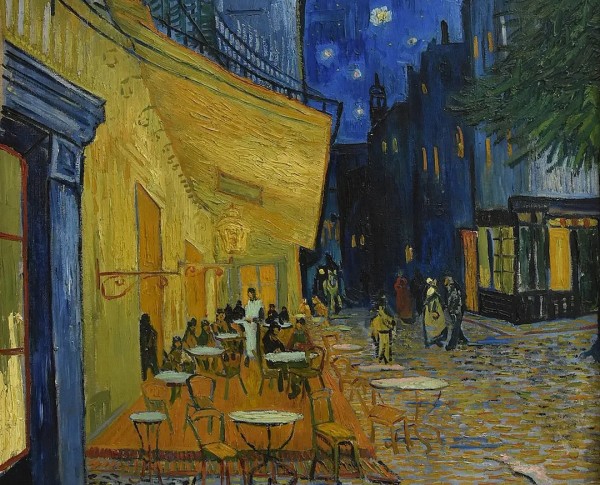
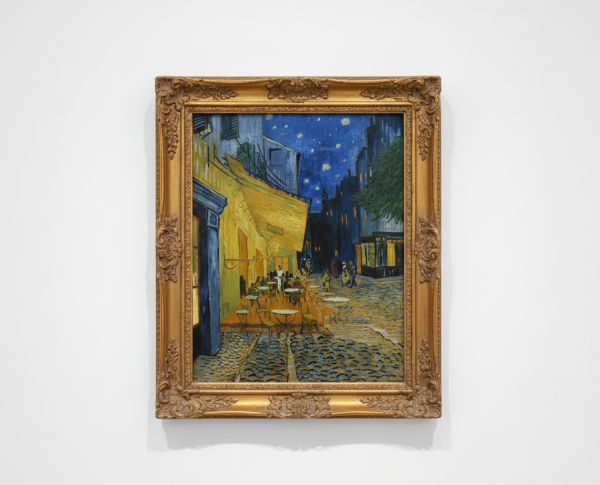
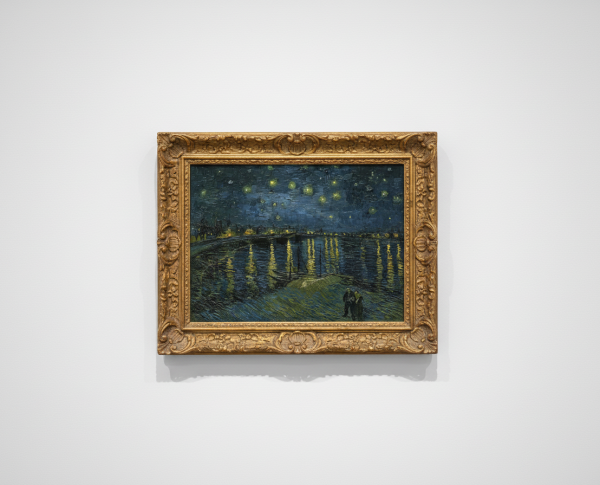
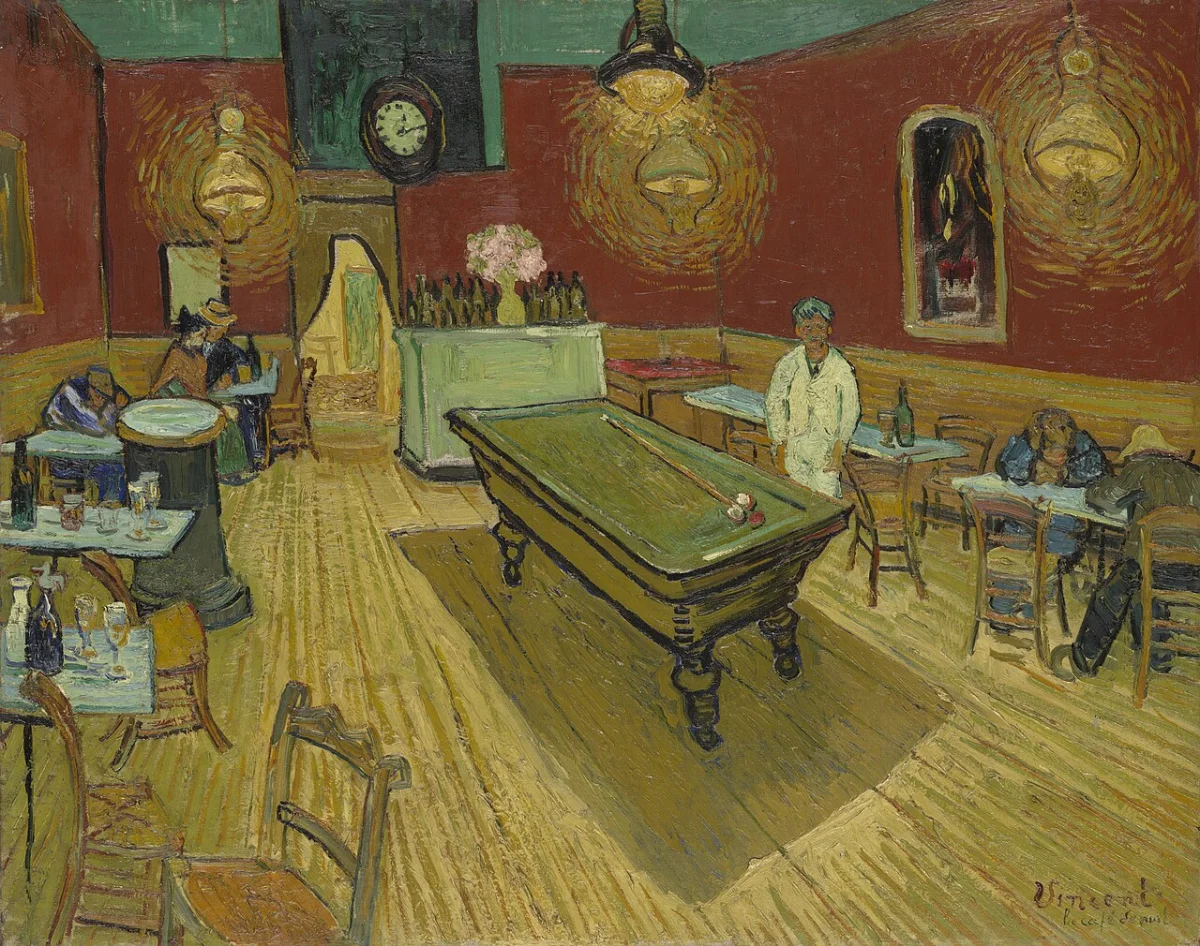
Van Gogh’s expertise is evident in every brushstroke of this oil on canvas masterpiece. "The Night Café" demonstrates his ability to evoke powerful emotions through bold colors and dynamic composition, hallmarks of the Post-Impressionism movement. Art enthusiasts who admire Van Gogh’s technique may also appreciate other works like "Vase With Red Poppies" and "Landscape with a Carriage and a Train," which showcase the artist’s unique handling of oil on canvas.
Every element in "The Night Café" tells a story, from the glowing lamps to the solitary figures, making it a captivating fine art painting for sale. Van Gogh’s symbolic use of color and light invites viewers to explore themes of isolation and introspection, central to the Post-Impressionism movement. Collectors interested in narrative-rich pieces might also consider "The Potato Eaters" or "Skull With Burning Cigarette" as compelling additions to their galleries.
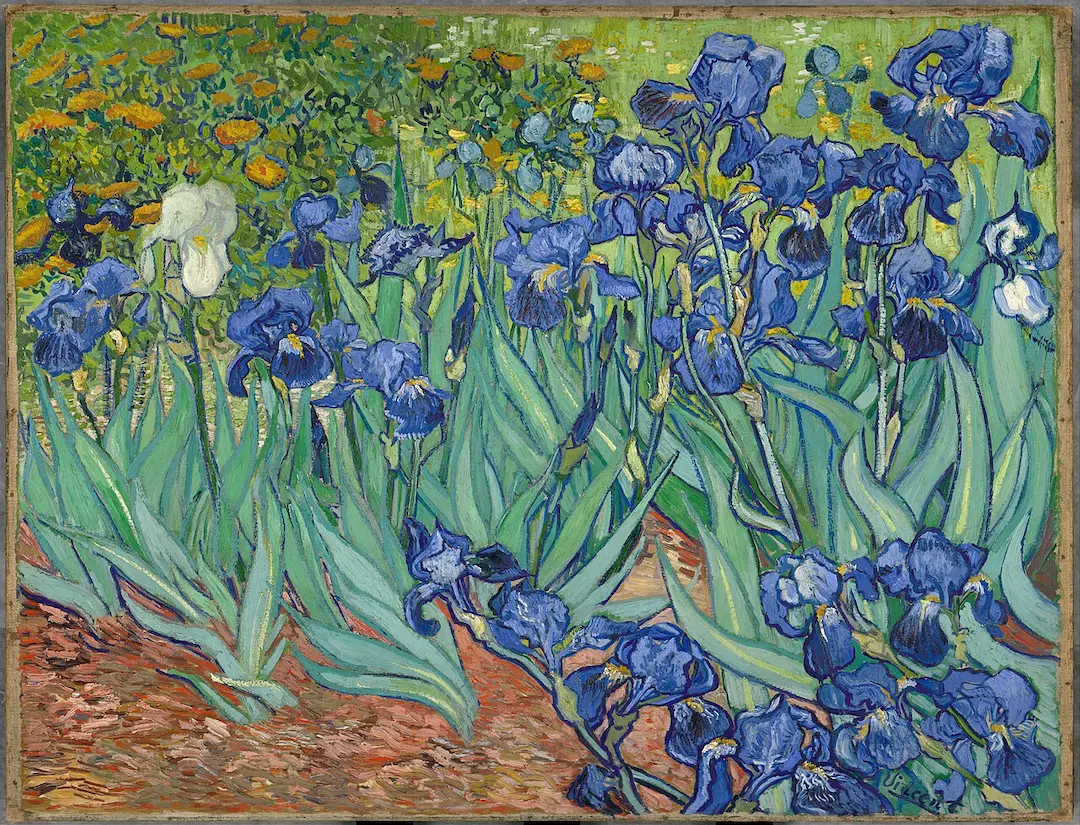
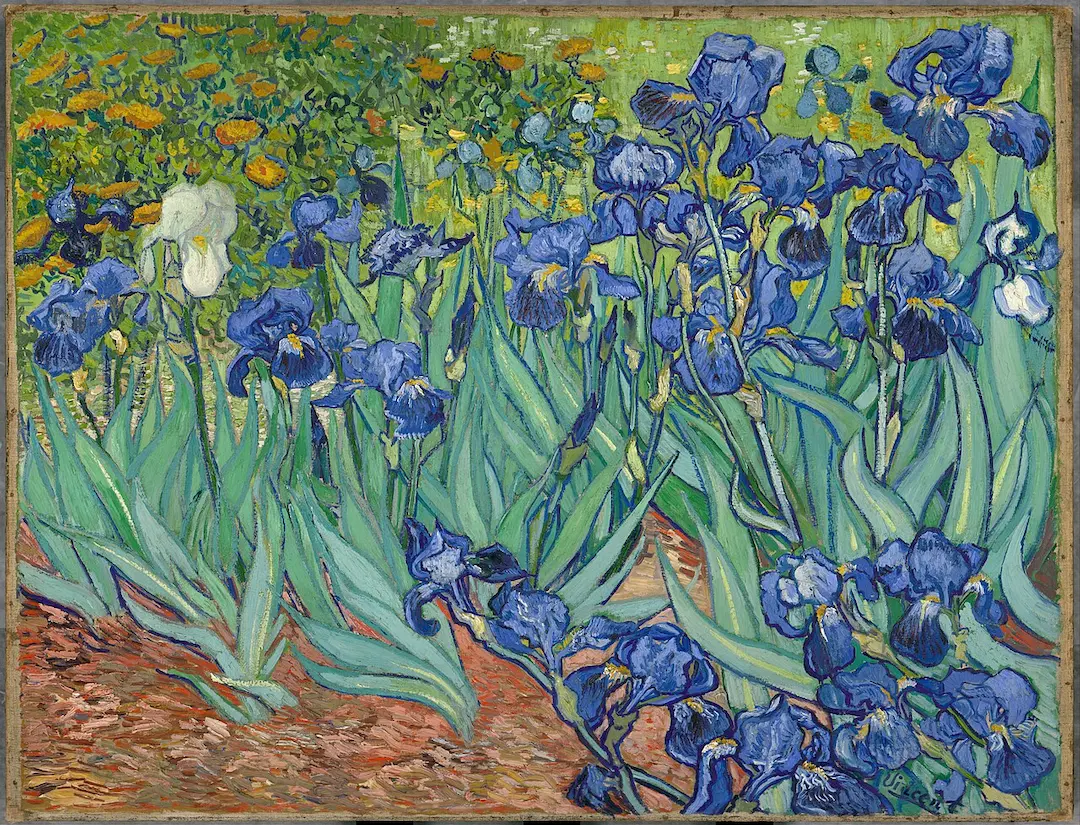
Owning "The Night Café" as a hand-painted oil painting allows collectors to experience Van Gogh’s genius firsthand. This iconic piece from the Post-Impressionism era remains highly sought after, appealing to those who value both artistic mastery and historical significance. Alongside this masterpiece, related products like "Irises" and "Vase With Red Poppies" are also available as fine art painting for sale, making them ideal choices for passionate art collectors.
When Art Meets History
"The Night Café" by Vincent Van Gogh stands as a crucial work in the Post-Impressionism movement, painted during Van Gogh's prolific period in Arles. This hand-painted oil painting, created in 1888, captures the isolation and unrest of late 19th-century urban life. Alongside masterpieces like "Martinique Landscape" and "The Yellow Christ," Van Gogh's "The Night Café" bridges historical context and artistic innovation, securing its place among the era's most influential artworks.
Techniques That Speak
Vincent Van Gogh's signature swirling brushstrokes and vivid, contrasting colors in "The Night Café" showcase Post-Impressionist experimentation with form and perspective. This oil on canvas employs thick impasto and expressive lines to evoke the emotional intensity of the scene. Echoing techniques seen in related works such as "A Sunday Afternoon on the Island of La Grande Jatte," the painting demonstrates Van Gogh's mastery in transforming ordinary spaces into dramatic, immersive environments.
Emotions on Display
"The Night Café" is renowned for its ability to convey mood and emotion through color and composition. Van Gogh used intense reds, greens, and yellows to evoke a sense of unease and alienation, reflecting his own turbulent feelings. Similar to the emotional resonance found in "One Of The Family" and "Two Tahitian Women," this fine art painting for sale continues to captivate viewers, inviting them to experience the psychological depth Van Gogh infused into his Post-Impressionist works.
Coveted by Collectors
As a seminal piece by Vincent Van Gogh, "The Night Café" is highly sought after in the world of art collecting. Its historical importance and bold Post-Impressionist style increase its desirability, much like related paintings from the same period. Collectors prize the oil on canvas for its authenticity and enduring impact, making it one of the most recognized and valued works in the fine art painting for sale market today.
Related Post-Impressionism Hand-Painted Oil Paintings by Other Artists
Other Famous Post-Impressionism Artists:
Frequently Asked Questions About The Night Café
What is the historical context of The Night Café?
The Night Café was painted by Vincent Van Gogh in September 1888 during his stay in Arles, France. This period was marked by Van Gogh's exploration of color and emotional expression, reflecting his desire to capture the essence of human experience.
What artistic techniques did Van Gogh use in The Night Café?
Van Gogh employed bold colors and expressive brushstrokes in The Night Café. The use of complementary colors, particularly the contrasting reds and greens, creates a vibrant atmosphere that conveys the emotional intensity of the scene.
What is the significance of the color palette in The Night Café?
The color palette of The Night Café is significant as it reflects Van Gogh's emotional state. The intense reds and yellows evoke feelings of warmth and discomfort, symbolizing the duality of social interaction and isolation experienced in nightlife.
How does The Night Café reflect Van Gogh's view of society?
The Night Café serves as a commentary on the darker aspects of nightlife and human behavior. Van Gogh intended to illustrate the loneliness and despair that can accompany social gatherings, highlighting the contrast between the lively setting and the individuals' emotional states.
What symbolism can be found in the furniture and layout of The Night Café?
The furniture and layout in The Night Café symbolize the isolation of individuals within a social space. The arrangement of tables and chairs creates a sense of separation, suggesting that despite being surrounded by others, patrons may feel profoundly alone.
What role does light play in The Night Café?
Light in The Night Café is used to create an atmosphere of tension and unease. The harsh, artificial lighting contrasts with the warm colors, emphasizing the emotional turmoil of the figures within the café and enhancing the overall sense of discomfort.
How does The Night Café compare to other works by Van Gogh?
Compared to other works by Van Gogh, The Night Café stands out for its intense emotional expression and innovative use of color. While many of his paintings focus on nature and landscapes, this piece delves into the complexities of human interaction and urban life.
What elements of The Night Café reflect Van Gogh's mental state?
The chaotic composition and vivid color contrasts in The Night Café reflect Van Gogh's turbulent mental state. The painting captures his struggle with loneliness and his desire to connect with others, mirroring his own experiences with mental health challenges.
What influence did The Night Café have on future artists?
The Night Café has had a profound influence on future artists, particularly those associated with Expressionism and Fauvism. Its bold use of color and emotional depth paved the way for movements that sought to convey subjective experiences and emotional truths through art.
What is the legacy of The Night Café in the art world?
The legacy of The Night Café lies in its pioneering approach to color and emotion, establishing Van Gogh as a key figure in modern art. It continues to be studied and revered for its innovative techniques and its exploration of the human condition, influencing countless artists and art movements.






















_GFM_Painting_(1).webp)


 100% Hand-Painted: Finished in 3-6 Weeks

.png)
















_(1).webp)