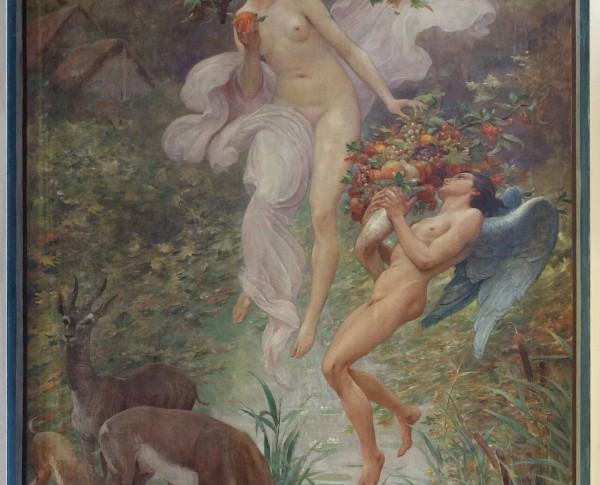
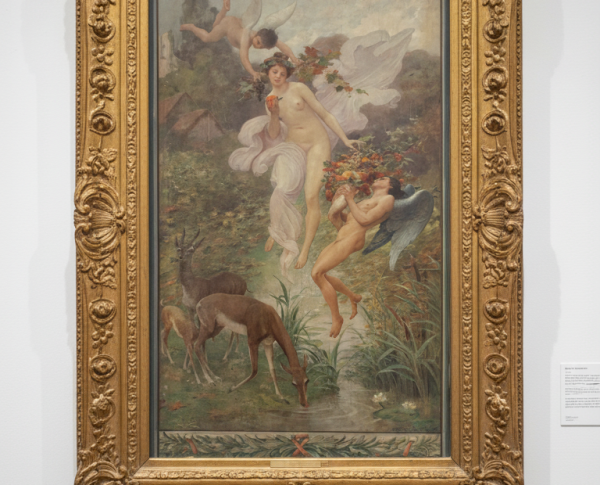
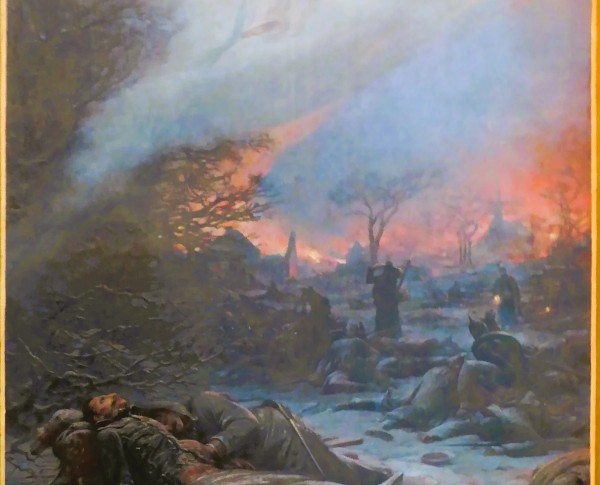
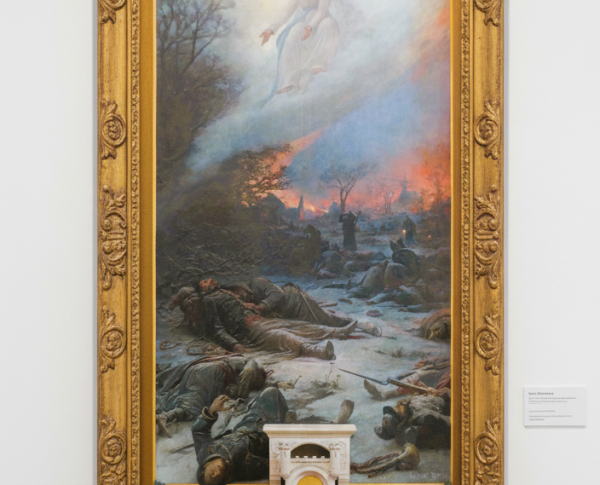
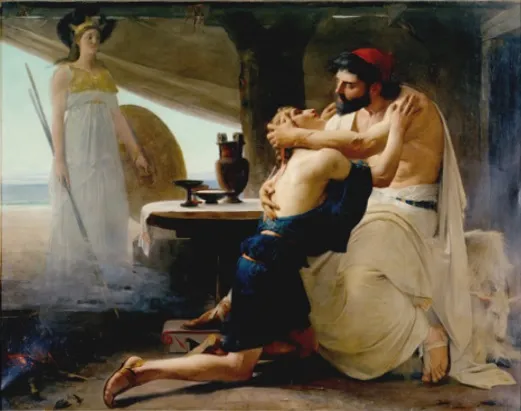
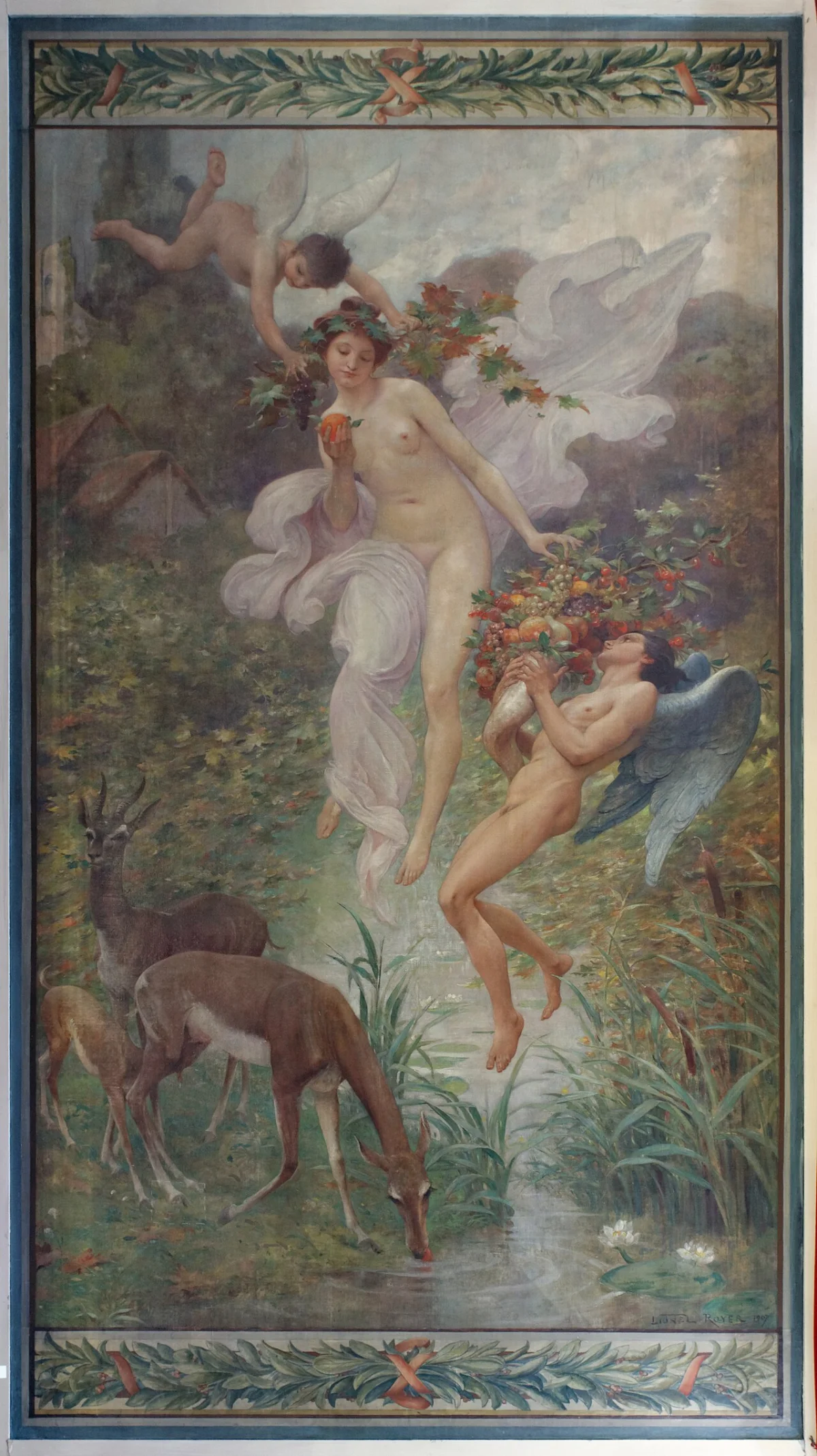
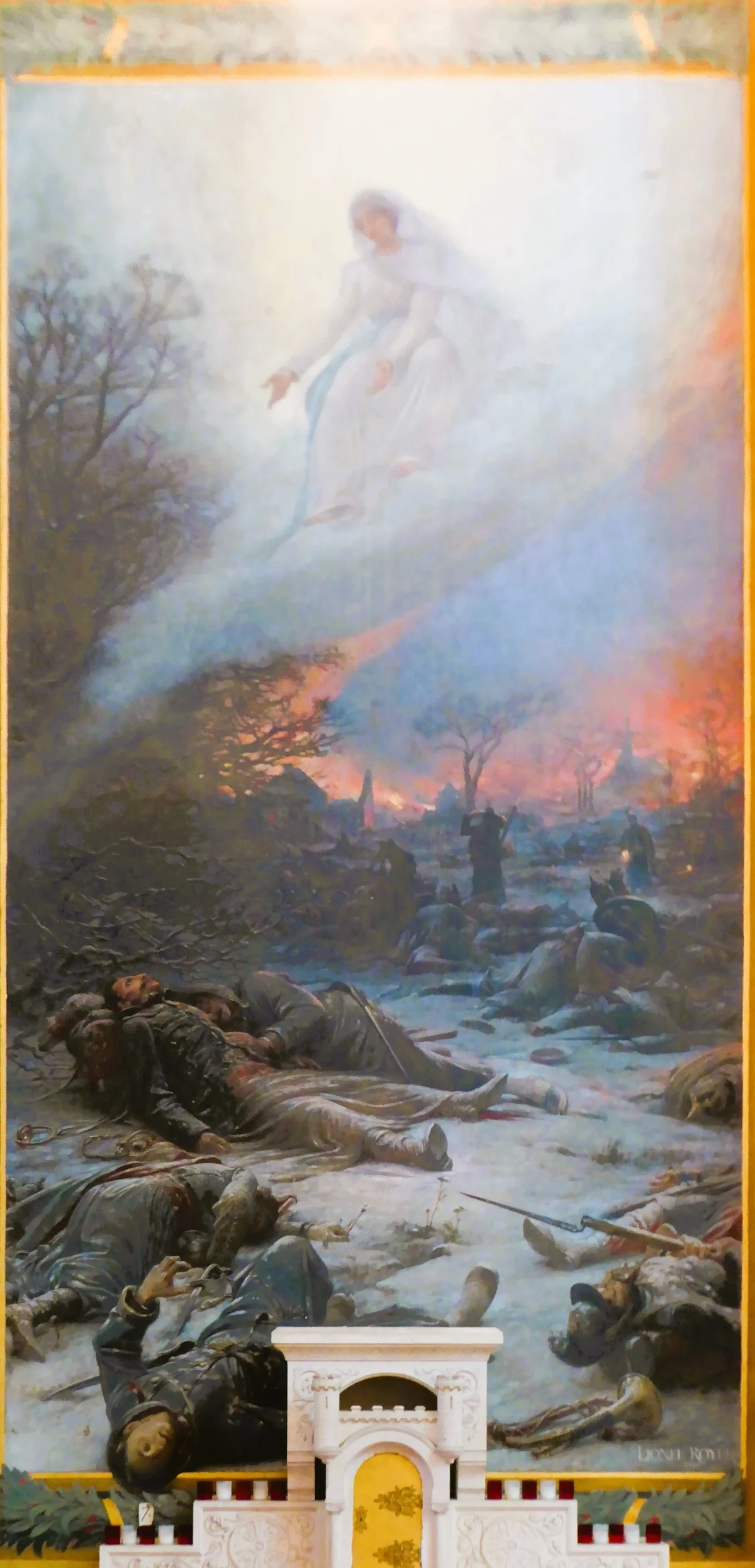
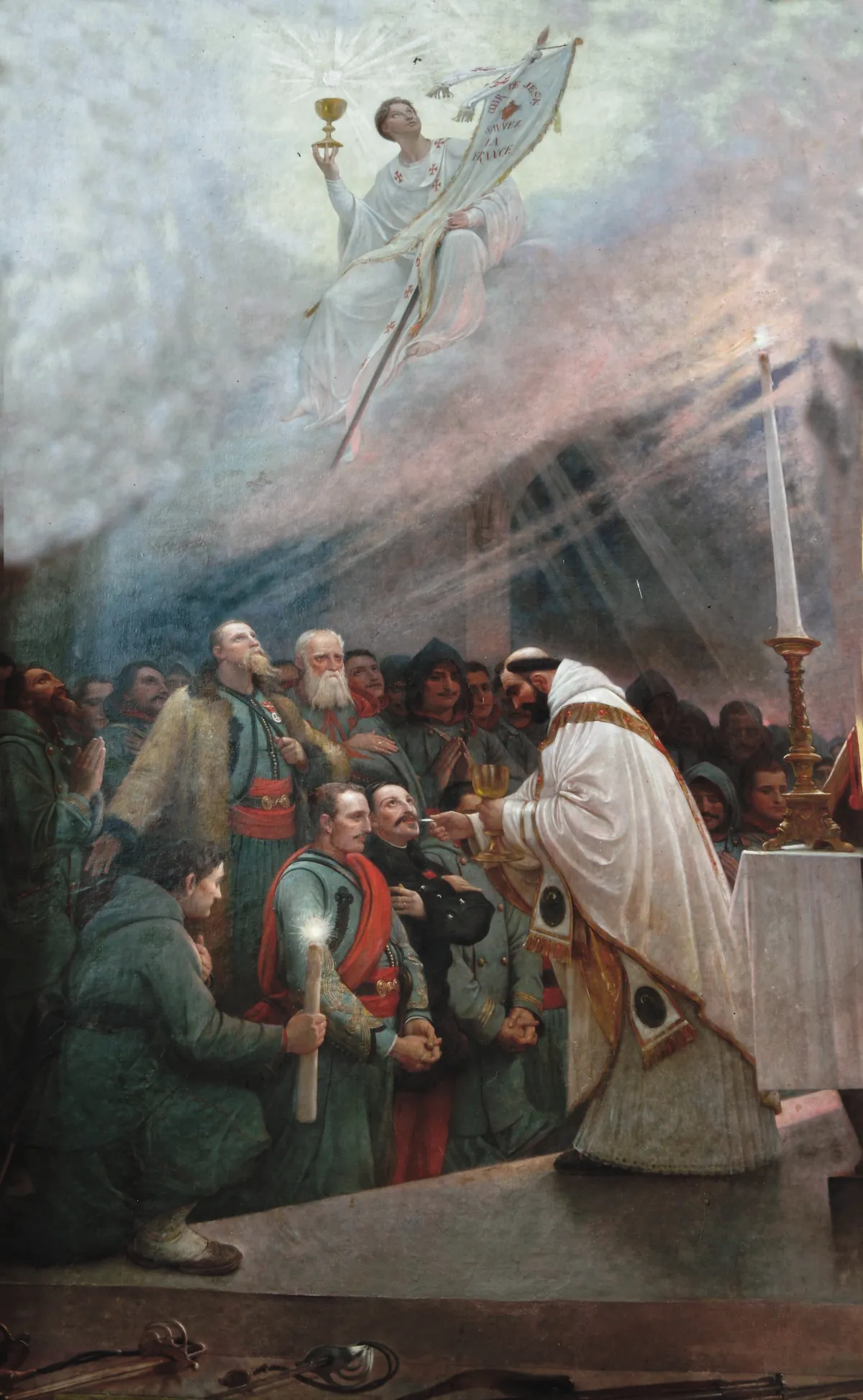
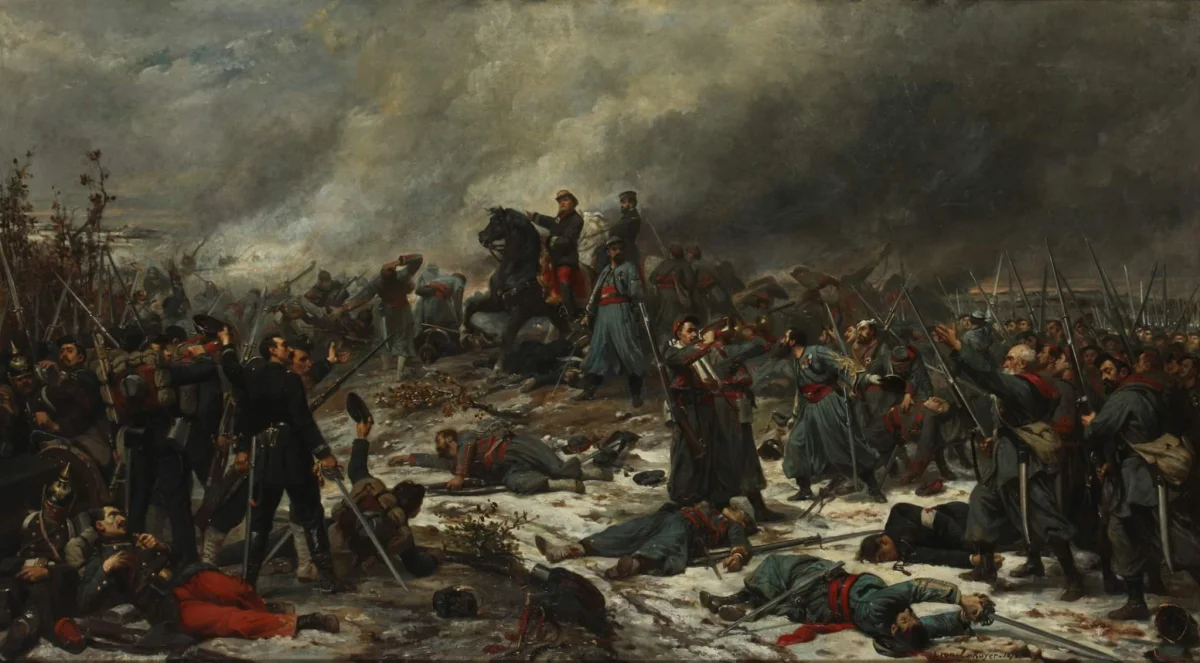
Lionel Noel Royer’s "Ulysse Et Télémaque" reveals his technical prowess and artistic discipline, hallmarks of the Academic Art movement. The detailed rendering and lifelike figures exemplify the artist’s command of oil on canvas, a medium favored for its richness and versatility. Royer’s attention to light and composition is also apparent in works like "La Bataille De Conte La Prusse" and "Champ De Bataille D'Auvours," offering viewers a visual journey through history and myth.
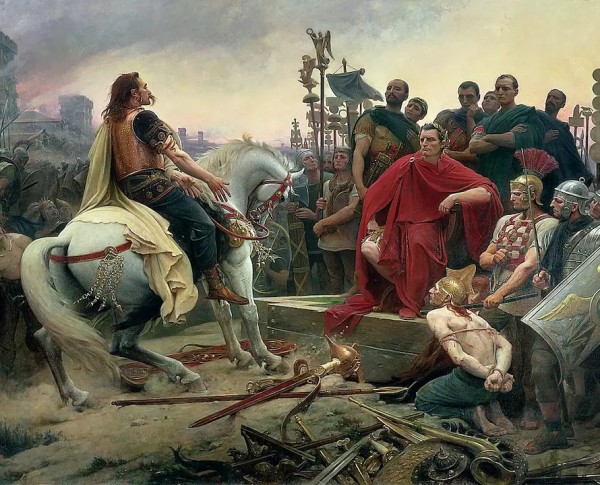
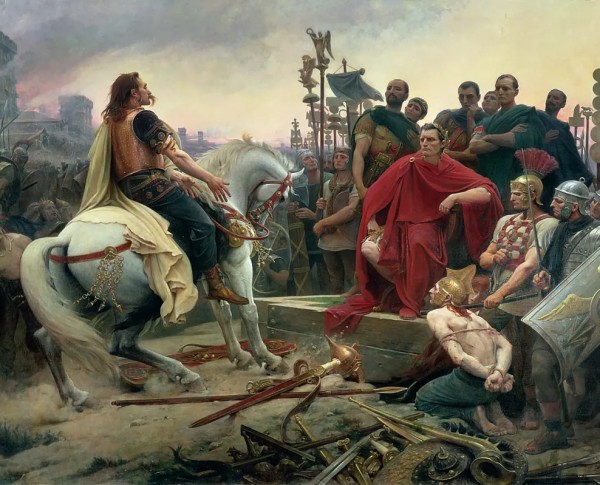
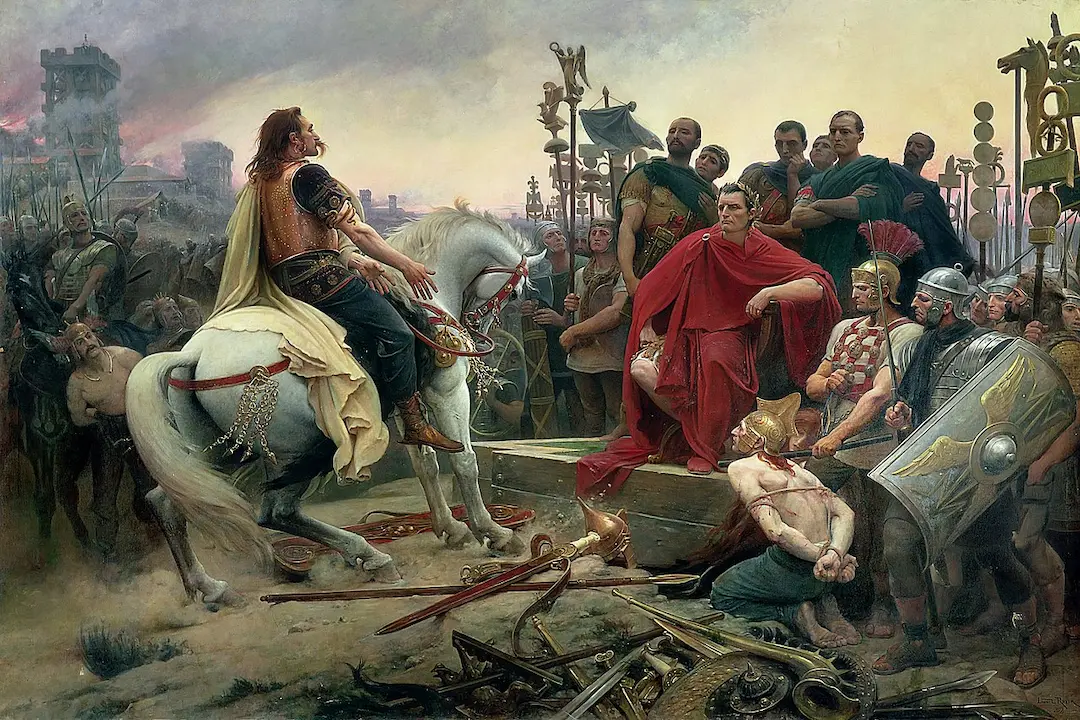
The narrative of "Ulysse Et Télémaque" unfolds with layers of symbolism, reflecting themes of reunion and heroism central to both the painting and the Academic Art tradition. Royer expertly weaves these elements, inviting viewers to explore the emotional connection between father and son. For those seeking a fine art painting for sale, related pieces such as "À Quelques Kilomètres Du Mans" and "Vercingetorix throws down his arms at the feet of Julius Caesar, 1899" offer similar storytelling depth and artistic excellence.
Owning "Ulysse Et Télémaque" means acquiring a significant piece of the Academic Art movement, masterfully executed by Lionel Noel Royer. This hand-painted oil painting, like "Auguste Au Tombeau D'Alexandre" and "General Gaston de Sonis," brings historical grandeur into any space. Collectors searching for an oil on canvas with enduring value will appreciate the craftsmanship and narrative power that make Royer’s works enduring treasures in the world of fine art.
When Art Meets History
"Ulysse Et Télémaque" by Lionel Noel Royer captures a pivotal moment from classical mythology, reflecting the grandeur of the Academic Art movement. This hand-painted oil painting immerses viewers in the legendary bond between Ulysses and Telemachus, drawing parallels to the narrative depth seen in works like "Rest on the Flight into Egypt" and "Objects of Art used by Marie Antoinette." Royer's mastery brings historical tales to life, making this a remarkable piece for any admirer of storytelling through art.
Techniques That Speak
Lionel Noel Royer employs meticulous oil on canvas techniques in "Ulysse Et Télémaque," characteristic of the Academic Art tradition. His brushwork and attention to detail are reminiscent of masterpieces such as "Odalisque with a Fan" and "Jeweled still life." The composition demonstrates Royer’s skillful use of light and shadow, imbuing the scene with realism and depth. The painting exemplifies how the precision of oil on canvas elevates historical subjects to timeless works of art.
Emotions on Display
In "Ulysse Et Télémaque," Royer channels intense emotion, capturing the heartfelt reunion between father and son. The expressive faces and dynamic poses evoke empathy, inviting viewers to experience the story anew. This fine art painting for sale stands alongside emotional works like "Odalisque" in its ability to convey complex feelings. Through Royer's interpretation, the Academic Art movement’s focus on dramatic storytelling is vividly realized, making the painting resonate with art lovers and collectors alike.
Coveted by Collectors
As a standout example of Academic Art, "Ulysse Et Télémaque" by Lionel Noel Royer is highly sought after by collectors of historical and classical themes. The hand-painted oil painting not only showcases Royer’s technical prowess but also offers a compelling narrative that appeals to connoisseurs. Like related pieces such as "Odalisque with a Fan" and "Jeweled still life," this artwork continues to attract attention on the fine art market, making it a prized acquisition for any serious collection.
Related Academic Art Hand-Painted Oil Paintings by Other Artists
Other Famous Academic Art Artists:
Frequently Asked Questions About Ulysse Et Télémaque
What is the historical context of "Ulysse Et Télémaque"?
"Ulysse Et Télémaque" was painted by Lionel Noel Royer during the late 19th century, a period marked by a revival of interest in classical themes and mythology in art. This era saw artists drawing inspiration from ancient texts, particularly Homer's "Odyssey," which depicts the relationship between Ulysses and his son Telemachus.
What artistic style is employed in "Ulysse Et Télémaque"?
The painting exemplifies the academic style prevalent in the 19th century, characterized by its meticulous attention to detail, dramatic composition, and a focus on narrative storytelling. Royer's work reflects the influence of neoclassicism, emphasizing clarity and idealized forms.
What themes are explored in "Ulysse Et Télémaque"?
The painting explores themes of heroism, paternal bonds, and the passage of time. It captures the moment of reunion and the emotional complexity of the father-son relationship, highlighting the ideals of loyalty and wisdom that are central to the narrative of the "Odyssey."
Who are the main figures depicted in the painting?
The central figures in "Ulysse Et Télémaque" are Ulysses, the legendary Greek hero, and his son Telemachus. Their portrayal reflects the emotional depth of their relationship, as well as the broader themes of longing and reconciliation present in the epic tale.
What symbolism is present in "Ulysse Et Télémaque"?
The painting is rich in symbolism, with Ulysses representing wisdom and experience, while Telemachus embodies youth and potential. The contrasting elements of their attire and postures further emphasize the generational differences and the journey from youth to maturity.
How does Royer's use of color contribute to the painting's impact?
Royer employs a vibrant color palette that enhances the emotional resonance of the scene. The warm tones used for Ulysses suggest familiarity and comfort, while cooler hues surrounding Telemachus evoke a sense of distance and longing, effectively illustrating their emotional states.
What role does composition play in "Ulysse Et Télémaque"?
The composition of "Ulysse Et Télémaque" is carefully structured to draw the viewer's eye towards the interaction between the two figures. The diagonal lines created by their postures and the surrounding elements guide the viewer's focus, enhancing the sense of drama and intimacy in the moment.
How does "Ulysse Et Télémaque" reflect the values of its time?
The painting reflects the 19th-century values of heroism, familial loyalty, and the celebration of classical antiquity. It embodies the Romantic ideal of the noble hero and the importance of personal relationships, resonating with contemporary audiences who sought depth and meaning in art.
What is the significance of the setting in "Ulysse Et Télémaque"?
The setting of the painting, reminiscent of ancient Greece, serves to ground the narrative in its mythological roots. It creates a timeless backdrop that emphasizes the universality of the themes being explored, allowing viewers to connect with the story on a deeper level.
In what ways has "Ulysse Et Télémaque" influenced modern interpretations of classical themes?
"Ulysse Et Télémaque" has influenced modern interpretations by showcasing the enduring relevance of classical narratives. Its exploration of complex emotional themes has inspired contemporary artists and writers to revisit these stories, highlighting the timeless nature of human experiences and relationships.























_GFM_Painting_(1).webp)


 100% Hand-Painted: Finished in 3-6 Weeks

.png)















_(1).webp)