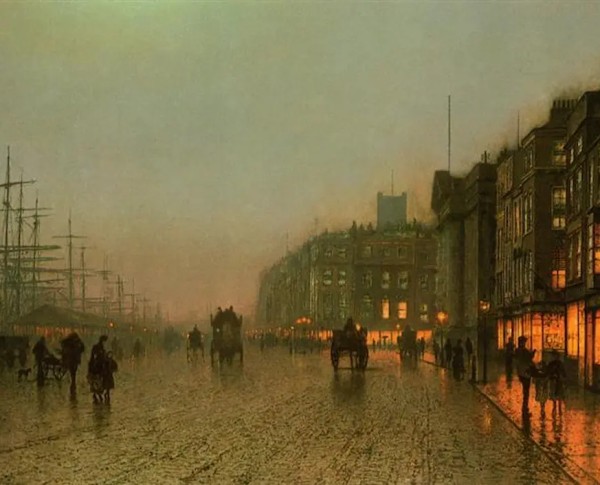
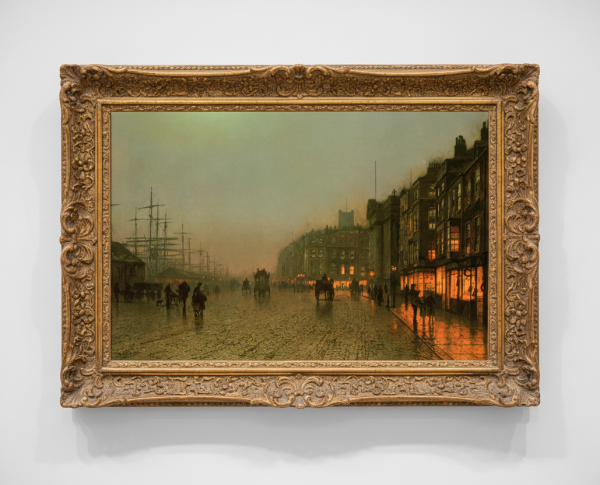
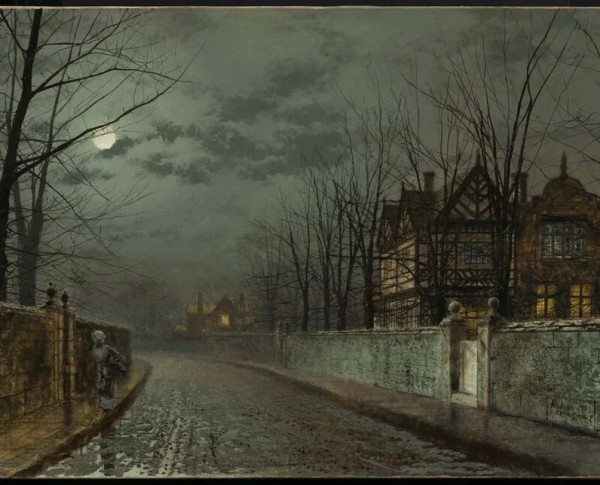
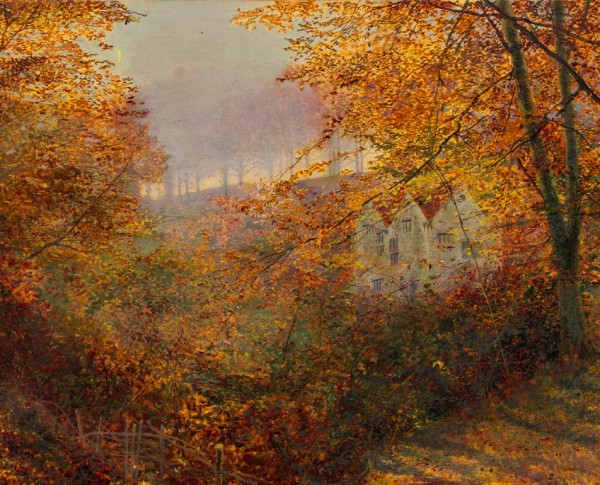
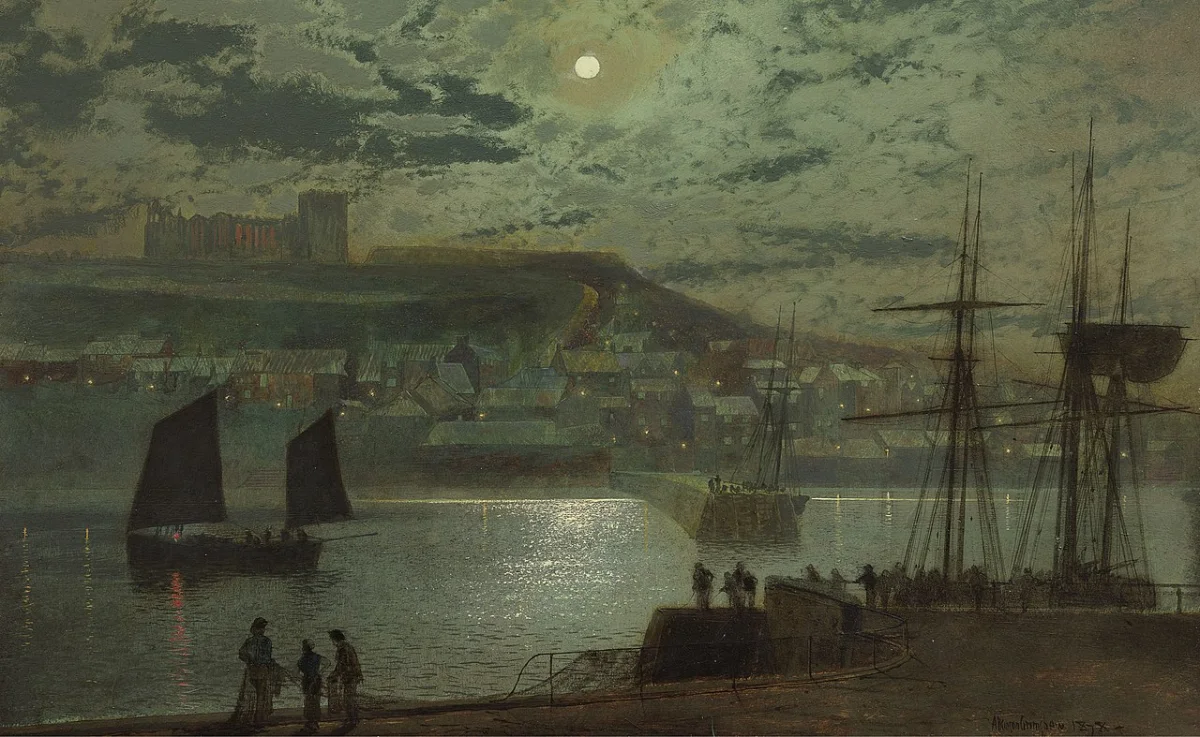
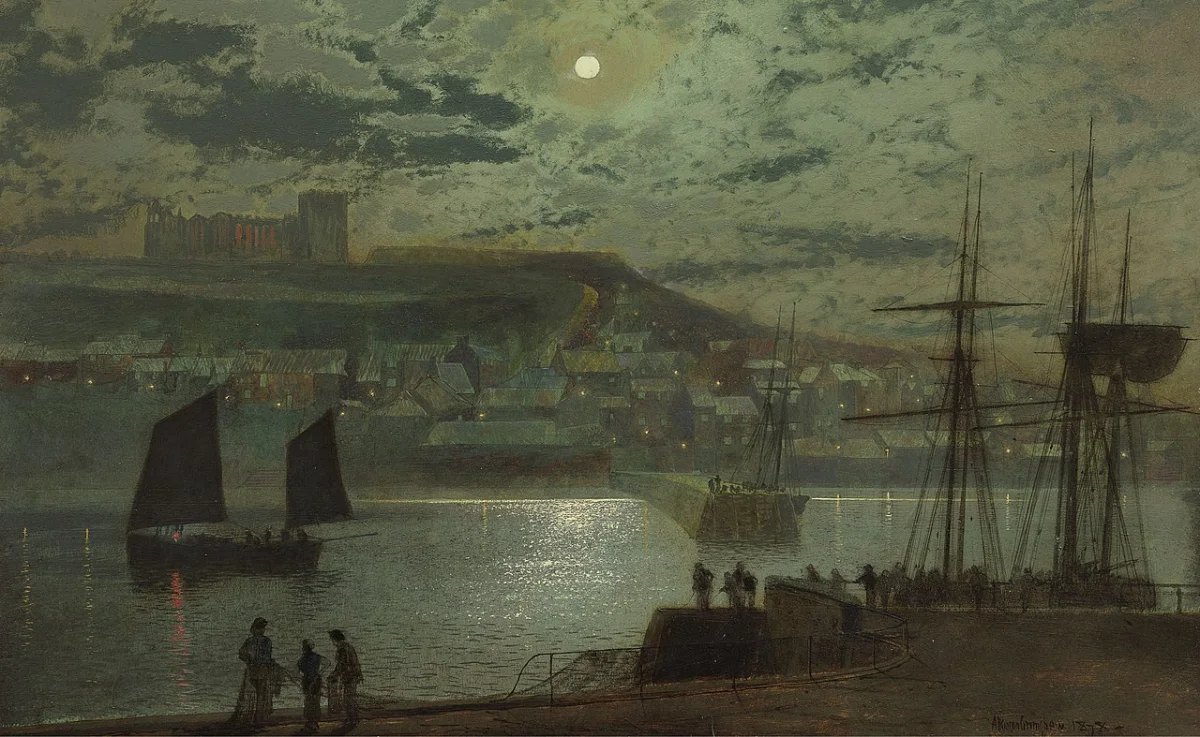
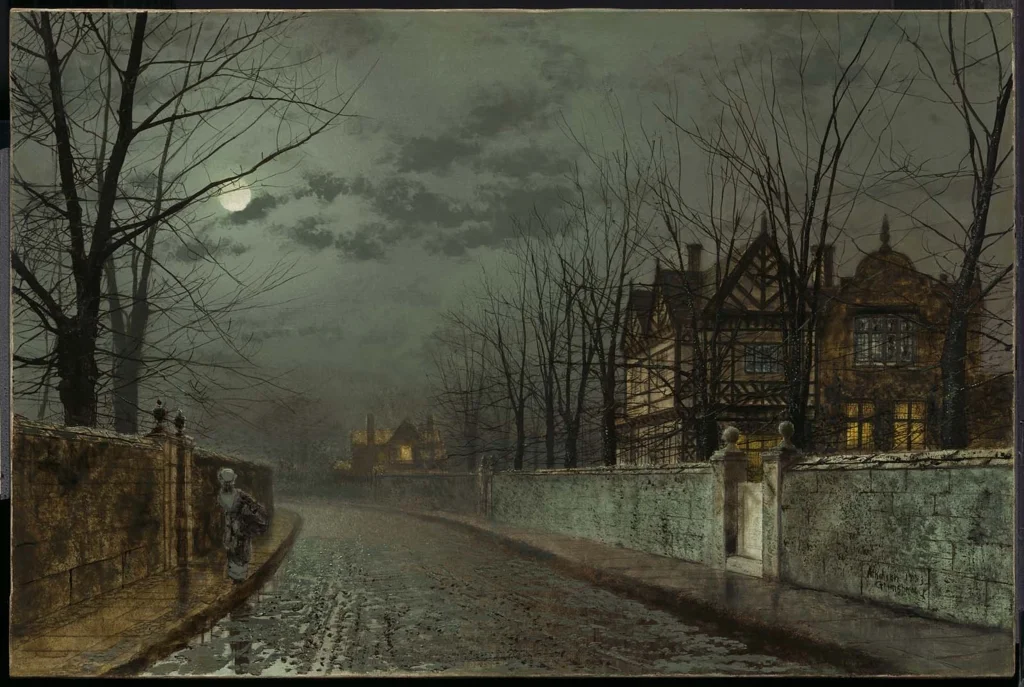
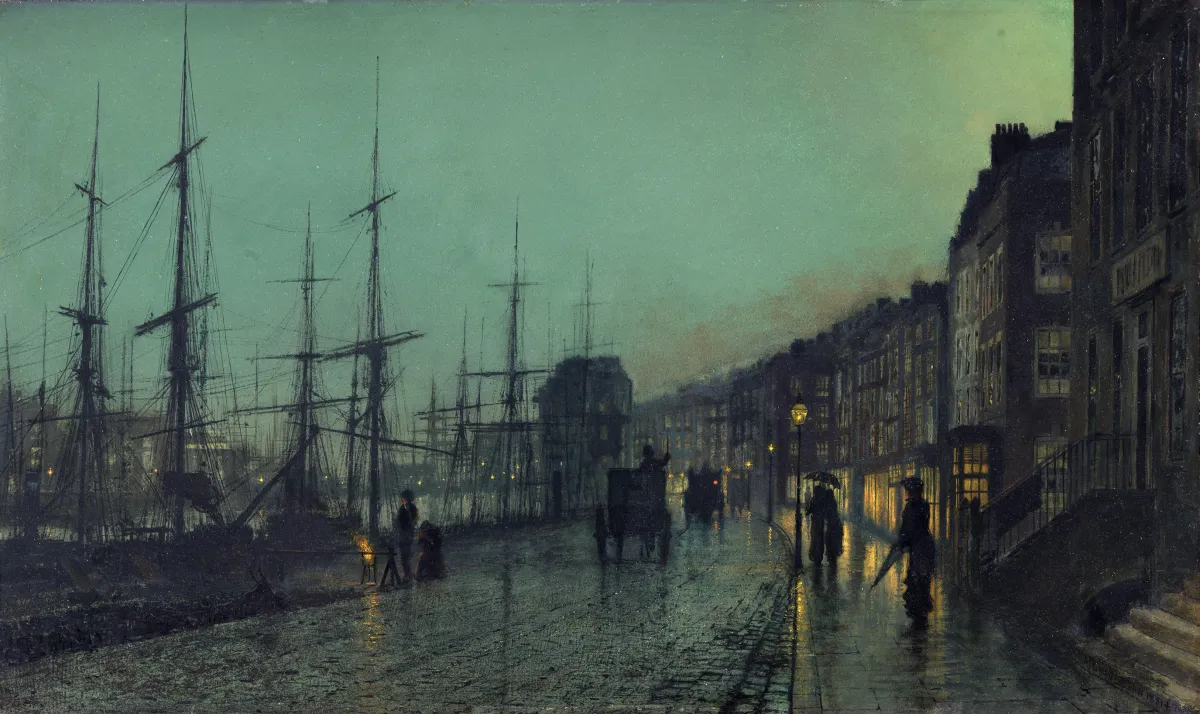
John Atkinson Grimshaw’s mastery shines through in "Whitby Harbor," where his delicate brushwork and nuanced color palette create a luminous effect. The oil on canvas technique brings out the reflective water and misty ambiance, hallmarks of Grimshaw’s unique style within the Aestheticism movement. Art enthusiasts often compare this painting’s technique to other masterpieces such as "Old English House by Moonlight" and "Canny Glasgow," which also showcase his exceptional skill.
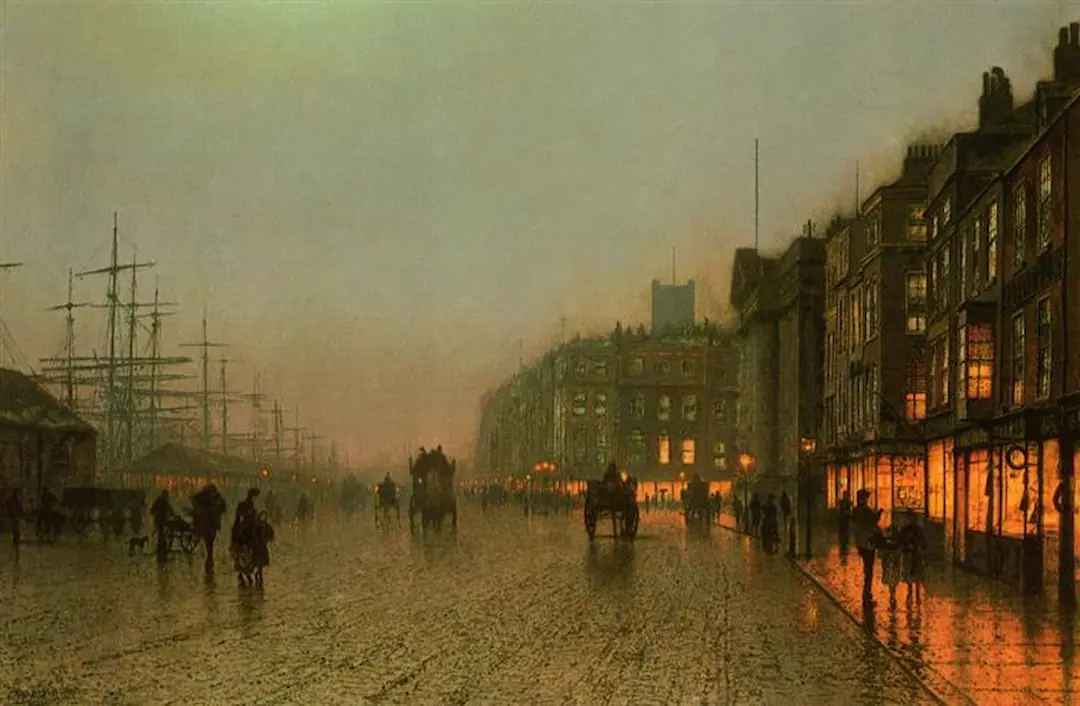
Within "Whitby Harbor," Grimshaw weaves subtle narratives through the interplay of light and shadow, inviting viewers to ponder the harbor’s quiet mysteries. The painting’s serene mood and symbolic use of moonlight are characteristic of Aestheticism’s focus on mood over narrative. This fine art painting for sale appeals to those who appreciate the poetic qualities found in related works like "Shipping on the Clyde" and "Liverpool from Wapping," each telling their own silent story.
Collectors value "Whitby Harbor" not only for its beauty but also for its historical significance in the Aestheticism movement. Owning a Grimshaw piece, such as this hand-painted oil painting, is akin to possessing a slice of art history. For those seeking to expand their collection, complementary artworks like "A Moonlit Evening" or "Liverpool from Wapping" offer a harmonious blend of style and sophistication, making each acquisition a cherished investment.
When Art Meets History
"Whitby Harbor" by John Atkinson Grimshaw stands as a luminous example of the Aestheticism movement, capturing the atmospheric beauty of Victorian England. This hand-painted oil painting transports viewers to the misty docks of Whitby, a historic port town. Grimshaw’s attention to detail and ethereal lighting evoke a sense of nostalgia, linking the viewer to the era’s bustling maritime life. Related works, such as "Study for Antony and Cleopatra," showcase his enduring fascination with mood and setting.
Techniques That Speak
Grimshaw’s mastery of oil on canvas is evident in "Whitby Harbor," where subtle gradations of light and shadow bring the harbor to life. His innovative use of glazing techniques enhances the painting’s depth and realism, a hallmark of the Aestheticism movement. The artist’s ability to capture reflective water and moody skies is also seen in his "Study of a head" and "The Arthurian Round Table and the fable of the Seat Perilous," demonstrating his technical prowess.
Emotions on Display
The tranquil ambiance of "Whitby Harbor" elicits a contemplative mood, inviting viewers to lose themselves in its serene vistas. Grimshaw’s fine art painting for sale captures the quiet beauty of twilight, a recurring theme in his work. Emotions of nostalgia and longing permeate the canvas, much like in "Study for Shakespeare" and "Man’s Head in Profile," where subtle expressions and atmospheric effects underscore the artist’s emotional depth within the Aestheticism movement.
Coveted by Collectors
"Whitby Harbor" remains highly sought after by art enthusiasts and collectors who appreciate the unique qualities of a hand-painted oil painting from the Aestheticism era. John Atkinson Grimshaw’s attention to atmospheric detail and his evocative style make this work, along with related paintings, prized additions to any collection. The enduring appeal of "Whitby Harbor" is further enhanced by its connections to Grimshaw’s broader oeuvre, celebrated for both beauty and historical significance.
Related Aestheticism Hand-Painted Oil Paintings by Other Artists
Other Famous Aestheticism Artists:
Frequently Asked Questions About Whitby Harbor
Who is the artist of Whitby Harbor?
The painting Whitby Harbor was created by the renowned British artist John Atkinson Grimshaw, known for his atmospheric landscapes and nocturnal scenes.
What is the historical significance of Whitby Harbor?
Whitby Harbor, located in North Yorkshire, England, has a rich maritime history, serving as a vital port since the medieval period and playing a key role in the fishing and shipbuilding industries.
What artistic techniques did Grimshaw use in Whitby Harbor?
Grimshaw employed a unique combination of realism and impressionism, utilizing meticulous detail and a masterful use of light to capture the serene beauty of the harbor at dusk.
What themes are explored in Whitby Harbor?
The painting explores themes of tranquility, nostalgia, and the relationship between humanity and nature, encapsulating the peaceful yet industrious spirit of the harbor.
How does Grimshaw's use of light contribute to the painting?
Grimshaw's innovative use of light creates a luminous atmosphere, highlighting the reflections on the water and enhancing the overall mood of serenity and contemplation in the scene.
What symbols can be found in Whitby Harbor?
The boats in the harbor symbolize the connection between the community and the sea, while the twilight sky represents transition, suggesting the passage of time and the fleeting nature of life.
In what period was Whitby Harbor painted?
Whitby Harbor was painted during the late 19th century, a time when Grimshaw was at the height of his artistic career, reflecting the Victorian fascination with nature and industrialization.
How does Whitby Harbor reflect Grimshaw's overall body of work?
This painting exemplifies Grimshaw's signature style, characterized by his focus on atmospheric effects, detailed landscapes, and the interplay of light and shadow, which are prevalent throughout his oeuvre.
What impact did Whitby Harbor have on contemporary artists?
Whitby Harbor has influenced contemporary artists by showcasing the emotive power of light and color, inspiring them to explore similar themes of nature and industrial landscapes in their own work.
Where can I view Whitby Harbor today?
Whitby Harbor is part of various private collections and exhibitions, and it may be displayed in art galleries that focus on 19th-century British art, including potential exhibitions at dedicated art institutions.























_GFM_Painting_(1).webp)


 100% Hand-Painted: Finished in 3-6 Weeks

.png)
















_(1).webp)