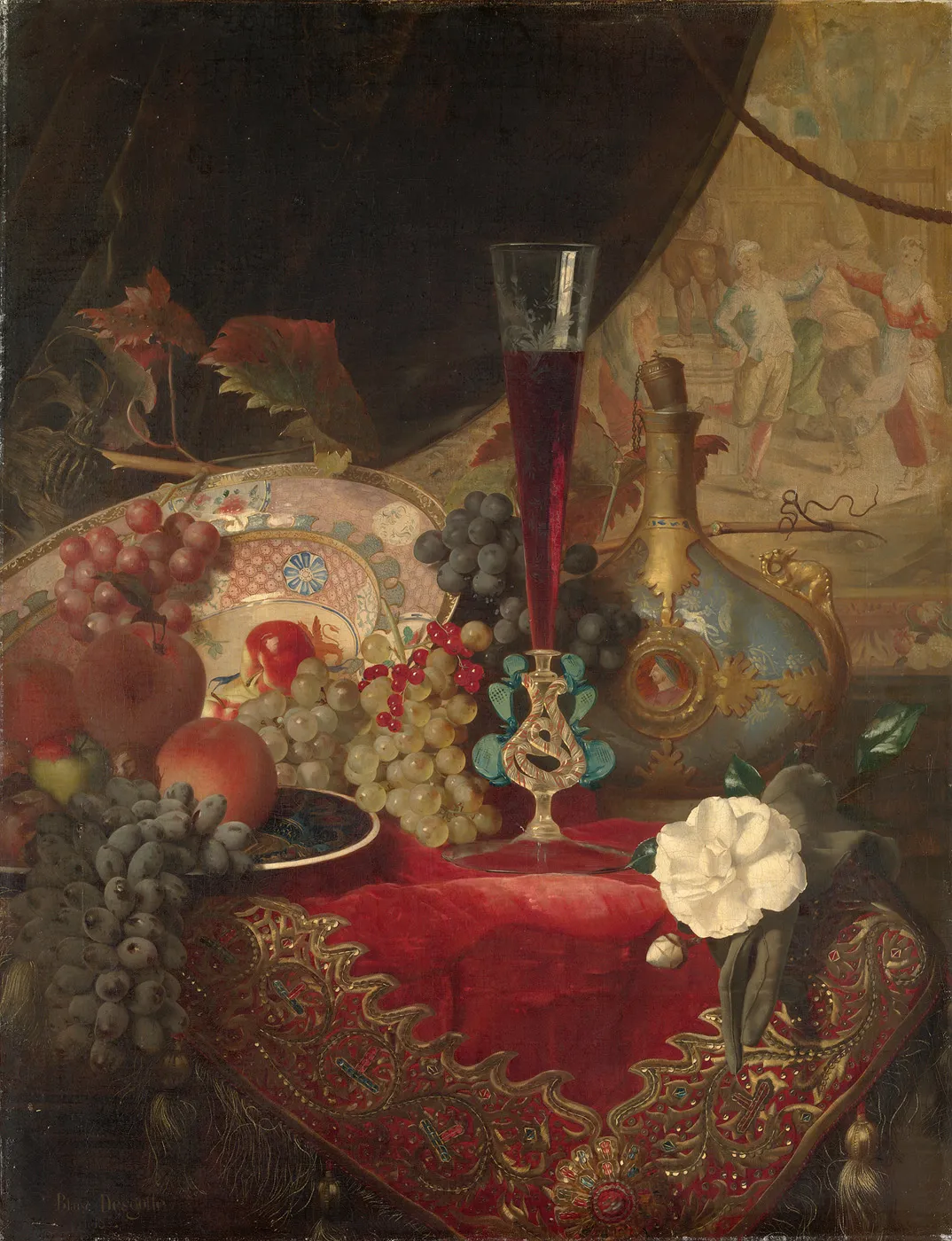
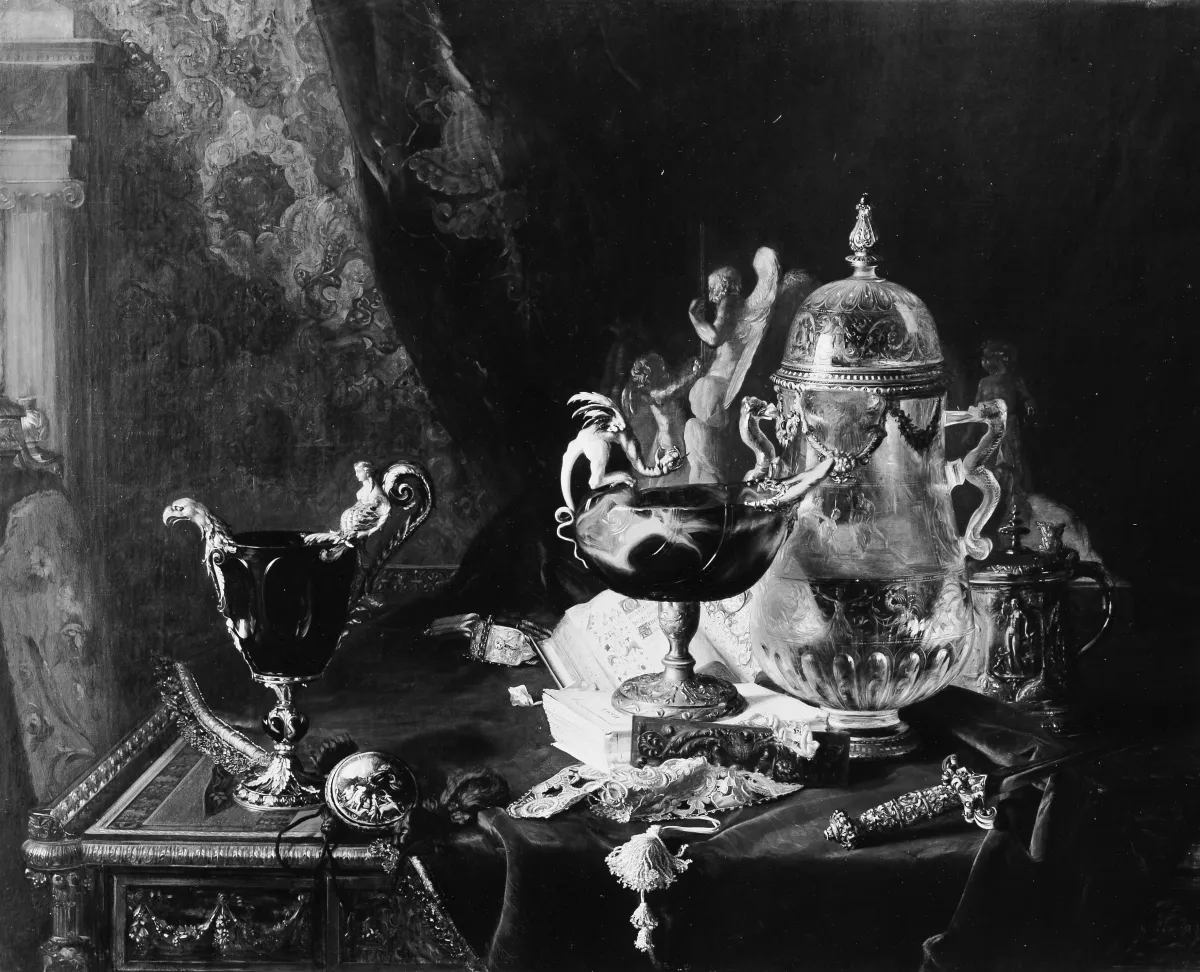
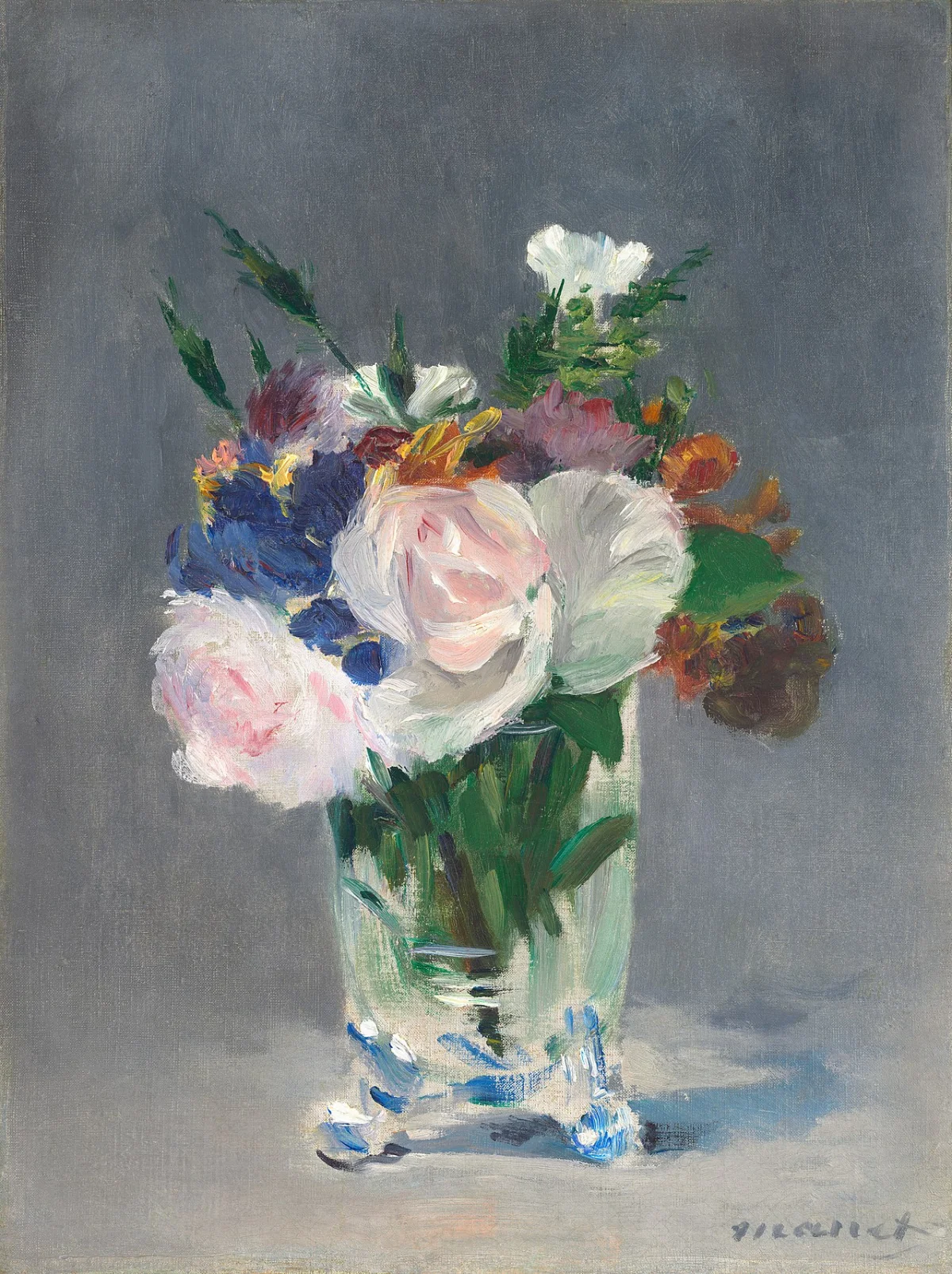
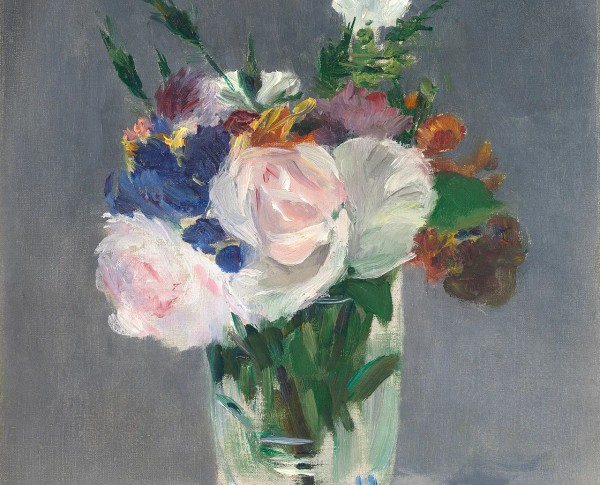
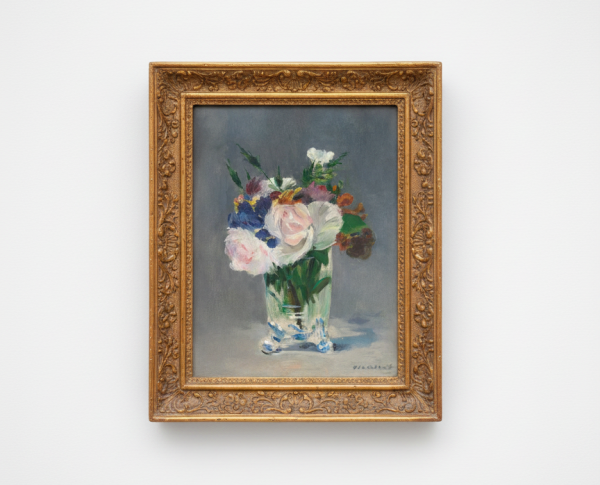
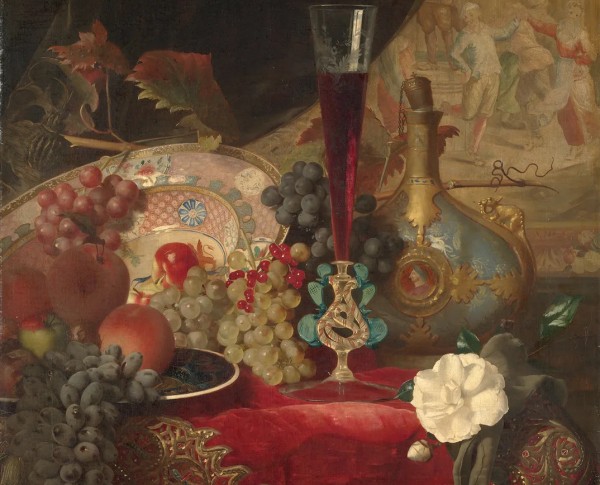
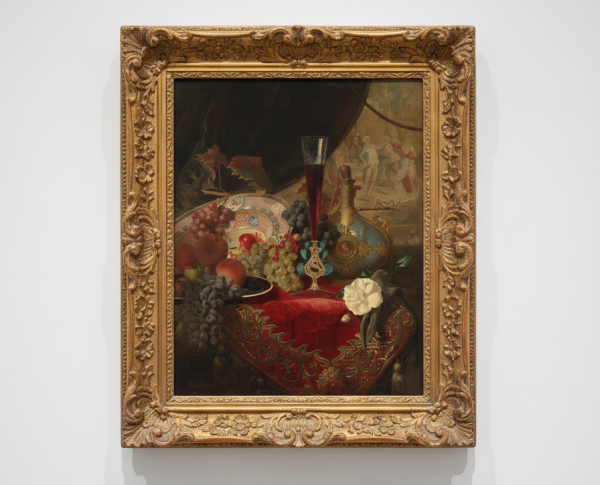
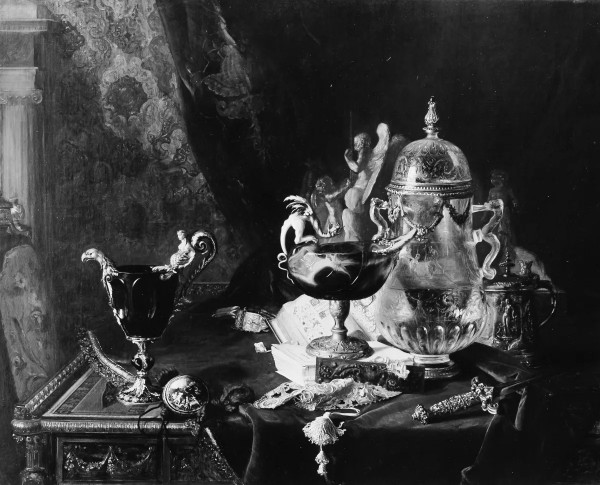
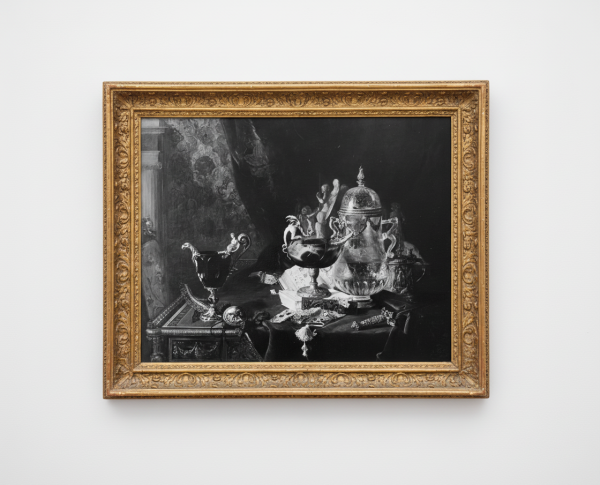
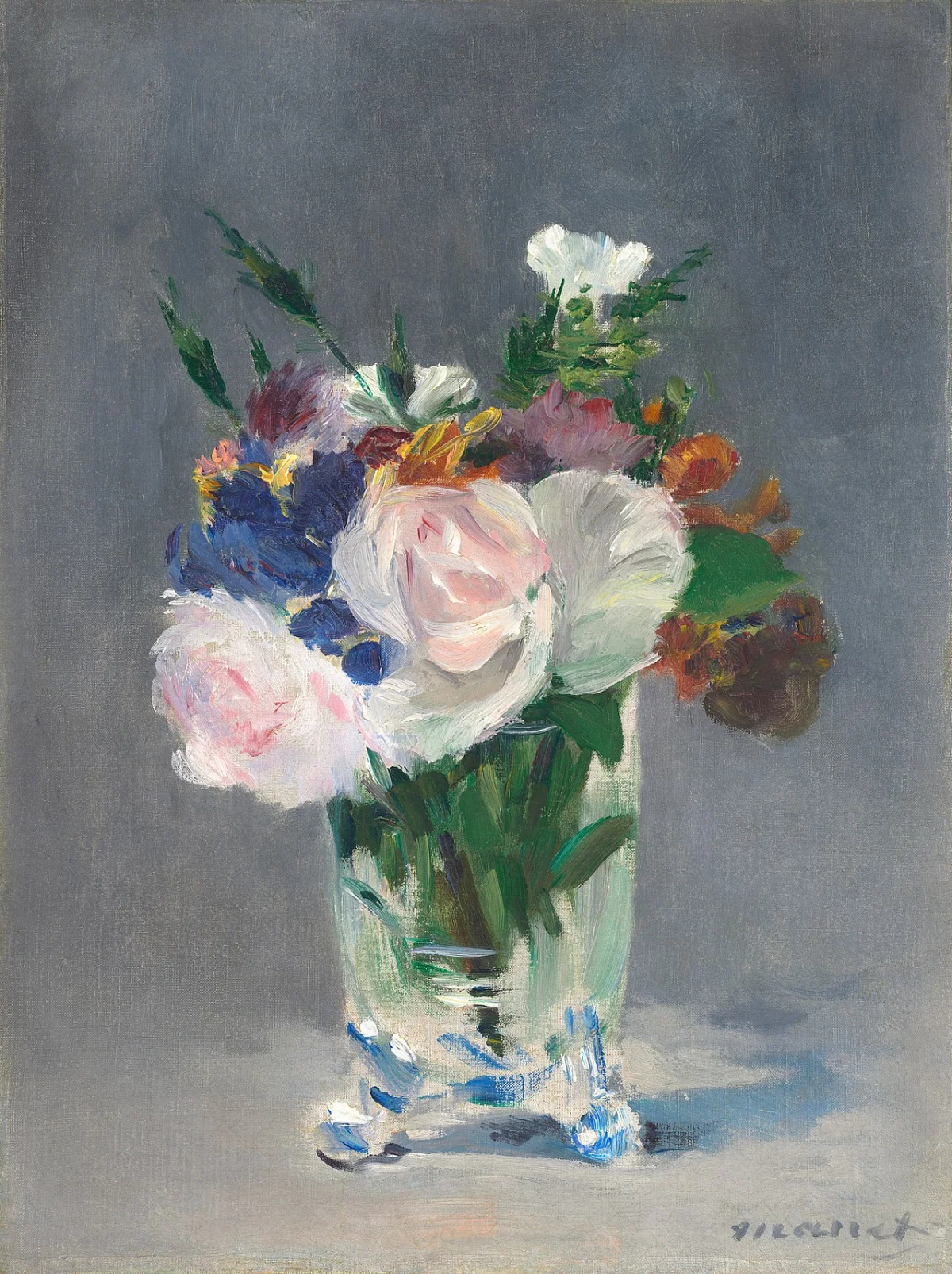
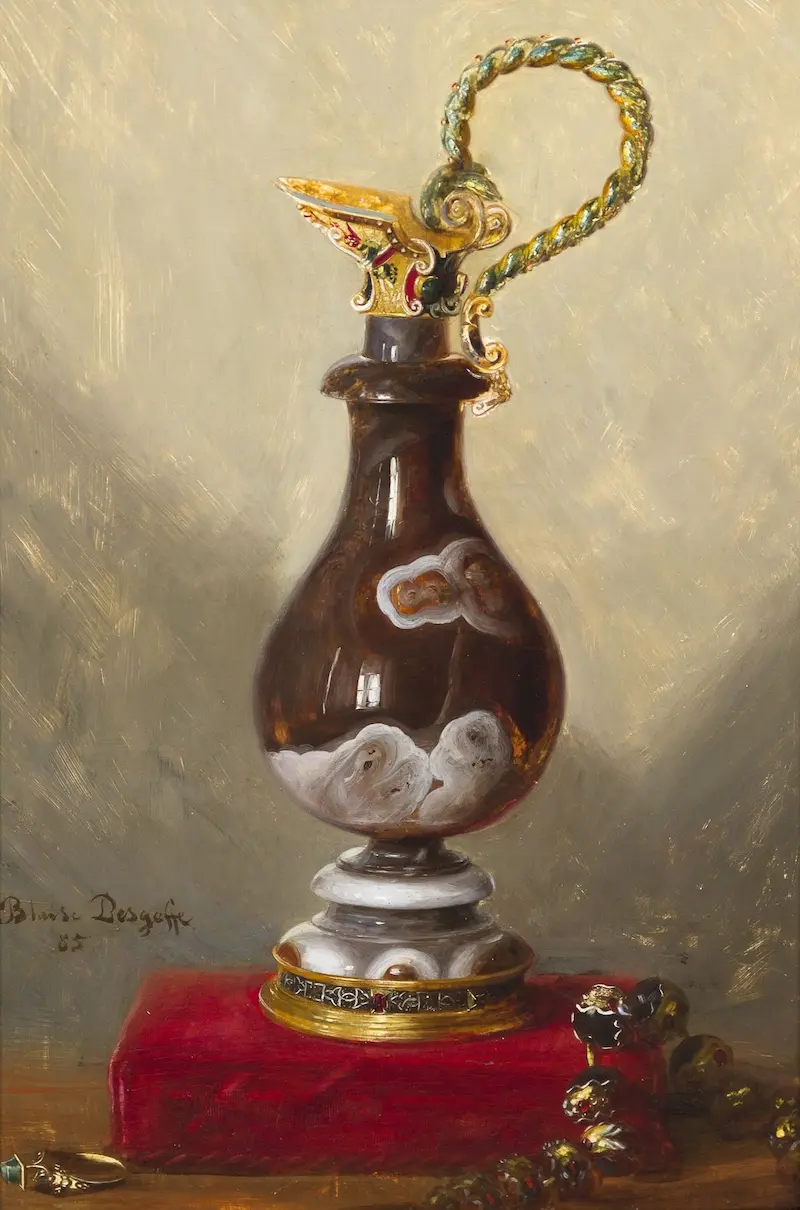
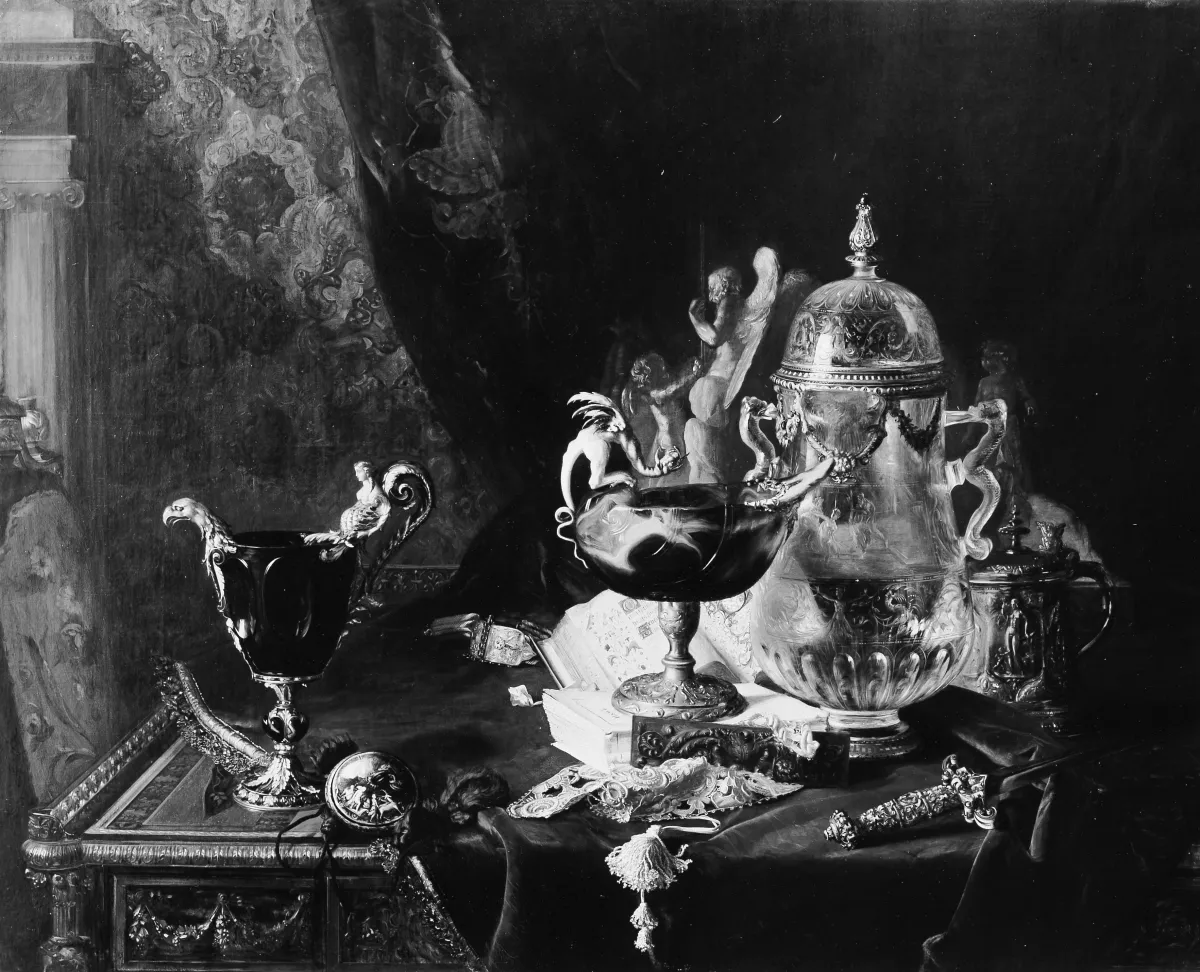
Desgoffe’s "Crystal vase" demonstrates exceptional skill through its oil on canvas technique, capturing the delicate interplay of light and transparency. The artist’s attention to detail and careful rendering of glass and flora exemplify the technical prowess characteristic of the Academic Art movement. This stunning work, along with similar pieces like "Vase of améthyste from the 16th-century," reveals the enduring appeal of traditional craftsmanship in the realm of fine art.
Within "Crystal vase," Blaise Alexandre Desgoffe weaves a narrative of purity and transience, using the crystal vessel and floral arrangement as symbols. This fine art painting for sale invites viewers to contemplate the fleeting beauty of life and the artist’s dedication to classical themes. Collectors may also appreciate related products such as " Vase of améthyste from the 16th-century," which echo the symbolic richness found in Desgoffe’s Academic Art masterpieces.
For discerning collectors, "Crystal vase" by Blaise Alexandre Desgoffe represents more than a decorative piece—it is a testament to the enduring value of Academic Art. This hand-painted oil painting stands out in any collection, admired for its authenticity and historical significance. Pairing it with related products like " Vase of améthyste from the 16th-century" further enhances a curated selection of timeless still-life works, making it a true treasure for art connoisseurs.
When Art Meets History
Blaise Alexandre Desgoffe’s "Crystal vase" stands as a remarkable example of the Academic Art movement, blending meticulous detail with classical themes. This hand-painted oil painting not only showcases Desgoffe’s mastery but also reflects the era’s fascination with realism and elegance. Alongside related works like "Odalisque" and "Battle of Auvours, 10 January 1871," "Crystal vase" captures the historical essence of 19th-century art, making it a celebrated piece among connoisseurs and historians alike.
Techniques That Speak
Desgoffe’s "Crystal vase" demonstrates the artist’s skillful use of oil on canvas, a medium favored in Academic Art for its versatility and depth. The intricate rendering of glass and floral elements showcases his attention to light, texture, and reflection. Similar to his works "Admiring Beauty" and "Diana the Huntress," this painting exemplifies the technical precision and refined brushwork that define Desgoffe’s legacy, inviting viewers to appreciate the artistry behind each carefully painted detail.
Emotions on Display
"Crystal vase" by Blaise Alexandre Desgoffe invites viewers to experience a moment of quiet elegance, evoking emotions of serenity and admiration. The composition’s balance and harmony are hallmarks of Academic Art, allowing the observer to connect deeply with the subject. This fine art painting for sale, much like "Admiring Beauty," captures subtle moods through its interplay of color and form, making it a treasured addition to any discerning collection.
Coveted by Collectors
Collectors highly seek Desgoffe’s "Crystal vase" for its exquisite craftsmanship and historical significance within the Academic Art movement. The painting’s hand-painted oil painting technique and timeless appeal place it alongside masterpieces like "Diana the Huntress" and "Odalisque." Its rarity and refined execution make it a prized acquisition, whether displayed in private galleries or esteemed institutions, ensuring its continued appreciation among those passionate about classic fine art.
Related Academic Art Hand-Painted Oil Paintings by Other Artists
Other Famous Academic Art Artists:
Frequently Asked Questions About Crystal vase
What is the historical significance of "Crystal vase"?
"Crystal vase," created by Blaise Alexandre Desgoffe, is significant for its representation of the 19th-century French still life genre, showcasing the transition towards more realistic and detailed depictions of everyday objects.
What artistic techniques are employed in "Crystal vase"?
The painting employs techniques such as chiaroscuro to create depth and realism, as well as meticulous brushwork that highlights the reflective qualities of the crystal and the textures of the surrounding elements.
What does the crystal vase symbolize in the artwork?
The crystal vase symbolizes elegance and refinement, often associated with the beauty of nature and the transience of life, reflecting the artist's appreciation for both material beauty and the ephemeral nature of existence.
How does "Crystal vase" reflect the artistic trends of its time?
The painting reflects the Realism movement of the 19th century, emphasizing accurate representation and attention to detail, which were pivotal in moving away from the idealized forms of earlier art styles.
What influences can be seen in Blaise Alexandre Desgoffe's style?
Desgoffe's style shows influences from the Dutch Masters, particularly in his use of light and shadow, as well as in the careful arrangement of objects, which creates a harmonious composition that draws the viewer's eye.
What materials did Desgoffe likely use for "Crystal vase"?
Desgoffe would have used oil paints on canvas, a common medium during his time, allowing for rich color saturation and the ability to achieve fine detail in the depiction of the crystal and floral elements.
What role does color play in "Crystal vase"?
Color plays a crucial role in "Crystal vase," with a palette that enhances the transparency and luminosity of the crystal, while the surrounding colors create contrast and depth, adding to the overall visual impact of the composition.
How does "Crystal vase" compare to other works by Desgoffe?
Compared to other works by Desgoffe, "Crystal vase" is notable for its intricate detail and focus on a singular subject, showcasing his mastery of still life and his ability to elevate ordinary objects to the level of fine art.
What themes are prevalent in "Crystal vase"?
The themes of beauty, transience, and the celebration of everyday life are prevalent in "Crystal vase," reflecting a broader cultural appreciation for the simple yet exquisite aspects of the world around us.
In what ways does "Crystal vase" invite viewer interpretation?
"Crystal vase" invites viewer interpretation through its juxtaposition of fragility and strength, encouraging contemplation on the nature of beauty and the passage of time, as well as personal reflections on the objects depicted.






















_GFM_Painting_(1).webp)


 100% Hand-Painted: Finished in 3-6 Weeks

.png)















_(1).webp)