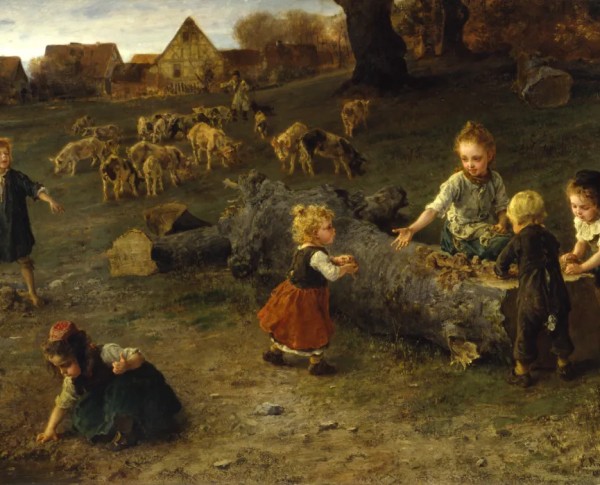
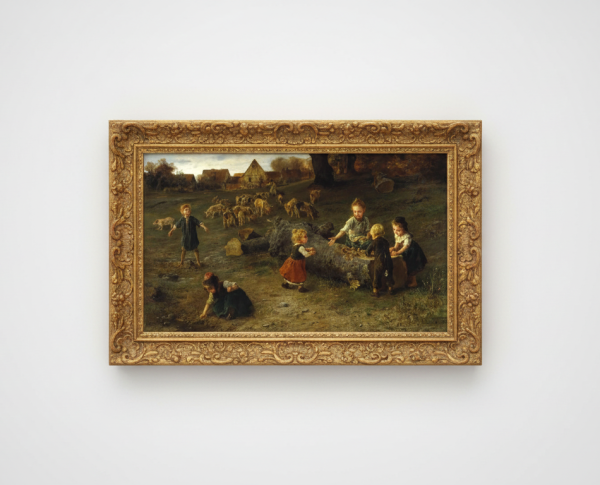
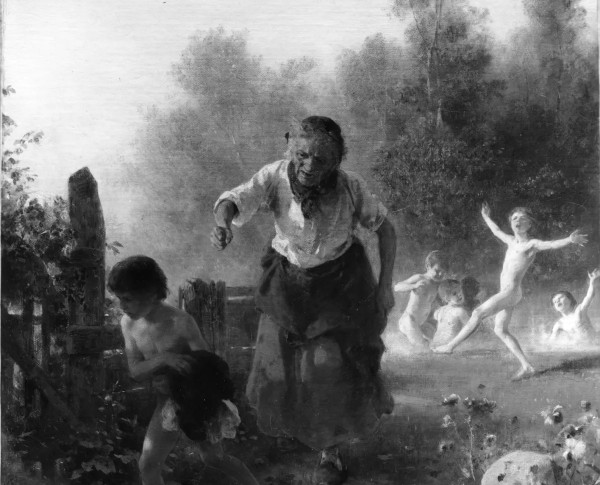
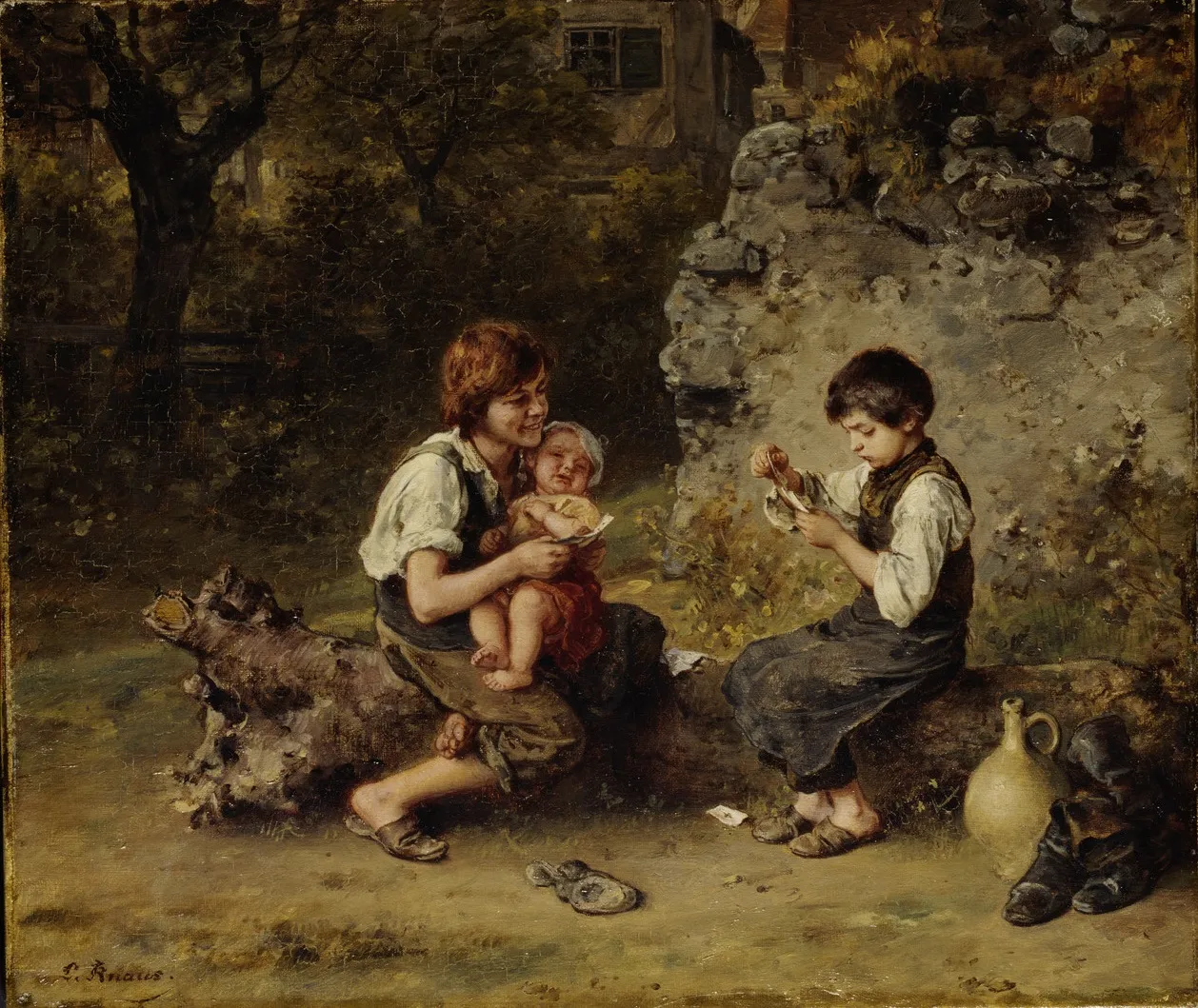
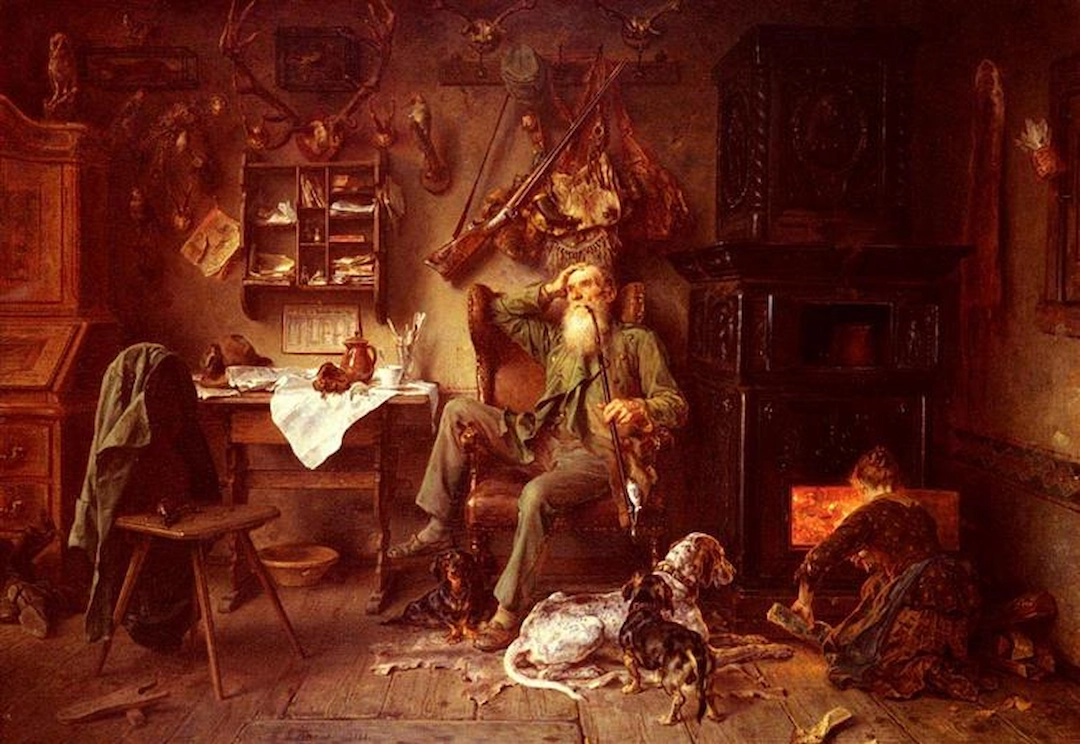
Ludwig Knaus’s expertise shines through in every brushstroke of this oil on canvas artwork. The meticulous attention to detail, characteristic of the Academic Art movement, is evident in the boys’ expressions and the textures of their surroundings. Collectors who appreciate technical brilliance may also enjoy related pieces such as "A Forester at Home" and "Portrait of Gustav Friedrich Waagen," which similarly showcase Knaus’s refined technique and mastery of the medium.
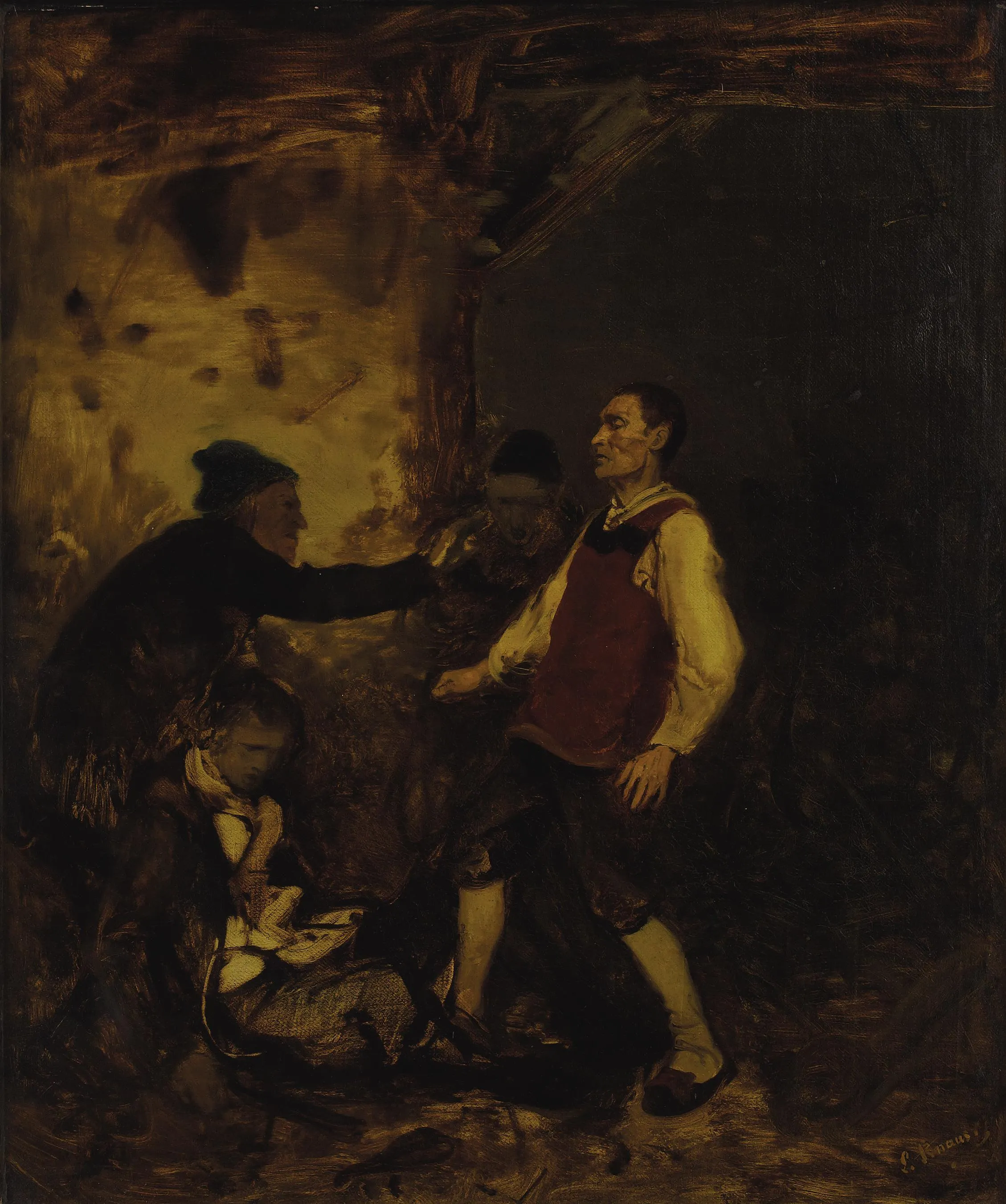
Within "Card-playing shoemaker boys," Knaus weaves a narrative that resonates with viewers. The painting, a fine art painting for sale, captures youthful camaraderie and the innocence of leisure, reflecting broader societal themes. Symbols like the playing cards and shoemaking tools add layers of meaning. Art lovers interested in narrative-rich pieces might also explore "Fire in the village" and "Portrait of a boy with dog in a forest" for further storytelling in oil on canvas.
As a prime example of Academic Art, "Card-playing shoemaker boys" stands as a valuable hand-painted oil painting for any collection. Ludwig Knaus’s legacy endures through his evocative works, each offering a window into 19th-century life. Collectors seeking to expand their galleries should consider related masterpieces like "The Truant" and "Promenade," which, along with this painting, represent the pinnacle of fine art painting for sale from this renowned artist.
When Art Meets History
"Card-playing Shoemaker Boys" by Ludwig Knaus stands as a remarkable example of the Academic Art movement. This hand-painted oil painting captures a slice of 19th-century daily life, reflecting the era's social dynamics and artistic ideals. Knaus, renowned for his attention to detail, brings the lively world of working-class youth into the spotlight. Similar to his works like "Admiring Beauty" and "Reunited," this piece preserves the cultural and historical context through its vivid storytelling.
Techniques That Speak
Ludwig Knaus’s mastery is evident in his use of oil on canvas, a hallmark of the Academic Art movement. In "Card-playing Shoemaker Boys," his brushwork delicately renders textures—from worn leather shoes to expressive faces—showcasing his technical prowess. The painting’s composition and lighting create a realistic, immersive scene. Comparable to "Psyche with Putti" and "A Beauty of Nature," Knaus’s technique elevates everyday moments into timeless masterpieces, exemplifying the power of oil on canvas.
Emotions on Display
The emotional resonance in "Card-playing Shoemaker Boys" sets it apart as a fine art painting for sale. Ludwig Knaus skillfully conveys camaraderie, concentration, and youthful mischief among the shoemaker boys, drawing viewers into their world. The Academic Art movement often focused on human expression, and Knaus’s work is no exception. Like "The Wolf of Agubbio" and "Reunited," this painting captures the subtleties of feeling, making it a favorite among art enthusiasts.
Coveted by Collectors
Collectors prize "Card-playing Shoemaker Boys" for its rich narrative and masterful execution, making it a sought-after hand-painted oil painting. Ludwig Knaus’s reputation within the Academic Art movement ensures that works like this, along with "Admiring Beauty" and "Psyche with Putti," remain highly valued. The painting’s blend of historical context and technical brilliance appeals to those seeking a fine art painting for sale that truly embodies the artistry of its time.
Related Academic Art Hand-Painted Oil Paintings by Other Artists
Other Famous Academic Art Artists:
Frequently Asked Questions About Card-playing shoemaker boys
What is the historical context of "Card-playing shoemaker boys"?
"Card-playing shoemaker boys" was created during the 19th century, a period marked by significant social and economic changes in Europe. The painting reflects the daily lives of working-class children, showcasing their leisure activities amidst the backdrop of industrialization.
Who was Ludwig Knaus and what is his significance in art history?
Ludwig Knaus was a German painter known for his depictions of everyday life and social realism. He played a crucial role in portraying the lives of ordinary people, and his works often highlight the intersection of childhood innocence and the harsh realities of life.
What artistic techniques did Knaus employ in this painting?
Knaus utilized naturalism and attention to detail in "Card-playing shoemaker boys." His use of light and shadow creates depth, while the composition draws the viewer's eye to the interaction between the boys, emphasizing their camaraderie and playful spirit.
What themes are explored in "Card-playing shoemaker boys"?
The painting explores themes of childhood, camaraderie, and the contrast between work and play. It highlights the fleeting nature of childhood and the importance of leisure in the lives of working-class children.
What symbols can be found in the painting?
The playing cards symbolize chance and the carefree nature of childhood, while the shoemaking tools in the background represent the boys' socio-economic status and the responsibilities that await them as they grow older.
How does "Card-playing shoemaker boys" reflect social realism?
This painting embodies social realism by depicting the lives of working-class children with authenticity and empathy. Knaus captures their innocence while subtly commenting on the socio-economic conditions of the time.
What is the significance of the setting in the painting?
The setting, likely a shoemaker's workshop, serves as a backdrop that contrasts the boys' playful activity with the labor-intensive environment. This juxtaposition emphasizes the duality of childhood joy and the realities of adult responsibilities.
How does the composition of the painting enhance its meaning?
The composition is carefully arranged to focus on the interaction between the boys, creating a sense of intimacy and connection. The placement of figures and objects guides the viewer's eye and reinforces the theme of camaraderie and shared experience.
What impact did "Card-playing shoemaker boys" have on contemporary audiences?
Upon its release, the painting resonated with audiences by evoking nostalgia for childhood and a sense of empathy for the working class. It encouraged viewers to reflect on the societal conditions of the time and the importance of preserving childhood innocence.
In what ways is this painting relevant to modern discussions about childhood?
"Card-playing shoemaker boys" remains relevant as it prompts discussions about the importance of play in childhood development and the socio-economic challenges faced by children today. It serves as a reminder of the need to protect and nurture childhood in an increasingly complex world.























_GFM_Painting_(1).webp)


 100% Hand-Painted: Finished in 3-6 Weeks

.png)















_(1).webp)