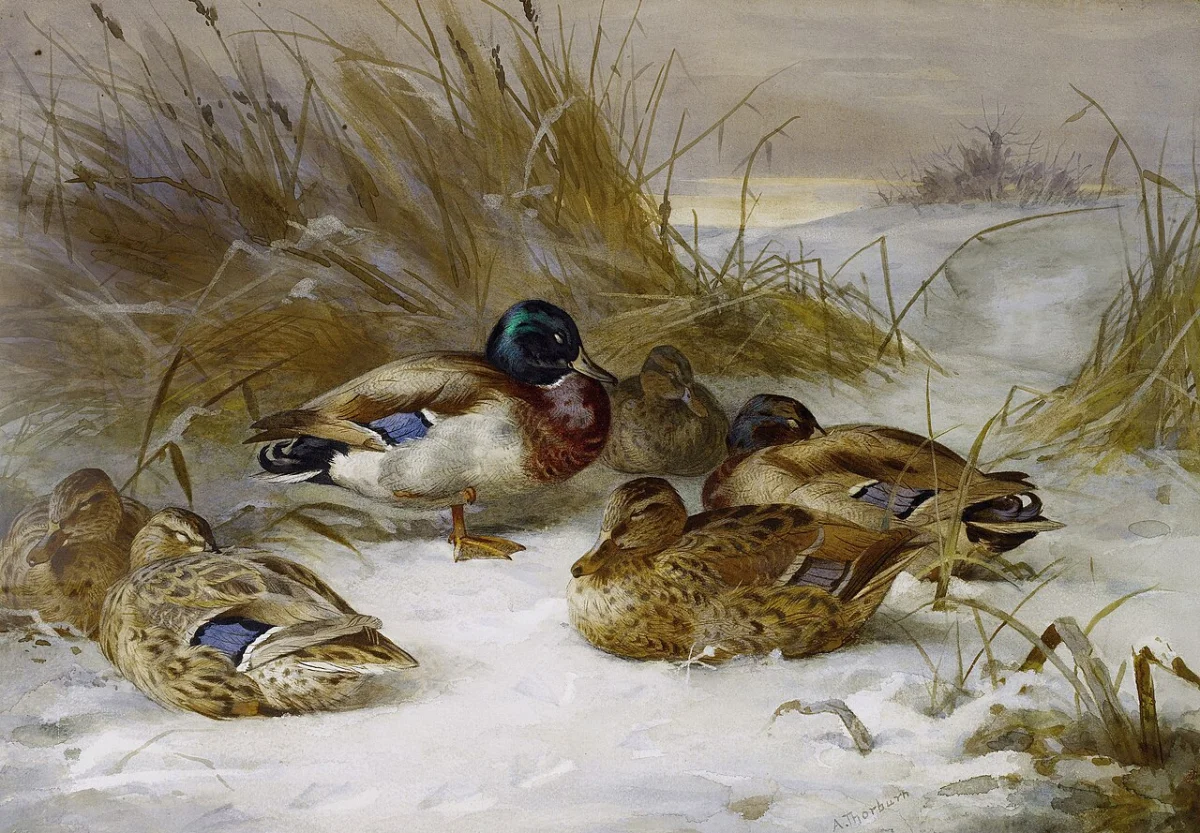
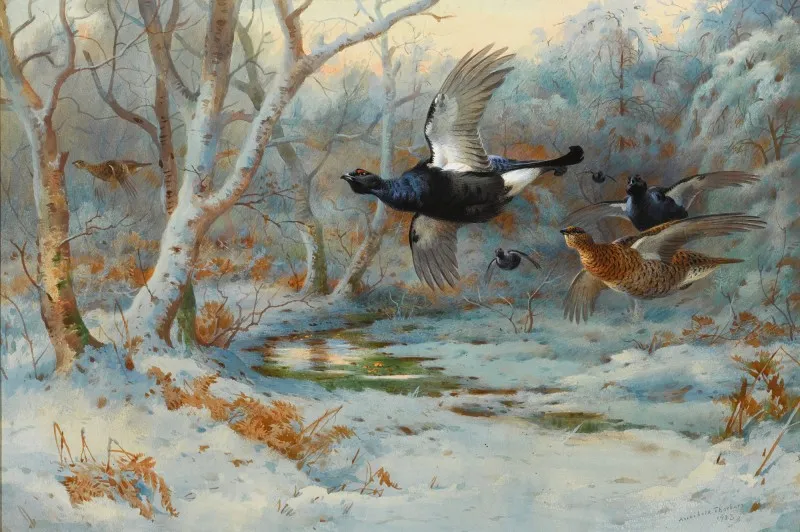
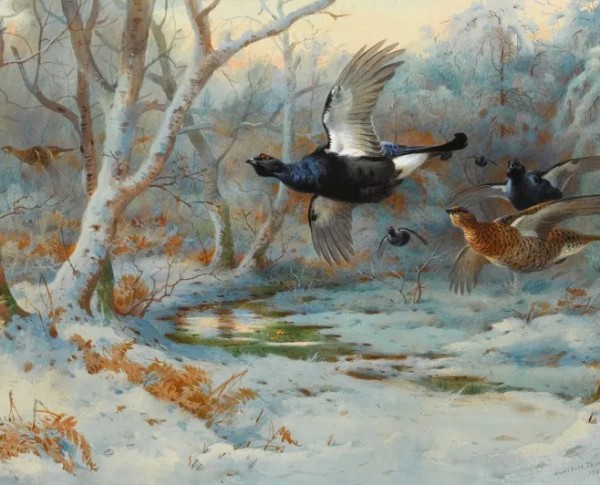
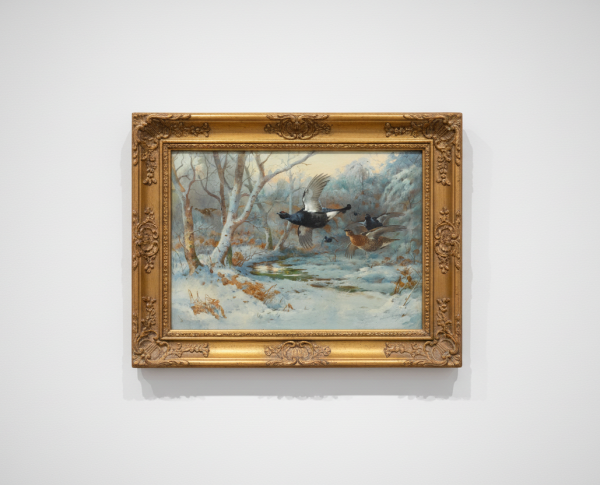
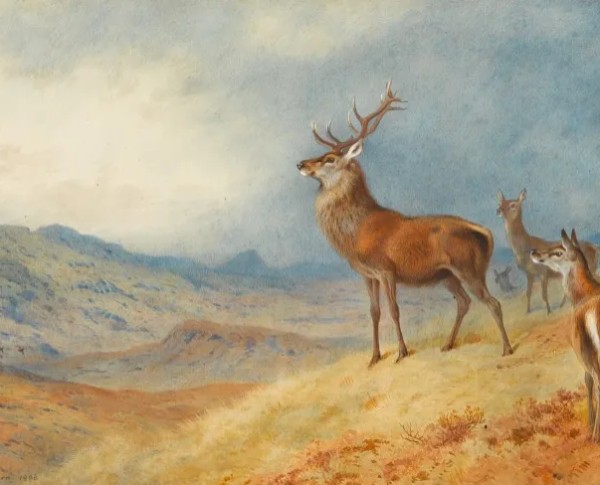
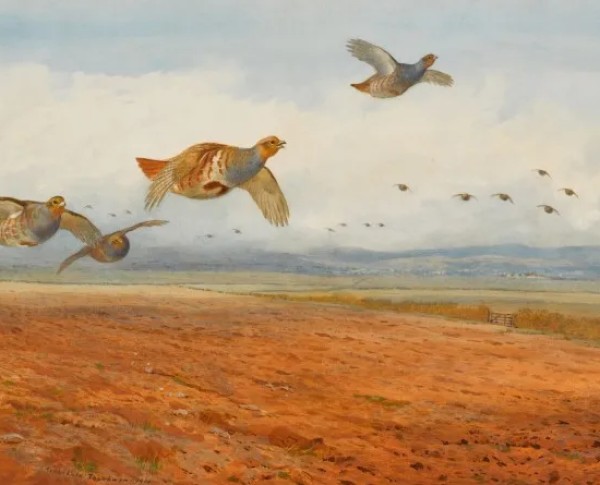
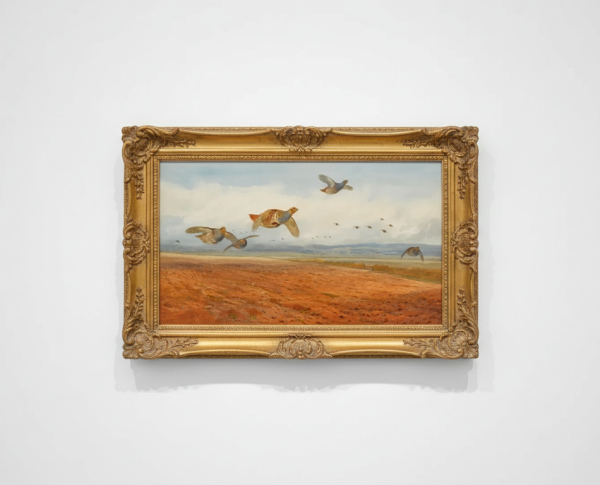
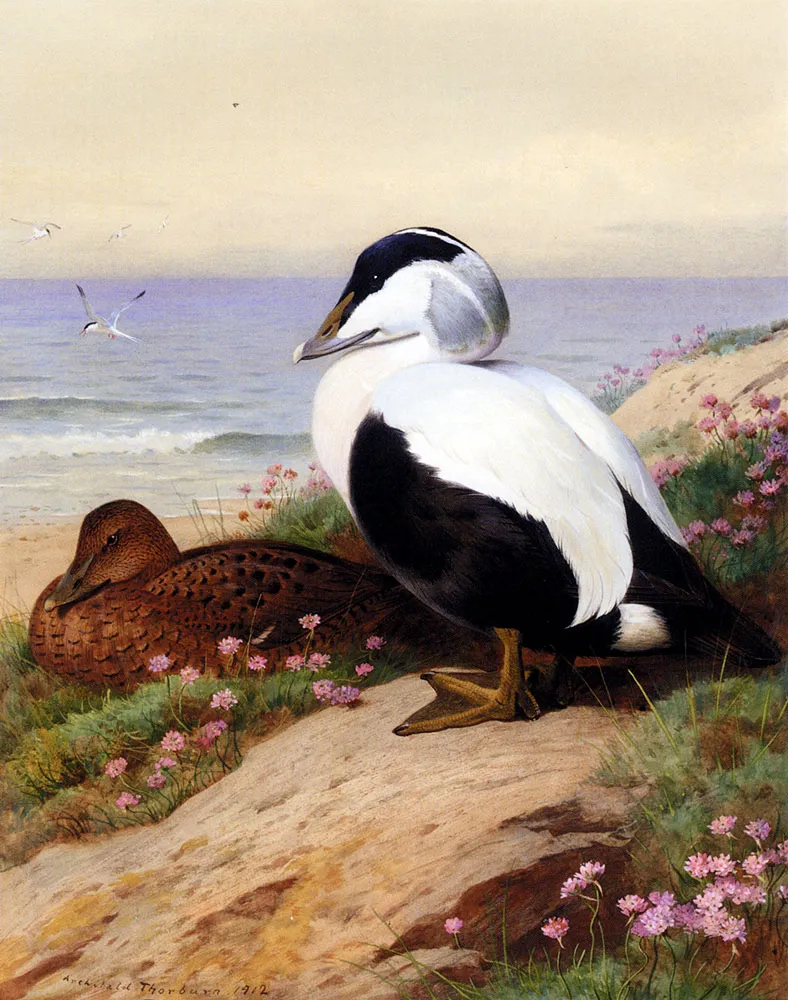
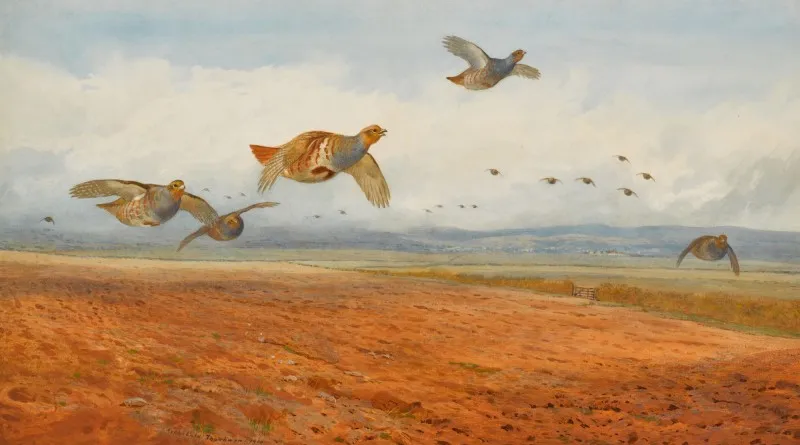
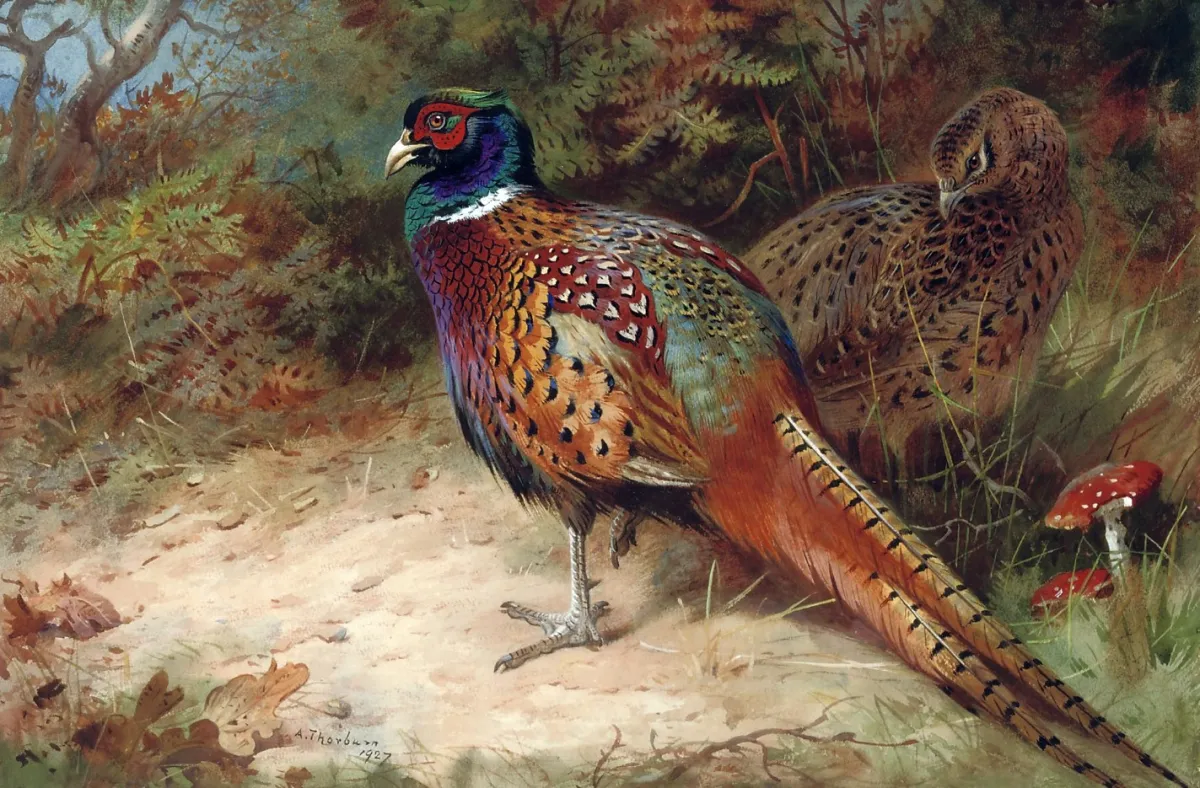
Thorburn’s mastery is evident in every stroke of "Common Eider Ducks," where the rich textures and lifelike colors reveal the artist’s expert handling of oil on canvas. The subtle interplay of light and shadow brings the ducks and their habitat to life, exemplifying the Naturalism movement’s focus on truthful depiction. Collectors of wildlife art may also appreciate related works such as "A Covey of Grey Partridge in Flight" and "Cock Grouse."
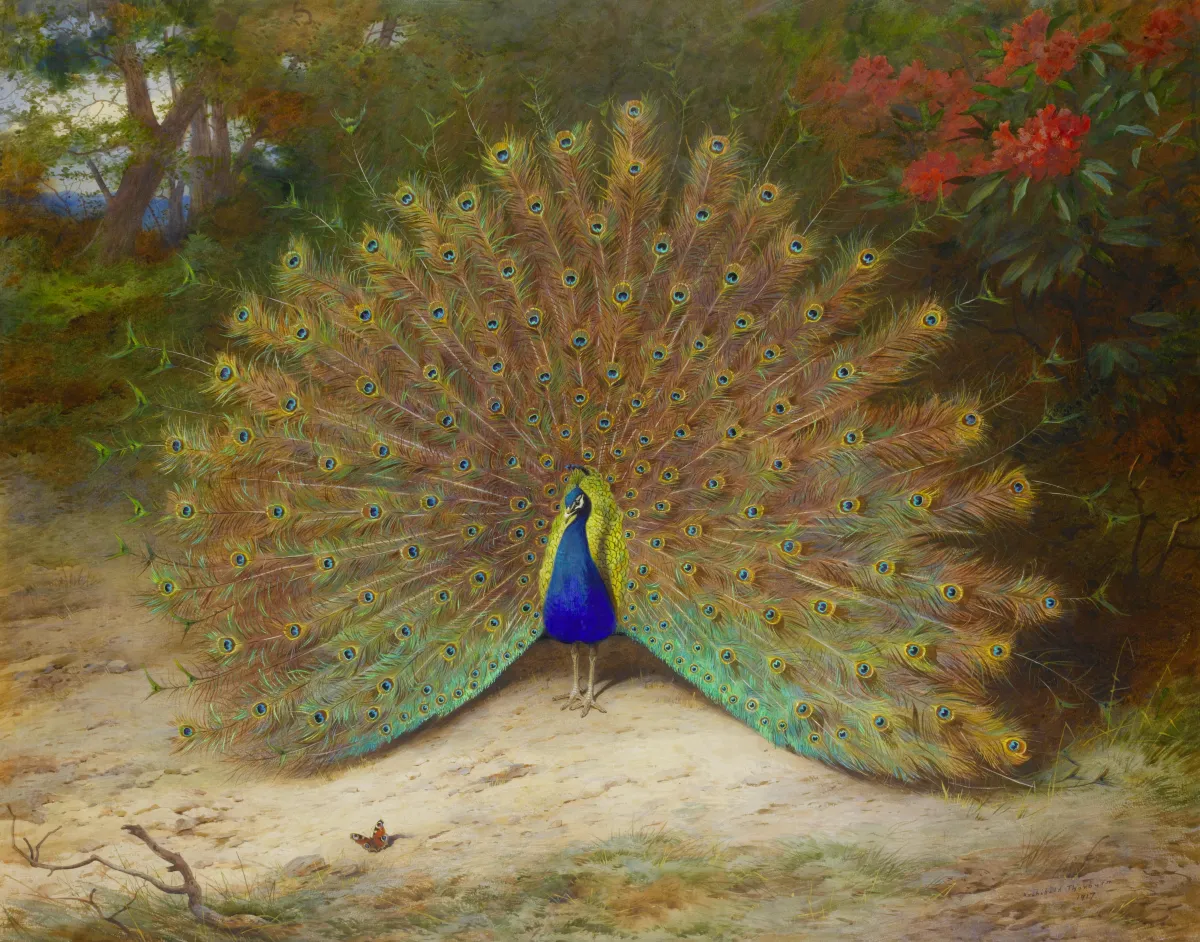
"Common Eider Ducks" goes beyond visual appeal, weaving stories of harmony and survival within its tranquil setting. In the tradition of Naturalism, Thorburn uses his fine art painting for sale to symbolize the delicate balance of nature. The careful arrangement of the ducks invites viewers to reflect on the interconnectedness of wildlife, much like his other pieces, including "Woodcock in a sandy hollow." and "Peacock and Peacock Butterfly."
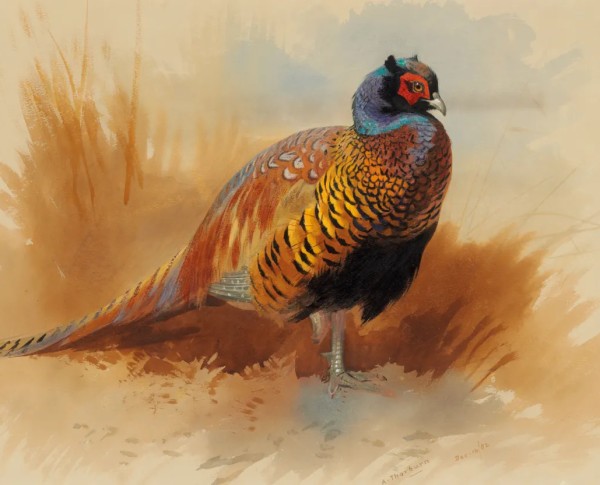
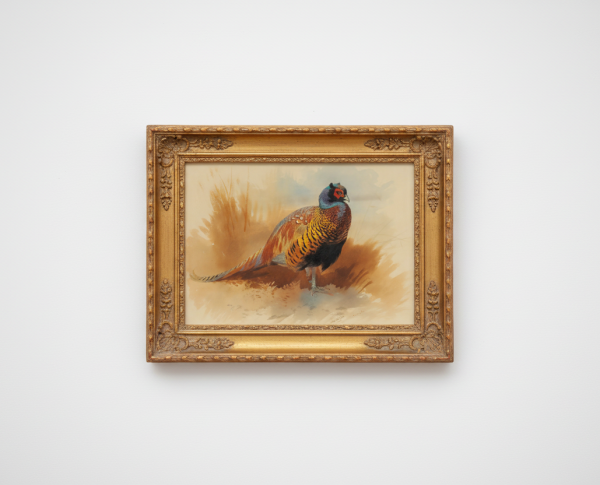
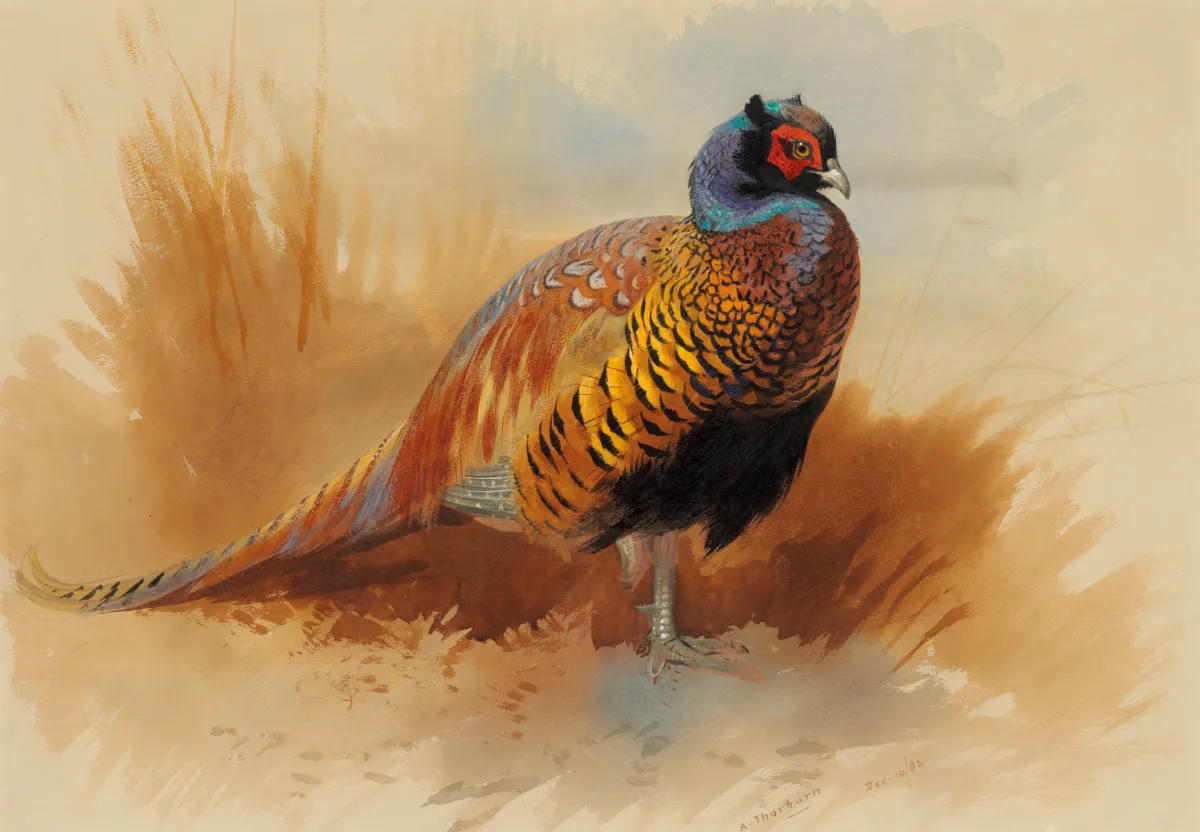
For art enthusiasts and collectors, "Common Eider Ducks" by Archibald Thorburn represents a valuable addition to any collection. This hand-painted oil painting, part of the revered Naturalism movement, offers both aesthetic beauty and historical significance. Those seeking to expand their collections may also consider related products, such as "Study of a cock pheasant" or "Peacock and Peacock Butterfly," each echoing Thorburn’s remarkable skill and passion for wildlife art.
When Art Meets History
"Common Eider Ducks" by Archibald Thorburn is a remarkable example of the Naturalism movement, capturing the intricate beauty of wildlife in its natural setting. Created as a hand-painted oil painting, this work reflects the late 19th-century fascination with realistic depictions of nature. Thorburn's dedication to authenticity places this piece alongside related paintings like "Portrait of Sarah Bernhardt" and "Joan Of Arc," celebrating both the artistry and historical context that define Naturalism’s enduring legacy.
Techniques That Speak
Archibald Thorburn’s mastery is evident in his use of oil on canvas, which brings the vibrant plumage and serene environment of the Common Eider Ducks to life. His brushwork, characteristic of the Naturalism movement, emphasizes precise detail and lifelike textures. Comparable to works such as "Émile Bastien-Lepage" and "An ethereal beauty with putti in the clouds," Thorburn’s technical prowess ensures each element of the scene is rendered with breathtaking clarity and realism.
Emotions on Display
The tranquil setting of "Common Eider Ducks" evokes a sense of peace and admiration for the natural world, hallmarks of Thorburn’s style. This fine art painting for sale seamlessly blends emotional resonance with visual storytelling, drawing viewers into the gentle rhythms of wildlife. Much like "Piet-Lataudrie, collector," Thorburn’s work invites contemplation and a deeper appreciation for nature’s quiet moments, making it a moving testament to the power of Naturalism.
Coveted by Collectors
"Common Eider Ducks" is highly sought after by art enthusiasts who appreciate the authenticity and beauty of the Naturalism movement. As a hand-painted oil painting, it stands out among fine art painting for sale, appealing to collectors who value both historical significance and artistic excellence. Alongside related masterpieces such as "Joan Of Arc" and "Émile Bastien-Lepage," Thorburn’s painting remains a prized addition to distinguished collections worldwide.
Related Naturalism Hand-Painted Oil Paintings by Other Artists
Other Famous Naturalism Artists:
Frequently Asked Questions About Common Eider Ducks
Who is the artist of Common Eider Ducks?
The painting Common Eider Ducks was created by the renowned British artist Archibald Thorburn, known for his detailed and lifelike representations of wildlife.
What is the historical significance of Archibald Thorburn's work?
Archibald Thorburn was a prominent figure in the late 19th and early 20th centuries, contributing significantly to the field of natural history illustration and influencing the genre of wildlife art.
What artistic techniques did Thorburn employ in Common Eider Ducks?
Thorburn utilized meticulous attention to detail, vibrant color palettes, and realistic textures to capture the essence of the Common Eider Ducks, reflecting his deep understanding of avian anatomy and behavior.
What themes are explored in Common Eider Ducks?
The painting explores themes of nature, wildlife conservation, and the beauty of avian life, emphasizing the importance of preserving natural habitats for future generations.
What symbolism is associated with ducks in art?
Ducks often symbolize adaptability, resourcefulness, and tranquility in art, representing the harmony of nature and the interconnectedness of life in aquatic ecosystems.
How does Common Eider Ducks reflect the artistic movements of its time?
The painting reflects the Naturalism movement, which emphasized accurate depictions of the natural world and a focus on realism, aligning with the broader trends in art during Thorburn's career.
What is the significance of the Common Eider Duck species in the context of the painting?
The Common Eider Duck is significant as it represents a species that thrives in coastal environments, highlighting the ecological diversity and the beauty of marine life that Thorburn sought to celebrate through his art.
Where can I find more information about Archibald Thorburn's contributions to wildlife art?
More information can be found in art history books, museum archives, and dedicated exhibitions that focus on Thorburn's works and his impact on wildlife conservation and artistic representation of nature.
What materials did Archibald Thorburn typically use for his paintings?
Thorburn primarily used watercolors and oils, which allowed him to achieve the delicate details and vibrant colors characteristic of his wildlife paintings.
How has Common Eider Ducks influenced contemporary wildlife artists?
The painting has inspired contemporary wildlife artists by setting a high standard for realism and detail, encouraging a continued appreciation for the natural world and the importance of conservation in artistic expression.























_GFM_Painting_(1).webp)


 100% Hand-Painted: Finished in 3-6 Weeks

.png)















_(1).webp)