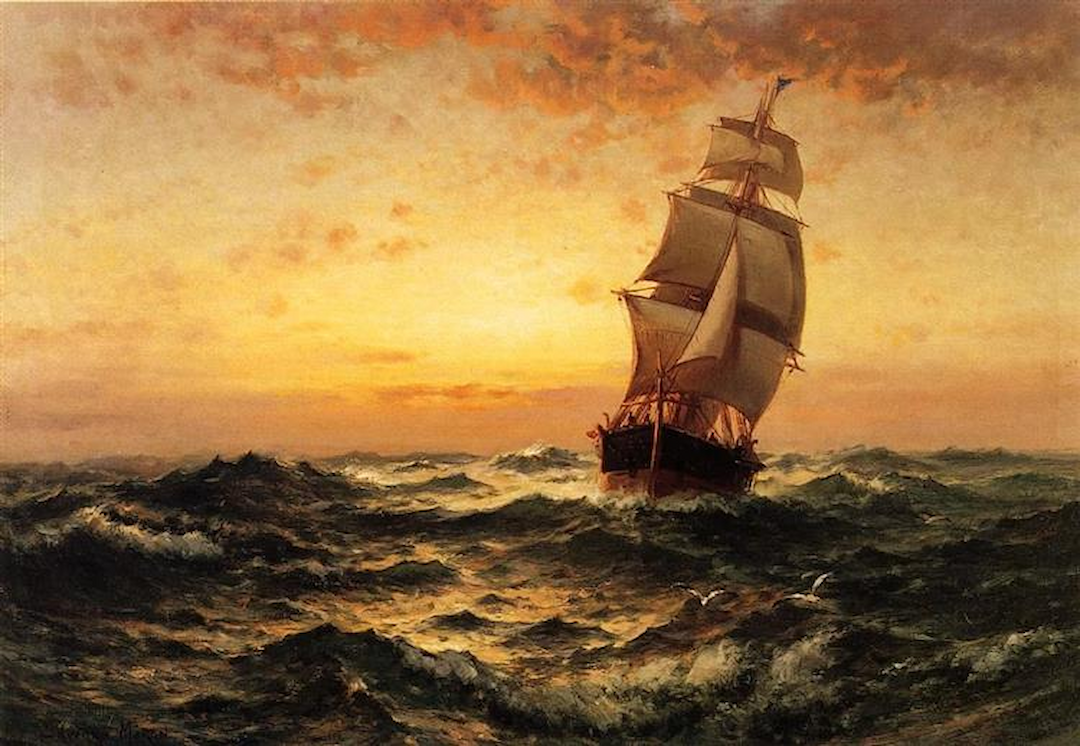
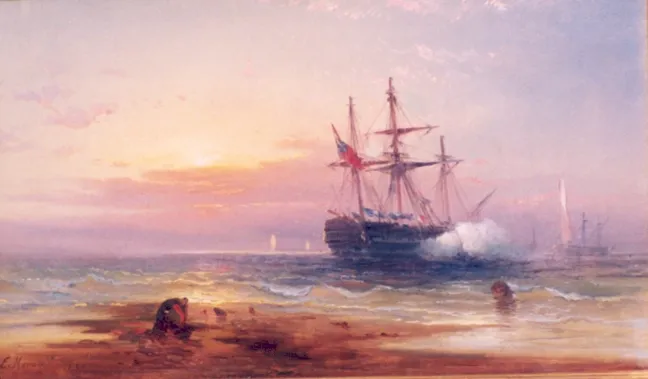
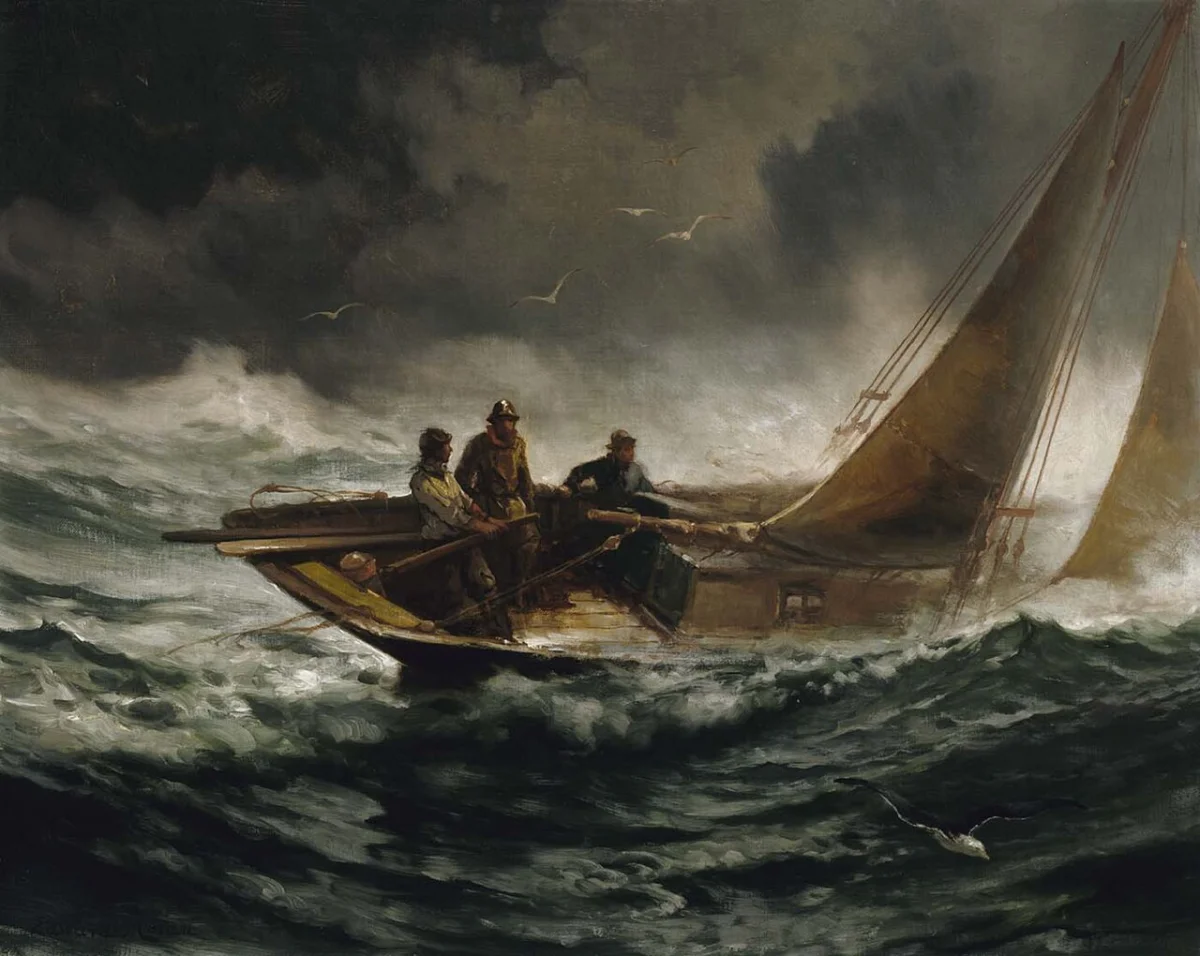
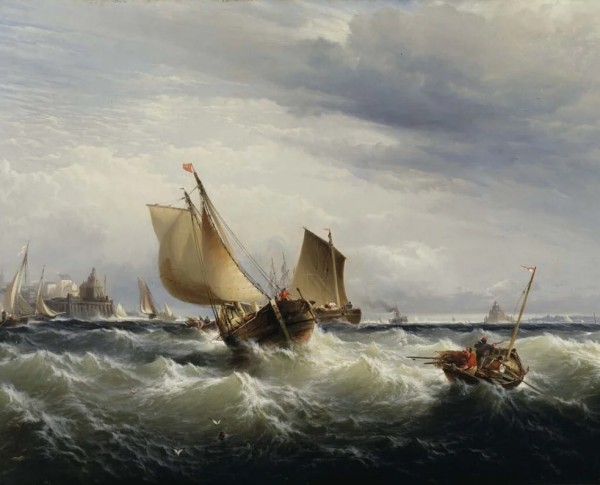
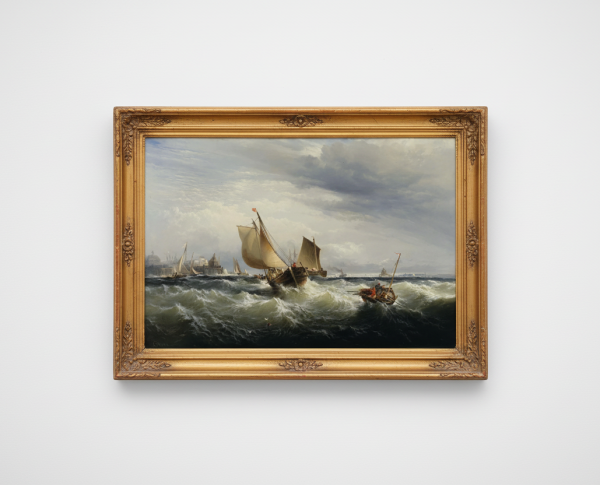
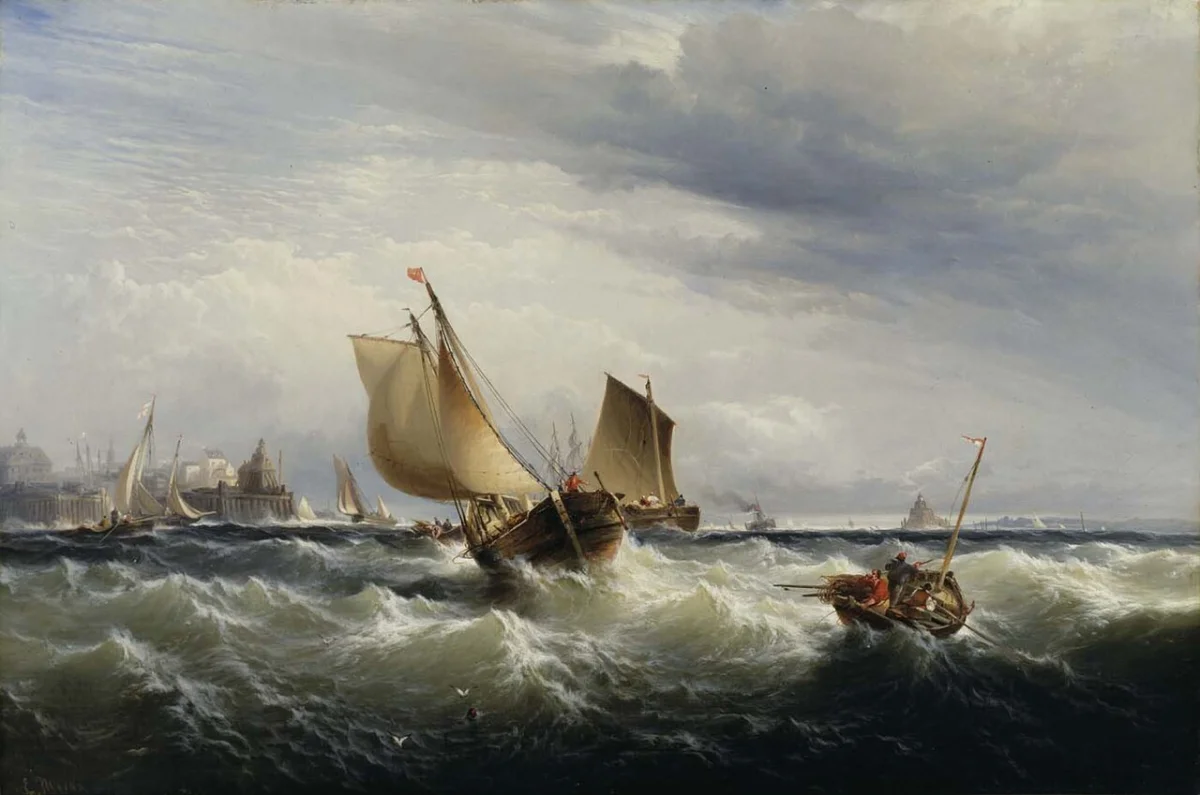
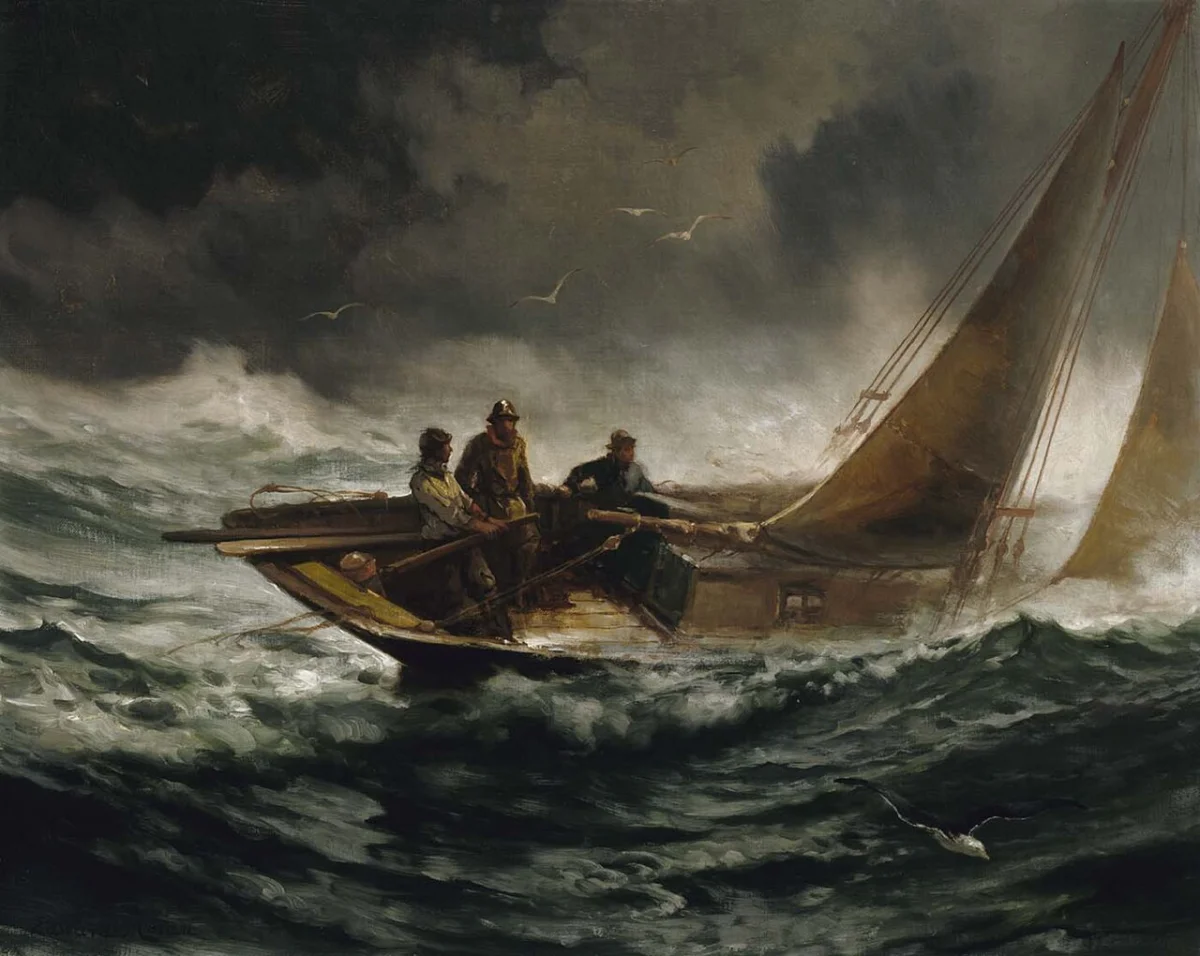
Edward Moran’s attention to detail in "Fishing Boats Beating up to Windward" reveals his profound skill with oil on canvas. The dynamic brushwork and vibrant colors evoke the movement of wind and water, hallmarks of the Romanticism era. Each element is rendered with care, making this oil on canvas a standout piece. Collectors often pair it with related products such as "Marine," "Ship at Sea," or "Sunset" to enhance their collections.
"Fishing Boats Beating up to Windward" by Edward Moran is more than just a fine art painting for sale; it’s a visual narrative of human resilience against nature’s forces. The Romanticism movement is evident through the emotional intensity of the scene. Symbols like the determined boats and turbulent sea create a timeless story. Art enthusiasts often complement this work with related products such as "Marine," "Ship at Sea," and "Sunset" for a cohesive maritime theme.
For collectors, owning "Fishing Boats Beating up to Windward" by Edward Moran is an opportunity to possess a hand-painted oil painting that epitomizes Romanticism. Its rich textures and evocative seascape make it a centerpiece in any collection. This fine art painting for sale is often sought alongside related products like "Marine," "Ship at Sea," and "Sunset," allowing collectors to celebrate Moran’s enduring legacy and the timeless allure of the sea.
When Art Meets History
"Fishing Boats Beating up to Windward" by Edward Moran is a remarkable example of the Romanticism movement, capturing the spirit of 19th-century seafaring life. This hand-painted oil painting immerses viewers in the historical context of maritime adventures, much like its contemporaries "Dawn at the Alamo" and "Ancient Rome; Agrippina Landing with the Ashes of Germanicus." Moran’s work stands as a testament to his era, blending artistic mastery with the dynamic history of his time.
Techniques That Speak
Edward Moran’s "Fishing Boats Beating up to Windward" demonstrates masterful use of oil on canvas, a technique that gives the painting its vivid textures and luminous sea. The movement of the boats and play of light are reminiscent of other Romantic works such as "The Fighting Temeraire" and "The Fighting 'Téméraire' tugged to her last Berth to be broken up." Moran’s brushwork brings the churning waters and billowing sails to life, showcasing his technical prowess.
Emotions on Display
Within "Fishing Boats Beating up to Windward," the viewer experiences a surge of emotion, from the tension of battling the wind to the hope embodied by the fishermen. This fine art painting for sale is evocative of the Romanticism movement’s focus on the sublime and the power of nature. Like "Pietro Rossi prisonner of the Scaligeri," Moran’s work captures the raw, emotional intensity that defines the best of 19th-century art.
Coveted by Collectors
"Fishing Boats Beating up to Windward" remains highly sought after by art enthusiasts and collectors, thanks to its status as a quintessential Romantic hand-painted oil painting. Edward Moran’s unique vision and technical skill place this masterpiece alongside celebrated works like "Dawn at the Alamo" and "The Fighting Temeraire." Collectors value this painting for its historical significance, emotional resonance, and enduring appeal within the world of fine art painting for sale.
Related Romanticism Hand-Painted Oil Paintings by Other Artists
Other Famous Romanticism Artists:
Frequently Asked Questions About Fishing Boats Beating up to Windward
What is the historical significance of "Fishing Boats Beating up to Windward"?
This painting by Edward Moran captures the essence of maritime life in the late 19th century, reflecting the importance of fishing as a livelihood and the challenges faced by fishermen in navigating the elements.
What artistic techniques did Edward Moran employ in this painting?
Moran utilized a combination of realism and impressionism, employing dynamic brushwork and a vibrant color palette to convey the movement of the boats and the turbulent sea, creating a sense of immediacy and drama.
What symbolism can be found in "Fishing Boats Beating up to Windward"?
The fishing boats symbolize resilience and determination, as they struggle against the wind, representing the broader human struggle against nature and the pursuit of sustenance and survival.
How does this painting reflect the maritime culture of the time?
The artwork reflects the maritime culture of the late 1800s, showcasing the significance of fishing in coastal communities and the relationship between humans and the sea, which was both a source of livelihood and a formidable force.
What role did Edward Moran play in the American art scene?
Edward Moran was a prominent figure in American art, known for his marine paintings and contributions to the Hudson River School movement, which emphasized the beauty of nature and the American landscape.
What can be said about the composition of the painting?
The composition features a dynamic arrangement of boats battling against the wind, with a dramatic sky and turbulent waters that draw the viewer's eye, creating a sense of movement and tension within the scene.
How does the painting reflect the challenges faced by fishermen?
The depiction of the boats struggling against the wind symbolizes the physical and environmental challenges fishermen faced, highlighting the dangers of the sea and the skill required to navigate it successfully.
In what ways does this painting exemplify the Romantic movement in art?
This painting exemplifies the Romantic movement through its emphasis on emotion, nature, and the sublime, capturing the power of the sea and the human spirit's endurance in the face of adversity.
What influence did Edward Moran's background have on his work?
Edward Moran's background as the son of a shipbuilder and his upbringing in a maritime environment deeply influenced his work, instilling in him a profound appreciation for the sea and its portrayal in art.
How has "Fishing Boats Beating up to Windward" been received by art critics and historians?
The painting has been well-received by art critics and historians, who praise its technical skill and emotional depth, recognizing it as a significant contribution to American marine painting and a reflection of its time.






















_GFM_Painting_(1).webp)


 100% Hand-Painted: Finished in 3-6 Weeks

.png)















_(1).webp)