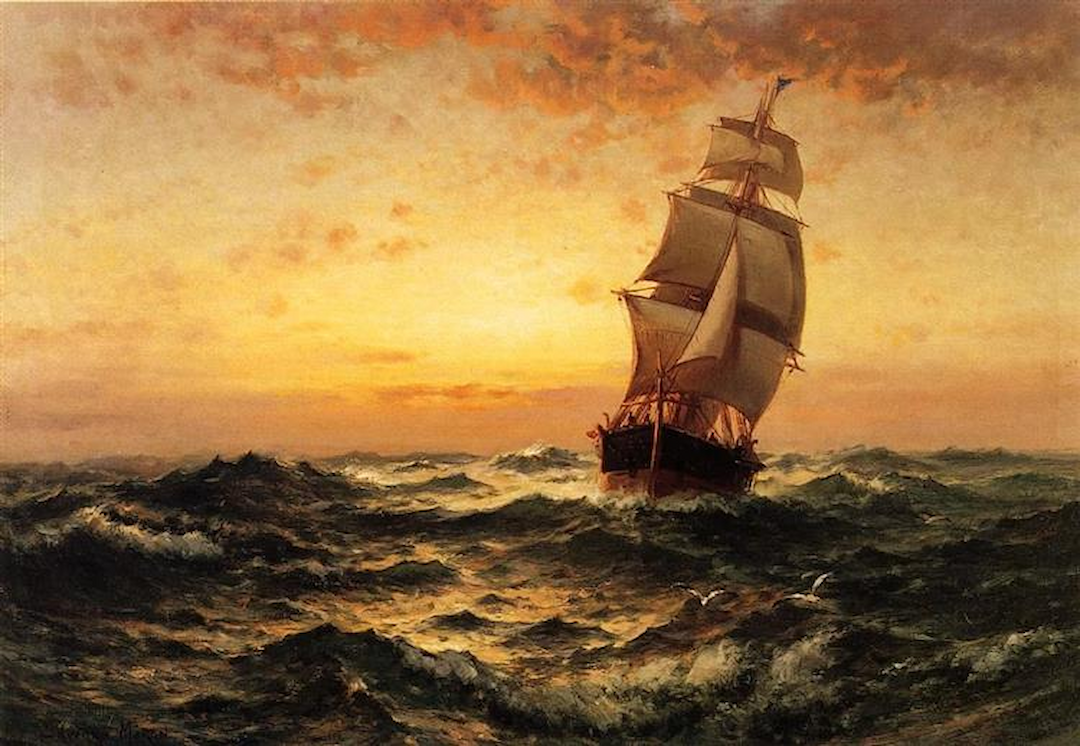
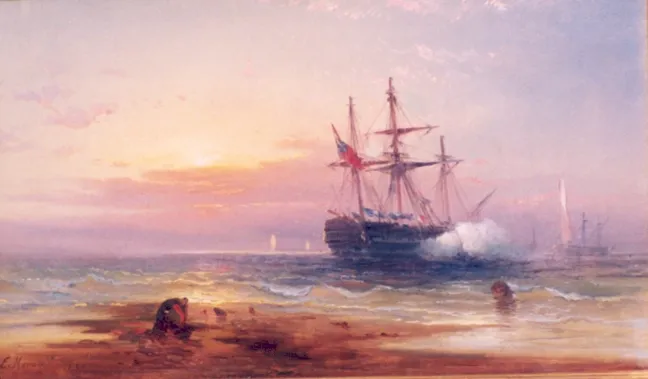
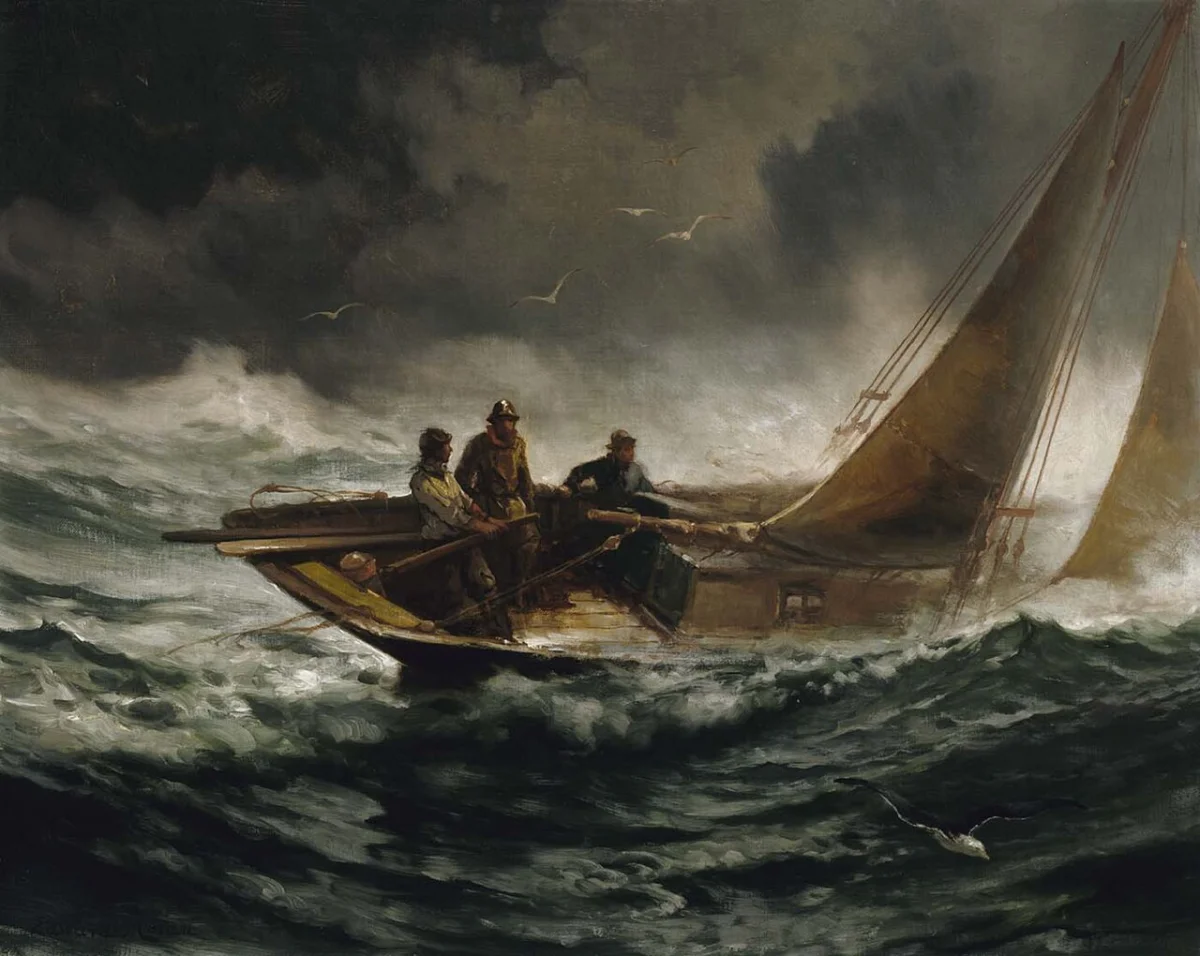
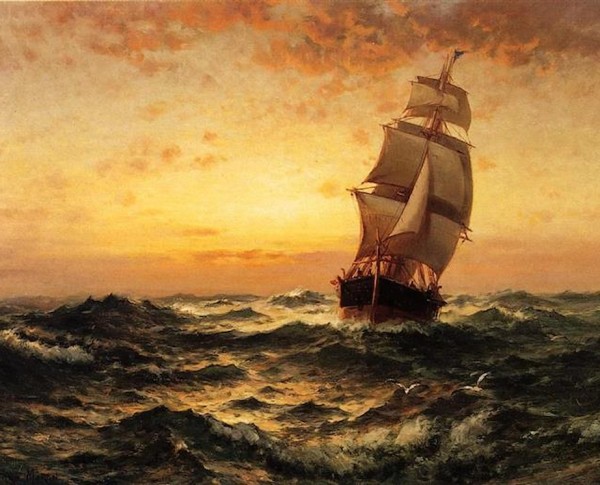
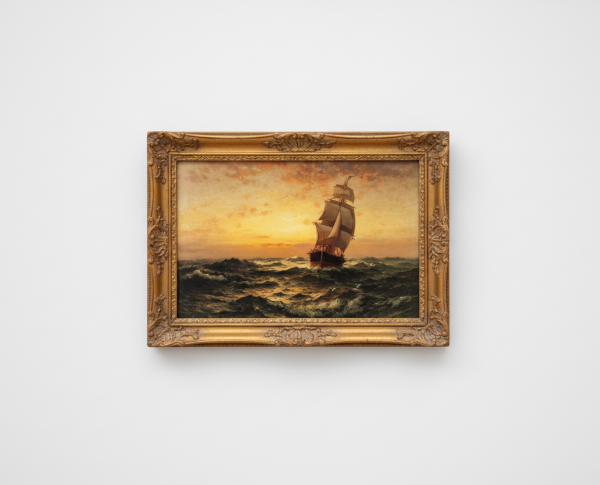
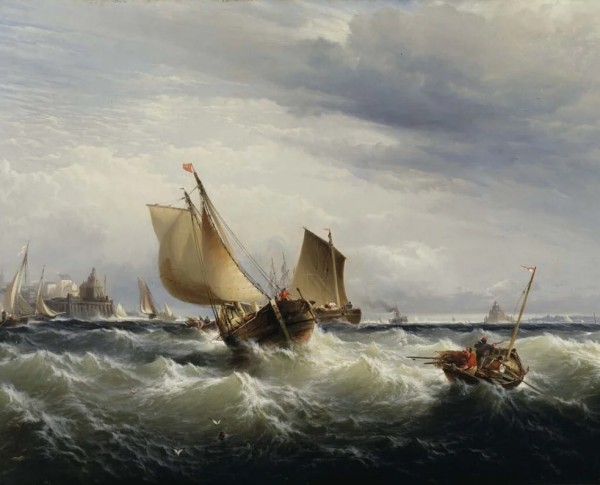
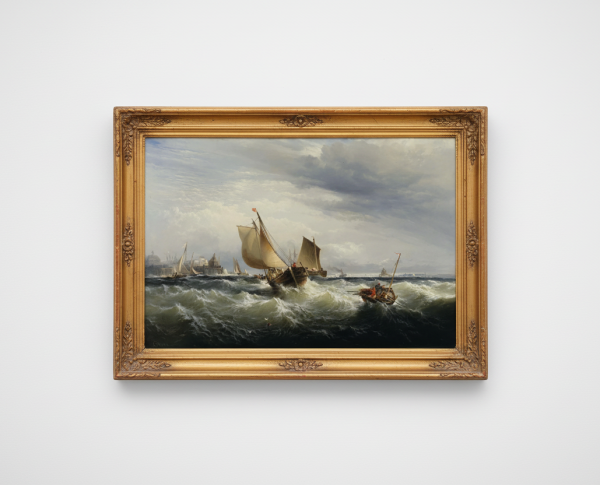
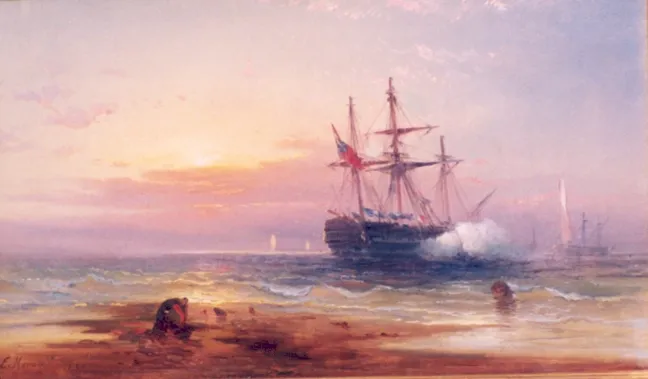
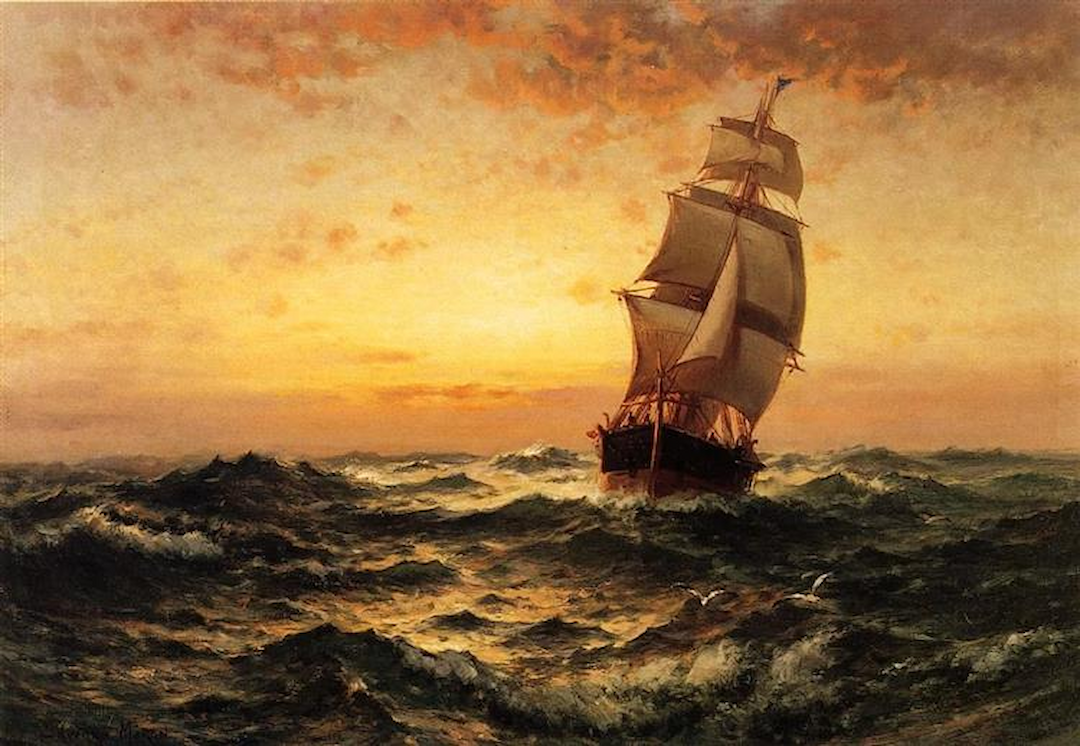
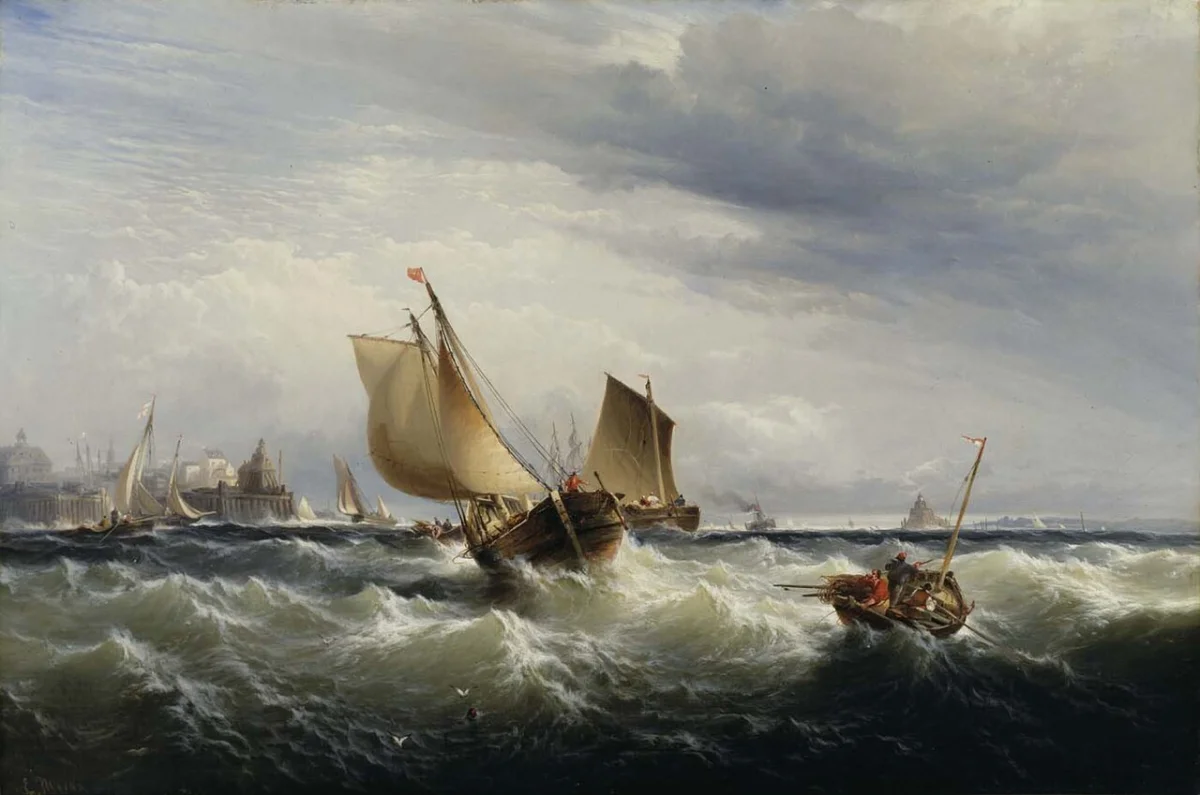
With “Salute at Sunset,” Edward Moran demonstrates remarkable technique through his use of oil on canvas, giving life to the luminous sunset and majestic vessels. The mastery in every stroke is evident, echoing the Romanticism movement’s emphasis on emotion and nature’s power. Moran’s attention to light and atmosphere is also found in related works such as “Fishing Boats Beating up to Windward” and “Marine,” making this piece a must-have for those who appreciate maritime artistry.
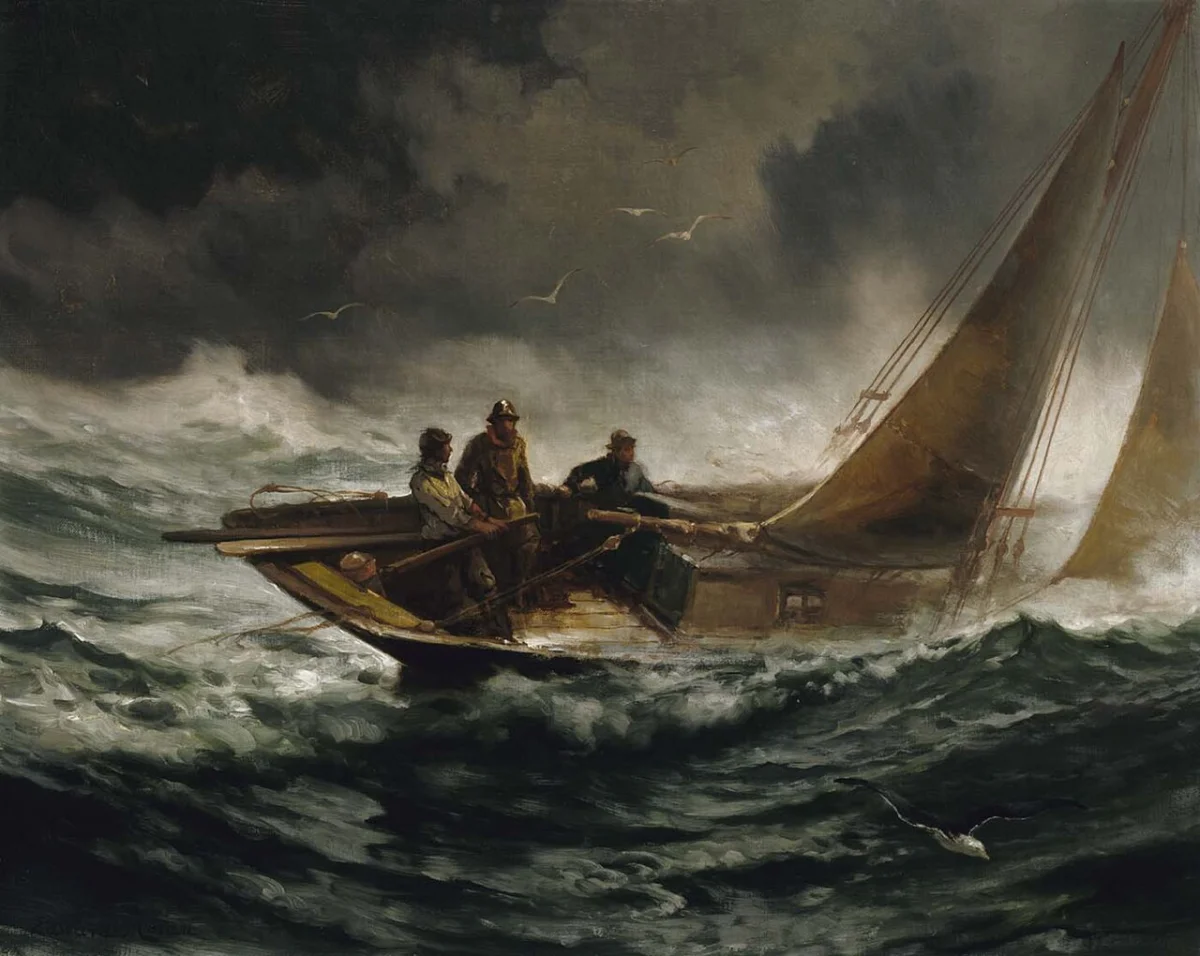
Within “Salute at Sunset,” Edward Moran weaves a narrative rich with symbolism, typical of Romanticism-era fine art painting for sale. The ship’s salute and the glowing horizon convey themes of adventure, hope, and farewell. Similar motifs appear in Moran’s “Riding out a Gale” and “Fishermans Home,” inviting viewers to reflect on the human connection to the sea. Each element in the composition tells a story, making this painting a conversation starter in any collection.
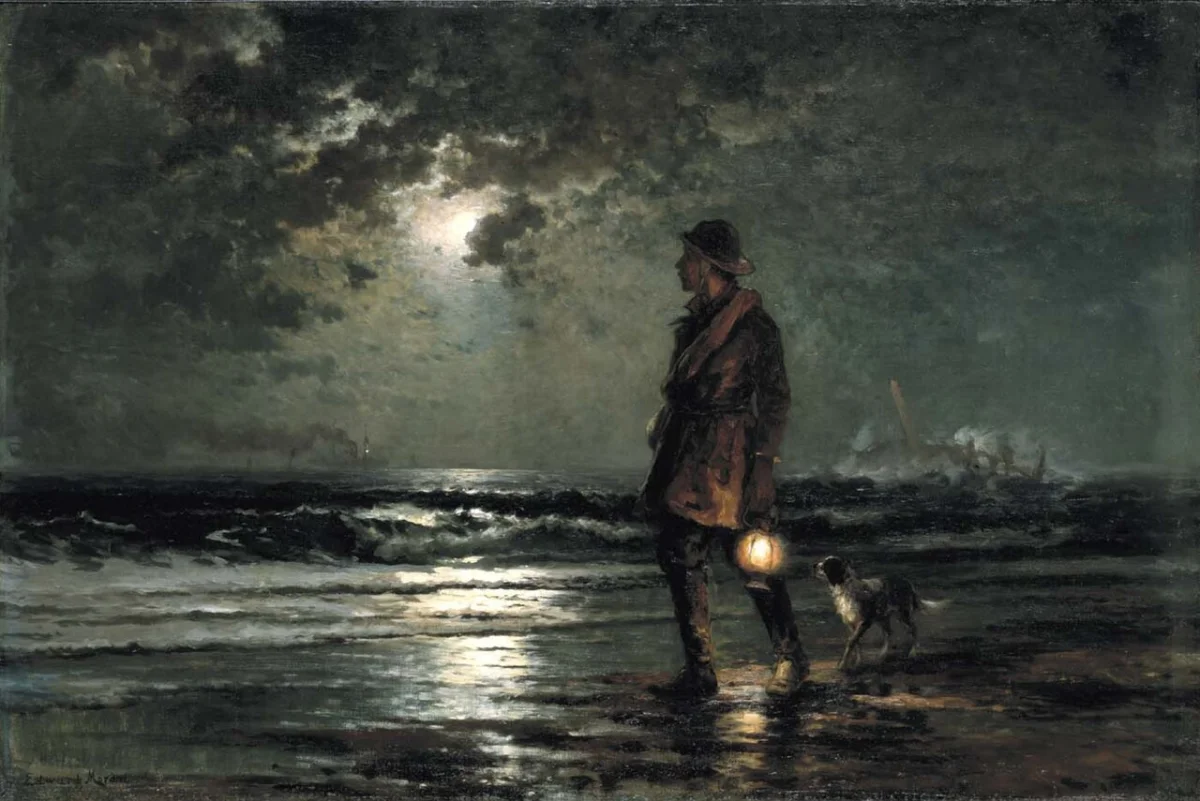
For art collectors seeking a distinguished addition, “Salute at Sunset” by Edward Moran is an exceptional hand-painted oil painting. As a standout among Romanticism works, it complements related products like “Brig off Sandy Hook” and “Life Saving Patrol.” The timeless beauty and expert craftsmanship make it a coveted fine art painting for sale, perfect for enhancing any space with maritime elegance and historical significance. Moran’s legacy endures through this remarkable piece.
When Art Meets History
"Salute at Sunset" by Edward Moran stands as a prime example of the Romanticism movement, capturing a dramatic moment in maritime history. This hand-painted oil painting transports viewers to a world where ships and sunsets intertwine, reflecting the artist’s fascination with nautical themes. Moran’s work, much like "In the Forest" and "The March of Silenus," highlights significant historical narratives, making "Salute at Sunset" a must-see for enthusiasts who appreciate the intersection of art and history.
Techniques That Speak
Edward Moran’s mastery in "Salute at Sunset" is evident in his use of oil on canvas, a favorite medium among Romanticism artists. The painting showcases vibrant hues and dynamic brushwork, skillfully rendering the shimmering water and glowing sky. Comparable to the techniques seen in "Sappho at Leucate" and "Portrait of Louis-Marie-Joseph, comte de Brigode-Kemlandt," Moran’s approach brings the maritime scene to life, inviting viewers to experience the technical brilliance behind this celebrated artwork.
Emotions on Display
"Salute at Sunset" exudes the emotional intensity characteristic of Romanticism, with Edward Moran capturing the fleeting beauty of dusk and the solemnity of a maritime salute. The painting’s atmosphere evokes feelings of nostalgia and reverence, much like the emotive qualities found in "School Rules" and "Sappho at Leucate." This fine art painting for sale resonates with collectors and admirers who seek to connect with the deep emotional currents that flow through Moran’s evocative compositions.
Coveted by Collectors
Collectors highly prize "Salute at Sunset" for its historical significance and artistic merit within the Romanticism movement. As a hand-painted oil painting by Edward Moran, it shares company with renowned works like "In the Forest" and "The March of Silenus." The rarity and allure of such pieces make them sought-after treasures in the world of fine art painting for sale, ensuring their enduring appeal among both seasoned and emerging art collectors.
Related Romanticism Hand-Painted Oil Paintings by Other Artists
Other Famous Romanticism Artists:
Frequently Asked Questions About Salute at Sunset
What is the historical context of "Salute at Sunset"?
"Salute at Sunset" was painted by Edward Moran during the late 19th century, a period characterized by a growing interest in maritime themes and the romanticization of sea life in American art.
What artistic techniques did Edward Moran use in this painting?
Moran employed a combination of realism and impressionism, utilizing vibrant colors and dynamic brushwork to capture the play of light on water and the atmospheric effects of sunset.
What is the significance of the sunset in "Salute at Sunset"?
The sunset symbolizes transition and reflection, often interpreted as a metaphor for the passage of time and the beauty found in fleeting moments.
How does "Salute at Sunset" reflect the maritime culture of the time?
The painting captures the essence of maritime culture, showcasing the importance of naval power and the romantic allure of the sea during a time when America was expanding its naval presence.
What elements in the painting convey a sense of tranquility?
The calm waters and soft hues of the sunset create a serene atmosphere, inviting viewers to reflect on the peaceful coexistence of nature and human activity.
What role do the ships play in the composition of "Salute at Sunset"?
The ships serve as focal points that draw the viewer's eye, symbolizing human endeavor and exploration, while also enhancing the narrative of maritime life.
How does Moran's background influence the themes in "Salute at Sunset"?
As a prominent marine painter, Moran's background and experiences at sea deeply influenced his work, allowing him to authentically portray the beauty and challenges of maritime life.
What emotions does "Salute at Sunset" evoke in viewers?
The painting evokes feelings of nostalgia and admiration for nature, encouraging viewers to appreciate the beauty of the natural world and the human connection to the sea.
In what ways does "Salute at Sunset" exemplify 19th-century American art?
The painting exemplifies 19th-century American art through its focus on landscape and maritime themes, reflecting the national identity and the romantic ideals of the time.
What are the key symbols present in "Salute at Sunset"?
Key symbols include the sunset, representing change; the ships, symbolizing adventure and exploration; and the calm waters, reflecting peace and harmony with nature.






















_GFM_Painting_(1).webp)


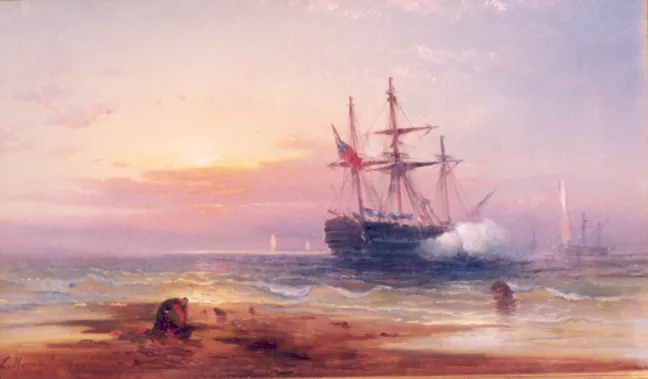
 100% Hand-Painted: Finished in 3-6 Weeks

.png)

















_(1).webp)