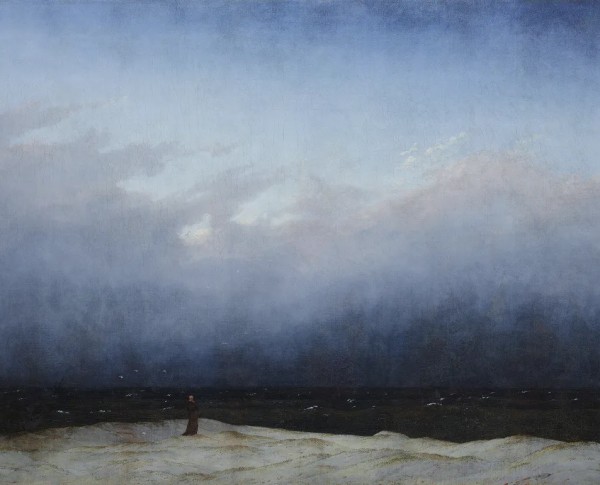
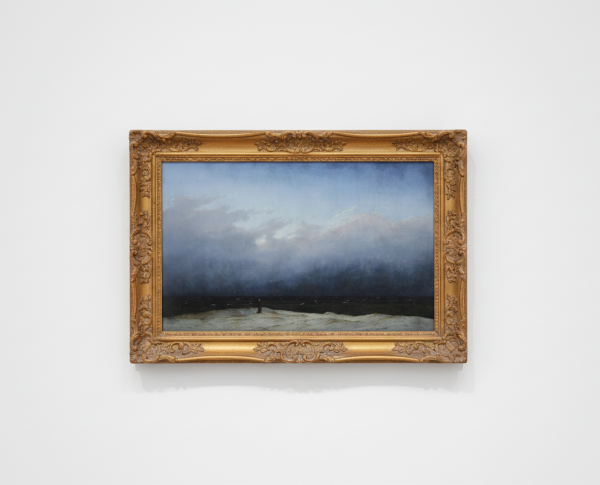
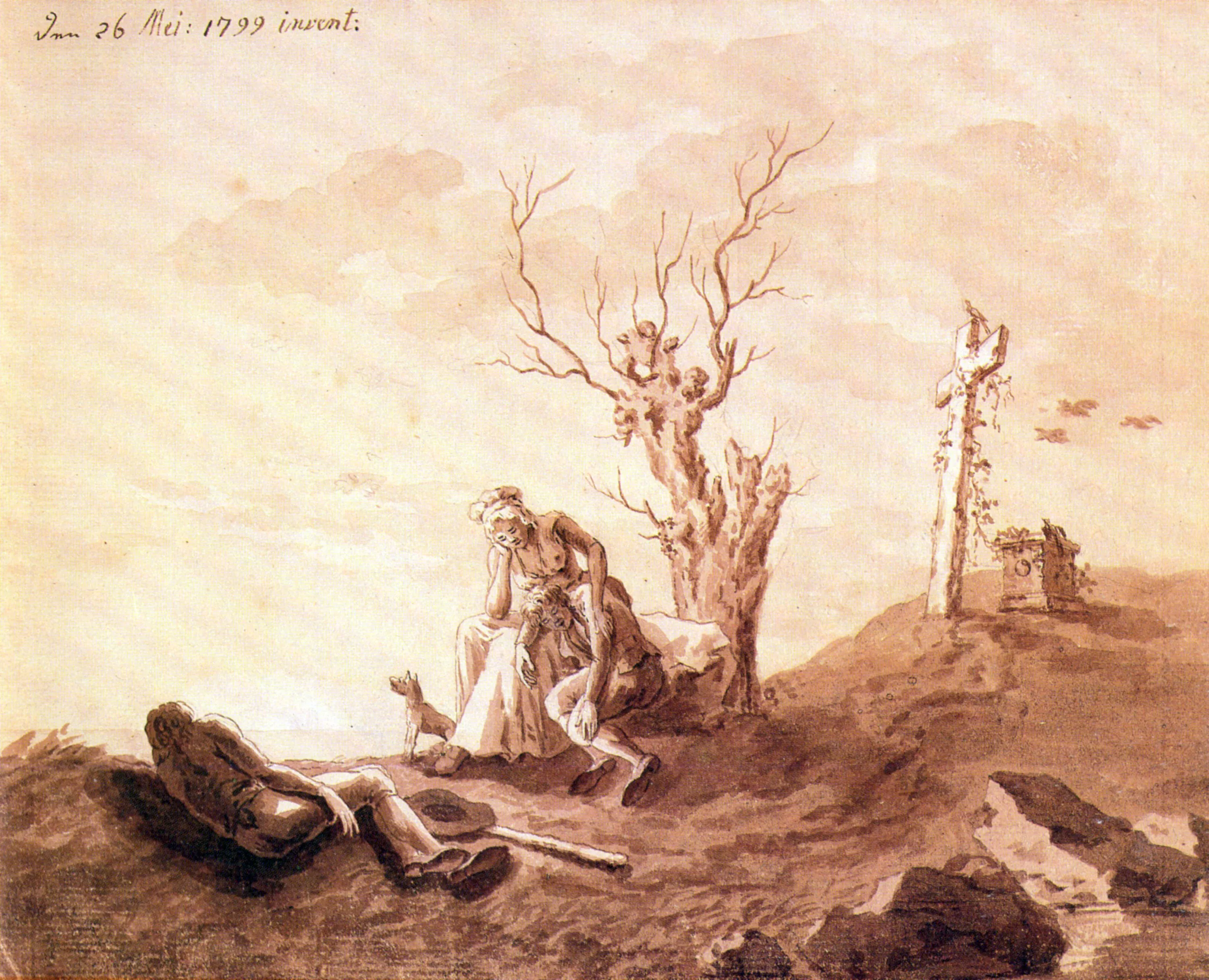
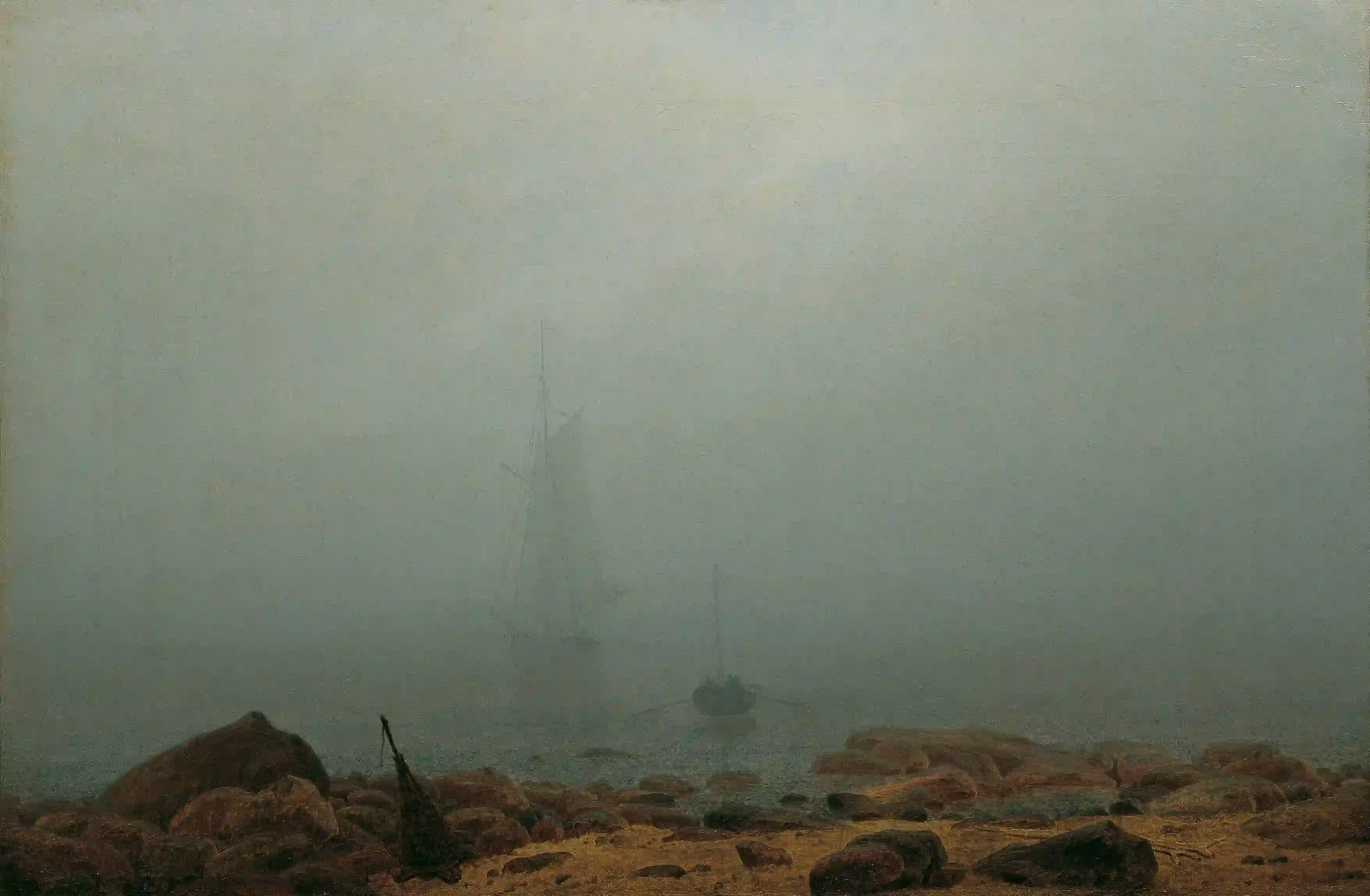
Caspar David Friedrich’s "Funeral scene at the beach" exemplifies the meticulous technique and atmospheric nuance characteristic of oil on canvas. The painting’s subtle hues and intricate details immerse viewers in the tranquil yet somber beach setting. As a cornerstone of Romanticism, it stands among other works like "Wolves in the Forest in Front of a Cave" and "Fog," each displaying Friedrich’s ability to convey emotion through landscape in oil on canvas.
Within "Funeral scene at the beach," Friedrich weaves profound symbolism, using the shoreline as a metaphor for life’s transitions—a hallmark of Romanticism. The figures and setting invite reflection on mortality and hope, themes echoed in related works such as "The Wanderer above the Mists 1817-18" and "Mountain Landscape with Rainbow." Collectors seeking a hand-painted oil painting that tells a story will find this fine art painting for sale particularly compelling.
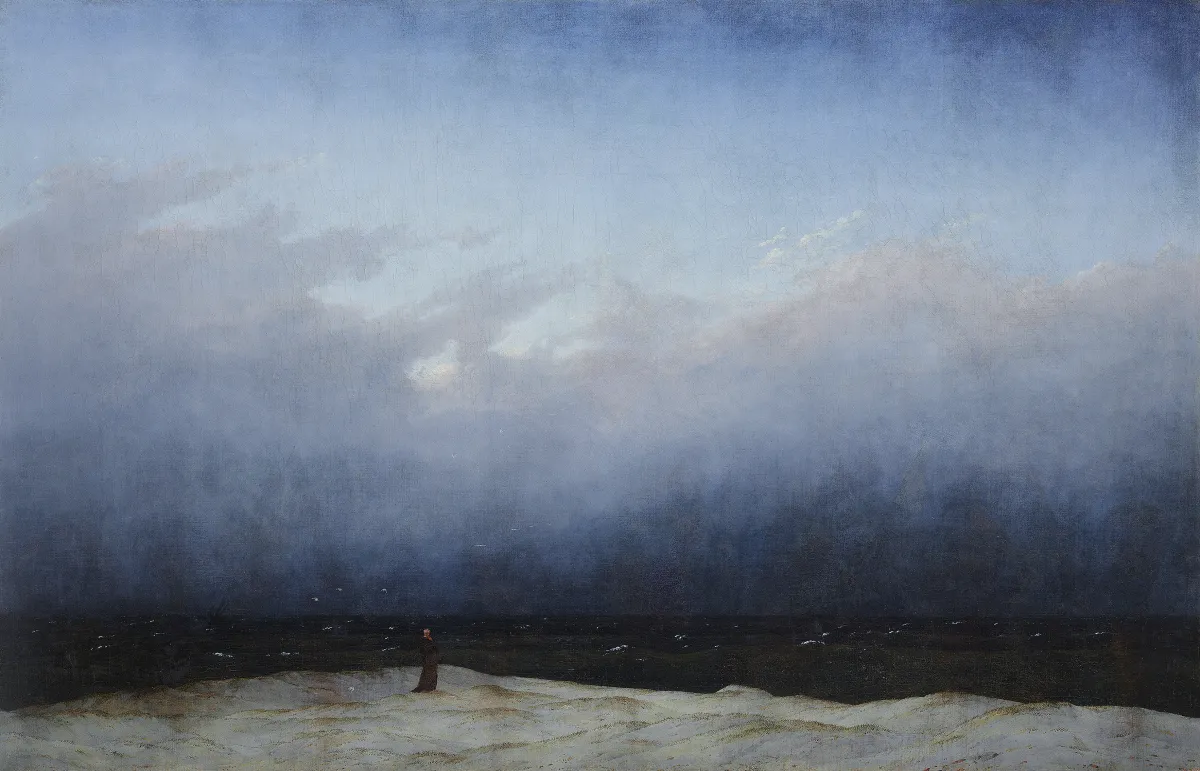
Owning "Funeral scene at the beach" by Caspar David Friedrich means possessing a piece of Romanticism’s rich history. This hand-painted oil painting is a testament to Friedrich’s influence and vision, complementing collections that include "The Monk by the Sea" and "Fog." For those searching for a fine art painting for sale, this evocative work offers both aesthetic beauty and historical significance, making it a prized addition to any refined gallery or private collection.
When Art Meets History
Caspar David Friedrich’s “Funeral scene at the beach” exemplifies the Romanticism movement, where artists captured profound human experiences against dramatic landscapes. This hand-painted oil painting reflects the era’s fascination with mortality and nature’s sublime power. Like his other works such as “In the Forest” and “Salisbury Cathedral from the Meadows,” Friedrich’s art connects viewers to historical contexts, evoking the timelessness of grief and remembrance. His mastery continues to inspire those seeking meaningful connections through art.
Techniques That Speak
Friedrich’s “Funeral scene at the beach” demonstrates his signature oil on canvas technique, using nuanced brushwork to create atmospheric depth and emotion. The interplay between light and shadow, characteristic of Romanticism, is also seen in masterpieces like “The Fighting Temeraire” and “Ancient Rome; Agrippina Landing with the Ashes of Germanicus.” These techniques allow Friedrich to convey a sense of solemnity and grandeur, inviting viewers to explore the spiritual dimensions of landscape painting.
Emotions on Display
In “Funeral scene at the beach,” Caspar David Friedrich channels the melancholic beauty of farewell, drawing viewers into a contemplative state. The fine art painting for sale captures the somber mood with muted tones and expressive figures, much like the emotional resonance found in “Portrait of Antoniet Vitali Sola.” Friedrich’s Romanticism invites us to reflect on life’s transience, using the vastness of nature as a backdrop to deeply personal and universal emotions.
Coveted by Collectors
Collectors highly value “Funeral scene at the beach” for its evocative portrayal of human experience and its place within Friedrich’s Romanticism oeuvre. As with related works such as “Salisbury Cathedral from the Meadows,” this hand-painted oil painting holds a special allure for art enthusiasts seeking historically significant pieces. The enduring appeal of Friedrich’s landscapes ensures that his paintings remain sought after in galleries and private collections worldwide, symbolizing the pinnacle of nineteenth-century fine art.
Related Romanticism Hand-Painted Oil Paintings by Other Artists
Other Famous Romanticism Artists:
Frequently Asked Questions About Funeral scene at the beach
What is the historical context of "Funeral scene at the beach"?
"Funeral scene at the beach" was created during the Romantic period, a time characterized by a focus on emotion, nature, and the sublime. This period followed the Enlightenment, which emphasized reason, leading artists like Caspar David Friedrich to explore deeper existential themes through their work.
What artistic techniques did Caspar David Friedrich employ in this painting?
Friedrich utilized a combination of dramatic lighting, atmospheric perspective, and a carefully composed landscape to evoke a sense of melancholy and introspection. His use of color contrasts and soft brushwork enhances the emotional depth of the scene.
What is the significance of the beach setting in this painting?
The beach serves as a liminal space between land and sea, symbolizing the transition between life and death. This setting reflects the Romantic fascination with nature as a backdrop for human experiences, particularly those related to loss and mourning.
How does "Funeral scene at the beach" reflect Romantic ideals?
The painting embodies Romantic ideals through its emphasis on emotion, the sublime beauty of nature, and the exploration of mortality. Friedrich's work invites viewers to reflect on the transient nature of life and the profound connection between humanity and the natural world.
What symbols are present in "Funeral scene at the beach"?
Key symbols include the sea, representing the unknown and the afterlife, and the figures mourning, which symbolize human vulnerability and the inevitability of death. The horizon line may also signify hope or the continuity of life beyond death.
What emotions does Friedrich aim to evoke in viewers of this painting?
Friedrich seeks to evoke feelings of sorrow, contemplation, and a sense of connection to the greater mysteries of existence. The somber tones and reflective posture of the figures encourage viewers to engage with their own thoughts about mortality and loss.
How does the composition of the painting contribute to its meaning?
The composition, with its central figures set against the vastness of the sea and sky, emphasizes the smallness of humanity in the face of nature's grandeur. This arrangement enhances the themes of isolation and reflection on mortality, inviting viewers to ponder their place in the world.
In what ways does Friedrich's personal life influence this painting?
Friedrich's personal experiences with loss and grief, particularly the death of loved ones, deeply influenced his artistic vision. His exploration of themes related to death and the sublime can be seen as a reflection of his own struggles with mortality and the human condition.
What impact did "Funeral scene at the beach" have on later artists?
This painting influenced later artists by reinforcing the Romantic tradition of exploring emotional depth and the relationship between humanity and nature. Its themes of loss and introspection can be seen echoed in the works of subsequent movements, including Symbolism and Expressionism.
What is the legacy of Caspar David Friedrich in the context of art history?
Caspar David Friedrich is regarded as one of the foremost figures of German Romanticism. His innovative approach to landscape painting and his exploration of profound themes have left a lasting legacy, influencing generations of artists and shaping the trajectory of modern art.























_GFM_Painting_(1).webp)


 100% Hand-Painted: Finished in 3-6 Weeks

.png)


















_(1).webp)