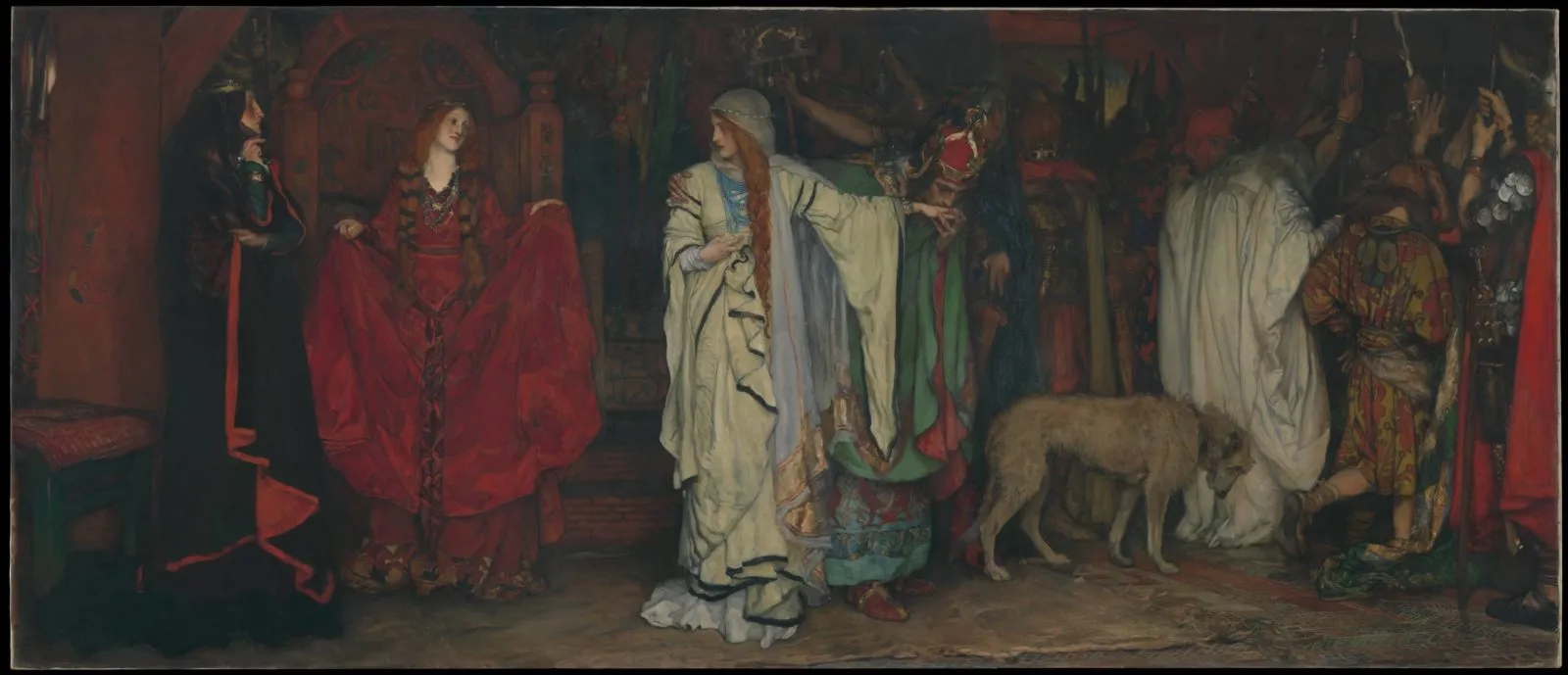
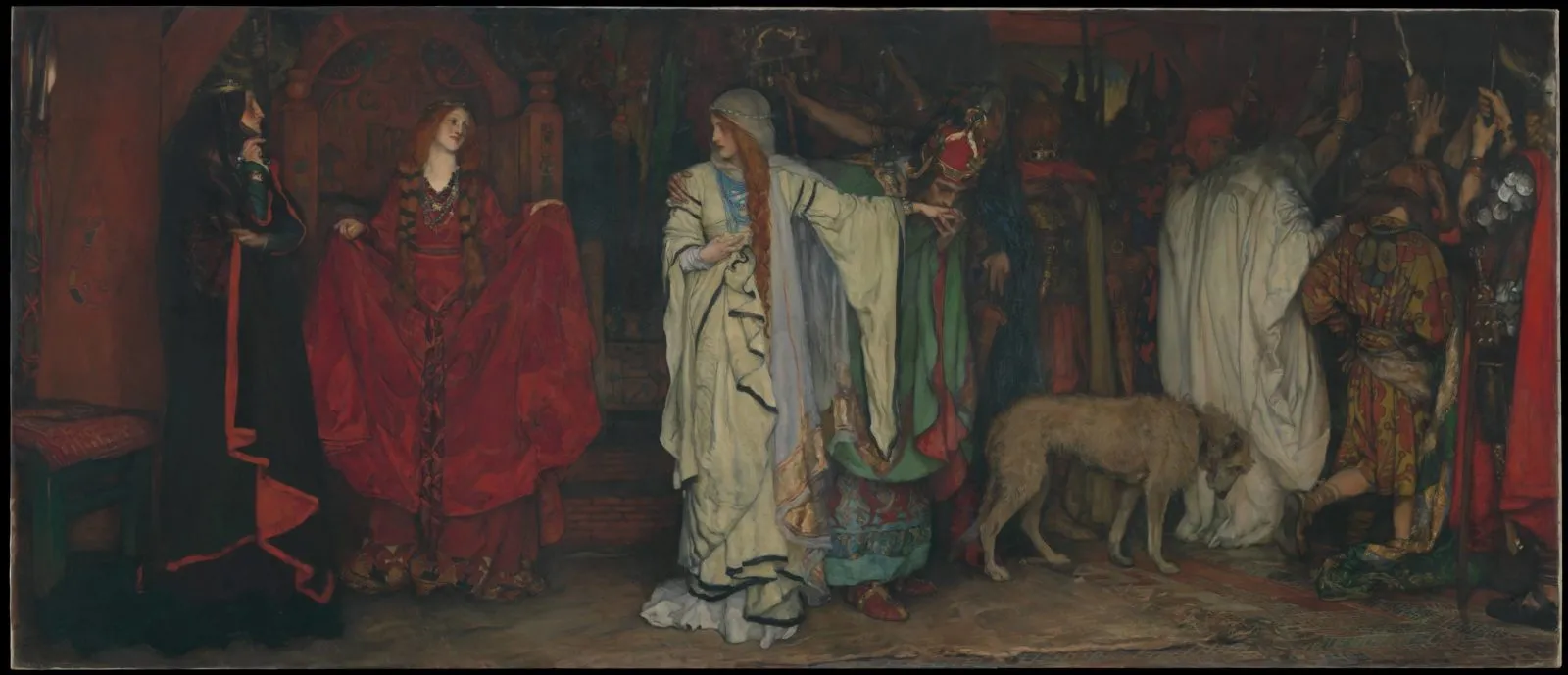
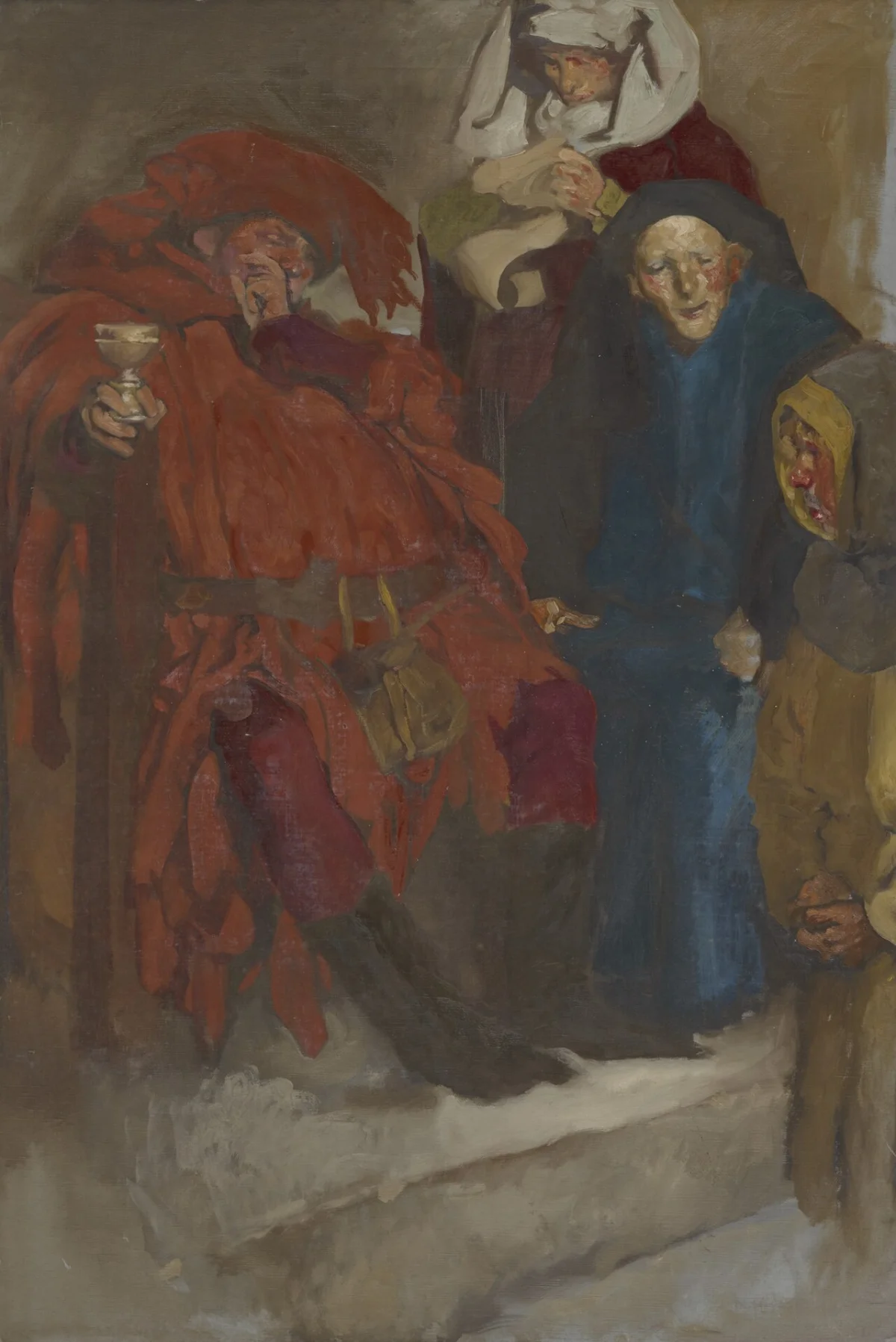
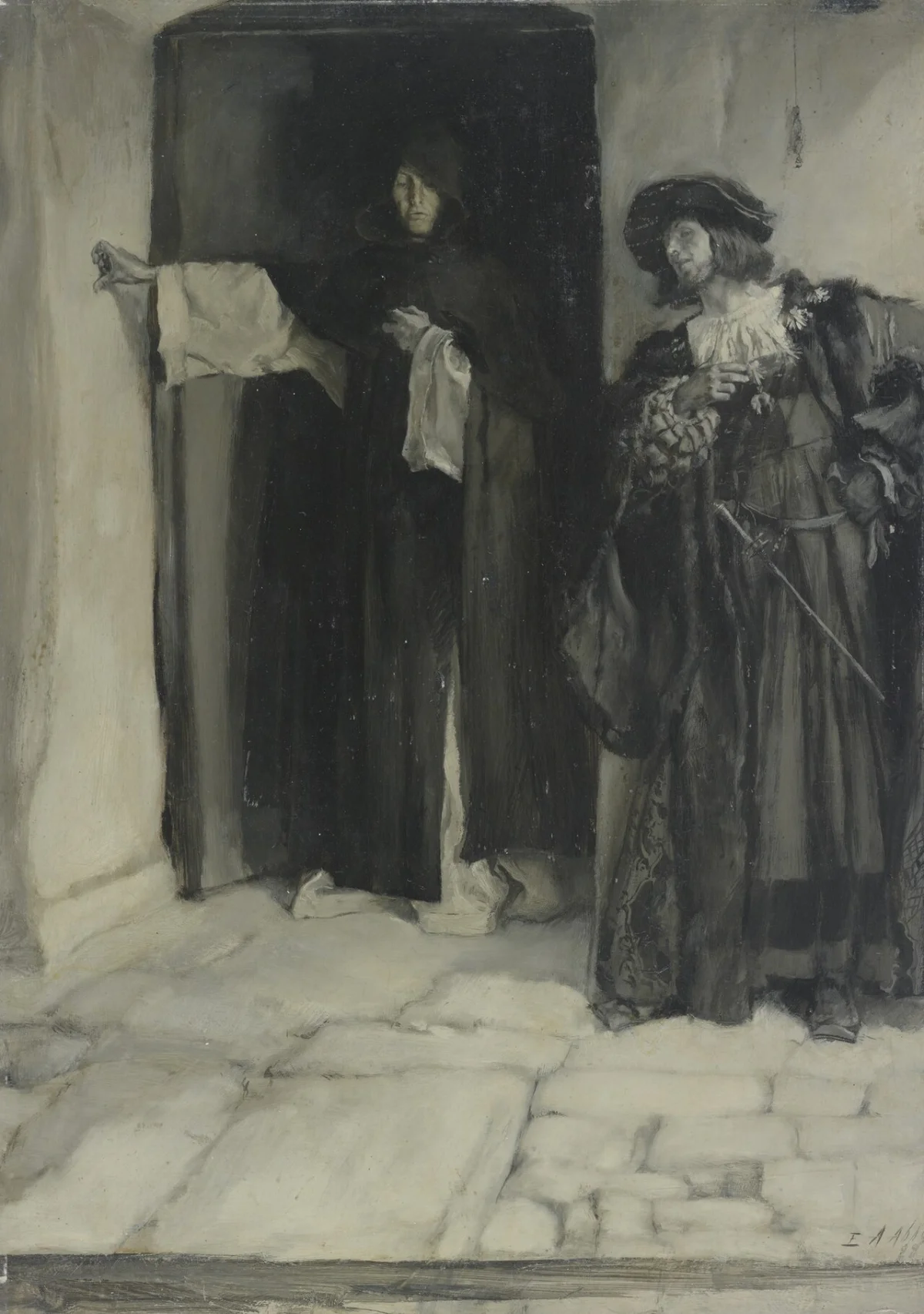
Edwin Austin Abbey’s oil on canvas technique in "King Lear: Cordelia's Farewell" showcases his extraordinary attention to detail and color harmony, hallmarks of the Aestheticism movement. Each brushstroke reflects his dedication to capturing both emotion and narrative. Art lovers seeking a refined oil on canvas will find Abbey’s work a sterling example. Collectors may also appreciate "Architectural study: a column" or "Seascape with Sailing Boat" for their exquisite craftsmanship.
This fine art painting for sale by Edwin Austin Abbey brings to life the tragic farewell between Cordelia and King Lear, evoking deep empathy from viewers. The symbolism woven throughout the composition is a testament to Abbey’s narrative skill, characteristic of the Aestheticism style. Those captivated by this story-driven approach may also be interested in related works like "Figure study: an Angel" or "Landscape study," which further explore visual storytelling.
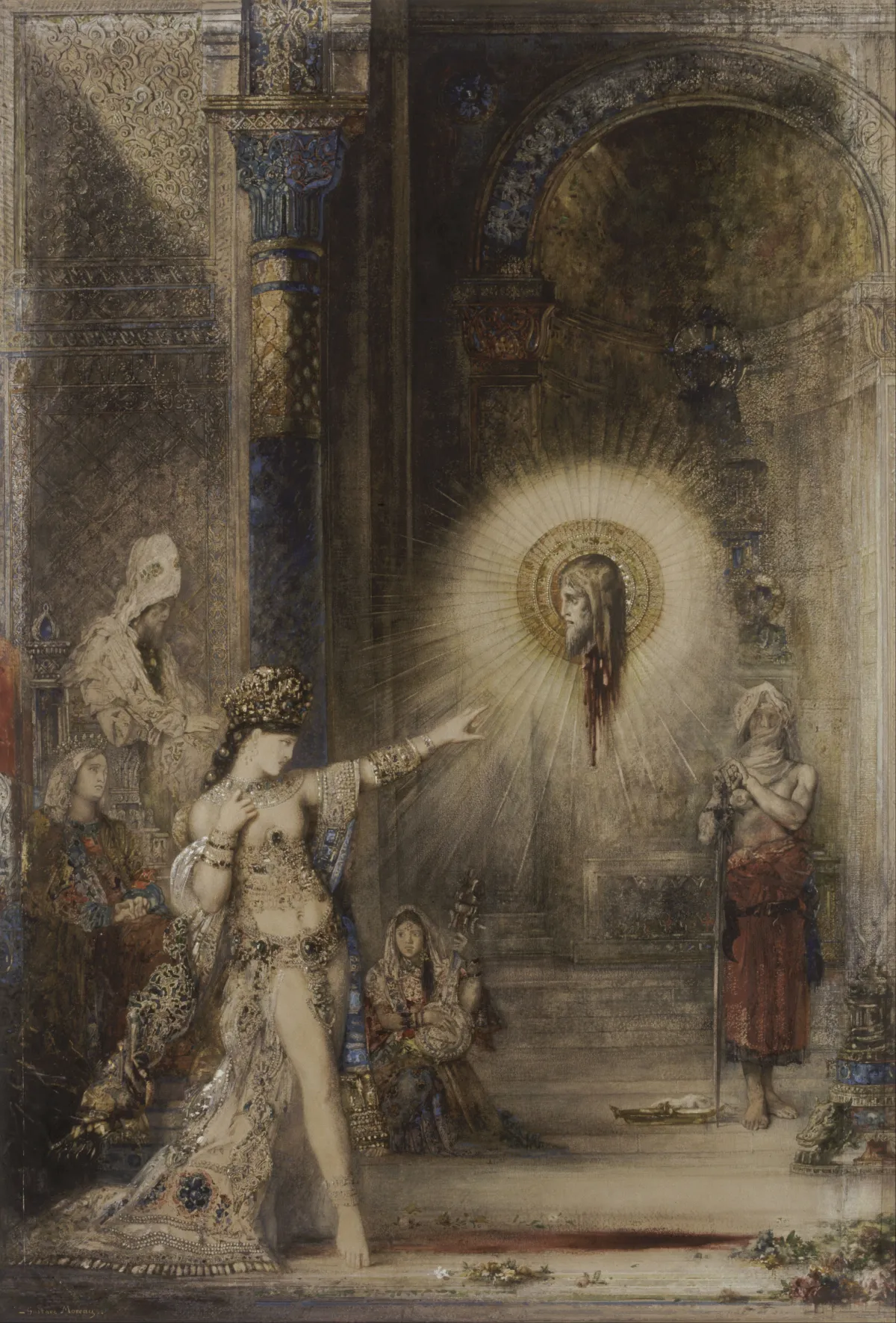
"King Lear: Cordelia's Farewell" stands as a treasured hand-painted oil painting in the world of fine art. Edwin Austin Abbey’s contribution to the Aestheticism movement makes this piece highly sought after by collectors. Its enduring beauty and emotional depth ensure its place among the greats. For those looking to expand their collection, similar fine art painting for sale options include "The Apparition" and "Seascape with Sailing Boat."
When Art Meets History
"King Lear: Cordelia's Farewell" by Edwin Austin Abbey stands as a poignant testament to the Aestheticism movement, where beauty and emotion intertwine. This hand-painted oil painting masterfully captures a pivotal moment from Shakespeare's classic, blending historical drama with visual elegance. Abbey’s work resonates alongside related paintings such as "Quai de Paris, Rouen" and "Old English House by Moonlight," each offering a unique window into the era’s artistic sensibilities and narrative power.
Techniques That Speak
Edwin Austin Abbey employed refined oil on canvas techniques to infuse "King Lear: Cordelia's Farewell" with both depth and luminosity. His meticulous brushwork and delicate color palette evoke the ethereal qualities central to the Aestheticism movement. Like his contemporaries, Abbey’s approach can also be seen in related works such as "A Moonlit Evening" and "A House in a Clearing," where the interplay of light and shadow enhances the emotional resonance of each composition.
Emotions on Display
In "King Lear: Cordelia's Farewell," Abbey’s mastery lies in his ability to convey raw emotion through gesture and expression. The painting’s somber mood and tender farewell between father and daughter are palpable, inviting viewers into the heart of Shakespeare’s tragedy. This fine art painting for sale is a testament to Abbey’s skill, echoing the evocative storytelling found in works like "Liverpool from Wapping" and other pieces from the Aestheticism movement.
Coveted by Collectors
Collectors worldwide seek "King Lear: Cordelia's Farewell" for its exquisite artistry and historical significance. As a prime example of a hand-painted oil painting from the Aestheticism movement, it holds a cherished place among Abbey’s oeuvre. Alongside related paintings such as "Old English House by Moonlight" and "A Moonlit Evening," this masterpiece continues to captivate admirers, making it a highly desirable addition to any fine art collection.
Related Aestheticism Hand-Painted Oil Paintings by Other Artists
Other Famous Aestheticism Artists:
Frequently Asked Questions About King Lear: Cordelia's Farewell
What is the historical context of "King Lear: Cordelia's Farewell"?
This painting is inspired by William Shakespeare's tragedy "King Lear," written in the early 17th century. It captures the poignant moment when Cordelia bids farewell to her father, King Lear, highlighting themes of loyalty, love, and betrayal.
Who is the artist behind "King Lear: Cordelia's Farewell"?
Edwin Austin Abbey, an American artist, created this work in the late 19th century. Abbey was known for his illustrations and paintings that often depicted scenes from literature, particularly Shakespearean works.
What artistic techniques are employed in the painting?
Abbey utilized a combination of realism and romanticism in "King Lear: Cordelia's Farewell." His use of dramatic lighting and detailed expressions enhances the emotional intensity of the scene, drawing viewers into the narrative.
What symbols are present in "King Lear: Cordelia's Farewell"?
The painting features several symbols, including the dark clouds in the background, which represent impending doom and turmoil, and the tender embrace between Lear and Cordelia, symbolizing love and reconciliation amidst tragedy.
How does "King Lear: Cordelia's Farewell" reflect the themes of the play?
The painting encapsulates the central themes of the play, such as familial loyalty, the consequences of pride, and the tragic fallout of miscommunication. Cordelia's unwavering love for her father serves as a stark contrast to Lear's earlier rejection of her.
What is the significance of the color palette used in the painting?
Abbey's choice of muted colors, particularly the somber tones of blue and gray, evokes a sense of melancholy and foreboding, mirroring the emotional weight of the scene and the tragic fate that awaits the characters.
In what way does the composition of the painting enhance its narrative?
The composition is carefully arranged to draw the viewer's eye towards the central figures of Lear and Cordelia. The use of diagonal lines and the positioning of the characters create a dynamic tension that reflects the emotional turmoil of the moment.
What influences can be seen in Abbey's artistic style?
Abbey's style shows influences from both the Pre-Raphaelite movement and the American Renaissance. His attention to detail and narrative depth reflects a commitment to storytelling through visual art, characteristic of these movements.
How does "King Lear: Cordelia's Farewell" compare to other depictions of the same scene?
Unlike many other interpretations that focus on the dramatic aspects of the scene, Abbey's painting emphasizes the emotional bond between father and daughter, offering a more intimate and poignant portrayal of their relationship.
What impact did "King Lear: Cordelia's Farewell" have on the art community?
The painting contributed to the revival of interest in literary themes within visual arts during the late 19th century. Abbey's work inspired other artists to explore similar narratives, bridging the gap between literature and visual storytelling.























_GFM_Painting_(1).webp)


 100% Hand-Painted: Finished in 3-6 Weeks

.png)















_(1).webp)