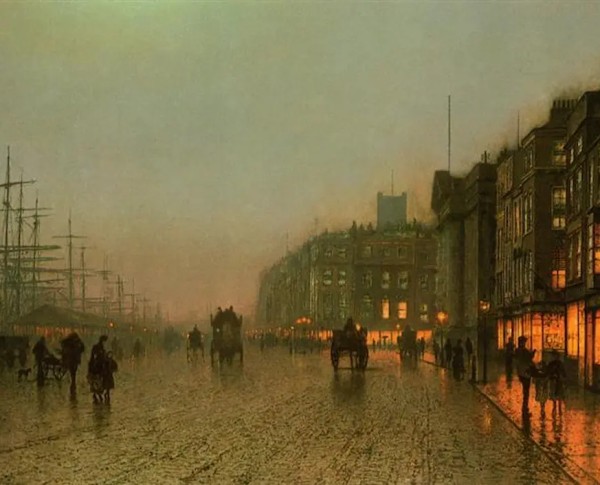
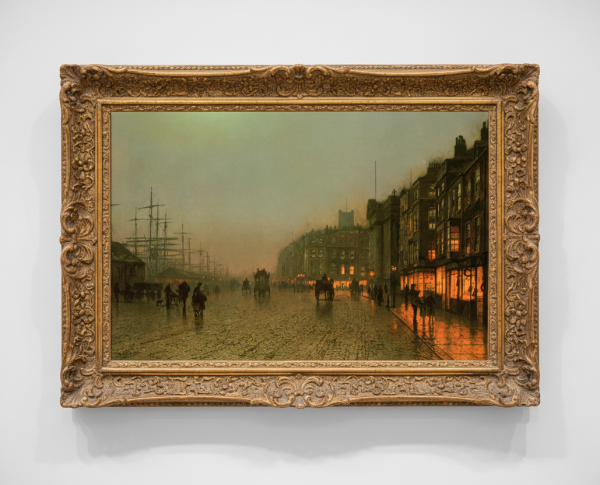
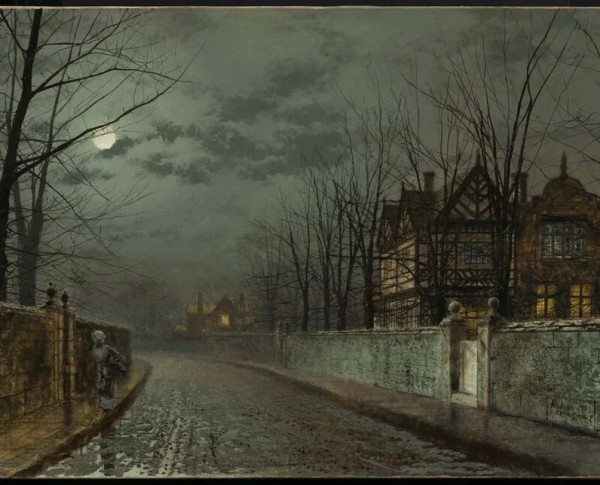
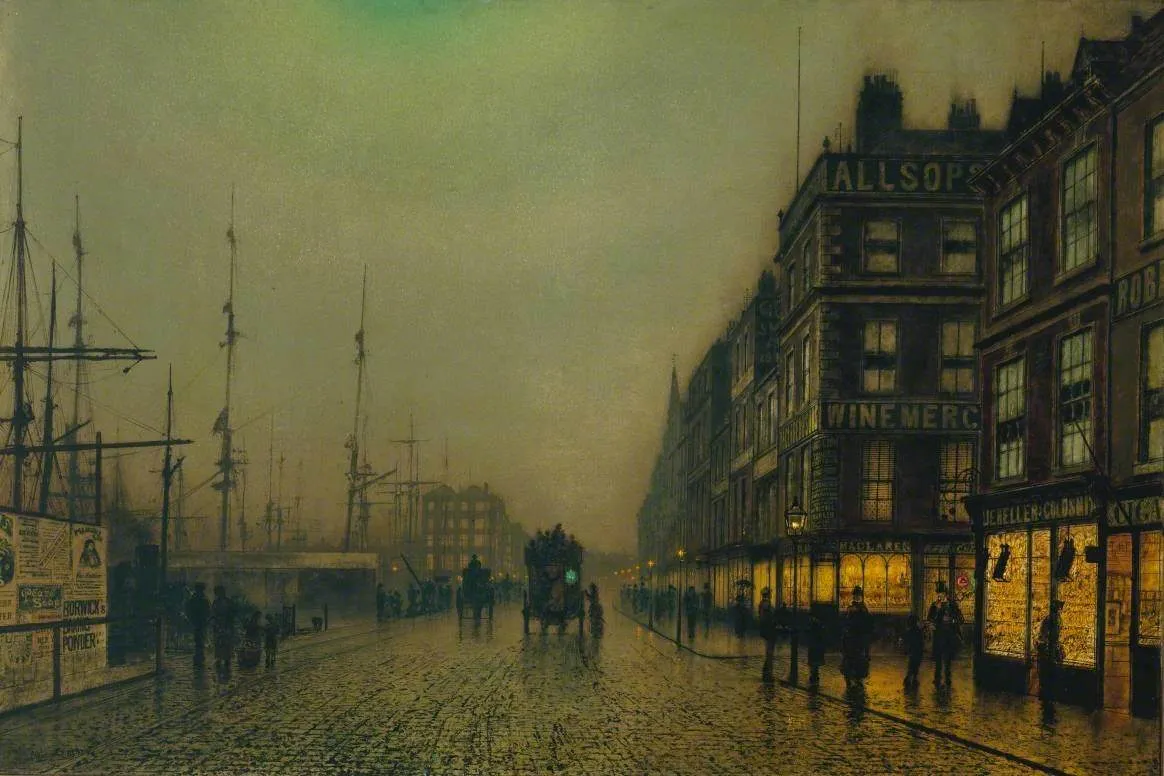
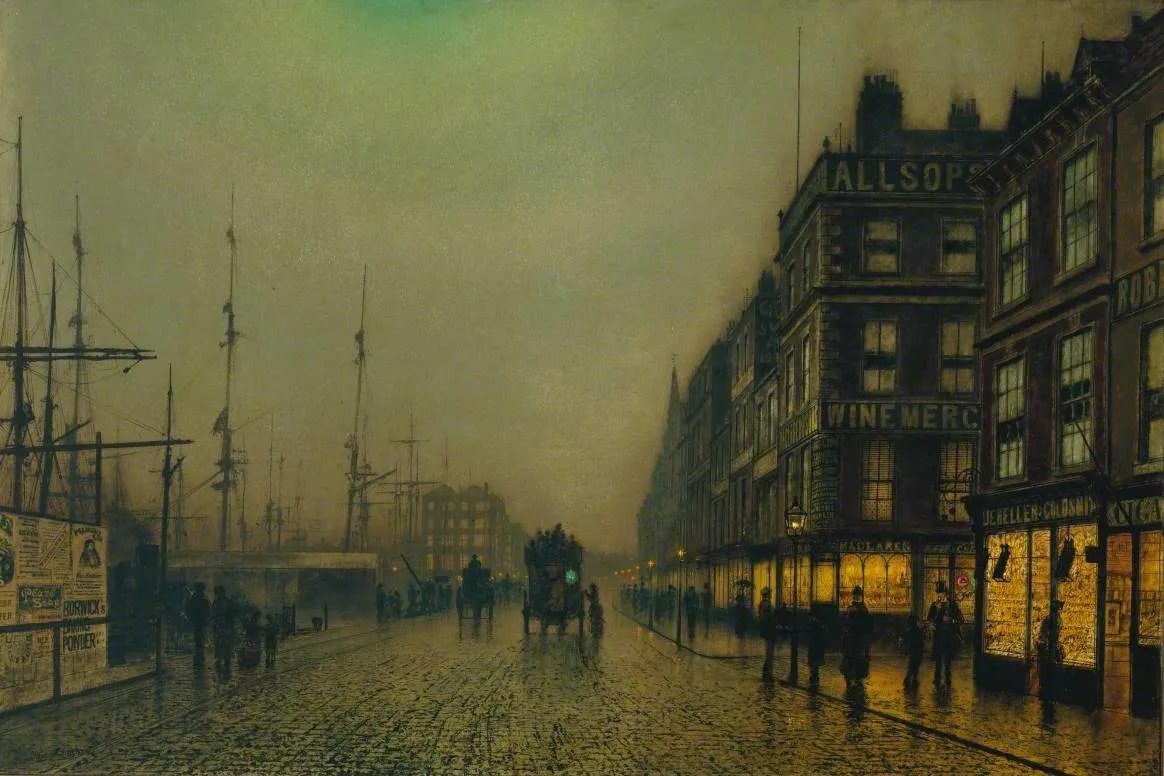
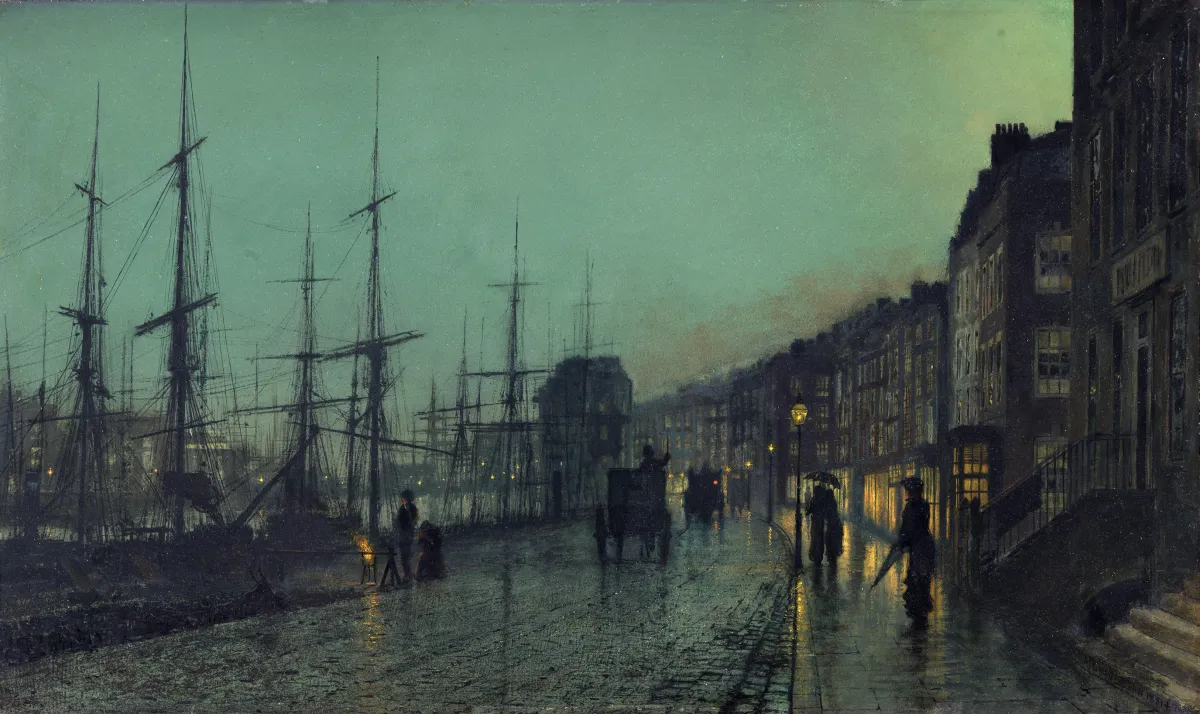
Grimshaw’s technique in "Liverpool Quay by Moonlight" showcases his exceptional ability to manipulate oil on canvas. The artist’s deft brushwork brings out the shimmering reflections on the water and the ethereal glow of the moon. His mastery in the Aestheticism movement is evident in the harmonious blend of realism and mood. If you appreciate this level of artistry, you may also enjoy works like "The Lady of Shalott" and "Quai de Paris, Rouen".
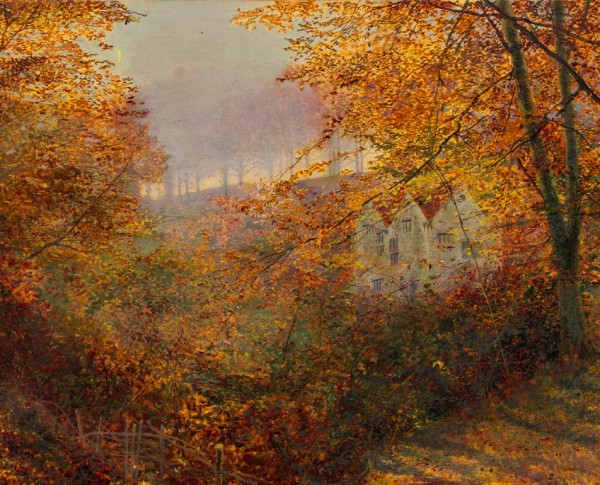
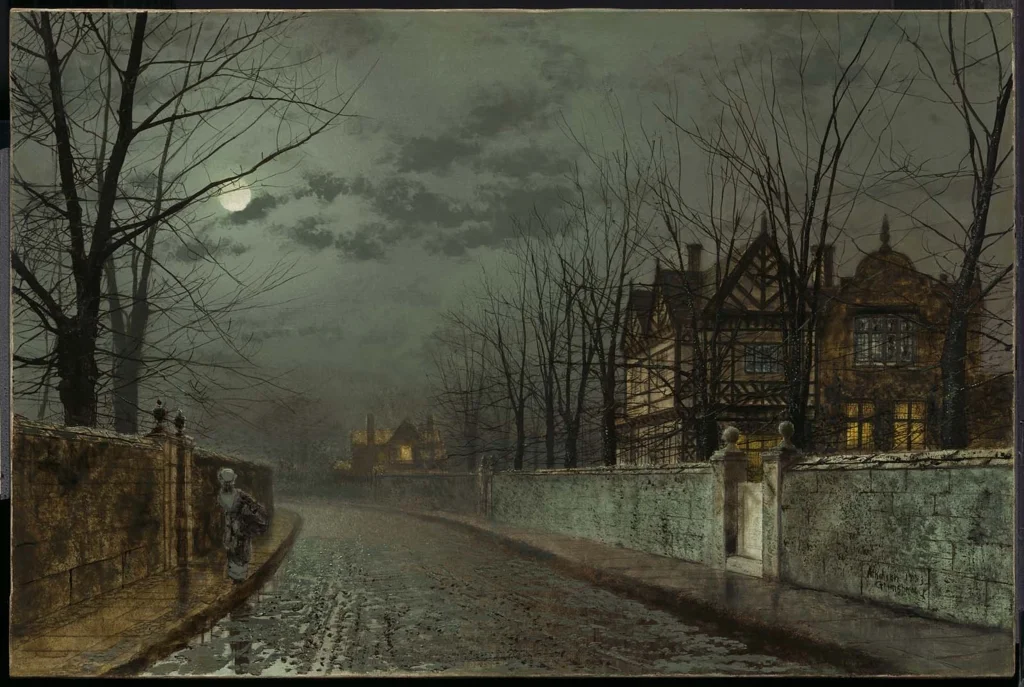
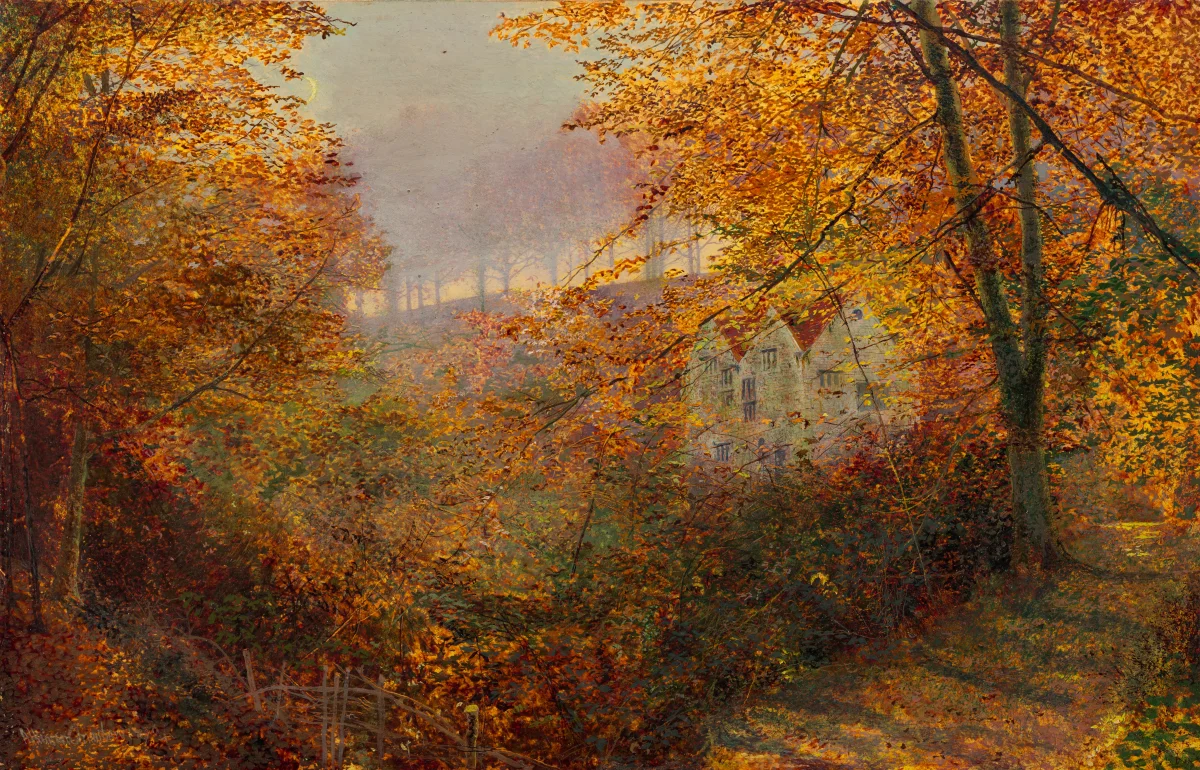
Within this fine art painting for sale, Grimshaw weaves narratives of Victorian life, commerce, and the romantic allure of the night. The ships and lamps symbolize progress and hope, while the subdued tones evoke a sense of introspection. As part of the Aestheticism movement, the painting goes beyond mere representation, inviting viewers to find deeper meaning. Other evocative works to explore include "A House in a Clearing" and "Old English House by Moonlight".
"Liverpool Quay by Moonlight" by John Atkinson Grimshaw is a prized oil on canvas for collectors seeking a piece that epitomizes the elegance of the Aestheticism movement. Its rarity and historical significance make it a standout addition to any collection of fine art painting for sale. Those interested in expanding their collection should also consider related products such as "Whitby Harbor" and "Quai de Paris, Rouen" for a complementary display.
When Art Meets History
"Liverpool Quay by Moonlight" by John Atkinson Grimshaw captures a transformative era in British history through the lens of the Aestheticism movement. This hand-painted oil painting beautifully depicts the bustling Liverpool docks under the ethereal glow of moonlight, reflecting industrial growth and maritime heritage. Grimshaw, known for works like "The Arthurian Round Table" and "The Apparition," masterfully blends historical context with artistic elegance, making this piece a striking example of 19th-century urban landscape art.
Techniques That Speak
In "Liverpool Quay by Moonlight," John Atkinson Grimshaw employs oil on canvas to achieve luminous effects and atmospheric depth characteristic of the Aestheticism movement. His meticulous brushwork and layered glazes create a haunting interplay of light and shadow, setting this painting apart from contemporaries like "Study for Falstaff" and "Man’s Head in Profile." The oil on canvas medium allows Grimshaw to evoke a sense of quiet beauty and realism, inviting viewers into the nocturnal world he so skillfully renders.
Emotions on Display
This fine art painting for sale eloquently conveys a mood of tranquility and introspection, hallmarks of Grimshaw's style within the Aestheticism movement. "Liverpool Quay by Moonlight" immerses viewers in an almost dreamlike atmosphere, where soft moonlight gently illuminates the silent docks. Like his works "Study for Shakespeare" and "The Apparition," Grimshaw’s subtle use of color and shadow evokes feelings of longing and nostalgia, making the emotional resonance of this masterpiece deeply captivating.
Coveted by Collectors
John Atkinson Grimshaw’s "Liverpool Quay by Moonlight" is a highly sought-after hand-painted oil painting among collectors of Aestheticism masterpieces. Its exceptional craftsmanship, historical significance, and evocative mood place it alongside related paintings such as "The Arthurian Round Table" and "Study for Falstaff." As a fine art painting for sale, it continues to attract art enthusiasts eager to own a piece that beautifully embodies the intersection of Victorian history and artistic innovation.
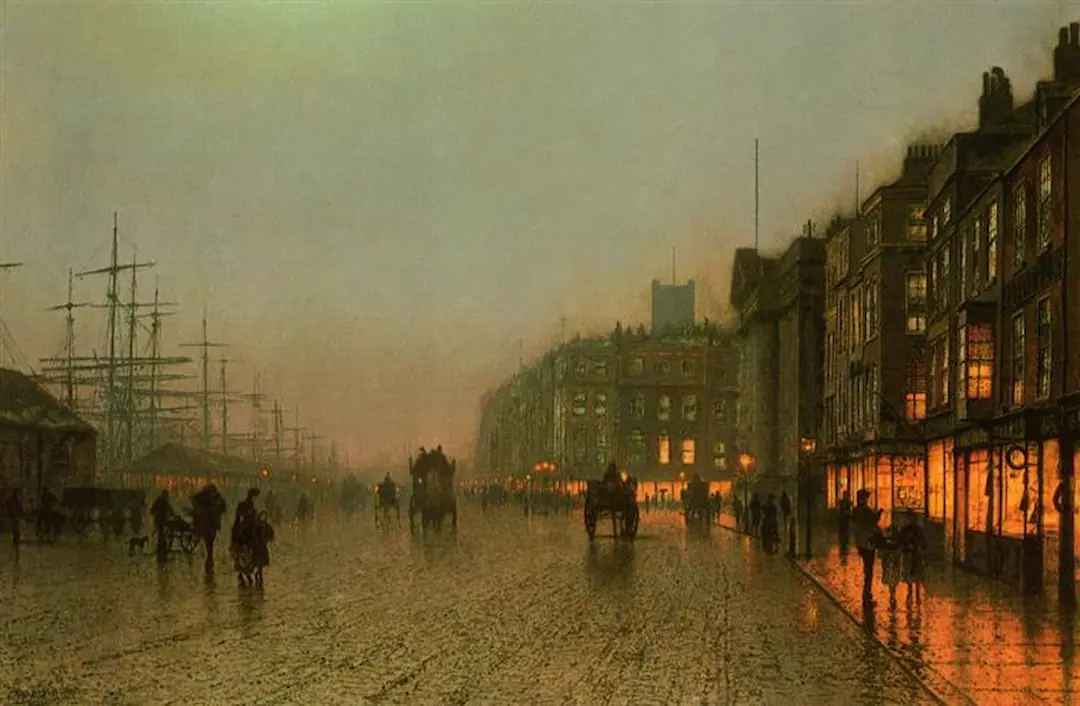
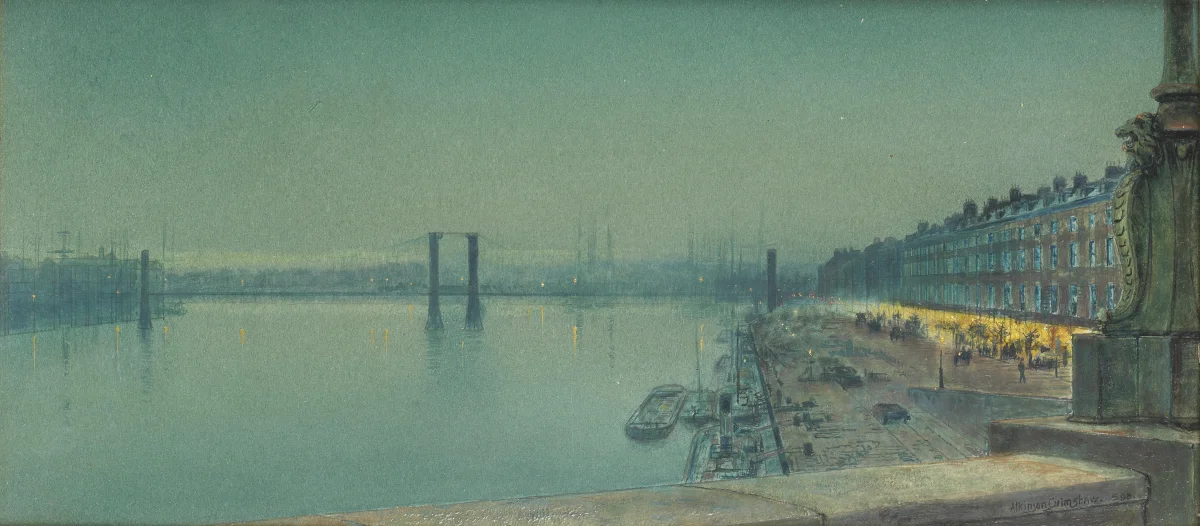
Related Aestheticism Hand-Painted Oil Paintings by Other Artists
Other Famous Aestheticism Artists:
Frequently Asked Questions About Liverpool Quay by Moonlight
What is the historical context of "Liverpool Quay by Moonlight"?
"Liverpool Quay by Moonlight" was painted in the late 19th century, a period characterized by the Industrial Revolution in England. This era saw significant changes in urban landscapes, and Grimshaw's work captures the essence of Liverpool as a bustling port city during this transformative time.
Who was John Atkinson Grimshaw?
John Atkinson Grimshaw was a British painter known for his nocturnal scenes and atmospheric landscapes. Born in 1836, he became renowned for his ability to depict light and shadow, particularly in urban settings, making him a prominent figure in the Victorian art movement.
What artistic techniques did Grimshaw use in this painting?
Grimshaw employed a technique known as chiaroscuro, which contrasts light and dark to create depth and dimension. His meticulous attention to detail and use of color enhance the moonlit ambiance, bringing a sense of tranquility and mystery to the scene.
What themes are explored in "Liverpool Quay by Moonlight"?
The painting explores themes of solitude, reflection, and the passage of time. The serene moonlit setting juxtaposed with the industrial backdrop invites viewers to contemplate the relationship between nature and urban life.
How does Grimshaw depict light in this artwork?
Grimshaw masterfully captures the effects of moonlight on the water and buildings, using a palette of cool blues and silvery whites. The light creates a shimmering effect on the quay, emphasizing the tranquility of the night and highlighting the intricate details of the architecture.
What is the significance of the moon in this painting?
The moon serves as a central element in the composition, symbolizing illumination and inspiration. It contrasts with the darker elements of the scene, representing hope and the beauty found in quiet moments amidst the hustle of city life.
What influences can be seen in Grimshaw's style?
Grimshaw was influenced by the Pre-Raphaelite Brotherhood and the Aesthetic Movement, which emphasized beauty and nature. His work reflects these influences through its focus on detail, color, and the emotional resonance of natural scenes.
How does "Liverpool Quay by Moonlight" reflect the Victorian era?
The painting reflects the Victorian era's fascination with nature, industrialization, and the interplay between the two. Grimshaw's portrayal of a moonlit quay captures the romanticized view of urban life while acknowledging the advancements of the time.
What role does perspective play in this painting?
Grimshaw uses perspective to draw the viewer into the scene, creating a sense of depth and inviting contemplation. The leading lines of the quay and the positioning of the buildings guide the eye towards the horizon, enhancing the immersive experience.
Why is "Liverpool Quay by Moonlight" considered an important work in Grimshaw's oeuvre?
This painting is considered significant as it exemplifies Grimshaw's mastery of nocturnal landscapes and his ability to evoke emotion through light and color. It remains a celebrated piece that showcases his unique style and the artistic trends of his time.























_GFM_Painting_(1).webp)


 100% Hand-Painted: Finished in 3-6 Weeks

.png)
















_(1).webp)