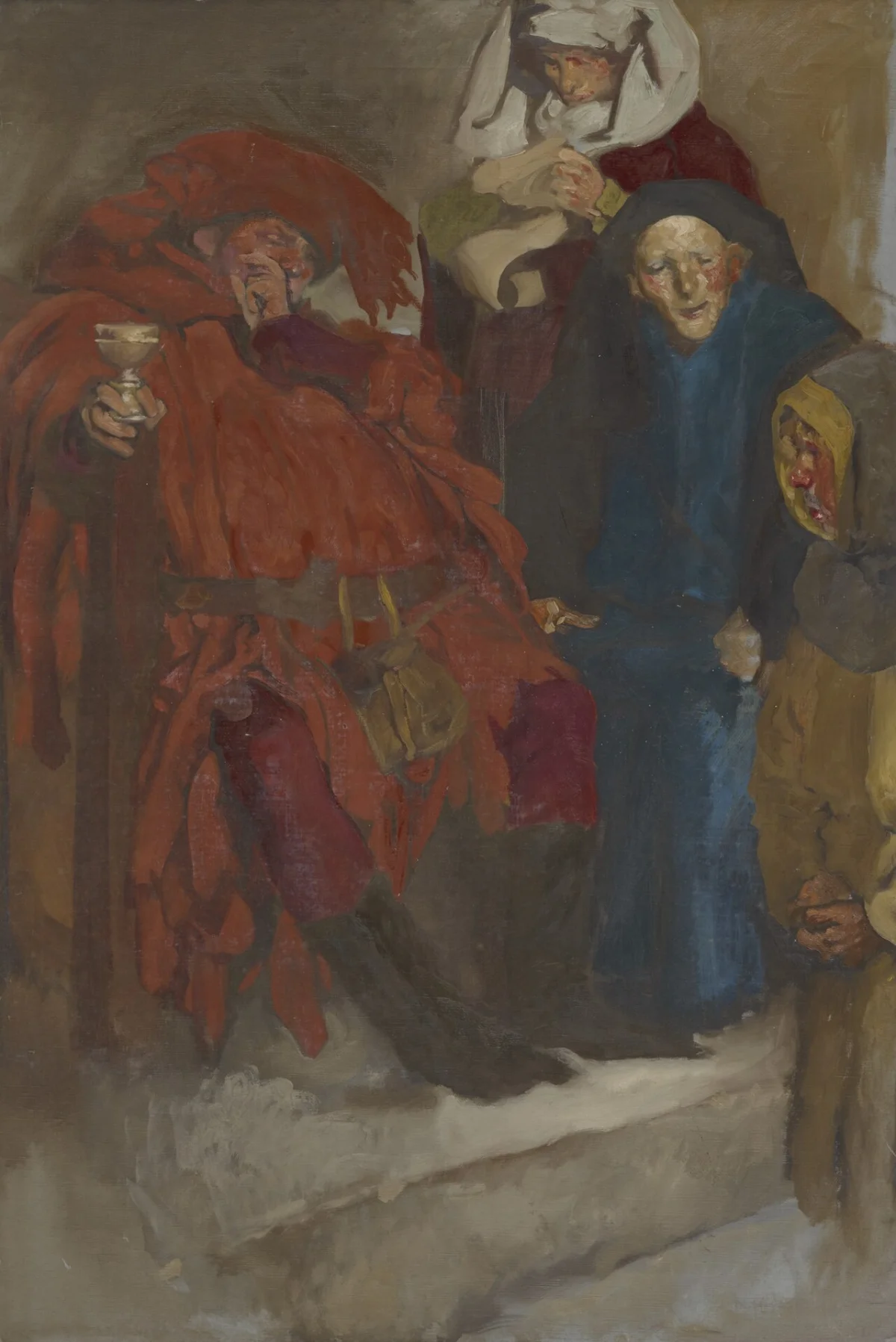
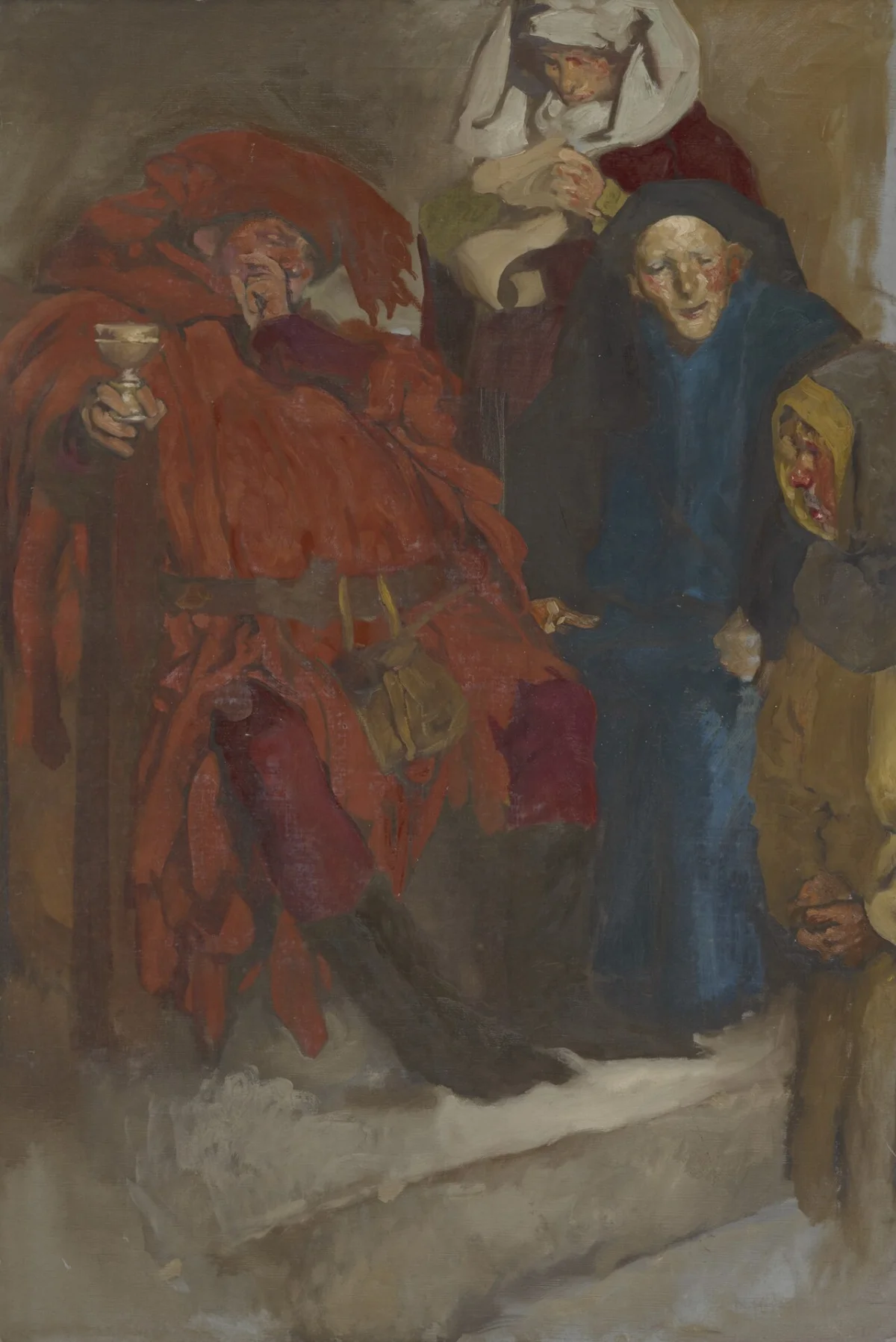
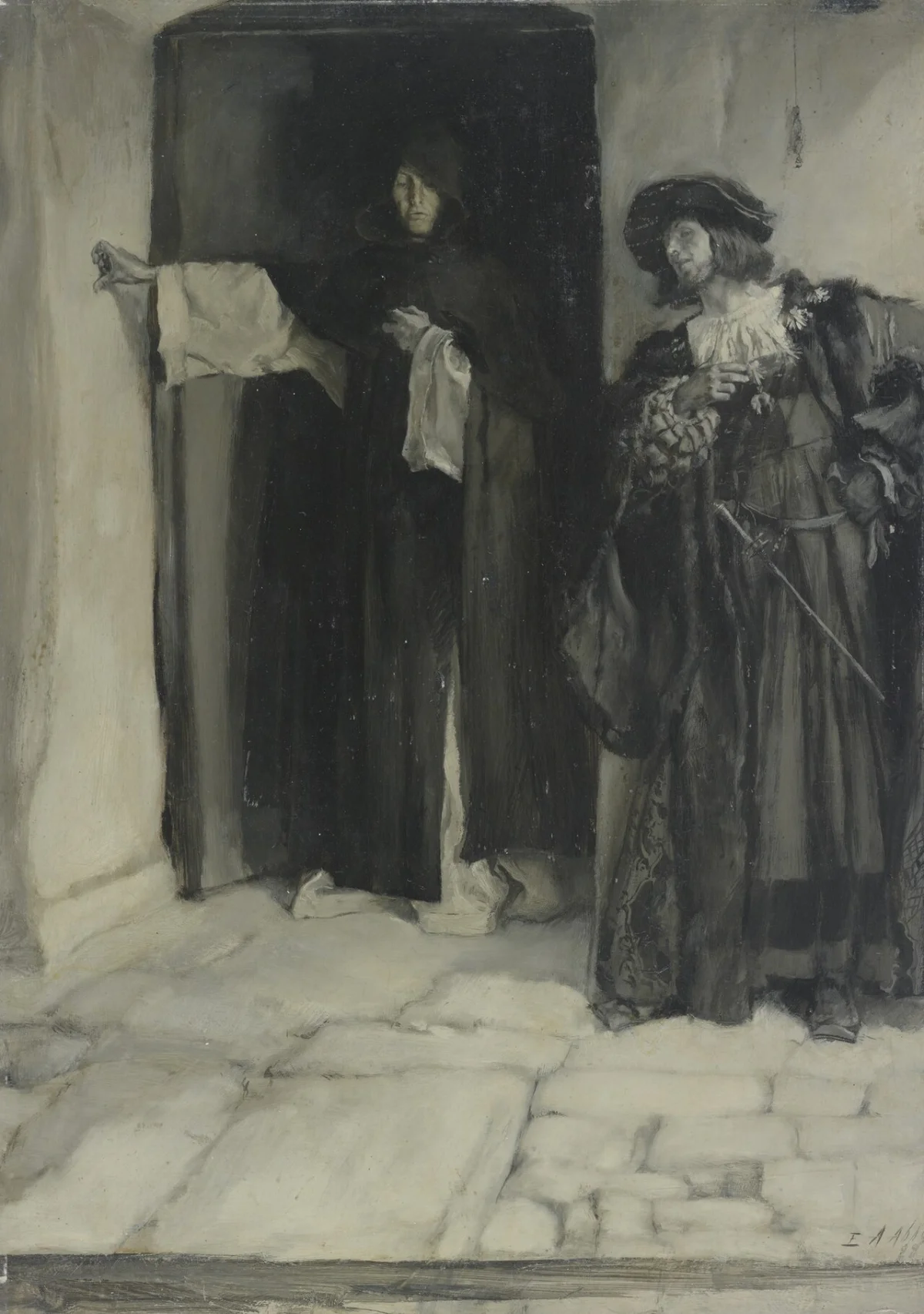
Abbey’s technique in "Study for Falstaff" demonstrates his exceptional skill with oil on canvas, bringing to life the textures and vibrant character of Falstaff. The subtle interplay of light and shadow in this fine art painting for sale reveals his mastery of both form and atmosphere. For those captivated by Abbey’s artistry, works like "Sketch, Three women by the sea" and "Study: Head of a woman for Sir Galahad" offer further insight into his creative process within the Aestheticism movement.
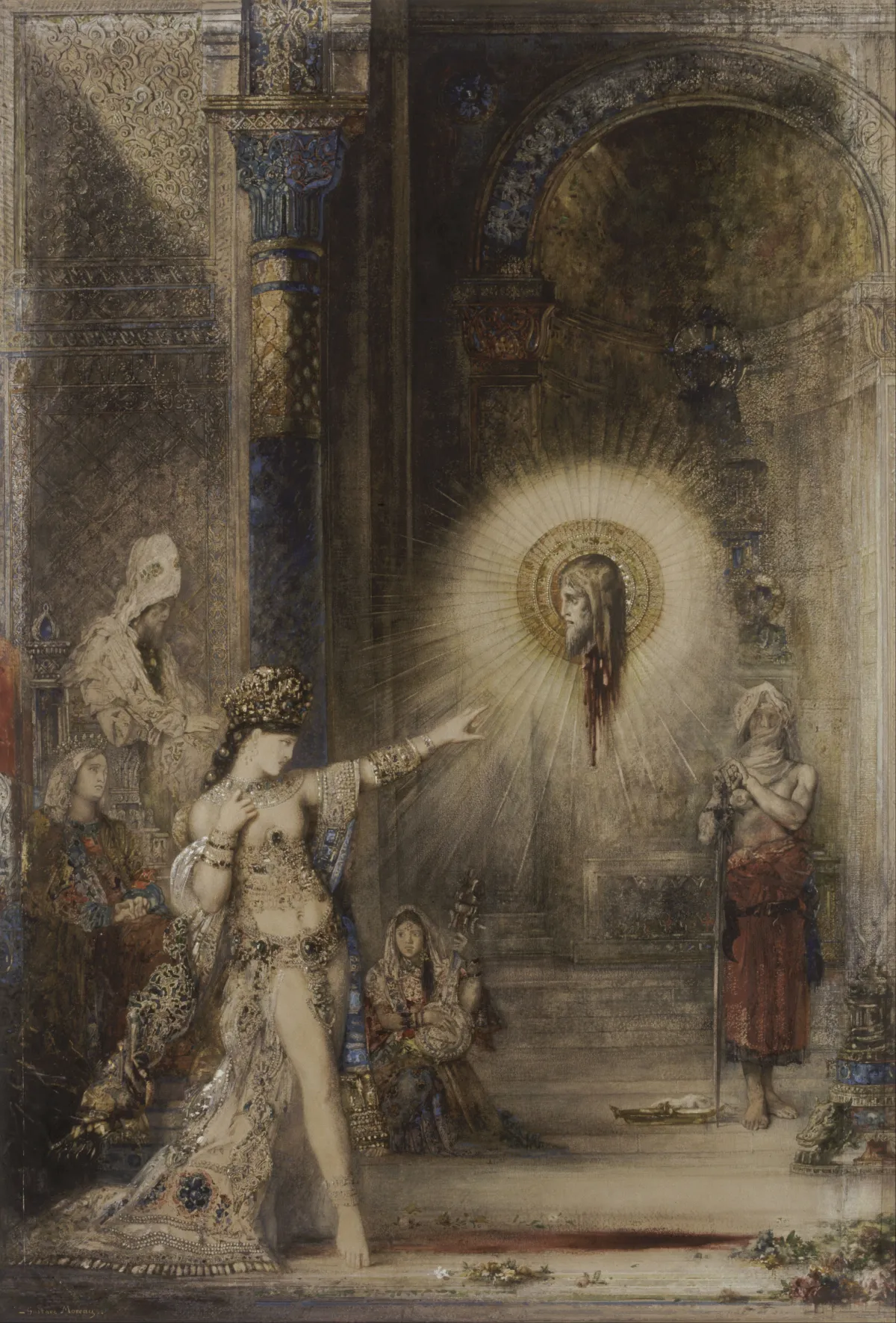
"Study for Falstaff" is more than a hand-painted oil painting; it is a narrative piece embedded with literary and symbolic depth. Abbey’s interpretation of Falstaff, a figure from Shakespeare’s plays, bridges the worlds of art and literature, making this work a unique addition to any collection. Explore other narrative-rich creations by Abbey, such as "The Apparition" and "Study for Shakespeare," to fully appreciate the storytelling power of Aestheticism art.
For collectors seeking a remarkable oil on canvas, "Study for Falstaff" by Edwin Austin Abbey is a distinguished choice. This fine art painting for sale exemplifies the sophistication and beauty of the Aestheticism movement. Owning such a piece not only enriches a collection but also connects you to a lineage of art inspired by literature and history. Complement your collection with related Abbey works like "Study for Antony and Cleopatra" and "Sketch for mural decoration."
When Art Meets History
Edwin Austin Abbey’s "Study for Falstaff" stands as a remarkable hand-painted oil painting, seamlessly blending historical narrative with artistic vision. Created during the Aestheticism movement, this piece captures the lively spirit of Shakespeare’s beloved character, Falstaff. Abbey, known for his meticulous attention to historical detail, brings the Elizabethan era to life. Collectors and enthusiasts often compare this work to related paintings such as "A House in a Clearing" and "Old English House by Moonlight," appreciating its rich cultural context.
Techniques That Speak
Abbey’s mastery with oil on canvas is evident in "Study for Falstaff," where each brushstroke demonstrates his commitment to the principles of Aestheticism. The painting showcases subtle gradations of color and skilled layering, highlighting textures and fabrics with exceptional realism. These techniques are also seen in his other works like "A Moonlit Evening" and "Liverpool from Wapping," making his paintings highly sought after. The use of oil on canvas allows Abbey to achieve depth and luminosity unique to his style.
Emotions on Display
"Study for Falstaff" by Edwin Austin Abbey is more than a fine art painting for sale—it is a vibrant portrayal of human emotion. Abbey’s depiction of Falstaff’s jovial and mischievous personality resonates with viewers, inviting them into the narrative. Drawing inspiration from Aestheticism, Abbey imbues his subject with warmth and wit, reminiscent of the expressive qualities found in "Quai de Paris, Rouen." This emotional depth makes the painting a captivating centerpiece for any collection.
Coveted by Collectors
Collectors prize "Study for Falstaff" as a hand-painted oil painting that exemplifies the best of the Aestheticism movement. Edwin Austin Abbey’s works, including related paintings like "A House in a Clearing" and "A Moonlit Evening," are frequently sought by those who appreciate historical and artistic significance. The lasting appeal of "Study for Falstaff" lies in its masterful execution, historical resonance, and the unique charm that Abbey brings to every canvas—a true gem among fine art painting for sale.
Related Aestheticism Hand-Painted Oil Paintings by Other Artists
Other Famous Aestheticism Artists:
Frequently Asked Questions About Study for Falstaff
What is the historical significance of "Study for Falstaff"?
"Study for Falstaff" serves as a preparatory work for Edwin Austin Abbey's larger project, illustrating the importance of the character Sir John Falstaff in Shakespearean literature and its adaptation in visual arts during the late 19th century.
Who was Edwin Austin Abbey and what influenced his work?
Edwin Austin Abbey was an American painter and illustrator known for his depictions of Shakespearean themes. His work was influenced by the Pre-Raphaelite movement and a deep appreciation for English literature, particularly the plays of Shakespeare.
What artistic techniques are evident in "Study for Falstaff"?
The painting showcases Abbey's mastery of watercolor techniques, with a focus on detailed line work and a vibrant color palette that brings the character of Falstaff to life, highlighting both his joviality and complexity.
What themes are explored in "Study for Falstaff"?
The painting explores themes of humor, folly, and the human condition, encapsulating Falstaff's role as a comic figure who also embodies deeper truths about life and society in Shakespeare's works.
How does "Study for Falstaff" relate to the original Shakespearean texts?
This study captures the essence of Falstaff as depicted in Shakespeare's plays, particularly "Henry IV." Abbey's interpretation emphasizes the character's larger-than-life personality and his interactions with other characters, reflecting the play's comedic and tragic elements.
What is the significance of the composition in "Study for Falstaff"?
The composition of the painting is carefully arranged to draw the viewer's eye towards Falstaff, using foreground and background elements to create a narrative context that enhances the character's prominence and significance within the scene.
What role does color play in "Study for Falstaff"?
Color plays a crucial role in conveying mood and character in "Study for Falstaff." Abbey employs a rich and varied palette to evoke the vibrancy of the character and the setting, enhancing the emotional resonance of the scene.
How does "Study for Falstaff" reflect the artistic trends of its time?
The painting reflects the late 19th-century trend of reviving classical themes through a modern lens, showcasing a blend of realism and romanticism that was prevalent among artists who sought to connect literature with visual storytelling.
What can we learn about the character of Falstaff from this painting?
The painting reveals Falstaff as a multifaceted character, embodying both comedic and tragic elements. Abbey’s portrayal invites viewers to consider the complexities of human nature and the societal roles that individuals play.
In what ways has "Study for Falstaff" influenced contemporary interpretations of Shakespeare?
"Study for Falstaff" has influenced contemporary interpretations by providing a visual reference that emphasizes the character's depth and humor, encouraging modern artists and directors to explore the duality of Falstaff in their own works.






















_GFM_Painting_(1).webp)


 100% Hand-Painted: Finished in 3-6 Weeks

.png)















_(1).webp)