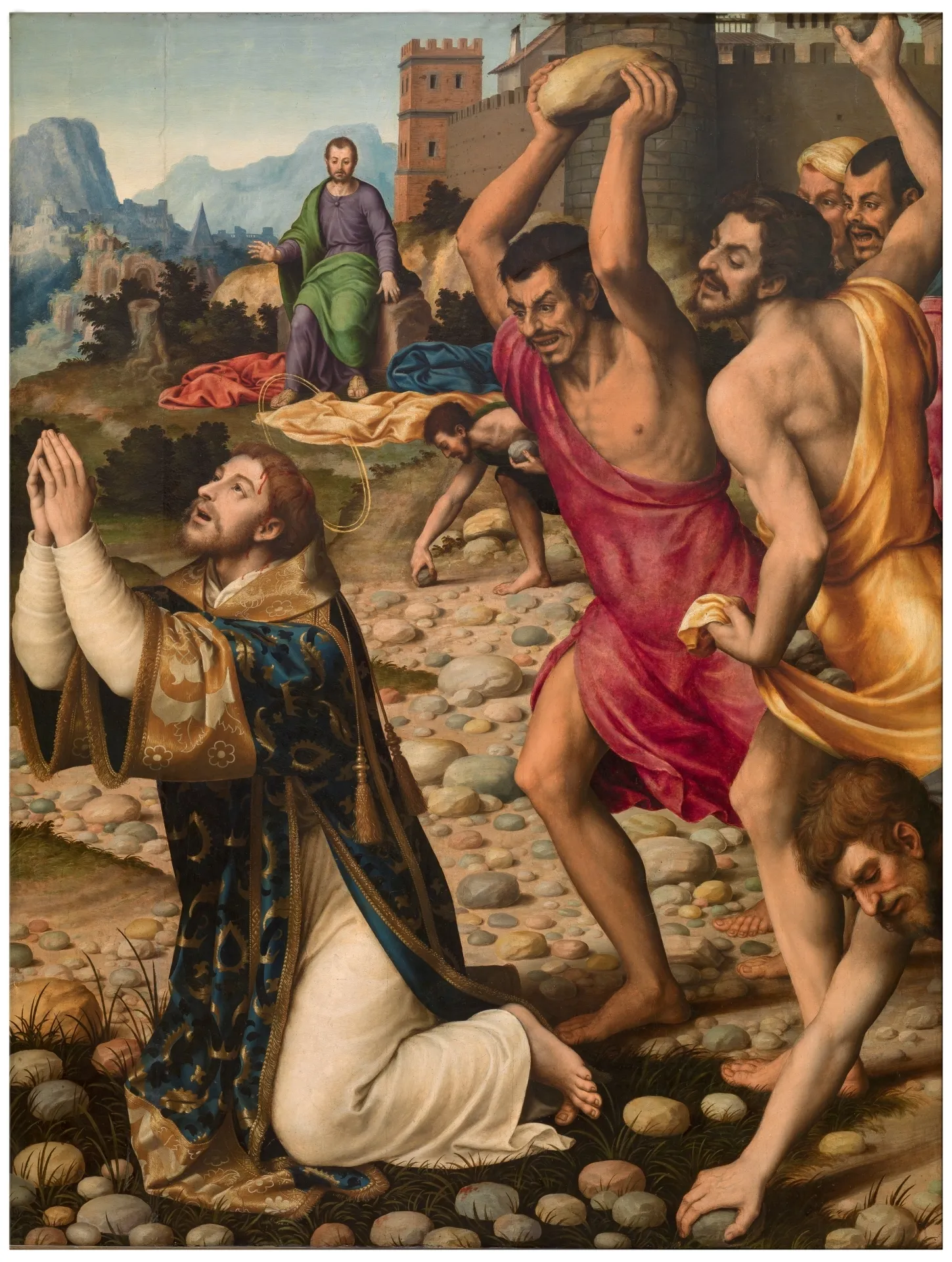
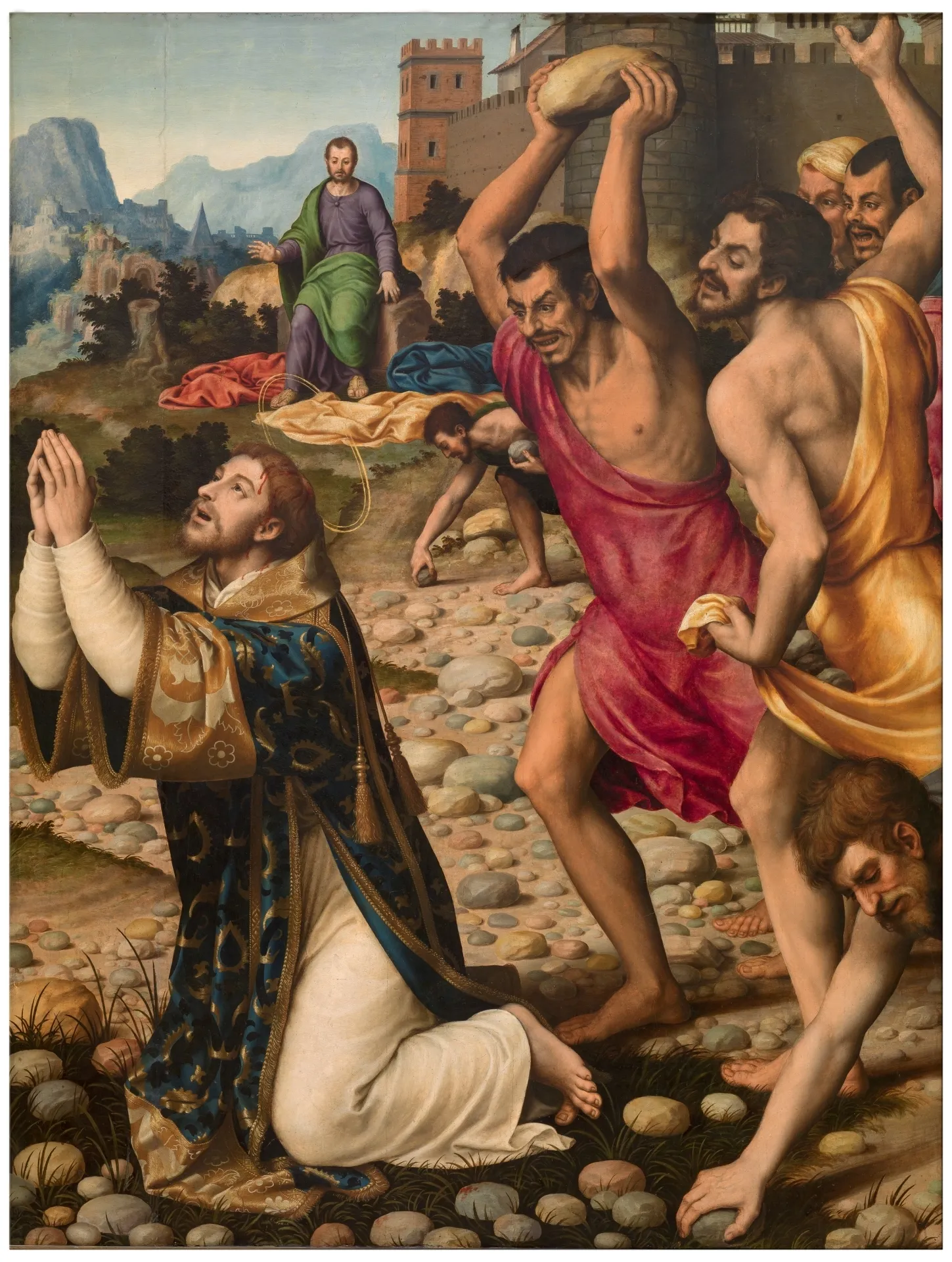
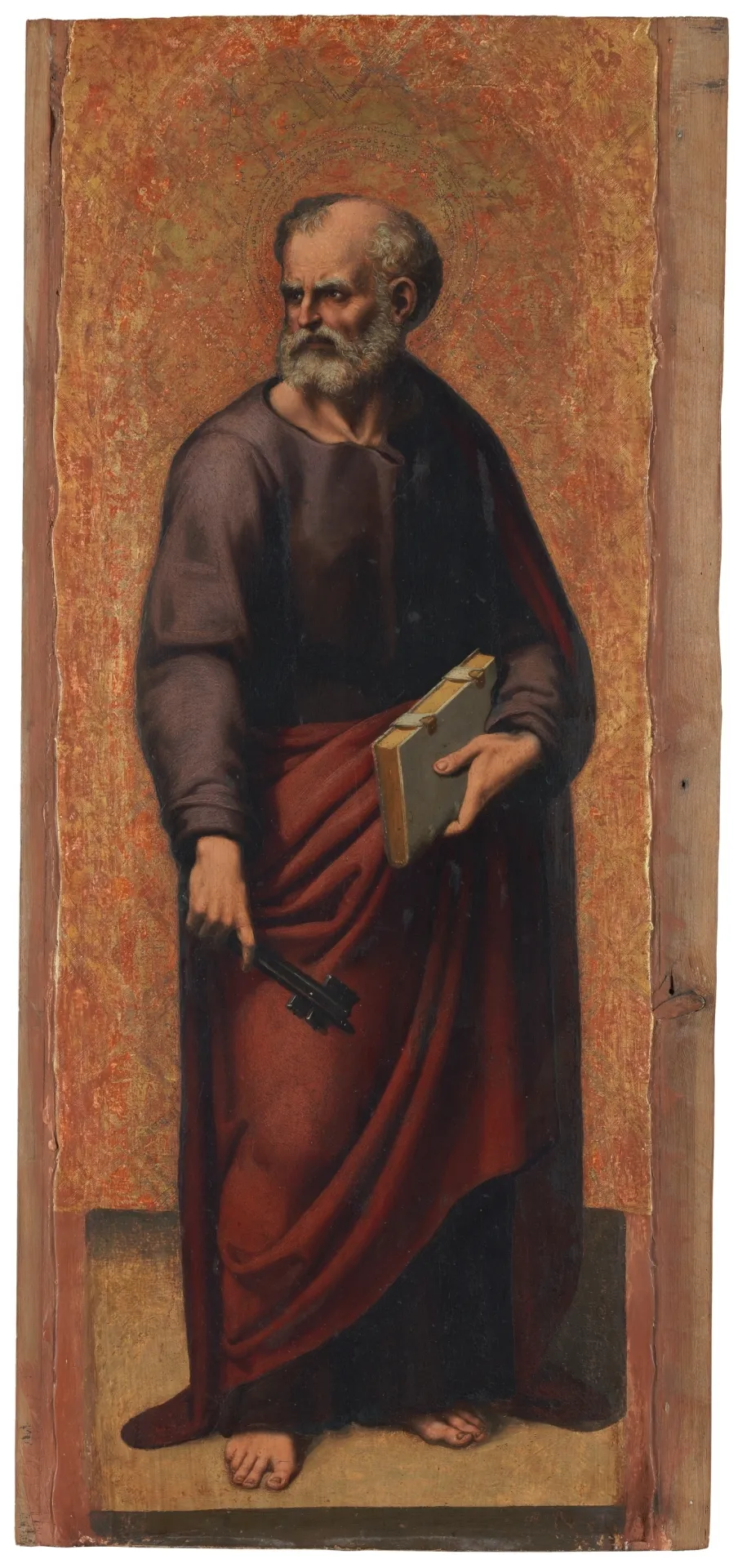
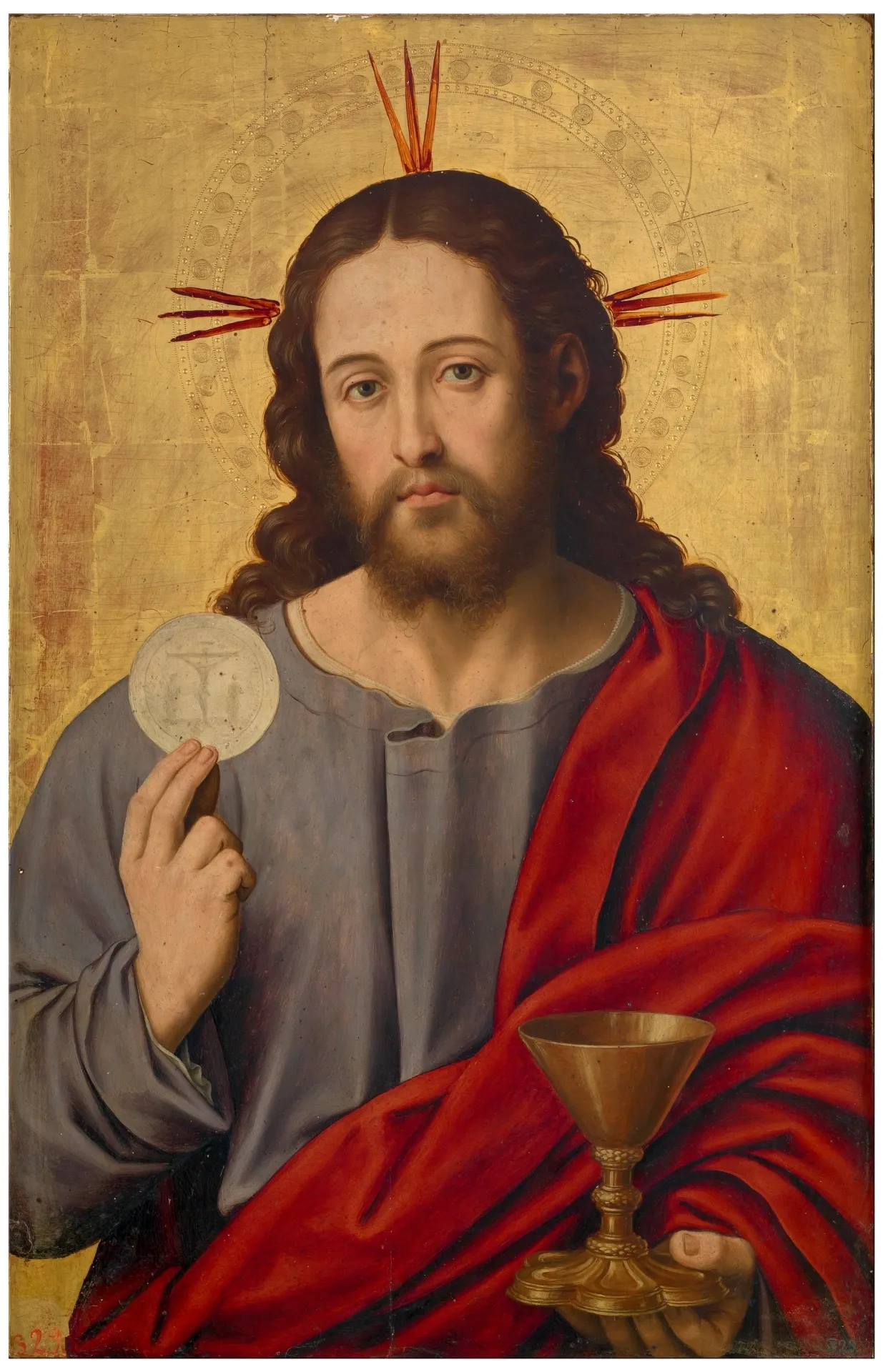
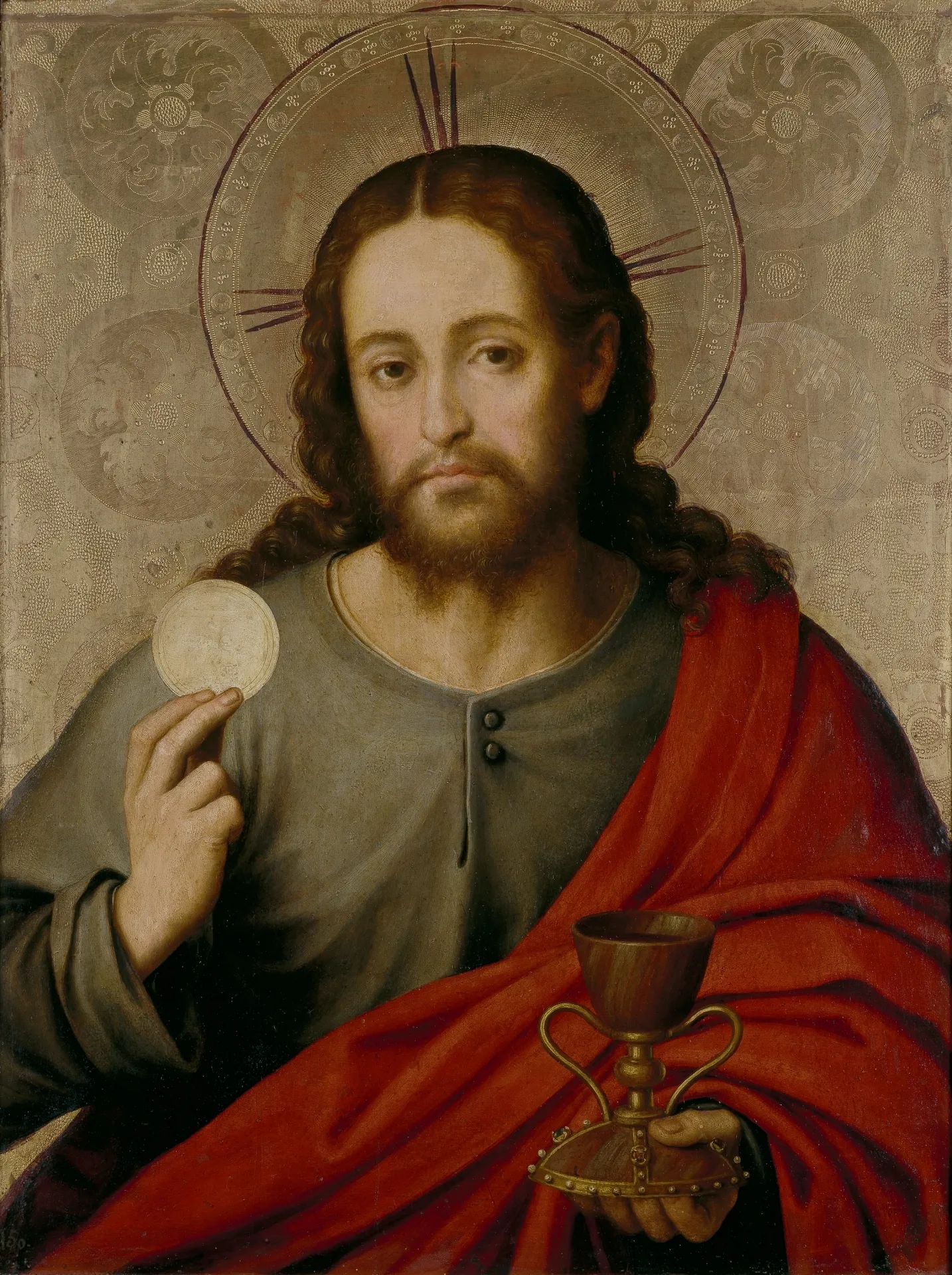
"Martirio De San Esteban" by Vicente Juan Juan de Juanes, also known as Masip (Macip), is a remarkable hand-painted oil painting from the Spanish Renaissance movement. This masterpiece reflects the era’s devotion and artistry, making it a sought-after piece among collectors. The painting stands alongside other notable works such as "Retrato De Un Caballero Santiaguista" and "El Salvador," further cementing Juan de Juanes’s enduring influence on Spanish fine art painting for sale.
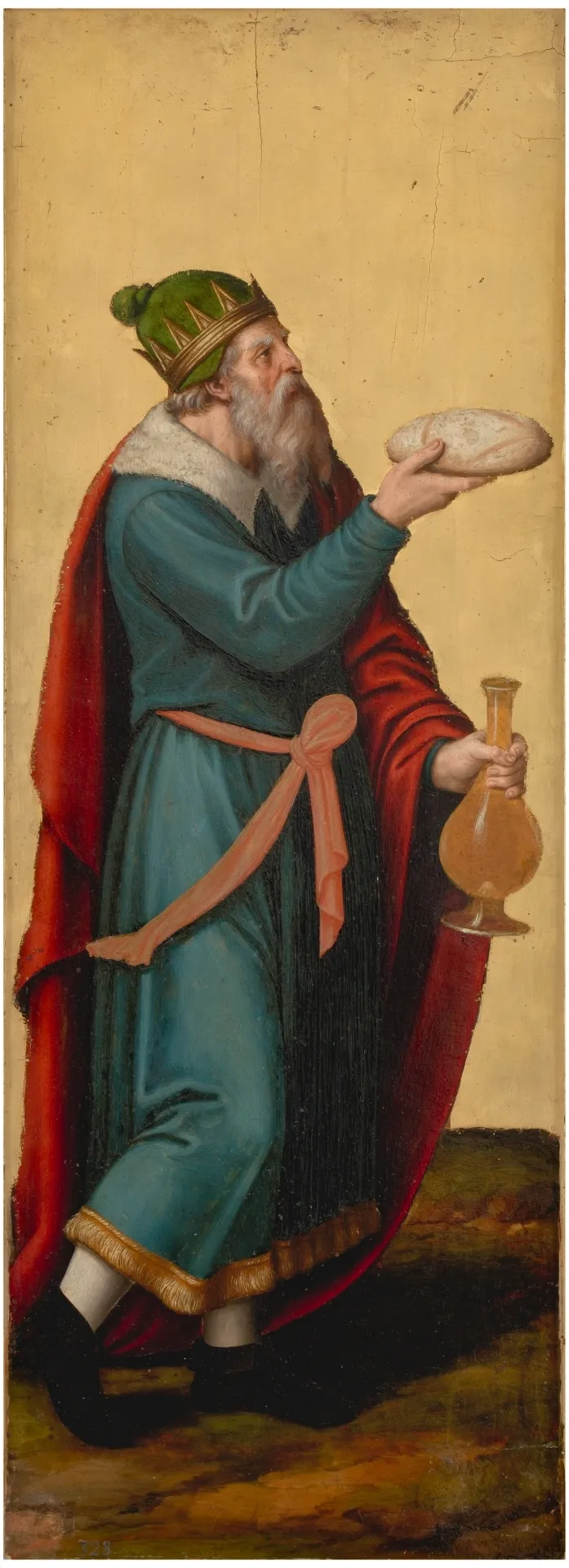
Vicente Juan de Juanes’s "Martirio De San Esteban" showcases exceptional technique and detail, characteristic of the Spanish Renaissance. The artist’s use of oil on canvas brings depth and vibrancy to the dramatic scene, capturing the martyrdom with emotive precision. This painting, along with related works like "Melquisedec, Rey De Salem" and "El Salvador Con La Eucaristia," exemplifies the mastery and innovation that define Renaissance oil on canvas artistry.
Every element of "Martirio De San Esteban" tells a story, blending religious symbolism with the narrative depth typical of the Spanish Renaissance. Vicente Juan de Juanes infuses the painting with rich iconography, inviting viewers to explore themes of faith and sacrifice. Collectors and enthusiasts of fine art painting for sale will appreciate connections to related pieces such as "San Esteban Acusado De Blasfemo" and "Entierro De San Esteban," which highlight similar motifs and storytelling.
For art collectors, "Martirio De San Esteban" by Vicente Juan de Juanes is a prized example of Spanish Renaissance artistry. This hand-painted oil painting offers not only visual splendor but also historical significance, making it a valuable addition to any collection. Those interested in expanding their collection may also consider related masterpieces like "El Salvador Con La Eucaristia" or "Entierro De San Esteban," both celebrated fine art paintings for sale.
When Art Meets History
"Martirio De San Esteban" by Vicente Juan Juan de Juanes / Masip (Macip) stands as a profound testament to the Spanish Renaissance. This hand-painted oil painting captures the dramatic martyrdom of Saint Stephen, reflecting the era's rich religious and historical narratives. The artist, celebrated for similar works, skillfully intertwines faith and artistry, making this masterpiece resonate with collectors and art historians alike. The painting exemplifies the movement’s dedication to storytelling through visual splendor.
Techniques That Speak
Vicente Juan Juan de Juanes / Masip (Macip) employed meticulous oil on canvas techniques in "Martirio De San Esteban," a hallmark of the Spanish Renaissance. His mastery of color, composition, and detail breathes life into each figure, rendering the scene vivid and emotionally charged. Like his related paintings, this work showcases the artist’s ability to harness the full potential of oil on canvas, capturing light, texture, and atmosphere with remarkable precision and depth.
Emotions on Display
The emotional intensity of "Martirio De San Esteban" is palpable, a signature of Vicente Juan Juan de Juanes / Masip (Macip) and the Spanish Renaissance. Through expressive faces and dynamic gestures, this fine art painting for sale conveys the agony and faith of Saint Stephen, inviting viewers to empathize with the scene. The artist’s other works also evoke strong feelings, but this masterpiece stands out for its dramatic storytelling and deep spiritual resonance.
Coveted by Collectors
Collectors admire "Martirio De San Esteban" for its historical significance and exceptional artistry. As a hand-painted oil painting by Vicente Juan Juan de Juanes / Masip (Macip), it represents the pinnacle of Spanish Renaissance craftsmanship. This work, like the artist’s related paintings, is highly sought-after in the art market, appealing to those who appreciate religious narratives and masterful technique. Its enduring value makes it a prized addition to any fine art collection.
Frequently Asked Questions About Martirio De San Esteban
What is the historical significance of "Martirio De San Esteban"?
"Martirio De San Esteban" is significant as it depicts the martyrdom of Saint Stephen, the first Christian martyr, highlighting the early struggles of Christianity and its followers during a time of persecution.
Who was Vicente Juan Juan de Juanes / Masip?
Vicente Juan Juan de Juanes, also known as Masip, was a prominent Spanish painter of the Renaissance period, celebrated for his religious works that combine emotional depth with technical precision.
What artistic techniques are employed in "Martirio De San Esteban"?
The painting showcases techniques such as chiaroscuro, which enhances the dramatic effect, and meticulous attention to detail, particularly in the depiction of human expressions and the textures of clothing.
What symbolism is present in "Martirio De San Esteban"?
The artwork symbolizes faith and sacrifice, with Saint Stephen's posture and facial expression conveying both suffering and serenity, representing the triumph of faith over adversity.
In what artistic movement does "Martirio De San Esteban" belong?
The painting is a part of the Spanish Renaissance movement, characterized by a focus on religious themes, realism, and the integration of classical elements into the artwork.
What materials were used in the creation of "Martirio De San Esteban"?
The painting was created using oil on canvas, a medium that allows for rich color and detailed textures, enhancing the emotional impact of the scene.
How does "Martirio De San Esteban" reflect the cultural context of its time?
The painting reflects the Counter-Reformation's emphasis on religious fervor and the need for visual storytelling to convey spiritual messages to the faithful during a time of religious upheaval.
What are the notable features of Saint Stephen's depiction in the painting?
Saint Stephen is depicted with a serene yet pained expression, often shown with stones or in a pose of supplication, emphasizing his role as a martyr and the gravity of his sacrifice for his beliefs.
Where can one view "Martirio De San Esteban" today?
"Martirio De San Esteban" is housed in a prominent art gallery, where it is part of a collection that showcases significant works of the Spanish Renaissance, allowing visitors to appreciate its historical and artistic value.
What influence did "Martirio De San Esteban" have on later artists?
The painting influenced later artists by setting a standard for religious iconography and emotional expression in art, inspiring them to explore similar themes of faith and martyrdom in their own works.























_GFM_Painting_(1).webp)


 100% Hand-Painted: Finished in 3-6 Weeks

.png)












_1560s.webp)



_(1).webp)