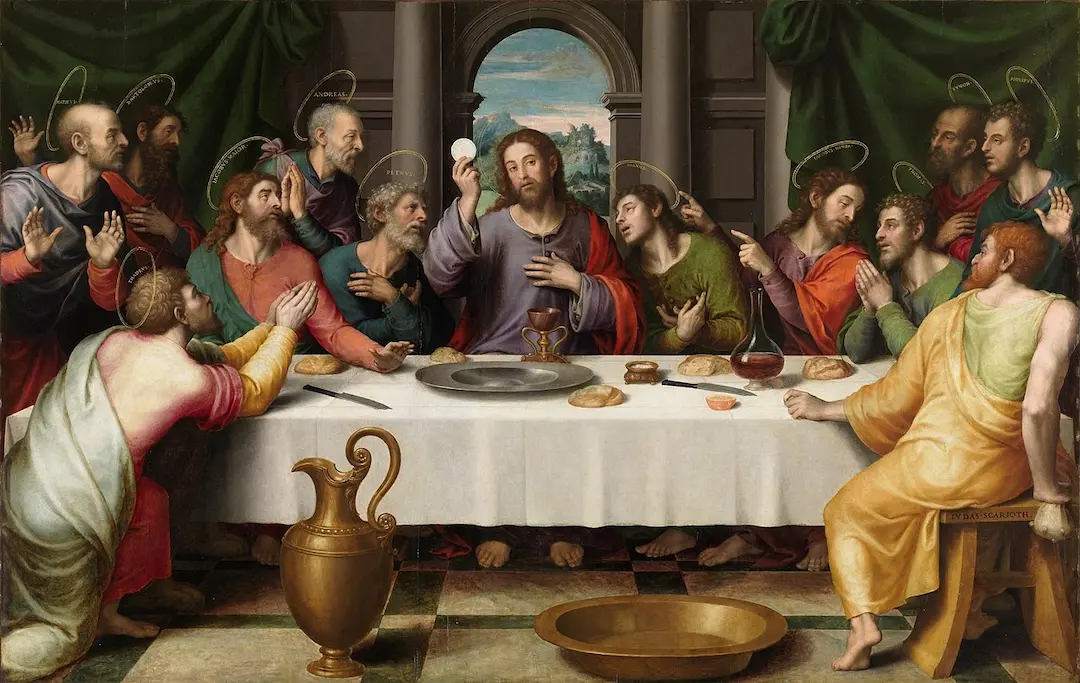
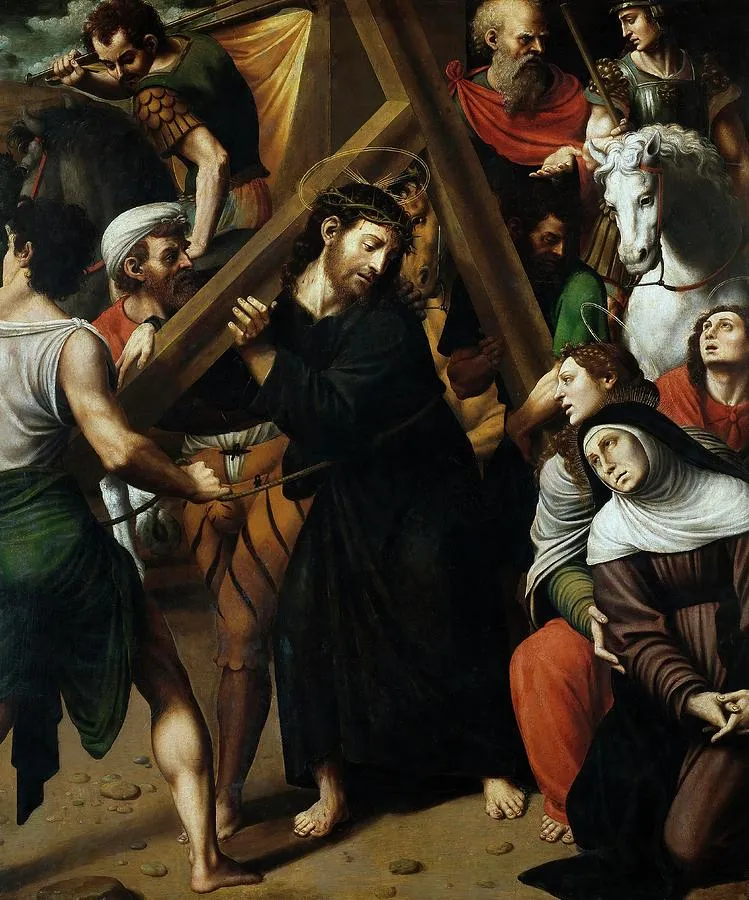
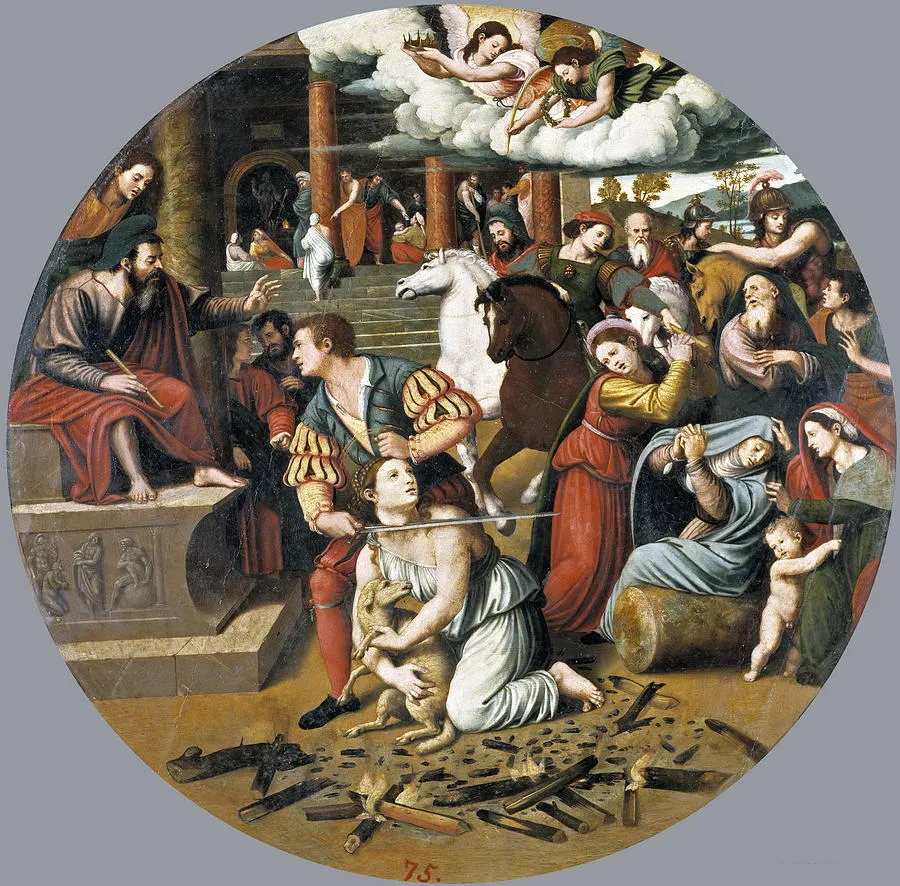
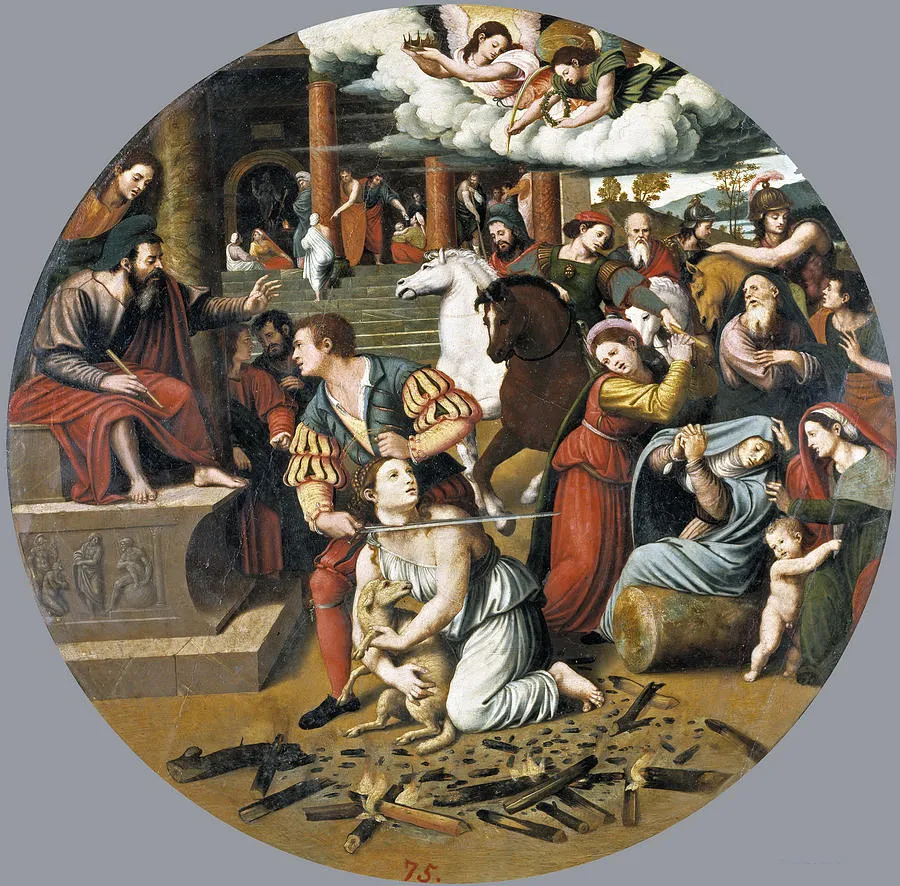
"Martyrdom of St Agnes" by Vicente Juan Juan de Juanes, also known as Masip (Macip), stands as a testament to the Spanish Renaissance movement. This hand-painted oil painting captures the dramatic narrative and spiritual fervor characteristic of the era. Like "Saint Stephen in the synagogue" and "La Virgen, Sedente," this masterpiece reflects the artist’s commitment to both faith and artistry, making it a sought-after piece among collectors of Spanish Renaissance fine art paintings for sale.
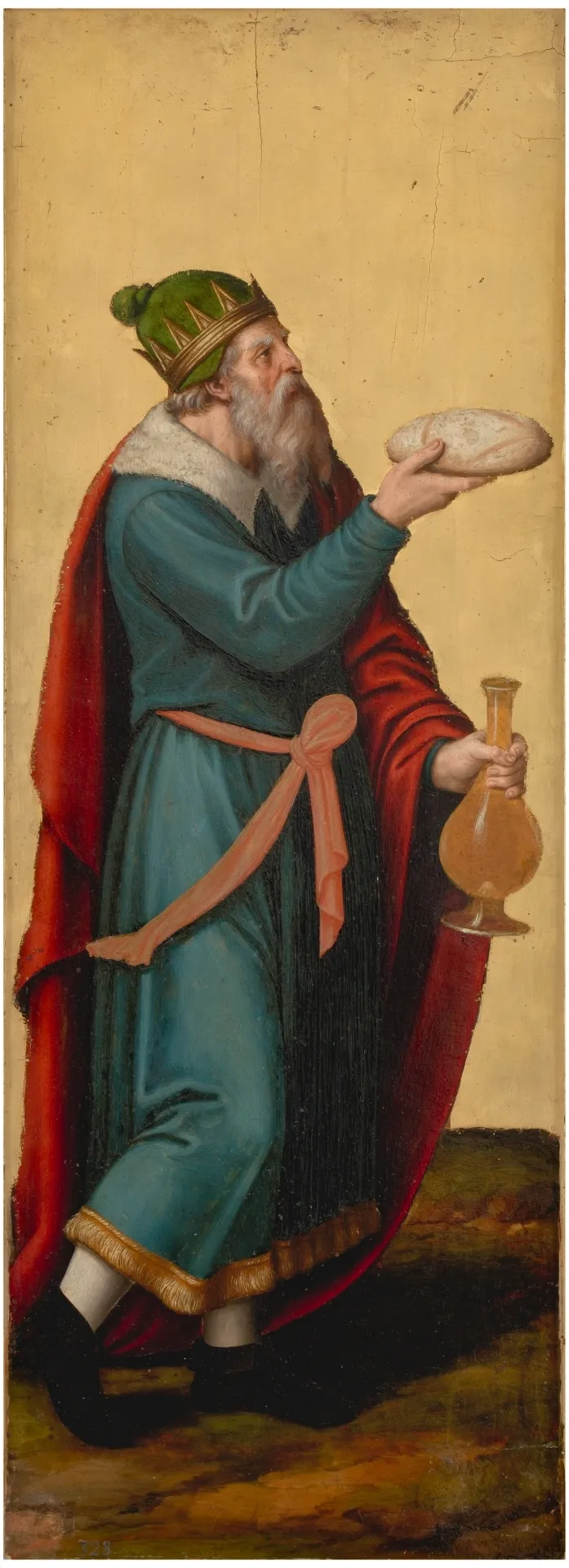
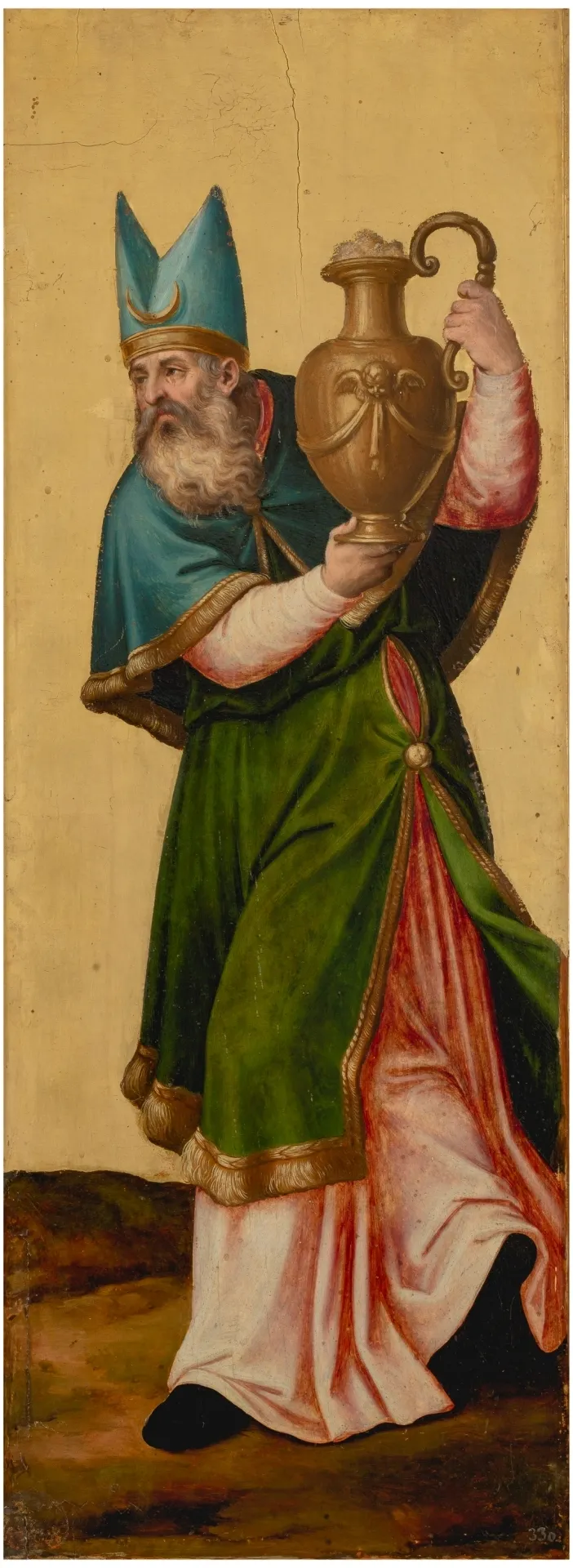
Within "Martyrdom of St Agnes," every element tells a story. The composition is rich with religious symbolism, echoing themes found in "Melquisedec, Rey De Salem" and "Martirio De San Esteban." As a hand-painted oil painting, it draws the viewer into the narrative of Saint Agnes’s sacrifice, a story deeply rooted in faith and resilience. The artist, Vicente Juan Juan de Juanes / Masip (Macip), masterfully weaves these symbols into a timeless Spanish Renaissance masterpiece.
For collectors seeking a fine art painting for sale, "Martyrdom of St Agnes" is an exceptional choice. The work stands alongside other masterpieces like "Saint Stephen in the synagogue" and "La Virgen, Sedente," each representing the Spanish Renaissance’s grandeur. With its detailed depiction and historical significance, this painting by Vicente Juan Juan de Juanes / Masip (Macip) offers both aesthetic value and a unique opportunity to own a piece of art history.
When Art Meets History
"Martyrdom of St Agnes" by Vicente Juan Juan de Juanes, also known as Masip (Macip), is a remarkable example of the Spanish Renaissance movement. This hand-painted oil painting captures the dramatic story of St Agnes, echoing the religious fervor of its era. Like other works from Juan de Juanes, the piece embodies the intersection of faith and artistry, making it a valuable reference for those interested in the narrative power of Spanish Renaissance masterpieces.
Techniques That Speak
Vicente Juan Juan de Juanes employed refined oil on canvas techniques in "Martyrdom of St Agnes," showcasing his mastery of light and color. The artist's skillful brushwork and attention to detail set this painting apart from other Spanish Renaissance works. By utilizing layered glazes and realistic textures, Juan de Juanes brings the story of St Agnes to life, emphasizing the technical prowess that defines this era’s most celebrated oil on canvas artworks.
Emotions on Display
The emotional depth in "Martyrdom of St Agnes" is palpable, as Vicente Juan Juan de Juanes communicates anguish, faith, and serenity in every brushstroke. This fine art painting for sale stands out for its expressive figures and dramatic composition, hallmarks of the Spanish Renaissance movement. Juan de Juanes’s ability to evoke empathy and spiritual reflection rivals that of his contemporaries, making this piece a touchstone for collectors and admirers of emotive religious art.
Coveted by Collectors
Collectors prize "Martyrdom of St Agnes" for its historical significance and exquisite execution by Vicente Juan Juan de Juanes. As a hand-painted oil painting from the Spanish Renaissance, it holds immense value in the art market. The scarcity of similar masterpieces and the artist’s esteemed reputation ensure continued demand. Its narrative and technical brilliance make it a sought-after treasure, reflecting the enduring allure of Spanish Renaissance fine art painting for sale.
Frequently Asked Questions About Martyrdom of St Agnes
What is the historical context of "Martyrdom of St Agnes"?
The "Martyrdom of St Agnes" is set in the early Christian period, reflecting the persecution faced by Christians during the Roman Empire. St Agnes, a young martyr, is celebrated for her unwavering faith and commitment to Christianity, which ultimately led to her execution around the year 304 AD.
Who was Vicente Juan Juan de Juanes, and what is his significance in art history?
Vicente Juan Juan de Juanes, also known as Masip or Macip, was a prominent Spanish painter of the Renaissance period. He is known for his religious works that exhibit a blend of naturalism and spiritual intensity, contributing significantly to the development of Spanish Baroque painting.
What artistic techniques are employed in "Martyrdom of St Agnes"?
The painting showcases Juanes's mastery of chiaroscuro, creating dramatic contrasts between light and shadow. The use of vibrant colors and intricate details in the figures and background enhances the emotional impact of the scene, drawing the viewer's attention to the central figure of St Agnes.
What symbols are present in the painting, and what do they represent?
Key symbols in "Martyrdom of St Agnes" include the lamb, which represents purity and innocence, and the palm branch, a traditional symbol of martyrdom. These elements underscore St Agnes's virtuous character and her sacrifice for her faith.
How does the composition of the painting contribute to its narrative?
The composition is carefully arranged to guide the viewer's eye towards St Agnes, emphasizing her central role in the narrative. The surrounding figures and the dramatic setting enhance the tension of the moment, effectively conveying the gravity of her martyrdom.
What influences can be seen in Juanes's portrayal of St Agnes?
Juanes's portrayal of St Agnes reflects influences from both Italian Renaissance art and Spanish religious traditions. His attention to anatomical accuracy and emotional expression is reminiscent of artists like Caravaggio, while his thematic focus on martyrdom aligns with the Counter-Reformation's emphasis on piety and devotion.
In what ways does "Martyrdom of St Agnes" reflect the values of the Counter-Reformation?
The painting embodies the Counter-Reformation's focus on the veneration of saints and the importance of martyrdom in the Catholic faith. By depicting St Agnes with dignity and reverence, Juanes reinforces the ideals of sacrifice and spiritual strength that were central to the movement.
What is the significance of the setting in "Martyrdom of St Agnes"?
The setting of the painting, often depicted with architectural elements that suggest a Roman backdrop, serves to contextualize St Agnes's martyrdom within the historical persecution of Christians. This setting enhances the dramatic effect and underscores the stakes of her faith.
How has "Martyrdom of St Agnes" been received by art critics and historians?
Art critics and historians have praised "Martyrdom of St Agnes" for its emotional depth and technical prowess. The painting is often regarded as a significant work within the Spanish Renaissance, illustrating Juanes's ability to convey complex themes of faith and sacrifice through visual art.
What impact did "Martyrdom of St Agnes" have on later artists?
The painting has influenced subsequent generations of artists by exemplifying the integration of emotional expression and religious themes. Its stylistic elements can be seen in the works of later Baroque painters who sought to evoke similar responses to themes of martyrdom and devotion.























_GFM_Painting_(1).webp)


 100% Hand-Painted: Finished in 3-6 Weeks

.png)












_1560s.webp)



_(1).webp)