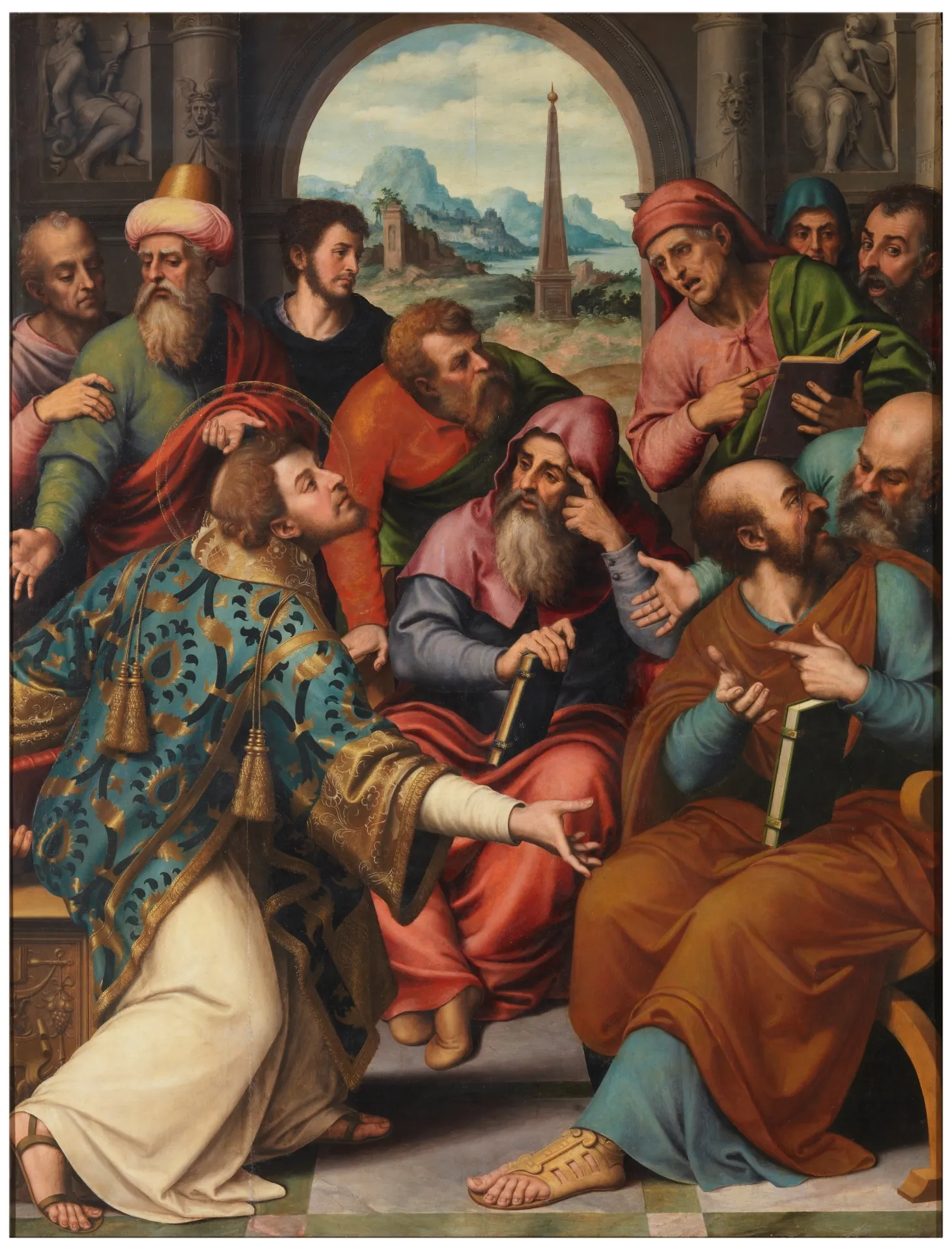
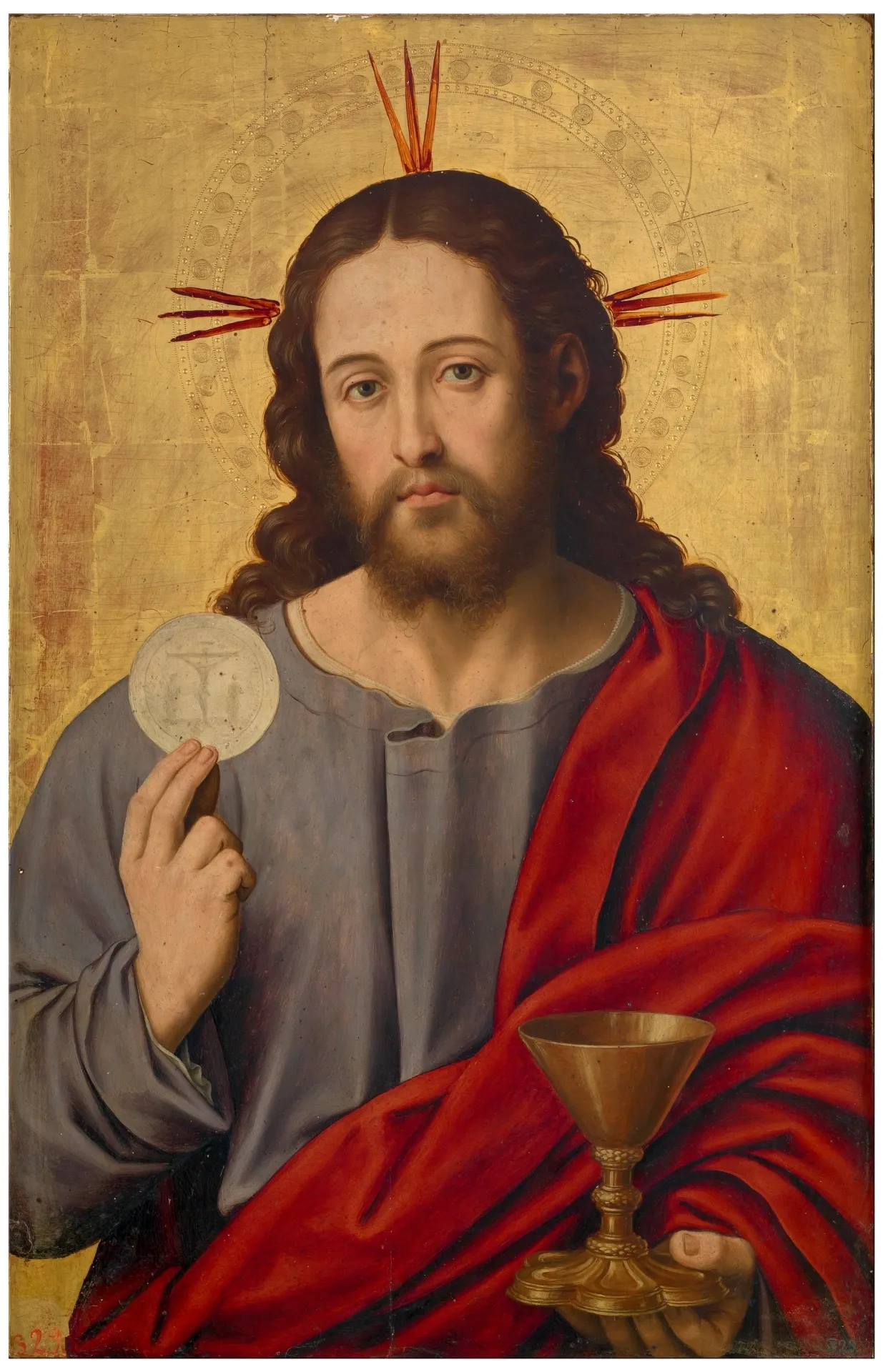
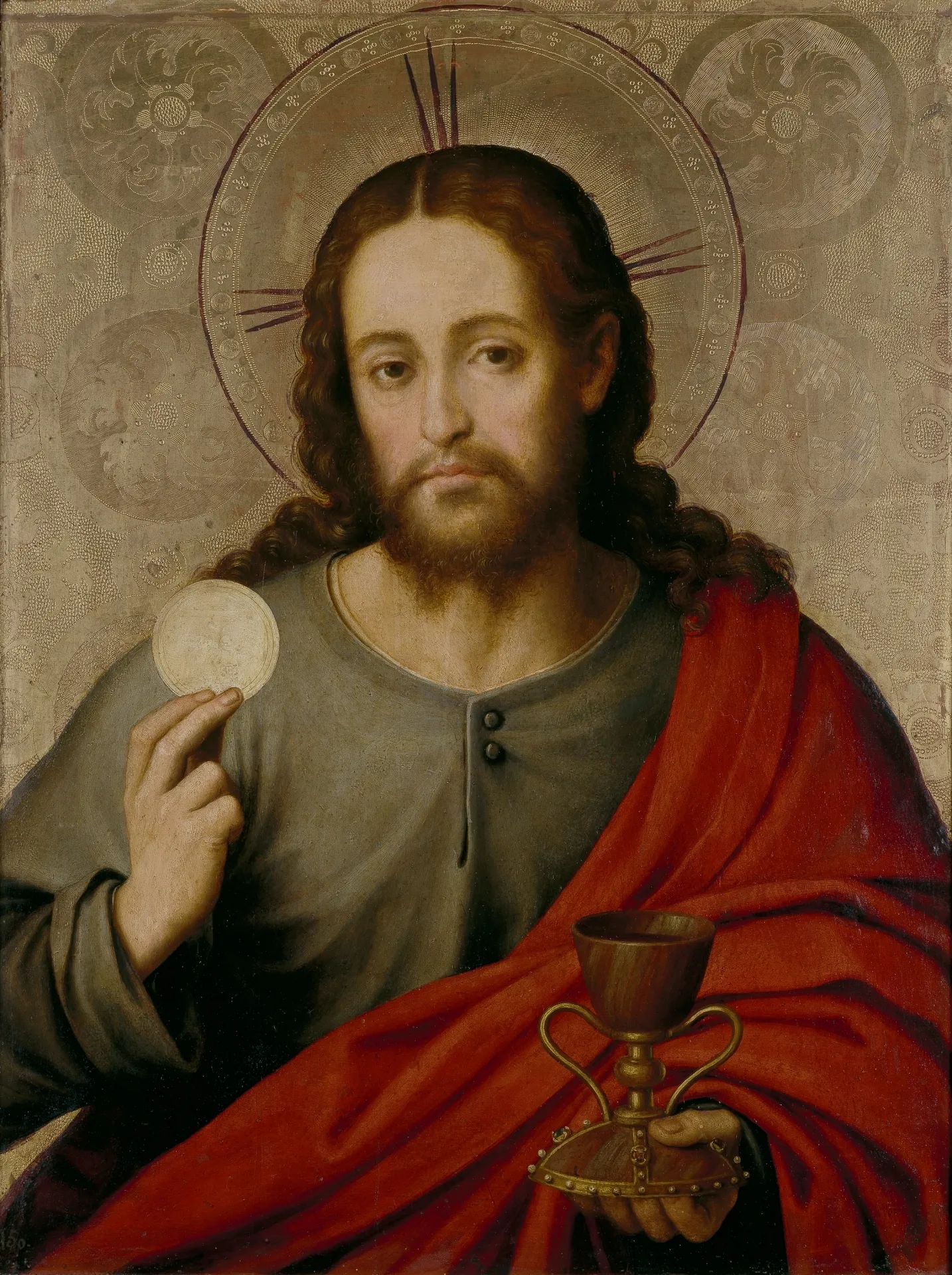
"Saint Stephen in the Synagogue" by Vicente Juan Juan de Juanes, also known as Vicente Masip, stands as a testament to the Spanish Renaissance movement. This hand-painted oil painting captures the spiritual fervor and artistic mastery that defined the era. Like his other works, including "El Salvador Con La Eucaristia" and "La Virgen," Juanes’ dedication to religious themes has made his paintings prized additions for collectors seeking authentic masterpieces from the Spanish Renaissance.
Vicente Juan de Juanes demonstrates consummate skill with oil on canvas, giving "Saint Stephen in the Synagogue" a remarkable sense of depth and emotion. His technique, echoed in related works such as "Entierro De San Esteban" and "San Esteban Acusado De Blasfemo," showcases the luminous color palette and precise detail characteristic of Spanish Renaissance art. Collectors searching for museum-quality oil on canvas pieces will appreciate the enduring beauty and technical prowess of Juanes’ creations.
In "Saint Stephen in the Synagogue," every element is imbued with symbolism, from the saint’s tranquil expression to the attentive figures around him. As with other fine art paintings for sale by Juanes, such as "Retrato De Un Caballero Santiaguista," the narrative depth invites viewers to explore the spiritual and historical context of the Spanish Renaissance. This painting not only tells the story of Saint Stephen but also reflects the broader religious and artistic currents of its time.
For those seeking a fine art painting for sale, "Saint Stephen in the Synagogue" by Vicente Juan Juan de Juanes is a remarkable acquisition. Its connection to the Spanish Renaissance and related masterpieces like "La Virgen, Sedente" ensures lasting value and appeal. Collectors and enthusiasts alike are drawn to the painting’s exquisite detail and spiritual resonance, making it a standout piece among the works of Juanes and his contemporaries.
When Art Meets History
"Saint Stephen in the Synagogue" by Vicente Juan Juan de Juanes, also known as Vicente Juan Masip, is a masterpiece of the Spanish Renaissance. This hand-painted oil painting captures a pivotal biblical scene, blending historical narrative with artistic innovation. The work stands as a testament to the era’s devotion to sacred storytelling, echoing the style found in other fine art painting for sale from the same movement, and highlighting the enduring legacy of Spanish Renaissance artists.
Techniques That Speak
Vicente Juan Juan de Juanes demonstrates exceptional skill in "Saint Stephen in the Synagogue" through his use of oil on canvas—a medium favored by Spanish Renaissance painters. The artist’s technique involves delicate layering and vibrant coloration, which enhances the realism and depth of the figures. Such mastery is evident in the meticulous rendering of textures and fabrics, making this oil on canvas a standout example among similar works from the period, including those by his contemporaries.
Emotions on Display
The painting conveys a profound range of emotions, from Saint Stephen’s serene faith to the fervor of the synagogue elders. Juan de Juanes skillfully uses light and shadow to heighten the drama, drawing viewers into the scene’s tension and spirituality. This hand-painted oil painting is celebrated for its ability to evoke empathy, a hallmark of Spanish Renaissance fine art. Collectors and art enthusiasts often seek such emotionally resonant works for their timeless appeal.
Coveted by Collectors
As a prime example of Spanish Renaissance artistry, "Saint Stephen in the Synagogue" remains highly sought after by collectors. The painting’s historical significance and artistic mastery make it a prized fine art painting for sale. Works by Vicente Juan Juan de Juanes, renowned for their vivid storytelling and technical excellence, continue to attract admiration alongside other masterpieces from the period, solidifying his reputation in the world of art collecting.
Frequently Asked Questions About Saint Stephen in the synagogue
What is the historical significance of "Saint Stephen in the synagogue"?
This painting depicts the martyrdom of Saint Stephen, the first Christian martyr, highlighting the early conflict between Christians and Jewish authorities. It serves as a reflection of the tensions during the time of its creation in the 16th century.
Who was Vicente Juan Juan de Juanes and what is his contribution to art?
Vicente Juan Juan de Juanes, also known as Masip, was a prominent Spanish painter of the Renaissance period. His works are characterized by their emotional depth and intricate detail, contributing significantly to the development of religious art in Spain.
What artistic techniques are employed in "Saint Stephen in the synagogue"?
The painting showcases Juanes' mastery of chiaroscuro, creating a dramatic contrast between light and shadow. This technique enhances the emotional intensity of the scene, drawing the viewer's eye to the central figure of Saint Stephen.
What symbols are present in the painting, and what do they represent?
Key symbols include the scrolls held by the figures, representing the Jewish law and teachings, and the stones, which signify the impending martyrdom of Saint Stephen. These elements underscore the conflict between faiths and the sacrifices made for belief.
How does "Saint Stephen in the synagogue" reflect the religious context of its time?
The painting reflects the Counter-Reformation's emphasis on clarity and emotional engagement in religious art. It aims to inspire devotion and convey the message of martyrdom and faith amidst persecution, resonating with the Catholic Church's goals during the period.
What influences can be seen in Juanes' style in this painting?
Juanes' style is influenced by Italian Renaissance artists, particularly in his use of composition and anatomical precision. However, he also incorporates Spanish elements, creating a unique fusion that enhances the painting's narrative depth.
What is the significance of the setting in "Saint Stephen in the synagogue"?
The synagogue setting is crucial as it situates the conflict within the Jewish community, emphasizing the historical context of early Christianity. It serves as a backdrop for the dramatic confrontation between Saint Stephen and the religious authorities.
How does the portrayal of Saint Stephen contribute to the overall message of the painting?
Saint Stephen is depicted with a serene expression, embodying faith and conviction in the face of adversity. This portrayal reinforces the theme of steadfastness in belief, serving as an inspiration for viewers to remain resolute in their faith.
What role did "Saint Stephen in the synagogue" play in the development of Spanish religious art?
This painting is a pivotal example of the transition in Spanish religious art towards more emotive and narrative-driven works. It paved the way for future artists to explore themes of martyrdom and divine grace in their own interpretations.
Where can "Saint Stephen in the synagogue" be viewed today?
The painting is housed in a prominent art collection, where it continues to be studied and appreciated for its historical and artistic value. Visitors can view it as part of exhibitions focusing on Renaissance art and religious themes.























_GFM_Painting_(1).webp)


 100% Hand-Painted: Finished in 3-6 Weeks

.png)












_1560s.webp)



_(1).webp)