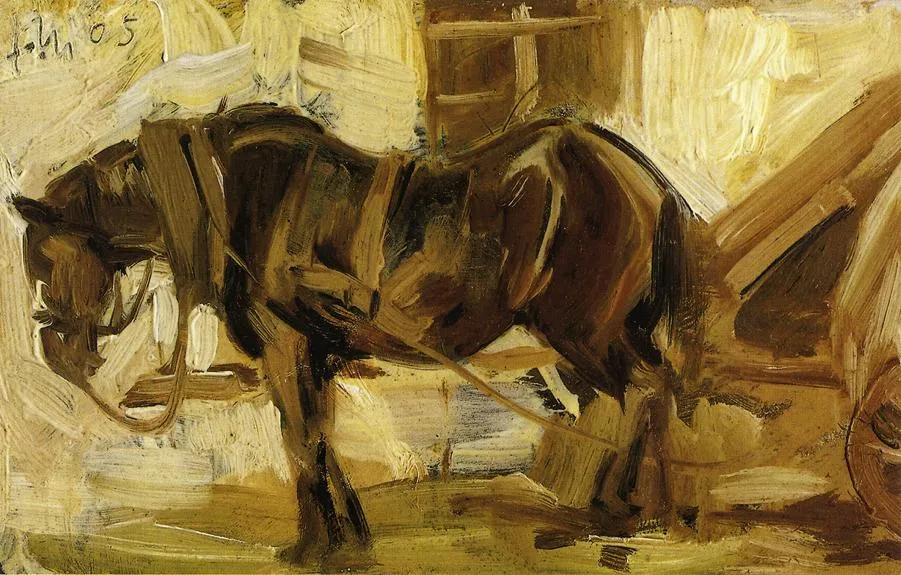
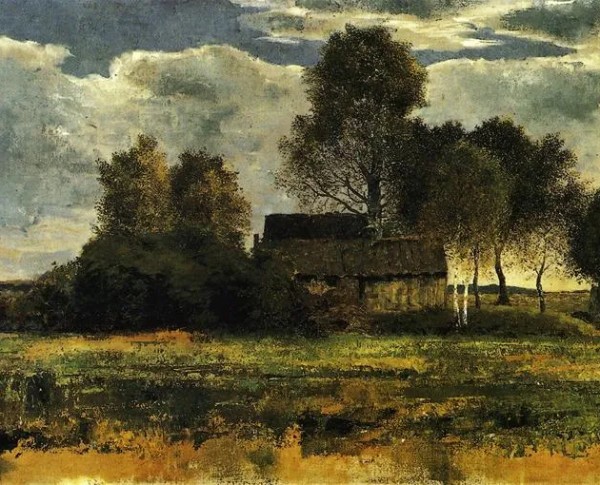
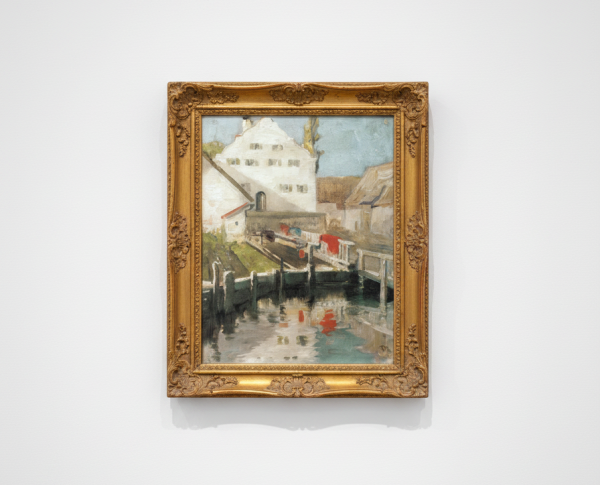
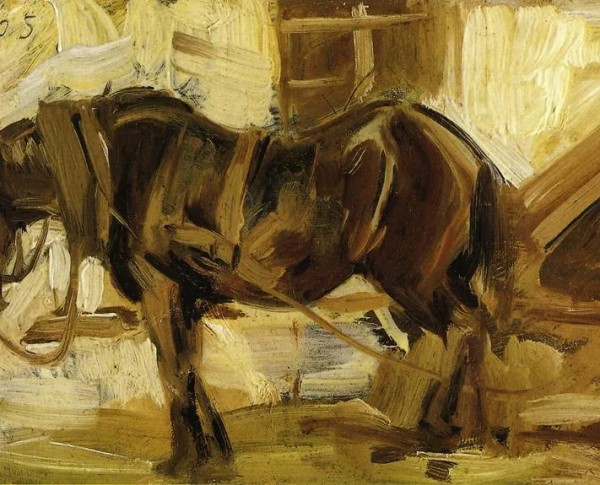
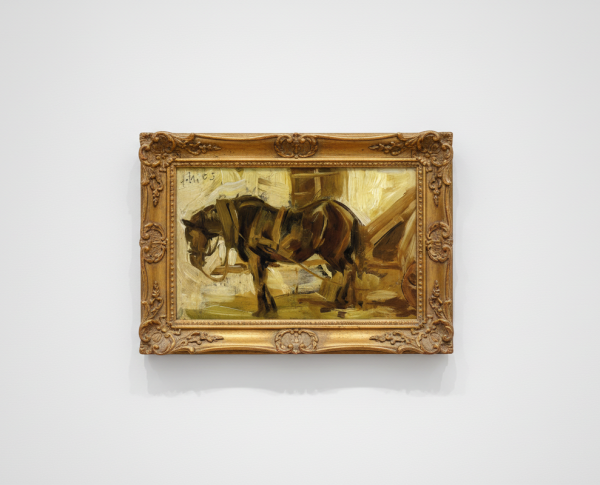
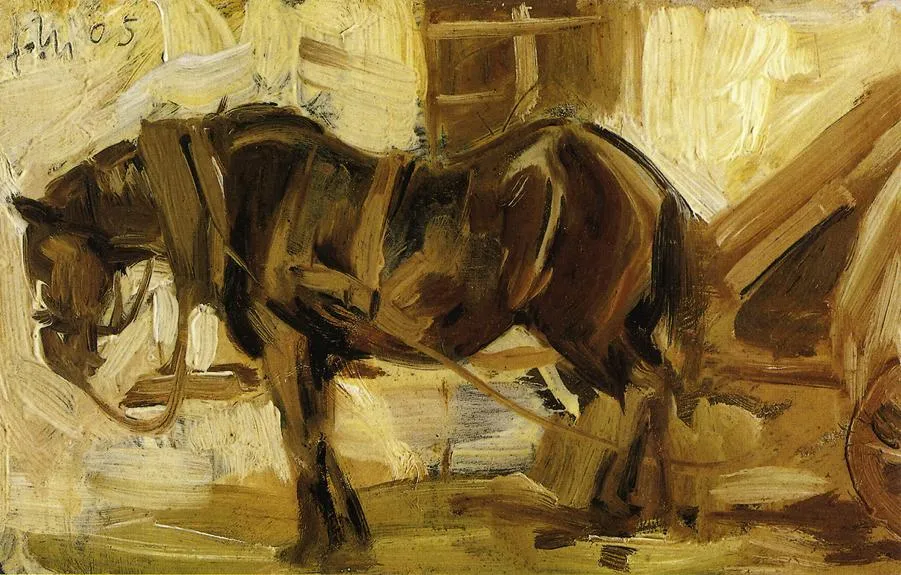
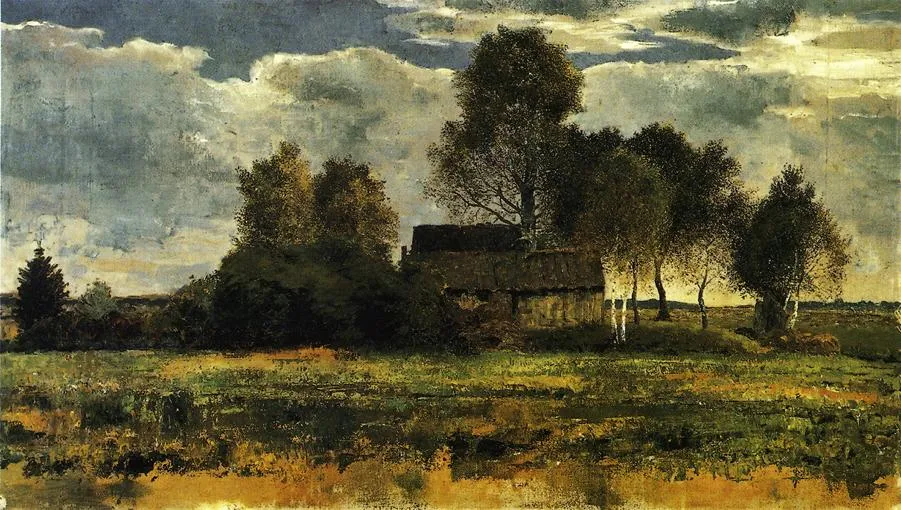
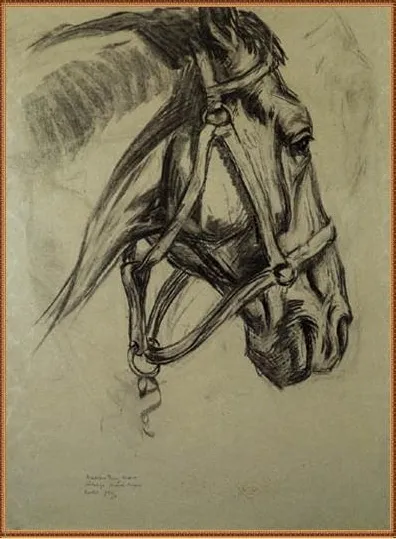
The technique behind "Small Horse Study" exemplifies Marc’s exceptional skill with oil on canvas. His dynamic brushwork and bold color choices breathe life into the subject, transforming a simple animal study into a masterpiece of modern art. Franz Marc’s commitment to the ideals of Expressionism is evident in every detail, making this painting a valuable addition to any collection. Pairing it with related products, such as "Cottages on the Dachau Marsh, Indersdorf," enriches any fine art display.
"Small Horse Study" is more than just a depiction of a horse; it is a symbolic reflection of Franz Marc’s deep spiritual connection with nature, a hallmark of Expressionism. This fine art painting for sale invites viewers to interpret the vibrant colors and stylized forms, revealing layers of meaning beneath the surface. Collectors and enthusiasts often find that related products like "Cottages on the Dachau Marsh, Indersdorf" offer further insight into Marc’s artistic journey.
Owning "Small Horse Study" by Franz Marc means possessing a piece of Expressionist history. As a hand-painted oil painting, it represents both artistic innovation and enduring value. Discerning collectors appreciate the significance of Marc’s work and often seek out complementary pieces, such as "Cottages on the Dachau Marsh, Indersdorf," to enhance their collections. This masterpiece remains a fine art painting for sale that appeals to those who understand the legacy of Expressionism.
When Art Meets History
"Small Horse Study" by Franz Marc stands as a hallmark of the Expressionism movement, capturing a transformative era in early twentieth-century art. This hand-painted oil painting reflects Marc’s fascination with animals as spiritual symbols, a theme also explored in his renowned works like "Morning" and "Death and the Child." As Expressionism flourished, artists like Marc redefined traditional forms, making each canvas a living testament to the emotional and historical shifts of their time.
Techniques That Speak
Franz Marc’s "Small Horse Study" is a striking example of oil on canvas technique, notable for its vibrant colors and bold brushwork. The artist’s dynamic layering and expressive lines imbue the painting with movement and energy, akin to his other masterpieces such as "Madonna" and "Landscape. Maridalen by Oslo." Marc’s technical prowess in manipulating oil paints enabled him to convey profound emotion and symbolic meaning, distinguishing his work within the Expressionism movement.
Emotions on Display
In "Small Horse Study," Franz Marc channels the raw intensity characteristic of Expressionism, using vivid hues and dynamic forms to evoke deep emotional responses. The painting’s subject—a horse, rendered with sensitivity—becomes a conduit for exploring themes of innocence and vitality. Similar to the emotional impact found in "Vampire" and "Death and the Child," Marc’s fine art painting for sale resonates with viewers, offering a window into the artist’s inner world and the spirit of the era.
Coveted by Collectors
As a celebrated work by Franz Marc, "Small Horse Study" is highly sought after among collectors and enthusiasts of the Expressionism movement. Its connection to other iconic paintings such as "Morning" and "Landscape. Maridalen by Oslo" only enhances its allure. Owning this hand-painted oil painting not only brings a piece of art history into one’s collection but also serves as a testament to the enduring appeal and value of Expressionist masterpieces.
Related Expressionism Hand-Painted Oil Paintings by Other Artists
Other Famous Expressionism Artists:
Frequently Asked Questions About Small Horse Study
What is the historical context of "Small Horse Study"?
"Small Horse Study" was created during the early 20th century, a period marked by significant artistic experimentation and the rise of modernism. Franz Marc, a key figure in the Expressionist movement, sought to explore the emotional and spiritual connections between humans and animals through his work.
What artistic techniques did Franz Marc employ in "Small Horse Study"?
In "Small Horse Study," Marc utilized bold colors and dynamic forms to convey the essence of the horse. His use of simplified shapes and vivid hues reflects his interest in abstraction and the emotional resonance of color, which was a hallmark of his artistic style.
What does the horse symbolize in Franz Marc's work?
The horse is a recurring motif in Marc's oeuvre, symbolizing freedom, vitality, and the connection to nature. In "Small Horse Study," the horse represents the ideal of purity and the spiritual essence of the animal world, contrasting with the industrialization of society.
How does "Small Horse Study" reflect Franz Marc's artistic philosophy?
Marc believed that art should express deeper truths and emotions beyond mere representation. "Small Horse Study" embodies his philosophy by capturing the essence of the horse through abstraction and color, inviting viewers to engage with the emotional and spiritual dimensions of the subject.
In what way does "Small Horse Study" connect to the broader Expressionist movement?
As part of the Expressionist movement, "Small Horse Study" emphasizes emotional experience over realistic representation. Marc's focus on color and form to evoke feelings aligns with the movement's goal of conveying subjective experiences and the inner emotional landscape of the artist.
What influences can be seen in "Small Horse Study" from other art movements?
Marc's work in "Small Horse Study" shows influences from Post-Impressionism and Fauvism, particularly in his use of color and brushwork. The vibrant palette and emotional depth reflect the impact of these movements on his artistic development and approach to representation.
How does the composition of "Small Horse Study" contribute to its overall impact?
The composition of "Small Horse Study" is characterized by its dynamic arrangement of shapes and colors, which creates a sense of movement and energy. This composition draws the viewer's eye and enhances the emotional intensity of the piece, making the horse appear almost alive.
What role does color play in "Small Horse Study"?
Color plays a crucial role in "Small Horse Study," as Marc uses it to convey emotion and symbolism. The vibrant blues and yellows not only enhance the visual appeal but also evoke feelings of joy and vitality, reflecting Marc's belief in the spiritual significance of color.
How has "Small Horse Study" been received by critics and art historians?
"Small Horse Study" has been widely praised for its innovative approach and emotional depth. Critics and art historians recognize it as a significant work within Marc's body of work, highlighting its role in advancing the principles of Expressionism and its lasting impact on modern art.
What is the significance of "Small Horse Study" in Franz Marc's artistic journey?
"Small Horse Study" marks an important stage in Marc's artistic journey, showcasing his transition towards abstraction and his deepening exploration of the relationship between humans and nature. It reflects his commitment to expressing the spiritual essence of the animal world, a theme that would resonate throughout his career.























_GFM_Painting_(1).webp)


 100% Hand-Painted: Finished in 3-6 Weeks

.png)















_(1).webp)