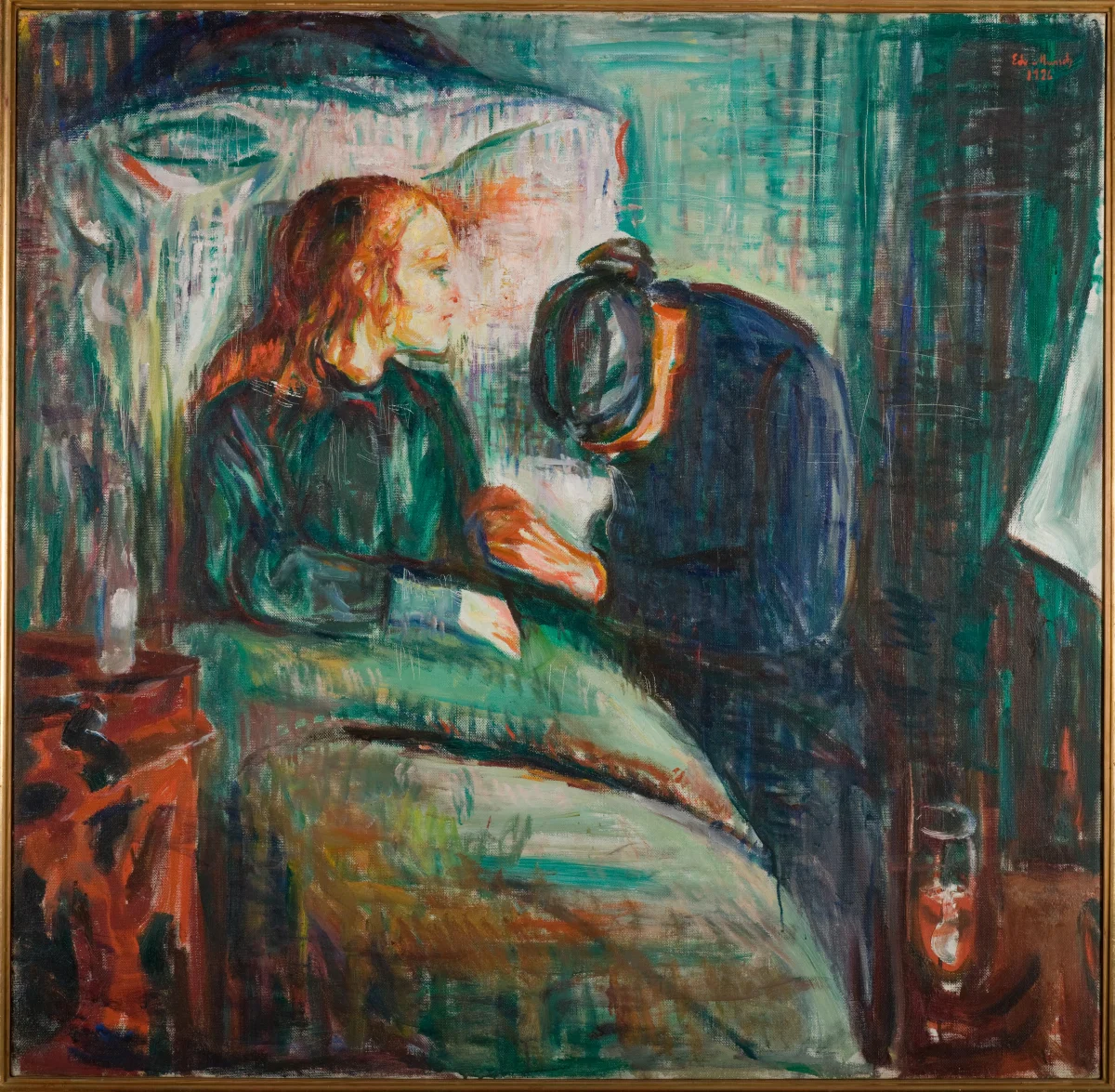
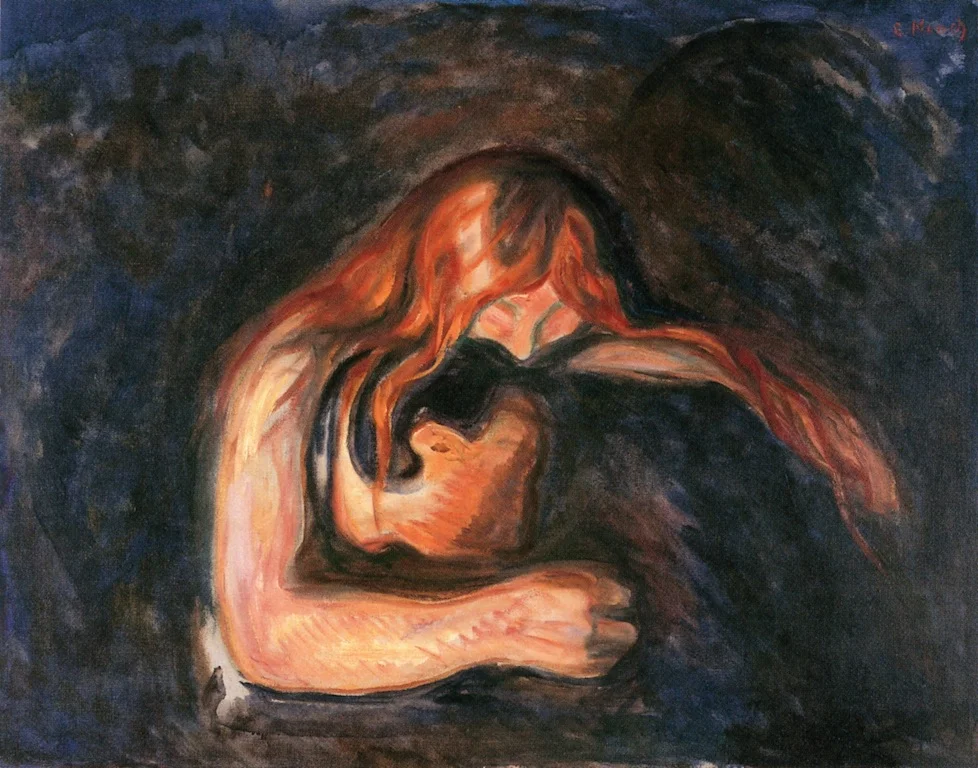
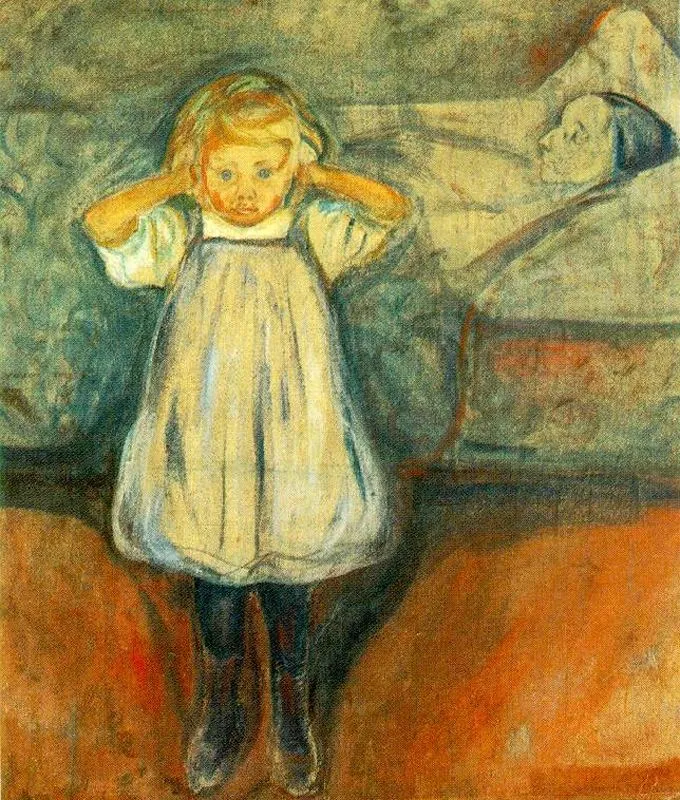
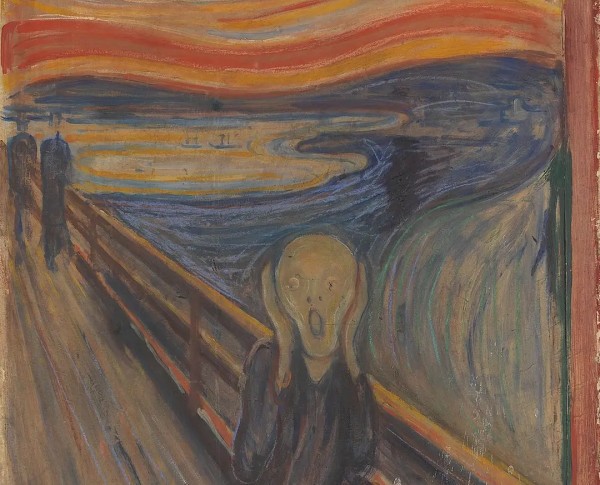
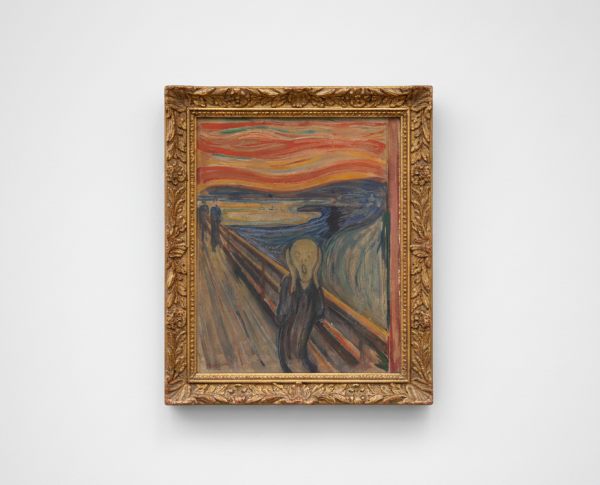
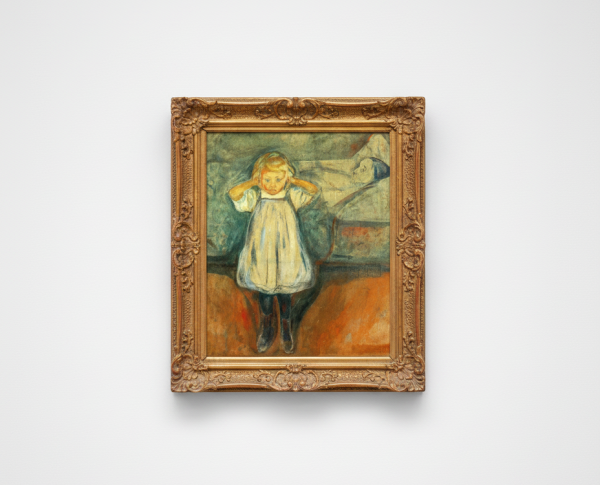
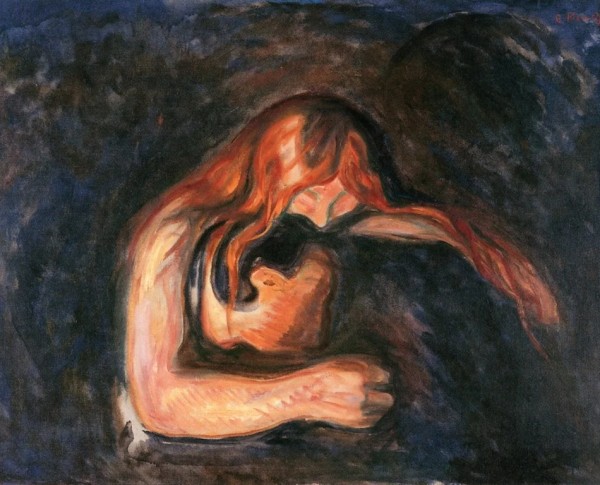
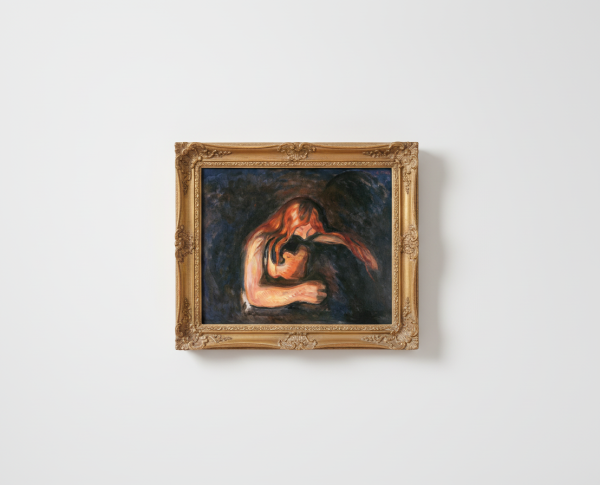
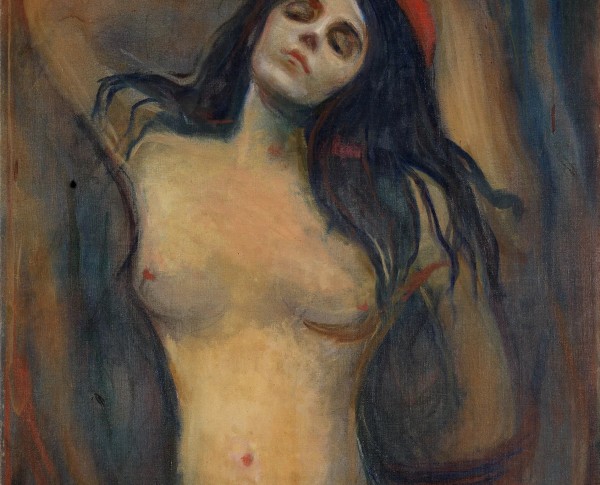
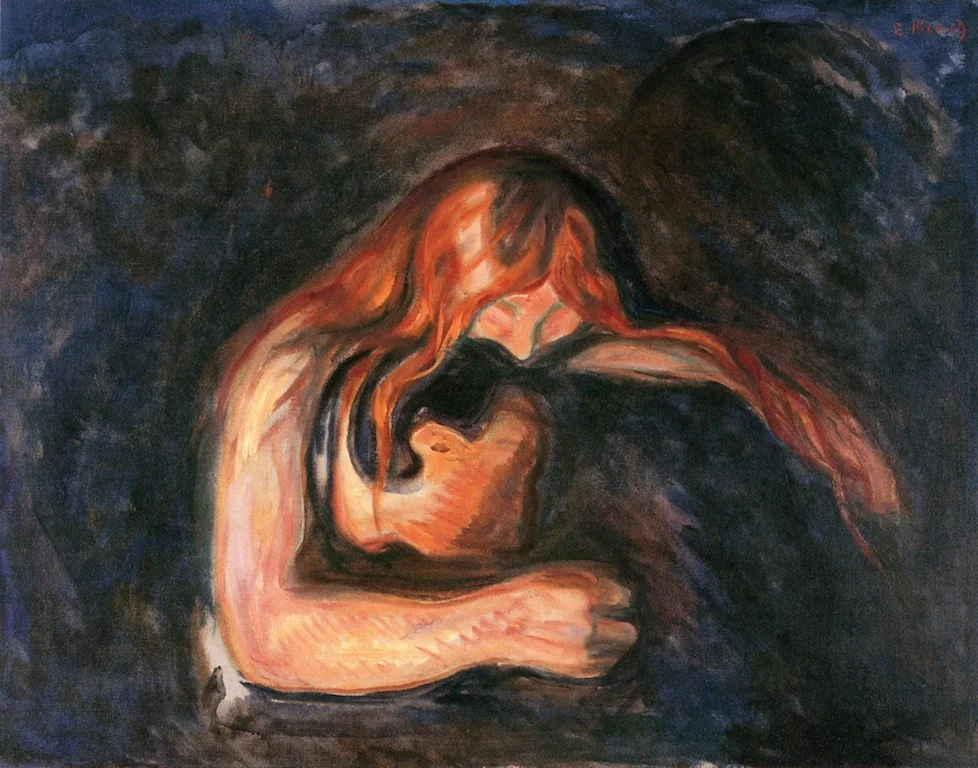
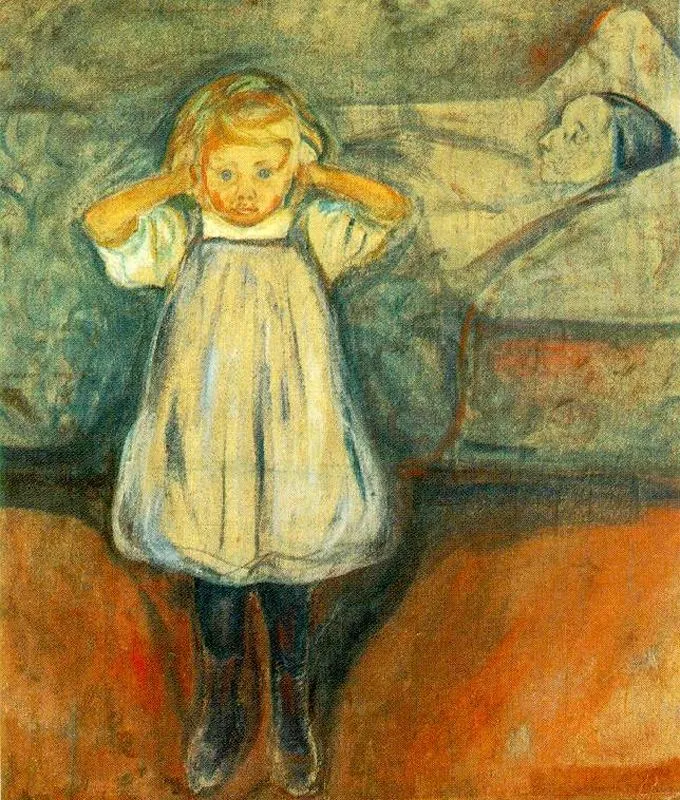
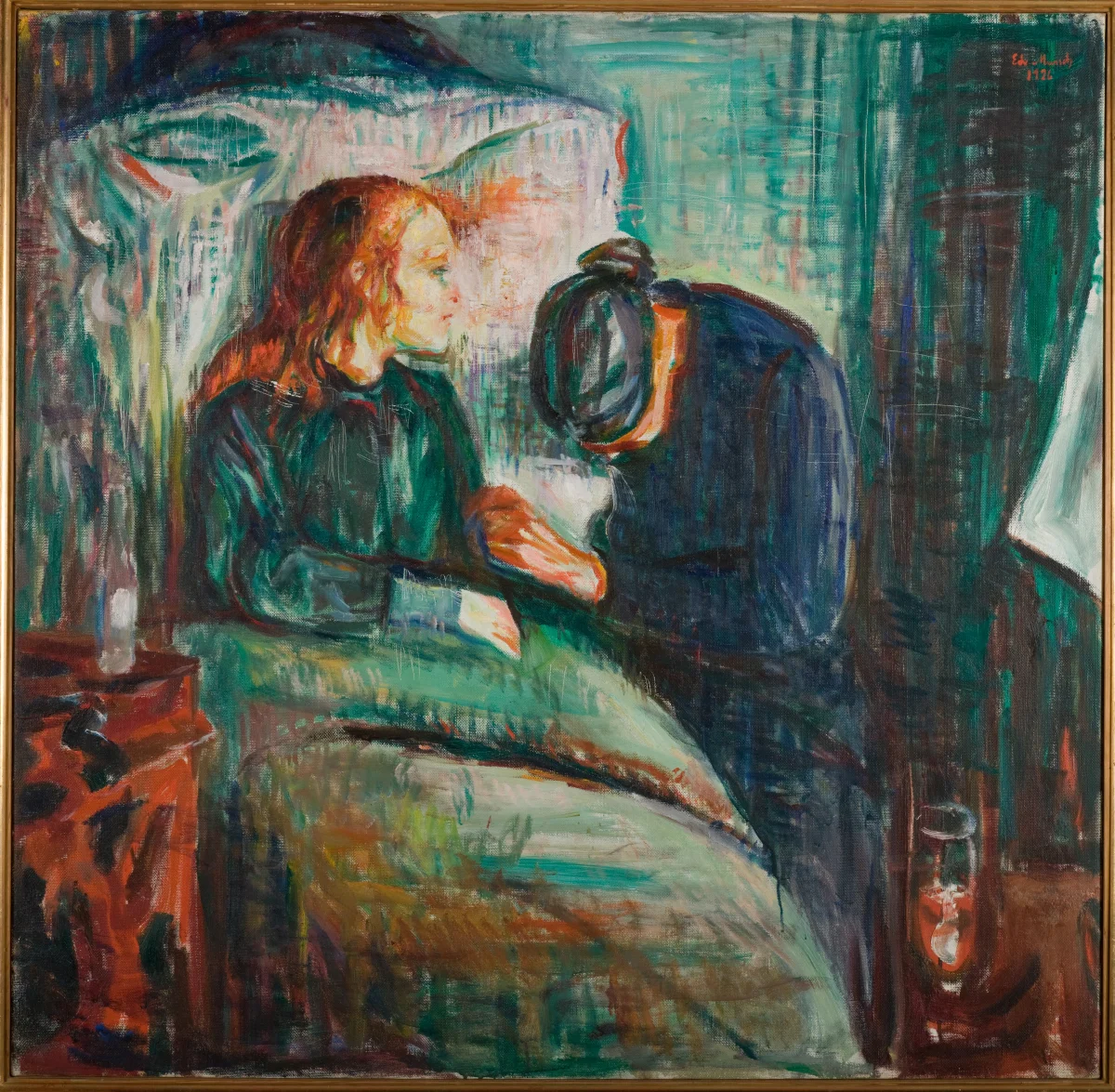
Edvard Munch’s "Vampire" demonstrates his exceptional skill with oil on canvas, using bold colors and dynamic brushwork to create intense emotional resonance. The Expressionism movement thrives in each stroke, revealing raw vulnerability and passion. Munch’s technique in this oil on canvas painting aligns with his other iconic pieces such as "Death and the Child" and "The Sick Child," showcasing his ability to convey deep psychological themes through artistic mastery.
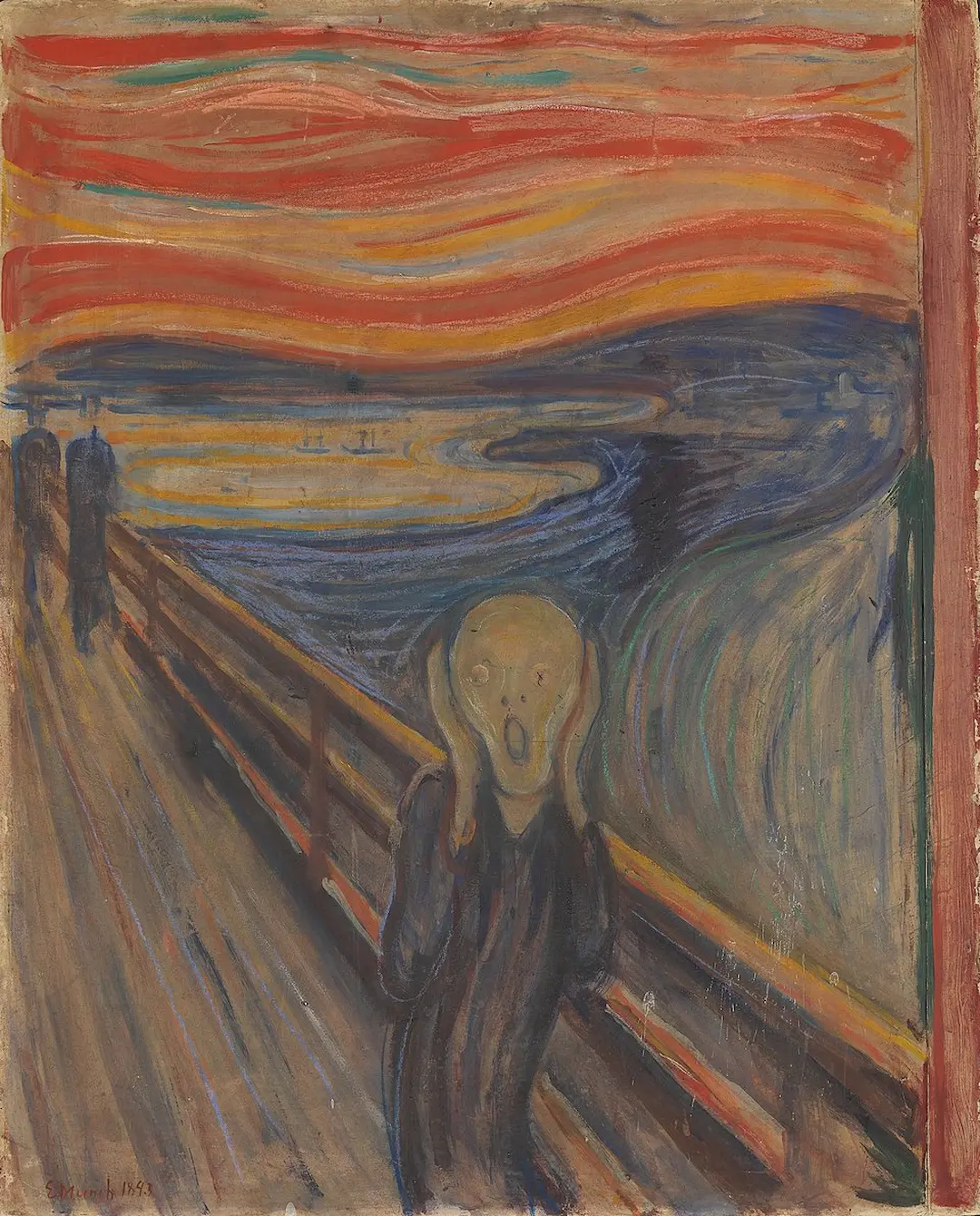
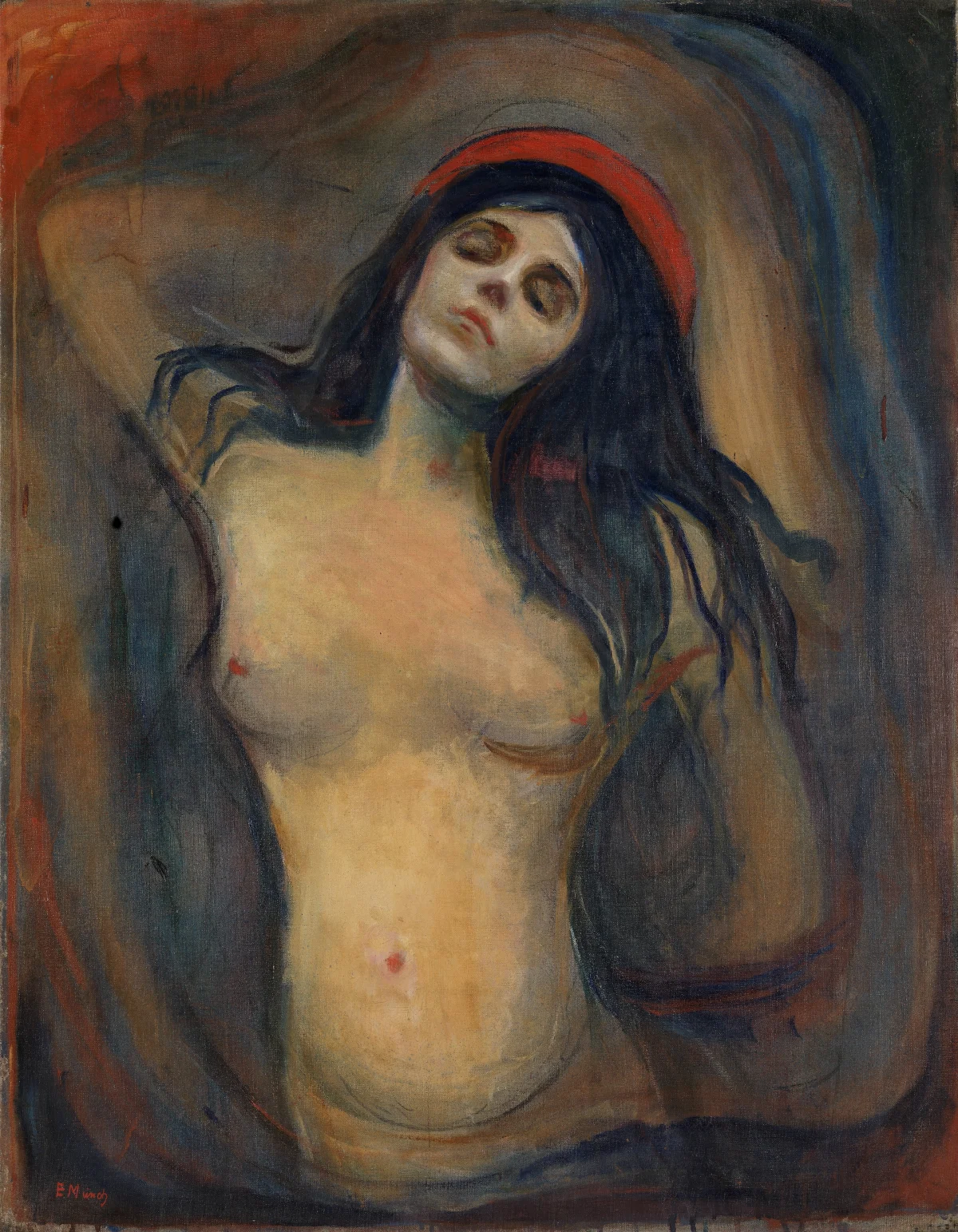
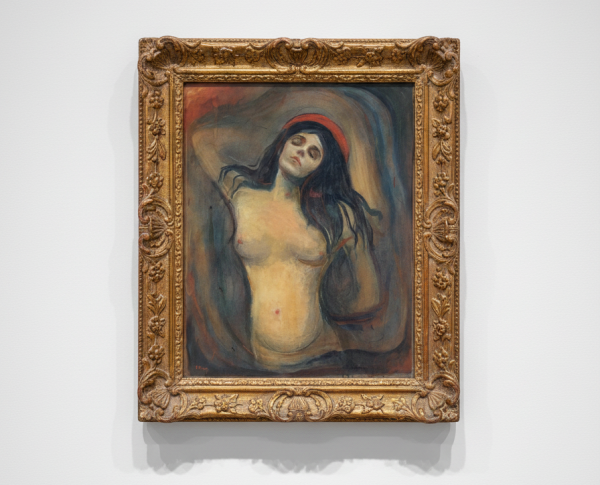
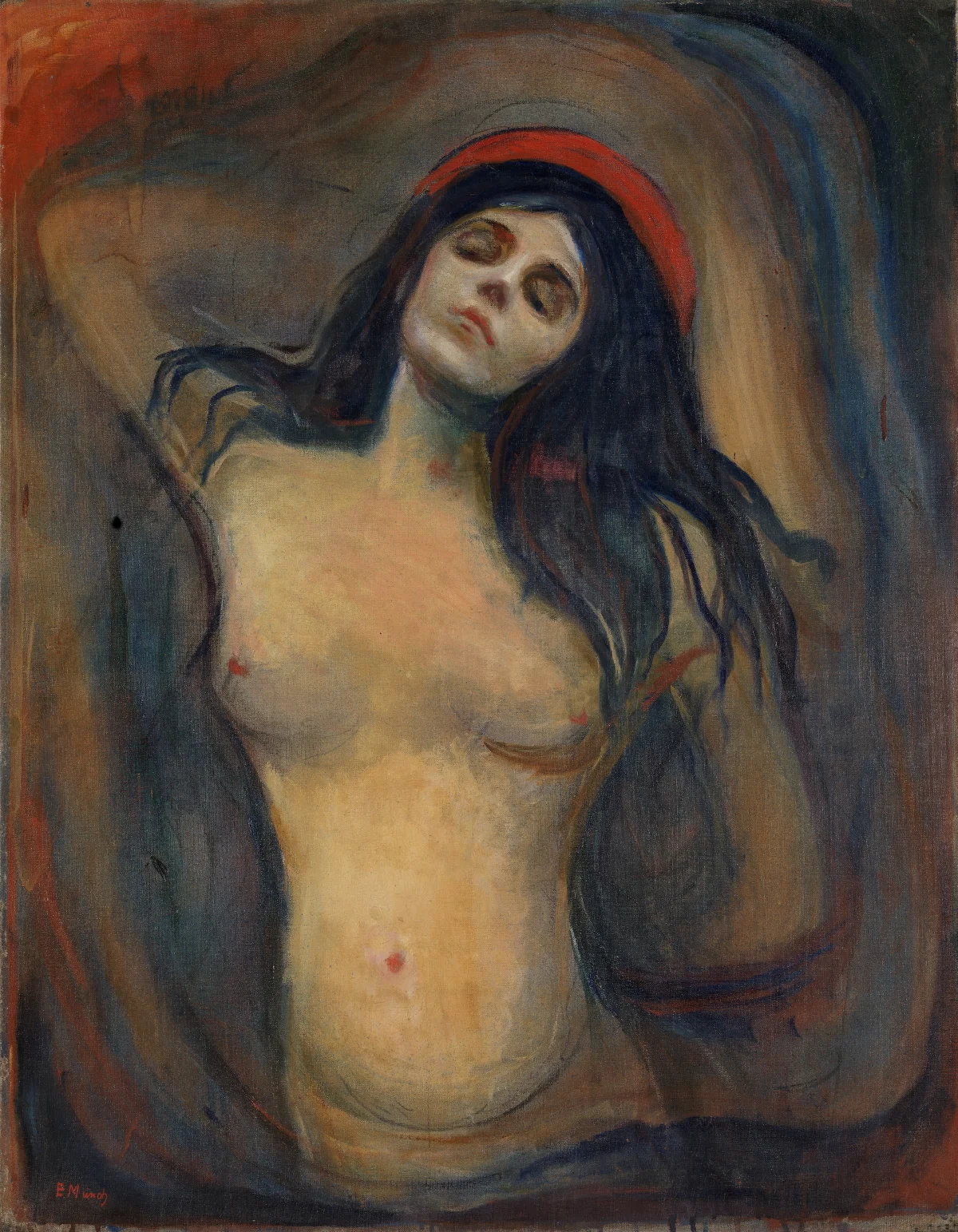
In "Vampire," Munch weaves a narrative rich with symbolism, exploring themes of love, pain, and despair. As a fine art painting for sale, its haunting imagery and ambiguous embrace have intrigued viewers for generations. The Expressionism movement, as seen in this work, allowed Munch to explore the depths of human emotion, much like in "The Scream" and "Madonna." Each element in the painting invites interpretation, making it a conversation piece for any art collection.
For collectors seeking a fine art painting for sale, "Vampire" by Edvard Munch remains a prized acquisition. Its legacy within the Expressionism movement, alongside masterpieces like "Madonna," "The Scream," and "Death and the Child," enhances its desirability. The hand-painted oil painting technique ensures each detail is preserved, offering both aesthetic beauty and historical significance. Owning this piece means holding a fragment of art history, cherished by enthusiasts worldwide.
When Art Meets History
"Vampire" by Edvard Munch, a pivotal work in the Expressionism movement, was created in 1895 and reflects the turbulent spirit of its time. This evocative hand-painted oil painting captures the psychological tension and existential dread that defined Munch’s oeuvre. Alongside masterpieces like "The Scream" and "Madonna," "Vampire" stands as a testament to the era’s fascination with emotional depth and human vulnerability, making it an essential chapter in the story of modern art.
Techniques That Speak
Edvard Munch’s distinctive use of oil on canvas in "Vampire" showcases his mastery of expressive brushwork and bold color. The swirling, almost haunting application of paint brings the figures to life, heightening the sense of intimacy and unease. This technique, also evident in his related paintings, allows Munch to evoke raw emotion and psychological complexity, making each oil on canvas piece a deeply personal and immersive experience for the viewer.
Emotions on Display
"Vampire" is a fine art painting for sale that delves into themes of love, fear, and vulnerability, hallmarks of Edvard Munch’s Expressionist style. The intertwined figures, rendered with dramatic contrast and shadow, evoke both tenderness and menace. As with "The Scream," Munch’s ability to project intense feeling onto the canvas makes "Vampire" a powerful exploration of the human psyche, resonating deeply with audiences even today.
Coveted by Collectors
Collectors and art enthusiasts alike are drawn to "Vampire" for its historical significance and haunting beauty. As a coveted hand-painted oil painting by Edvard Munch, this work represents a key moment in the Expressionism movement. Its rarity and connection to iconic related paintings make it highly sought-after in the world of fine art. Owning such a masterpiece is a testament to one’s appreciation for the transformative power of Munch’s vision.
Frequently Asked Questions About Vampire
What is the historical context of Edvard Munch's "Vampire"?
"Vampire" was created in 1893, during a period marked by significant social and psychological upheaval in Europe. This era saw the rise of modernism and a growing interest in the human psyche, which Munch explored through his art.
What artistic movements influenced "Vampire"?
Edvard Munch was influenced by Symbolism and Impressionism. "Vampire" embodies the Symbolist movement's focus on emotional experience and the exploration of themes such as love, death, and existential angst.
What are the main themes represented in "Vampire"?
The painting explores themes of love, desire, and the darker aspects of human relationships. The figure of the vampire symbolizes both seduction and the consuming nature of passion.
How does Munch use color in "Vampire"?
Munch employs a striking palette dominated by reds and dark tones, which evoke feelings of passion and danger. The use of color enhances the emotional intensity of the scene, drawing the viewer into the psychological turmoil of the subjects.
What is the significance of the composition in "Vampire"?
The composition features a central figure of a woman embracing a man, creating a sense of intimacy and tension. The swirling lines and forms contribute to a feeling of unease, reflecting the tumultuous emotions associated with love and desire.
What role does symbolism play in "Vampire"?
Symbolism is central to "Vampire," with the vampire figure representing not just a literal creature but also the metaphorical consumption of one's spirit and vitality through obsessive love. This duality invites various interpretations of the human condition.
How does "Vampire" relate to Munch's other works?
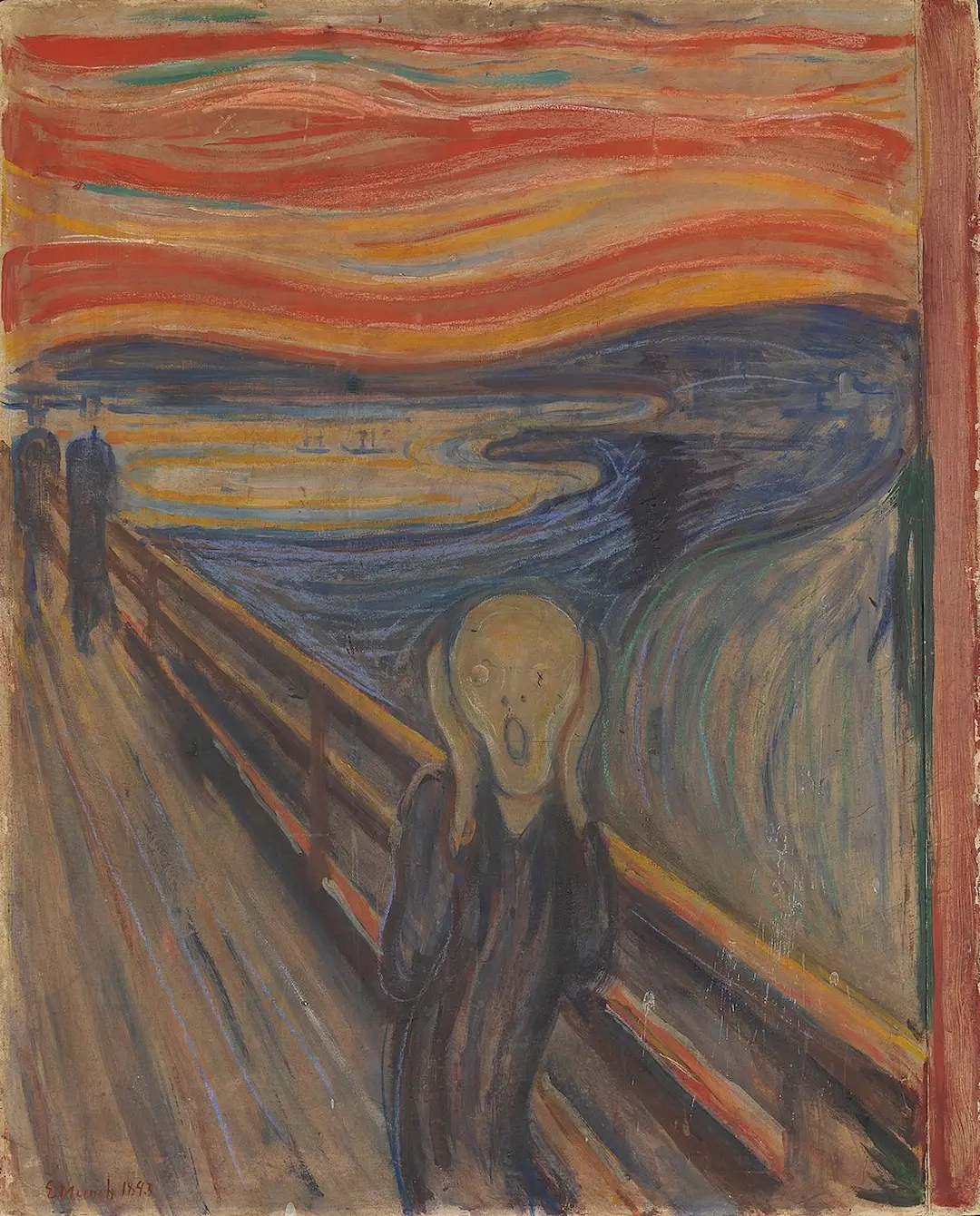
"Vampire" is part of Munch's exploration of themes such as love, anxiety, and death, which are prevalent in his broader oeuvre. Works like "The Scream" share similar emotional depth and psychological complexity, highlighting Munch's focus on the human experience.
What techniques did Munch use to create "Vampire"?
Munch utilized oil on canvas, employing bold brushstrokes and expressive forms to convey emotion. His technique emphasizes the psychological aspects of the subjects, creating a sense of movement and urgency within the composition.
What impact did "Vampire" have on the art world?
"Vampire" has had a lasting impact on the art world, influencing later artists in their exploration of psychological themes and emotional expression. Munch's ability to convey complex human emotions paved the way for future movements, including Expressionism.
How is "Vampire" perceived in contemporary art discussions?
In contemporary art discussions, "Vampire" is often regarded as a seminal work that challenges traditional notions of love and desire. Its exploration of darker themes continues to resonate, making it a relevant piece in discussions about human relationships and emotional complexity.






















_GFM_Painting_(1).webp)


 100% Hand-Painted: Finished in 3-6 Weeks

.png)















_(1).webp)