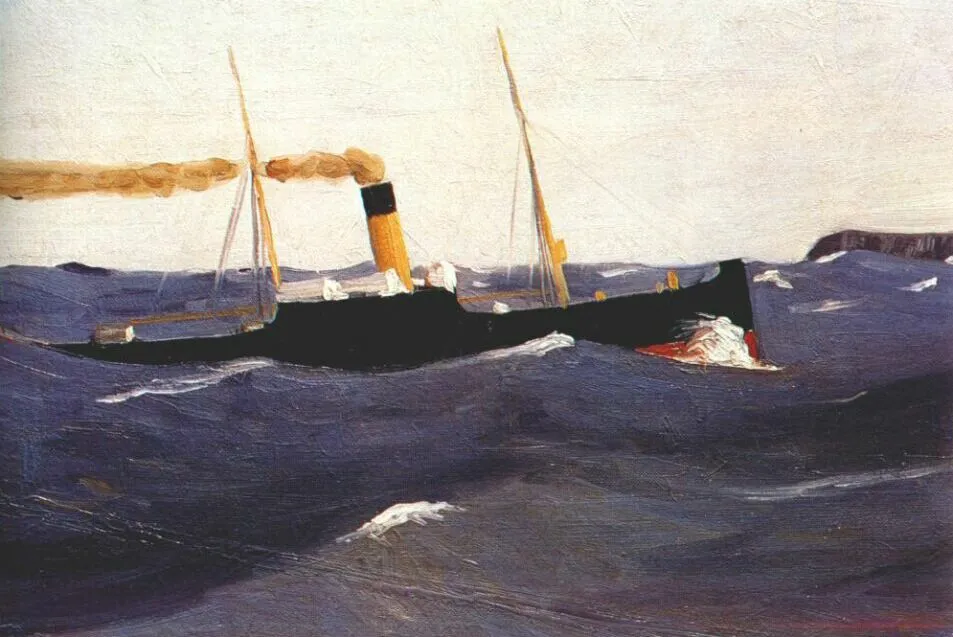
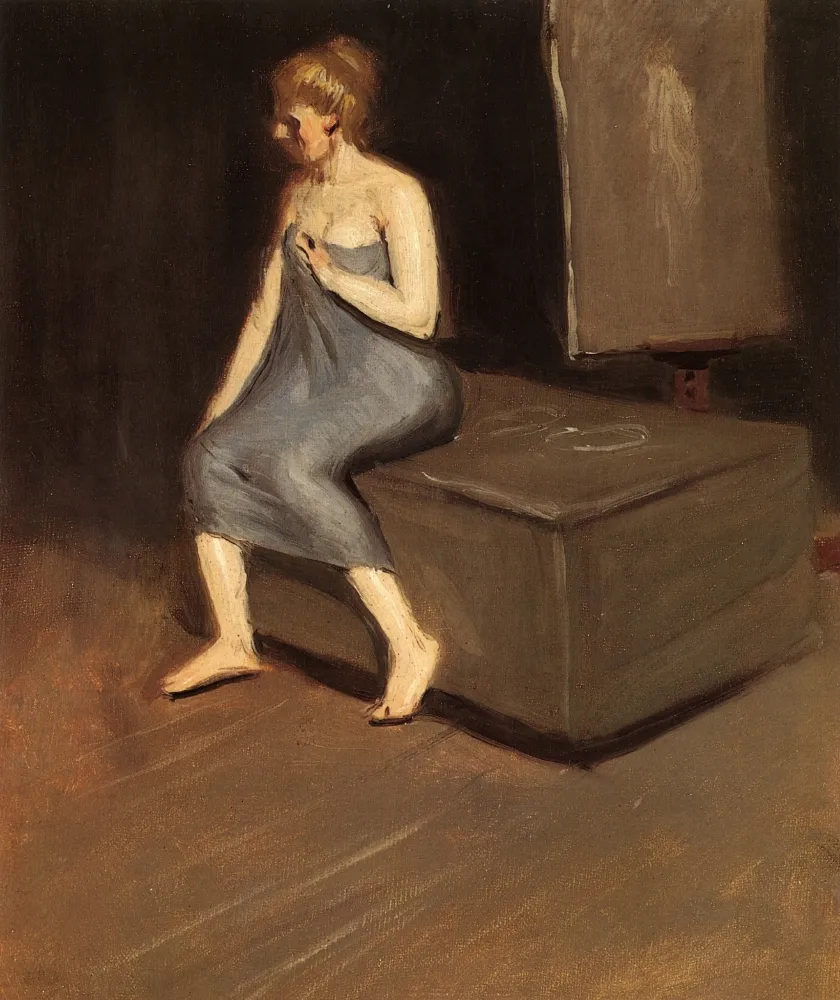
Hopper’s expertise is evident in every detail of "Tramp Steamer," where his precise use of oil on canvas brings the scene to life. The painting’s rich textures and subtle color palette showcase his technical mastery, setting a standard for American Realism. Collectors and admirers of "Standing Female Figure" and "Railroad Train" will appreciate the craftsmanship evident throughout this piece, making it a striking example of Hopper’s artistic prowess.
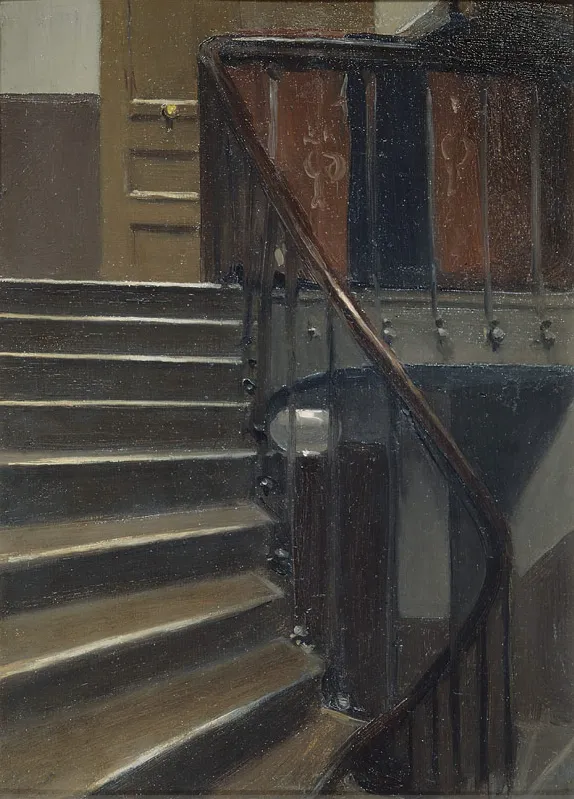
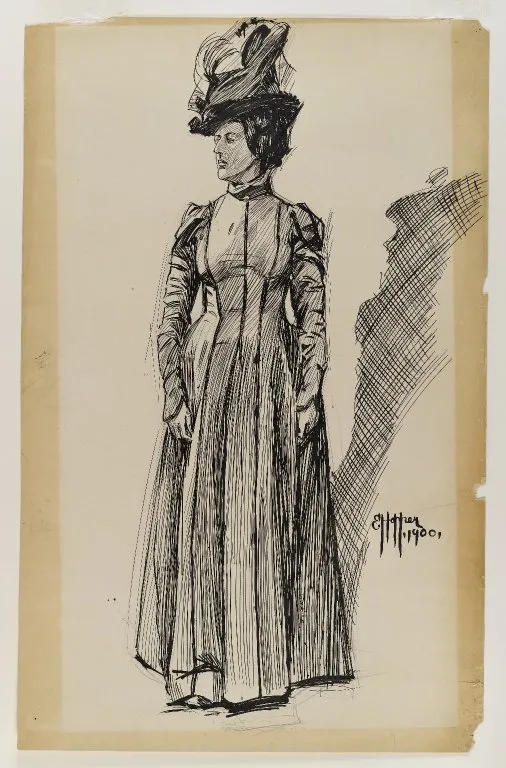
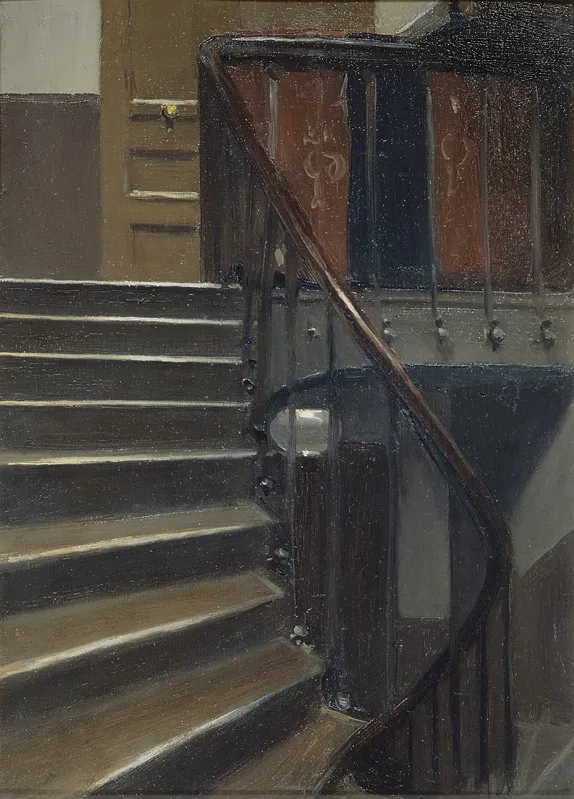
"Tramp Steamer" is more than just an oil on canvas; it is a narrative rich with symbolism and emotion. Hopper’s depiction of a solitary vessel evokes themes of isolation, journey, and the passage of time, hallmarks of the American Realism movement. Fans of related art such as "Study of a Standing Woman" and "Stairway at 48 rue de Lille, Paris" will recognize Hopper’s ability to infuse his hand-painted oil painting with profound meaning.
For art lovers seeking a fine art painting for sale, "Tramp Steamer" by Edward Hopper is a distinguished choice. Its place within American Realism, combined with Hopper’s iconic style, ensures enduring value and appeal. Whether displayed alongside "Cape Cod Morning" or "The El Station," this oil on canvas masterpiece enhances any collection, offering a glimpse into the evocative world Hopper so masterfully depicted.
When Art Meets History
"Tramp Steamer" by Edward Hopper is a striking example of the American Realism movement, reflecting the era’s fascination with everyday life and industrial progress. This hand-painted oil painting captures the essence of maritime travel, a theme that resonated during Hopper’s time. Much like his other works such as "The Tale of a Wedded Life" and "Foregrounds Advertisement," Hopper’s depiction connects viewers directly to the social currents of the early twentieth century, blending artistry and historical context seamlessly.
Techniques That Speak
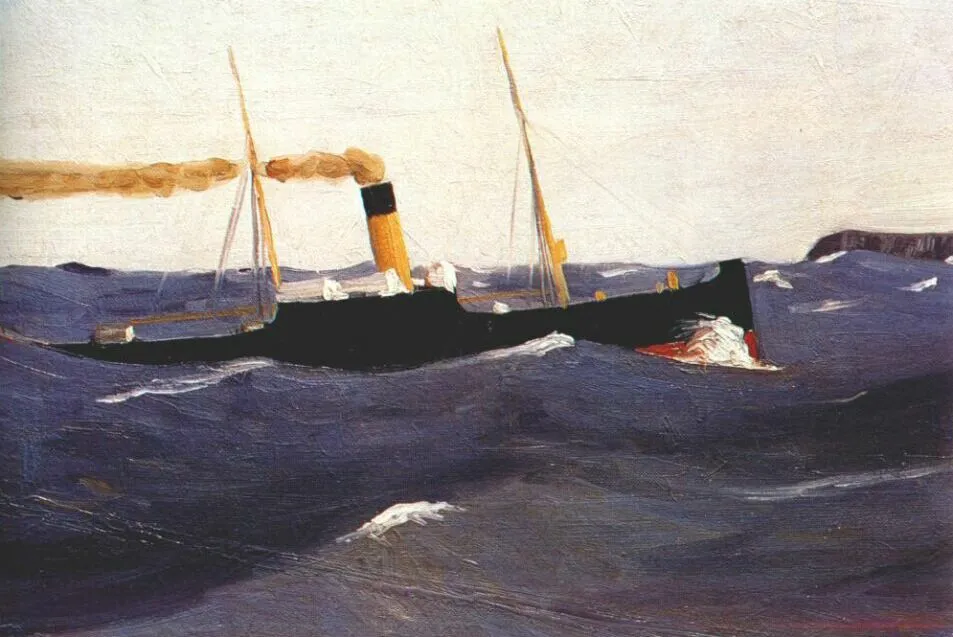
Edward Hopper’s mastery of oil on canvas is evident in "Tramp Steamer." His brushwork and use of light create a sense of atmosphere unique to American Realism. The detailed rendering of the steamer and surrounding water highlights Hopper’s technical prowess. This technique is also seen in related paintings like "The Accommodating Money Lender" and "Dream of the Fisherman’s Wife," where the medium of oil on canvas allows for rich, textured scenes that draw the viewer into the artist’s world.
Emotions on Display
"Tramp Steamer" evokes a sense of isolation and introspection, hallmark emotions in Edward Hopper’s portfolio. The painting’s subdued palette and solitary subject matter reflect the quiet strength of American Realism. As with "Scene IV - Tongue Couple Arguing," Hopper’s fine art painting for sale invites viewers to contemplate the emotional undercurrents of everyday life, making his work deeply relatable and emotionally compelling for art enthusiasts and casual viewers alike.
Coveted by Collectors
Collectors highly prize "Tramp Steamer" for its place within American Realism and Edward Hopper’s celebrated body of work. Its status as a hand-painted oil painting enhances its desirability, especially among those seeking a fine art painting for sale. Alongside related pieces like "Foregrounds Advertisement" and "Dream of the Fisherman’s Wife," this artwork continues to attract attention from museums and private collectors, underscoring Hopper’s enduring influence in the world of twentieth-century art.
Related American Realism Hand-Painted Oil Paintings by Other Artists
Other Famous American Realism Artists:
Frequently Asked Questions About Tramp Steamer
What is the historical context of Edward Hopper's "Tramp Steamer"?
"Tramp Steamer," painted in 1929, reflects the economic and social climate of the late 1920s in America, a period marked by industrial growth and the rise of maritime commerce. The painting captures the essence of the American maritime industry during a time when steamships were vital for trade and transportation.
What artistic techniques did Edward Hopper use in "Tramp Steamer"?
Hopper employed a realistic style characterized by bold colors and strong contrasts of light and shadow. His use of geometric forms and careful composition directs the viewer's attention to the ship, emphasizing its significance in the maritime landscape.
What themes are explored in "Tramp Steamer"?
The painting explores themes of isolation and solitude, common in Hopper's work. The lone ship against the expansive background evokes a sense of loneliness, reflecting the transient nature of life at sea and the human experience of being adrift.
How does "Tramp Steamer" reflect Edward Hopper's artistic style?
"Tramp Steamer" exemplifies Hopper's signature style, which often includes stark contrasts, a focus on light, and a sense of stillness. The painting's composition and color palette are typical of Hopper's ability to convey mood and atmosphere through simplicity.
What is the significance of the ship in "Tramp Steamer"?
The ship symbolizes both commerce and the passage of time. It represents the connection between different places and cultures, while also embodying the transient nature of human endeavors, as ships come and go, much like moments in life.
In what ways does "Tramp Steamer" reflect American culture of the 1920s?
The painting reflects the burgeoning American maritime industry and the sense of adventure associated with sea travel during the 1920s. It captures the optimism of the era while also hinting at the underlying uncertainties that would soon lead to the Great Depression.
What emotions does "Tramp Steamer" evoke in viewers?
The painting evokes a sense of nostalgia and contemplation. Viewers may feel a connection to the themes of solitude and the passage of time, prompting reflections on their own experiences and the transient nature of life.
How does the composition of "Tramp Steamer" enhance its meaning?
The composition, with the ship positioned prominently against a vast sky and water, emphasizes the isolation of the vessel. This arrangement enhances the themes of solitude and the vastness of the sea, inviting viewers to ponder the relationship between humanity and nature.
What influences can be seen in Hopper's "Tramp Steamer"?
Hopper was influenced by American realism and the European modernist movements. His ability to blend these influences is evident in "Tramp Steamer," where he captures the realism of the maritime scene while infusing it with a modern sensibility that speaks to broader existential themes.
What role does light play in "Tramp Steamer"?
Light plays a crucial role in "Tramp Steamer," as it highlights the ship and creates a dramatic contrast with the surrounding environment. Hopper's manipulation of light not only enhances the visual appeal but also contributes to the emotional depth of the painting, evoking feelings of nostalgia and introspection.























_GFM_Painting_(1).webp)


 100% Hand-Painted: Finished in 3-6 Weeks

.png)
















_(1).webp)