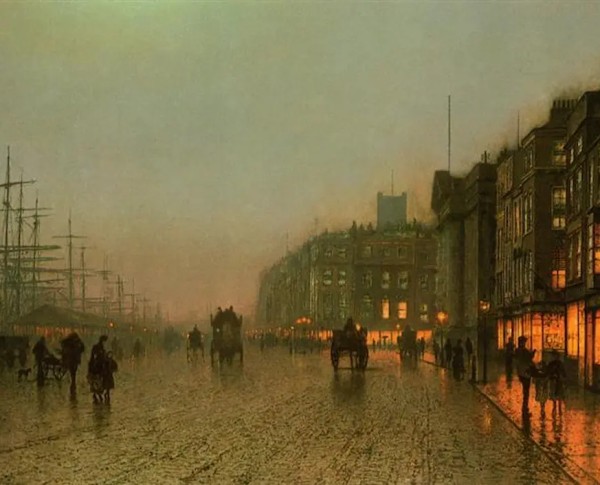
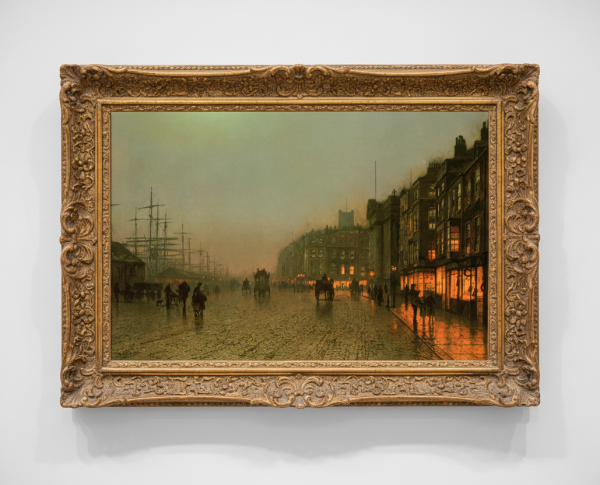
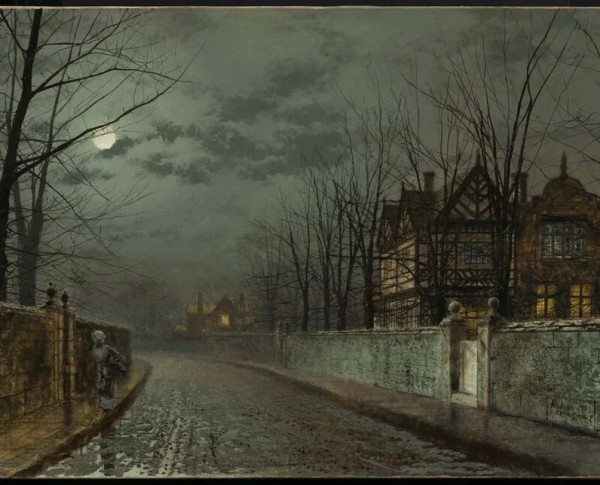
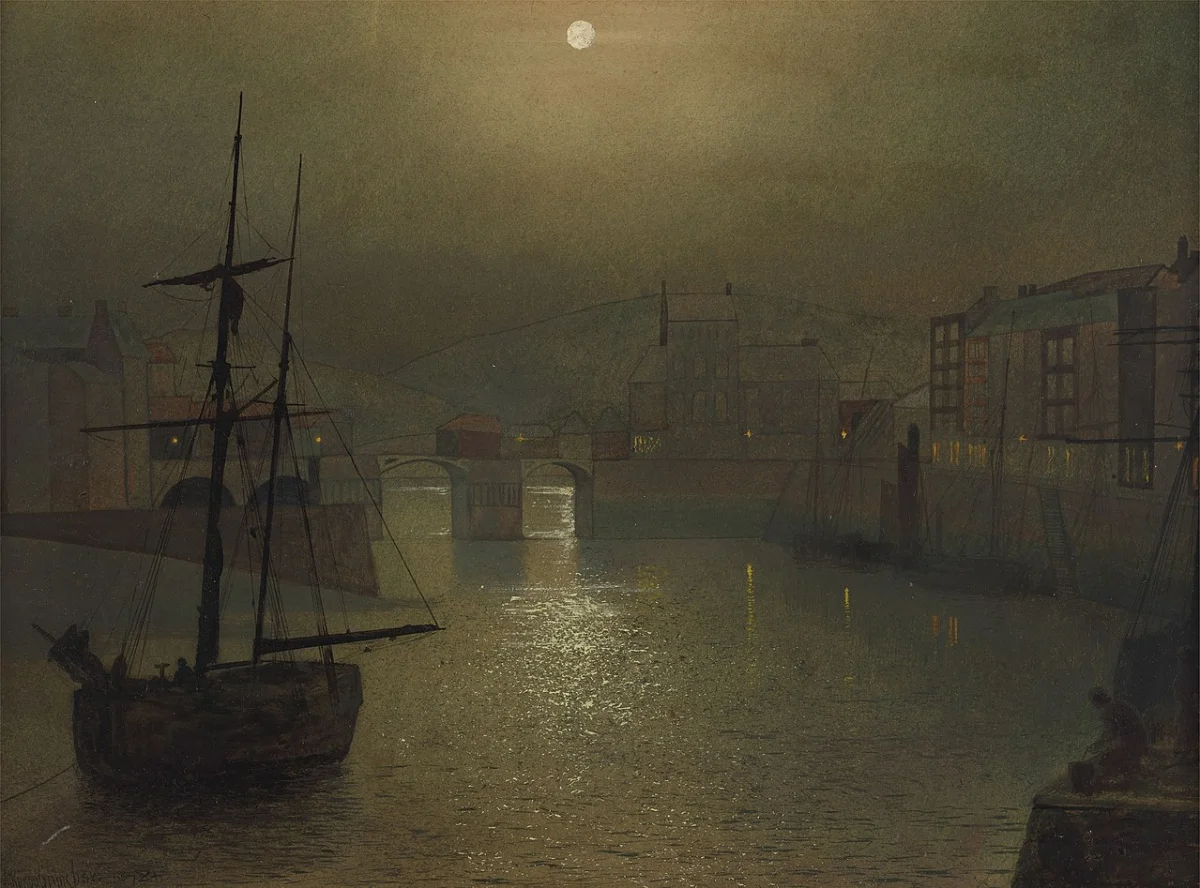
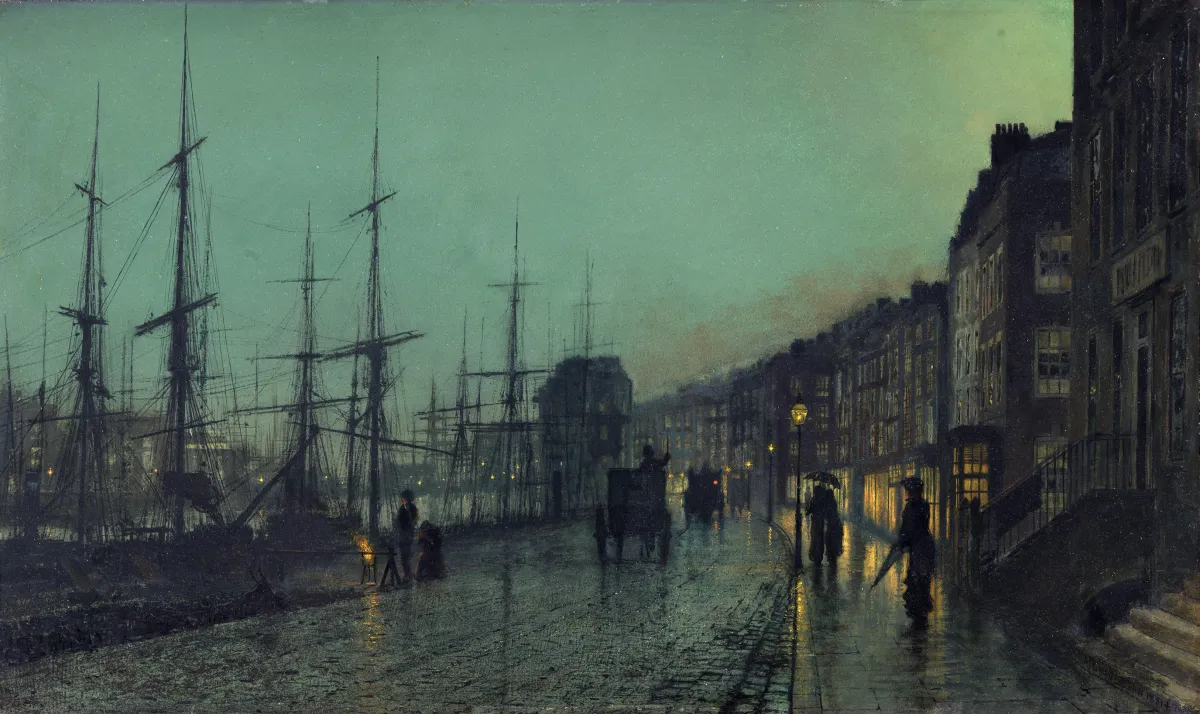
Grimshaw’s "Whitby" demonstrates his technical brilliance with oil on canvas, where each brushstroke renders the harbor’s misty ambiance with exquisite detail. The painting’s luminous reflections and subtle color palette are hallmarks of the Aestheticism movement. As seen in related fine art pieces such as "Quai de Paris, Rouen" and "A Moonlit Evening," Grimshaw’s mastery elevates every scene, making "Whitby" a testament to his unparalleled ability to capture mood and place.
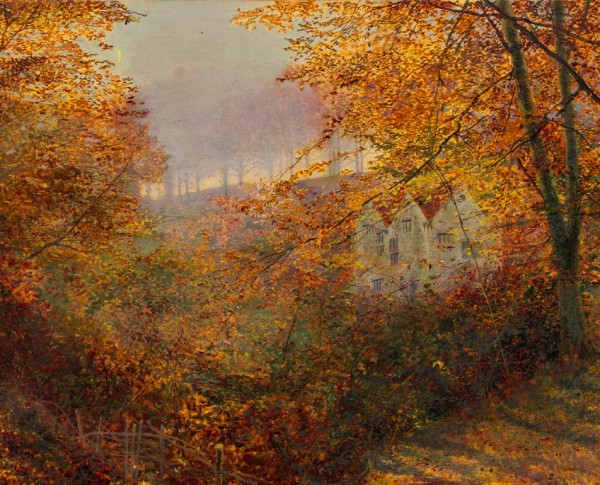
Within "Whitby," Grimshaw weaves stories and symbols that resonate with viewers. The interplay of light and shadow in this oil on canvas piece evokes both nostalgia and serenity, hallmarks of the Aestheticism movement. Like "A House in a Clearing" and "Shipping on the Clyde," this painting invites interpretation—whether as a tribute to maritime heritage or a reflection on solitude—making each glance an immersive journey through the artist’s imagination.
For art collectors, "Whitby" by John Atkinson Grimshaw is a coveted fine art painting for sale, embodying the sophistication of the Aestheticism movement. Its atmospheric beauty pairs well with related works such as "Canny Glasgow" and "A Moonlit Evening," enhancing any curated collection. Owning "Whitby" is not just acquiring a painting—it’s investing in a legacy of masterful oil artistry that continues to inspire and captivate connoisseurs worldwide.
When Art Meets History
"Whitby" by John Atkinson Grimshaw is a remarkable example of the Aestheticism movement, capturing the atmospheric beauty of the English coast. Painted in the late 19th century, this hand-painted oil painting transports viewers to the historic town of Whitby, renowned for its haunting charm. Grimshaw's mastery is evident, much like in his other works such as "Seascape with Sailing Boat" and "King Henry VI, Part II: 'Come hither, gracious sovereign, view this body.'"
Techniques That Speak
John Atkinson Grimshaw expertly utilizes oil on canvas to render the luminous skies and reflective waters in "Whitby." His meticulous technique, synonymous with the Aestheticism movement, brings the moody landscape to life. The artist's approach parallels his handling of light and detail in related paintings like "Architectural study: a column" and "The Play Scene in Hamlet," showcasing his dedication to atmospheric effects and intricate composition in each oil on canvas masterpiece.
Emotions on Display
In "Whitby," Grimshaw channels the introspective spirit of the Aestheticism movement, inviting viewers to experience a sense of yearning and quietude. The tranquil yet mysterious ambiance evokes deep feelings, much like his "Study for Antony and Cleopatra." This fine art painting for sale resonates emotionally, drawing on subtle shifts in light and shadow to create a contemplative mood that lingers long after the viewer has left its presence.
Coveted by Collectors
"Whitby" stands as a testament to Grimshaw's legacy and is highly prized among collectors of the Aestheticism movement. The demand for this hand-painted oil painting is matched by interest in his other celebrated works, including "Seascape with Sailing Boat" and "Architectural study: a column." Its rarity and timeless beauty make it a sought-after piece, perfect for those seeking a distinguished fine art painting for sale to enhance any collection.
Related Aestheticism Hand-Painted Oil Paintings by Other Artists
Other Famous Aestheticism Artists:
Frequently Asked Questions About Whitby
What is the historical significance of "Whitby"?
"Whitby" is a notable work by John Atkinson Grimshaw, painted in the late 19th century during the Victorian era, a time characterized by significant industrial and cultural changes in England. The painting captures the essence of Whitby, a coastal town that was a popular destination for artists and tourists during this period.
What artistic techniques did Grimshaw employ in "Whitby"?
Grimshaw is renowned for his use of chiaroscuro, a technique that contrasts light and shadow to create depth and drama. In "Whitby," he skillfully uses this technique to depict the interplay of moonlight on the water and the atmospheric effects of twilight, enhancing the painting's emotional resonance.
What themes are explored in "Whitby"?
The painting explores themes of solitude and tranquility, capturing the serene beauty of the seaside town at dusk. It reflects the Romantic ideal of nature as a source of inspiration and contemplation, inviting viewers to reflect on their own experiences of nature and solitude.
How does "Whitby" reflect the characteristics of the Pre-Raphaelite movement?
While Grimshaw was not a member of the Pre-Raphaelite Brotherhood, "Whitby" shares characteristics with the movement, such as a focus on detail, vibrant color palettes, and an emphasis on natural beauty. The painting's meticulous attention to the landscape and atmospheric effects aligns with the Pre-Raphaelite commitment to realism and beauty.
What symbolism can be found in "Whitby"?
The moonlit scene in "Whitby" symbolizes enlightenment and inspiration, often associated with the Romantic movement. The calm waters and distant boats may represent the journey of life, evoking a sense of exploration and the passage of time.
In what ways did Grimshaw's personal experiences influence "Whitby"?
Grimshaw's personal experiences, including his love for nature and the coastal landscapes of Yorkshire, profoundly influenced "Whitby." His frequent visits to the region allowed him to capture its unique atmosphere and beauty, which is evident in the painting's evocative portrayal of the town.
What role does light play in the composition of "Whitby"?
Light is a central element in "Whitby," serving to create mood and highlight the painting's intricate details. Grimshaw's masterful depiction of moonlight reflecting on the water not only enhances the visual appeal but also evokes a sense of calm and introspection.
How does "Whitby" compare to other works by John Atkinson Grimshaw?
"Whitby" is representative of Grimshaw's signature style, characterized by atmospheric landscapes and nocturnal scenes. Compared to his other works, it showcases his ability to capture the interplay of light and shadow, as well as his deep appreciation for the natural world.
What impact did "Whitby" have on the art community during Grimshaw's time?
"Whitby" contributed to Grimshaw's reputation as a leading artist of his time, particularly in the genre of landscape painting. The work was well-received and helped to elevate the status of nocturnal landscapes in the art community, influencing future generations of artists.
What can visitors learn from viewing "Whitby" in person?
Viewing "Whitby" in person allows visitors to appreciate the intricate details and subtle color variations that may not be fully captured in reproductions. The experience offers insights into Grimshaw's artistic techniques and the emotional depth of the work, fostering a greater understanding of 19th-century landscape painting.























_GFM_Painting_(1).webp)


 100% Hand-Painted: Finished in 3-6 Weeks

.png)















_(1).webp)