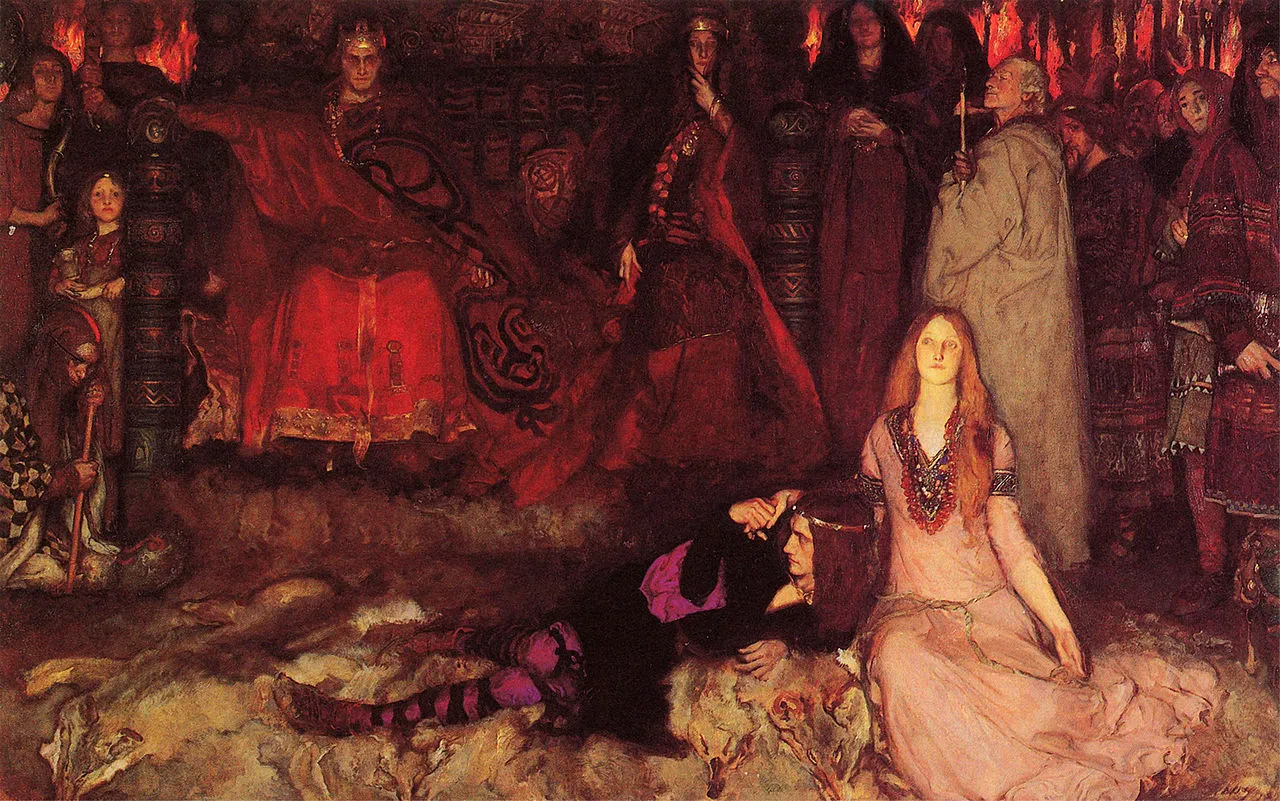
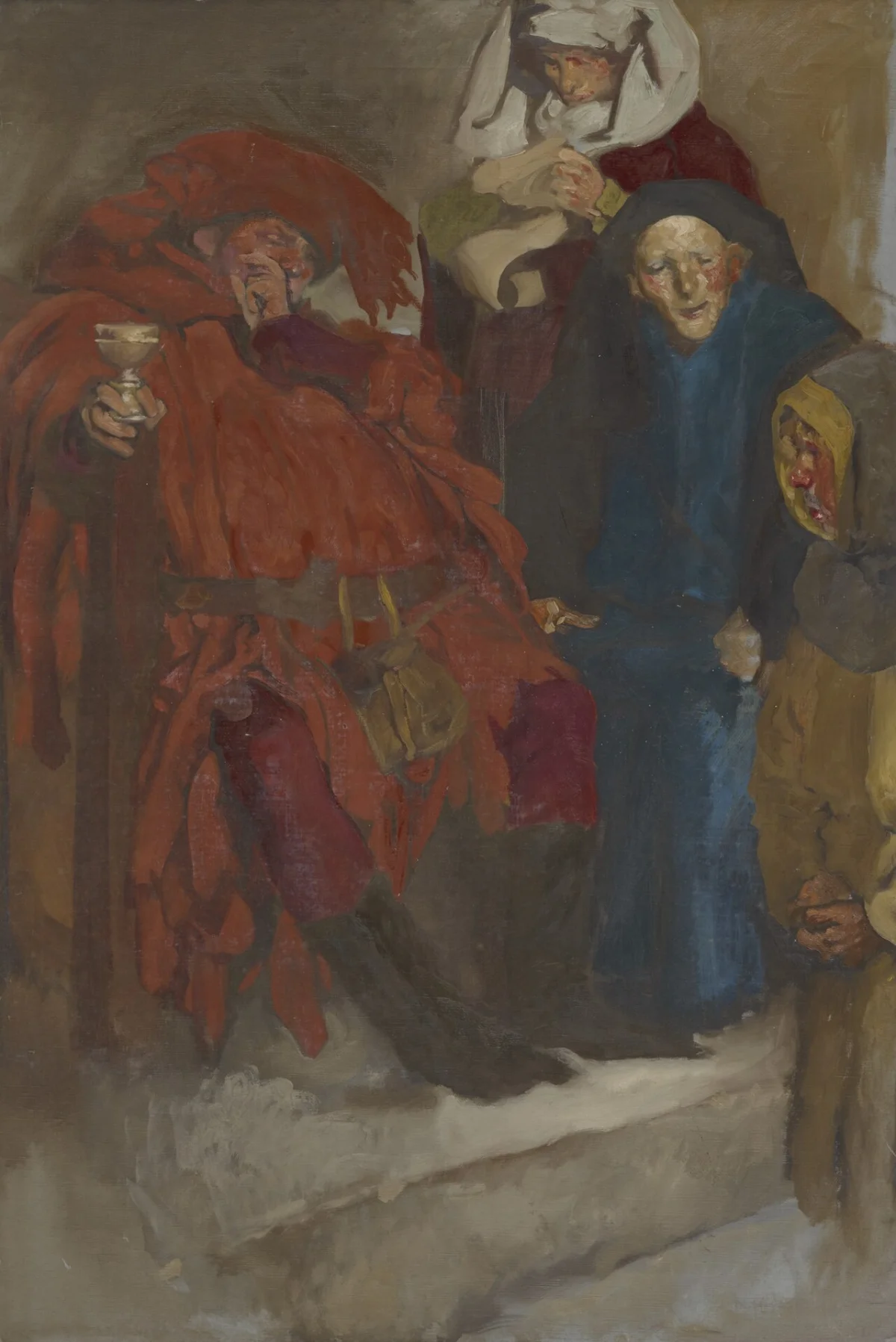
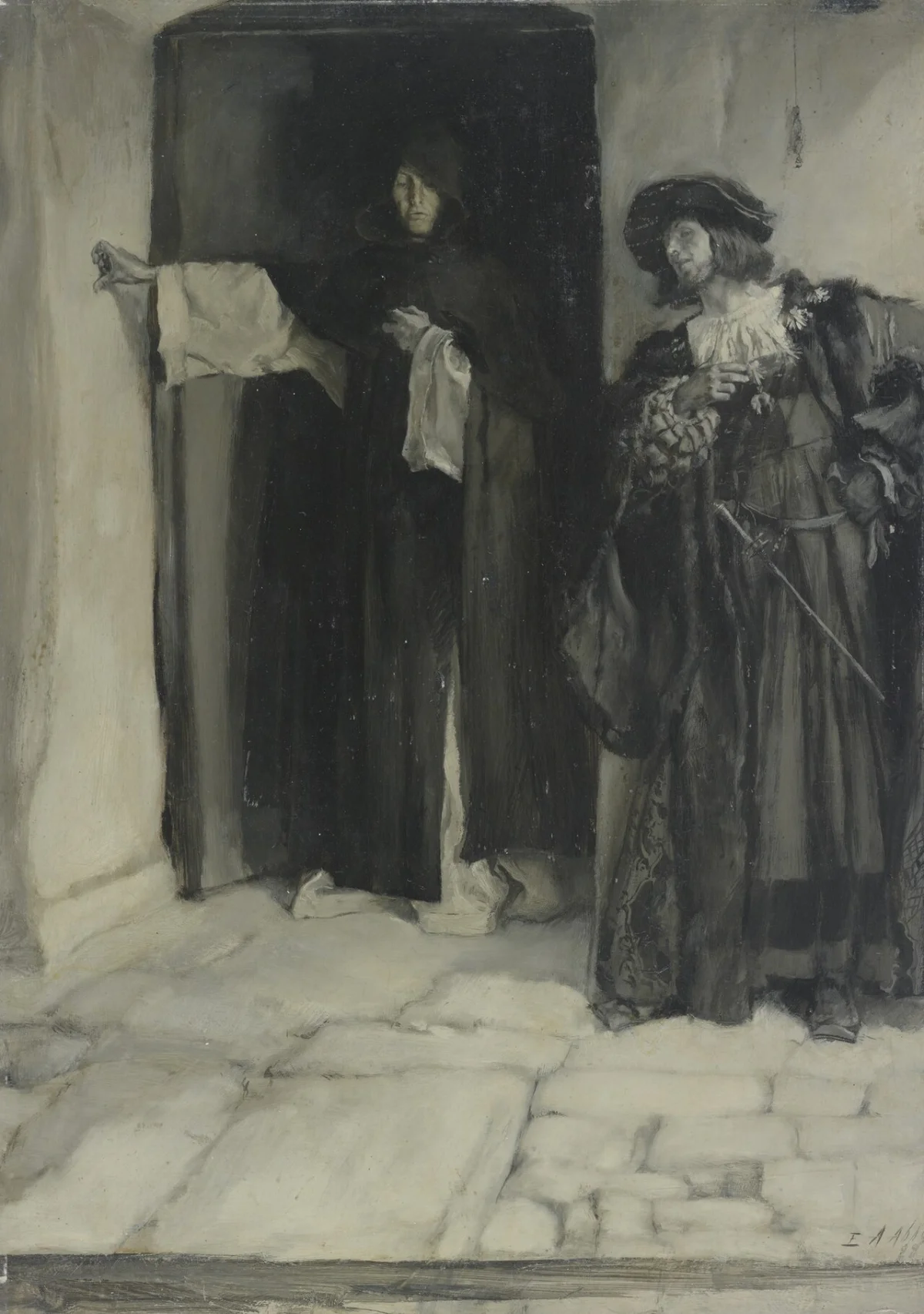
Abbey’s exquisite technique in "The Play Scene in Hamlet" showcases his mastery of oil on canvas, a medium that allows for rich textures and subtle color transitions. Each brushstroke conveys emotion and narrative, characteristic of the Aestheticism movement’s dedication to visual pleasure. This oil on canvas masterpiece is often compared to Abbey’s other works, like "Landscape study" and "Architectural study: a column," all of which highlight his commitment to artistic excellence.
"The Play Scene in Hamlet" is more than just a hand-painted oil painting; it’s a tapestry of Shakespearean intrigue and symbolism. Abbey weaves subtle cues and expressive gestures to evoke the tense atmosphere of the famous play-within-a-play. Art collectors searching for fine art painting for sale will appreciate the narrative depth found here, as well as in Abbey’s other dramatic creations such as "King Henry VI, Part II: “Come hither, gracious sovereign, view this body.”" and "The Arthurian Round Table and the fable of the Seat Perilous."
Owning "The Play Scene in Hamlet" by Edwin Austin Abbey offers more than an exquisite oil on canvas; it connects collectors to the heart of the Aestheticism movement. This fine art painting for sale is prized for its historical significance and artistic value, making it a centerpiece in any collection. Pairing this masterpiece with related Abbey works, like "Study for Falstaff" or "The Arthurian Round Table and the fable of the Seat Perilous," enhances any art lover’s gallery.
When Art Meets History
"The Play Scene in Hamlet" by Edwin Austin Abbey is a remarkable hand-painted oil painting that captures a pivotal moment from Shakespeare’s renowned play. Created during the Aestheticism movement, Abbey’s masterpiece is both a historical homage and an artistic triumph. Alongside related works like "Shipping on the Clyde" and "A Moonlit Evening," this painting demonstrates Abbey’s dedication to blending literary themes with visual storytelling, resulting in a timeless piece that continues to captivate art enthusiasts and scholars alike.
Techniques That Speak
Employing masterful oil on canvas technique, Edwin Austin Abbey brings "The Play Scene in Hamlet" to life with meticulous attention to detail and luminous color palettes. The Aestheticism movement’s ideals are evident in the painting’s elegant composition and delicate brushwork. Abbey’s technique is comparable to his other works, such as "Quai de Paris, Rouen" and "A House in a Clearing," each exemplifying his ability to infuse narrative depth into every stroke of his brush.
Emotions on Display
In "The Play Scene in Hamlet," Abbey skillfully conveys the tension and intrigue of Shakespeare’s iconic moment, making it a fine art painting for sale that resonates with viewers. The characters’ expressions and body language exude an array of emotions, from suspicion to revelation. This emotional depth, also visible in Abbey’s "Liverpool from Wapping," showcases his talent for transforming literary drama into visual poetry, a hallmark of the Aestheticism movement.
Coveted by Collectors
As a sought-after hand-painted oil painting from the Aestheticism movement, "The Play Scene in Hamlet" by Edwin Austin Abbey is highly coveted by collectors. Its exceptional quality and historical significance place it alongside related masterpieces like "A Moonlit Evening" and "Shipping on the Clyde." Abbey’s works, including this notable oil on canvas, continue to command attention in galleries and private collections, making them prized acquisitions for connoisseurs of fine art.
Related Aestheticism Hand-Painted Oil Paintings by Other Artists
Other Famous Aestheticism Artists:
Frequently Asked Questions About The Play Scene in Hamlet
What is the historical context of "The Play Scene in Hamlet"?
"The Play Scene in Hamlet" was created during the late 19th century, a period marked by a revival of interest in Shakespeare's works. Edwin Austin Abbey was influenced by the Pre-Raphaelite movement, which emphasized detail and vibrant color, reflecting the Victorian era's fascination with literature and theater.
What artistic techniques did Edwin Austin Abbey employ in this painting?
Abbey utilized a combination of realism and romanticism, employing meticulous detail in the characters' expressions and costumes. The use of light and shadow enhances the dramatic tension of the scene, while the rich color palette draws the viewer's eye to the central action.
What is the significance of the scene depicted in the painting?
The painting captures a pivotal moment in Shakespeare's "Hamlet," where the play within a play serves as a device to reveal King Claudius's guilt. This meta-theatrical element underscores themes of appearance versus reality, a central motif in the play.
How does Abbey's interpretation of the characters contribute to the painting's impact?
Abbey's portrayal of Hamlet, Gertrude, and Claudius is imbued with psychological depth. Their expressions convey a range of emotions, from guilt to despair, which invites viewers to engage with the characters' inner turmoil and the overarching themes of betrayal and revenge.
What role does color play in "The Play Scene in Hamlet"?
The color scheme is carefully chosen to evoke the mood of the scene. Darker hues dominate the background, creating a sense of foreboding, while brighter colors highlight the actors on stage, emphasizing their importance and the gravity of the moment.
In what ways does this painting reflect Victorian attitudes towards Shakespeare?
The painting exemplifies the Victorian era's reverence for Shakespeare as a cultural icon. Abbey's detailed and dramatic representation reflects the period's romanticized view of the Bard, celebrating his works as timeless and relevant to contemporary audiences.
What symbolic elements can be found in the painting?
Symbolism in the painting includes the use of the play within a play as a metaphor for truth and deception. The actors' costumes and props also symbolize the broader themes of identity and the masks people wear in society, resonating with Hamlet's exploration of existential questions.
How does "The Play Scene in Hamlet" compare to other artistic interpretations of Shakespeare's works?
Abbey's interpretation stands out for its focus on the emotional and psychological depth of the characters, contrasting with more literal or abstract representations. His work invites viewers to engage with the narrative on a deeper level, emphasizing the human experience behind the text.
What was the reception of Abbey's painting at the time of its unveiling?
Upon its unveiling, "The Play Scene in Hamlet" received critical acclaim for its artistic merit and fidelity to Shakespeare's themes. It was celebrated as a significant contribution to the genre of literary painting, reinforcing Abbey's reputation as a leading artist of his time.
What influence did "The Play Scene in Hamlet" have on later artists?
The painting influenced subsequent artists by demonstrating the potential of literary themes in visual art. Abbey's approach encouraged later generations to explore the intersection of literature and painting, inspiring a continued interest in dramatizing literary narratives through visual media.























_GFM_Painting_(1).webp)


 100% Hand-Painted: Finished in 3-6 Weeks

.png)















_(1).webp)