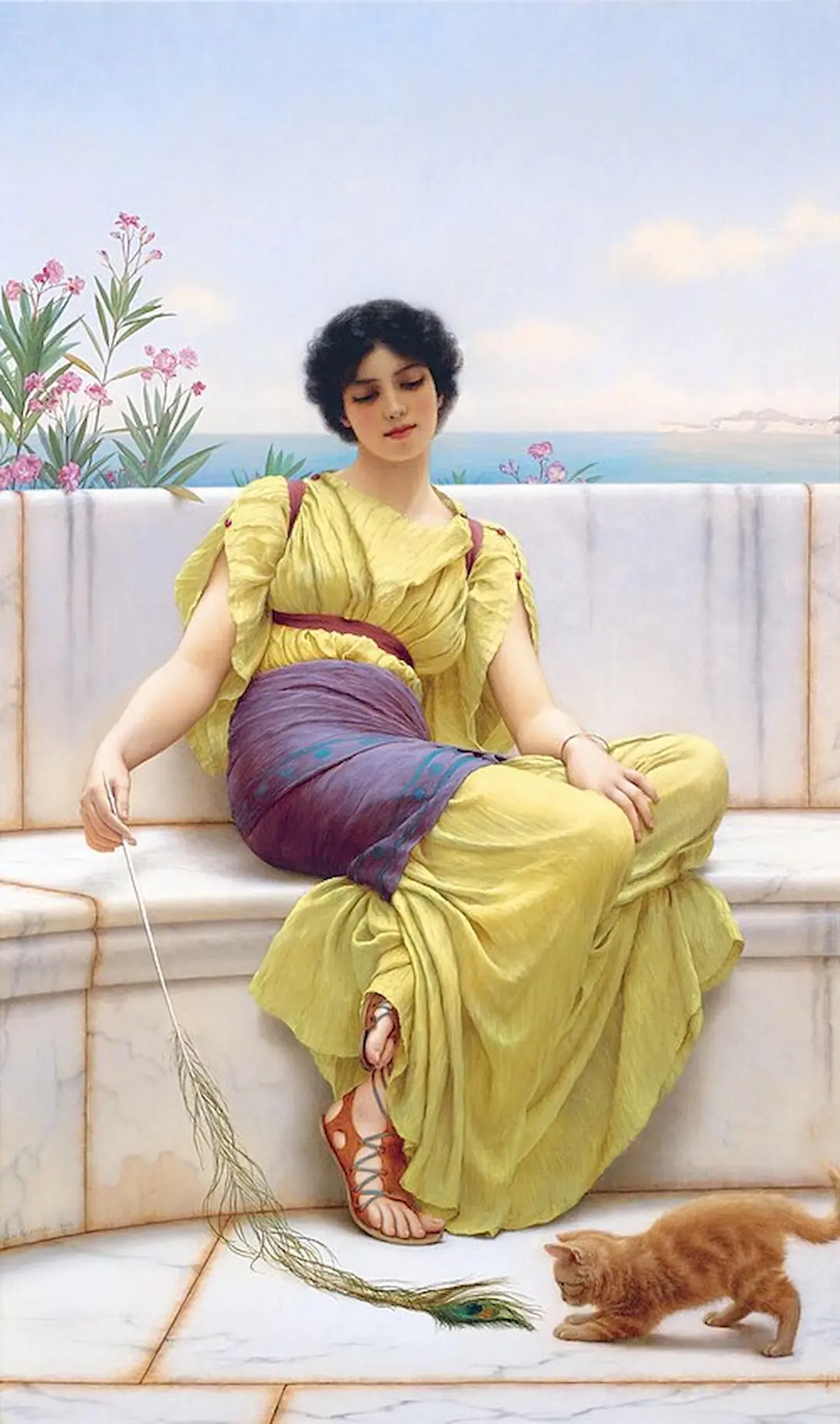
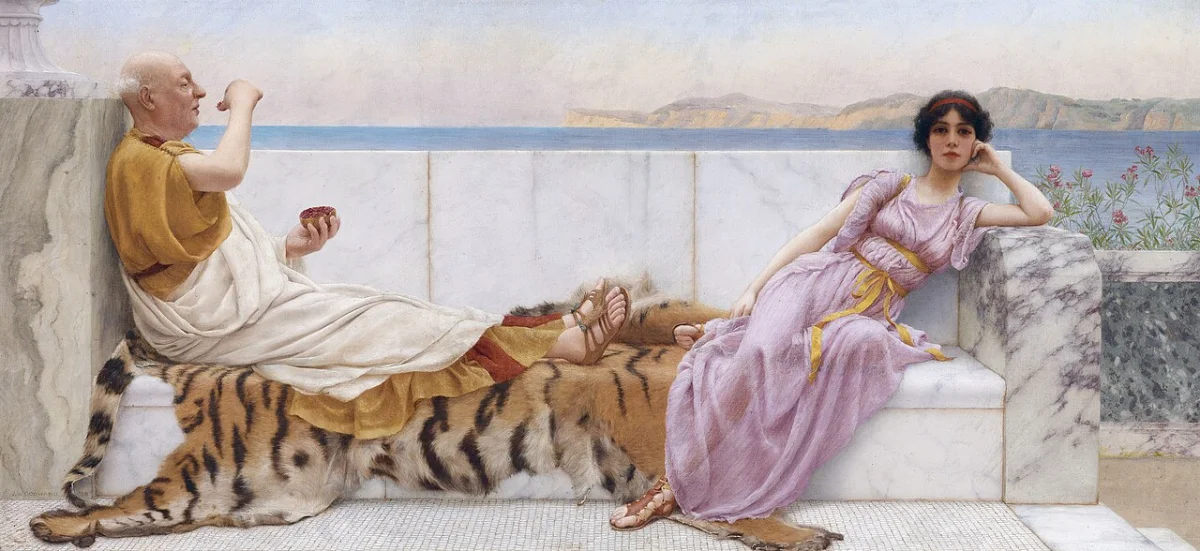
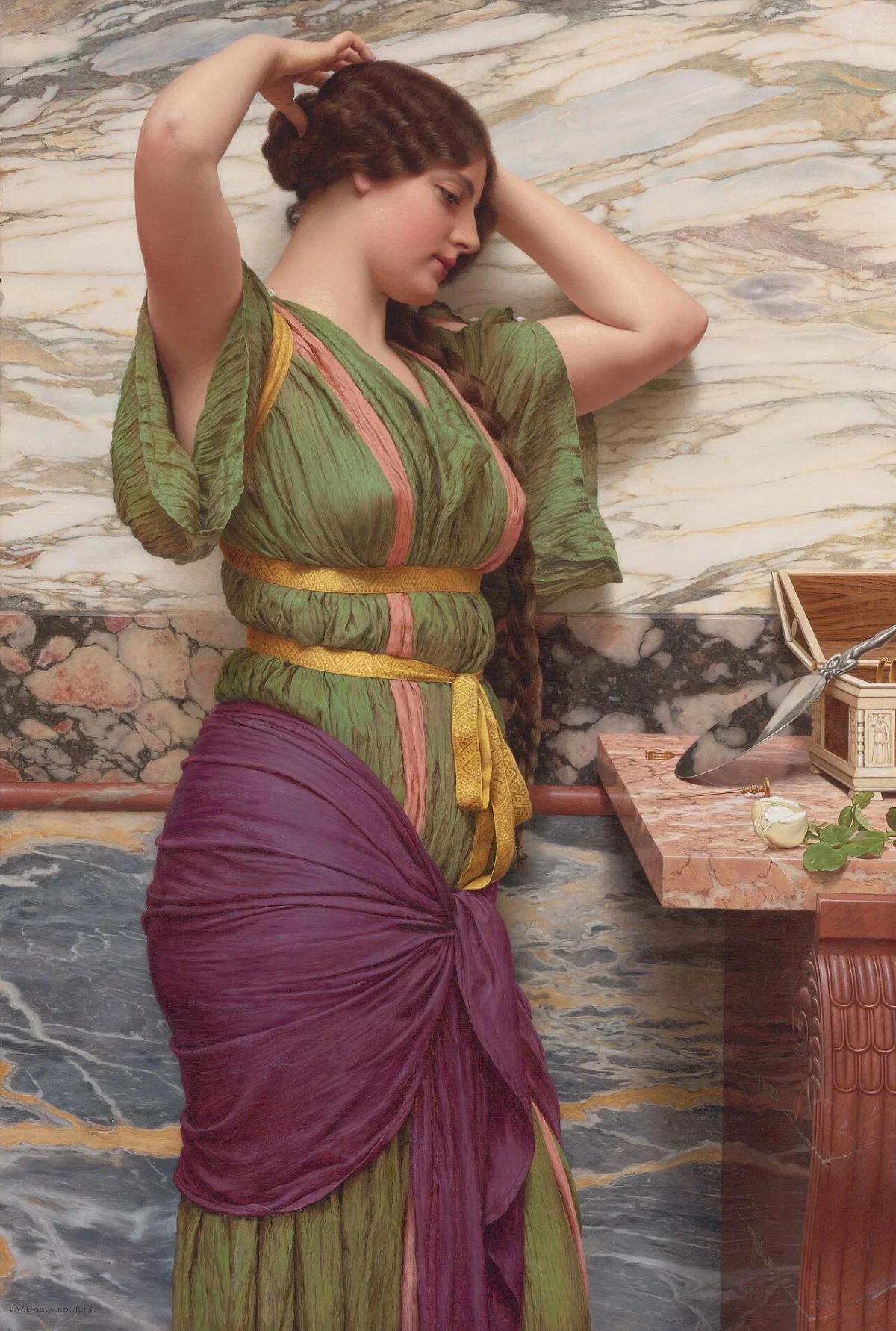
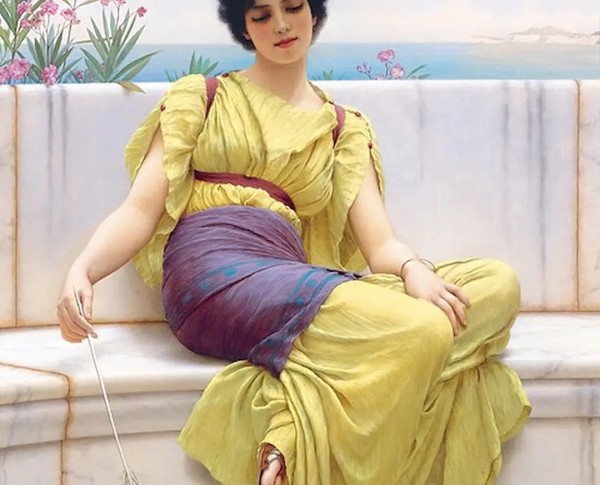
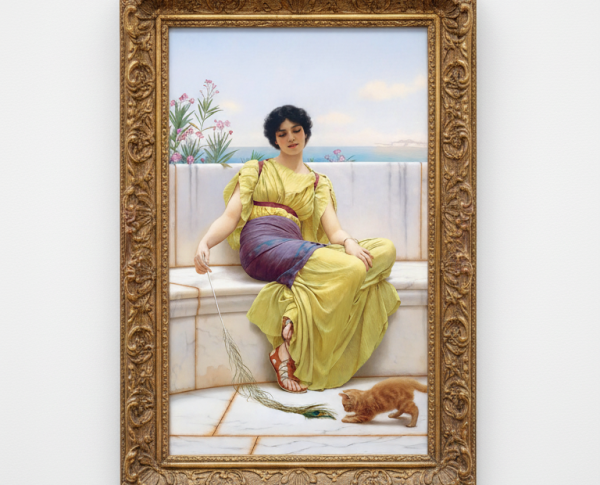
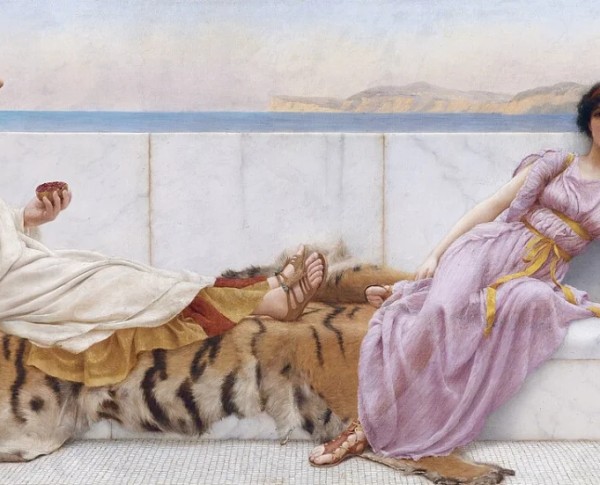
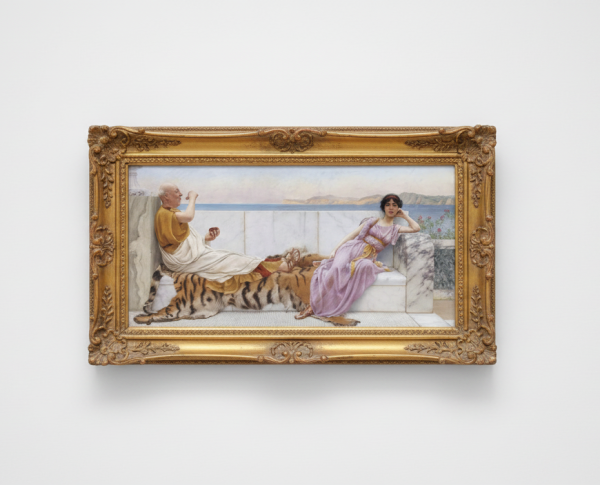
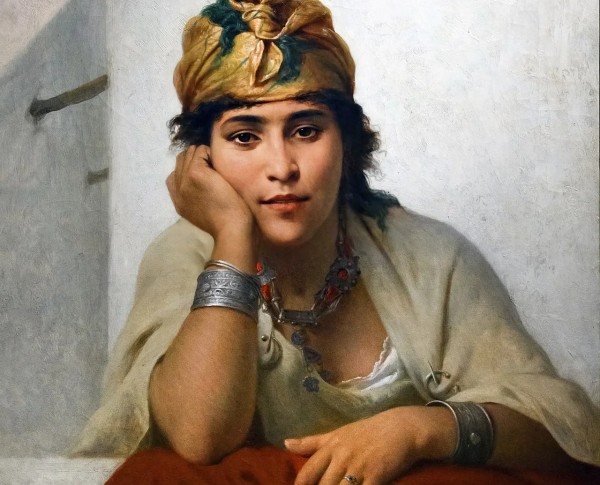
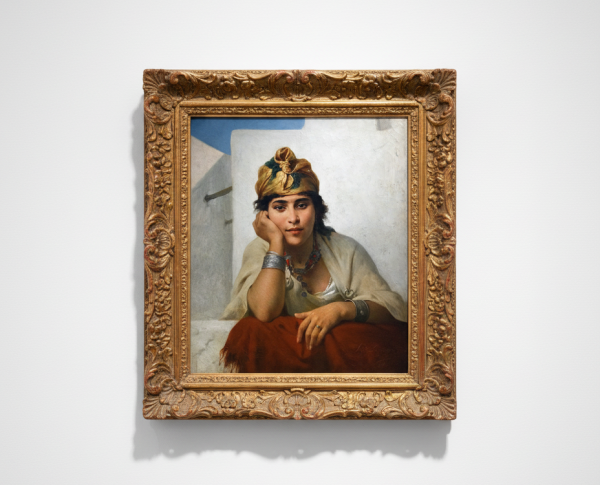
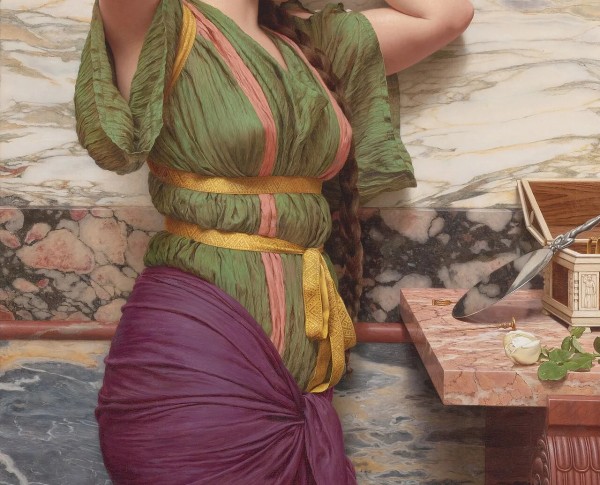
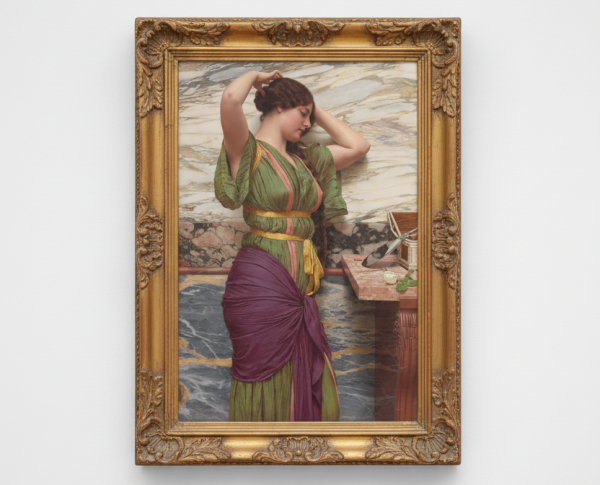
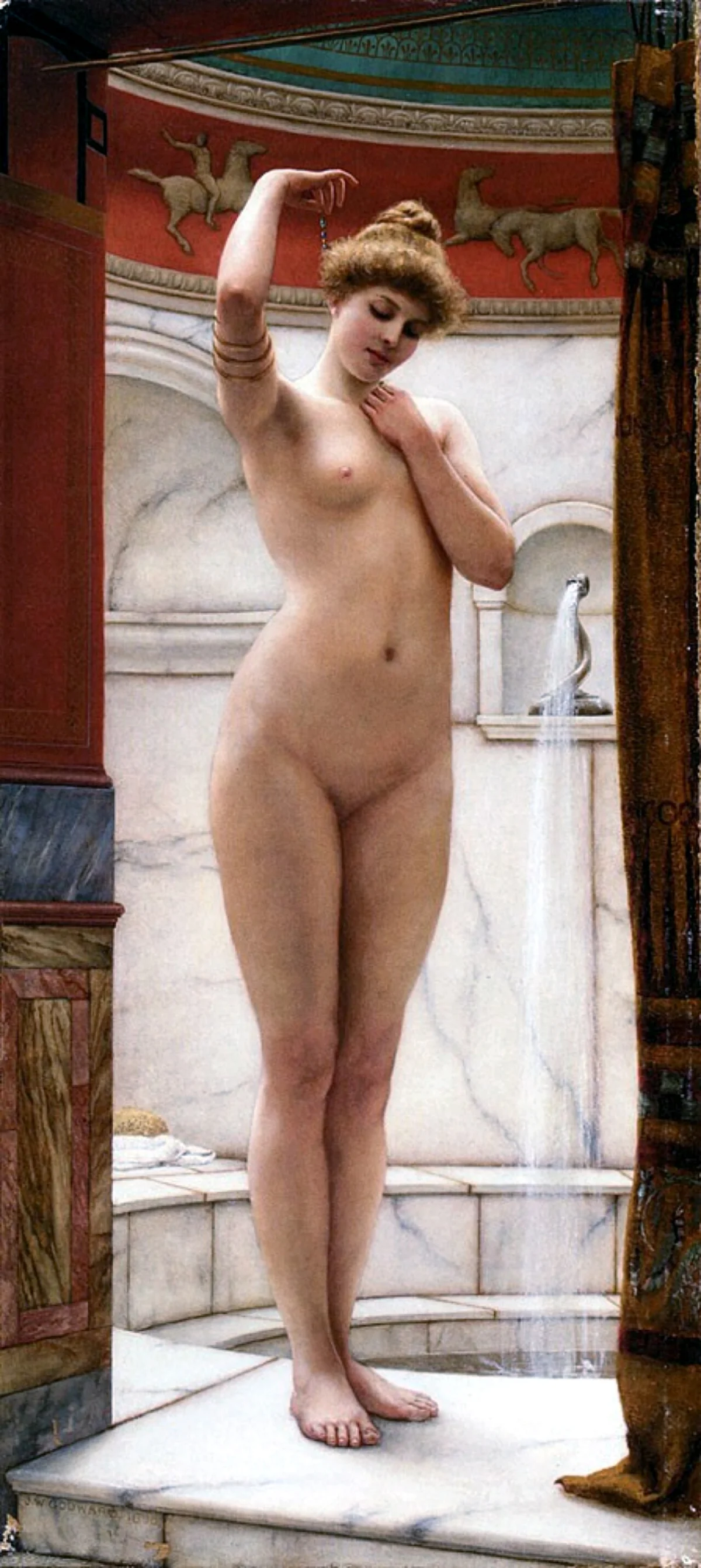
Godward’s “A Pompeian Bath” demonstrates exceptional technique through its luminous oil on canvas medium. Every brushstroke highlights his devotion to realism, from the intricate marble textures to the delicate rendering of the human form. This painting is a testament to the Neoclassical Academic Realism movement, sharing its artistic lineage with works such as “A Fair Reflection” and “The Mirror.” Such pieces are prized for their technical brilliance and evocative storytelling.
Within “A Pompeian Bath,” Godward weaves subtle stories and symbols that define the essence of Neoclassical Academic Realism. The serene subject and classical setting invite viewers to reflect on themes of beauty, leisure, and antiquity. As with other fine art painting for sale by Godward, including “Eighty and eighteen,” the painting encourages deeper exploration of its historical context, making it a meaningful addition to any sophisticated art collection.
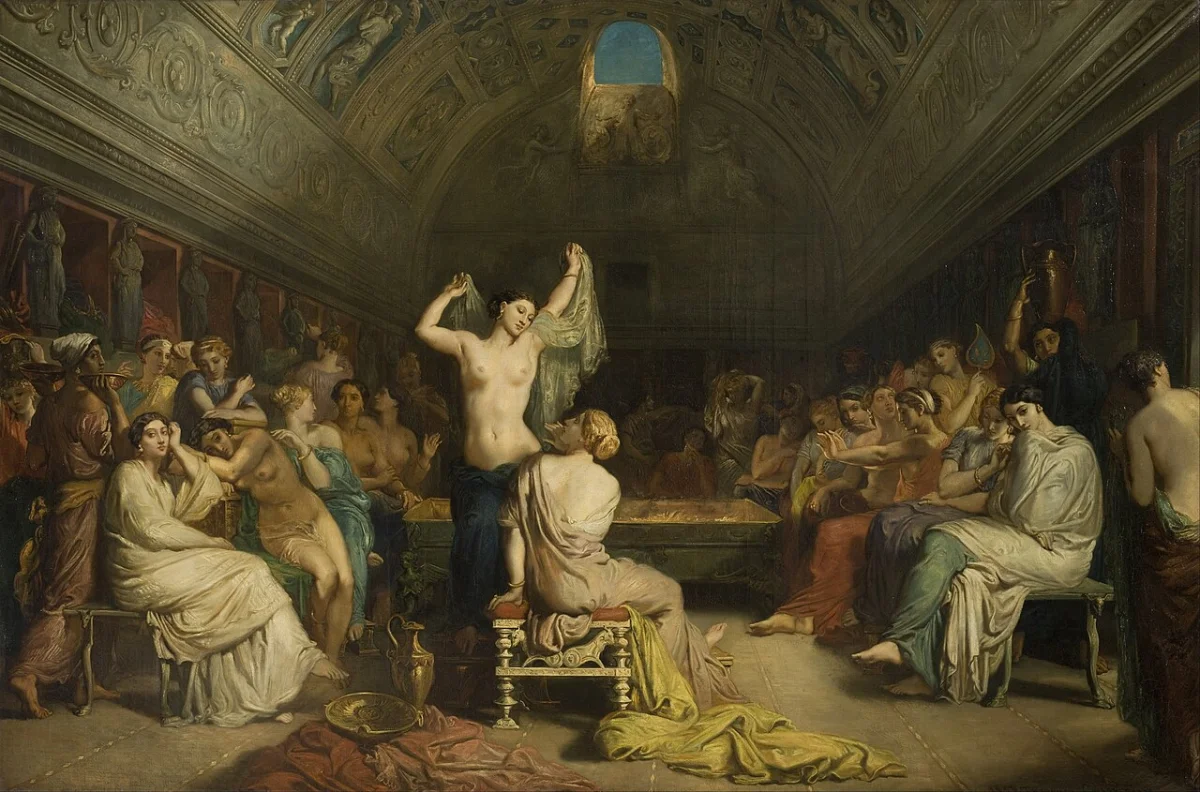
Owning “A Pompeian Bath” by John William Godward is akin to possessing a piece of refined history. This hand-painted oil painting is not only a striking visual statement but also a valuable investment for collectors of Neoclassical Academic Realism. Pairing it with related products like “In the Tepidarium” or “The Mirror” enhances any gallery, celebrating the enduring appeal of Godward’s artistic legacy and the timeless beauty of oil on canvas works.
When Art Meets History
"A Pompeian Bath" by John William Godward transports viewers to the elegance of ancient Rome, capturing the essence of the Neoclassical Academic Realism movement. This hand-painted oil painting beautifully recreates a historical atmosphere, much like Jacques-Louis David’s "The Death of Socrates" or "Napoleon Crossing the Alps". Godward’s meticulous attention to period details invites viewers to relive a bygone era, making this piece a standout in any fine art collection inspired by classical antiquity.
Techniques That Speak
Godward’s exceptional mastery in "A Pompeian Bath" is evident through his refined use of oil on canvas. His technique, reminiscent of works like "Calm on a Fiery Steed" and "Crossing the Alps 1801", showcases smooth brushwork and delicate transitions of light. The artist’s ability to render marble textures and soft skin tones in this Neoclassical Academic Realism masterpiece demonstrates an unparalleled dedication to traditional artistry, distinguishing his paintings among collectors and admirers of classical technique.
Emotions on Display
In "A Pompeian Bath", John William Godward evokes a serene and contemplative mood, characteristic of Neoclassical Academic Realism. The tranquil setting, combined with the poised figure, draws parallels to the introspective atmosphere found in "Portrait of Antoine-Laurent Lavoisier and his wife". This fine art painting for sale invites viewers to experience the subtle grace and timeless beauty of antiquity, making it a compelling addition for those who appreciate emotional depth in classical artworks.
Coveted by Collectors
Collectors worldwide seek "A Pompeian Bath" for its historical significance and exquisite execution. As a hand-painted oil painting by John William Godward, it stands alongside masterpieces like "Consecration of the Emperor Napoleon I and Coronation of the Empress Josephine 1805-07". This piece exemplifies the ideals of the Neoclassical Academic Realism movement, making it a prized possession for those looking for a fine art painting for sale that embodies both artistic mastery and rich cultural heritage.
Related Neoclassical Academic Realism Hand-Painted Oil Paintings by Other Artists
Other Famous Neoclassical Academic Realism Artists:
Frequently Asked Questions About A Pompeian Bath
What is the historical context of "A Pompeian Bath"?
"A Pompeian Bath" was painted by John William Godward in the early 20th century, a time when there was a resurgence of interest in classical antiquity, particularly the art and culture of ancient Rome. This painting reflects the Victorian fascination with the romanticized ideals of the past.
Who was John William Godward?
John William Godward was a British painter known for his classical subjects and meticulous attention to detail. He was associated with the Pre-Raphaelite movement and often depicted themes of beauty and mythology in his works, drawing inspiration from ancient cultures.
What artistic techniques are evident in "A Pompeian Bath"?
The painting showcases Godward's mastery of color, light, and texture. His use of vibrant hues and intricate details in the depiction of fabrics and architectural elements exemplifies the academic painting style of the time, emphasizing realism and beauty.
What themes are explored in "A Pompeian Bath"?
The painting explores themes of leisure, beauty, and the idealization of the female form. It captures a moment of tranquility and indulgence, reflecting the artist's interest in the aesthetics of ancient Roman life.
What symbolism is present in "A Pompeian Bath"?
The bath itself symbolizes purification and rejuvenation, while the presence of the female figure embodies beauty and sensuality. The lush surroundings further enhance the theme of opulence and the pleasures of life in ancient Rome.
How does "A Pompeian Bath" reflect the ideals of the Victorian era?
The painting reflects Victorian ideals by emphasizing beauty, morality, and the appreciation of classical antiquity. It presents a sanitized and romanticized view of ancient life, aligning with the era's values of refinement and aestheticism.
In what ways does Godward's work differ from that of his contemporaries?
Godward's work is characterized by its focus on classical themes and the female figure, often set against elaborate backgrounds. Unlike some of his contemporaries who embraced modern subjects, Godward remained committed to traditional techniques and classical motifs.
What influences can be seen in "A Pompeian Bath"?
The influences of the Pre-Raphaelite movement are apparent in Godward's attention to detail and vibrant color palette. Additionally, the painting draws from classical Roman art, particularly in its portrayal of the human figure and architectural elements.
What is the significance of the setting in "A Pompeian Bath"?
The setting, reminiscent of ancient Pompeii, serves as a backdrop that enhances the themes of luxury and leisure. It invites viewers to immerse themselves in a historical moment, highlighting the cultural richness of ancient Roman society.
How has "A Pompeian Bath" been received by art critics and historians?
"A Pompeian Bath" has been praised for its technical skill and aesthetic beauty. Art critics and historians often highlight Godward's ability to blend historical accuracy with idealized beauty, making it a significant work within the context of late 19th and early 20th-century art.























_GFM_Painting_(1).webp)


 100% Hand-Painted: Finished in 3-6 Weeks

.png)
















_(1).webp)