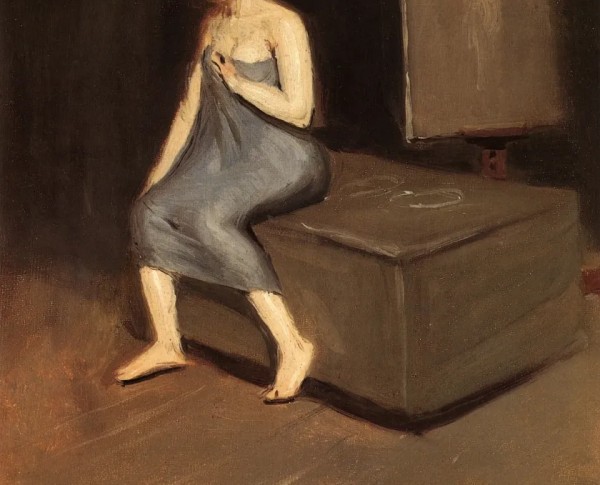
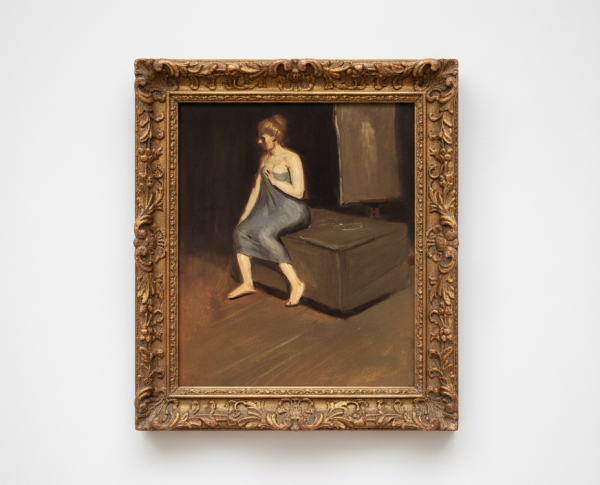
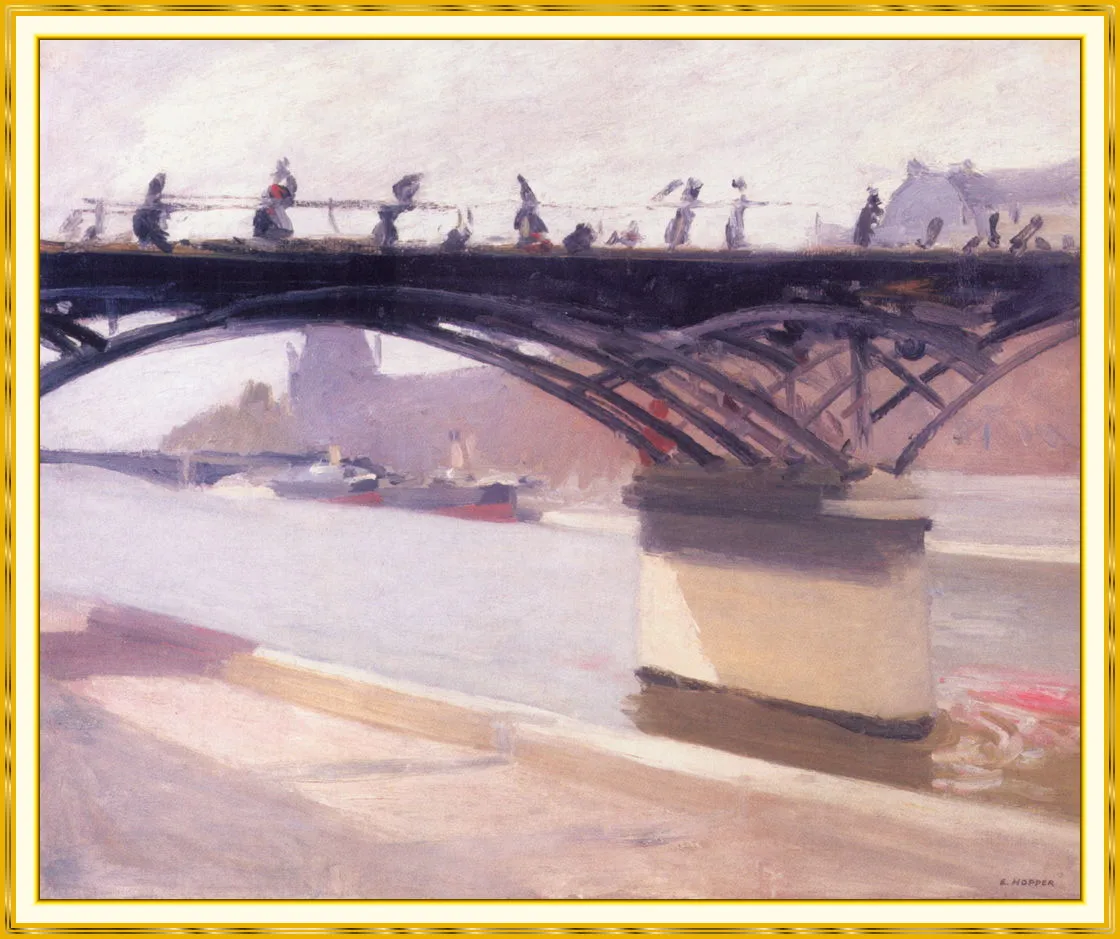
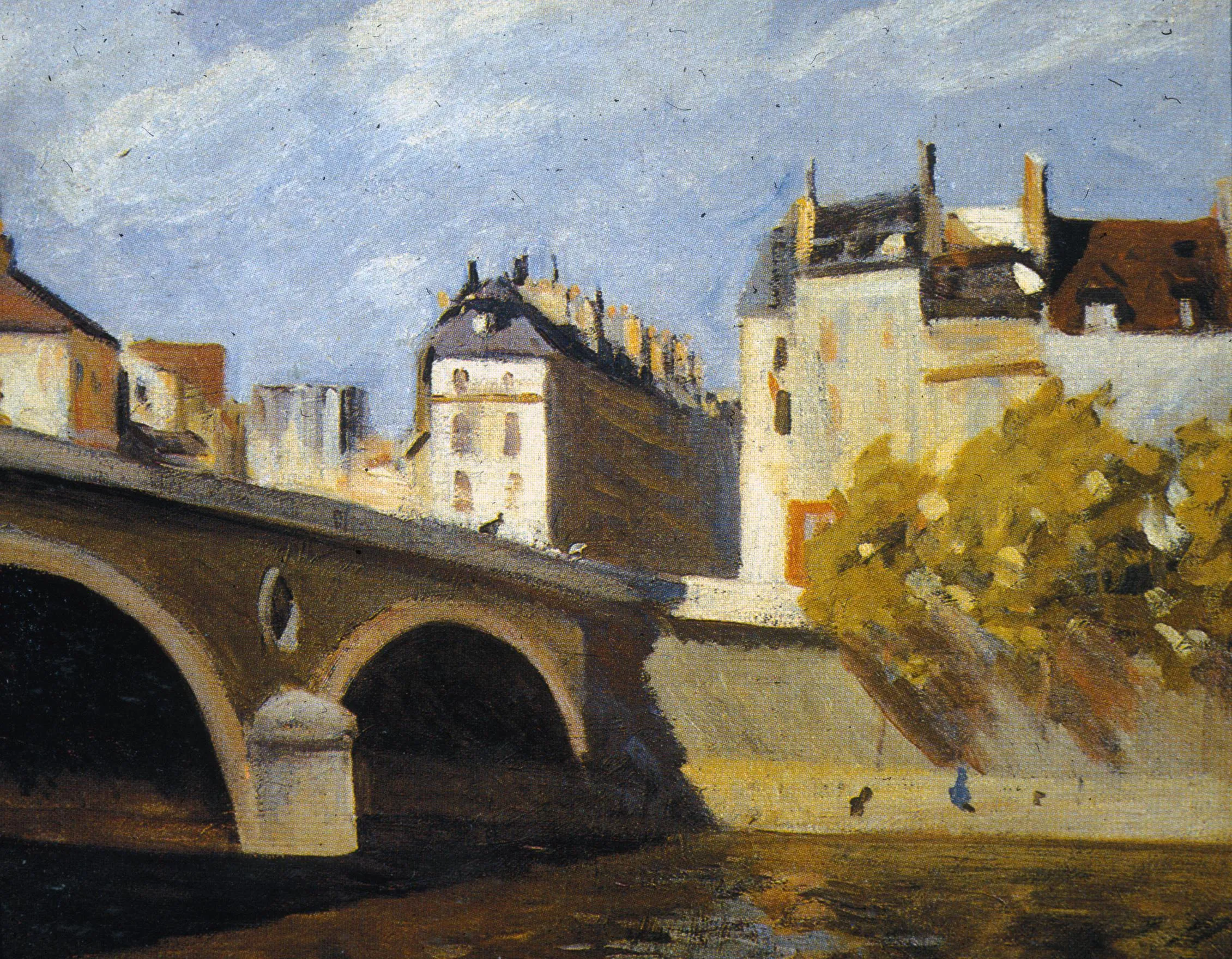
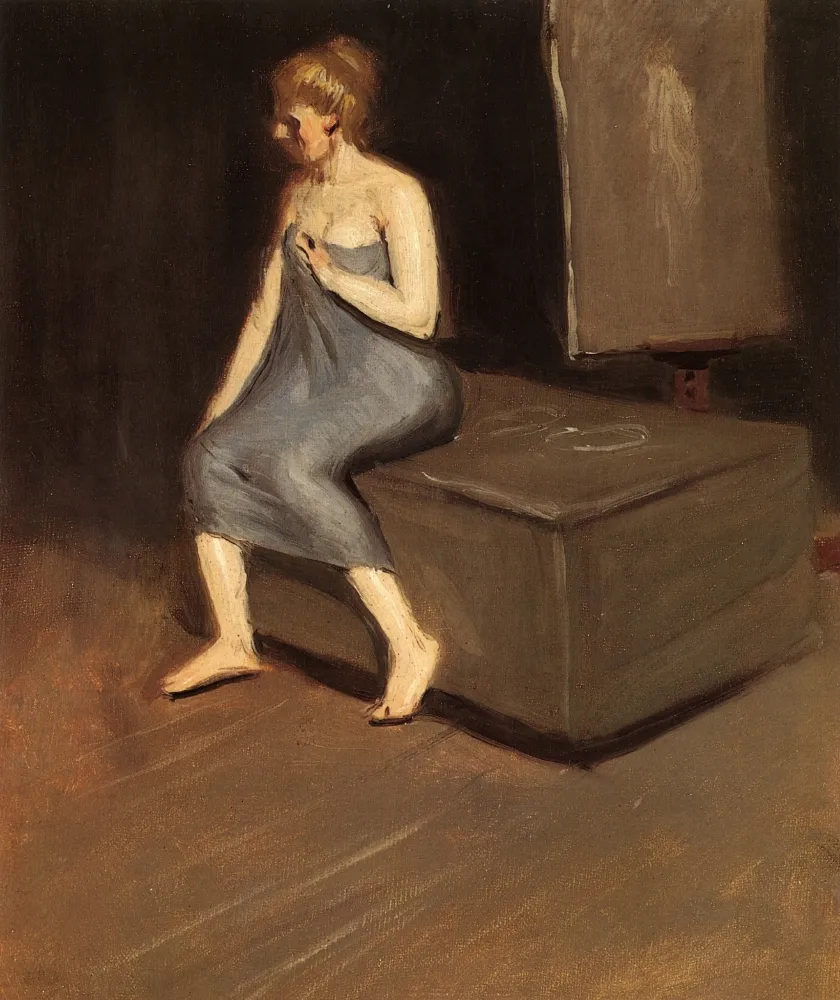
Edward Hopper’s "Bridge on the Seine" exemplifies his extraordinary technique with oil on canvas. Each brushstroke in this American Realism masterpiece showcases his nuanced use of light and shadow, creating a scene that feels both vivid and contemplative. Collectors searching for authentic works can pair this painting with others like "Model in Towel" or "Sitting on Box" to experience a fuller range of Hopper’s artistic genius and his dedication to realism.
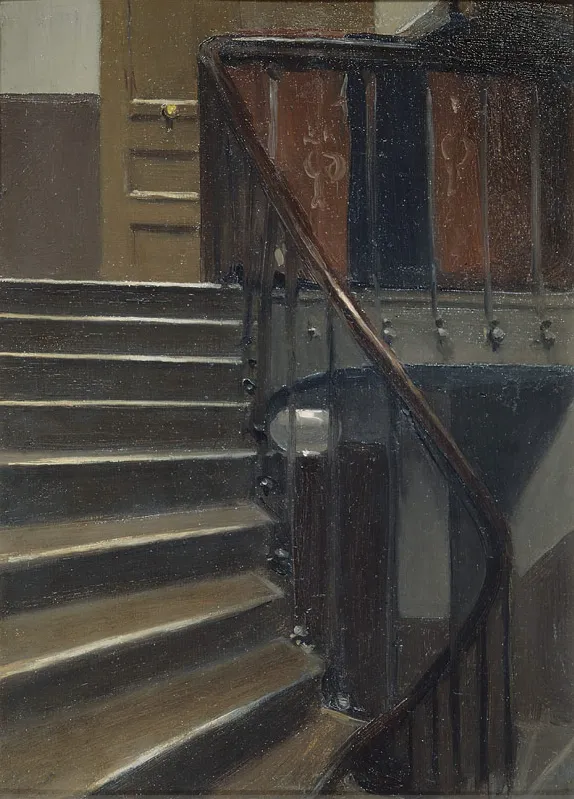
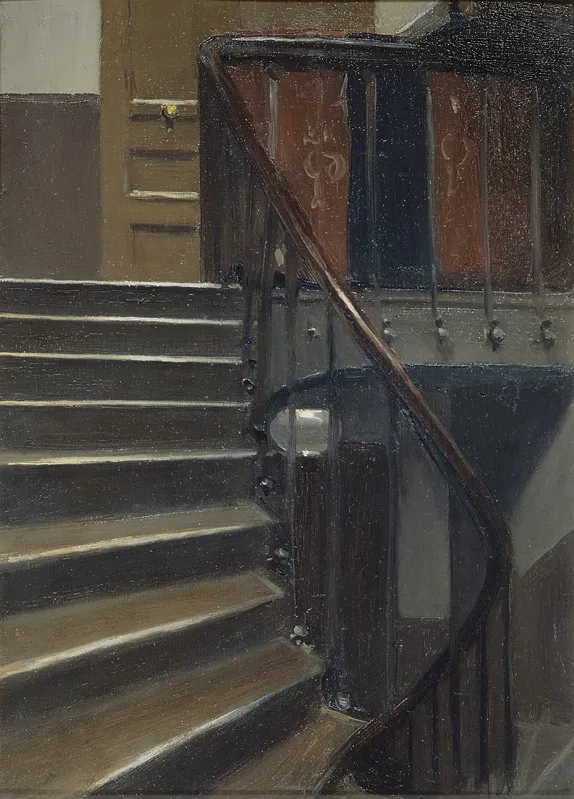
"Bridge on the Seine" is more than a fine art painting for sale; it is an invitation to explore the subtle narratives woven throughout Hopper’s work. The bridge serves as a symbol of connection and transition, a theme often present in American Realism. When viewed alongside related works such as "Ground Swell" or "Stairway at 48 rue de Lille, Paris," the painting reveals deeper stories about urban existence and the quiet moments that define it.
Owning "Bridge on the Seine" by Edward Hopper means acquiring a significant piece of American Realism history. This hand-painted oil painting is sought after by collectors who value authenticity and artistic legacy. It pairs beautifully with other Hopper works like "Notre Dame No 2," creating a distinguished collection. For those seeking a fine art painting for sale, this masterpiece offers both timeless appeal and a connection to the artist’s celebrated vision.
When Art Meets History
"Bridge on the Seine" by Edward Hopper stands as a testament to the American Realism movement, capturing the urban landscape with clarity and authenticity. Painted in the early 20th century, this hand-painted oil painting reflects the era’s fascination with city life and architectural beauty. Hopper’s work often aligns with related pieces like "The Accommodating Money Lender" and "Scene IV - Tongue Couple Arguing," offering a window into the evolving American experience through art.
Techniques That Speak
Edward Hopper’s mastery is evident in "Bridge on the Seine," where his use of oil on canvas brings depth and subtlety to every brushstroke. The painting’s luminous qualities and precise lines echo the hallmarks of American Realism, a movement that values true-to-life representation. Hopper’s techniques can also be observed in related works such as "Man Holding up a Comic Foreground That Puts Him in a Fishing Scene," highlighting his consistent attention to detail and atmosphere.
Emotions on Display
"Bridge on the Seine" evokes a contemplative mood, inviting viewers to reflect on solitude and serenity within the bustling cityscape. Hopper’s fine art painting for sale is renowned for its ability to convey complex emotions through seemingly simple scenes. This emotional resonance is a common thread in his oeuvre, connecting works like "We are Having a Heavenly Time" and "Foregrounds Advertisement" to the broader narrative of American Realism and its exploration of human experience.
Coveted by Collectors
As a prime example of American Realism, Edward Hopper’s "Bridge on the Seine" remains a highly sought-after piece among art enthusiasts. This hand-painted oil painting not only represents a significant chapter in Hopper’s career but also appeals to collectors who appreciate timeless cityscapes. Alongside related paintings from the same period, it continues to inspire admiration and demand in galleries and private collections worldwide, securing Hopper’s legacy in the annals of fine art.
Related American Realism Hand-Painted Oil Paintings by Other Artists
Other Famous American Realism Artists:
Frequently Asked Questions About Bridge on the Seine
What is the historical context of "Bridge on the Seine"?
"Bridge on the Seine" was painted by Edward Hopper in 1903, a time when Impressionism was still influential in the art world. This period marked a transition towards modernism, and Hopper's work reflects the evolving artistic landscape of early 20th-century America.
What artistic techniques did Edward Hopper use in this painting?
Hopper employed a unique use of light and shadow, characteristic of his style. The interplay of natural light on the bridge and water creates a sense of depth and dimension, while his bold brushstrokes contribute to the painting's overall texture and atmosphere.
What themes are explored in "Bridge on the Seine"?
The painting explores themes of solitude and isolation, common in Hopper's work. The bridge serves as a metaphorical connection between two worlds, yet the absence of figures suggests a sense of emptiness and contemplation.
How does "Bridge on the Seine" reflect Hopper's artistic style?
This painting exemplifies Hopper's signature style through its focus on urban landscapes and architectural forms. His use of color and composition captures the essence of American life, while the serene yet melancholic mood resonates with viewers.
What is the significance of the bridge in the painting?
The bridge symbolizes connection and transition, serving as a visual link between the two banks of the Seine. It represents not only physical movement but also emotional and psychological journeys, a recurring motif in Hopper's oeuvre.
How does the painting reflect the influence of Impressionism?
While Hopper's style evolved beyond Impressionism, "Bridge on the Seine" showcases its influence through the use of light and color. The loose brushwork and emphasis on atmospheric effects are reminiscent of the Impressionist movement, yet Hopper infuses his own narrative depth.
What emotions does "Bridge on the Seine" evoke in viewers?
The painting evokes a sense of tranquility mixed with introspection. The serene water and the quiet structure of the bridge invite viewers to reflect on their own experiences of solitude and the passage of time.
In what ways does "Bridge on the Seine" connect to Hopper's other works?
This painting shares thematic and stylistic similarities with Hopper's other works, particularly in its exploration of isolation and urban landscapes. The focus on architecture and light is a hallmark of his artistic expression, creating a cohesive body of work.
What role does color play in "Bridge on the Seine"?
Color plays a crucial role in establishing mood and atmosphere in the painting. The muted tones reflect the calmness of the scene, while the contrasting hues of the bridge and water highlight the structure's significance within the landscape.
How has "Bridge on the Seine" been received by critics and art historians?
Critics and art historians have praised "Bridge on the Seine" for its masterful depiction of light and space, as well as its emotional depth. It is often regarded as a significant work in Hopper's career, showcasing his ability to convey complex themes through simple yet powerful imagery.























_GFM_Painting_(1).webp)

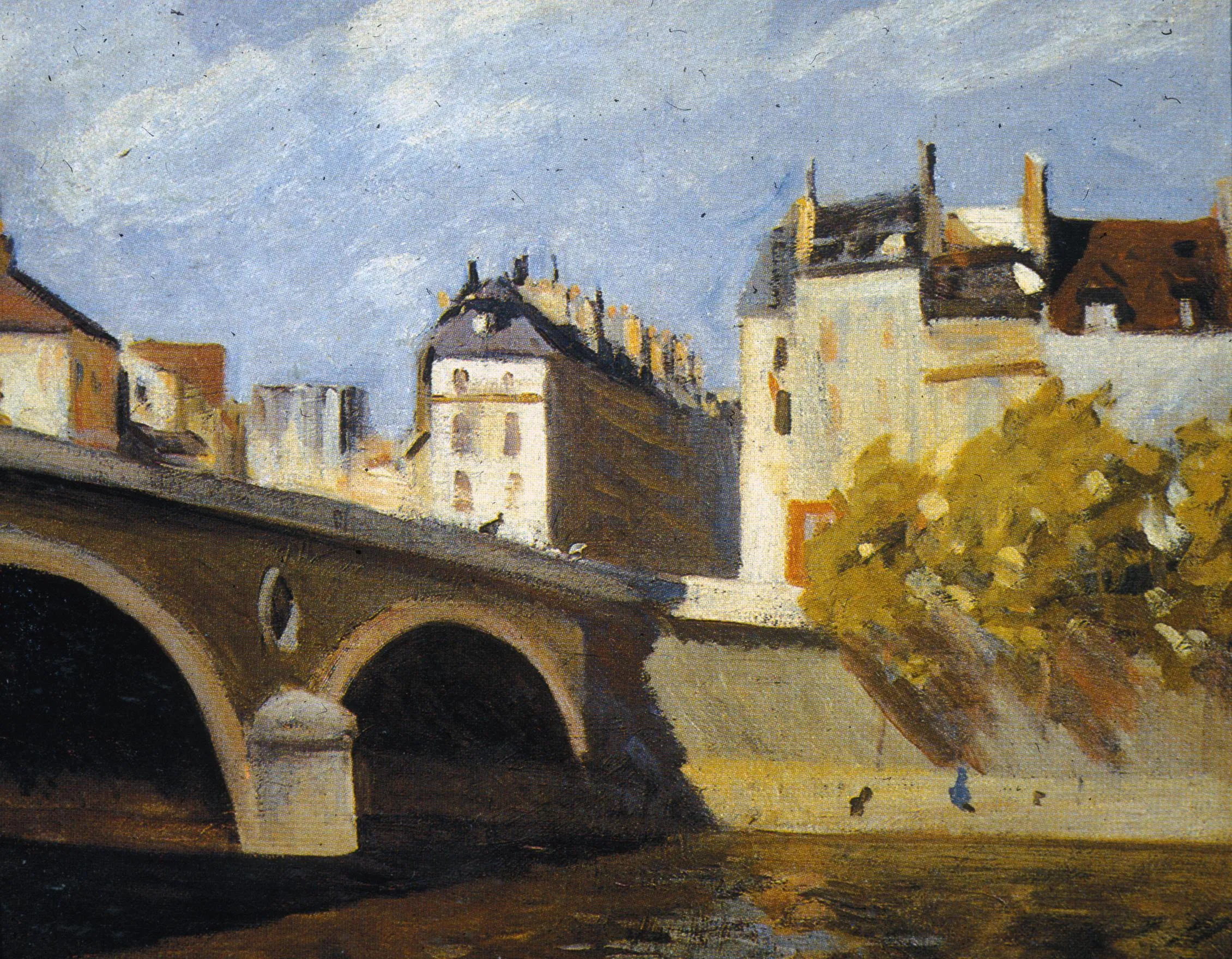

 100% Hand-Painted: Finished in 3-6 Weeks

.png)
















_(1).webp)