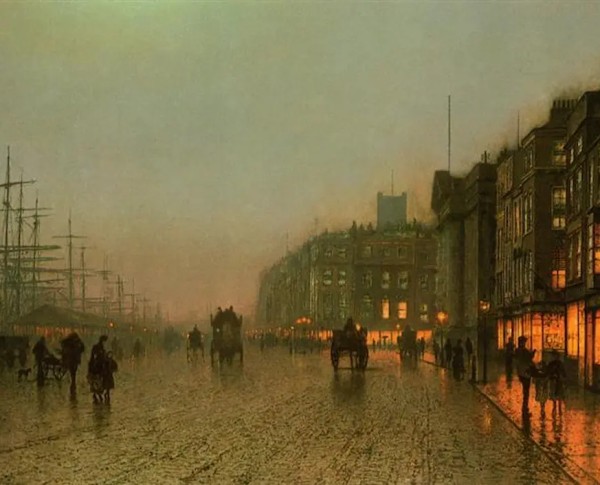
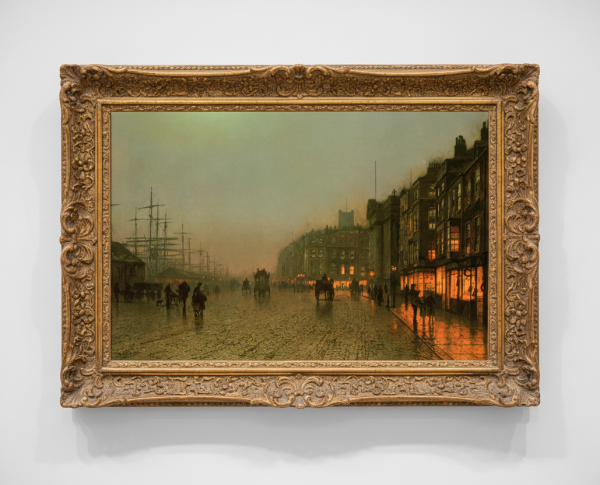
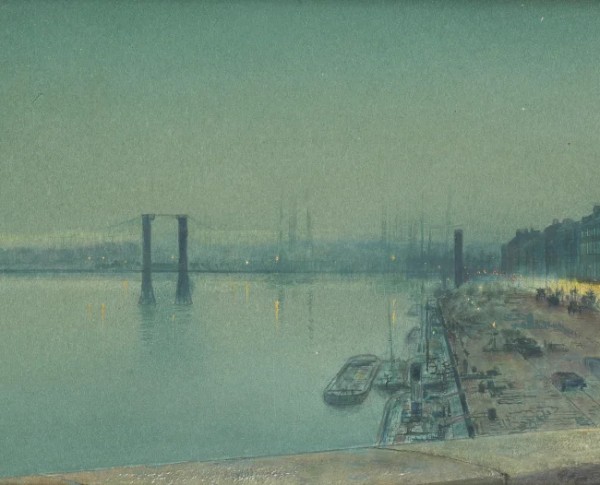
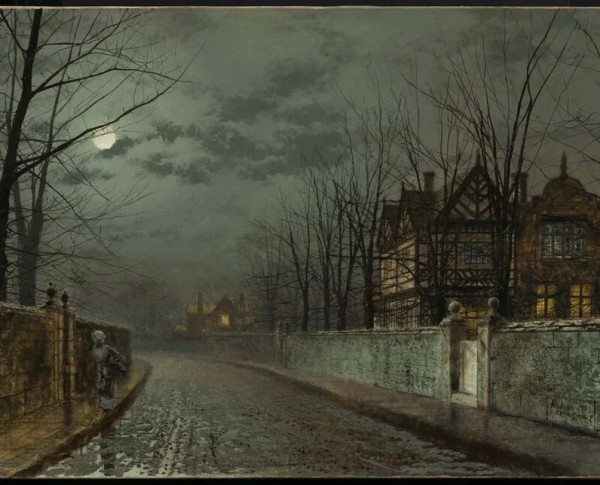
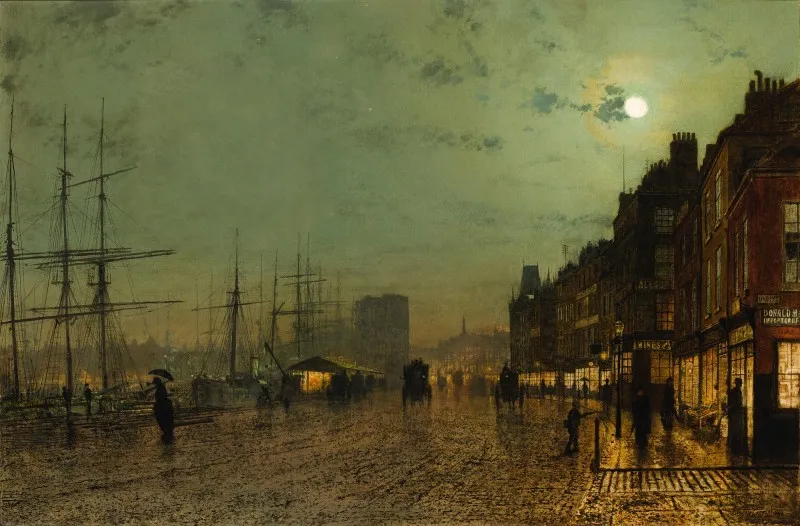
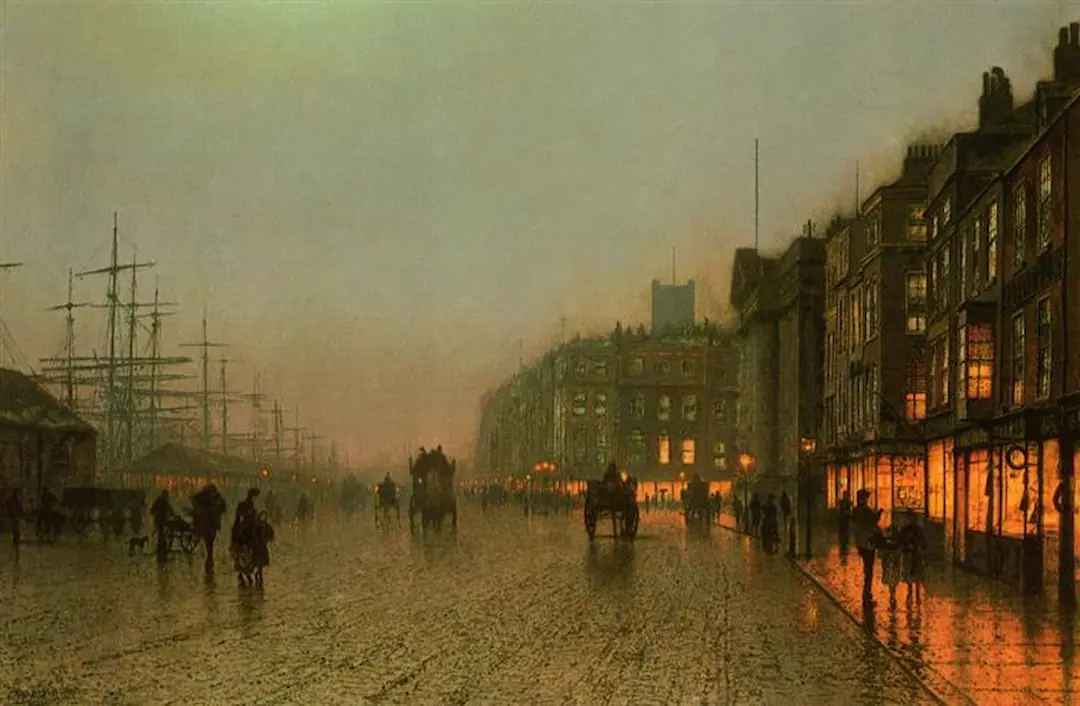
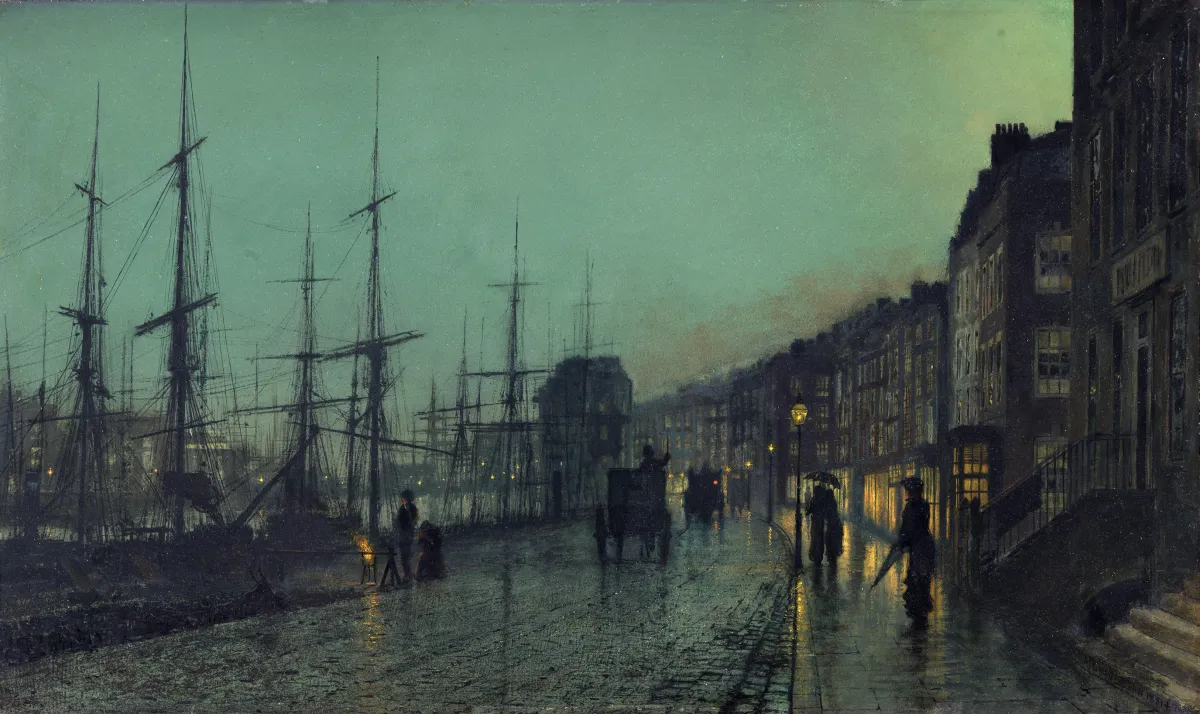
John Atkinson Grimshaw’s "Glasgow Docks" showcases his remarkable technique in oil on canvas, where intricate brushwork and delicate lighting transform an ordinary harbor into a poetic nocturne. His ability to merge detail with atmosphere is a hallmark of the Aestheticism movement. Grimshaw’s other works, such as "Canny Glasgow" and "Liverpool Quay by Moonlight," similarly reveal his command of light and shadow, making each painting a celebration of urban beauty and artistry.
In "Glasgow Docks," Grimshaw weaves stories through subtle symbols—misty water, glowing lamps, and silent ships—that evoke both the promise and mystery of Victorian industry. This fine art painting for sale resonates with viewers who appreciate the narrative depth characteristic of the Aestheticism movement. For collectors, owning works like "Quai de Paris, Rouen" or "'The Ironbound Shore'" alongside "Glasgow Docks" enriches a collection with layers of meaning and historic ambiance.
Owning "Glasgow Docks" by John Atkinson Grimshaw is a privilege for any art enthusiast, as this hand-painted oil painting embodies the elegance and emotion of the Aestheticism movement. Its timeless allure makes it a prized addition to any collection, especially when displayed with related masterpieces like "View of Heath Street by Night" or "Shipping on the Clyde." This fine art painting for sale invites collectors to celebrate the golden age of British urban landscapes.
When Art Meets History
"Glasgow Docks" by John Atkinson Grimshaw is a remarkable hand-painted oil painting that captures the bustling industrial spirit of 19th-century Scotland. Created during the Aestheticism movement, Grimshaw’s work offers a window into the era’s urban transformation. As seen in related paintings like "Fair Is My Love" and "Landscape study," Grimshaw’s detailed cityscapes provide a visual chronicle of their time, blending artistic beauty with historical significance in every brushstroke.
Techniques That Speak
John Atkinson Grimshaw’s mastery of oil on canvas is evident in "Glasgow Docks." His unique technique involves subtle layering and meticulous attention to light, which brings the foggy docks to life. Similar approaches can be observed in his "Study of a head" and "Richard, Duke of Gloucester, and the Lady Anne." Through these techniques, Grimshaw elevates everyday scenes, making the Aestheticism movement’s ideals tangible for viewers and collectors alike.
Emotions on Display
The atmospheric mood of "Glasgow Docks" evokes both melancholy and wonder, hallmarks of a fine art painting for sale that resonates emotionally. John Atkinson Grimshaw’s ability to convey the quiet solitude of dusk sets this piece apart, echoing the emotive qualities found in works like "Study for Falstaff." By channeling the essence of the Aestheticism movement, Grimshaw invites viewers to experience the profound beauty in ordinary moments.
Coveted by Collectors
As a celebrated example of the Aestheticism movement, "Glasgow Docks" by John Atkinson Grimshaw remains highly sought-after among art enthusiasts. This hand-painted oil painting is prized for its evocative atmosphere and technical brilliance, much like Grimshaw’s other works such as "Landscape study" and "Study of a head." Collectors cherish these masterpieces, recognizing them as timeless additions to any distinguished fine art collection.
Related Aestheticism Hand-Painted Oil Paintings by Other Artists
Other Famous Aestheticism Artists:
Frequently Asked Questions About Glasgow Docks
What is the historical significance of "Glasgow Docks"?
"Glasgow Docks" captures a pivotal moment in the late 19th century when Glasgow was a thriving hub of industrial activity and trade. The painting reflects the economic prosperity of the city during the Industrial Revolution.
Who was John Atkinson Grimshaw and what was his artistic style?
John Atkinson Grimshaw was a British painter known for his atmospheric landscapes and cityscapes, particularly those depicting nighttime scenes. His style is characterized by meticulous detail, a mastery of light, and a romanticized view of urban life.
What techniques did Grimshaw use in "Glasgow Docks"?
Grimshaw employed a combination of oil painting techniques, utilizing glazes to create depth and luminosity. His use of chiaroscuro enhances the contrast between light and shadow, contributing to the painting's dramatic effect.
What symbols are present in "Glasgow Docks"?
The painting features symbols of industrial progress, such as the ships and cranes, representing Glasgow's maritime trade. The interplay of light and shadow symbolizes the duality of industrial advancement and its impact on the environment.
How does "Glasgow Docks" reflect the mood of the era?
The painting embodies a sense of nostalgia and melancholy, reflecting the rapid changes in society during the Industrial Revolution. The serene yet bustling scene evokes both the vibrancy of commerce and the solitude of urban life.
What role does light play in "Glasgow Docks"?
Light is a central element in "Glasgow Docks," used to create a sense of time and atmosphere. The glow from the docks contrasts with the darkening sky, evoking a transition from day to night and symbolizing the relentless pace of industrialization.
How does Grimshaw's portrayal of urban landscapes differ from other artists of his time?
Unlike many of his contemporaries who focused on the grandeur of nature or historical themes, Grimshaw's urban landscapes emphasize the beauty and complexity of city life, often highlighting the interplay of light and shadow in industrial settings.
What impact did "Glasgow Docks" have on the perception of industrial art?
"Glasgow Docks" contributed to the acceptance of industrial themes in fine art, showcasing the aesthetic potential of urban environments. It helped to elevate the status of industrial scenes within the broader context of 19th-century art.
In what ways does "Glasgow Docks" reflect Grimshaw's personal experiences or beliefs?
Grimshaw's works often reflect his fascination with the interplay of light and the passage of time, suggesting a personal contemplation of change and progress. His portrayal of industrial scenes may also indicate a critical awareness of the consequences of modernization.
What is the significance of the color palette used in "Glasgow Docks"?
The color palette of "Glasgow Docks," dominated by blues and golds, creates a sense of tranquility amidst the bustling industrial scene. The cool tones evoke the evening atmosphere, while warm highlights draw attention to key elements, enhancing the painting's emotional depth.























_GFM_Painting_(1).webp)


 100% Hand-Painted: Finished in 3-6 Weeks

.png)

















_(1).webp)