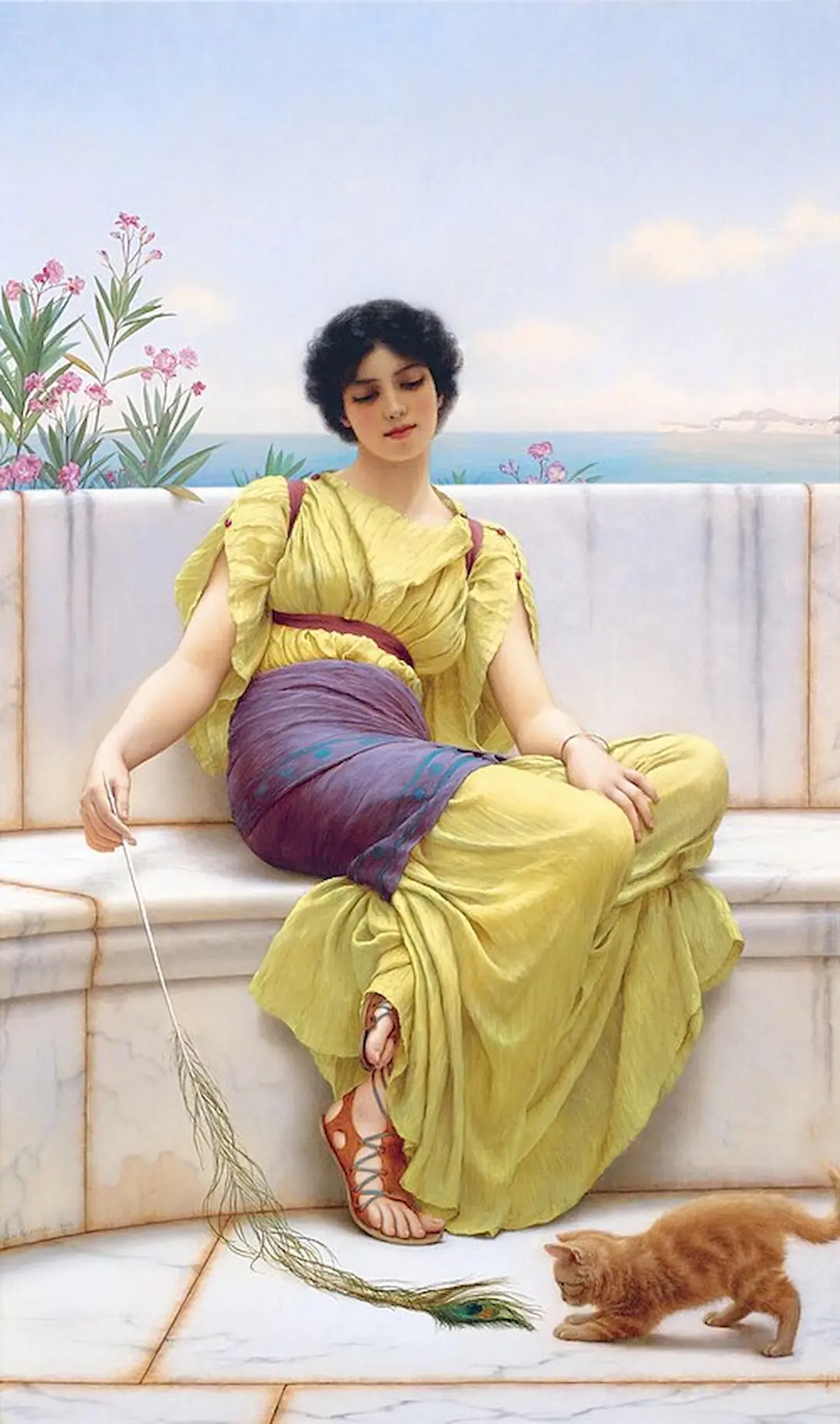
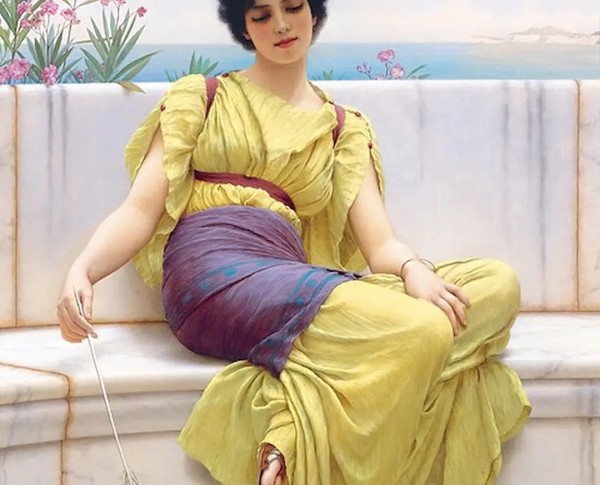
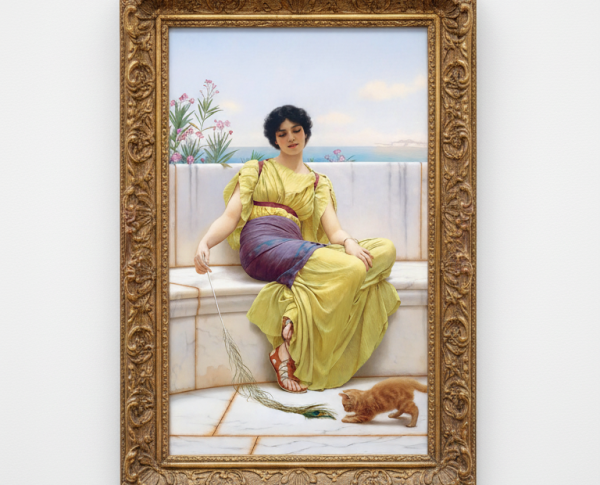
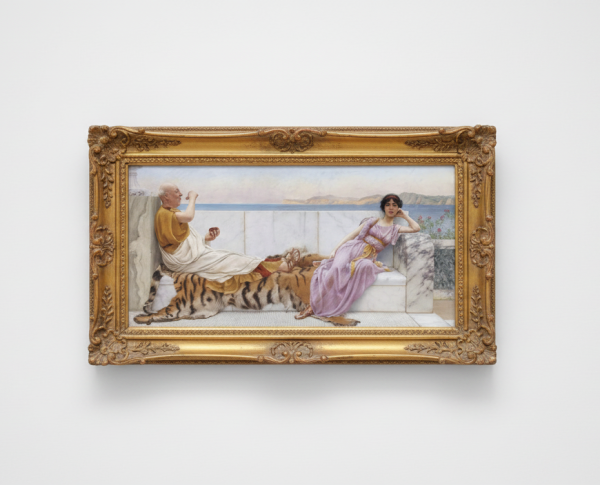
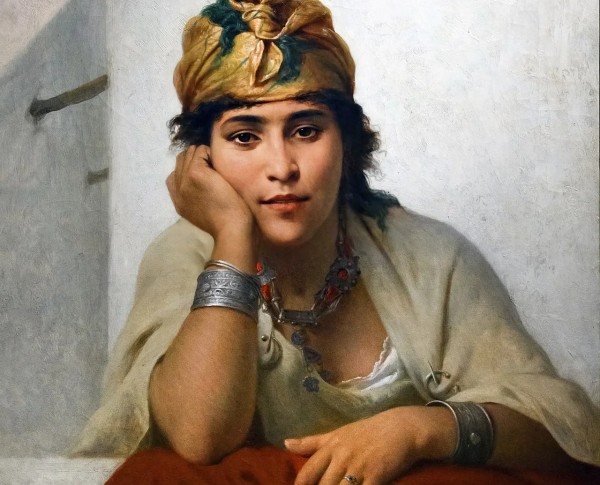
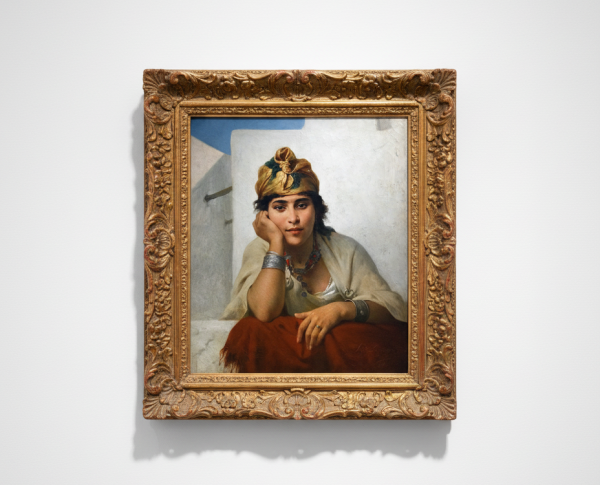
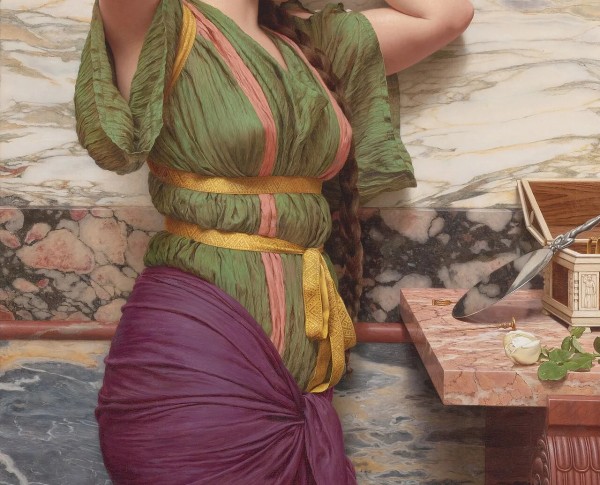
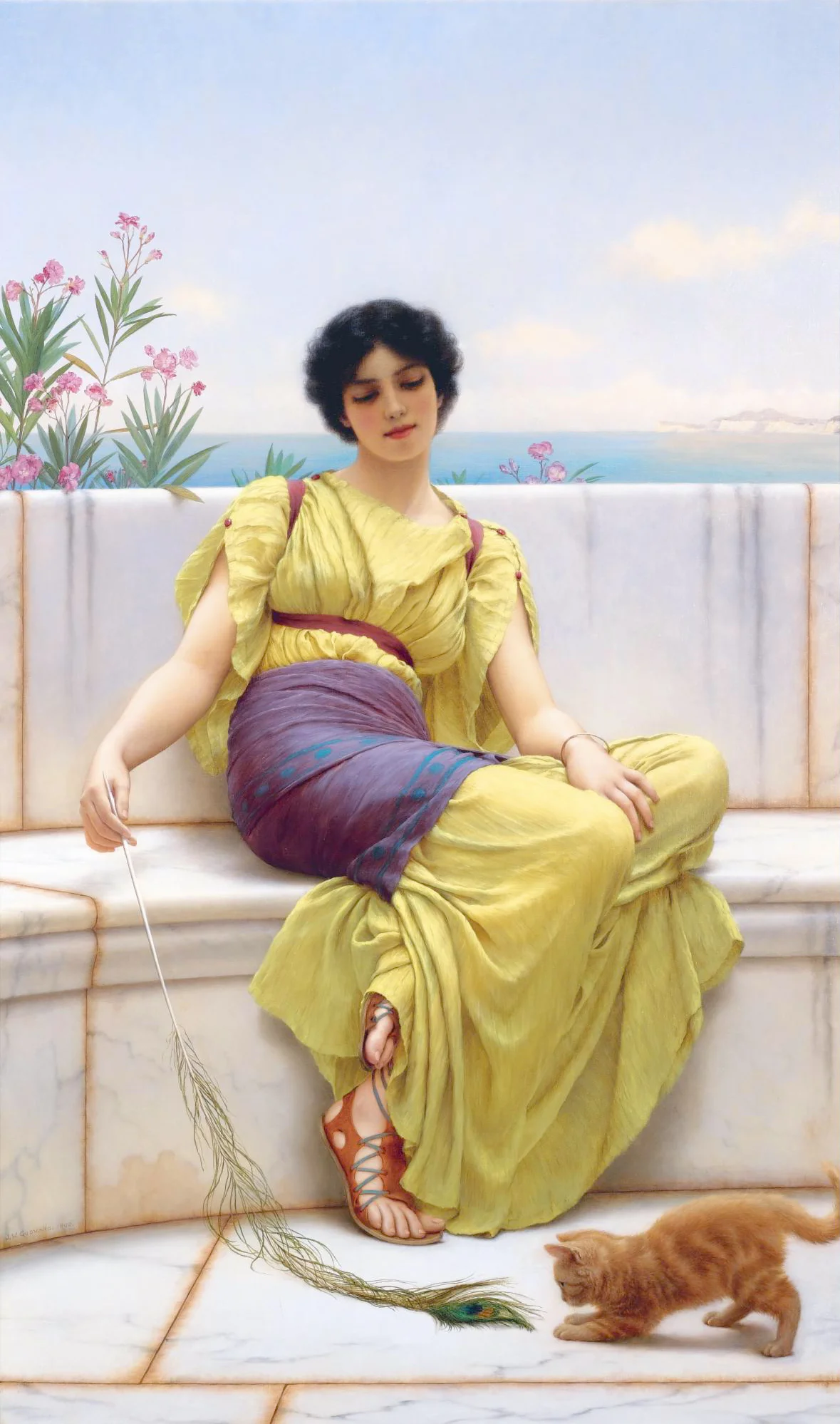
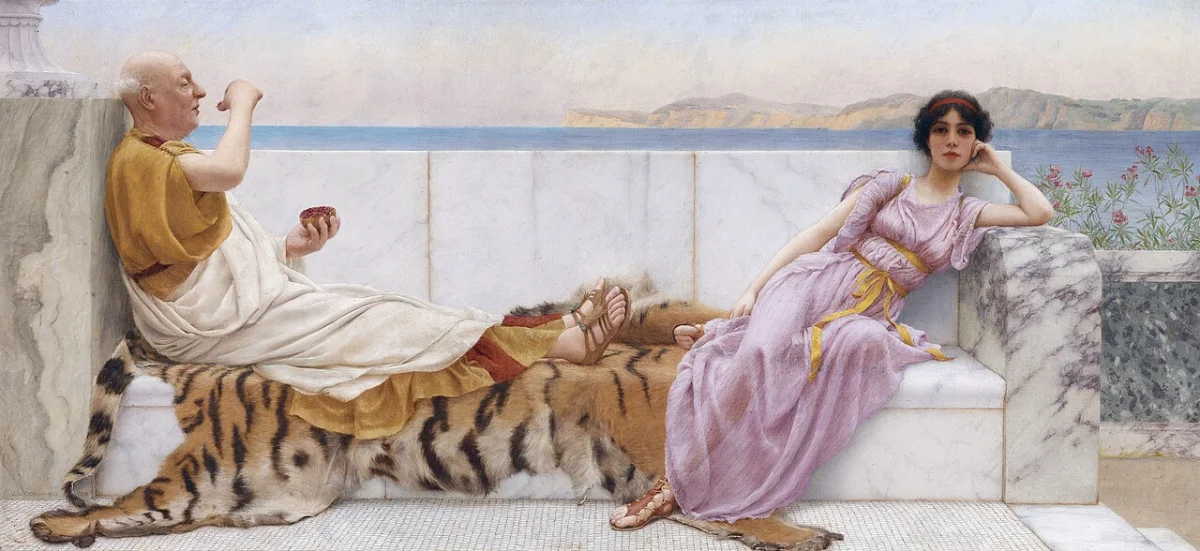
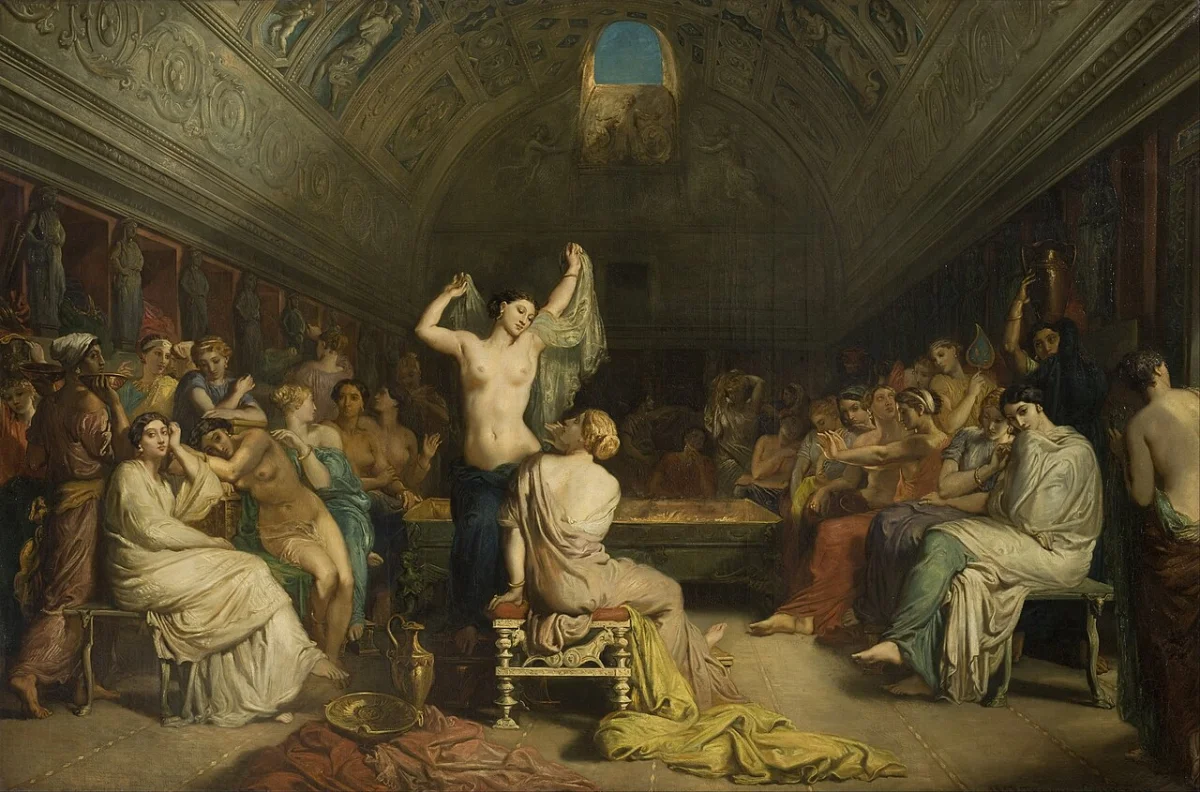
John William Godward’s "Idleness" exemplifies his technical prowess in oil on canvas, blending delicate textures with vibrant yet subtle hues. The artist’s attention to detail in rendering the subject’s serene expression and intricate drapery showcases the hallmarks of Neoclassical Academic Realism. Each brushstroke reflects a commitment to classical beauty, making this painting a highlight among Godward’s oeuvre. Collectors often pair this masterpiece with "Eighty and eighteen" or "Reverie" for a harmonious gallery.
Within "Idleness," Godward weaves narratives of tranquility and introspection, hallmarks of the Neoclassical Academic Realism movement. The painting’s composition and symbolic elements evoke a timeless sense of peace, inviting viewers to contemplate the value of rest. This fine art painting for sale is one of several evocative works by the artist, alongside "Idleness II" and "A Pompeian Bath." Each piece offers a window into the refined world Godward so elegantly depicted.
For discerning collectors, "Idleness" by John William Godward represents more than just an exquisite hand-painted oil painting—it’s an investment in art history. As part of the Neoclassical Academic Realism movement, this artwork holds significant value and aesthetic appeal. Those seeking to expand their collection may also consider related products like "Nude on the Beach" and "A Fair Reflection," each offering a unique glimpse into Godward’s celebrated artistic vision.
When Art Meets History
"Idleness" by John William Godward is a remarkable example of Neoclassical Academic Realism, a movement characterized by its reverence for classical antiquity and technical mastery. This hand-painted oil painting transports viewers to a serene, idealized past, echoing the grandeur of ancient Rome. Godward's work stands alongside masterpieces like "Portrait of Antoine-Laurent Lavoisier and his wife" and "The Death of Socrates," reflecting the era's fascination with balance, beauty, and historical storytelling through art.
Techniques That Speak
John William Godward's "Idleness" showcases exquisite oil on canvas technique, with meticulous attention to texture and light. His brushwork brings marble, fabric, and skin to life, creating a tangible sense of realism. Godward’s approach aligns with other Neoclassical artists, such as those who painted "Napoleon Crossing the Alps" and "Consecration of the Emperor Napoleon I and Coronation of the Empress Josephine 1805-07," where technical precision elevates historical and mythological subjects to enduring works of art.
Emotions on Display
In "Idleness," Godward captures a quiet moment of introspection, evoking a sense of calm and contemplation. The subject’s languid pose and distant gaze invite viewers to ponder themes of leisure and longing, hallmarks of Neoclassical Academic Realism. This fine art painting for sale resonates with the emotional depth found in works like "Bonaparte, Calm on a Fiery Steed" and "Crossing the Alps 1801," where human emotion is intricately woven into historical narrative.
Coveted by Collectors
"Idleness" remains a sought-after treasure among collectors who appreciate the enduring allure of Neoclassical Academic Realism. As with celebrated pieces such as "The Death of Socrates," this hand-painted oil painting is prized not just for its beauty, but for its representation of a sophisticated artistic movement. Collectors value Godward’s unique ability to merge classical inspiration with technical brilliance, making his works, including "Idleness," highly desirable in the world of fine art.
Related Neoclassical Academic Realism Hand-Painted Oil Paintings by Other Artists
Other Famous Neoclassical Academic Realism Artists:
Frequently Asked Questions About Idleness
What is the historical context of "Idleness"?
"Idleness," painted by John William Godward in 1890, reflects the late Victorian era's fascination with classical themes and the idealization of beauty, which were prevalent in the art movements of that time.
Who was John William Godward?
John William Godward was a British painter known for his neoclassical style and his depictions of beautiful women in classical settings. He was associated with the Pre-Raphaelite movement and was active during the late 19th and early 20th centuries.
What artistic techniques are employed in "Idleness"?
Godward utilized a combination of meticulous detail, vibrant color palettes, and soft lighting to create a sense of tranquility and beauty in "Idleness," showcasing his skill in rendering textures and fabrics.
What themes are explored in "Idleness"?
The painting explores themes of leisure, beauty, and the idealization of femininity. It captures a moment of serene contemplation, inviting viewers to reflect on the nature of idleness and its association with beauty.
What symbolism can be found in "Idleness"?
The figure in "Idleness" symbolizes the ideal of beauty and the pursuit of pleasure. The surrounding classical elements suggest a connection to ancient cultures that valued aesthetics and leisure as integral to a fulfilling life.
How does "Idleness" compare to other works by Godward?
What influences can be seen in "Idleness"?
The painting reflects influences from both classical art and the Pre-Raphaelite movement, particularly in its focus on natural beauty and the use of rich colors and intricate details to evoke emotion.
What is the significance of the title "Idleness"?
The title "Idleness" suggests a celebration of leisure and the beauty found in moments of stillness. It challenges the notion that productivity is the sole measure of value, highlighting the importance of rest and contemplation.
Where can "Idleness" be viewed today?
"Idleness" is part of private collections and may occasionally be exhibited in galleries that focus on Victorian art or the works of John William Godward. Please check with local galleries for current exhibitions.
How has "Idleness" been received by art critics?
Critics have generally praised "Idleness" for its technical skill and aesthetic appeal. It is often discussed in the context of Godward's ability to merge classical themes with Victorian ideals of beauty, making it a notable work in his career.























_GFM_Painting_(1).webp)


 100% Hand-Painted: Finished in 3-6 Weeks

.png)















_(1).webp)