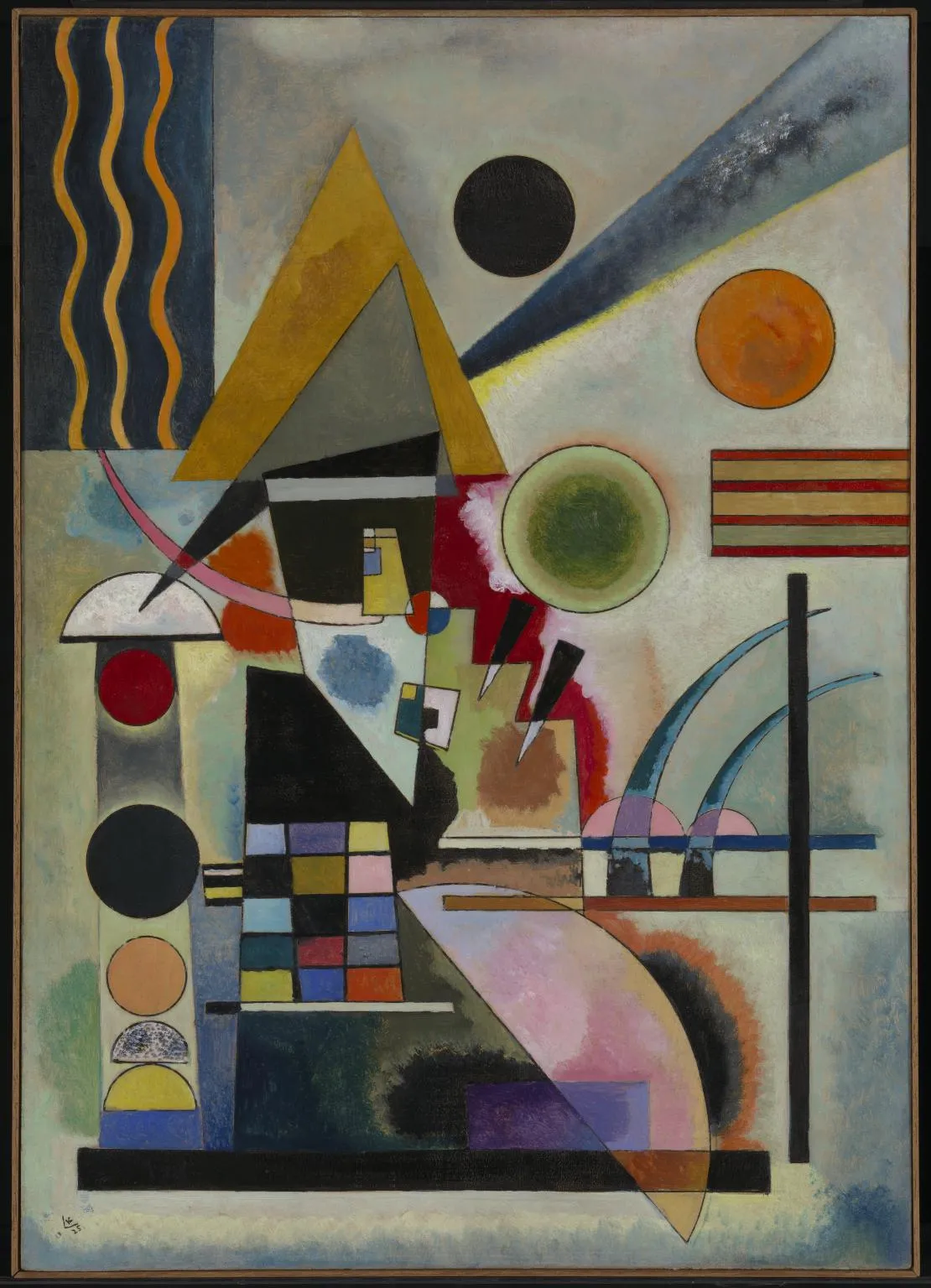
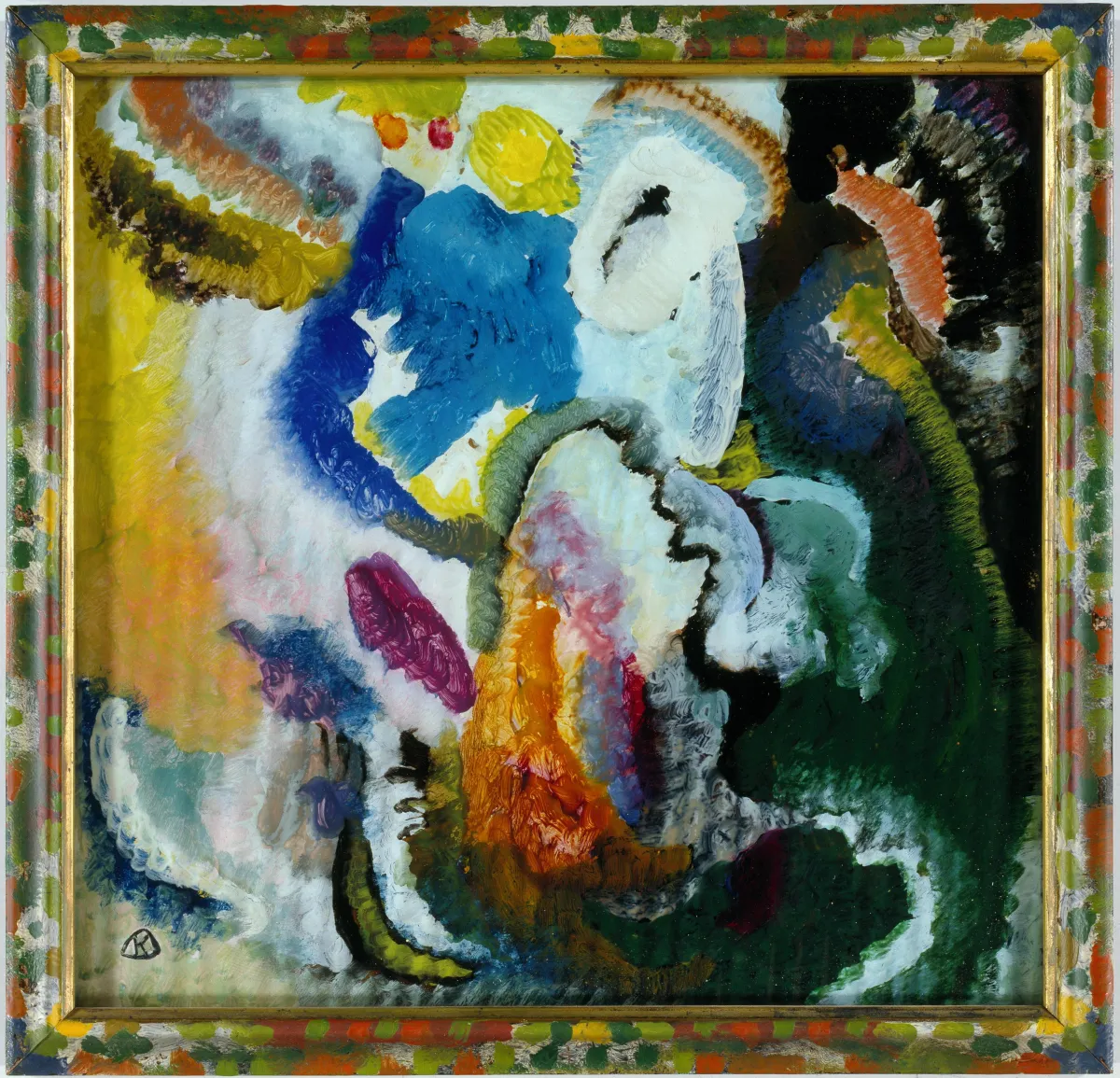
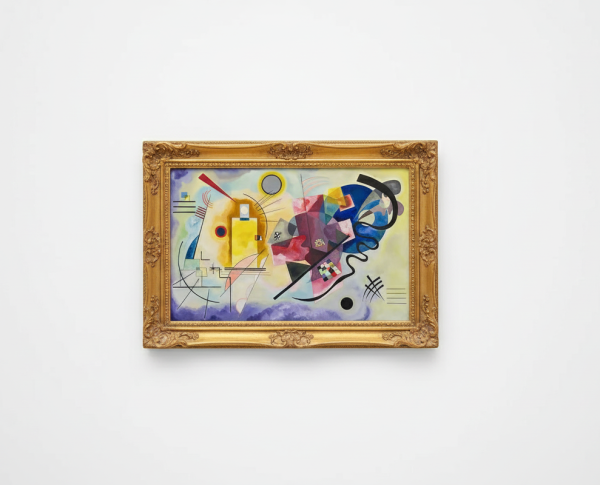
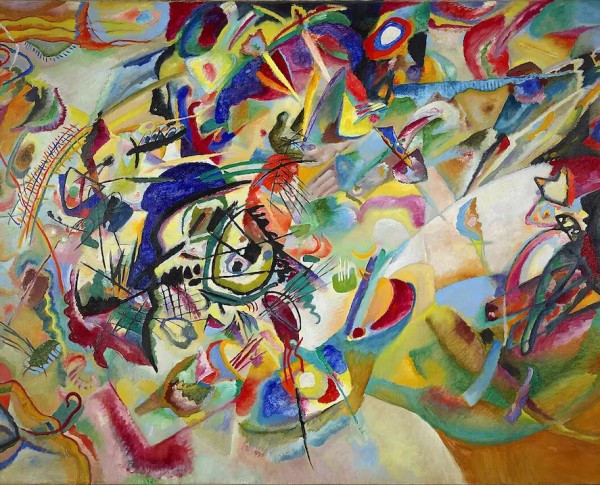
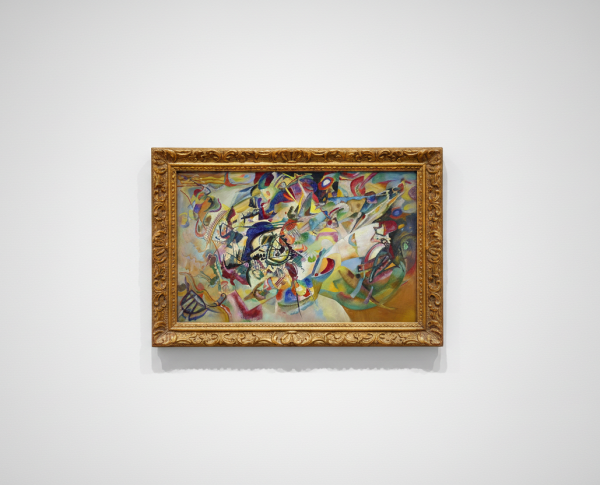
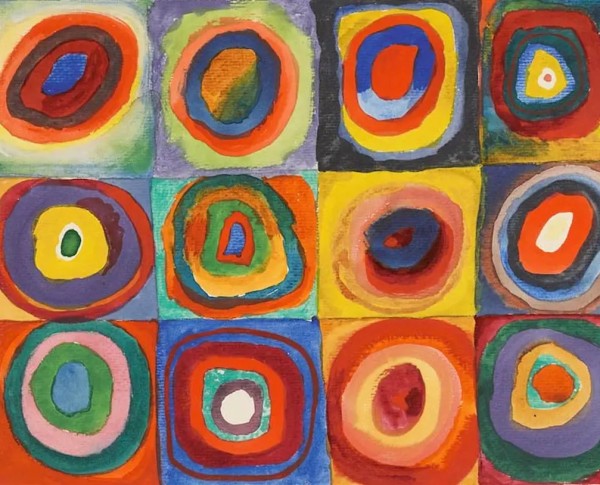
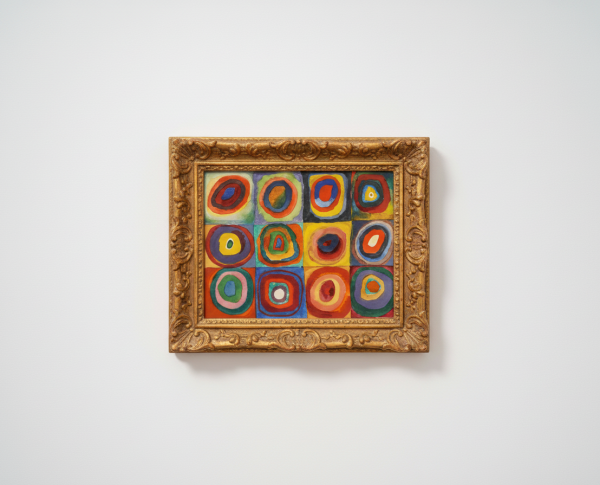
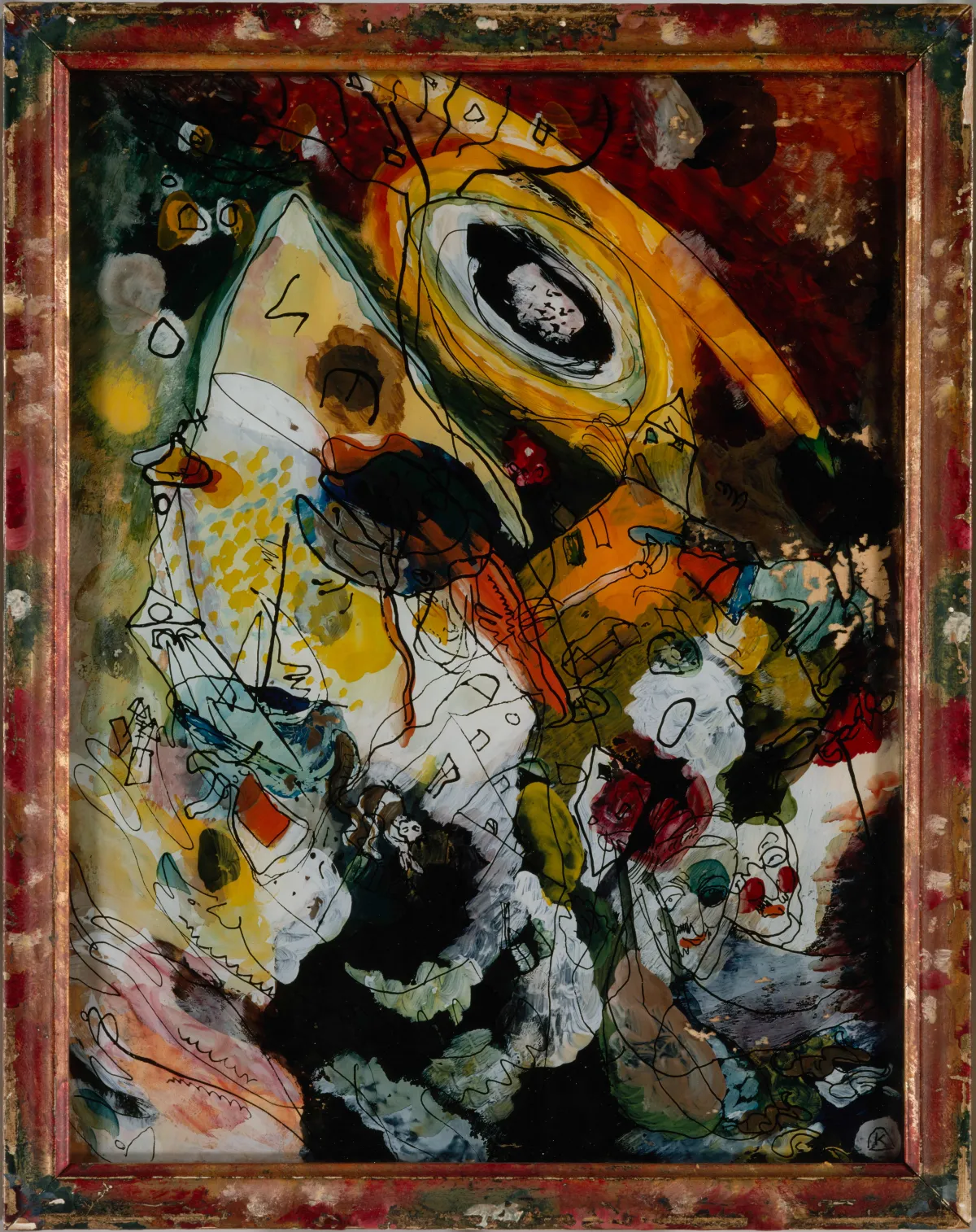
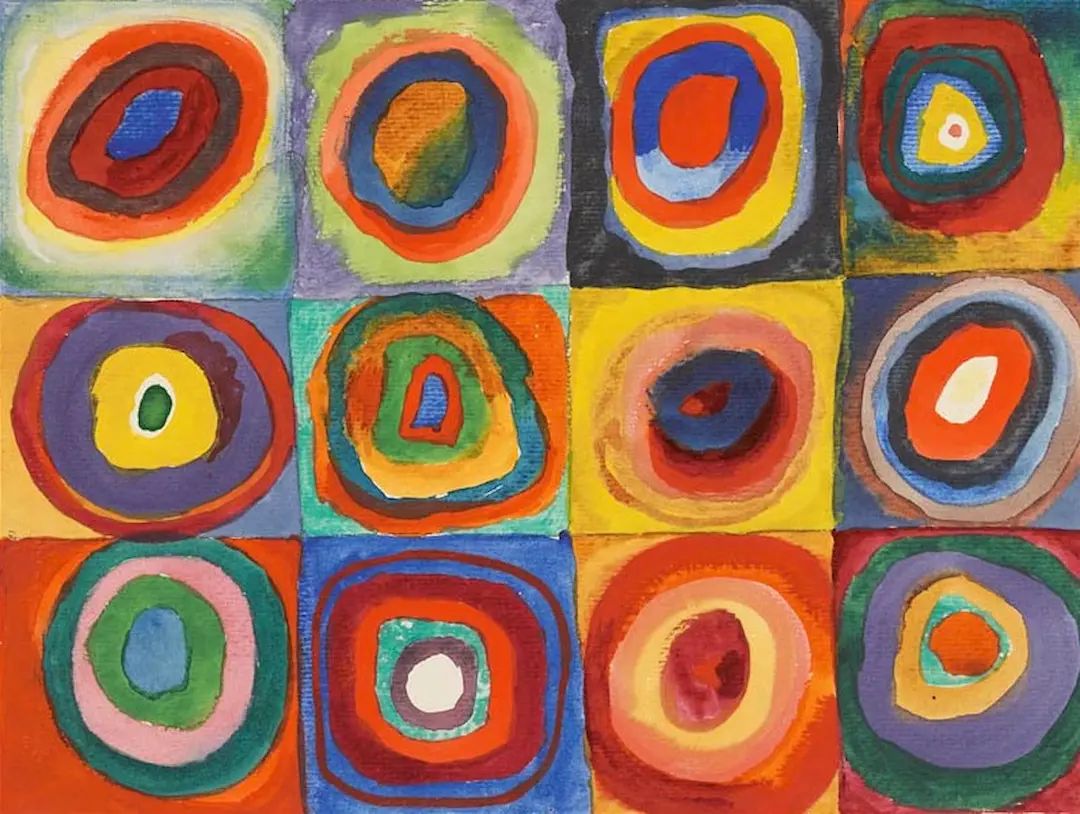
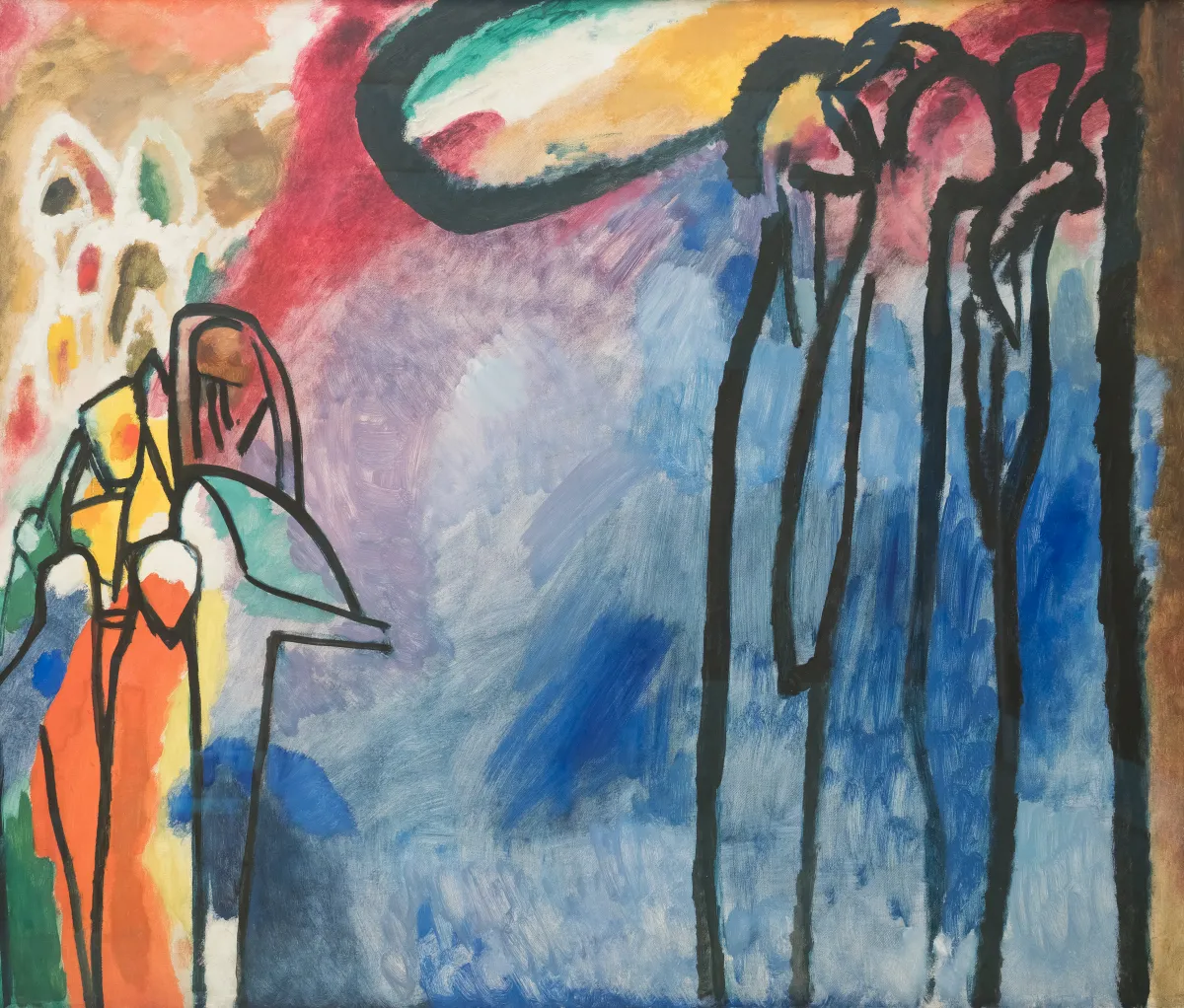
Kandinsky’s mastery is evident in every brushstroke of this oil on canvas artwork, where dynamic forms and vibrant colors interact harmoniously. "Picture with Pince-nez" demonstrates his innovative approach to composition, blending bold lines with subtle textures. As part of the Abstract Expressionism movement, this piece, along with works such as "Squares with Concentric Rings" and "Improvisation 21," exemplifies Kandinsky’s revolutionary vision in modern art.
Within "Picture with Pince-nez," viewers discover a tapestry of symbols and stories woven through abstract shapes and colors. Kandinsky’s fine art painting for sale reveals hidden meanings and emotions, inviting interpretation and reflection. As with "Improvisation 19" and "Improvisation 11," this work encourages viewers to explore the depths of abstraction and symbolism, solidifying its place among the most intriguing pieces of the Abstract Expressionism movement.
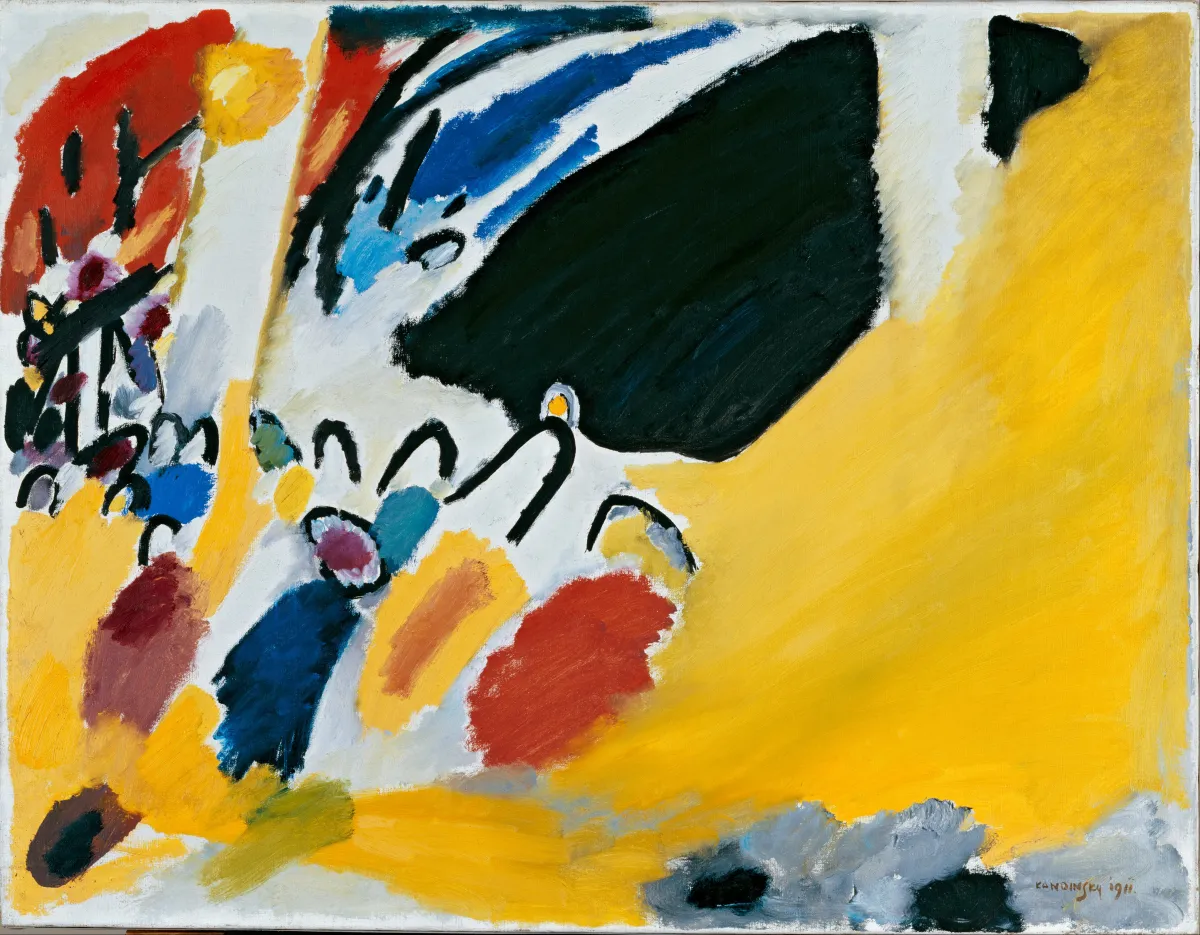
For collectors, owning "Picture with Pince-nez" by Wassily Kandinsky is a testament to the enduring allure of hand-painted oil paintings. This fine art painting for sale is a prized addition to any collection, representing the innovation of Abstract Expressionism. Alongside related products like "Impression lll (Concert)" and "Squares with Concentric Rings," this masterpiece continues to captivate art lovers and enrich the world of modern art.
When Art Meets History
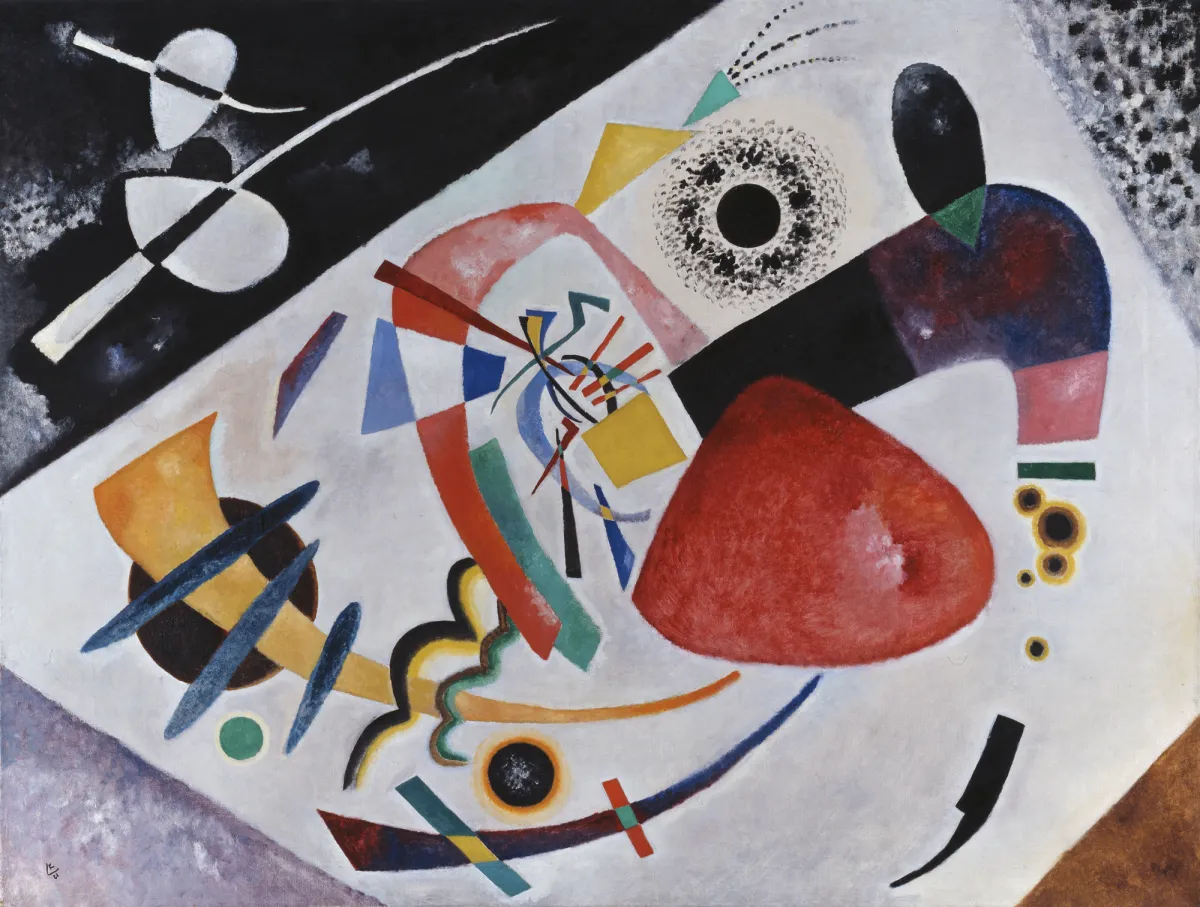
"Picture with Pince-nez" by Wassily Kandinsky stands as a significant milestone in the Abstract Expressionism movement. Painted in 1913, this hand-painted oil painting reflects a period when artists began to break away from traditional forms, embracing bold experimentation. Kandinsky’s innovative approach influenced contemporaries and later artists alike. When viewed alongside related paintings such as "Untitled (Violet, Black, Orange, Yellow on White and Red), 1949," one can appreciate how abstract art evolved and gained historical importance.
Techniques That Speak
Wassily Kandinsky's mastery is evident in his use of oil on canvas, which allowed him to create dynamic shapes and vibrant colors in "Picture with Pince-nez." Through energetic brushwork and layered textures, he achieved a sense of movement and emotion unique to Abstract Expressionism. The techniques in this painting share similarities with other fine art works of the era, including "Untitled (Violet, Black, Orange, Yellow on White and Red), 1949," showcasing the versatility of oil on canvas as a medium.
Emotions on Display
"Picture with Pince-nez" invites viewers to experience a spectrum of emotions through its abstract forms and vivid palette. Kandinsky's artistic vision, rooted in Abstract Expressionism, transforms feelings into visual language. The painting’s energetic composition stirs curiosity and contemplation, much like related works from the movement. Collectors and art lovers are drawn to the intense emotional resonance found in this fine art painting for sale, which continues to inspire new generations.
Coveted by Collectors
Wassily Kandinsky’s "Picture with Pince-nez" remains a highly sought-after masterpiece among collectors of modern art. Its status as a hand-painted oil painting from the Abstract Expressionism movement makes it especially valuable. Alongside iconic works like "Untitled (Violet, Black, Orange, Yellow on White and Red), 1949," this painting is celebrated for its innovation and historical impact. For those seeking a fine art painting for sale, Kandinsky’s work offers both artistic brilliance and lasting investment potential.
Related Abstract Expressionism Hand-Painted Oil Paintings by Other Artists
Other Famous Abstract Expressionism Artists:
Frequently Asked Questions About Picture with Pince-nez
What is the historical context of "Picture with Pince-nez"?
"Picture with Pince-nez" was created in 1912, during a time when Wassily Kandinsky was exploring abstract forms and colors. This period marked a significant shift in the art world, moving away from representational art towards abstraction, influenced by the socio-political changes in Europe.
What artistic movement is "Picture with Pince-nez" associated with?
This painting is associated with the Expressionist movement, particularly the Munich branch, where Kandinsky was a prominent figure. His work often emphasized emotional expression through color and form, which is evident in this piece.
What are the key themes represented in "Picture with Pince-nez"?
The key themes in this painting include the exploration of identity and perception. The pince-nez glasses symbolize vision and perspective, suggesting a deeper commentary on how we perceive reality and art itself.
How does Kandinsky use color in "Picture with Pince-nez"?
Kandinsky employs a vibrant color palette to evoke emotions and create a dynamic composition. The contrasting colors serve to engage the viewer and provoke an emotional response, a hallmark of his artistic style.
What is the significance of the pince-nez in the painting?
The pince-nez glasses serve as a focal point, symbolizing clarity of vision and the act of seeing. They also represent the intersection of the intellectual and the artistic, highlighting the relationship between observation and creativity.
In what ways does "Picture with Pince-nez" reflect Kandinsky's personal philosophy on art?
Kandinsky believed that art should transcend mere representation and evoke spiritual experiences. This painting reflects his philosophy by using abstract forms and colors to convey deeper meanings and emotions beyond the visible world.
What techniques did Kandinsky use in "Picture with Pince-nez"?
Kandinsky utilized a combination of geometric shapes and organic forms, employing techniques such as layering and juxtaposition of colors to create depth and movement within the composition.
How does "Picture with Pince-nez" fit into Kandinsky's overall body of work?
This painting is a pivotal example of Kandinsky's transition towards pure abstraction. It encapsulates his innovative approach to color and form, which would continue to evolve throughout his career, influencing future generations of artists.
What impact did "Picture with Pince-nez" have on contemporary art?
The painting contributed to the broader acceptance of abstraction in art, challenging traditional notions of representation. Kandinsky's work inspired many artists to explore non-representational forms, paving the way for movements such as Abstract Expressionism.
Where can I view "Picture with Pince-nez"?
"Picture with Pince-nez" is part of the collection at the [insert gallery or museum name]. It is often featured in exhibitions focusing on early 20th-century art and the development of abstraction.























_GFM_Painting_(1).webp)


 100% Hand-Painted: Finished in 3-6 Weeks

.png)















_(1).webp)